

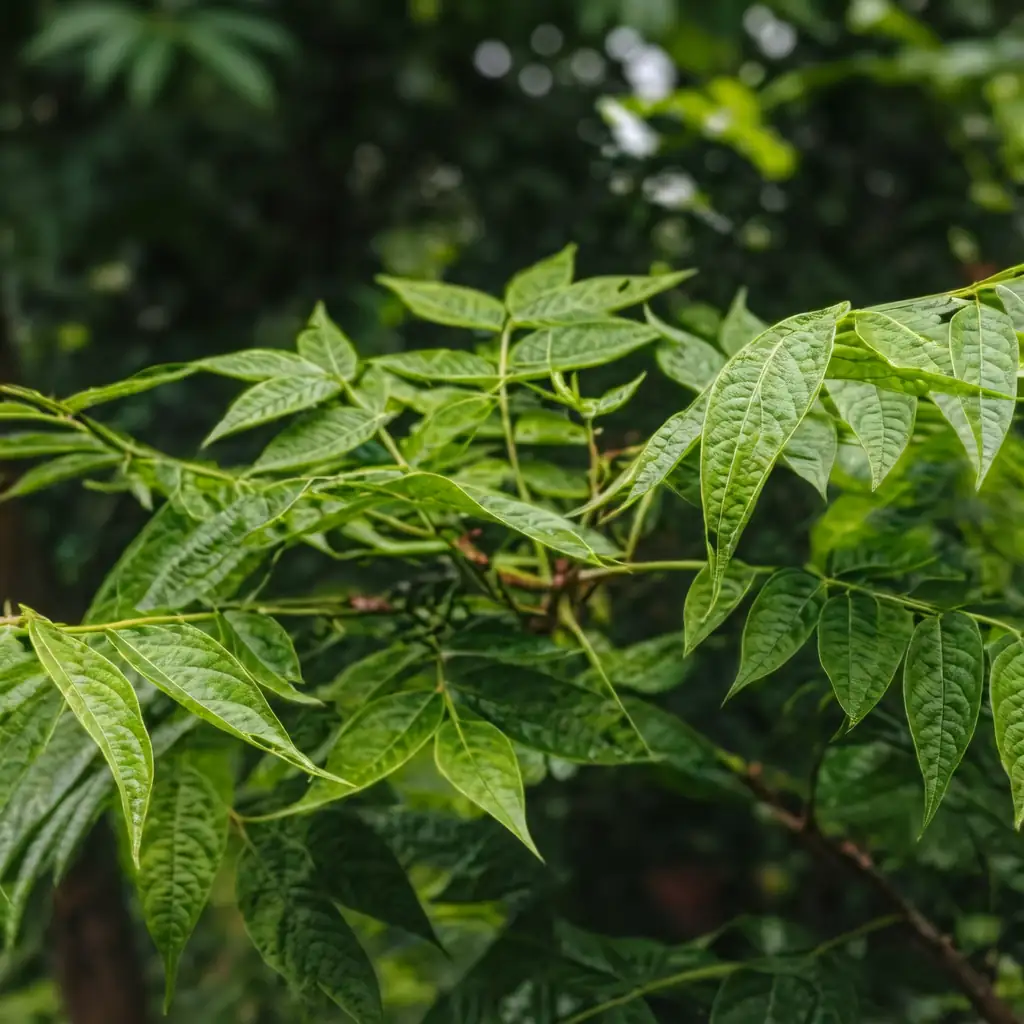

Plant Features
- Size: Typically 10–20 m (33–66 ft) tall; a medium to large deciduous tree.
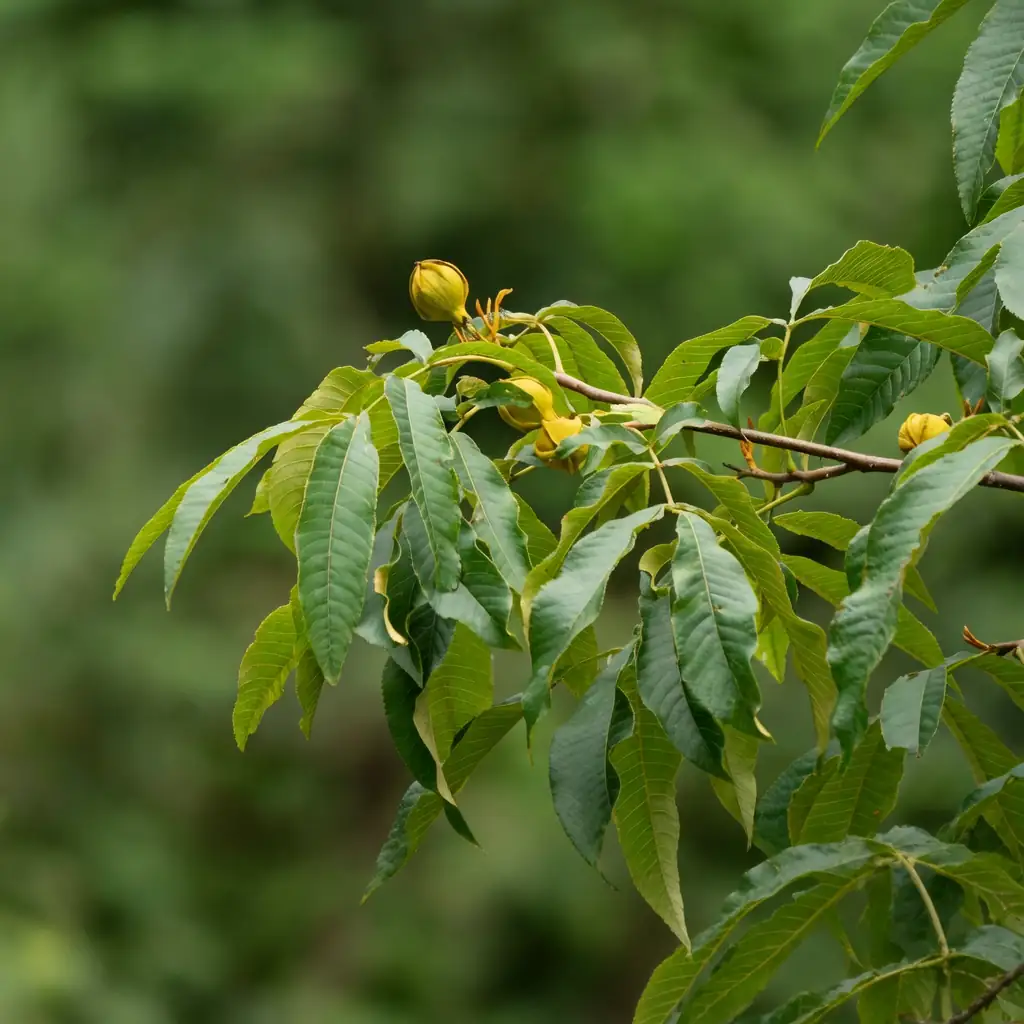
- Foliage: Pinnate compound leaves with 5–7 leaflets; leaflet margins finely serrated. Young shoots are slender and conspicuously coated in dense orange-yellow glandular scales.
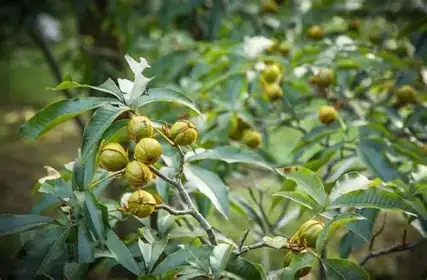
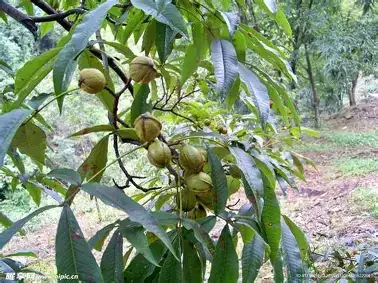
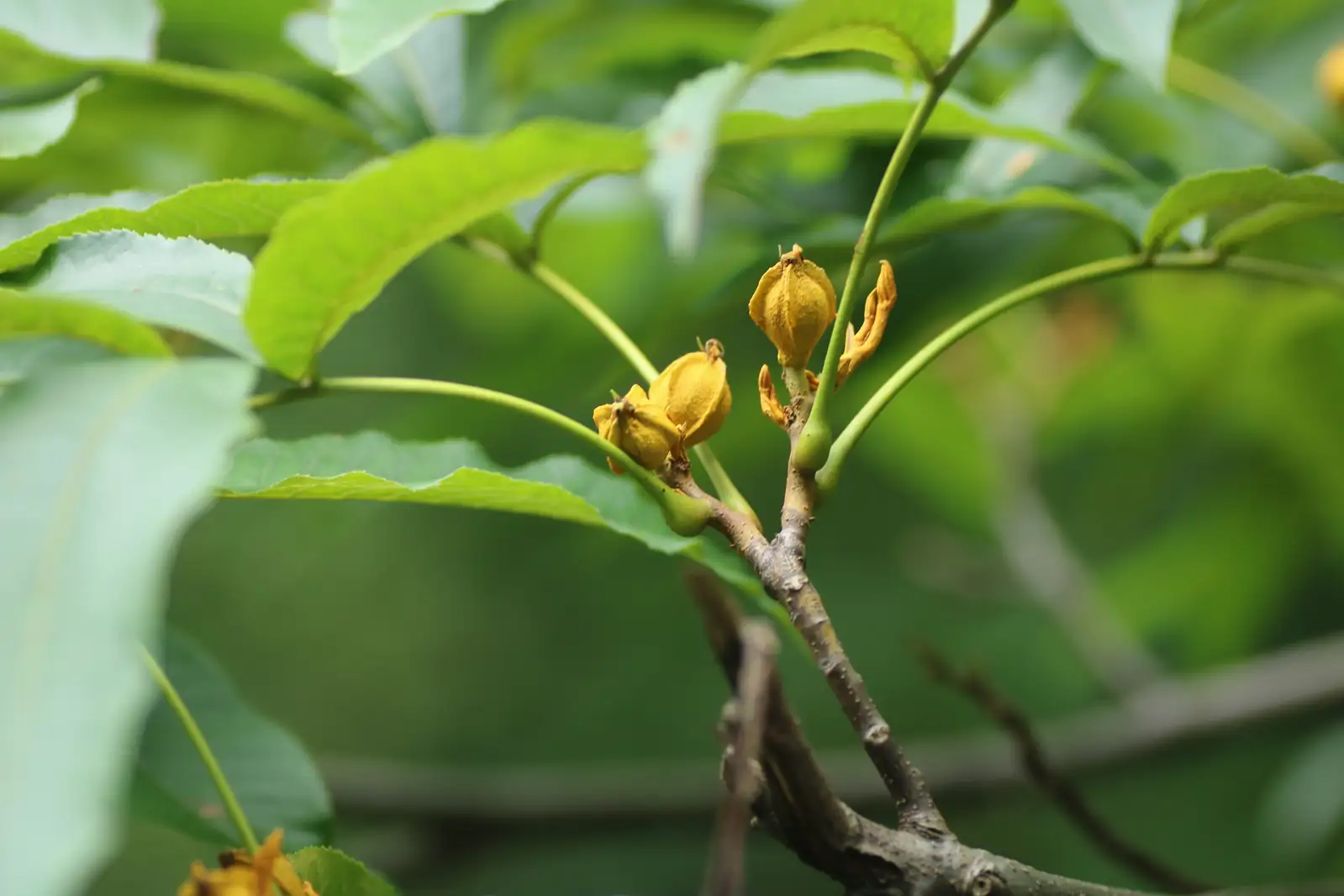
- Flower: Flowers are typical of hickories: male flowers appear as catkins (often in groups of three), while female flowers form upright spikes with 1–3 flowers; the flower axis is densely glandular. The developing fruit is obovoid and may show four narrow, wing-like longitudinal ribs and dense orange-yellow glands when young, becoming less obvious as it matures. The nut has a hard shell, usually pale grayish to yellow-brown.
- Flowering Season: April–May (spring).
- Growth Habit: Upright, woody, deciduous tree; forms a substantial canopy with age.
Environment
Sunlight
Full sun to light shade; full sun is best for strong growth and reliable nut production.
Temperature
Temperate conditions; prefers cool winters and warm summers. Typical growing range about 5–30°C (41–86°F).
Humidity
Moderate humidity; avoid prolonged drought during the growing season, especially around flowering and nut fill.
Soil
Deep, fertile, humus-rich, well-drained soil is ideal. Often associated with open woodland at foothills and humus-rich valleys; dislikes waterlogged sites.
Placement
Best outdoors in orchards, courtyards, parks, or large gardens where roots can go deep and the canopy has room to develop.
Hardiness
Approximately USDA Zone 6–9 (about -23 to -7°C / -10 to 20°F minimum, depending on provenance and site).
Care Guide
Difficulty
Moderate. Rewarding in the ground, but not a long-term container plant—hickories naturally want to send roots down deep and dislike disturbance.
Buying Guide
Pick a healthy young tree (often grafted for nut quality) with a straight, intact central leader, clean bark, and no trunk wounds. Avoid plants showing canker symptoms or signs of borer activity. Locally adapted stock usually performs better for winter survival, flowering, and nut set.
Watering
Water deeply after planting and keep soil evenly moist while the tree establishes. Once established, irrigate during extended dry spells—especially from flowering through nut development—while avoiding soggy soil. A mulch layer helps conserve moisture and protects shallow feeder roots.
Fertilization
In early spring, apply well-rotted compost or a balanced slow-release fertilizer. Don’t overdo nitrogen: too much can produce lush leaves at the expense of nuts and may increase pest problems.
Pruning
Prune during dormancy (late winter) to maintain a strong central leader, remove weak/crossing branches, and improve airflow through the crown. Avoid heavy pruning during active growth.
Propagation
Seed is used mainly for rootstocks; grafting or budding is preferred to preserve good nut traits and produce uniform orchard trees.
Repotting
Not typically recommended. If grown in a container only while young, transplant to the ground as soon as practical; deep-rooting hickories can resent root disturbance.
📅 Seasonal Care Calendar
Spring: watch flowering; water if dry and apply light feeding. Summer: maintain even moisture and monitor pests/disease. Autumn: harvest mature nuts; tidy fallen husks. Winter: structural pruning while dormant and plan planting/site improvements.
Pests, Diseases & Safety
Common Pests & Diseases
May be affected by aphids, scale insects, caterpillars, and wood-boring insects; leaf spot and other foliar diseases can show up in humid conditions. Good airflow, sanitation (removing diseased leaves/husks), avoiding frequent overhead watering, and regular monitoring form the backbone of integrated pest management; use targeted controls only when needed.
Toxicity
The nuts are edible for humans. As with many tree nuts, allergies are possible. Whole nuts can be a choking hazard, and large quantities may upset pets’ stomachs—keep out of reach of animals prone to GI issues.
Culture & Symbolism
Symbolism: Often linked with longevity, abundance, and nourishment—fitting for a long-lived tree that reliably provides nutritious nuts.
History & Legends: Long cultivated in eastern China, especially in Zhejiang and Anhui, where local selections have been developed for nut production and oil pressing.
Uses: Primarily grown for edible nuts and for pressing a fragrant cooking oil. Also valued as a courtyard/shade tree. The tough wood is used as quality timber; shells may be processed into activated carbon. The oil has also been used in traditional coating/varnish-like preparations.
FAQ
When does Chinese hickory flower and fruit?
It typically flowers in April–May, and nuts mature in autumn (often around September), depending on local climate.
Does it need full sun?
It tolerates light shade, but full sun usually gives a denser crown and better nut yields.
Can I grow it in a pot on a balcony?
Only temporarily when young. For long-term health and nut production, it’s best planted in the ground because it develops a deep root system.
Fun Facts
- The kernels can be pressed into a fragrant edible oil.
- The hard shells can be processed into activated carbon.
- Its wood is notably tough and valued for durability.
- Young twigs are easy to spot thanks to their dense orange-yellow glandular scales.
- Immature fruits can show four narrow, wing-like ribs that become less obvious as they ripen.


