Plant Features
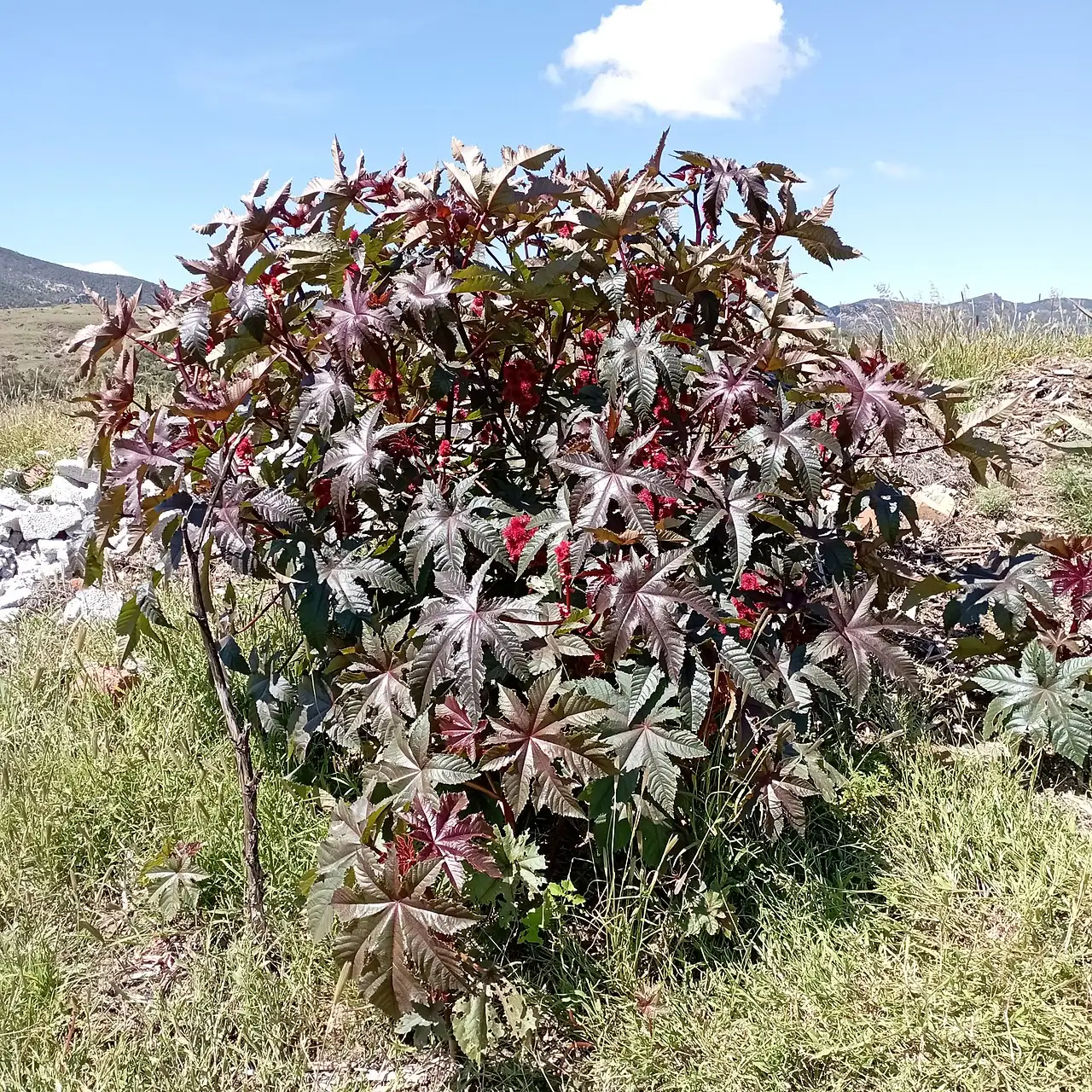
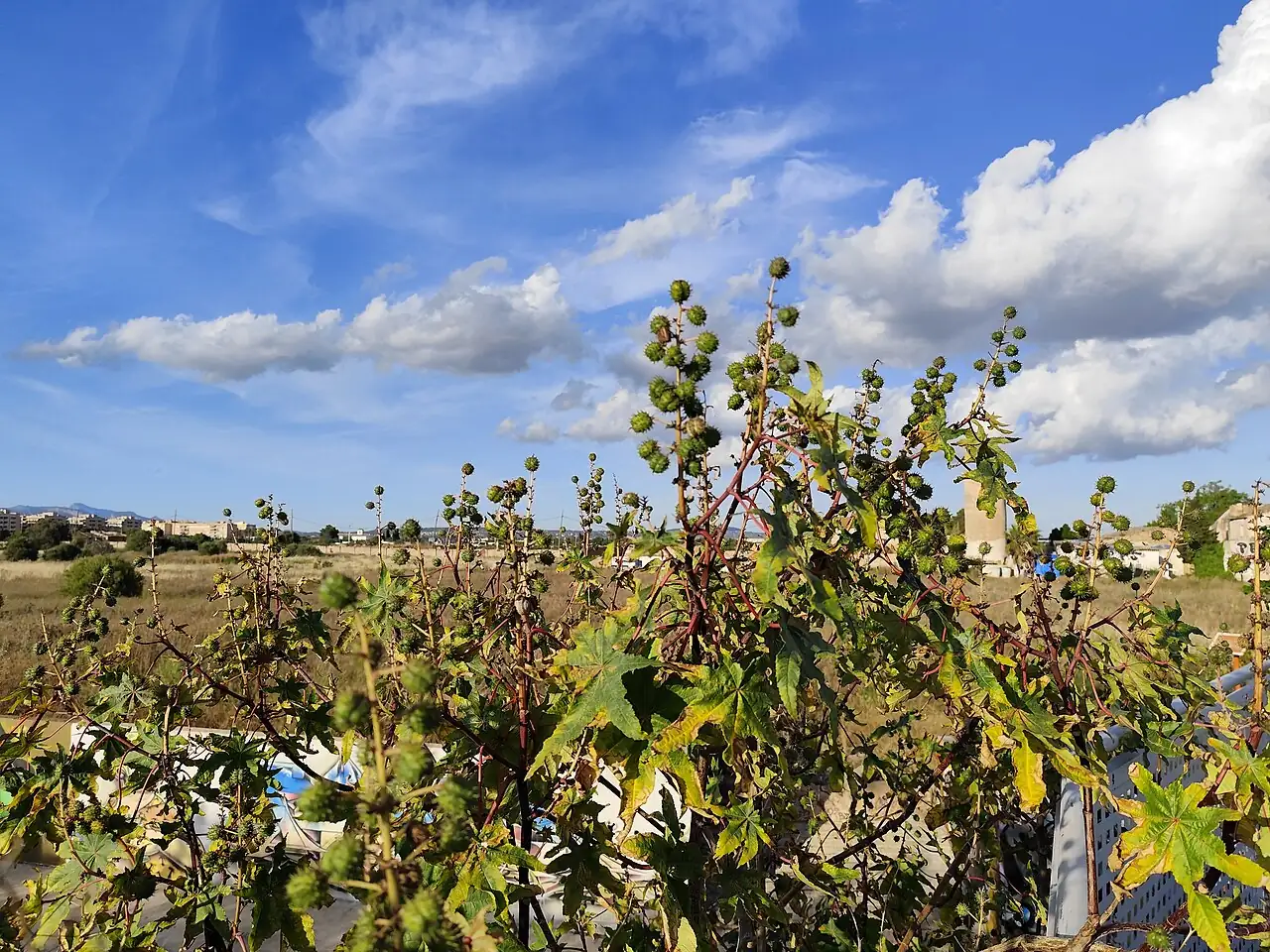
- Size: Typically 1–3 m (3–10 ft) tall in one season; in frost-free climates it can reach up to about 5 m (16 ft) with a broad, open spread.
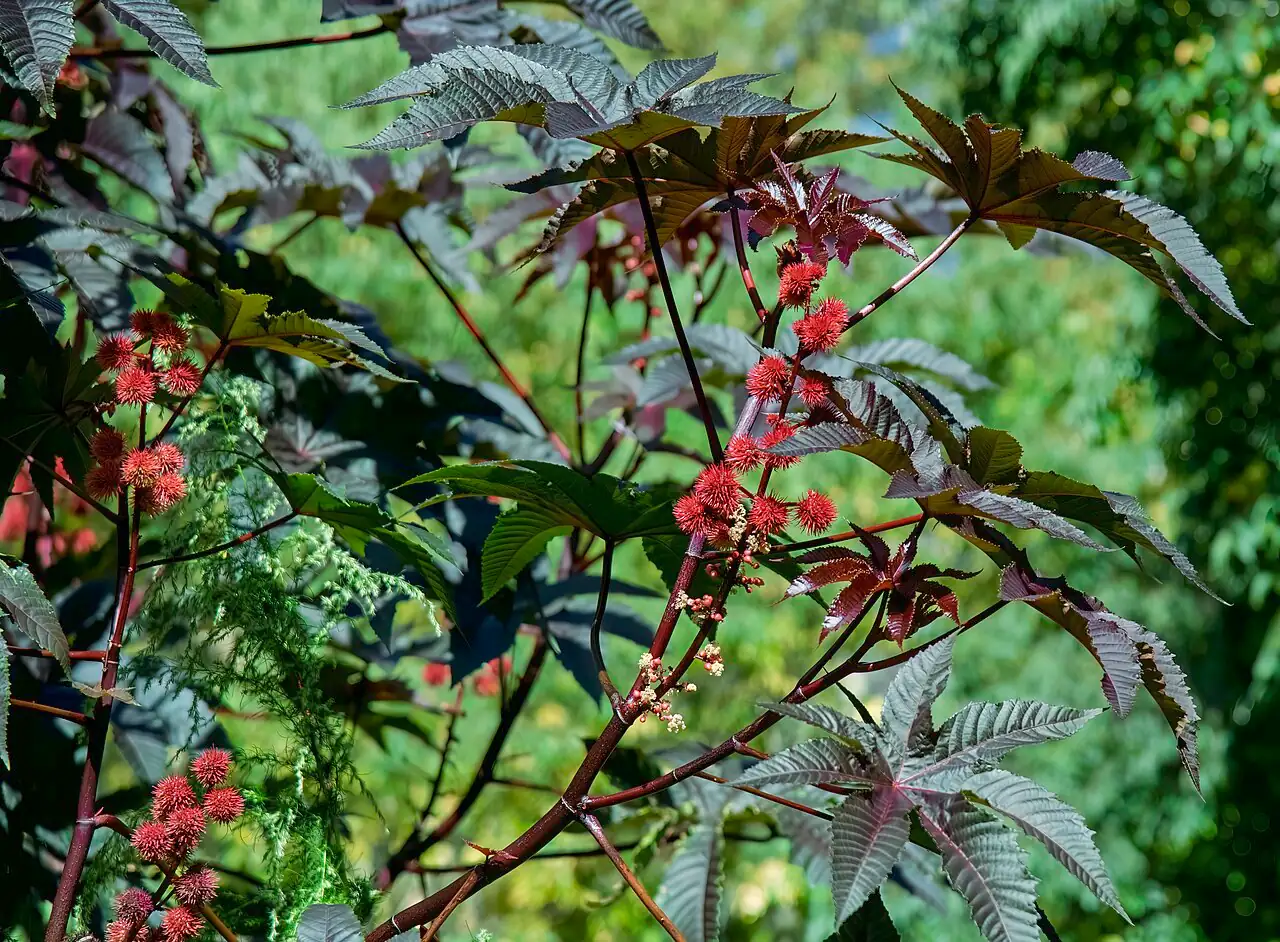
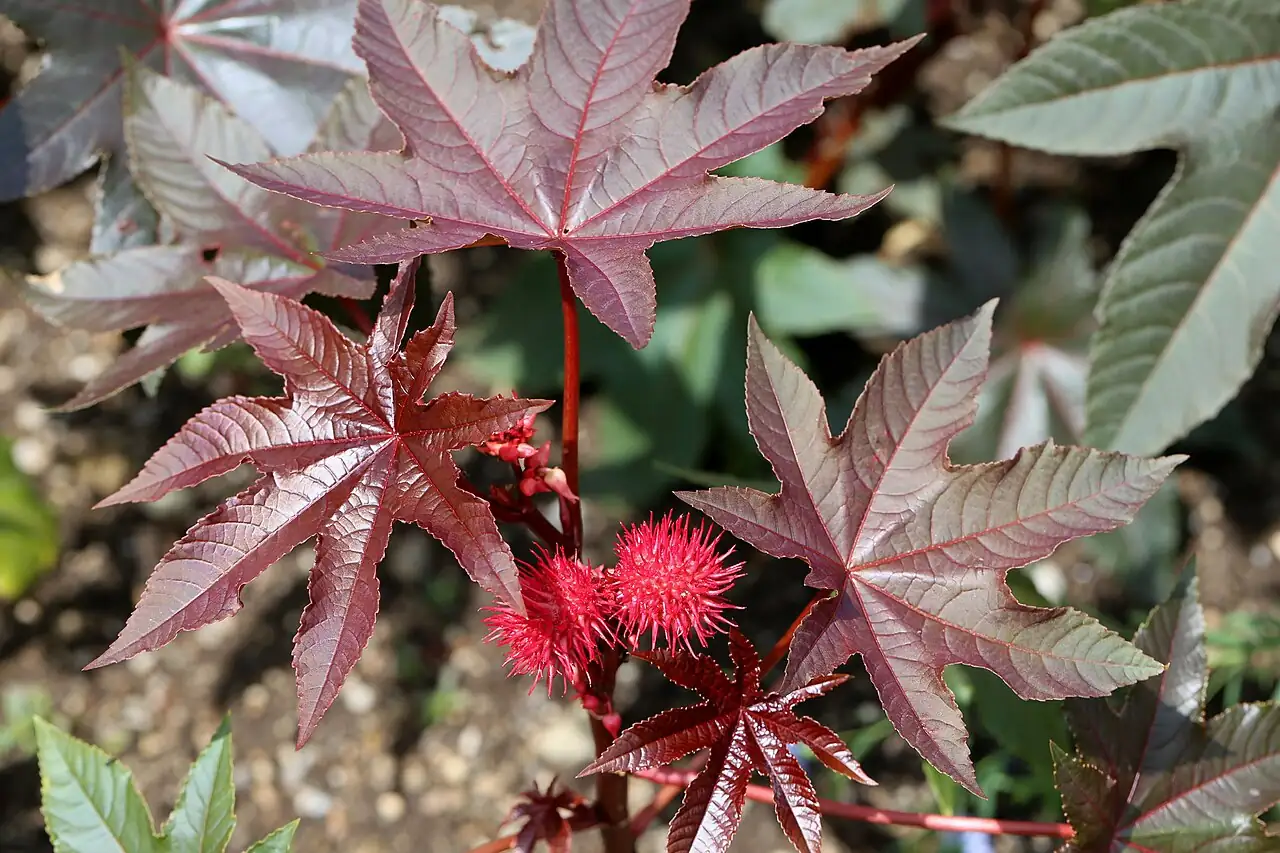
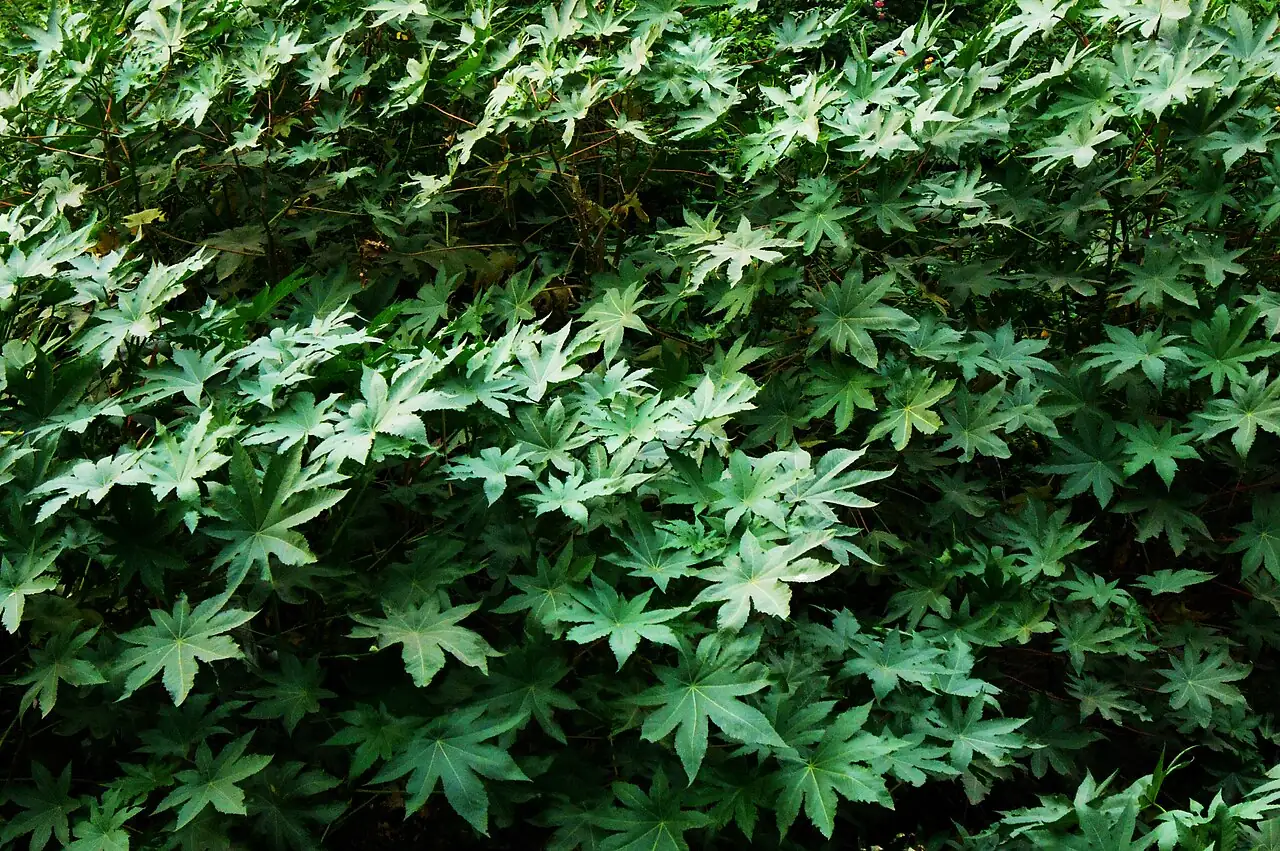
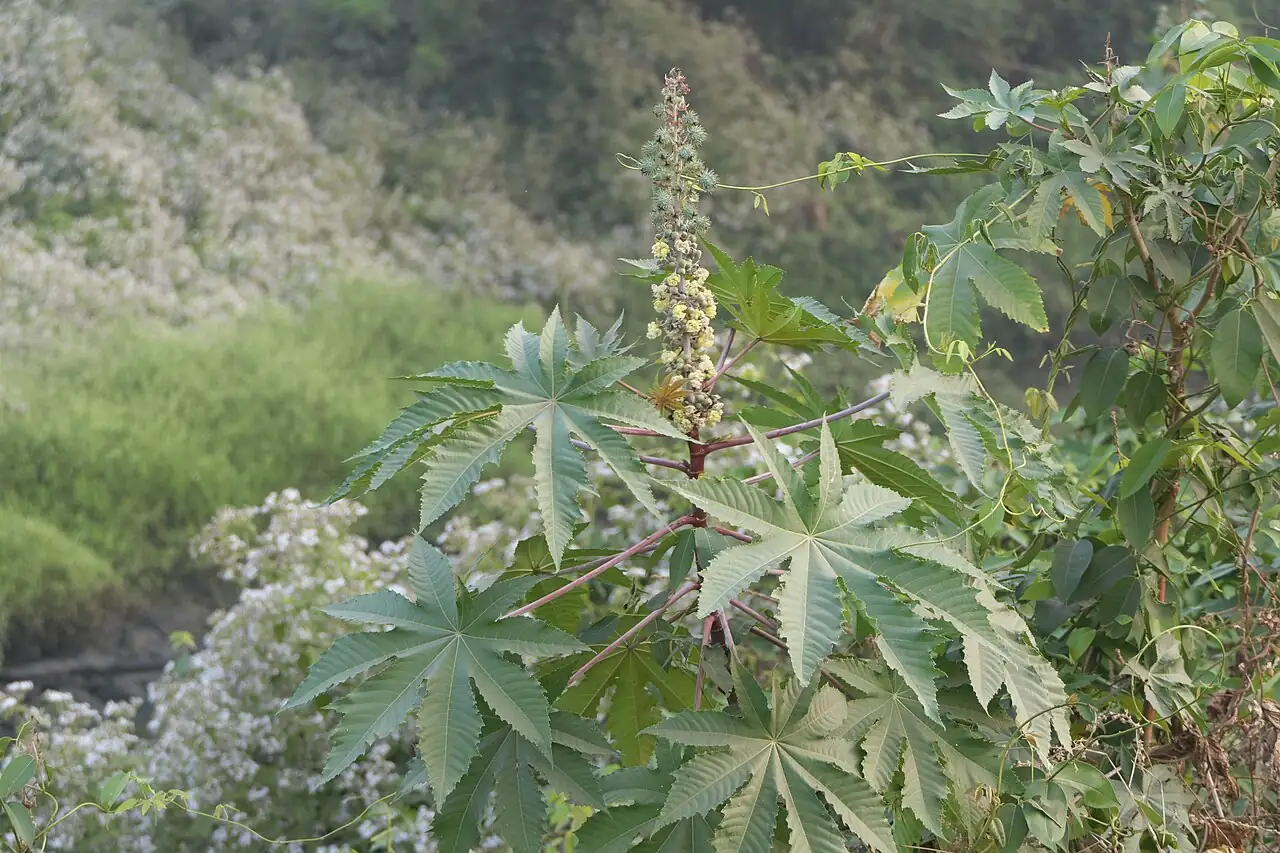
- Foliage: Leaves are alternate, very large and shield-like (peltate), usually round in outline with deep palmate lobes (often cut to less than halfway toward the center). Depending on cultivar and sun exposure, foliage can be fresh green to rich reddish-purple, often with a glossy sheen that catches the light.
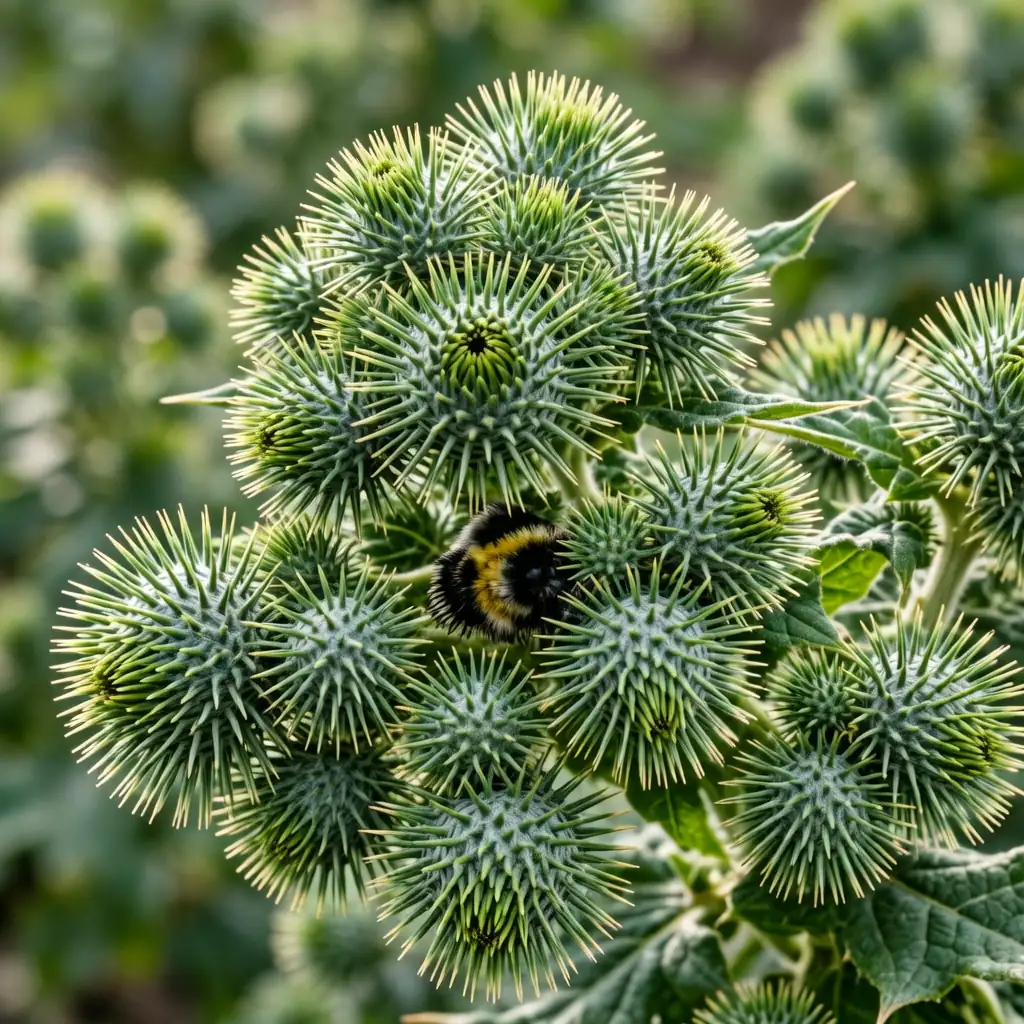
- Flower: Flowers are small and not showy, carried in upright panicles. The plant is monoecious: female flowers sit above male flowers on the same spike. After flowering, it forms round capsules covered in soft spines; these split open at maturity to release distinctive, mottled seeds.
- Flowering Season: May–August (late spring to summer; varies by climate)
- Growth Habit: Vigorous, upright annual in climates with frost; short-lived perennial that becomes a perennial shrub or small tree where winters are frost-free.
Environment
Sunlight
Full sun to light shade; strongest growth and best foliage color in full sun.
Temperature
Warm-loving; grows best around 20–35°C (68–95°F). Frost-tender—injury occurs at about 0°C (32°F) and below.
Humidity
Adaptable; happy in average outdoor humidity, with especially strong growth in warm, moderately humid conditions.
Soil
Adaptable to many soil types and pH levels, but performs best in fertile, well-drained soil. Avoid waterlogged ground.
Placement
Outdoors in a sunny, sheltered spot (especially if grown for its big leaves). In warm regions it may also appear naturalized on disturbed ground and riverbank alluvial soils.
Hardiness
Frost-tender; typically USDA Zone 9–11 (protect from freezing).
Care Guide
Difficulty
Easy in warm weather with sun and moisture, but not frost-hardy. The biggest challenge is safety: seeds are extremely poisonous, so it’s not a casual plant for homes with kids or curious pets.
Buying Guide
Pick plants with sturdy stems and clean, fully expanded leaves. Avoid any with wilting, soft/blackened stems (possible rot), or obvious pest outbreaks. If buying seeds, use reputable suppliers and store the seed securely away from children and pets.
Watering
Water regularly while establishing. Once growing strongly, aim for evenly moist soil (not soggy). Let the top 2–5 cm (1–2 in) dry slightly between waterings. Container plants dry faster and may need more frequent watering during hot spells.
Fertilization
Feed lightly to moderately during active growth. Use a balanced fertilizer (for example 10-10-10) about every 3–4 weeks, or apply a slow-release fertilizer according to the label. Don’t overdo nitrogen—too much can cause overly soft, weak growth.
Pruning
Very little pruning is required. Remove damaged leaves as needed. To reduce self-seeding, cut off maturing fruiting clusters before they dry and split. In frost-free climates, you can cut back to manage height and encourage branching—wear gloves and avoid contact with sap and seeds.
Propagation
Primarily grown from seed. Sow after the last frost when conditions are reliably warm; soaking seeds for 12–24 hours can improve germination. Keep seeds and seedlings well out of reach of children and pets.
Repotting
For container plants, repot in spring when roots fill the pot. Move up one size (about 5–10 cm / 2–4 in wider) into a heavy, stable container with good drainage.
📅 Seasonal Care Calendar
Spring: sow or transplant after frost; start regular watering and feeding. Summer: peak growth—stake in windy sites and watch moisture. Autumn: capsules ripen; remove if you want to prevent self-seeding. Winter: plants die back with frost; in frost-free areas, reduce watering and prune to shape.
Pests, Diseases & Safety
Common Pests & Diseases
Usually tough. Watch for spider mites in hot, dry weather, aphids on tender new growth, and occasional leaf spots during prolonged wet conditions. Boost airflow, avoid overhead watering when possible, and use horticultural soap or other integrated pest management methods if needed.
Toxicity
Extremely toxic if ingested—seeds contain ricin. Keep away from children and pets; never use any parts as food. Sap can irritate skin and eyes; wear gloves when handling and wash hands afterward.
Culture & Symbolism
Symbolism: Often linked with boldness and dramatic, tropical-style garden design thanks to its oversized, striking foliage.
History & Legends: Cultivated for centuries as an oilseed crop. Castor oil is extracted through processing, but the raw seeds themselves remain dangerously poisonous—an important reminder that “useful” and “safe” are not the same thing in plants.
Uses: A major oilseed plant. Processed castor oil is widely used in industrial applications; seed byproducts may be used as fertilizer and for other industrial purposes (such as feedstock for activated carbon) where regulations allow and safe handling is ensured.
FAQ
Is castor bean safe to grow in a home garden?
It can be grown as an ornamental, but it’s high-risk around children and pets because the seeds are extremely poisonous. If you can’t guarantee secure placement and careful cleanup of seed pods, choose a safer plant.
Why did my castor bean die after autumn?
Castor bean is frost-tender. In climates with freezing temperatures it behaves like an annual and is damaged or killed at around 0°C (32°F) and below.
Fun Facts
- Although native to northeastern Africa and parts of South Asia, castor bean is now widespread across tropical and warm-temperate regions.
- In frost-free climates it can persist as a shrub or small tree and may naturalize on disturbed ground and along rivers.
- The round, softly spiny capsules split open when mature, revealing beautifully patterned seeds.
- Given enough warmth and time, it can reach about 5 m (16 ft) tall.
- Despite its huge industrial value, the raw seeds are among the most poisonous commonly encountered in gardens.