
Plant Features
- Size: Typically about 10–30 cm (4–12 in) tall and 20–60 cm (8–24 in) wide in containers over time. When buying, a compact plant around 5 cm (2 in) tall or less is often ideal for small pots.
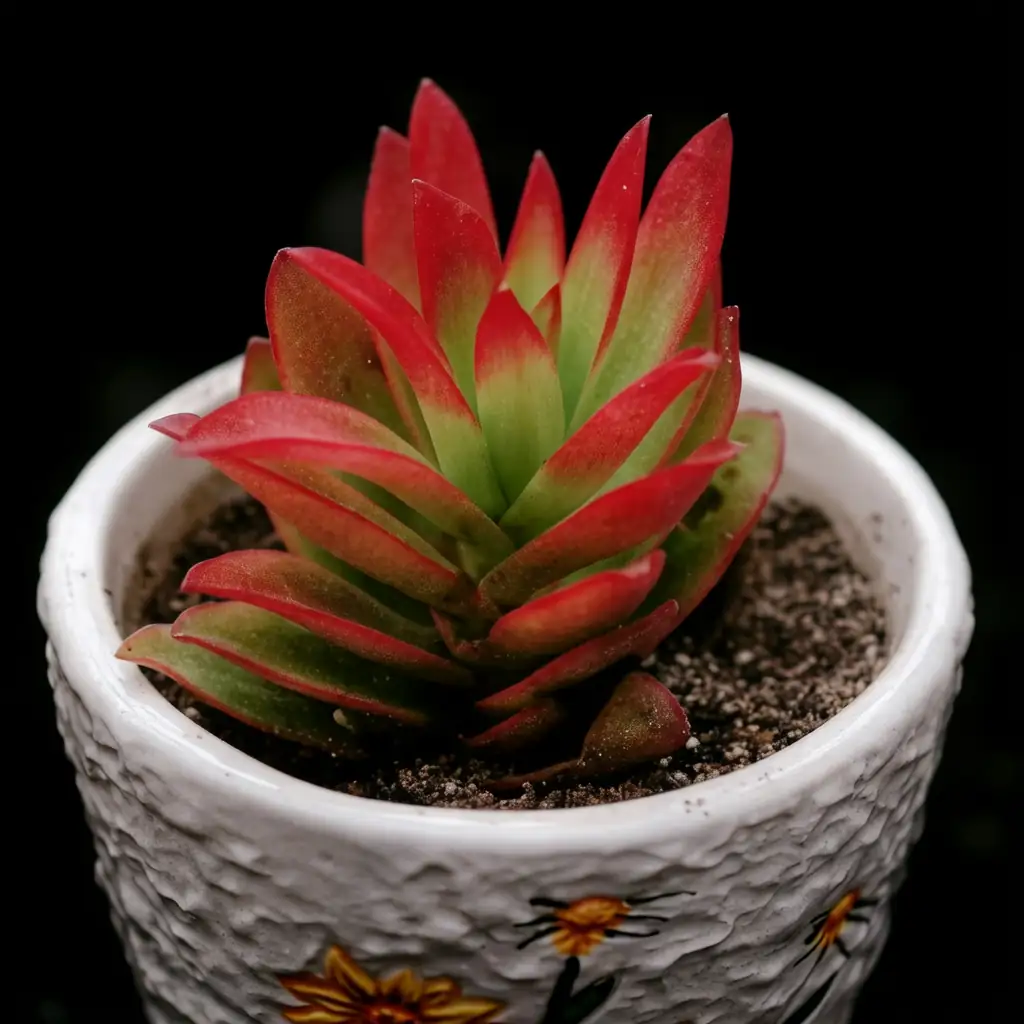
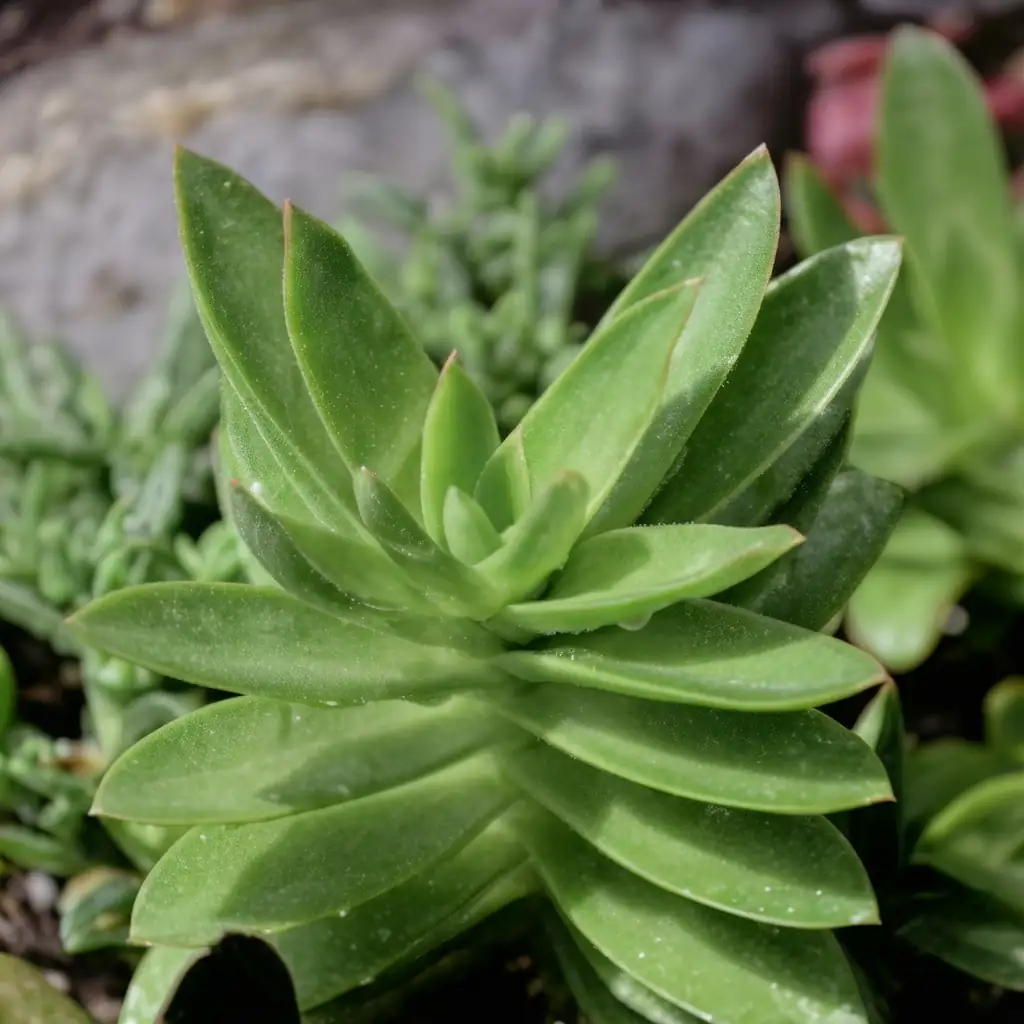
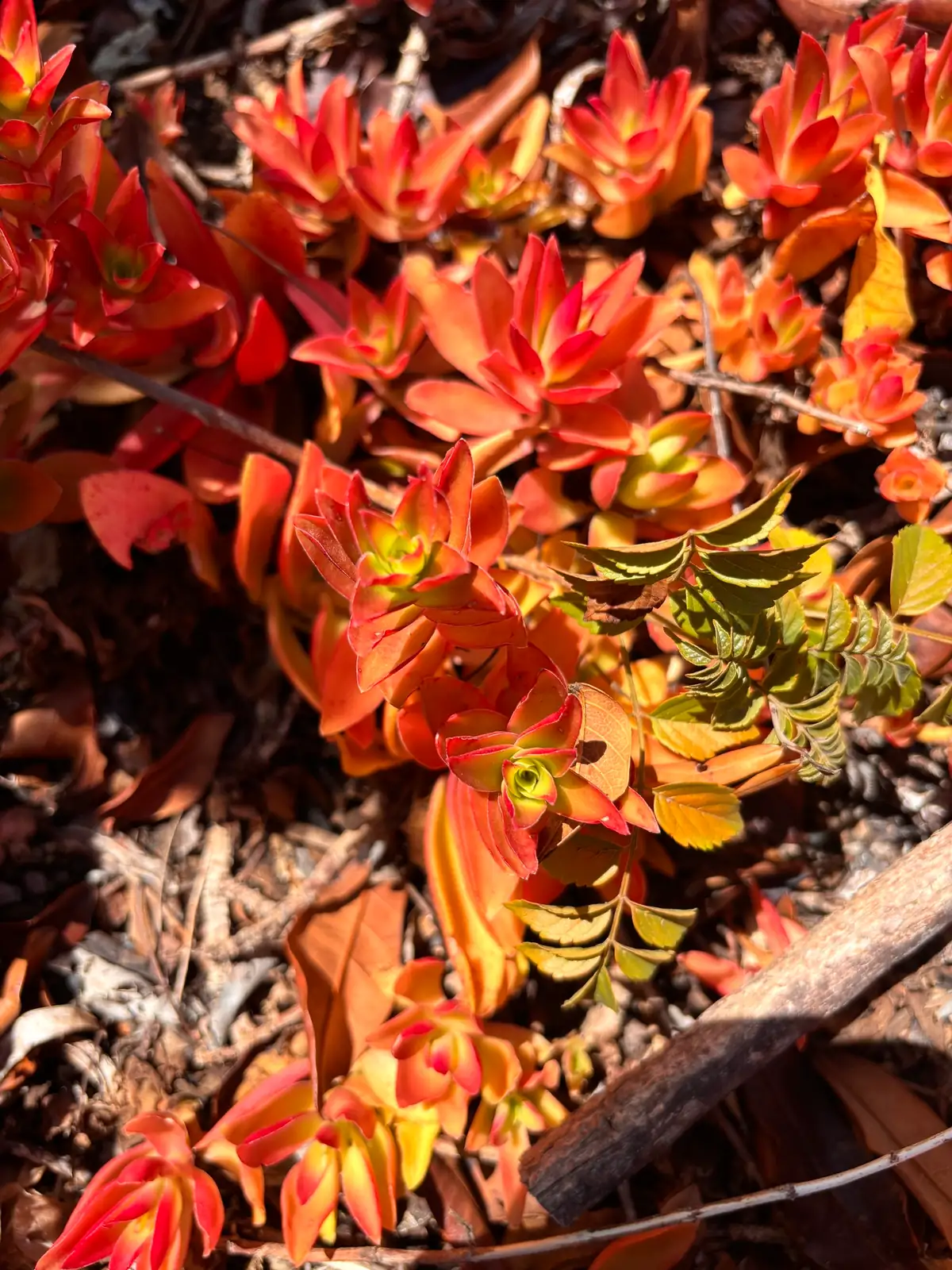
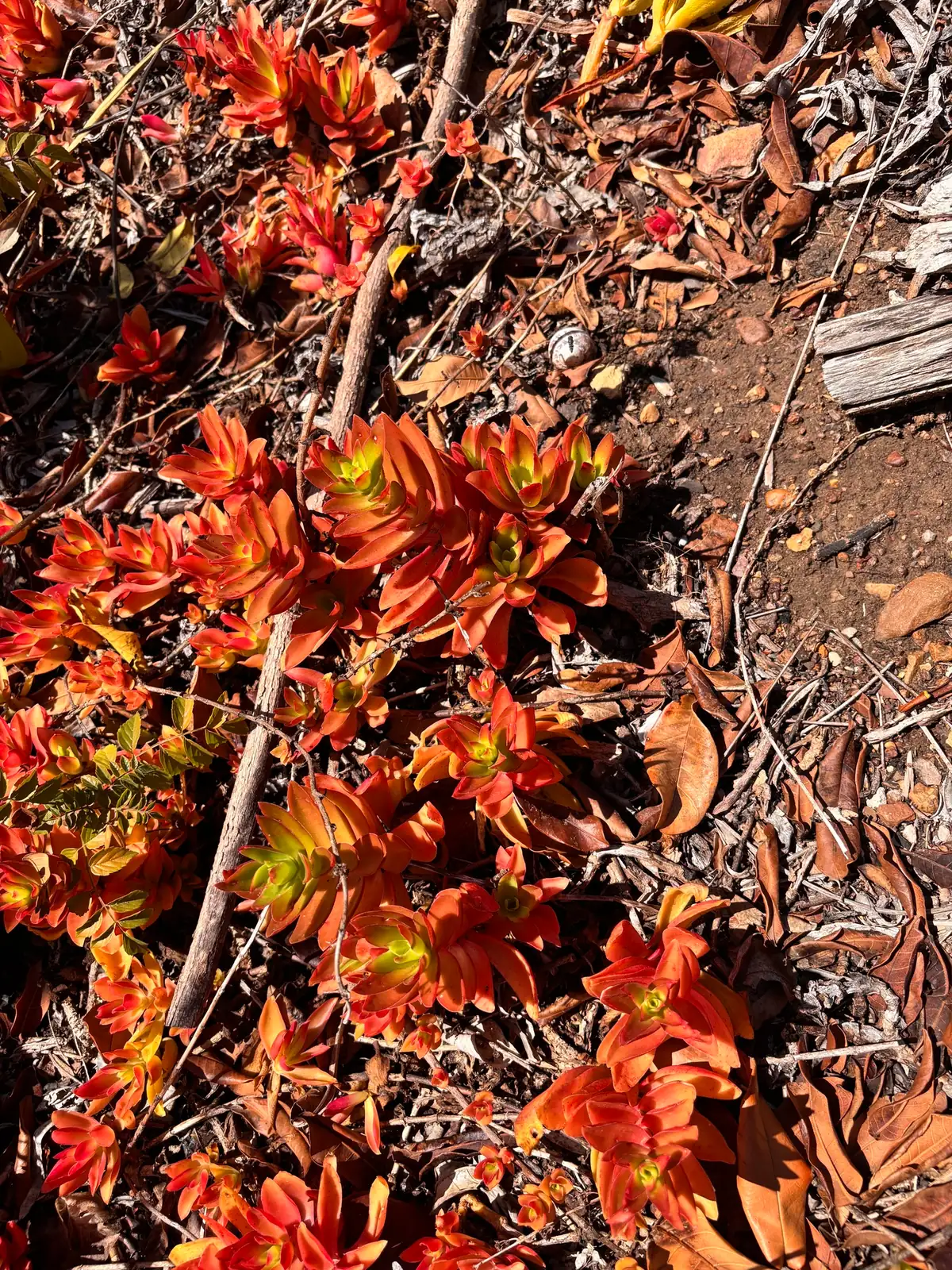
- Foliage: Dense, fleshy, opposite leaves packed tightly along the stems, creating a stacked, architectural look. Color is gray‑green to green in warmer seasons or milder light, then reddens from the margins inward under stronger light and bigger day–night temperature swings—often becoming orange‑red to vivid scarlet in cool, bright autumn/winter conditions.
- Flower: On mature plants, small star-shaped flowers can appear in clusters, usually white to pale pink. Blooming is somewhat variable and depends on conditions, but it’s most commonly seen in autumn.
- Flowering Season: Autumn (Fall)
- Growth Habit: Low, branching perennial succulent with upright-to-spreading stems that become creeping/trailing with age. Forms a dense, mat-like clump and can spill slightly over the pot edge.
Environment
Sunlight
Bright light to full sun for best red color. Indoors, give the brightest window you have (east or south-facing is ideal). Outdoors, acclimate gradually to prevent scorch; in extreme heat, a little afternoon shade can help.
Temperature
Grows best at 18–24°C (64–75°F). Keep above 8°C (46°F) in winter. Not frost hardy; if temperatures dip toward 5°C (41°F) or below, keep the potting mix dry and stop watering to reduce rot risk.
Humidity
Prefers dry air and good ventilation. Persistently high humidity, wet foliage, and still air make rot and leaf spotting more likely.
Soil
Very free-draining cactus/succulent mix. A practical blend is potting mix (ideally peat-free) cut with coarse sand/grit/perlite; always use a pot with drainage holes. Avoid heavy, water-retentive soil.
Placement
Sunny windowsill, bright balcony, or beside a very bright floor-to-ceiling window. Avoid dim rooms, rain-soaked outdoor corners, and stuffy, poorly ventilated spots—especially in cool weather.
Hardiness
Frost tender; roughly USDA Zone 10–11 for year-round outdoor growth. Protect from frost and prolonged cold.
Care Guide
Difficulty
Easy to moderate. It’s forgiving about missed waterings, but not forgiving about soggy soil or cold wet conditions. Also, it can sun-scorch if moved into intense sun too suddenly.
Buying Guide
Choose a compact, symmetrical, sturdy plant with thick, tightly packed opposite leaves and firm stems—often around 5 cm (2 in) tall or less is ideal for small containers. Avoid plants with a mushy base, blackened/rotting roots, scars from damage, or visible pests (especially scale/whitefly). After bringing it home, place it in bright light with airflow, keep it out of humid corners, and don’t let rain soak the pot.
Watering
Soak thoroughly, then let the mix dry out well before watering again—this plant thrives on a “drench and dry” rhythm. In spring (active growth), watering is often about once a week if the mix dries quickly; in summer, many growers reduce to about every 2–3 weeks (less in heatwaves if the plant is resting, more only if it’s actively growing and drying fast). In autumn, water lightly when dry (often about weekly in bright, mild conditions). In winter, keep it very bright and water sparingly; keep the mix mostly dry, and if temperatures are near/below 5°C (41°F), stop watering entirely. Black, soft leaves are a classic sign of rot from excess moisture or poor drainage.
Fertilization
Feed about once a month during active growth with a diluted fertilizer. A balanced-to-bloom-leaning, lower-nitrogen option (for example, 15-15-30) at low strength works well. Do not fertilize during cold, low-light winter periods.
Pruning
During spring repotting, remove dead basal leaves and trim overly long roots. Pinch or trim stems that are getting leggy or spilling too far over the pot; the cut pieces make excellent propagation material.
Propagation
Very easy from stem cuttings. Take a firm tip cutting about 3–6 cm (1.2–2.4 in) long with roughly 6–7 leaves, let the cut end callus, then insert into a gritty, sandy medium. Keep warm and bright (about 18–22°C / 64–72°F); rooting typically takes about 2–3 weeks (around 14–21 days).
Repotting
Repot annually in early spring or whenever the plant outgrows its pot. A 10–12 cm (4–5 in) pot is a common size for small plants; always prioritize drainage. While repotting, tidy away dead leaves at the base and shorten overly long roots.
📅 Seasonal Care Calendar
Spring: repot, tidy, and take cuttings; water lightly as growth resumes. Spring–Summer: strong light; water only after drying; feed monthly; in extreme sun/heat, acclimate and consider light afternoon shade. Fall: best seasonal color and possible flowering; late fall is also a great time for cuttings. Winter: keep very bright and above 8°C (46°F); reduce watering sharply and keep on the dry side—stop watering if near/below 5°C (41°F).
Pests, Diseases & Safety
Common Pests & Diseases
Can develop rust or leaf spot when airflow is poor or foliage stays damp; remove affected leaves, keep the plant drier, and improve ventilation (fungicides labeled for ornamentals can be used if needed). Common pests include whitefly and scale; treat early by wiping off pests and using insecticidal soap or horticultural oil, repeating as required and following label directions.
Toxicity
Not consistently documented as toxic for this cultivar. Still, it’s best treated as “do not eat”: ingestion may cause mild stomach upset in pets or people, so keep out of reach of children and animals.
Culture & Symbolism
Symbolism: Often linked with a “prosperous home” feeling, plus themes of passion and boldness—very fitting for a plant that turns fiery red in the cool season.
History & Legends: No specific history or legends were provided in the sources; it’s mainly known as a popular garden/houseplant cultivar selected for intense color.
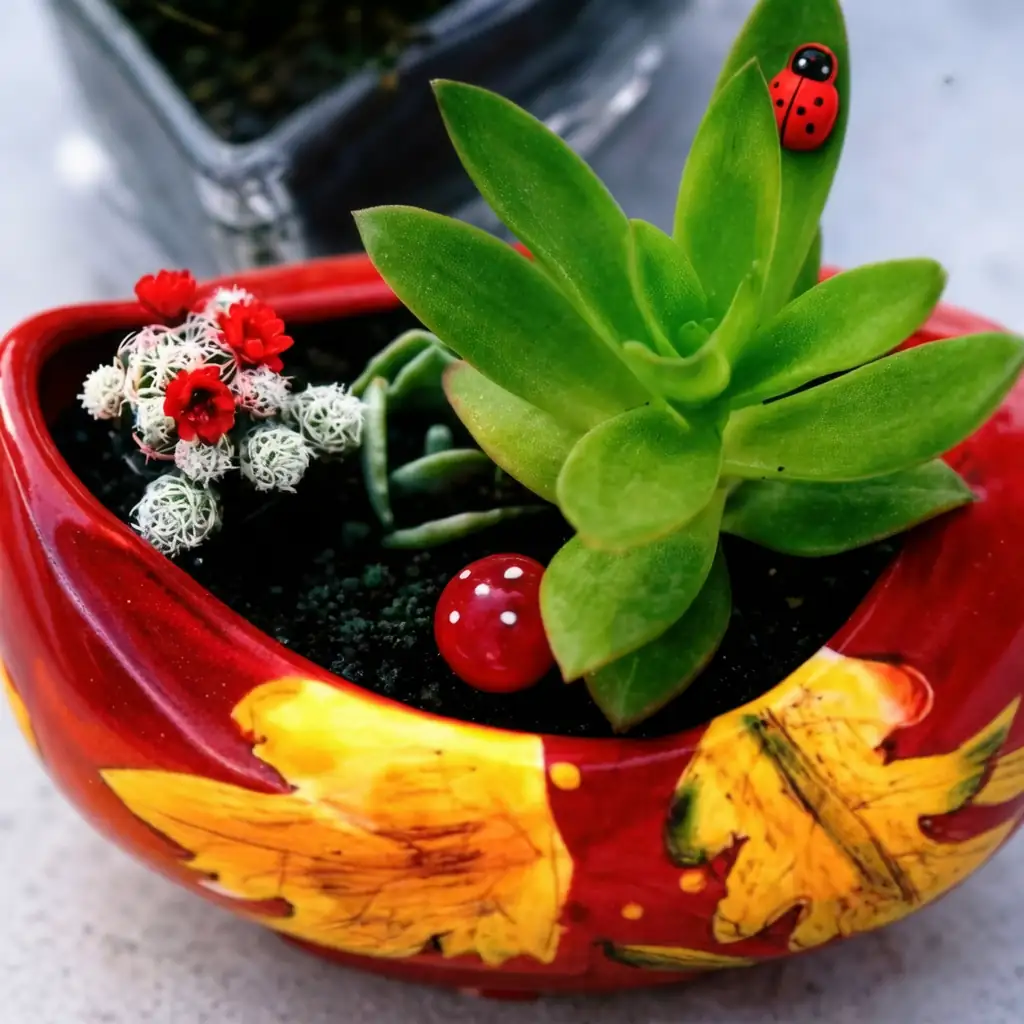
Uses: Primarily ornamental. A favorite for bright windowsills, balconies, and sunny indoor displays, especially for autumn/winter color and festive arrangements.
FAQ
How do I make Campfire Crassula turn red?
Give it much brighter light (some direct sun is ideal) and cooler autumn/winter conditions with a noticeable day–night temperature difference. Strong light plus cooler nights is what pushes the foliage from gray‑green to orange‑red and scarlet.
Why are the leaves turning black and soft?
That’s usually rot from excess moisture—watering too often, poor drainage, or a damp, poorly ventilated spot (especially in cool weather). Move it to brighter light with better airflow, let the mix dry thoroughly, reduce watering, and remove any rotting tissue.
How do I choose a good plant in the store, and what should I do after bringing it home?
Pick a compact plant with firm stems and thick, tightly stacked leaves—avoid mushy bases, blackened roots, and visible pests. After purchase, place it in a bright window or sunny balcony, keep it away from humid corners, and don’t let rainwater saturate the pot.
Fun Facts
- Many growers think of it as a “winter color” succulent because its brightest reds usually show up in cool, bright seasons.
- The name ‘Campfire’ comes from the flame-like red tones that develop under high light.
- It propagates so easily that a single trimming session can produce several new plants.
- It loves strong light, but can sunburn if moved from indoors to harsh sun too quickly—gradual acclimation makes all the difference.