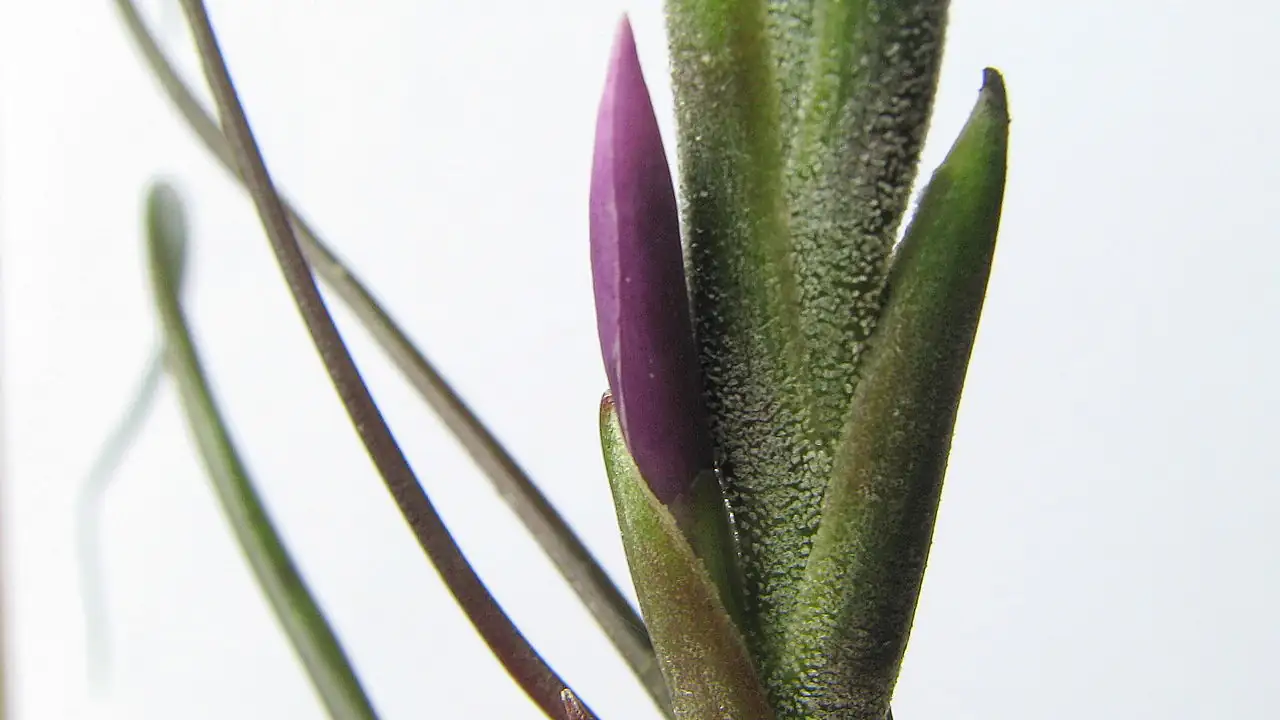
Plant Features
- Size: Typically 10–20 cm (4–8 in) tall; spread about 10–20 cm (4–8 in), depending on age and growing conditions.
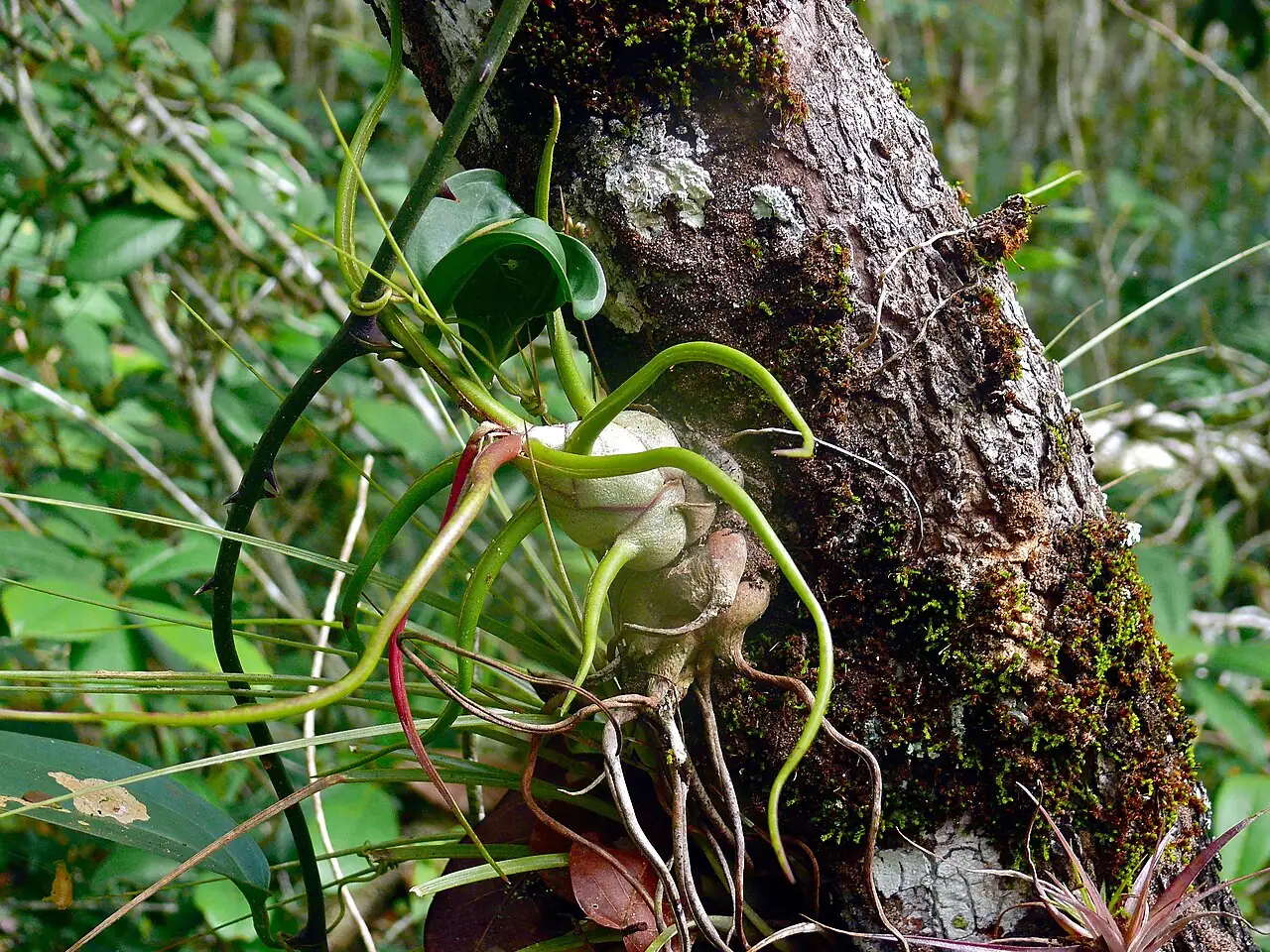
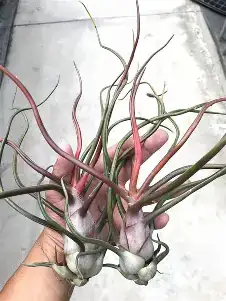
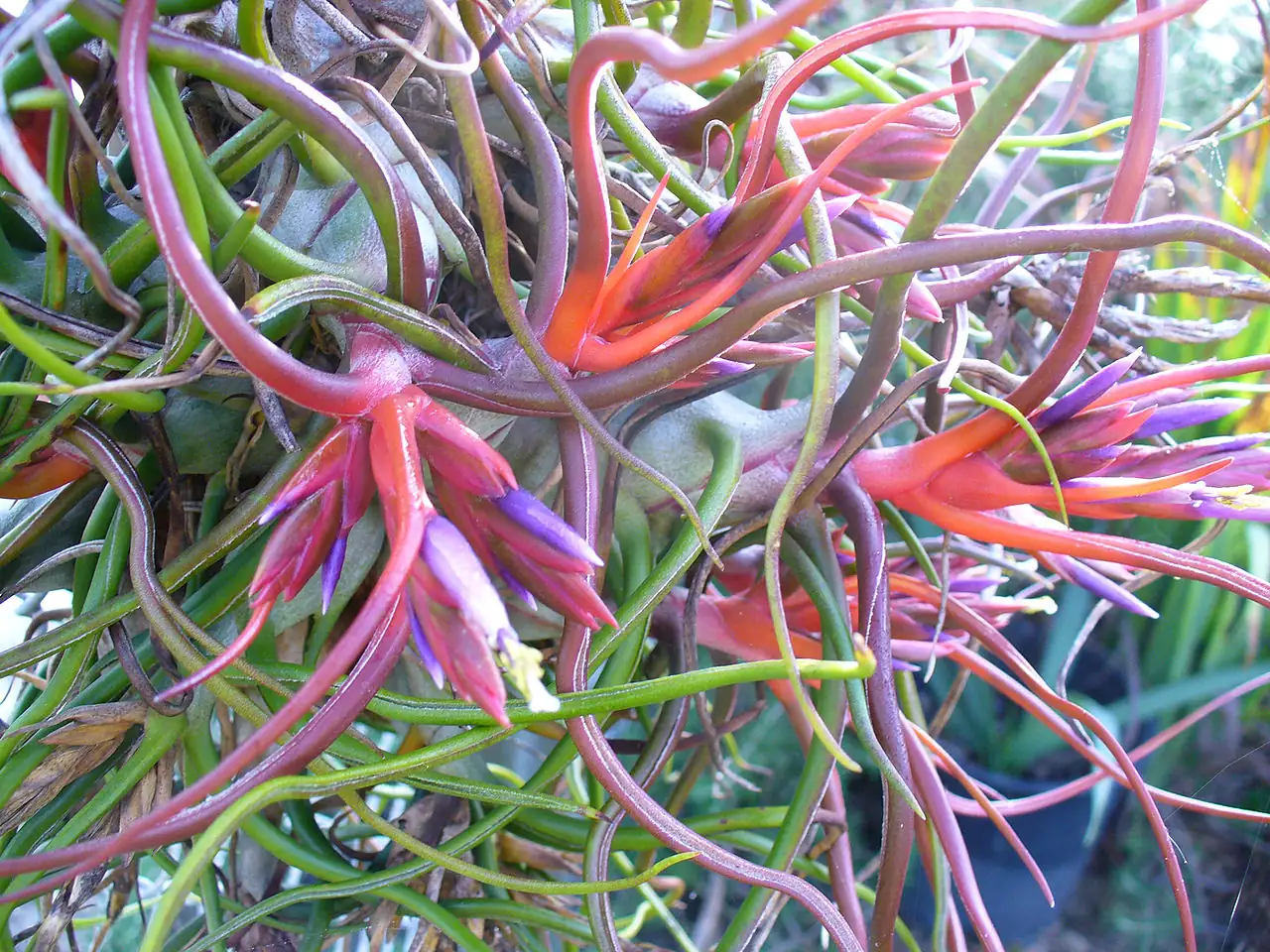
- Foliage: Slender, twisting, strap-like leaves emerge from a distinctly swollen, bulb-shaped base, creating a spider- or octopus-like silhouette. Leaves may take on a reddish blush as flowering approaches.
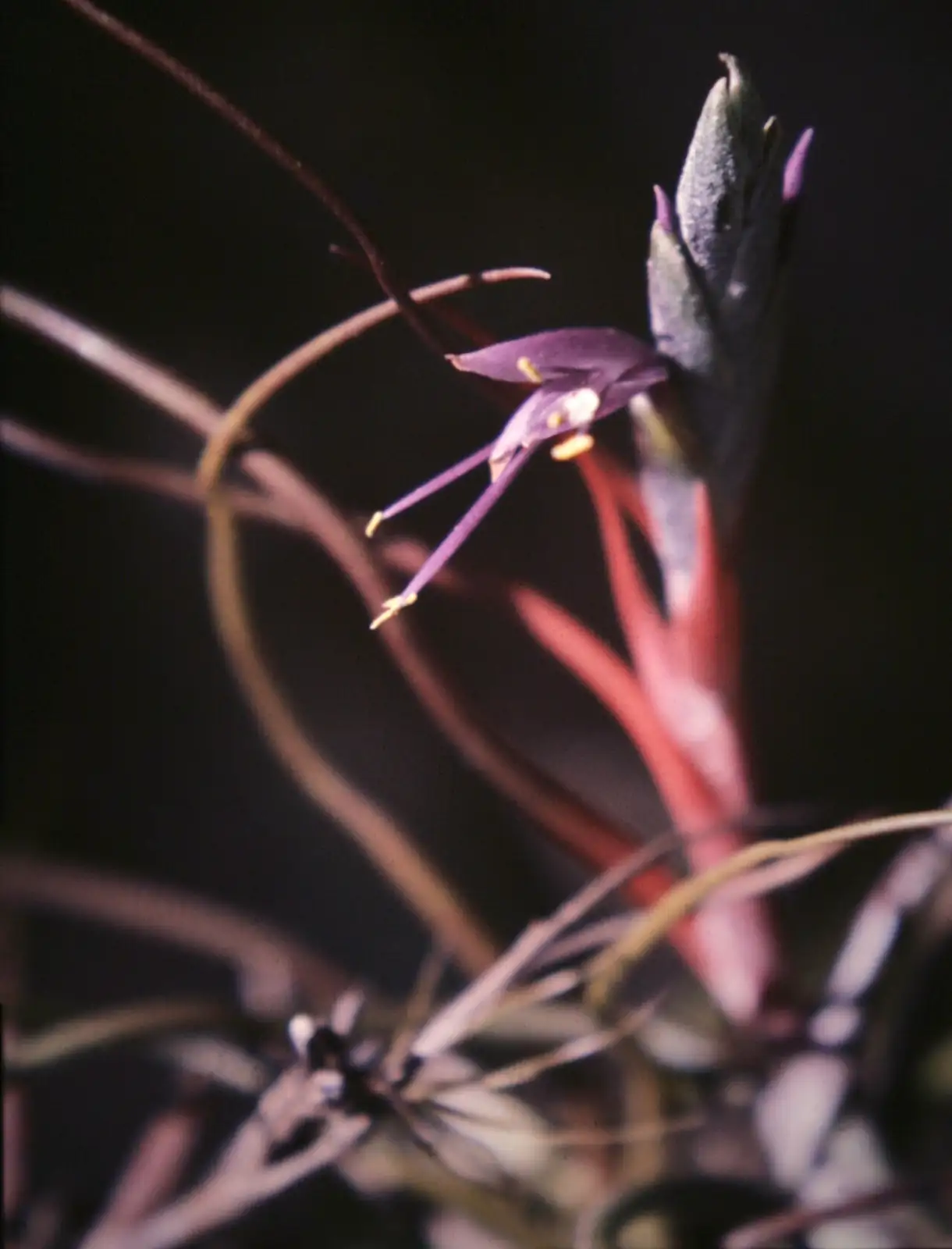
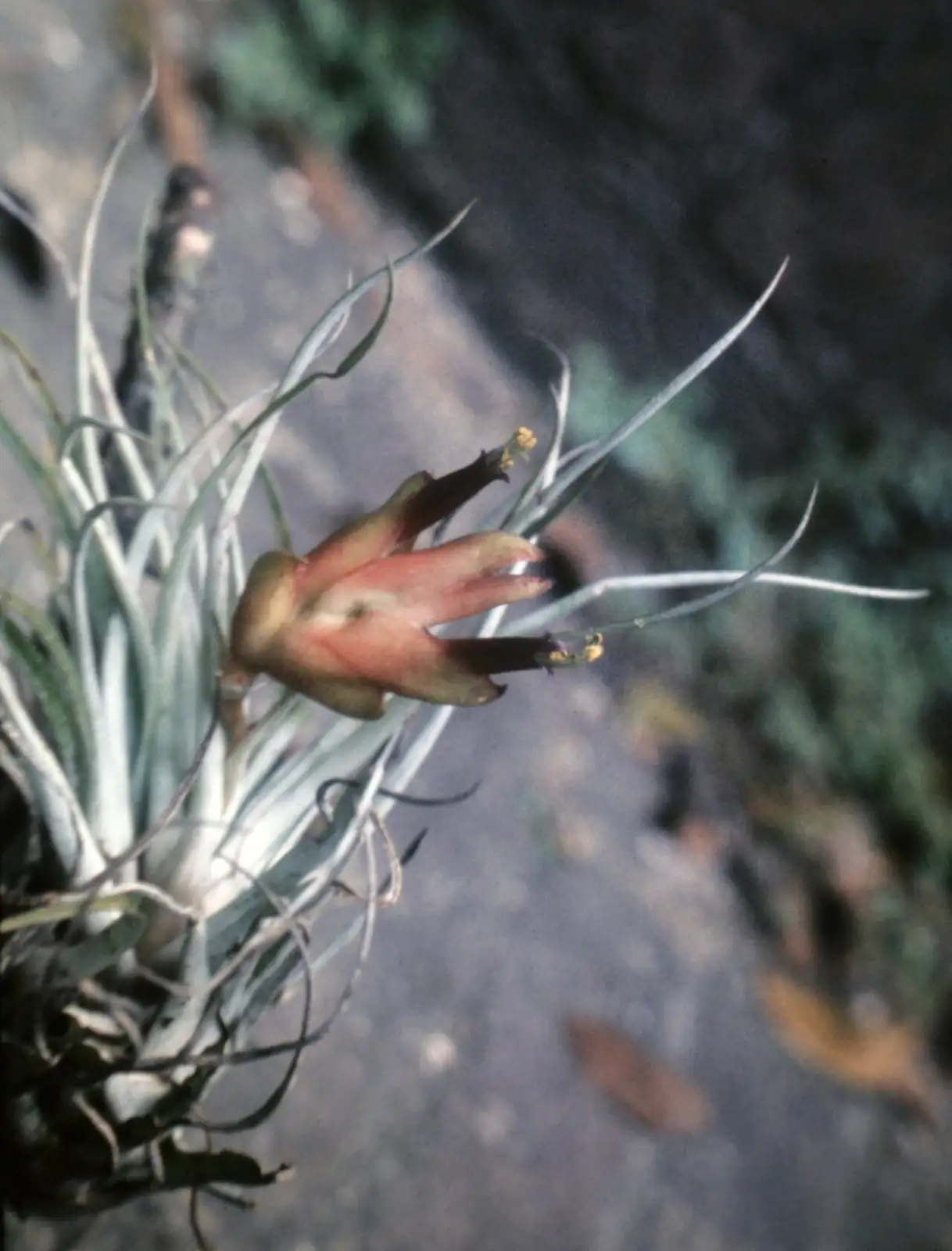
- Flower: Flowers emerge from the center on a short inflorescence; blooms are commonly pink to purple. Color changes in the foliage (a red blush) often accompany bud development.
- Flowering Season: Late winter to early spring (often early spring indoors).
- Growth Habit: Epiphytic, clumping air plant with a bulbous base and curling leaves; produces offsets (“pups”) over time.
Environment
Sunlight
Bright, indirect light is ideal; tolerates gentle morning sun. Avoid harsh midday sun, especially through window glass.
Temperature
Prefers 18–30°C (64–86°F); protect from chills below about 10°C (50°F).
Humidity
Moderate to high humidity, ideally around 50–70%, paired with strong airflow to prevent rot.
Soil
No soil needed (epiphyte). Mount on wood/cork, place in a slatted basket, or set on a breathable surface. Key rule: it should dry within a few hours after watering so moisture doesn’t sit in the bulb.
Placement
Near a bright east window or bright north light, or under grow lights. Bathrooms/kitchens can work well if ventilation is strong and the plant dries quickly after watering.
Hardiness
USDA Zone 10–12 (frost-tender; not hardy outdoors where freezing occurs).
Care Guide
Difficulty
Easy to moderate: the basics are simple (light + water), but success depends on excellent airflow and quick drying—especially around the bulbous base.
Buying Guide
Pick plants with a firm, plump base and clean, intact leaves. Avoid soft/mushy bulbs, blackened centers, or sour odors (classic rot signs). A light silvery coating from trichomes is normal and healthy.
Watering
Soak or rinse about 1–3 times per week depending on heat, light, and humidity. A common routine is a 15–30 minute soak in room-temperature water, then thoroughly shake out excess water. Dry the plant upside down or on its side so water can’t pool in the bulb. In cooler, darker seasons, water less often and prioritize fast drying.
Fertilization
Light feeding during active growth: use a bromeliad/air-plant fertilizer at about 1/4 strength every 4–6 weeks. Overfertilizing can cause weak, stretched growth.
Pruning
Only remove fully dead, brown leaves by gently pulling or trimming. Avoid cutting into green tissue near the base.
Propagation
Propagate via offsets (“pups”). Separate pups when they reach about 1/3–1/2 the size of the mother plant, or leave them attached to form an attractive clump.
Repotting
No repotting needed. If mounted, remount only when it outgrows its support or if the mount stays wet too long.
📅 Seasonal Care Calendar
Spring–summer: brighter light, more frequent watering, and occasional light feeding. Autumn–winter: reduce watering frequency, keep warm, maximize light, and make sure it dries quickly after any soak.
Pests, Diseases & Safety
Common Pests & Diseases
The biggest problem is rot caused by trapped water and poor airflow (often in the bulb/base). Occasional pests include mealybugs and scale; remove manually and/or use a gentle insecticidal soap, keeping product out of the plant’s wet center and ensuring it dries well afterward.
Toxicity
Generally considered non-toxic to people and pets, though it’s not meant to be eaten. Keep out of reach to prevent chewing (which can damage the plant).
Culture & Symbolism
Symbolism: Often linked with independence and adaptability—an iconic “no-soil needed” plant that thrives in creative displays.
History & Legends: Tillandsias are bromeliads that evolved specialized leaf scales called trichomes, which help them capture moisture and nutrients from the air. This allows them to live on trees without stealing from the host (they’re epiphytes, not parasites).
Uses: Ornamental houseplant for mounting on cork/driftwood, hanging arrangements, and open (well-ventilated) terrarium-style displays.
FAQ
Do I need to plant it in soil?
No—Tillandsia bulbosa is an epiphyte and should not be planted in regular potting soil. Mount it or place it somewhere airy so it dries quickly after watering.
Why is the base turning soft or dark?
That’s usually rot from water trapped in the bulb plus low airflow. Water less often, drain thoroughly, and dry the plant upside down or sideways so water can’t sit in the base.
Why are the leaves turning red?
A red blush is often normal, especially before blooming or under brighter light. If you also see bleaching or crispy tips, reduce direct sun and fine-tune watering and airflow.
Fun Facts
- That swollen “bulb” helps the plant store moisture—beautiful and practical, as long as you don’t let water pool inside it.
- Many Tillandsias make pups after flowering, slowly turning a single plant into a sculptural little cluster.