

Plant Features
- Size: Slender herbaceous climber; size depends heavily on moisture, competition, and available support, typically scrambling through surrounding vegetation rather than forming a self-supporting clump.
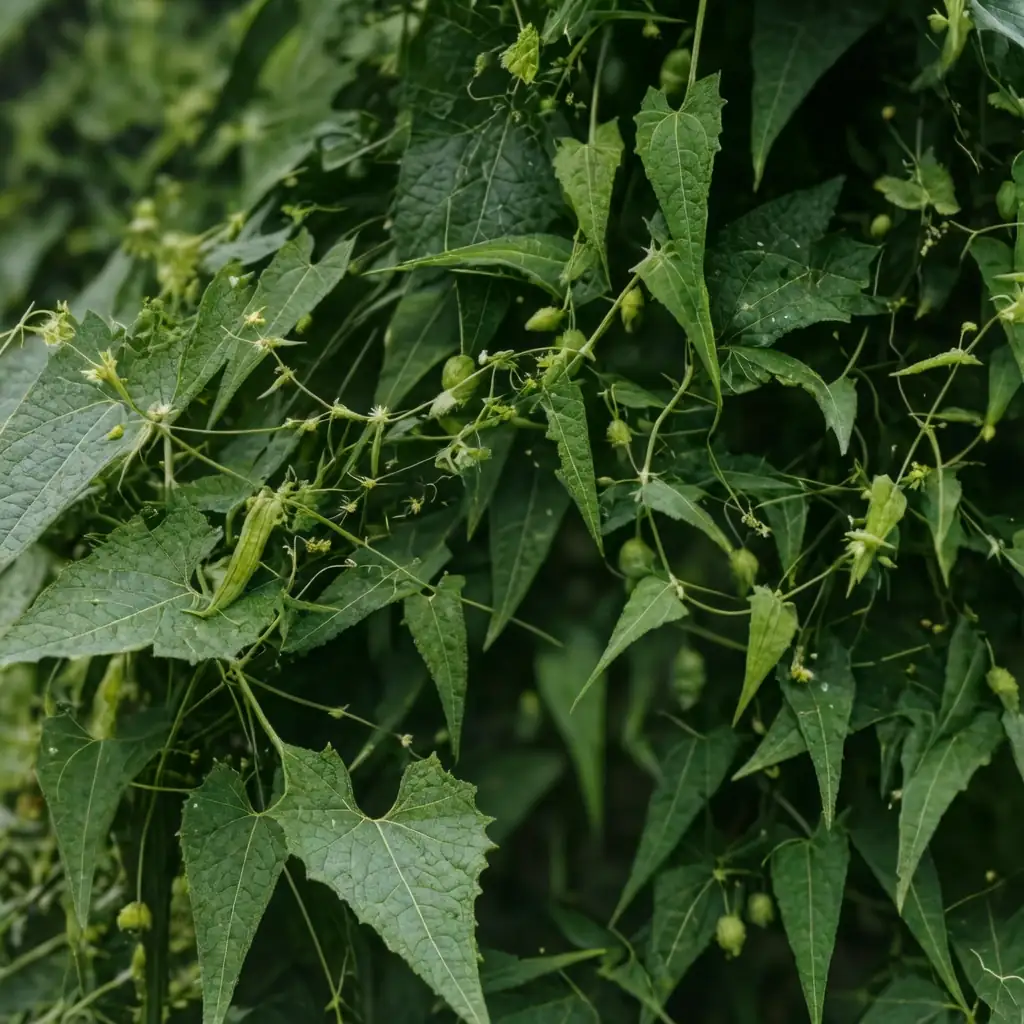
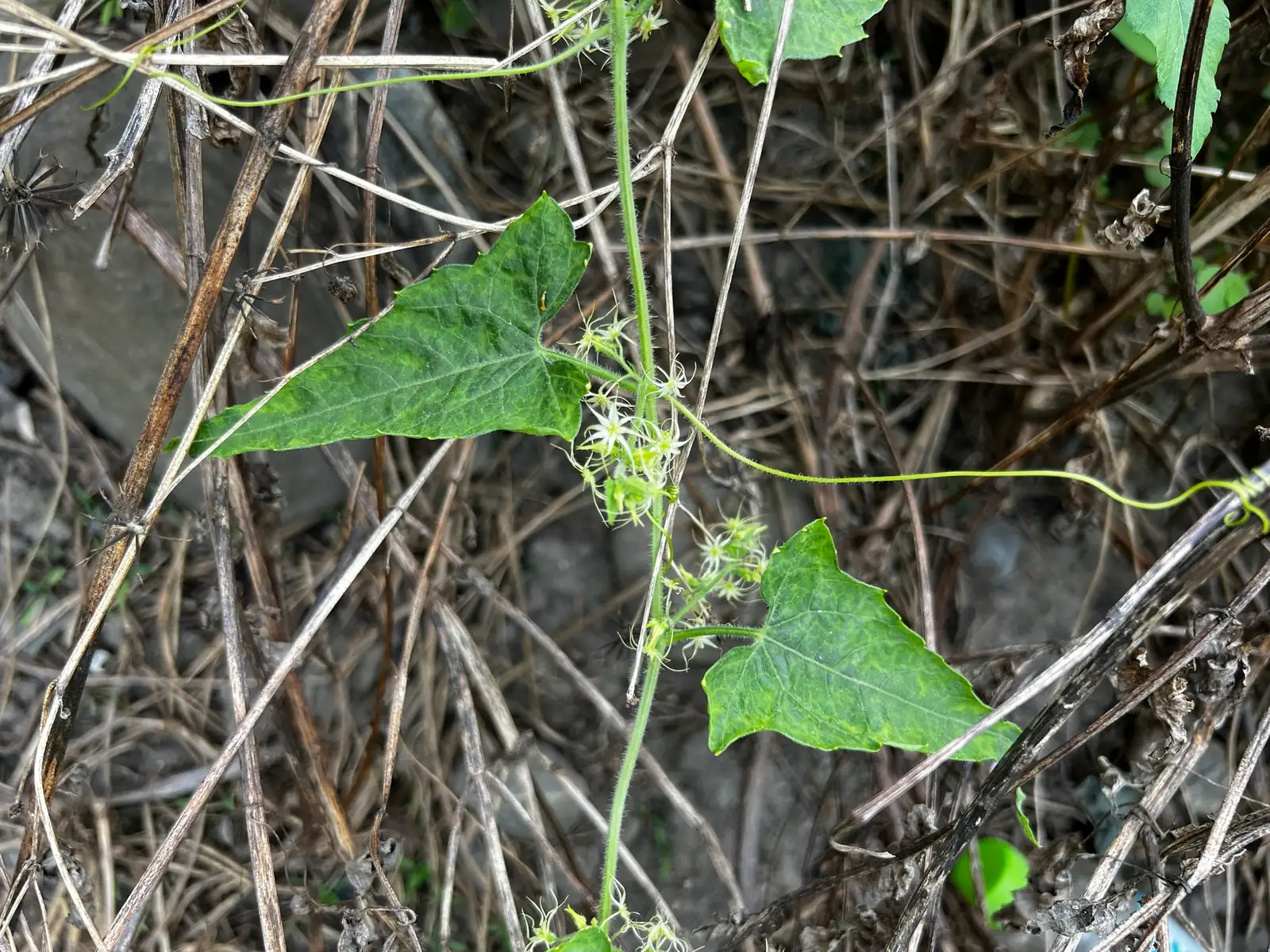
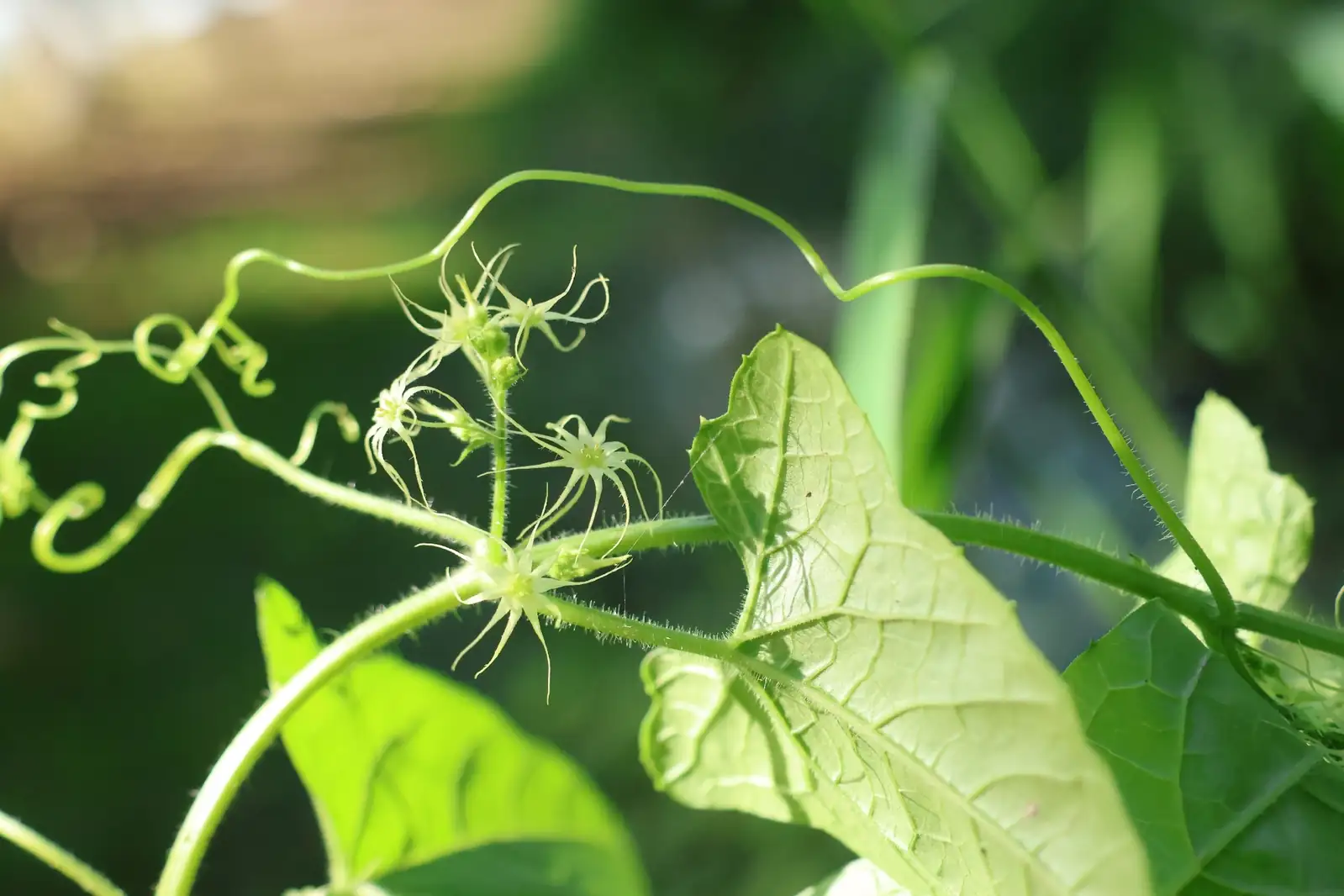
- Foliage: Stems are thin; leaf stalks (petioles) are slender and lightly hairy. Leaves are famously variable: often heart-shaped with a flatter base, but they may also be narrow heart-shaped to ovate, and sometimes shift toward lanceolate or triangular-lanceolate forms.
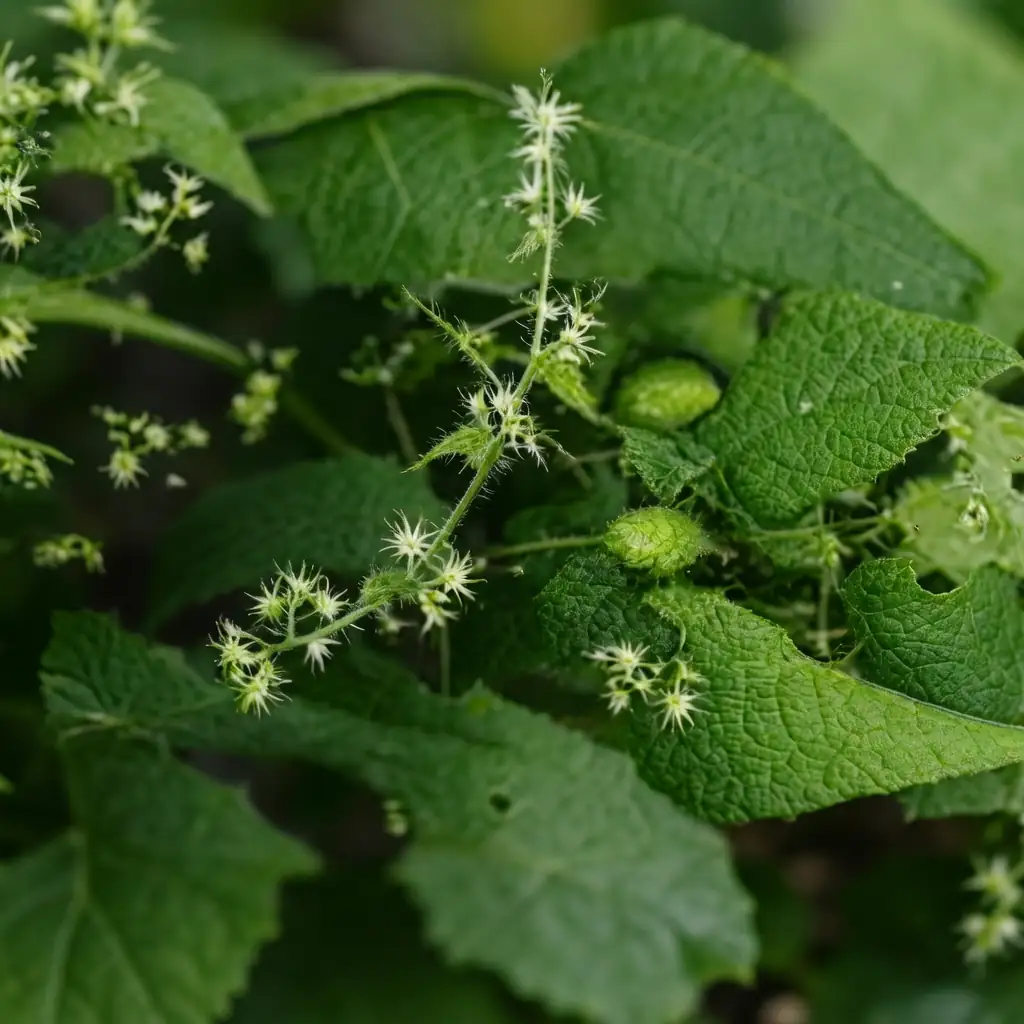
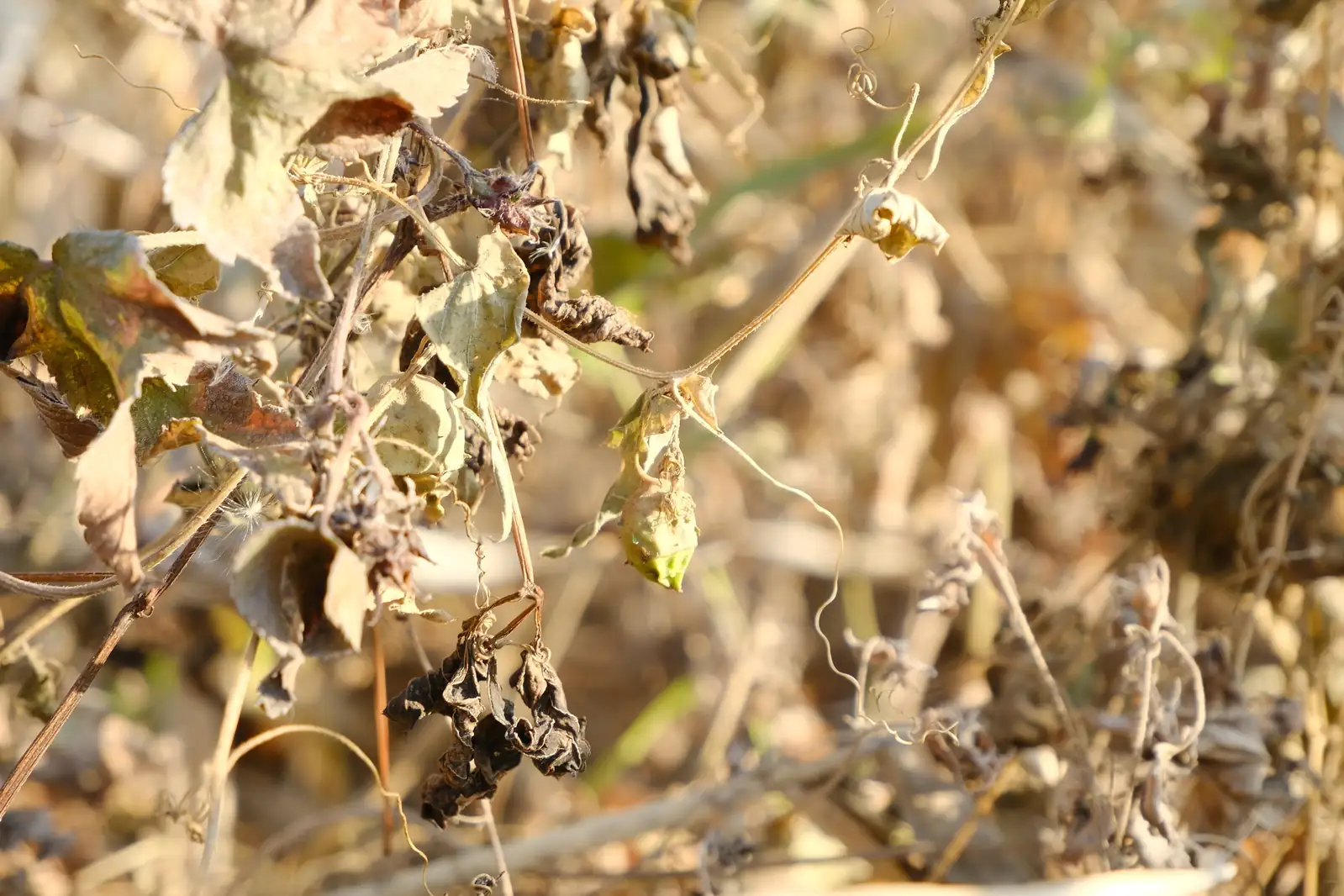
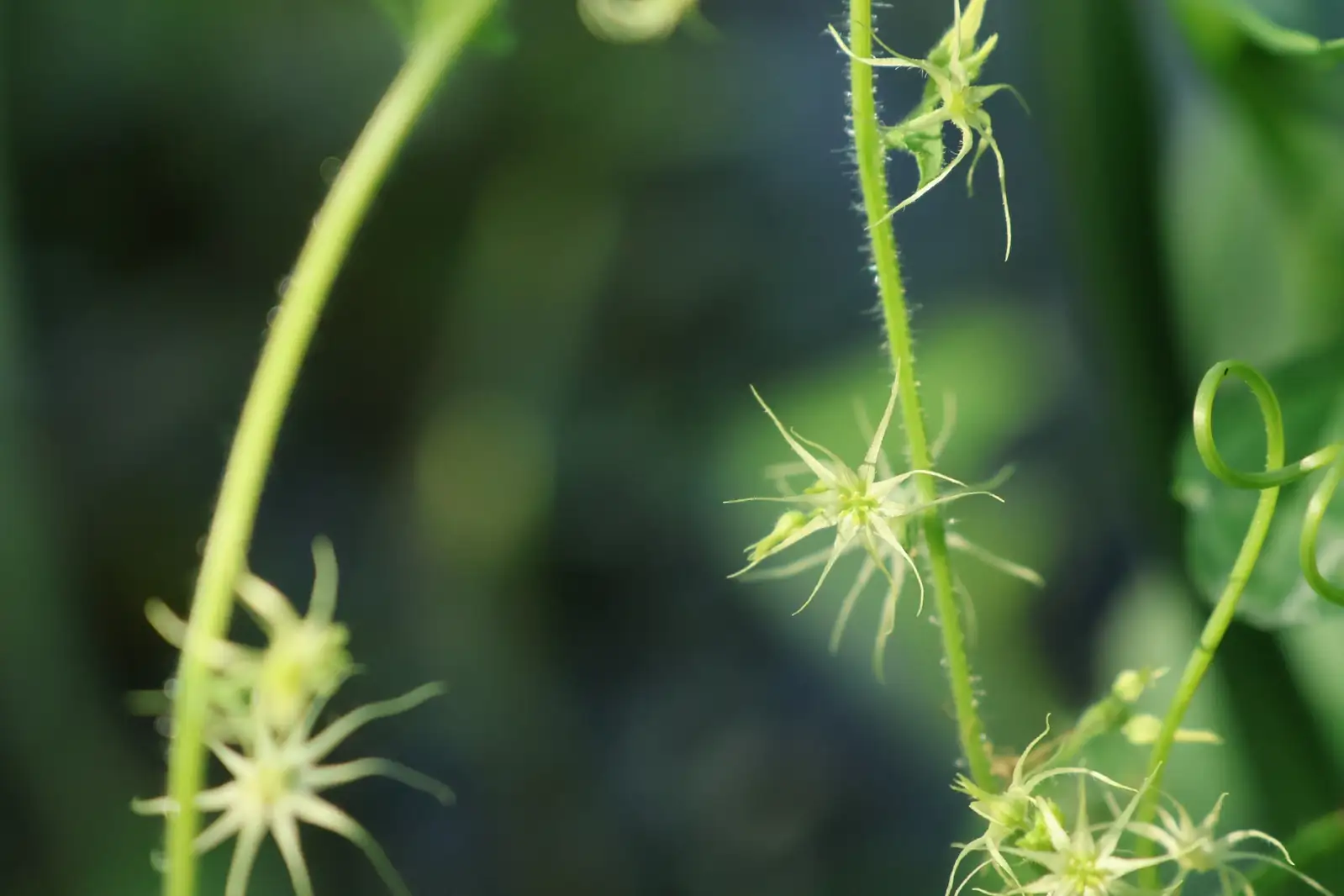
- Flower: Flowers are small and typical of cucurbit relatives. Male flowers appear in racemes and may form a loose panicle; female flowers sit on jointed stalks, with calyx and corolla resembling the male flowers. The fruit is green (egg-shaped to broadly egg-shaped or oblong-elliptic) and decorated with dark green, scale-like warty bumps; the fruit tip forms a conical cap. Seeds show irregular surface sculpturing.
- Flowering Season: July–September
- Growth Habit: Herbaceous vine that twines or scrambles through neighboring plants (climbing/scrambling habit), especially in moist natural vegetation.
Environment
Sunlight
Bright dappled light to partial sun, similar to what it gets along streamsides and moist thickets; avoid deep shade, and in hot regions protect from harsh all-day scorching sun if soil runs dry.
Temperature
Grows best in mild to warm growing-season temperatures typical of temperate East Asia. Specific minimum temperature isn’t provided; in practice, treat it as a temperate species that dies back seasonally and avoid exposing it to severe freezes if you’re outside its comfortable range.
Humidity
Moisture-loving and humidity-tolerant; handles wet air and consistently damp sites well.
Soil
Moist to wet soils near water—ideally consistently damp but still aerated (not sour, stagnant mud). It dislikes drying out for long periods.
Placement
Outdoors in a naturalistic setting—pond edge, streamside, rain garden margin, or a reliably moist border—with shrubs, a trellis, or tall grasses to scramble through.
Hardiness
Not precisely specified. Treat as a temperate East Asian vine; protect from severe freezing in harsh-winter climates (especially if grown in a container).
Care Guide
Difficulty
Moderate: easy in the ground where moisture stays consistent, trickier in pots because it can sulk quickly if it dries out.
Buying Guide
Look for plants with fresh, flexible stems and healthy, unblemished leaves. Avoid stock that is wilted, brittle, or root-bound. If buying for fruit interest, ask whether the plant has been observed fruiting in your climate or source nursery conditions.
Watering
Keep evenly moist. In the garden, aim for consistently damp soil; in containers, check frequently and water before the mix dries. Increase watering in hot weather and reduce when growth slows down toward dormancy.
Fertilization
Usually light feeding is enough. If soil is lean, apply a balanced fertilizer in spring (or top-dress with compost) to support steady vine growth—avoid overfeeding, which can cause lots of soft growth that’s more mildew-prone.
Pruning
Not essential, but you can trim tangled or overlong stems to keep it within bounds and improve airflow (helpful for mildew prevention).
Propagation
Primarily by seed. Collect mature fruits in autumn, clean and dry the seeds, and sow when appropriate for your climate (many temperate species germinate best after a cool period).
Repotting
If grown in a pot, repot in spring into a larger container with a moisture-retentive but well-aerated mix, and provide a support to climb. Keep the root zone from overheating and drying out.
📅 Seasonal Care Calendar
Spring: provide support, refresh soil/compost, begin light feeding as growth starts. Summer: keep soil consistently damp and ensure good airflow; watch for aphids and mildew. Late summer–autumn: enjoy flowering and fruiting; keep watering steady. Late autumn–winter: reduce watering as growth slows; in colder areas, protect container plants from hard freezes.
Pests, Diseases & Safety
Common Pests & Diseases
Not well documented in the source, but as a cucurbit relative it may attract aphids and spider mites, and can develop powdery mildew in still, crowded conditions. Improve airflow, avoid wetting foliage late in the day, rinse off aphids early, and use insecticidal soap if infestations build. Remove badly mildewed leaves and avoid excess nitrogen.
Toxicity
Not clearly documented here. Because many Cucurbitaceae can contain bitter compounds, do not eat any part unless you have reliable, species-specific confirmation of safety; keep curious pets and children from chewing the plant.
Culture & Symbolism
Symbolism: Often appreciated for quiet resilience and “wild-garden charm”—a small vine that thrives where many ornamentals struggle (damp edges and thickets).
History & Legends: No specific legends provided in the source; it’s more of a naturally occurring, habitat-linked plant than a traditional folklore star.
Uses: Primarily ornamental in naturalistic plantings for its variable foliage and distinctive, textured green fruits; also suitable for wildlife-friendly gardens along moist margins.
FAQ
When does it flower?
July–September.
When does it fruit?
Typically September–November, after flowering.
What habitat does it prefer?
Moist to wet waterside grasslands and thickets—places that stay reliably damp.
Where is it distributed?
Recorded widely across China and also reported from Taiwan.
What is its growth habit?
An herbaceous plant that often behaves like a small climber, twining and scrambling through surrounding vegetation.
Fun Facts
- Its fruits look like tiny green capsules with darker green, scale-like warty bumps, topped by a neat conical “cap.”
- Leaf shape can vary dramatically—even on the same plant—ranging from heart-shaped to narrow ovate and even lance-like forms.
- Although not a woody vine, it can climb surprisingly well by leaning and twining through neighboring plants.


