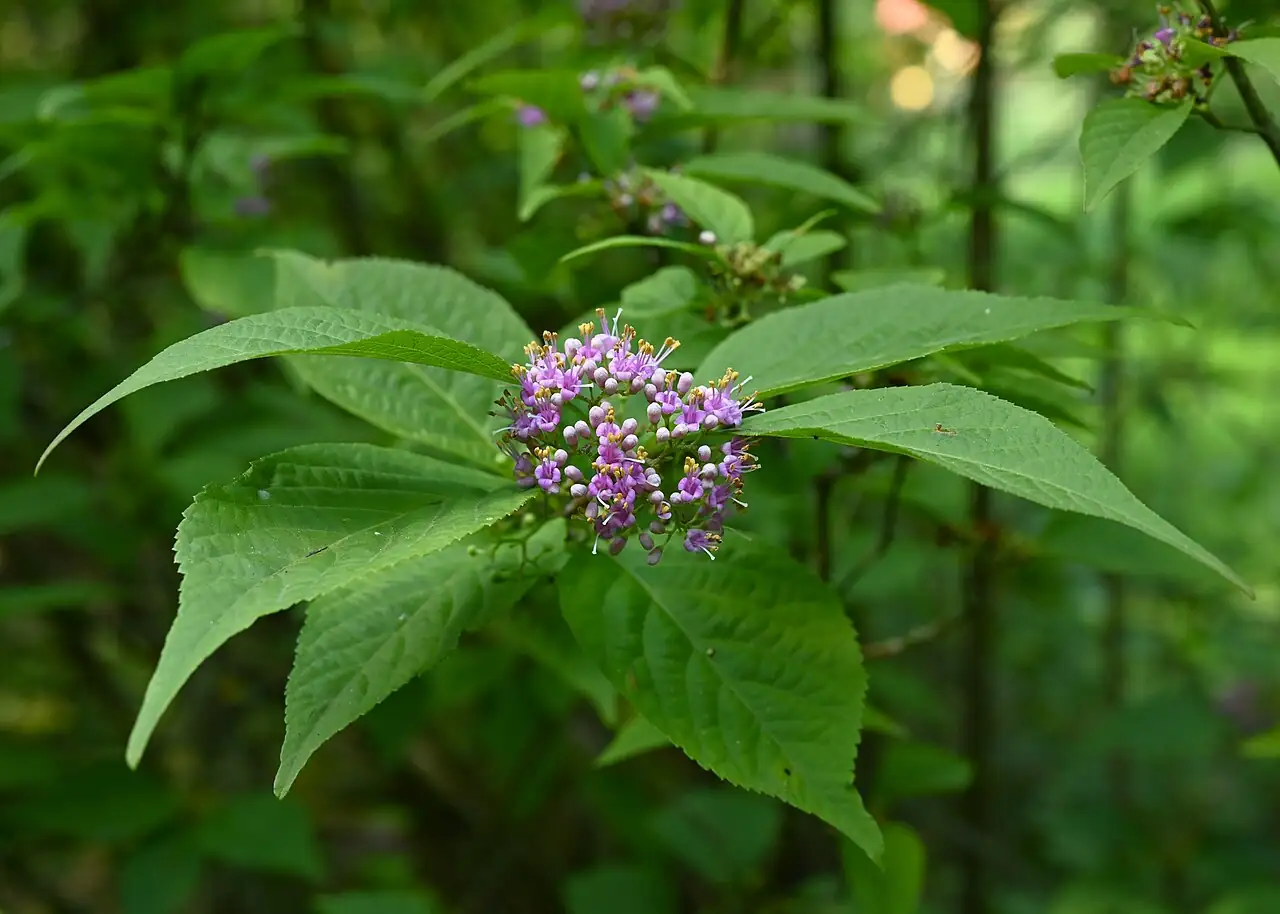
Plant Features
- Size: Typically about 2 m (6.6 ft) tall; spread often similar or slightly wider with age, depending on pruning and site.
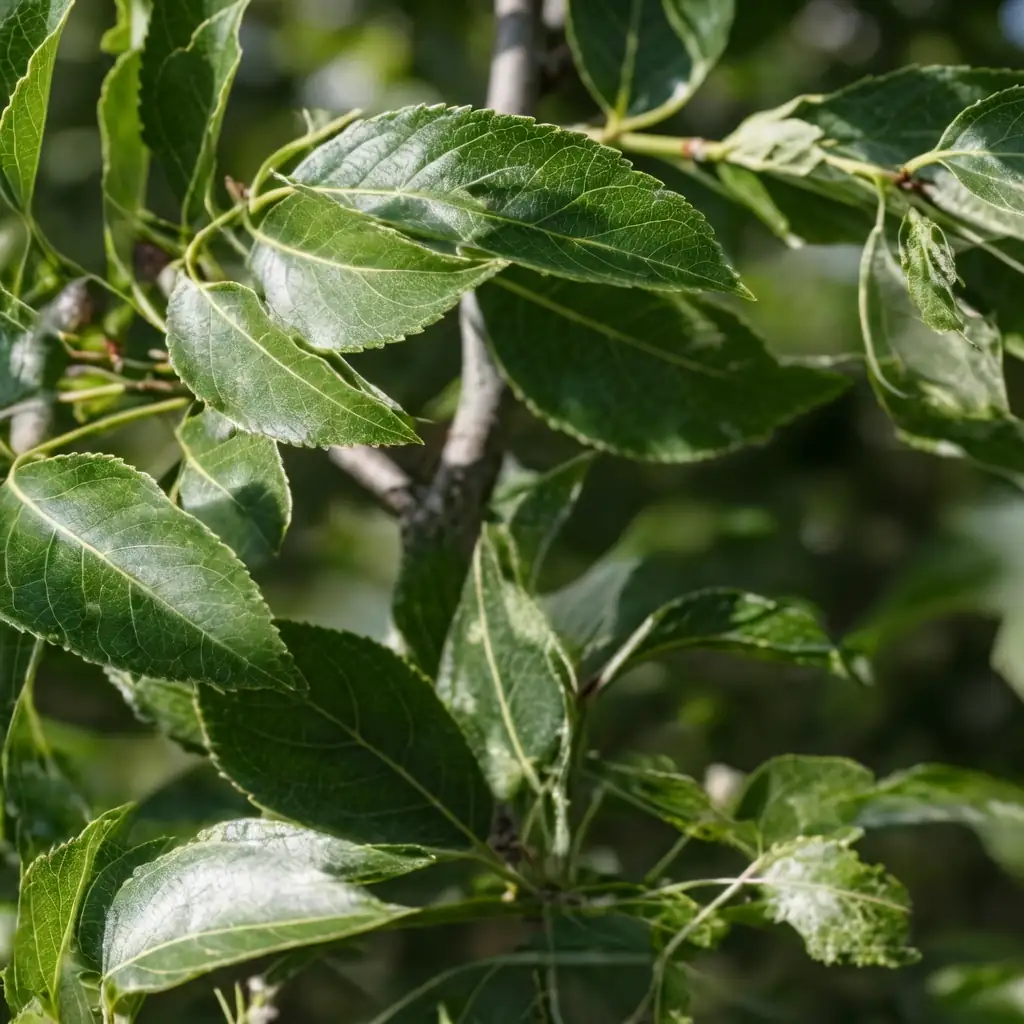
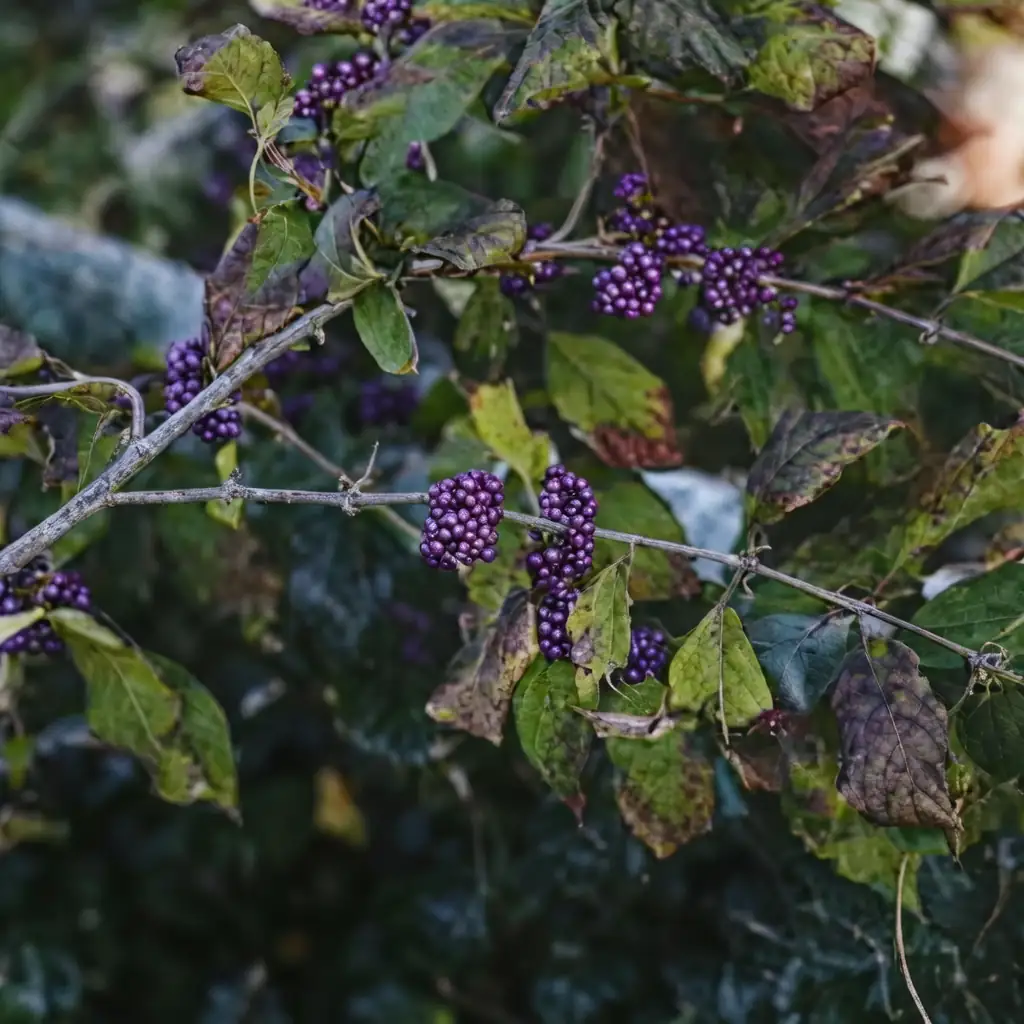
- Foliage: Leaves are ovate-oblong to elliptic, giving the plant a soft, full, leafy outline through the growing season before it drops foliage in winter.
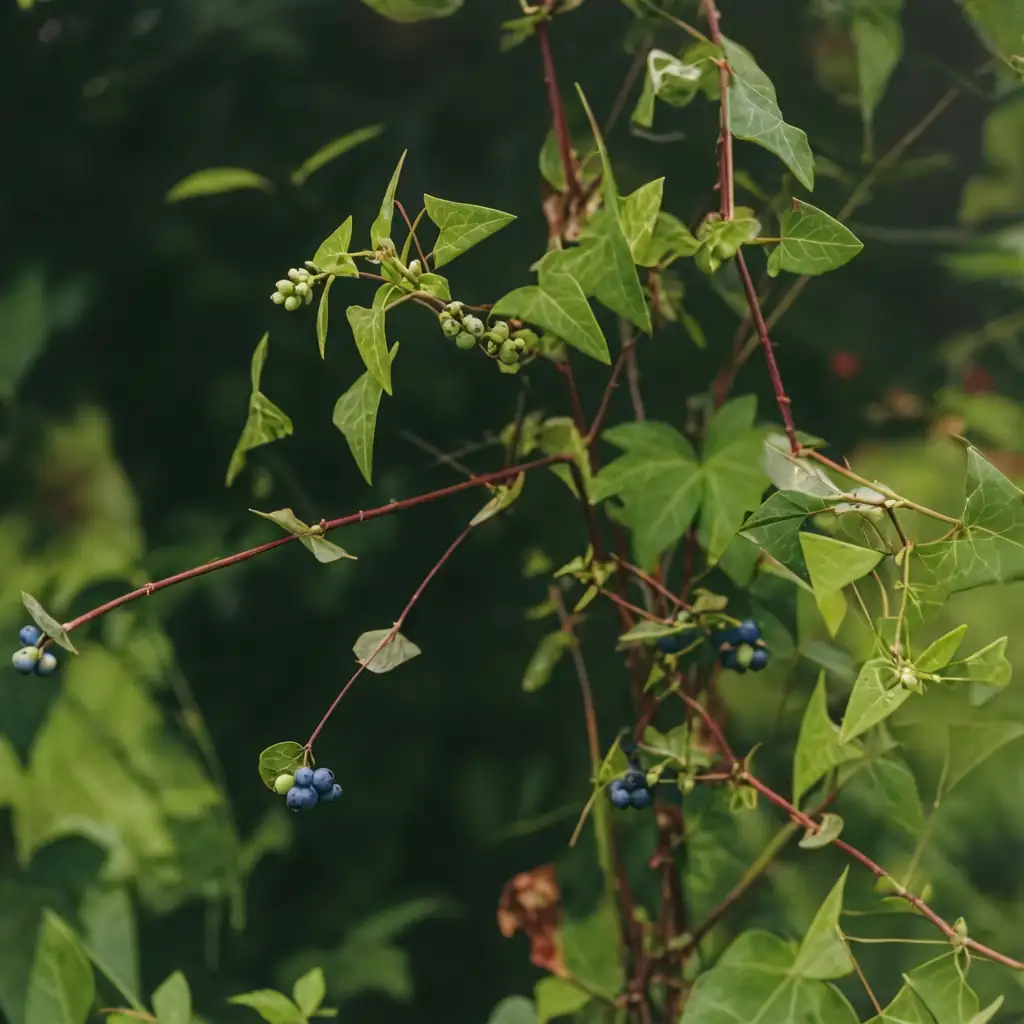
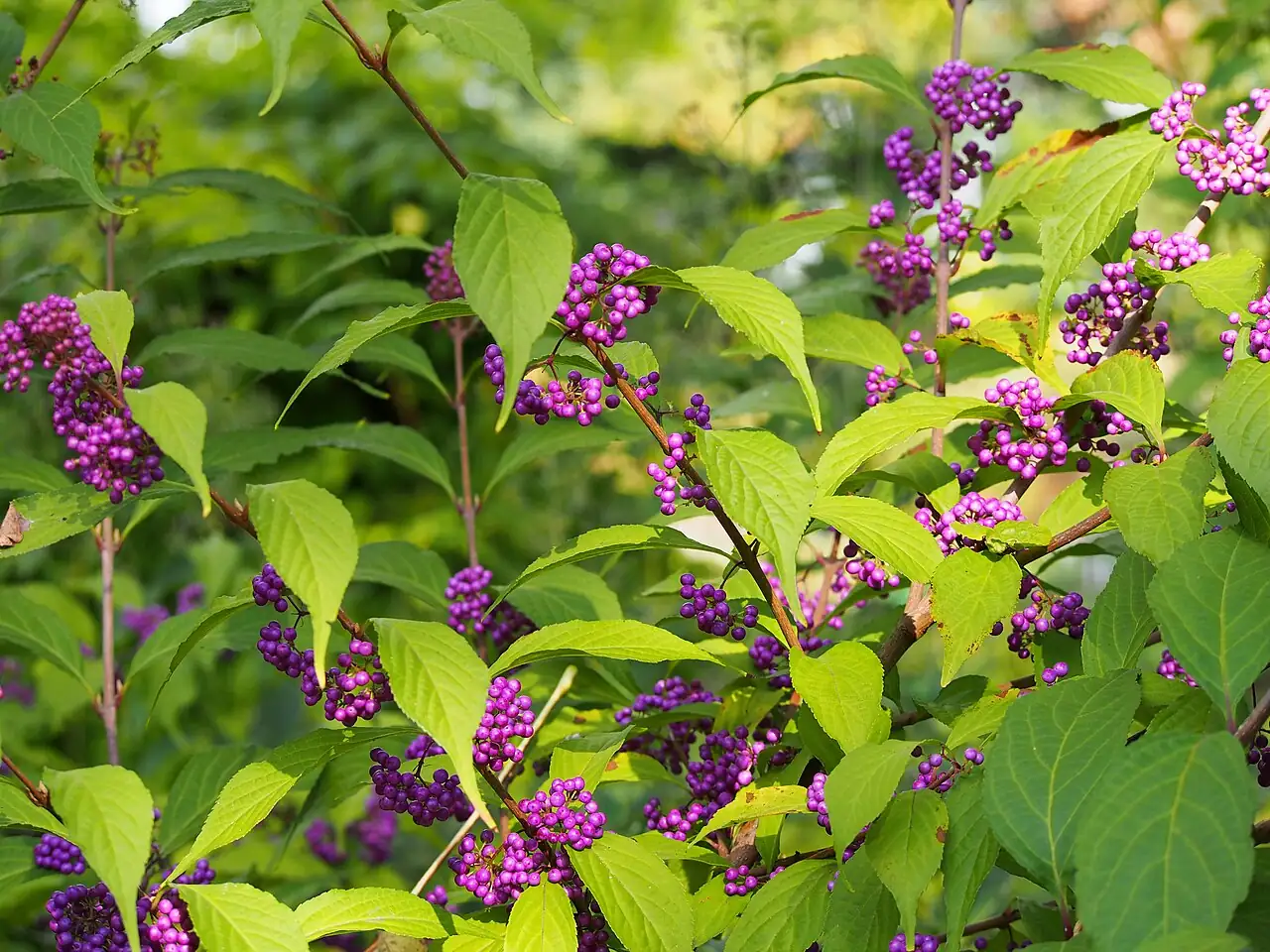
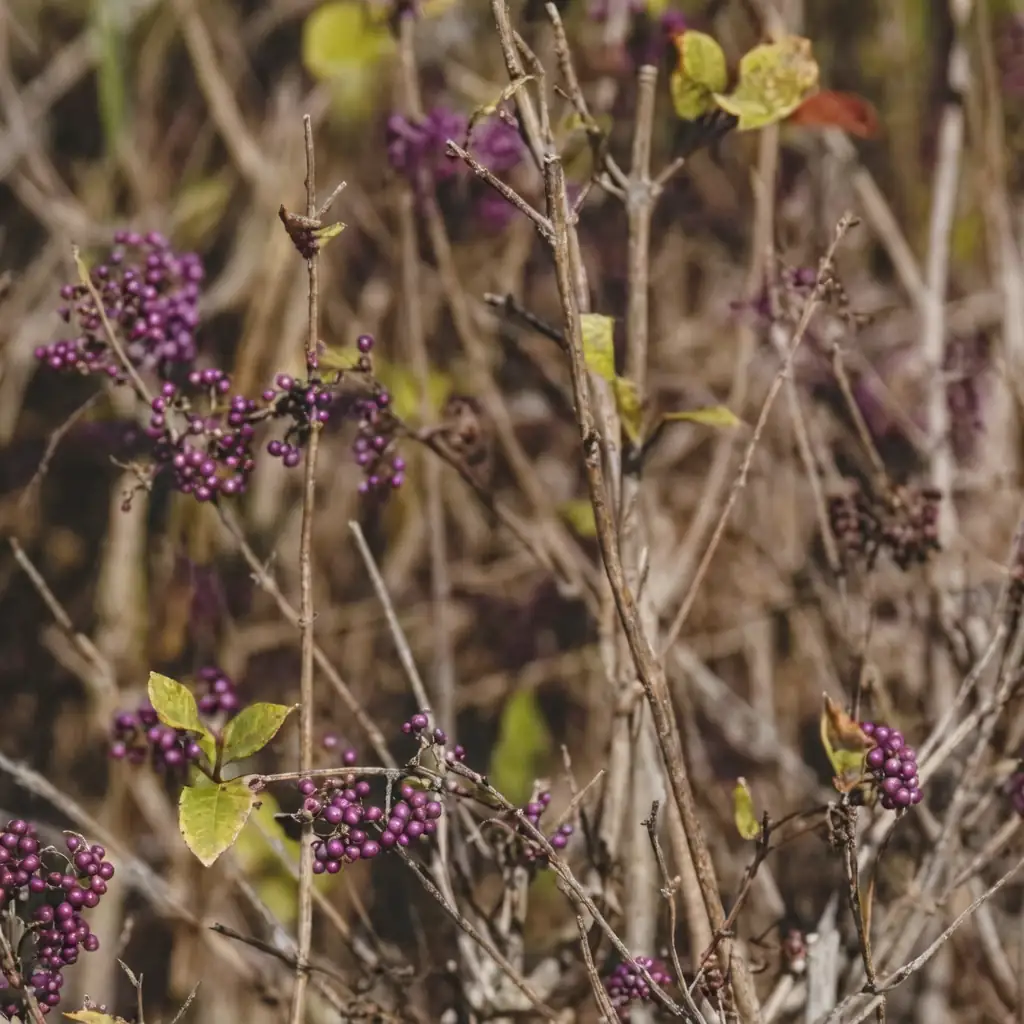
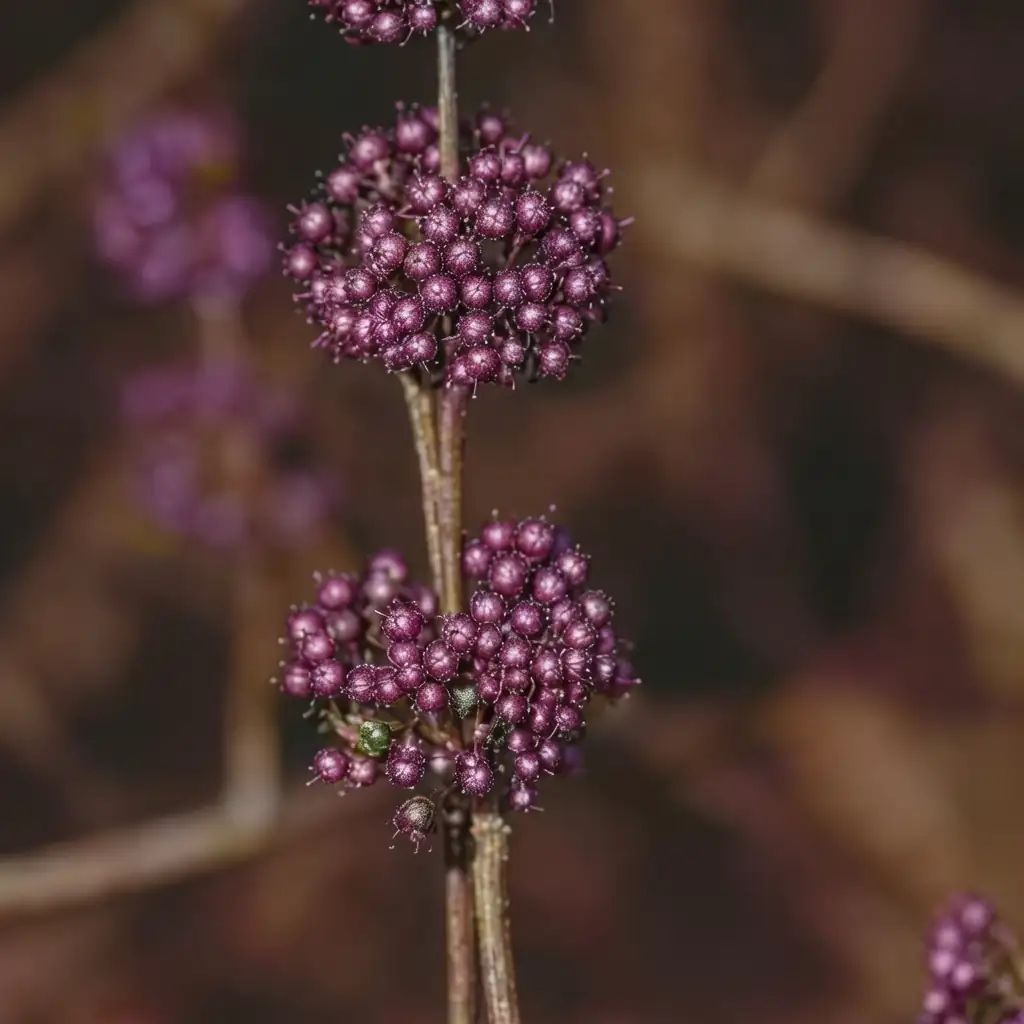
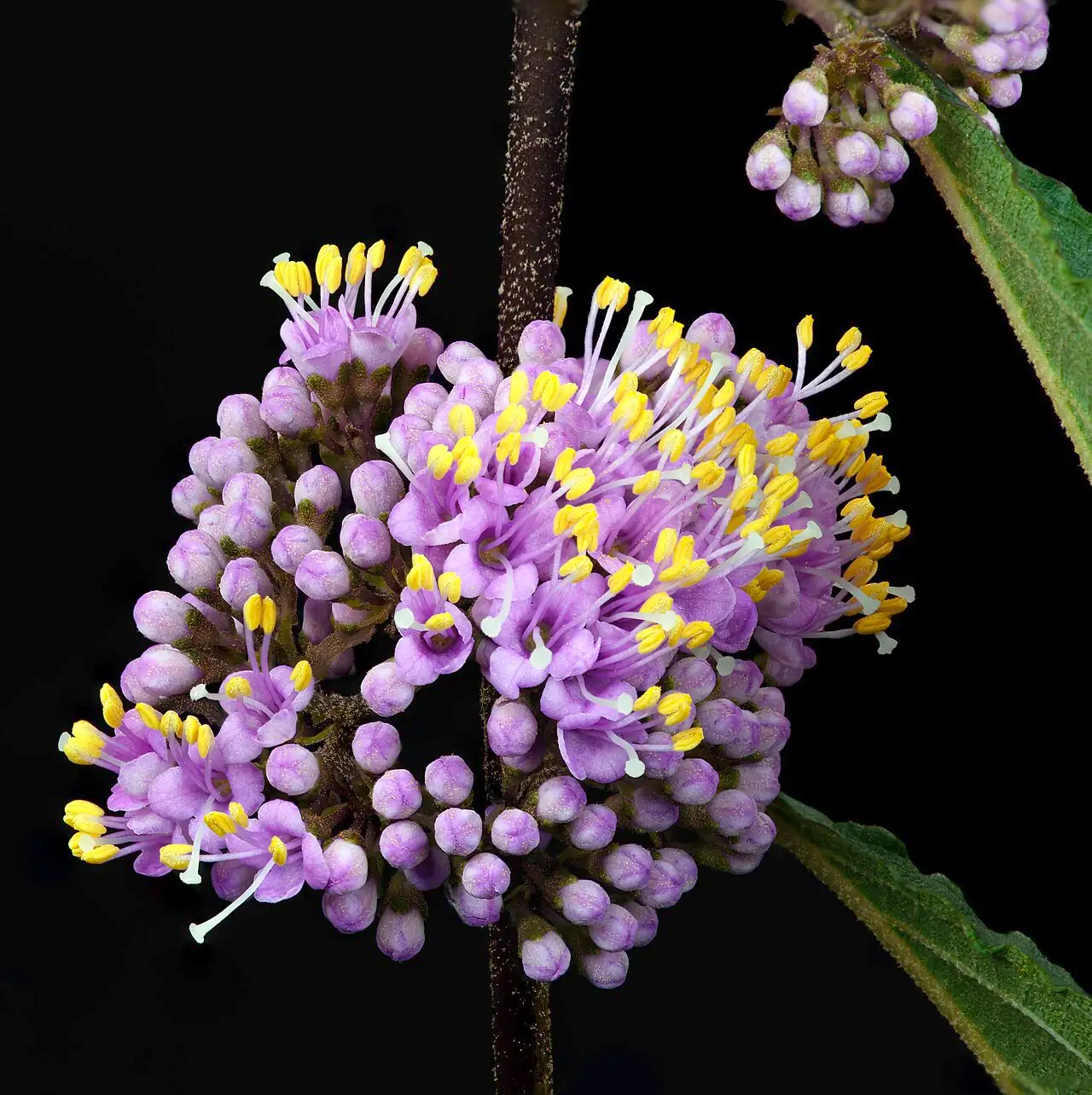
- Flower: Produces small lilac-to-purple flowers in clustered sprays in summer. These are followed by dense clusters of round, hairless berries that ripen a striking bright purple; individual berries are about 2 mm (0.08 in) across, but the clustered effect is very showy.
- Flowering Season: June–July
- Growth Habit: Deciduous shrub with an upright, bushy habit. It performs best in warm, humid conditions and appreciates shelter from drying winds; it can sulk in drought or very exposed sites.
Environment
Sunlight
Best in partial shade to light shade; can take more sun if the soil stays evenly moist (especially in summer).
Temperature
Preferred average growing temperature about 15–25°C (59–77°F).
Humidity
Prefers humid air and consistently moist conditions rather than dry heat.
Soil
Moist, well-drained, fertile soil. Slightly acidic conditions suit it well; aim for a moisture-retentive but airy mix (especially in containers).
Placement
Woodland-edge style plantings, mixed borders, courtyards, and large containers. Also excellent near paths where the autumn berries can be enjoyed up close; fruiting stems can be cut for indoor display.
Hardiness
Commonly considered hardy in USDA Zone 6–9 (approx. -23 to -1°C / -10 to 30°F), but results vary with wind exposure and winter extremes; protect container plants from deep freezes.
Care Guide
Difficulty
Moderate. Very rewarding once established, but it’s not a “set-and-forget” shrub in hot, dry, windy spots. Give it steady moisture and a sheltered position for best flowering and berry set.
Buying Guide
Choose plants with multiple healthy stems and firm buds, and avoid any with obvious leaf spot, scale insects, or weak, shriveled growth. In fruiting season, look for richly colored berry clusters and steer clear of pots that are bone-dry or plants with shriveled fruit.
Watering
After planting, water deeply and keep evenly moist during active growth. For containers, water when the top 2–3 cm (about 1 in) of mix feels dry—don’t let the pot dry out completely. Mulch with 5–8 cm (2–3 in) to help hold moisture and reduce summer stress.
Fertilization
In the ground, feed in spring with compost or a balanced slow-release fertilizer. In containers, use a balanced liquid fertilizer every 2–4 weeks during active growth, following label directions.
Pruning
Prune in late winter to early spring before new growth begins. Remove weak, crossing, or overly old stems and lightly thin to improve airflow. Since the best berry display is typically on new season’s growth, annual pruning can boost vigor and help keep the plant productive and tidy.
Propagation
Propagate by softwood cuttings in late spring to early summer, semi-ripe cuttings in summer, or by seed (slower and seedlings can vary).
Repotting
Repot every 1–2 years in spring into a slightly larger pot with fresh, moisture-retentive but well-drained mix. If not upsizing, refresh the top layer of potting mix annually.
📅 Seasonal Care Calendar
Spring: prune before growth starts, feed, and mulch. Summer: maintain even moisture; take softwood/semi-ripe cuttings. Autumn: enjoy the berry display and cut stems for arrangements. Winter: protect container roots from hard freezes and avoid soggy, waterlogged conditions.
Pests, Diseases & Safety
Common Pests & Diseases
Generally trouble-free. Watch for aphids on tender new growth, scale insects, and occasional leaf spot—especially where air is still and humidity is high. Improve airflow with thinning, water at the base rather than overhead (especially late in the day), and use horticultural soap/oil early if pests appear.
Toxicity
No well-established toxicity issues are widely reported for this species, but the berries are ornamental rather than edible. It’s best to discourage pets and children from eating any plant parts.
Culture & Symbolism
Symbolism: Often linked with lasting beauty and late-season charm, thanks to its jewel-like purple berries that keep the garden colorful after many plants have finished flowering.
History & Legends: Beautyberries (Callicarpa) have long been appreciated in East Asian gardens for their distinctive berry clusters that brighten landscapes in late summer and autumn.
Uses: Primarily grown as an ornamental shrub for summer flowers and especially the vivid purple autumn fruit. Popular in garden borders and courtyards, suitable for large containers, and widely used as cut, fruiting stems in floral arrangements.
FAQ
What other common names does it go by?
It’s often sold simply as Beautyberry, and sometimes as Chinese Beautyberry in the plant trade.
When does it flower?
Typically June–July.
When are the berries most showy?
Usually from August through November, depending on local climate and weather.
What temperature range does it prefer?
It grows best with an average of about 15–25°C (59–77°F).
Where does it naturally occur?
It’s native to China and is recorded across many provinces, commonly on hillsides and in valleys.
Fun Facts
- Each berry is tiny—about 2 mm (0.08 in) across—but the dense clusters create a surprisingly intense purple display.
- It’s a classic “flowers-then-fruit” shrub: summer blooms fade just as the berry show begins.
- Fruiting stems are commonly used in vases for a natural pop of purple indoors.