Plant Features
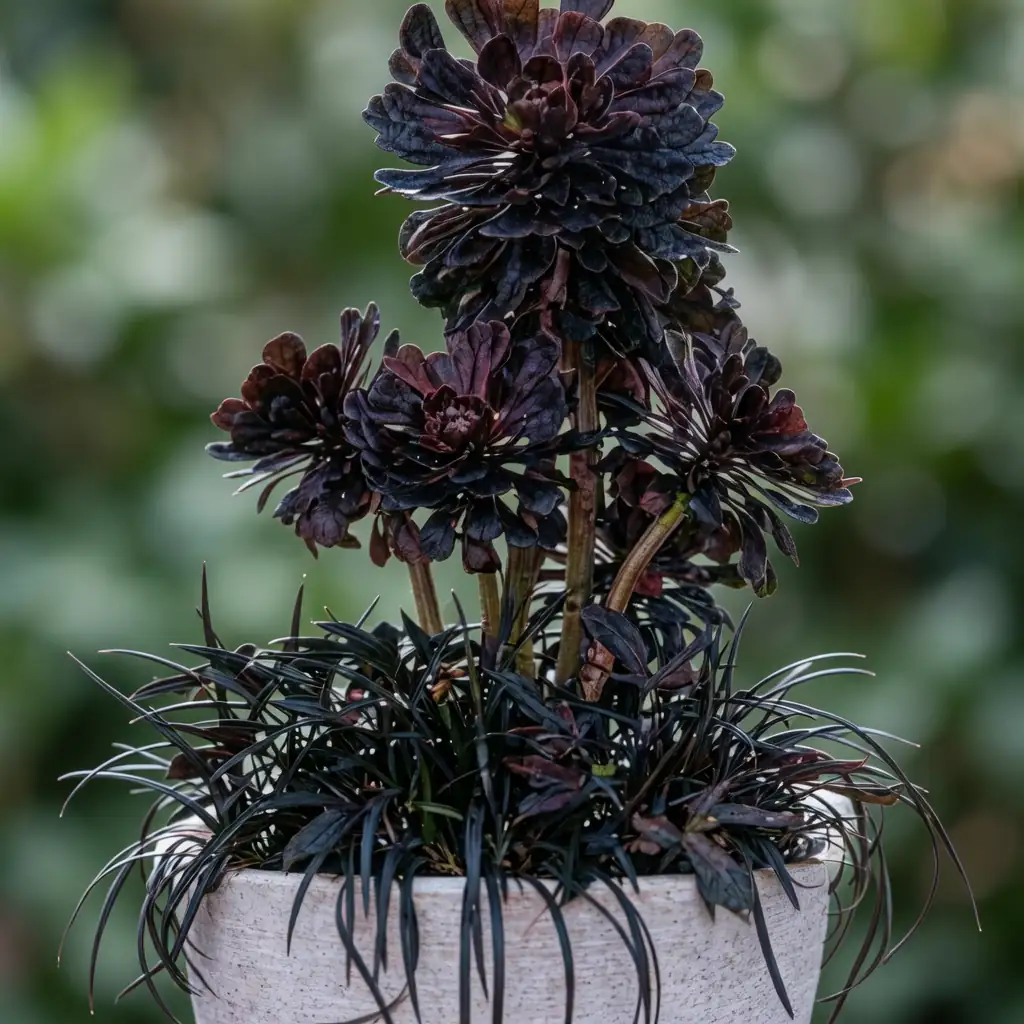
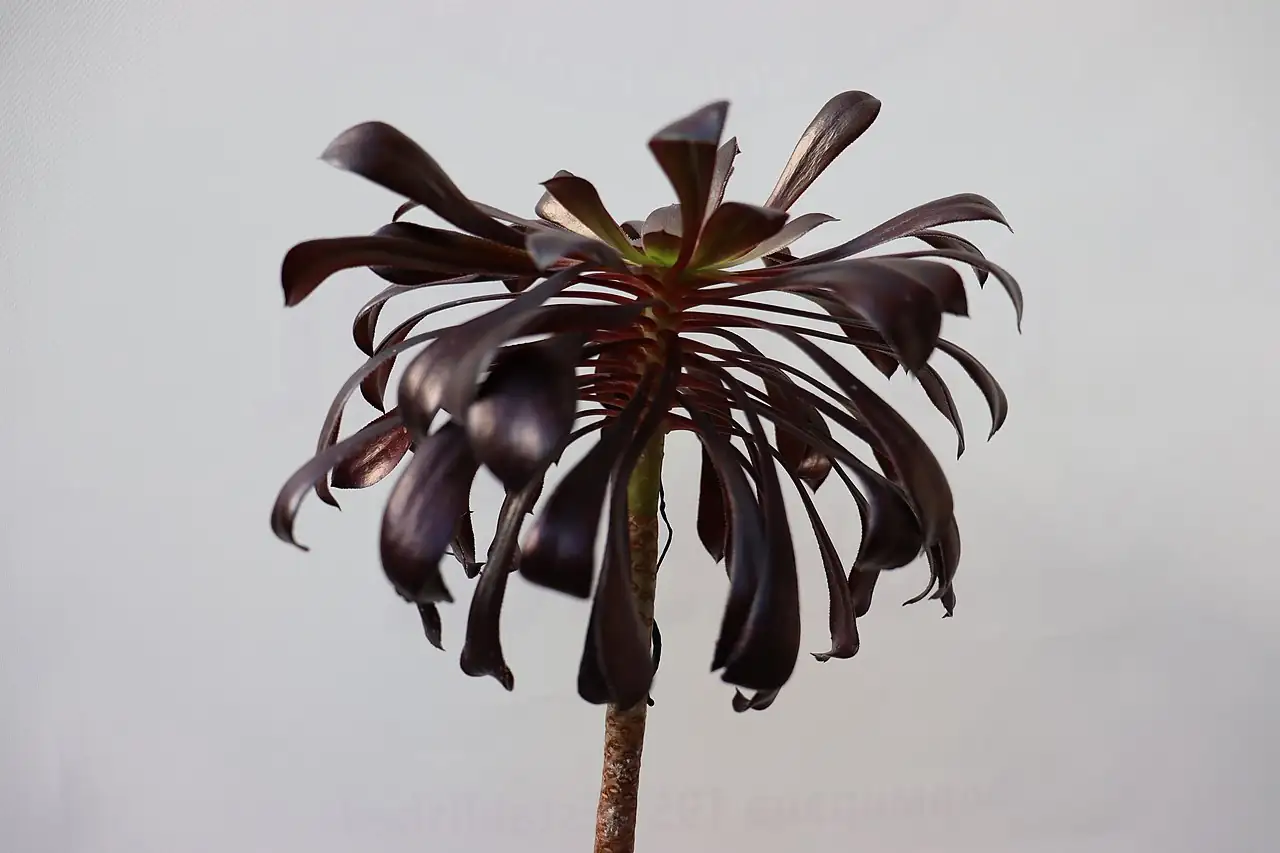
- Size: A low, branching succulent shrub. In pots it’s often kept compact, sometimes around 10 cm (4 in) tall as a young rosette plant, but with age it can become a taller, branching specimen up to about 60 × 60 cm (24 × 24 in), depending on pruning and container size. A 12 cm (4.7 in) pot commonly holds a plant with roughly a 10 cm (4 in) spread; small-to-medium plants often suit a 15 cm (6 in) pot with drainage.
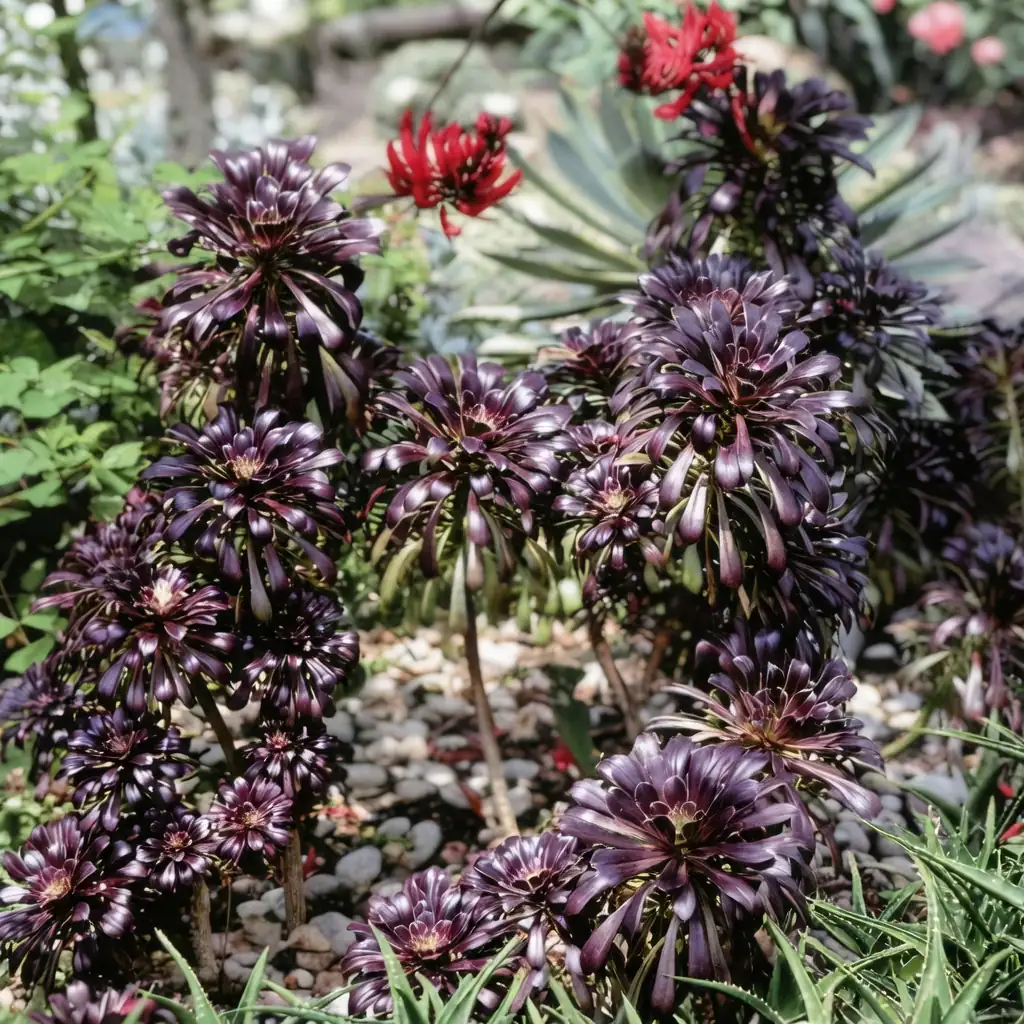
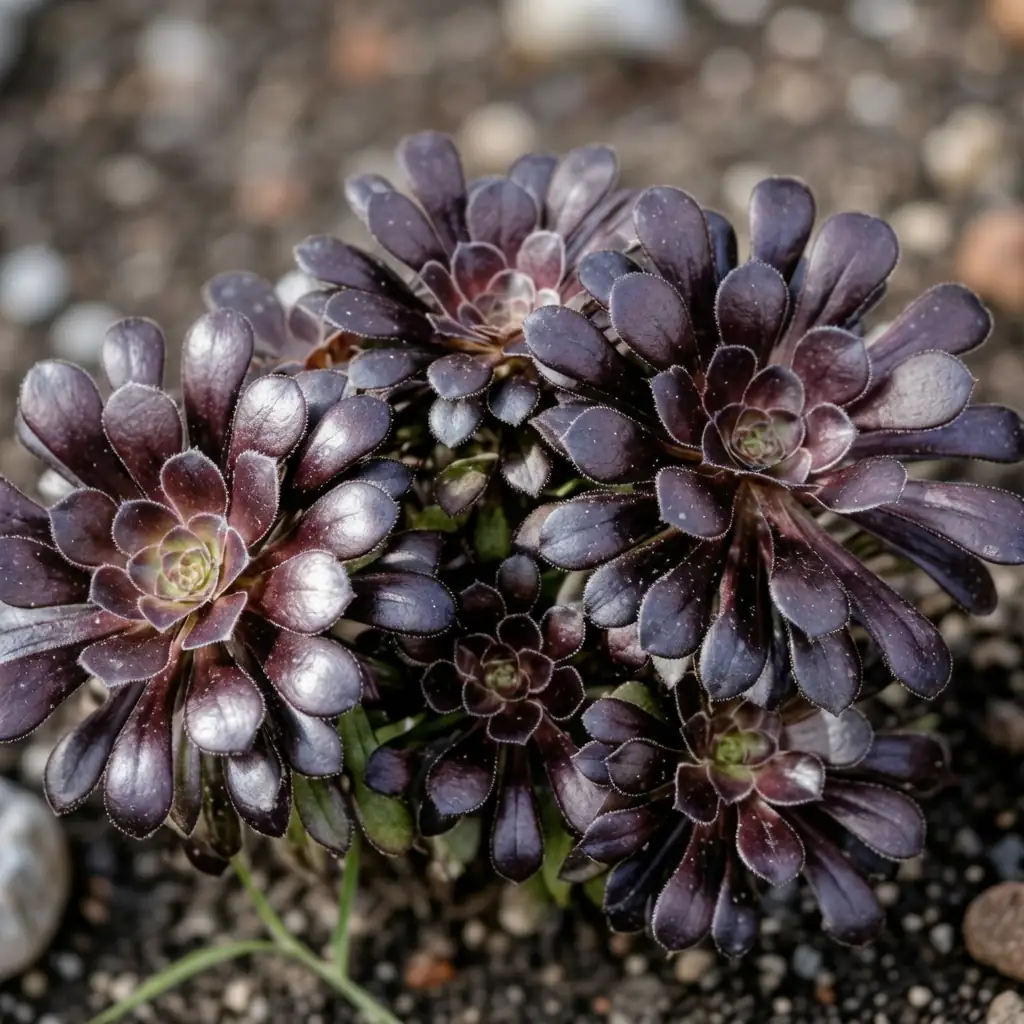
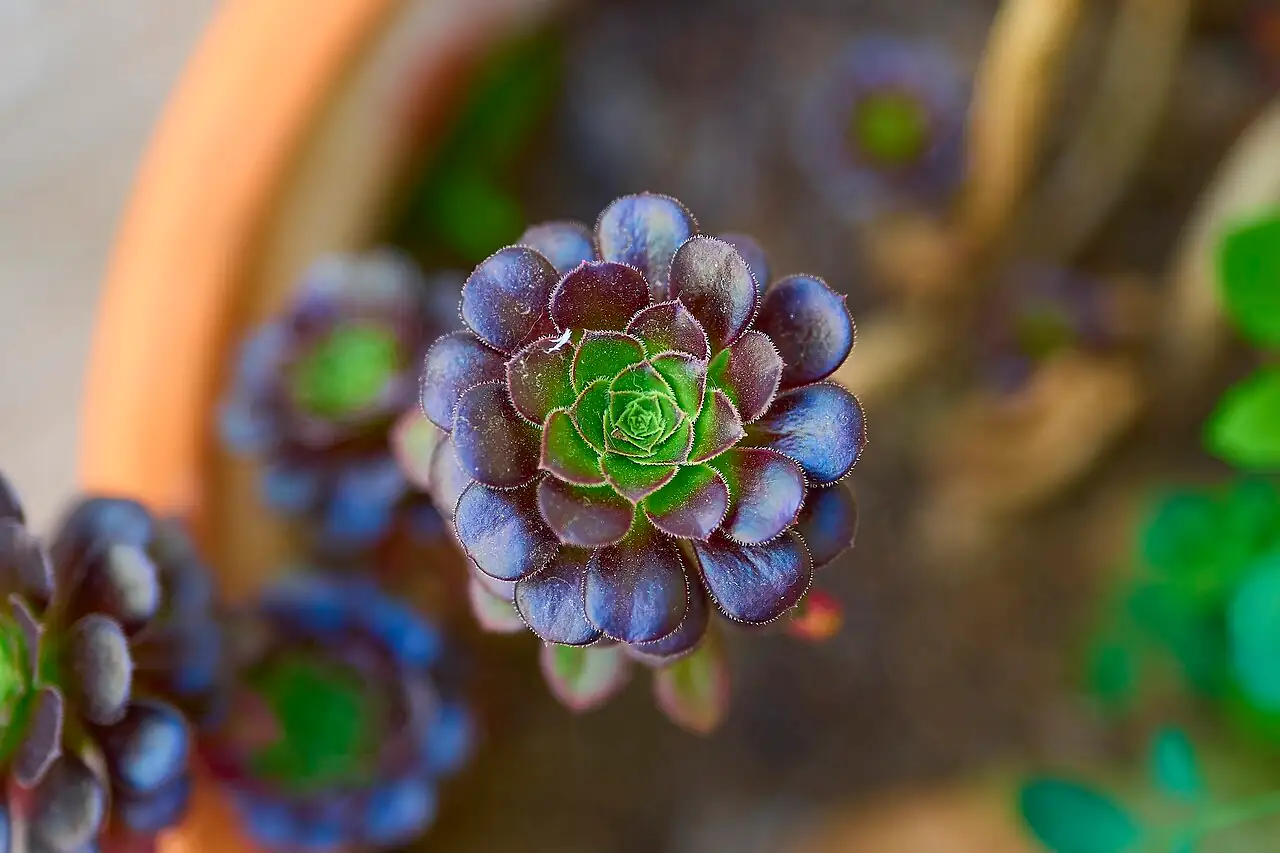
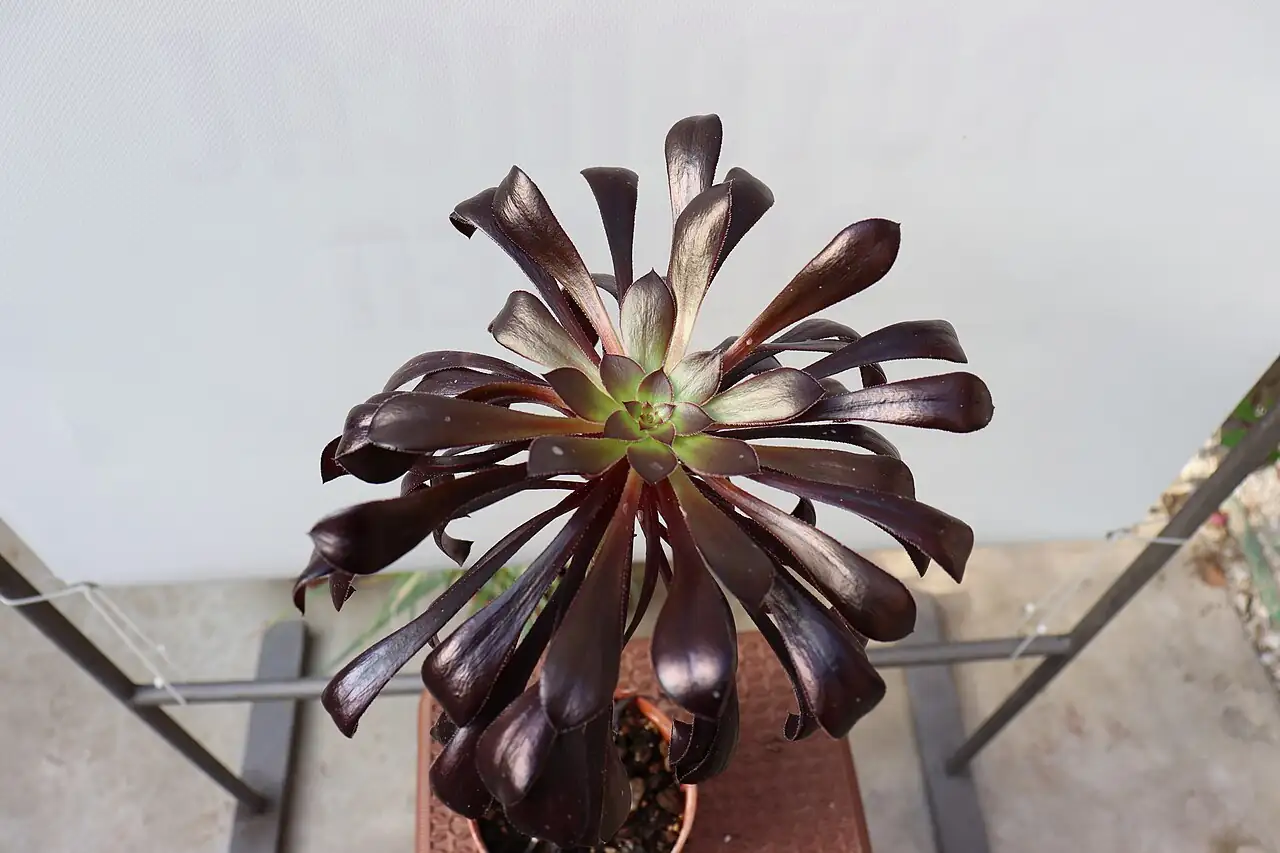
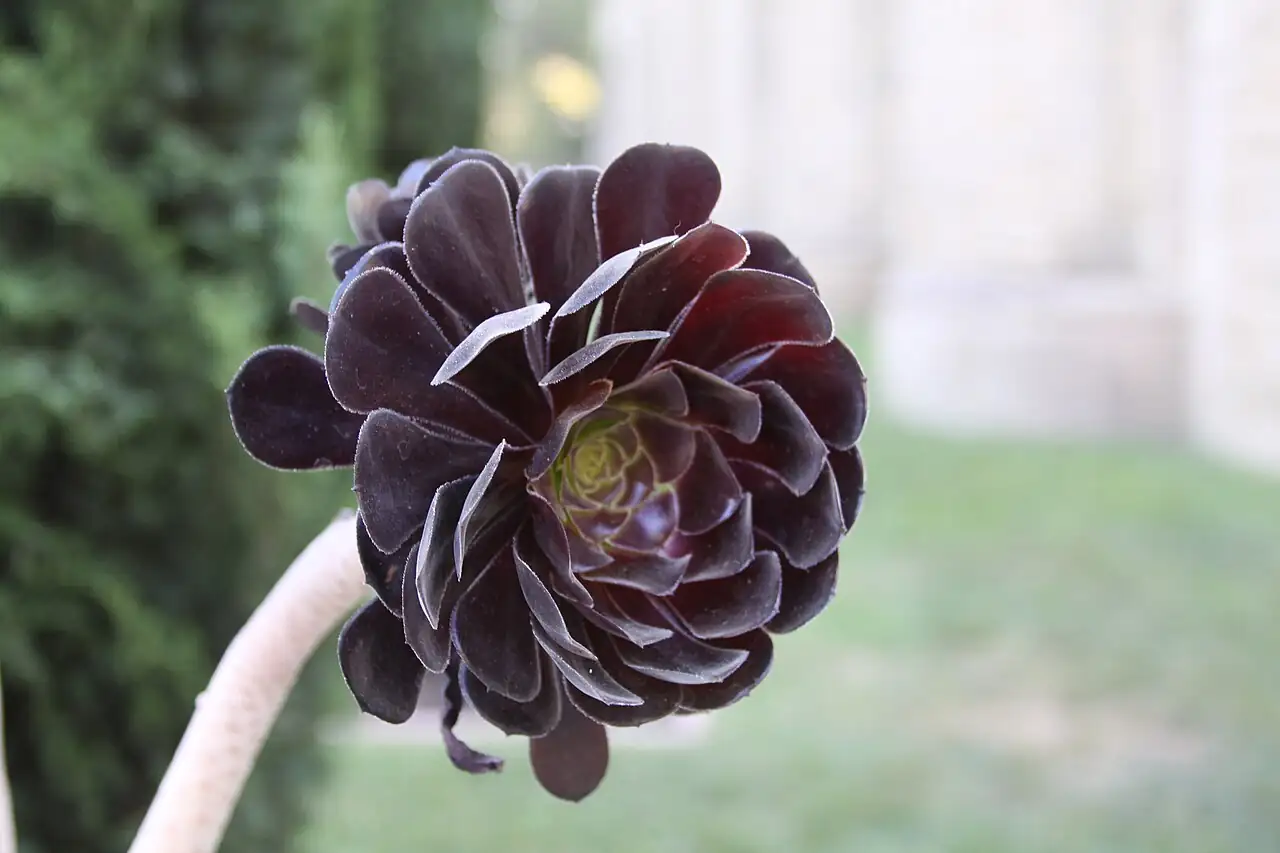
- Foliage: Dense, spoon-shaped (obovate) leaves arranged in tight rosettes, sitting at the tips of upright, branching stems. Color ranges from deep burgundy-purple to near-black in strong light and cooler seasons, often with a slightly greener center during active growth; in lower light it can look more reddish-purple or greener. Healthy leaves are firm and glossy, without spotting, scars, or mushy patches.
- Flower: Mature rosettes can produce upright clusters of small, star-shaped yellow flowers. The rosette that flowers is typically monocarpic (it declines after blooming), but the plant usually persists through side rosettes/offsets.
- Flowering Season: Early spring to late spring (most often spring).
- Growth Habit: Rosette-forming, upright and branching succulent that clumps as new rosettes develop. Often grows more strongly from autumn through spring and slows down in hot summer conditions.
Environment
Sunlight
Full sun to bright light; tolerates bright partial shade. Indoors, aim for the brightest window you have. In very hot weather (especially behind glass), protect from harsh midday sun to prevent scorch—sheer curtains or pulling the pot slightly back from the window helps.
Temperature
Best roughly 20–25°C (68–77°F) for strong growth; generally happy in about 10–24°C (50–75°F). Keep frost-free and avoid cold, wet conditions. A practical minimum is to keep it above about 6°C (43°F); protect carefully as temperatures approach 0°C (32°F).
Humidity
Prefers low to average household humidity with good airflow. High humidity plus low light can encourage stretching and increases rot risk. During summer semi-dormancy, keeping the soil drier matters more than boosting humidity; if you do mist, mist the air around the plant lightly rather than soaking the mix.
Soil
Fast-draining cactus/succulent mix. A good approach is a standard potting base (peat/leaf mold) cut generously with grit/coarse sand/pumice for airflow and drainage. Never let it sit waterlogged; keep much drier in summer heat and in cool winter rooms.
Placement
Very bright windowsill, sunroom, or under strong grow lights indoors; outdoors on a bright patio/terrace during warm seasons, with midday protection during heatwaves. Balconies with morning sun (east) or bright south light with filtering work well.
Hardiness
Tender, not frost tolerant. Best outdoors year-round only in mild, frost-free climates, roughly USDA Zone 10–11.
Care Guide
Difficulty
Easy to moderate. It’s forgiving of missed watering but unforgiving of soggy soil and low light. The key is strong light, fast drainage, and dialing water way back during summer heat/dormancy.
Buying Guide
Look for tight, symmetrical rosettes with firm, glossy leaves and a healthy center. Avoid plants with mushy stems, blackened centers, soft patches, heavy scarring, or a potting mix that stays persistently wet (classic rot risk). For a compact look, choose plants around 10 cm (4 in) tall or less, then acclimate to sun gradually—bright light first, then stronger sun as it settles in.
Watering
Water deeply, then let excess drain away—no standing water. During active growth (typically autumn through spring, and often also spring and autumn), water when the surface/top layer has dried; keep it lightly moist but never soggy. In hot summer weather the plant often slows down or semi-dorms—keep the mix almost dry and give only small “sips” if rosettes begin to wrinkle. In winter, especially in cool rooms, keep the soil on the dry side to prevent root rot. (If attempting water culture/hydro: keep only part of the root system in water with some roots above the waterline; use nutrients in spring/autumn and plain water during summer and winter.)
Fertilization
Feed only in the main growth season. A simple routine is monthly, using a balanced fertilizer at 1/2 strength or a low-nitrogen succulent feed, from winter through late spring and/or across the spring and autumn growth windows. Skip feeding during summer dormancy; overfeeding can cause weak, stretched growth.
Pruning
Remove shriveled lower leaves as needed. After flowering, the blooming rosette usually declines—wait until it dries, then remove it to tidy the plant. You can cut back leggy stems to shape and encourage branching; many growers rejuvenate plants by restarting from cuttings every 2–3 years.
Propagation
Best by stem cuttings (and offsets). Take a healthy rosette with a short piece of stem, let the cut end callus for several days, then place into a dry, gritty mix; begin light watering only after roots form. Leaf/stem cuttings can root in about 3–4 weeks under good conditions. Seeds can be sown in spring or autumn: surface sow (do not cover), keep warm around 20–22°C (68–72°F), and expect germination in roughly 9–14 days with steady moisture and ventilation.
Repotting
Repot in spring. Young or fast-growing plants may appreciate annual refreshes; otherwise repot about every 2–3 years, moving up only one pot size and replacing with fresh, fast-draining mix. Common pot sizes include about 12–15 cm (4.7–5.9 in) for small to medium plants—always with drainage holes.
📅 Seasonal Care Calendar
Autumn–spring: main growth season—water when the surface dries; give very bright light; feed monthly at half strength. Early spring: possible flowering on mature rosettes; after bloom, remove the spent rosette once dry. Spring (as needed): repot, clean up dead basal leaves, and prune to shape. Summer: protect from harsh midday sun and heat behind glass; reduce watering sharply and keep nearly dry during semi-dormancy.
Pests, Diseases & Safety
Common Pests & Diseases
Common pests include mealybugs, aphids (often on flower stalks), whiteflies, and scale. Treat early with insecticidal soap or horticultural oil and repeat as needed. The biggest health risk is root/stem rot from overwatering, poor drainage, or cool, wet conditions—boost light and airflow and let the mix dry appropriately. Leaf spot/rust can appear in damp, stagnant air; avoid wet foliage late in the day and improve ventilation.
Toxicity
Generally not listed as highly toxic, but the sap can irritate sensitive skin. Best to keep out of reach of pets and children and avoid ingestion; wash hands after pruning if you’re sensitive.
Culture & Symbolism
Symbolism: Often linked with resilience and bold, modern elegance—dark rosettes that stay stylish even when conditions are dry and bright.
History & Legends: A widely grown ornamental cultivar of tree aeonium (Aeonium arboreum). The cultivar name ‘Zwartkop’ is a standard horticultural name used for this dark-leaved form, popular in Mediterranean-style gardens and as a container plant worldwide.
Uses: Ornamental and highly decorative: a statement houseplant, a focal point in mixed succulent bowls, and a favorite for patio containers in warm seasons. It’s also used in framed succulent art and display planters where strong shape and color contrast are desired.
FAQ
What light does Black Rose aeonium need to stay dark?
Very bright light to sun. The rosettes look darkest in strong light (and often in cooler seasons). If it’s too shady indoors, it tends to turn greener and stretch.
Why does it stop growing in summer, and should I keep watering?
Many aeoniums slow down or semi-dorm in hot summer weather. During that time, keep the soil almost dry—water only lightly if the rosettes start to wrinkle, and avoid soaking the pot.
What happens after it flowers—will the whole plant die?
Usually only the rosette that flowers declines (it’s monocarpic). The rest of the plant often survives through side rosettes/offsets, which continue growing after you remove the spent rosette.
How often should I repot it?
Typically every 2–3 years in spring (or sooner if the mix stays wet too long or the plant is top-heavy). Use a fast-draining succulent mix and a pot with drainage holes.
Can I grow it in water (hydroponically)?
It’s possible but riskier than soil. Keep only part of the roots in water (some roots above the waterline), use nutrients in spring/autumn, and switch to plain water during summer and winter to match its slower growth.
Fun Facts
- The same plant can look almost black in strong light, but more burgundy, reddish-purple, or even greener when light is lower.
- It often grows best in the cool season—opposite of many summer-loving houseplants.
- Stem cuttings usually root quickly once callused, making it an easy plant to share.
- A mature specimen can turn into a little “tree” of rosettes, which is why Aeonium arboreum is often called tree aeonium.