Plant Features
- Size: As an annual, typically reaches 0.9–2.4 m (3–8 ft) in one season; in warm climates as a tender perennial it can grow to about 6.1 m (20 ft). Typical spread is about 0.9–1.8 m (3–6 ft).
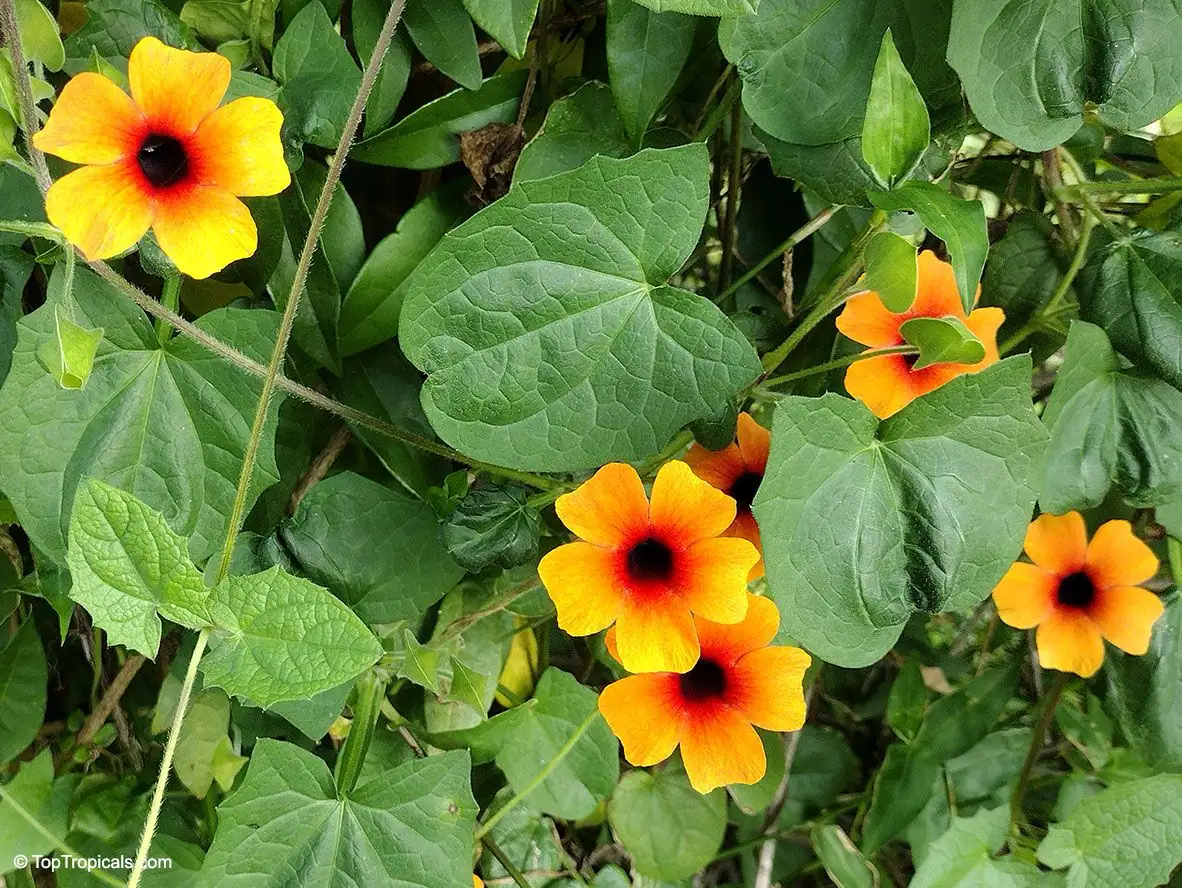
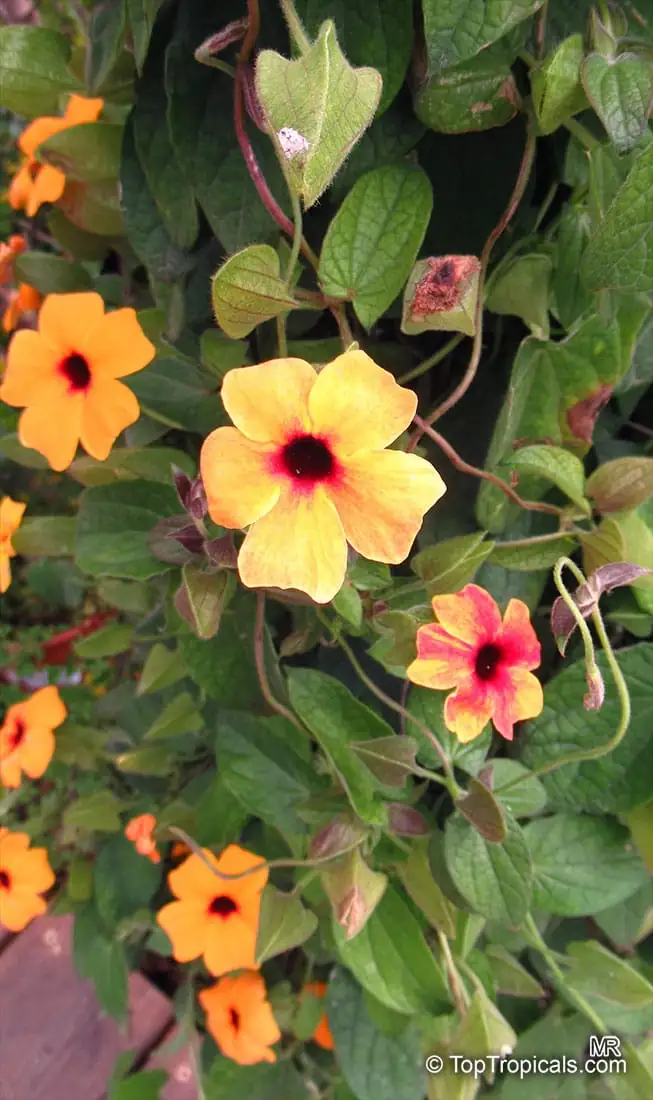
- Foliage: Leaves are heart-shaped to triangular, usually about 5–8 cm (2–3 in) long, with slightly toothed to smooth margins. The foliage is soft and lightly hairy, a dull deep green above and paler underneath with noticeable veins; the leaf stalks are “winged,” which is a key identifying feature.
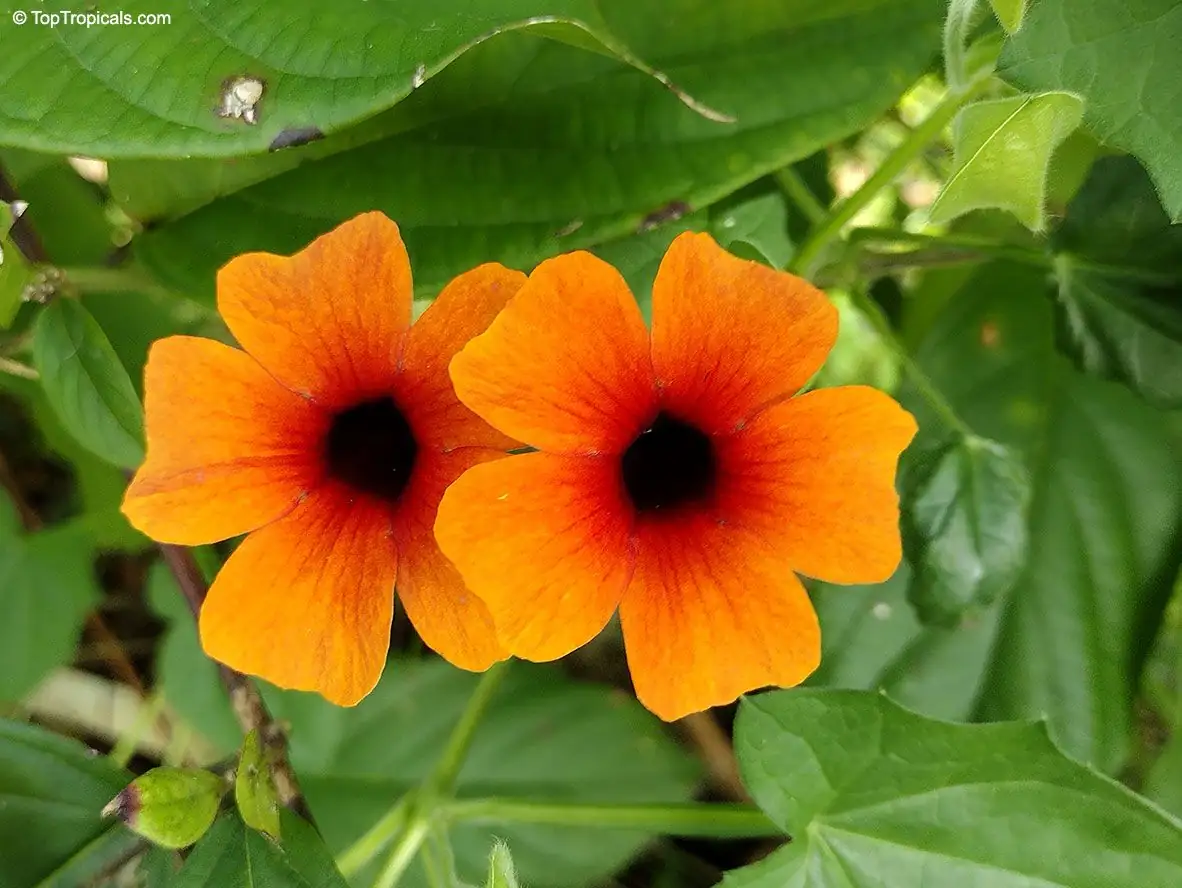
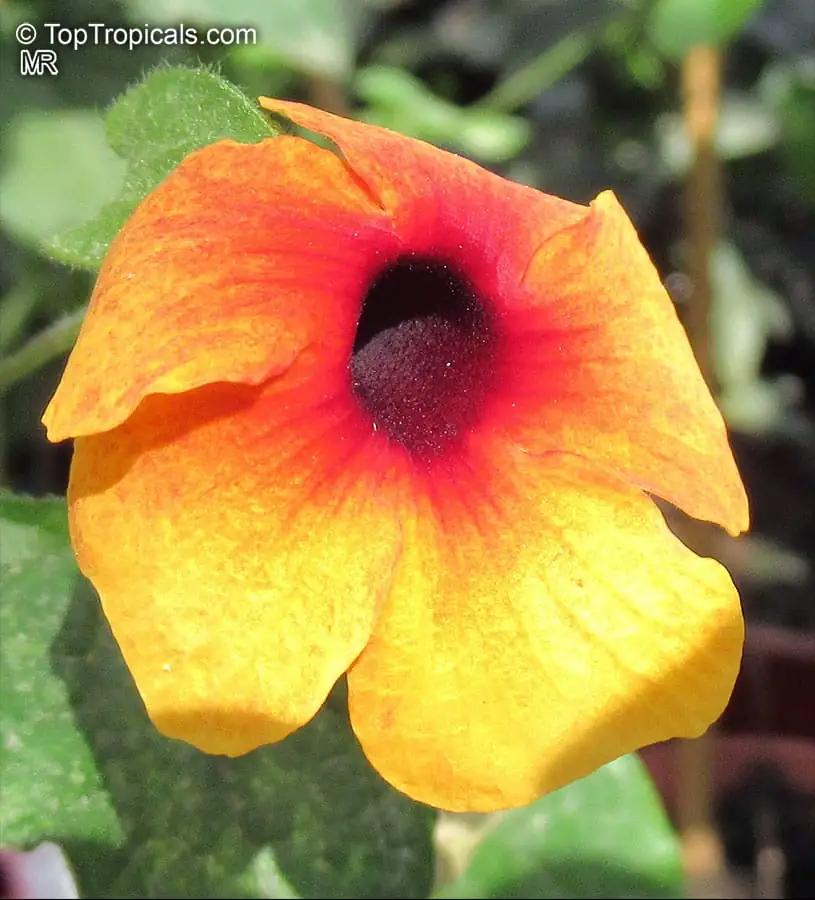
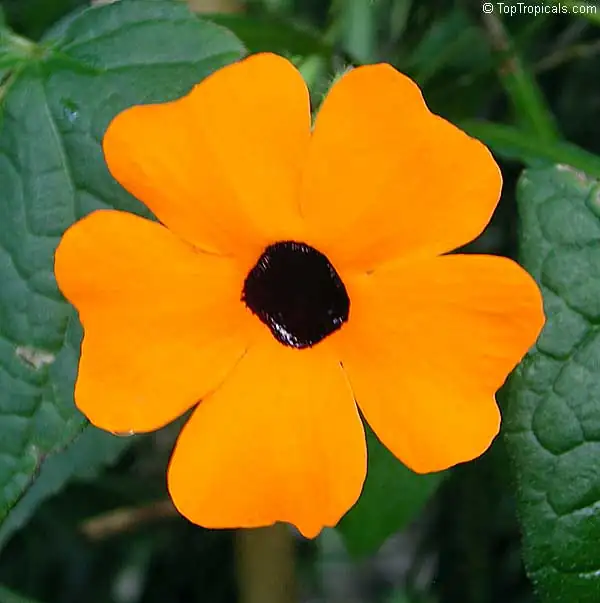
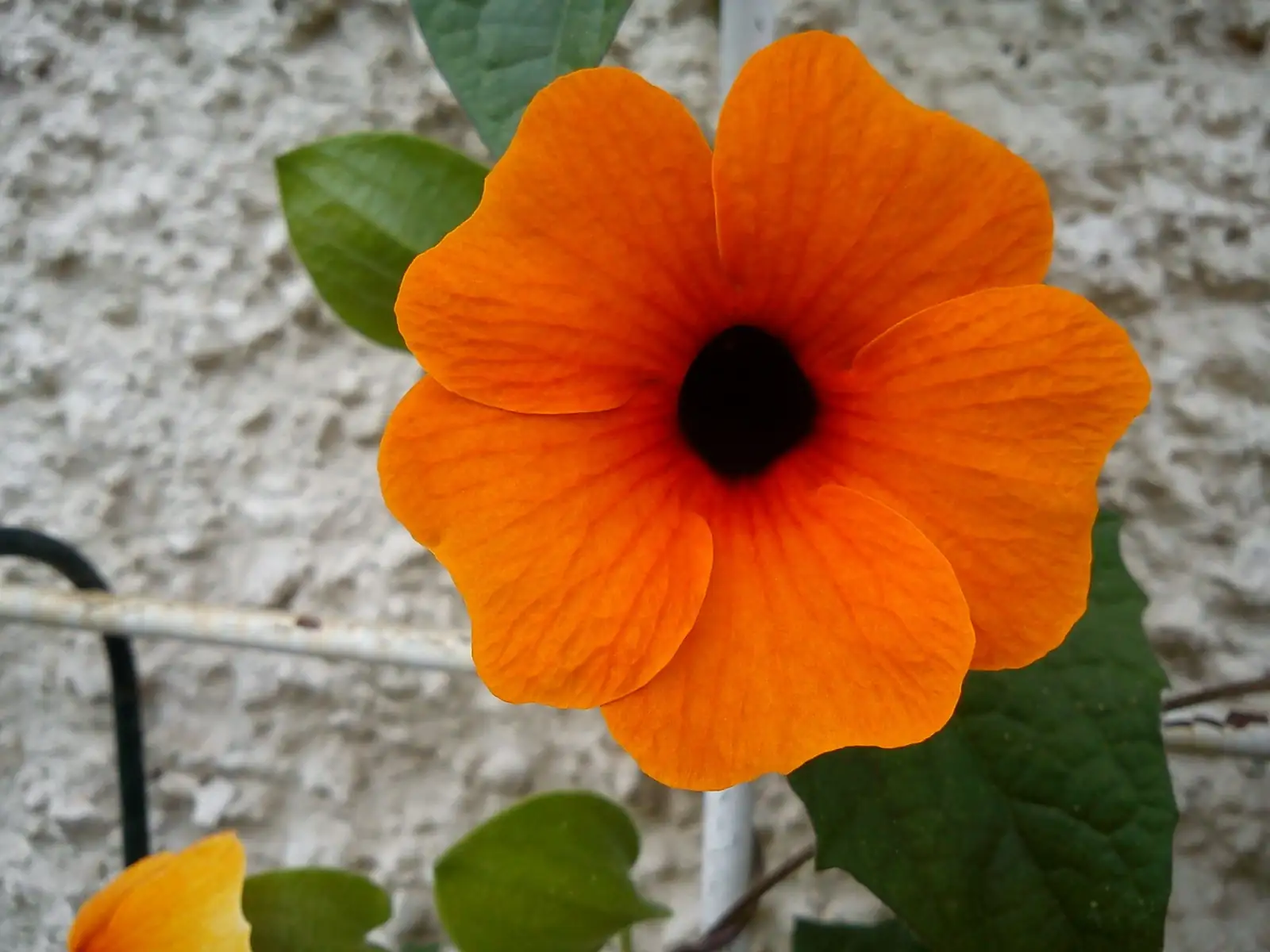
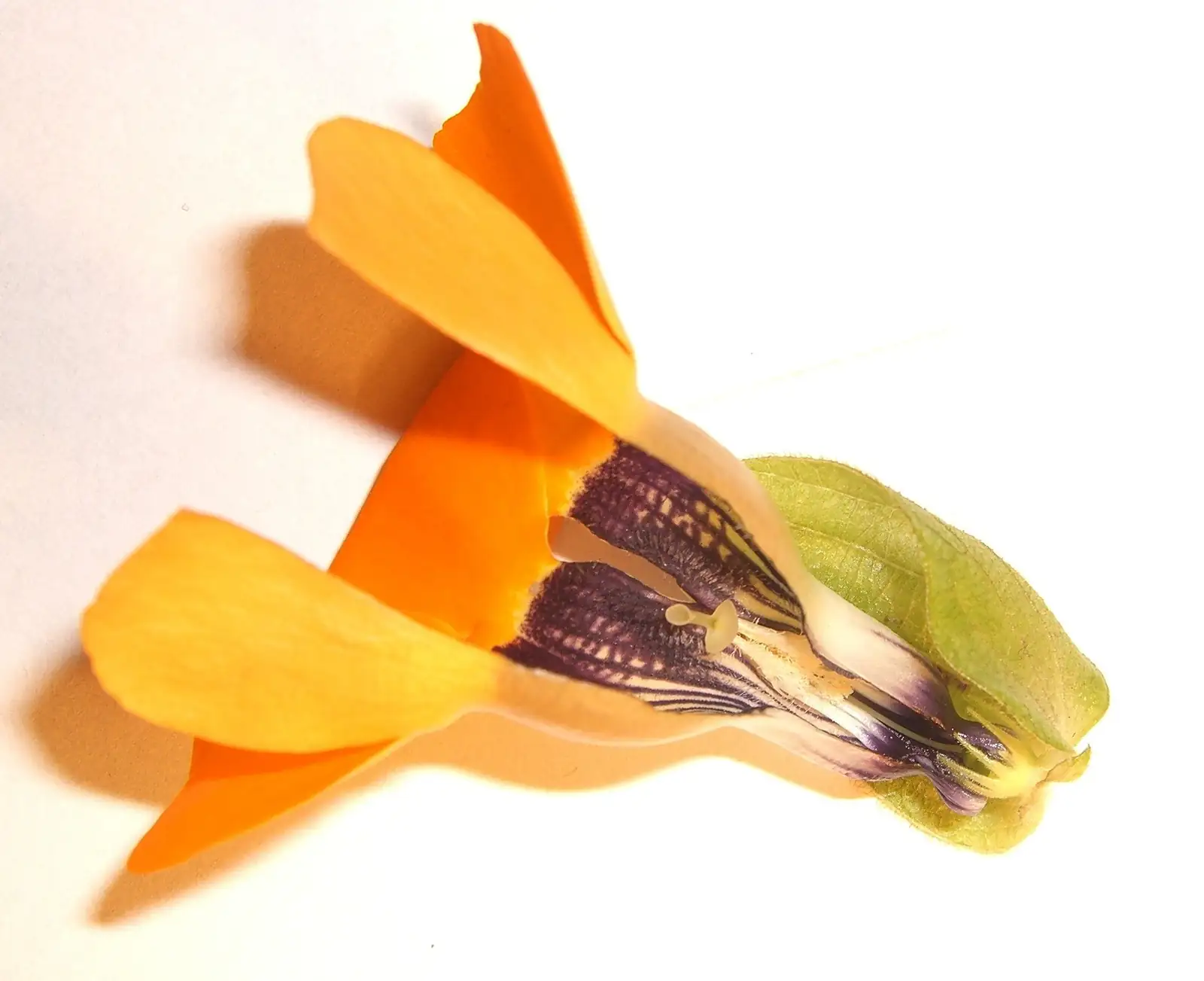
- Flower: Flowers are usually borne singly from the leaf axils and measure about 3.8 cm (1.5 in) across. Each bloom is a flared trumpet that opens into five overlapping lobes, nearly flat at the face. Colors range widely—orange, yellow, white, pink, red, and bicolors—almost always with the signature dark purple-brown throat (“black eye”).
- Flowering Season: Typically May–October (often blooming from mid-summer until frost, with peak bloom in late summer).
- Growth Habit: A twining vine that climbs by wrapping its stems around supports (not by tendrils). Without support it can trail and cascade, making it an excellent spiller for hanging baskets and containers.
Environment
Sunlight
Full sun for best flowering (aim for 6+ hours of direct sun daily). In very hot, dry regions, light afternoon shade can help reduce stress.
Temperature
Warm-lover: grows best around 21–27°C (70–80°F). Keep above about 16°C (60°F) for strong growth; outdoor nights should stay above about 10°C (50°F). Not frost-tolerant.
Humidity
Comfortable in humid conditions, but appreciates good airflow to prevent powdery mildew. Very dry indoor air can encourage spider mites.
Soil
Rich but well-draining soil, ideally a loam amended with organic matter. Prefers roughly neutral pH (about 6.6–7.7). Avoid waterlogged mixes.
Placement
Great on trellises, arbors, fences, and balcony supports; also excellent in hanging baskets, window boxes, patios, porches, and containers (add a small trellis or let it trail). Indoors: place at the brightest window or under grow lights.
Hardiness
Tender perennial in USDA Zones 10–11; grown as an annual in cooler zones.
Care Guide
Difficulty
Easy and beginner-friendly—fast growth, lots of flowers, and generally forgiving as long as it gets sun and steady moisture.
Buying Guide
Choose spring plants with sturdy stems and fresh green leaves (no yellowing, spotting, webbing, or sticky residue). Check undersides of leaves for mites/whiteflies if buying for indoors. Seed-grown plants are often especially vigorous.
Watering
Keep evenly moist but never soggy. In the ground, a common target is about 2.5 cm (1 in) of water per week from rain/irrigation. In hot spells, water when the top 2.5 cm (1 in) of soil feels dry. Containers dry quickly and may need daily watering in summer. Mulch helps conserve moisture; avoid leaving pots sitting in water.
Fertilization
Feed lightly during active growth. A balanced fertilizer every 4–6 weeks works well; in containers while blooming, feeding every 2–3 weeks can keep flowers coming. Too much nitrogen can cause leafy growth with fewer blooms—switch to a bloom-leaning (higher phosphorus) formula when buds are forming.
Pruning
Not essential for flowering, but pinching young tips encourages a bushier plant. Trim back long shoots to keep it tidy or to fit its support; remove tired growth as needed.
Propagation
Most often grown from seed: soak seeds in warm water for 1–2 days, then sow about 6 mm (1/4 in) deep. Start indoors 6–8 weeks before the last frost or direct-sow once soil is about 16°C (60°F). Germination is usually 10–21 days. Also easy from 10–15 cm (4–6 in) stem cuttings in fall, rooted in potting mix; layering can work too.
Repotting
Use a well-draining potting mix and a pot with drainage holes. Hanging baskets around 25–30 cm (10–12 in) can hold 2–3 plants for a full look. Repot when rootbound (often annually for container culture), and provide a small support if you want it to climb.
📅 Seasonal Care Calendar
Spring: start seeds indoors or plant out after frost when nights stay above about 10°C (50°F). Summer: water consistently and feed regularly for peak bloom. Fall: enjoy flowers until frost; collect seed if desired. Winter: in Zones 10–11, reduce watering and feeding; elsewhere, overwinter indoors in bright light and warmth or treat as an annual.
Pests, Diseases & Safety
Common Pests & Diseases
Usually trouble-free outdoors with sun and airflow. Indoors (or in hot, dry conditions), watch for spider mites and whiteflies; occasional mealybugs or scale can occur. Powdery mildew may appear if air is still and foliage stays damp—improve ventilation and avoid overhead watering. Treat pests with a strong water rinse, then insecticidal soap or horticultural oil as needed.
Toxicity
Generally considered non-toxic to humans and pets and is commonly listed as not on major toxic plant lists; still, discourage pets from chewing any houseplant.
Culture & Symbolism
Symbolism: Often associated with cheerfulness, encouragement, and determined resilience—those bright blooms with their “little dark eye” look like they’re smiling back at you.
History & Legends: Thunbergia is named for Swedish botanist Carl Peter Thunberg (1743–1828), a student of Linnaeus. The species epithet alata means “winged,” referring to the winged leaf stalks. It became popular as an ornamental and has been widely spread in warm regions, sometimes naturalizing where winters stay frost-free.
Uses: Mainly grown for ornament—training quickly over trellises, fences, and arches, or spilling beautifully from baskets and containers. It’s also used as a quick seasonal privacy screen. It can attract pollinators such as bees and butterflies; in some traditions, the plant has been used in folk remedies for minor inflammation (not a substitute for medical care).
FAQ
Is Black-eyed Susan vine an annual or a perennial?
It’s a tender perennial in USDA Zones 10–11. In colder climates it’s usually grown as an annual, though you can overwinter it indoors in a bright, warm spot.
Does it need a trellis or support?
If you want it to climb, yes—provide a trellis, fence, or strings. If you’d rather it trail, it also looks great cascading from hanging baskets or window boxes.
Why is my plant growing lots of leaves but not many flowers?
The most common reasons are not enough sun or too much nitrogen fertilizer. Give it at least 6 hours of direct sun and use a balanced or bloom-focused feed rather than a high-nitrogen formula.
How fast does it grow?
Very fast in warm weather: about 0.9–2.4 m (3–8 ft) in one season as an annual, and potentially up to around 6.1 m (20 ft) in frost-free climates.
Can I grow it indoors?
Yes, if you can provide very bright light (often a sunny window plus a grow light), warmth above about 16°C (60°F), and you keep an eye out for spider mites and whiteflies.
Fun Facts
- The “black eye” is usually a deep purple-brown throat, not a true black spot.
- Despite the shared nickname, this vine is not related to the prairie wildflower Black-eyed Susan (Rudbeckia hirta).
- In frost-free climates it can self-seed and spread readily—beautiful, but worth monitoring in warm regions.
- It’s a classic choice for instant vertical color on small spaces like balconies and patios.
- The seeds have a distinctive, textured look that many gardeners recognize instantly once they’ve collected them.