

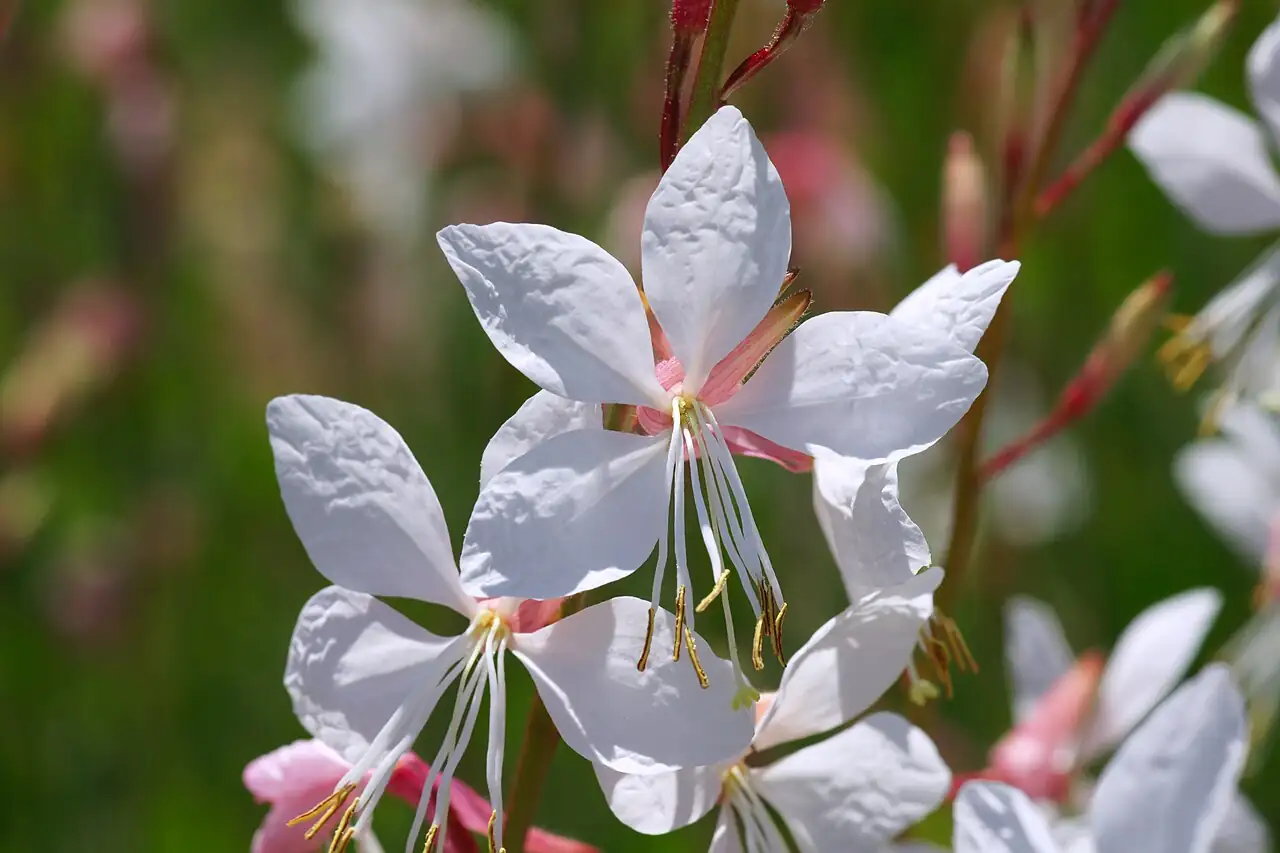
Plant Features
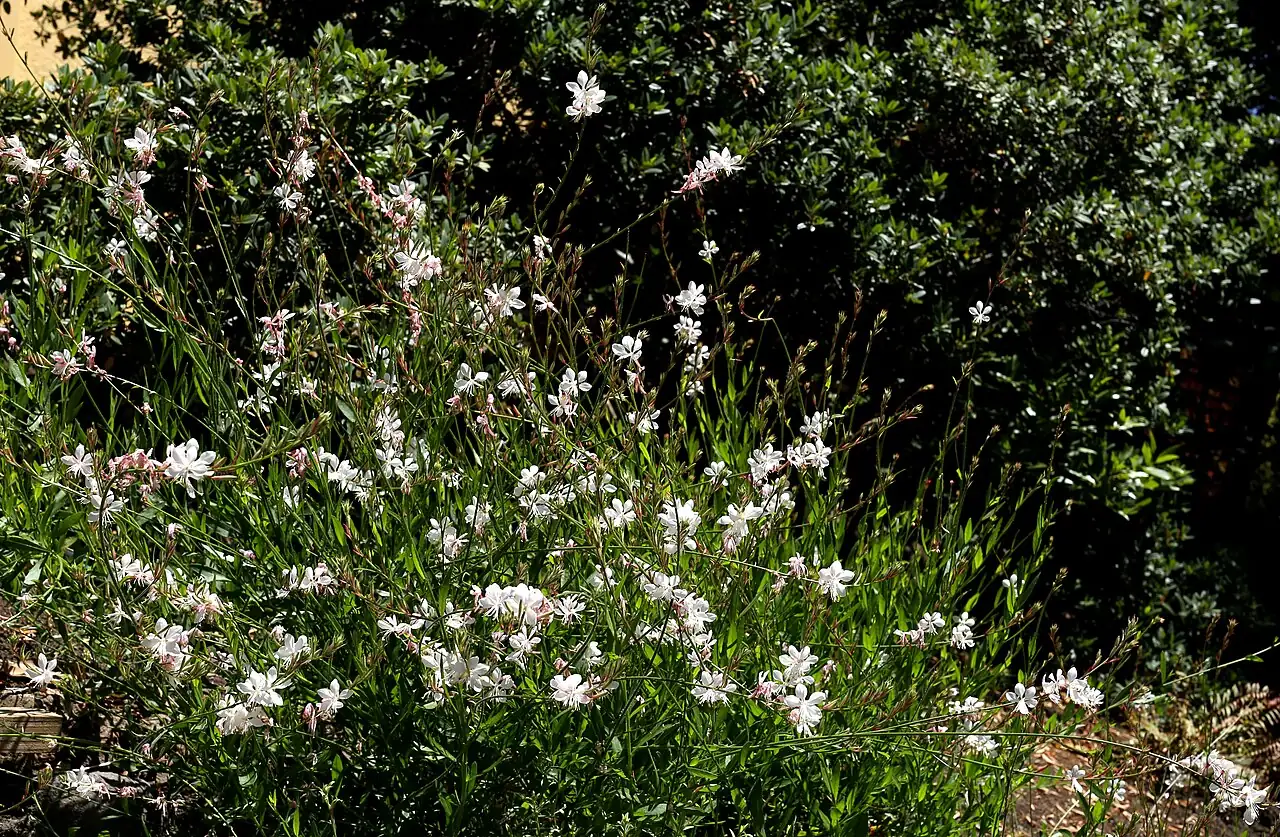
- Size: Typically 60–120 cm (24–48 in) tall and 45–60 cm (18–24 in) wide; can reach about 150 cm (59 in) in flower in ideal conditions.
- Foliage: Narrow, lance-shaped leaves with slightly wavy, toothed margins. Plants are finely branched, sometimes lightly hairy, giving an overall soft, delicate texture.
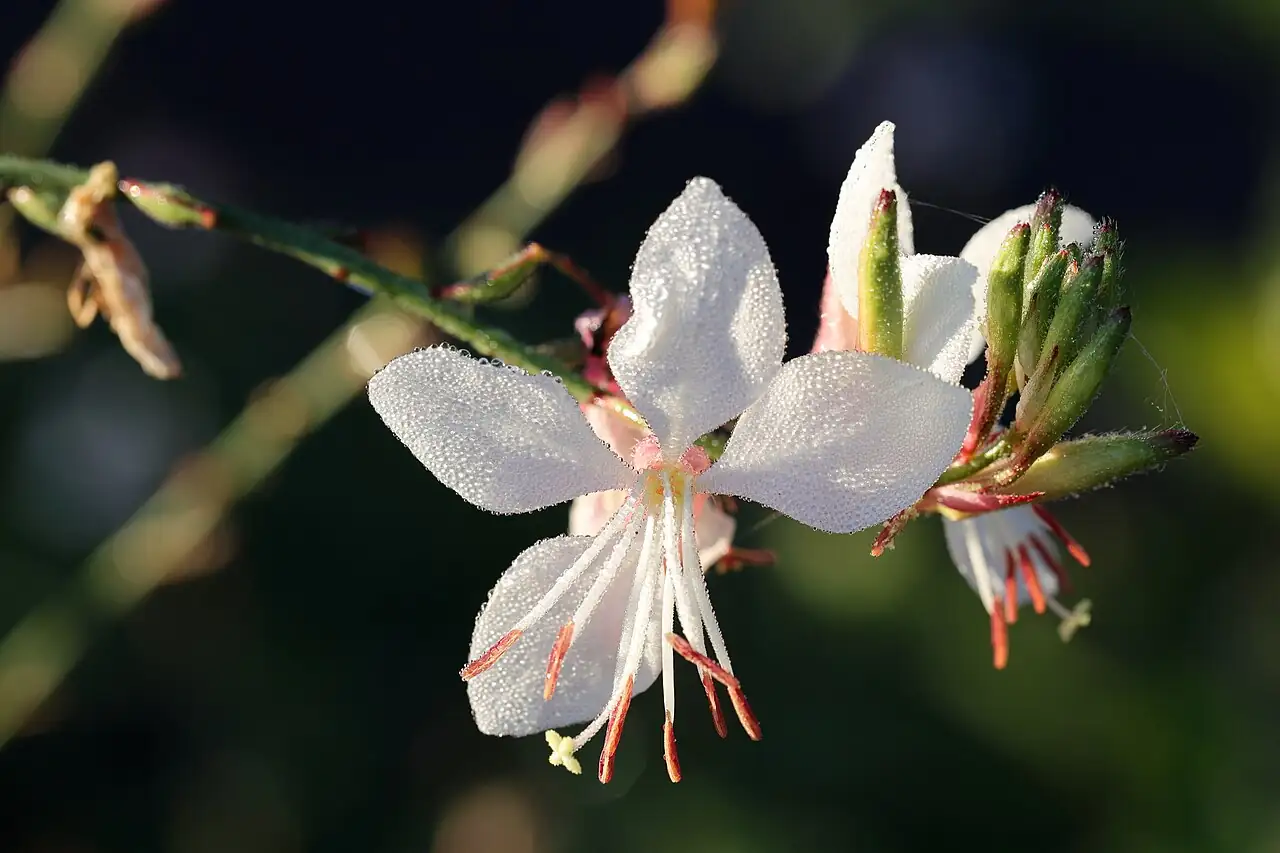
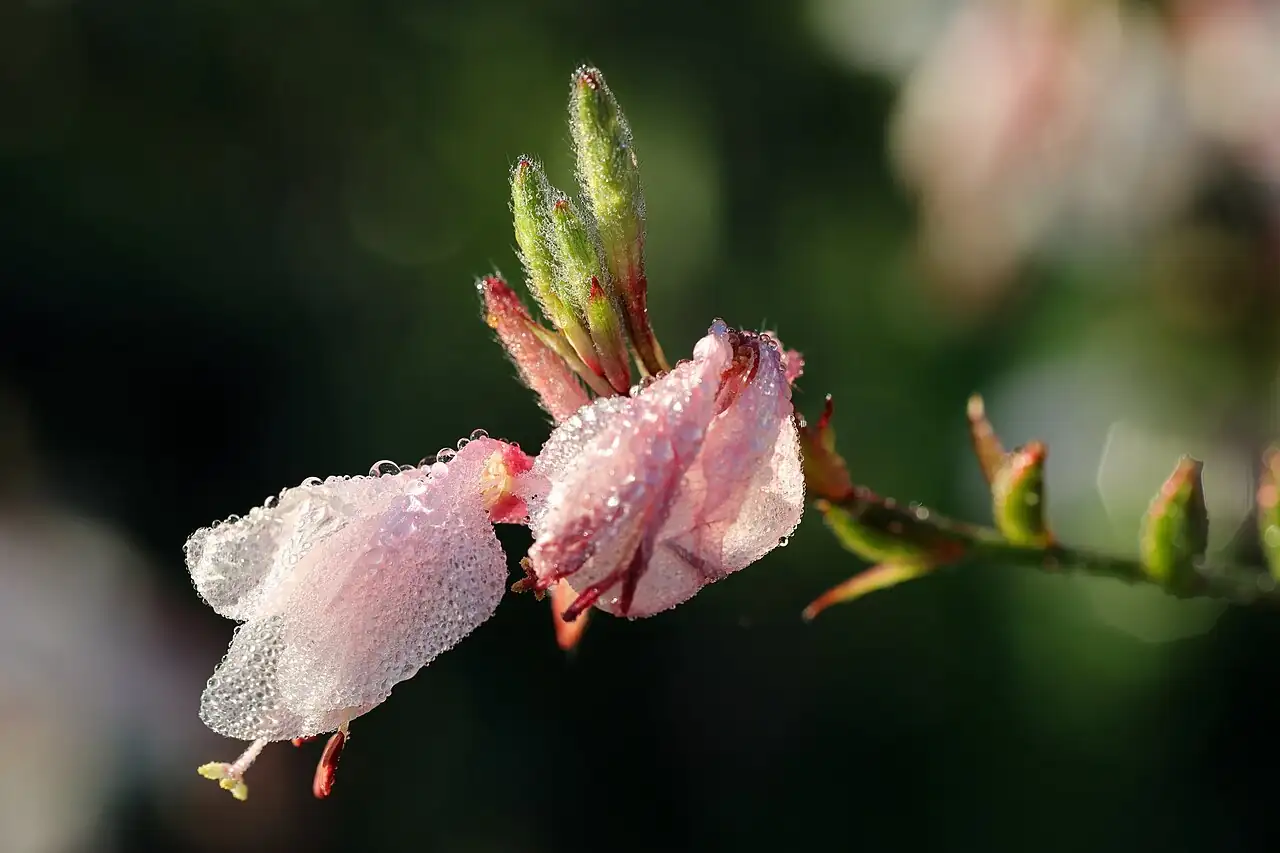
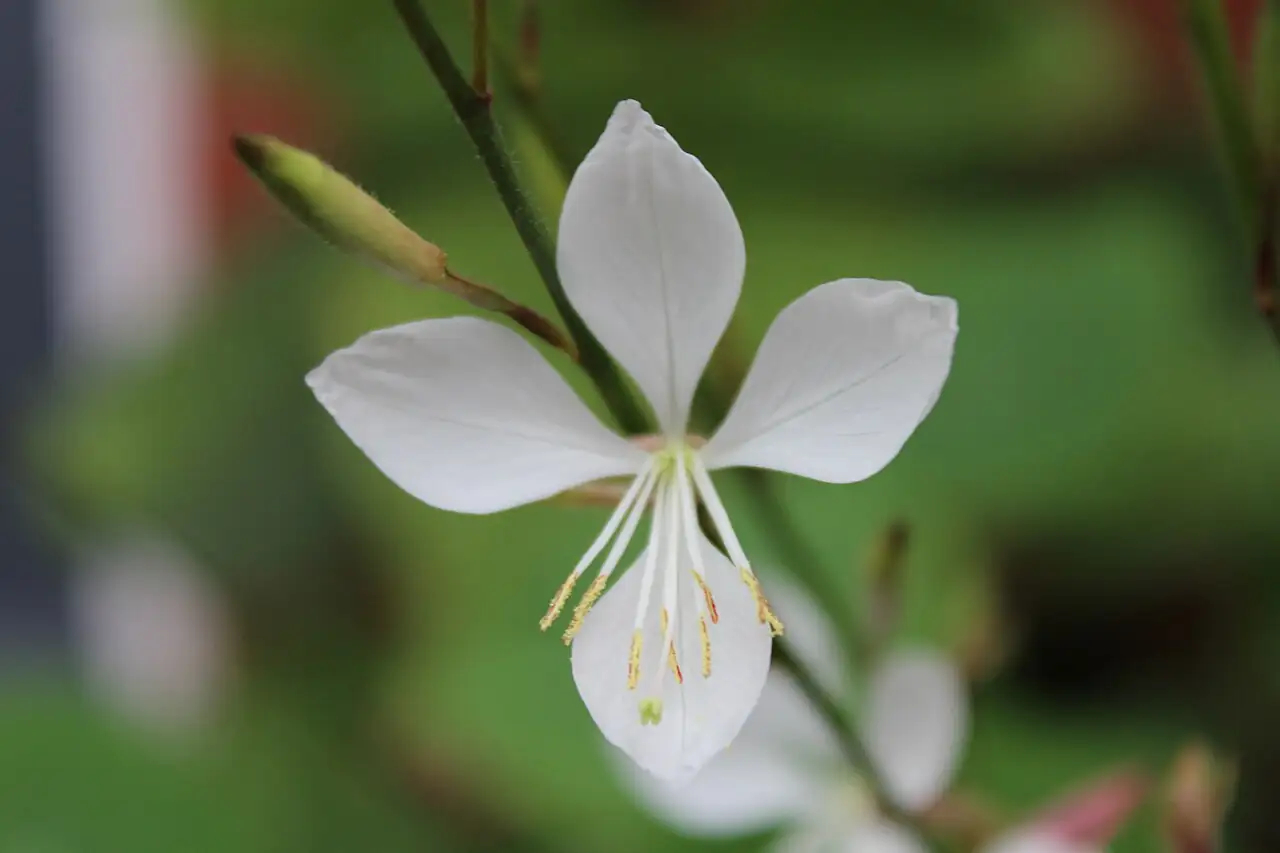
- Flower: Small, four-petaled flowers carried in airy terminal spikes/panicles on wiry stems. Blooms are commonly white aging to pink, with pink-flowering forms depending on cultivar; the overall effect is light and fluttery.
- Flowering Season: Late spring to late summer, about May–August; may continue into early fall in mild climates.
- Growth Habit: Clump-forming, upright to loosely arching perennial with many branching stems and an open, floating silhouette.
Environment
Sunlight
Full sun for the best, most floriferous display. Tolerates light shade, but may stretch and flop if it doesn’t get enough sun.
Temperature
Prefers mild to warm conditions; performs best around 15–25°C (59–77°F). In very hot, humid summers it may look tired or decline, especially if airflow is poor.
Humidity
Moderate to low humidity is ideal. Good airflow matters—avoid crowded, stagnant conditions, and never let the crown stay wet for long.
Soil
Deep, fertile but fast-draining soil—sandy or gritty loam is perfect. Heavy clay should be amended generously for drainage; waterlogged soil is the quickest way to lose the plant.
Placement
Sunny borders and mixed beds, meadow/prairie-style drifts, and anywhere you want a light, airy “weaving” effect among grasses and perennials. Also suitable for large containers if drainage is excellent.
Hardiness
USDA Zone 5–9 (roughly down to about -29°C / -20°F, depending on winter wetness and cultivar). Notably, wet winters can reduce survival even where temperatures are tolerable.
Care Guide
Difficulty
Easy to moderate. It’s simple and rewarding in full sun with sharply draining soil; most failures come from soggy soil, poor drainage, or too much shade.
Buying Guide
Choose compact, well-branched plants with clean green foliage and firm, healthy stems. Avoid pots that stay constantly wet or show blackened stems/signs of root rot. In regions with wet winters, pick cultivars known for better hardiness and longevity.
Watering
Water regularly during establishment. Once rooted in, water sparingly—let the top layer of soil dry between waterings. Avoid standing water at all costs; frequent watering and poor drainage can lead to rapid decline.
Fertilization
A light feeder. In spring, use a small amount of balanced slow-release fertilizer or top-dress with compost. Too much nitrogen can cause floppy growth and fewer flowers.
Pruning
Deadhead or lightly shear after a main flush to encourage rebloom and keep it tidy. A midsummer cutback of about one-third can refresh plants and reduce legginess. Cut back old stems in late winter or early spring.
Propagation
By seed (often self-sows lightly) or by basal cuttings in spring to early summer. Division can work, but the plant may resent disturbance—keep divisions small and replant promptly.
Repotting
For container plants, repot in spring every 1–2 years into a free-draining mix. Ensure drainage holes are clear, and avoid oversized pots that stay wet.
📅 Seasonal Care Calendar
Spring: cut back, feed lightly, and plant out after hard frosts. Summer: keep in full sun, don’t overwater; shear after flowering for rebloom. Autumn: reduce watering; leave some seedheads if you want gentle self-sowing. Winter: keep the crown on the dry side; in colder areas, wait to cut back until late winter/early spring rather than in fall.
Pests, Diseases & Safety
Common Pests & Diseases
Usually trouble-free. In wet or poorly drained conditions it may develop root/crown rot. Occasional pests include aphids, spider mites (especially when stressed by heat/drought), and powdery mildew if airflow is poor or plants are crowded.
Toxicity
Not known to be toxic to people or pets. As with many plants, individual sensitivities can occur—avoid ingestion and wash hands after handling if you have sensitive skin.
Culture & Symbolism
Symbolism: Often linked with lightness, freedom, and graceful movement—its flowers seem to “dance” on long stems.
History & Legends: A North American prairie and open-woodland perennial that became a modern garden favorite thanks to its exceptionally long blooming season and its airy, informal look that pairs beautifully with ornamental grasses and naturalistic designs.
Uses: Ornamental planting in flower beds, mixed borders, edging, and meadow/prairie-style drifts. It’s especially useful as a soft, floating accent that visually weaves through heavier plants without feeling dense.
FAQ
When does beeblossom bloom?
Most often from May to August (late spring through late summer), and it can keep going into early fall in mild climates.
When does it set seed/fruit?
Seed capsules typically mature in late summer to early fall, around August–September.
How tall does it grow?
Commonly 60–120 cm (24–48 in) tall, with flowering stems sometimes reaching about 150 cm (59 in) in great conditions.
Where is it native to?
It’s native to temperate North America and is widely cultivated elsewhere, including eastern China.
What growing conditions does it prefer?
Full sun, sharply draining soil (sandy/gritty is ideal), and moderate watering—avoid waterlogged conditions. It’s fairly cold-hardy but can struggle in very hot, humid summers.
Fun Facts
- Its nickname “whirling butterflies” comes from the way the blooms flutter on tall, wiry stems in the breeze.
- Once established in the ground, it tolerates short dry spells better than many flowering border perennials—so long as the soil drains well.
- Designers love it in naturalistic plantings because it adds movement and a “see-through” layer rather than a solid block of color.


