

Plant Features
- Size: Typically 1–2 m (3.3–6.6 ft) tall at maturity.
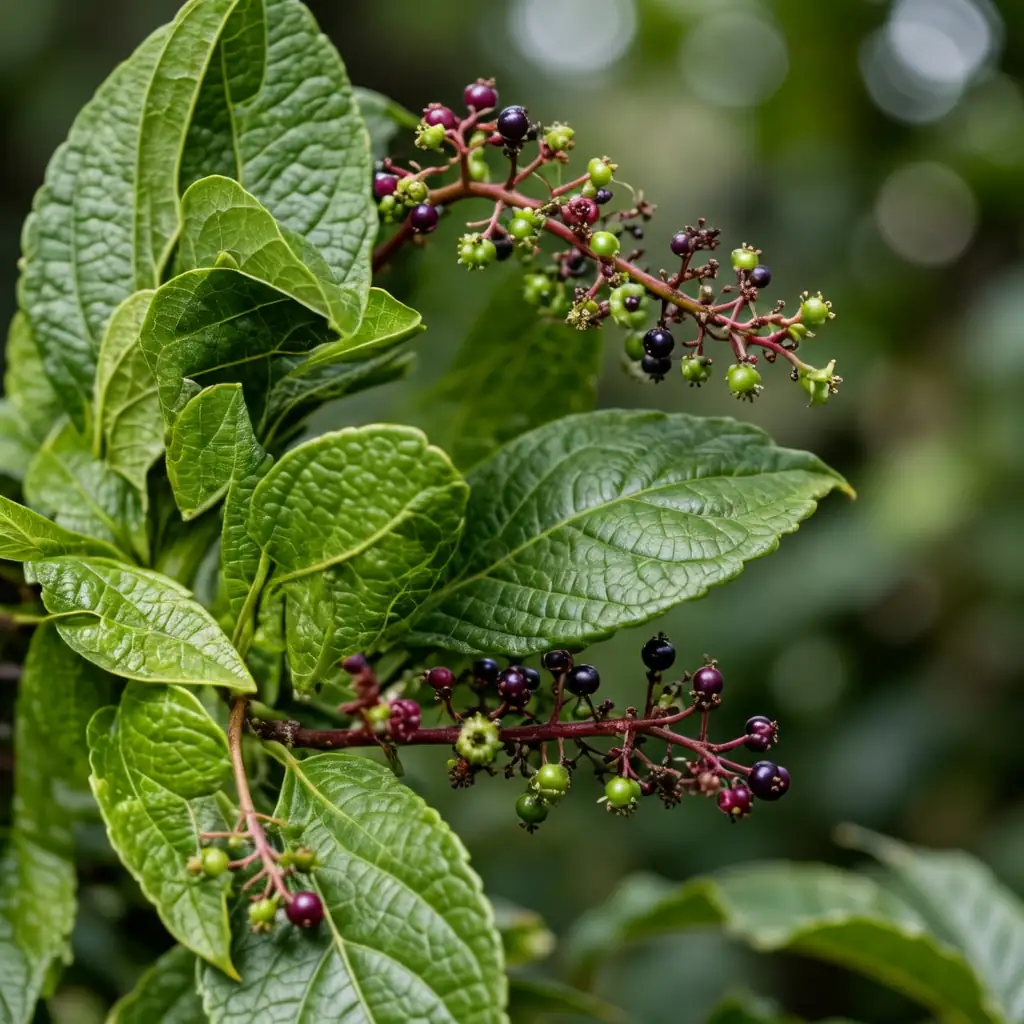
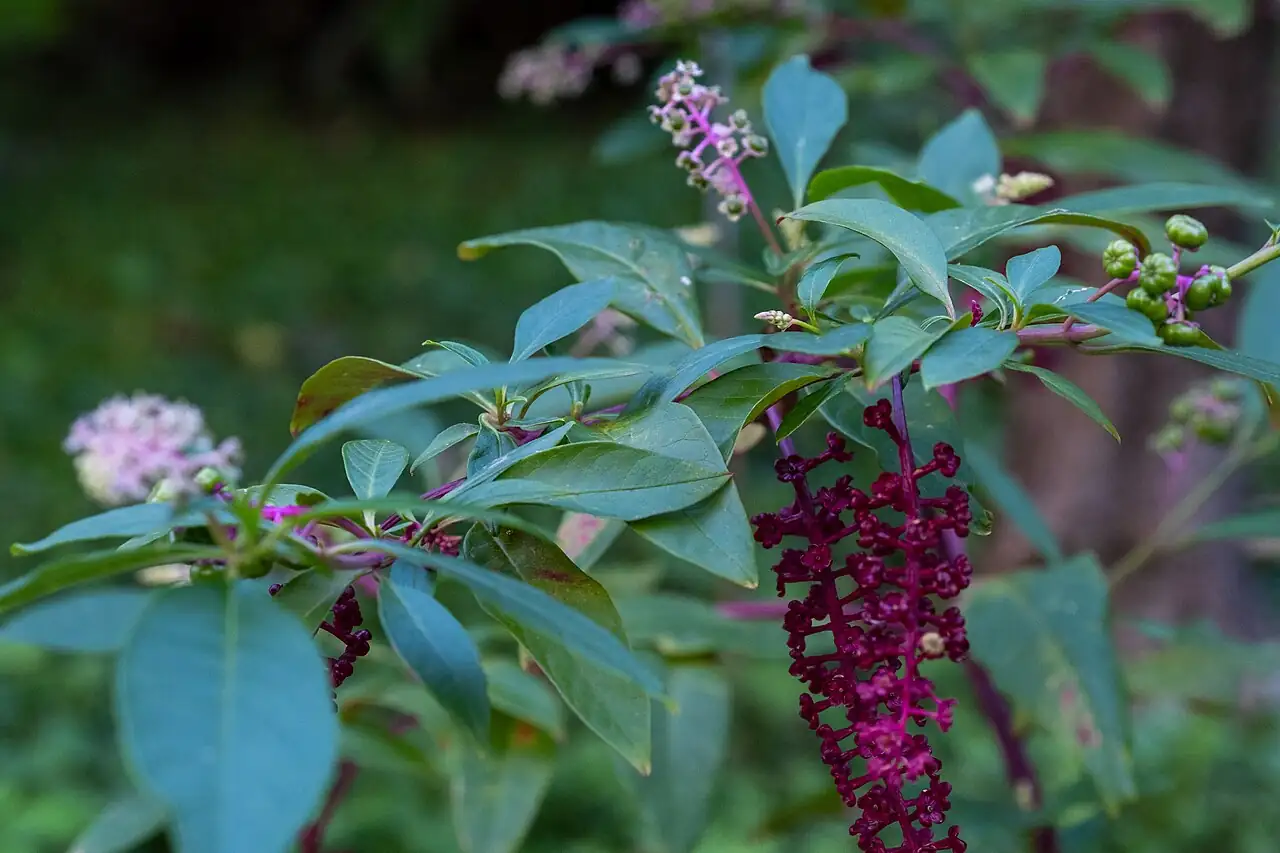
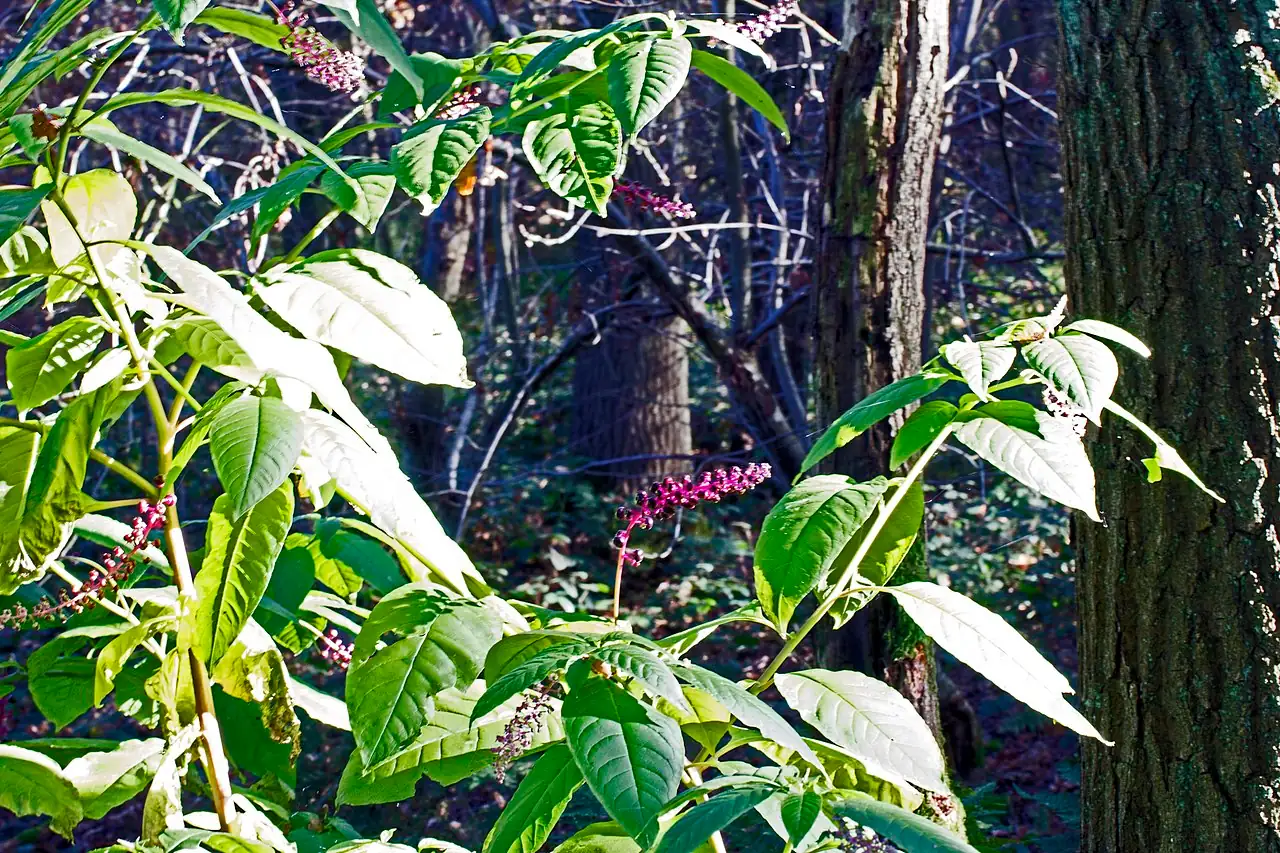
- Foliage: Leaves are large, soft-textured, and broadly elliptic to ovate-elliptic with pointed tips, giving the plant a lush, bold look.
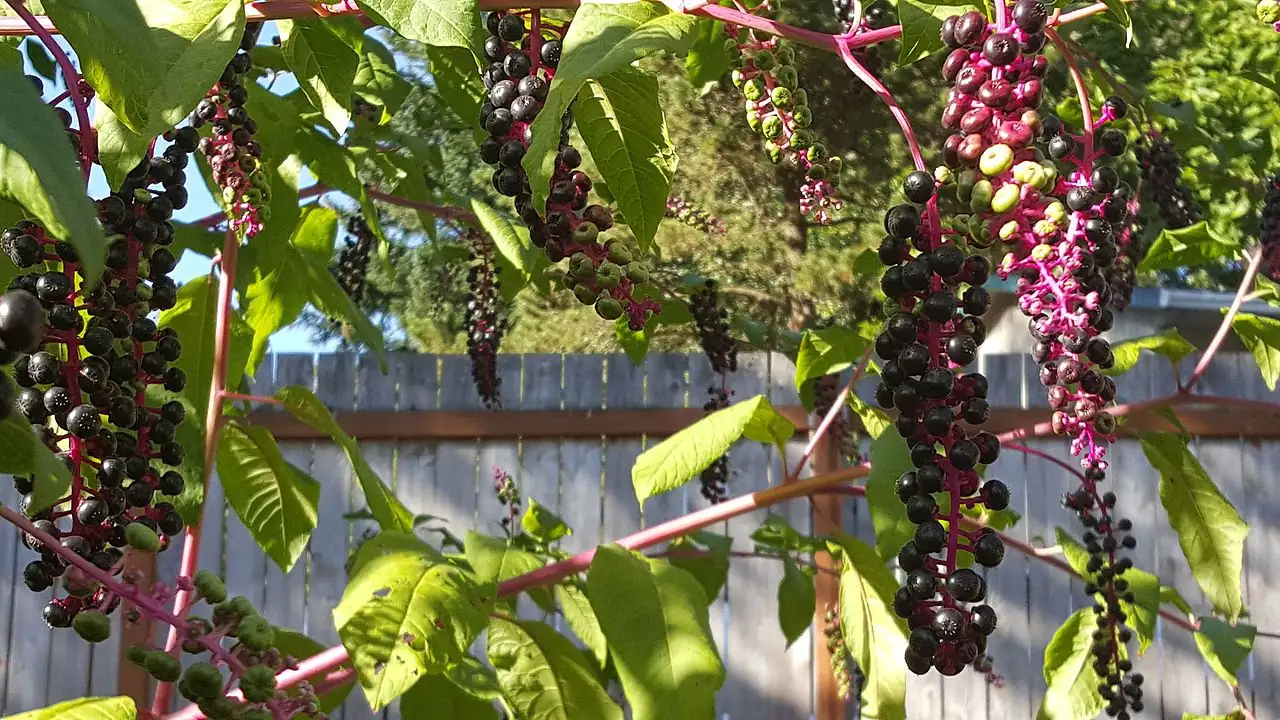
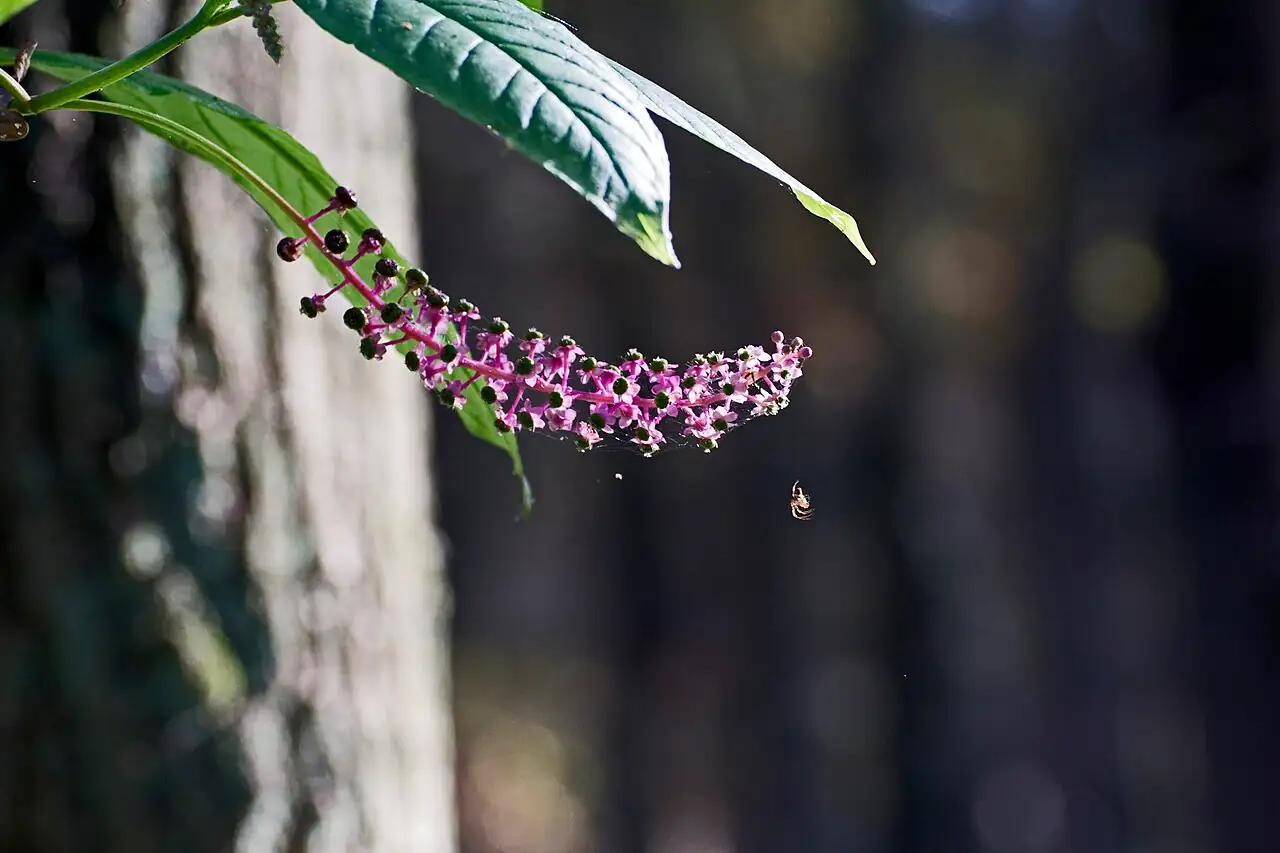
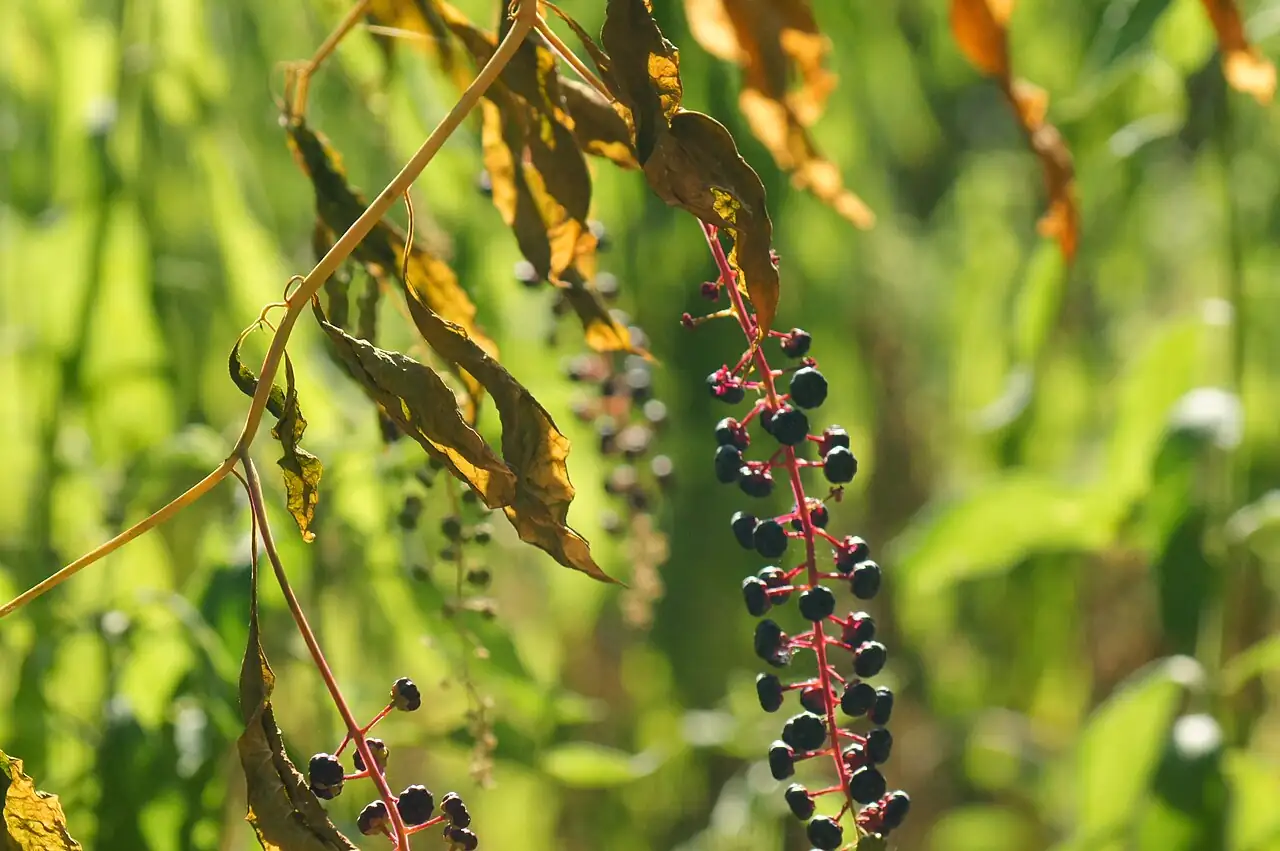
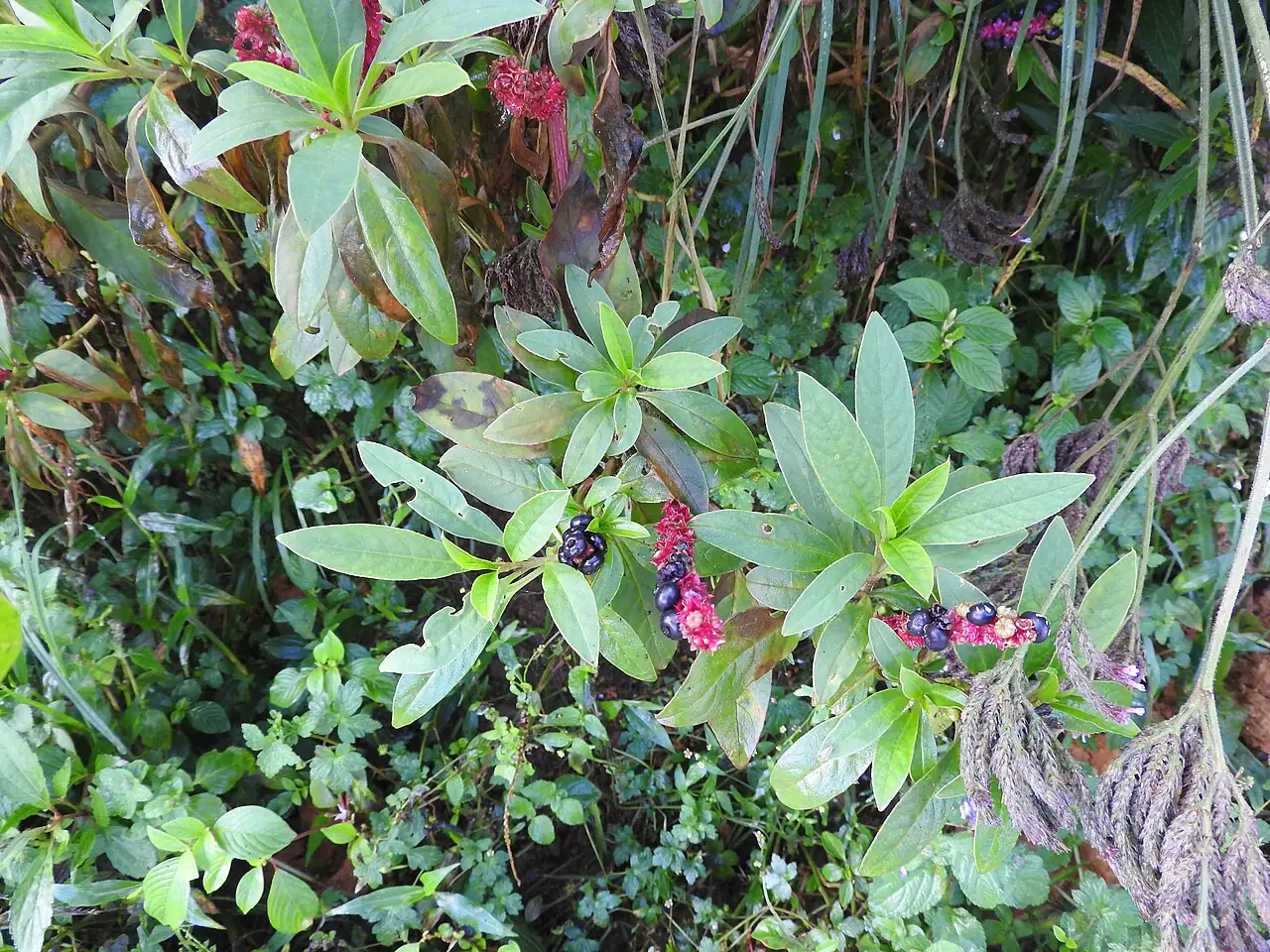
- Flower: Produces terminal or axillary racemes of many small white to greenish-white flowers, sometimes tinged pink. Flower racemes are about 4–12 cm (1.6–4.7 in) long. After flowering, fruits develop in drooping clusters as flattened, berry-like drupes that ripen to a glossy deep purple-black in late summer through autumn (commonly Aug–Oct).
- Flowering Season: Summer to early autumn; commonly June–August.
- Growth Habit: Upright, vigorous perennial herb arising from a thick, fleshy, conical taproot; readily self-seeds in suitable conditions.
Environment
Sunlight
Full sun to partial shade (best flowering and fruiting in brighter light).
Temperature
Warm-season grower; strongest growth around 18–30°C (64–86°F). In the ground it tolerates winter cold by dying back and returning from the root when temperatures warm.
Humidity
Adaptable; does well in average outdoor humidity.
Soil
Moist but well-drained, fertile soil; tolerant of many soil types including loam and disturbed ground, as long as it isn’t waterlogged.
Placement
Best grown outdoors in gardens/courtyards—ideally in a managed bed or wild garden area where volunteers (self-sown seedlings) can be controlled and kept away from children and pets.
Hardiness
USDA Zone 4–9; top growth is frost-killed, but the plant regrows from the root.
Care Guide
Difficulty
Easy and highly adaptable; can become weedy where conditions suit it.
Buying Guide
Choose plants with sturdy, upright stems and clean, unblemished foliage. Avoid any with crown rot or obvious pest damage. Check local guidance—pokeweed can be considered invasive in some regions.
Watering
Water regularly while establishing to keep soil evenly moist. Once established it tolerates short dry spells, but looks best with steady moisture. Avoid soggy, waterlogged soil.
Fertilization
Usually unnecessary in decent garden soil. If growth is weak, feed in spring with a balanced slow-release fertilizer at label rates; too much fertilizer can cause overly lush, floppy growth.
Pruning
Remove flower/fruit spikes (deadhead) to reduce self-seeding and limit spread. Cut stems back to ground level after frost or in late winter before new shoots emerge.
Propagation
Mostly by seed (often self-sown). Can also be divided from the root in late winter to early spring—wear gloves and handle carefully due to toxicity.
Repotting
Not a great long-term container plant because of its large taproot. If grown in a pot, use a deep container, refresh the mix yearly, and transplant gently to avoid root damage.
📅 Seasonal Care Calendar
Spring: shoots emerge; water as needed and mulch. Summer: flowering/berry set; stake if exposed to wind. Late summer–autumn: remove fruiting spikes to reduce spread. Winter: stems die back; cut down and dispose of plant material safely.
Pests, Diseases & Safety
Common Pests & Diseases
Usually trouble-free. Occasionally aphids or leaf spots appear; improve airflow, avoid frequent overhead watering, and rinse aphids off or use insecticidal soap if needed.
Toxicity
Highly toxic to humans and pets. All parts are poisonous, especially the root and berries. Ingestion can cause severe gastrointestinal upset and systemic symptoms. Keep away from children/animals and wear gloves when handling.
Culture & Symbolism
Symbolism: Often linked with wildness and resilience because it thrives in disturbed ground, and admired for the dramatic look of its dark, hanging berry clusters.
History & Legends: A North American native that was introduced elsewhere as an ornamental. A herbarium specimen collected in Hangzhou in 1935 suggests it was being grown in parts of China relatively early for garden display.
Uses: Primarily ornamental for bold foliage and showy fruit clusters; also used in wildlife-friendly plantings since some birds eat the berries. Not recommended for edible gardens due to toxicity and its tendency to self-seed.
FAQ
Is American pokeweed safe to grow in a home garden?
It can be grown as an ornamental, but it’s highly toxic and can self-seed aggressively. Grow it only where children and pets can’t access it, and remove fruit spikes to prevent spread.
When does it flower and fruit?
It usually flowers in summer (often June–August) and produces ripe berries in late summer to autumn, commonly August–October.
Fun Facts
- The glossy, deep purple-black berries hang in drooping clusters, making the plant especially noticeable in late summer.
- It readily naturalizes in disturbed soils and can pop up as volunteer seedlings where birds drop the seeds.
- A specimen collected in Hangzhou in 1935 hints at its early ornamental introduction in China.
- Because the entire plant is poisonous—especially roots and berries—thoughtful placement and careful handling are essential.


