Plant Features
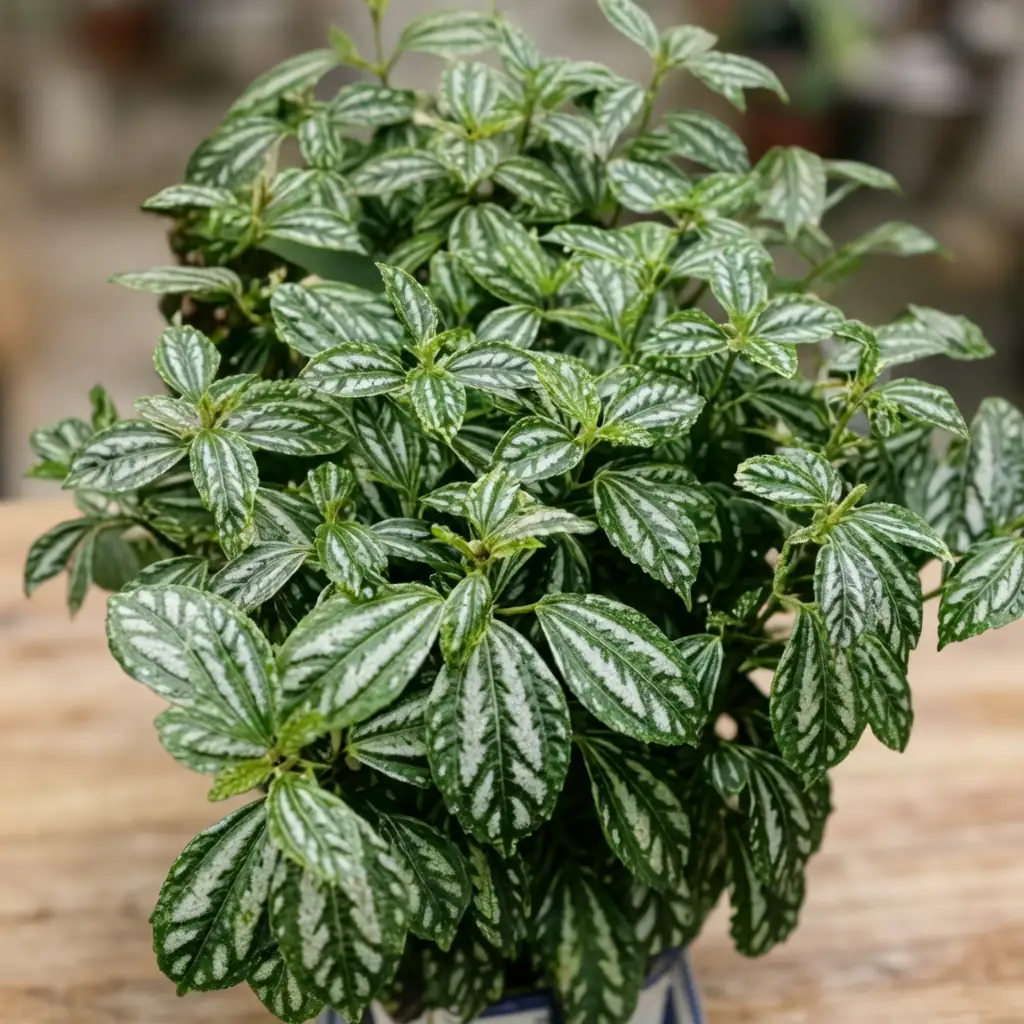
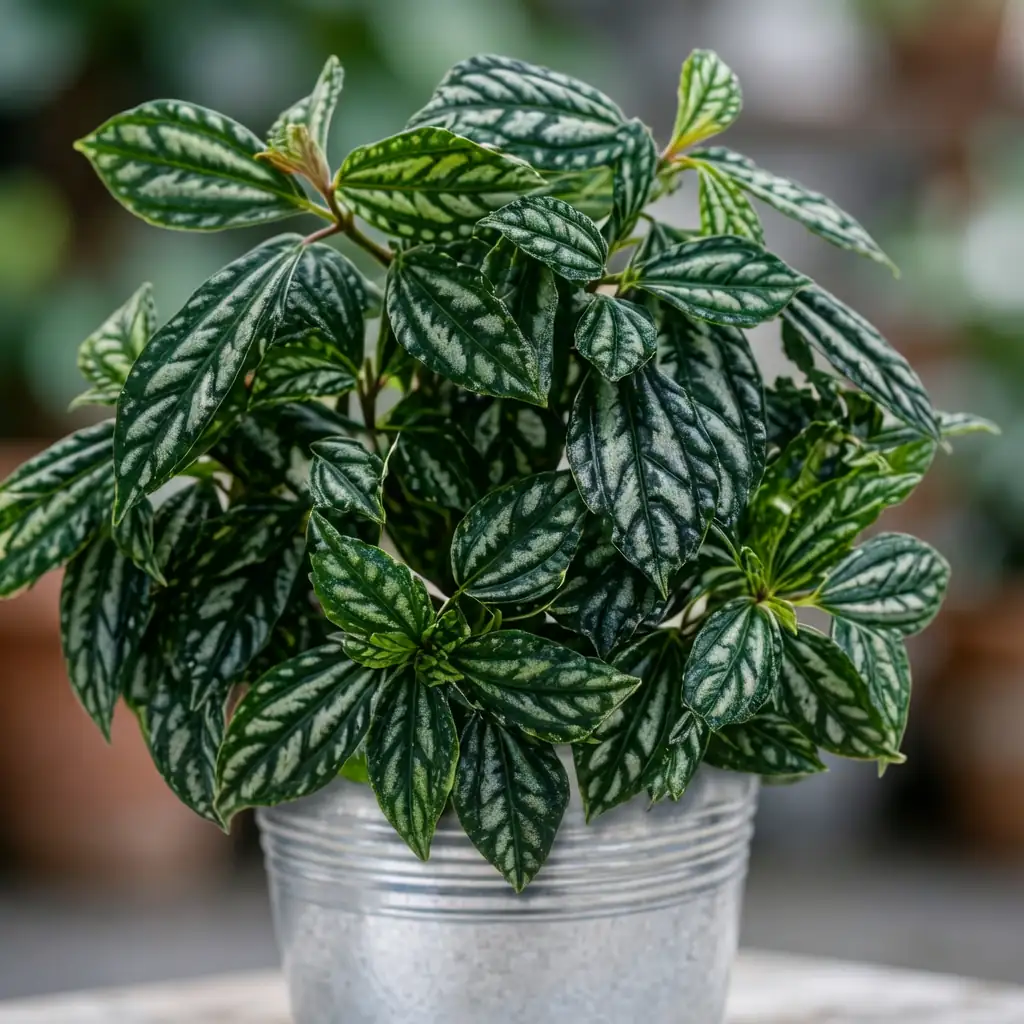
- Size: Typically about 20–30 cm (8–12 in) tall and 20–30 cm (8–12 in) wide, forming a compact mound. Commonly grown in 12–15 cm (5–6 in) pots, and can be shifted up to about 18–20 cm (7–8 in) as it fills out; pinching keeps it especially tidy and bushy.
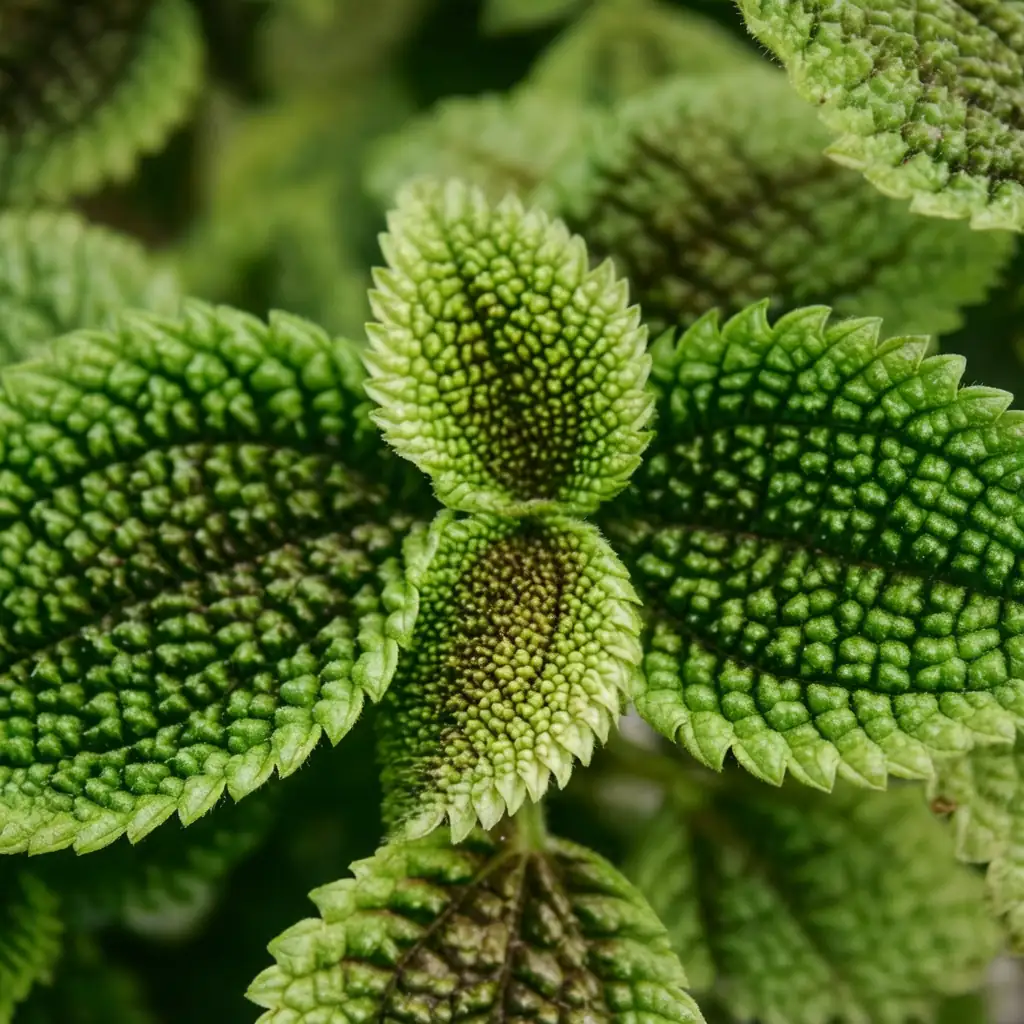
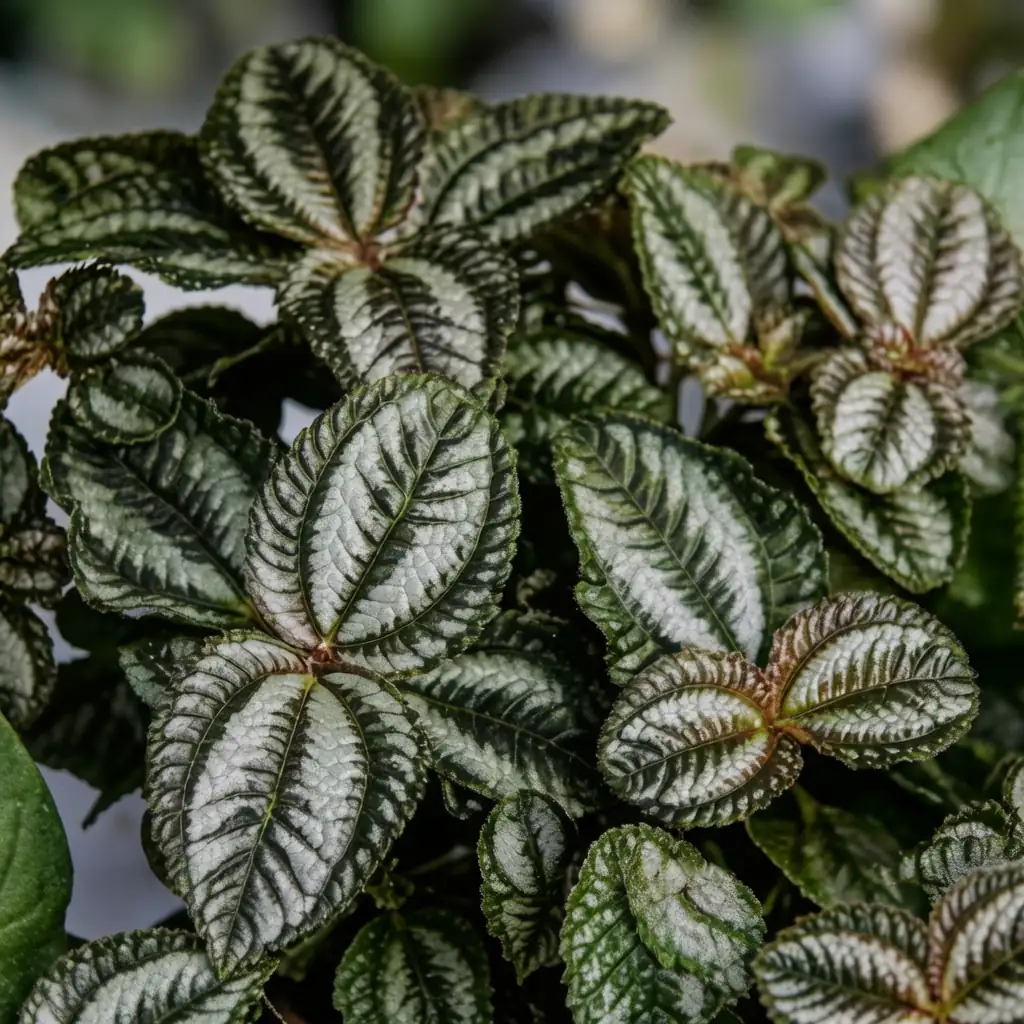
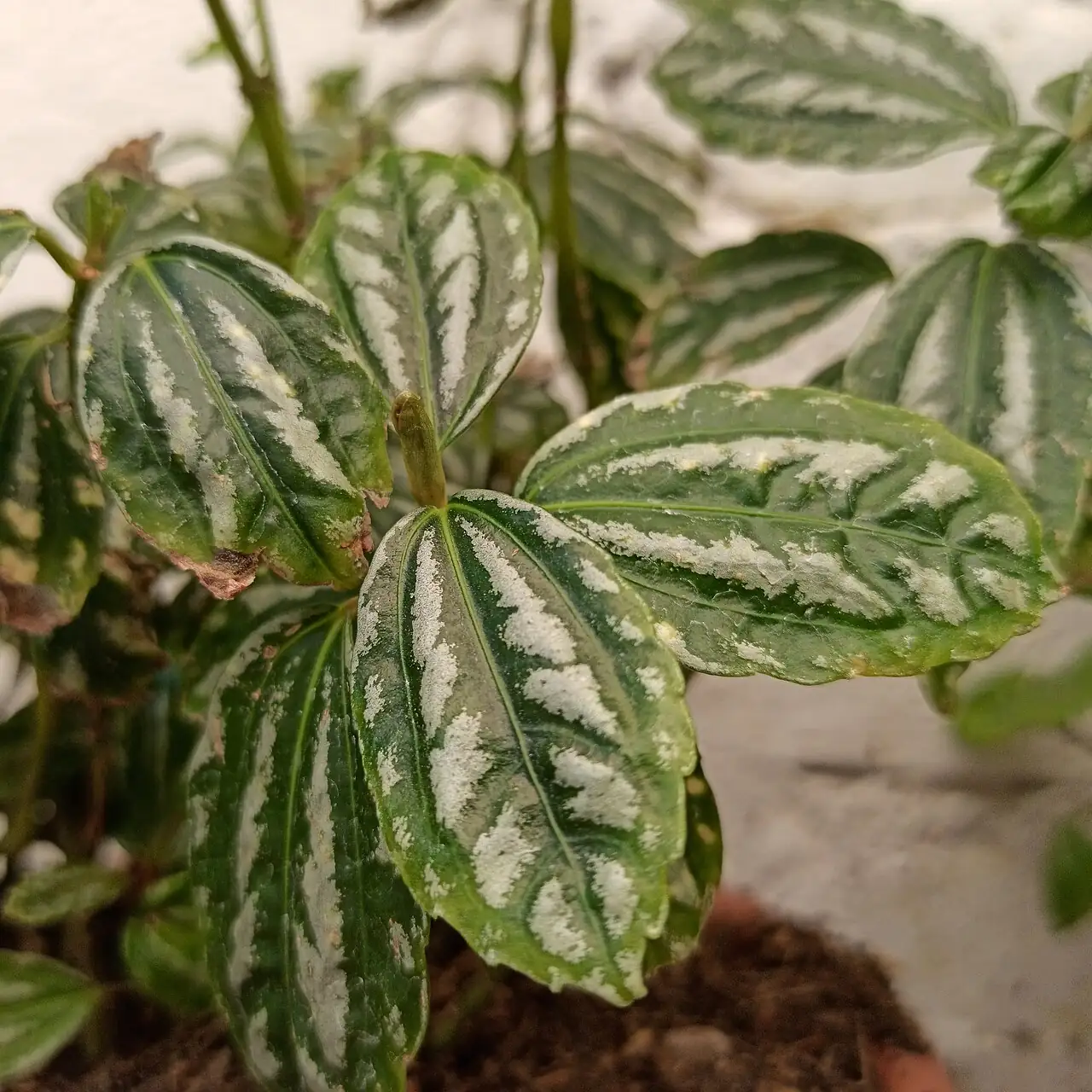
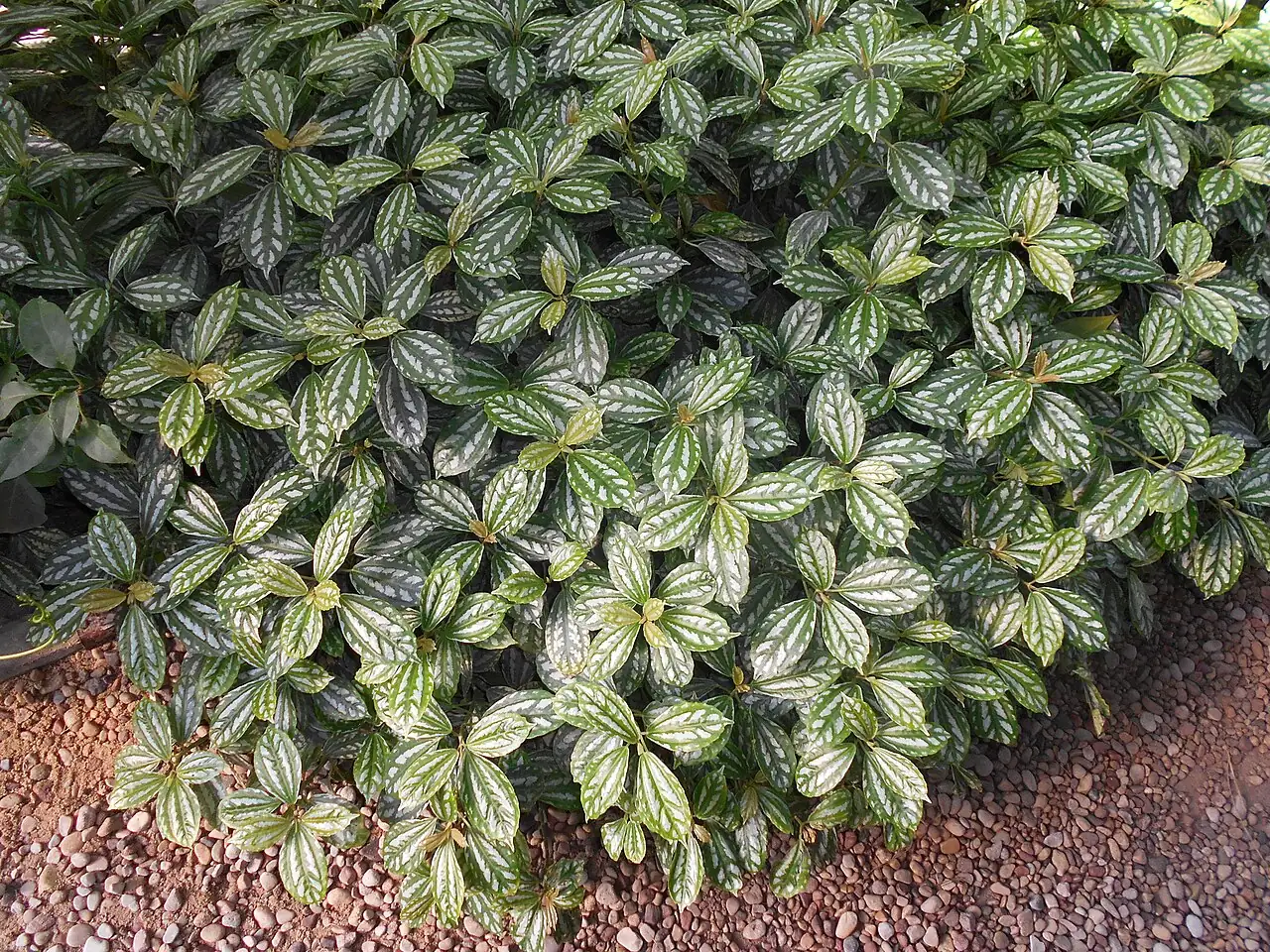
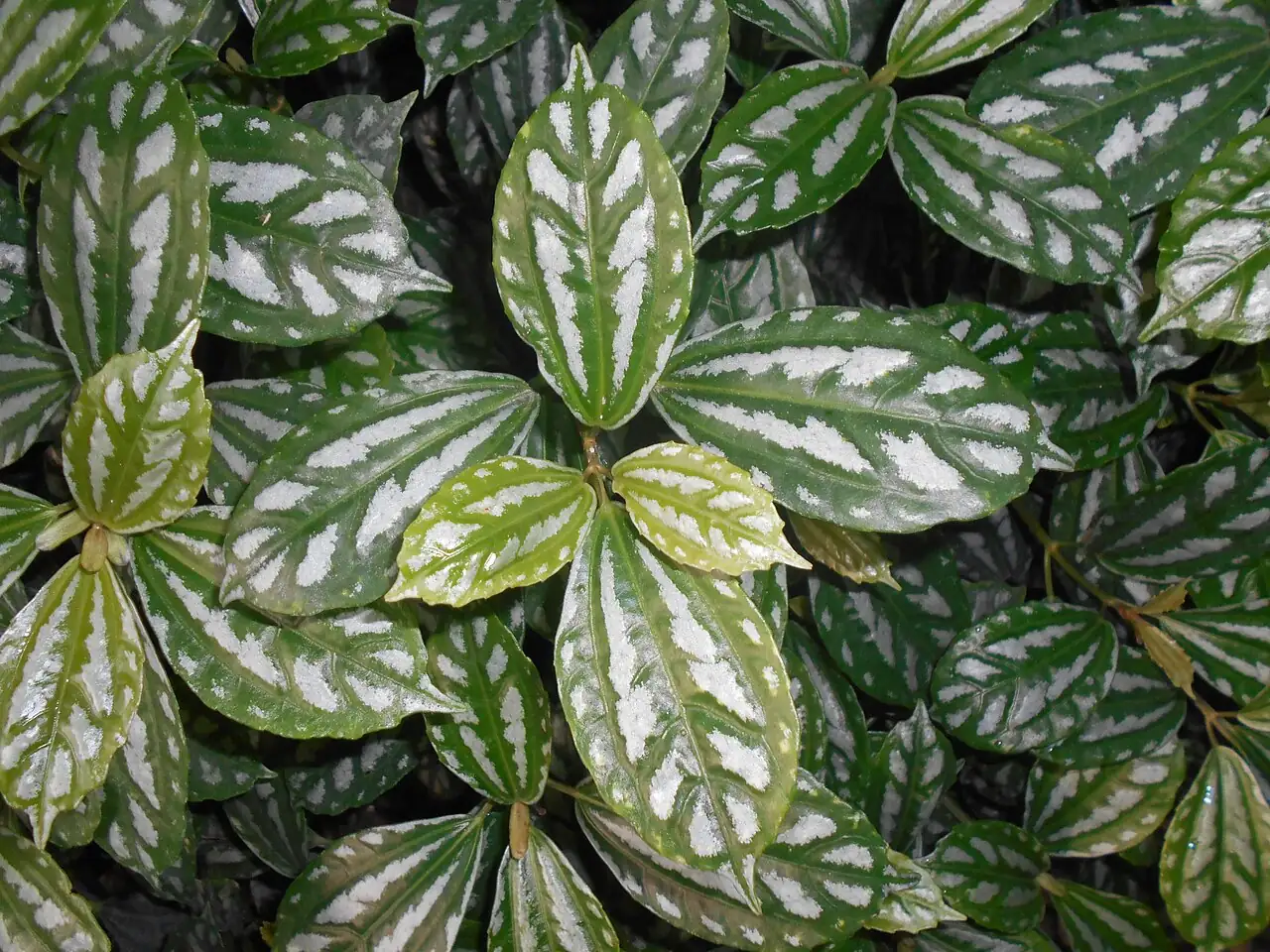
- Foliage: Oval to slightly rounded leaves with a gently quilted texture. The leaf surface is rich green with distinctive silver to aluminum-white patches, often aligned along the veins in a lace-like pattern. Too much harsh sun can scorch and shrink leaves and dull the pattern; too little light can fade the silver, cause brown tips/edges, and lead to stretched, floppy (leggy) growth.
- Flower: Produces tiny, inconspicuous flowers that are easy to miss. It may bloom in summer, but indoors flowering is often irregular and the plant is grown almost entirely for its striking foliage.
- Flowering Season: Summer (often irregular indoors)
- Growth Habit: Compact, bushy, upright-to-mounding herbaceous plant that branches readily when tip-pinched. In frost-free regions it can spread as a low, glossy groundcover in shaded or filtered-light areas.
Environment
Sunlight
Bright, indirect light is ideal. It tolerates partial shade and does well near an east window, a north window, or a few feet back from a bright south/west window. Avoid harsh direct midday sun, which can scorch leaves; a sheer curtain is a simple fix.
Temperature
Best at 15–25°C (59–77°F). Protect from chills: problems can start around 8–10°C (46–50°F), and below about 5°C (41°F) leaves may yellow and drop quickly. Keep it warm and away from cold drafts in winter.
Humidity
Prefers moderate to high humidity (roughly 40–60%+). Misting in summer can help, and pebble trays or grouping plants can boost humidity—just keep airflow decent to discourage leaf spot.
Soil
Loose, airy, well-draining mix. A peat-based houseplant mix amended with coarse sand and/or perlite works well (for example, about 2 parts potting mix to 1 part perlite). Avoid heavy, waterlogged soil to prevent root rot.
Placement
Indoors on bright shelves, desks, hanging baskets, or bathrooms with good light; near an east/north window or filtered south light. Outdoors (warm climates only): shaded to part-shaded beds as a low groundcover.
Hardiness
Not frost hardy; best kept frost-free. Suitable outdoors year-round only in very warm areas (approximately USDA Zone 11–12).
Care Guide
Difficulty
Easy and forgiving, especially if you avoid two common mistakes: harsh direct sun and soggy soil. Fast growing and famously easy to propagate from cuttings.
Buying Guide
Pick a plant with firm stems and crisp leaves showing strong silver markings. Avoid limp, stretched growth; blackened stems; or potting mix that smells sour or stays soggy (classic overwatering/red-flag signs). After purchase, start it in bright filtered light, water lightly, and rotate the pot about half a turn weekly so it grows evenly.
Watering
Aim for evenly moist, not wet. During active growth (spring through early fall, roughly May–September), water thoroughly when the top 1–2 cm (0.4–0.8 in) just begins to dry. Empty the saucer—don’t let it sit in water. In winter, water more sparingly (often about every 2 weeks, depending on indoor heat/light), letting the surface dry a bit more between waterings. Overwatering is the quickest route to yellowing leaves and root rot.
Fertilization
Feed during active growth, lightly. Options that both work: (1) a balanced liquid houseplant fertilizer every 2 weeks at label rate or half-strength, spring to fall; or (2) a gentler approach—about once every 2 months from May–August with a diluted organic liquid feed (e.g., oil-cake tea) or a balanced/bloom-leaning formula used sparingly. Reduce to monthly or pause in winter if growth slows. Avoid splashing fertilizer solution on the leaves.
Pruning
Pinch stem tips regularly to encourage branching and a dense, cushiony shape. If stems reach about 15 cm (6 in) and start to look lanky, pinch back to force side shoots. Remove leggy or crowded stems anytime to reshape. In spring (often combined with repotting), you can cut back quite hard—down to a couple of basal nodes—to refresh an older plant and keep it compact.
Propagation
Very easy from stem cuttings. Take tip cuttings 5–12 cm (2–4.7 in) long, remove the lower leaves, and root in water or in a moist, airy medium (coarse sand/perlite-peat style mix). Warmth helps: about 18–22°C (64–72°F). Cuttings can root quickly (often around 1 week in good conditions); pot up once roots are roughly 2–5 cm (0.8–2 in) long or after a few weeks in mix. Established clumps can also be divided, typically after they’ve filled the pot.
Repotting
Repot in spring. Young plants may enjoy a refresh yearly; otherwise every 1–2 years or when rootbound. Step up just one pot size (commonly into 12.5–15 cm / 5–6 in, or up to about 18–20 cm / 7–8 in for fuller specimens) using a well-draining mix. Repotting time is also a great moment for light root pruning and a hard cutback if the plant has gotten tall or uneven.
📅 Seasonal Care Calendar
Spring: repot (if needed) and prune/pinch to rebuild a compact mound; best season to refresh leggy plants.
Spring–Fall: keep lightly and evenly moist; feed during active growth; pinch tips often for fullness.
May–August: continue light feeding (either biweekly diluted or a gentler every-2-month plan).
Summer: increase humidity support (misting/pebble tray) and protect from strong direct sun.
Autumn: another great window for taking cuttings.
Winter: water sparingly after the surface dries; keep bright and warm, and protect from drafts and temperatures below about 8–10°C (46–50°F) to reduce leaf drop.
Pests, Diseases & Safety
Common Pests & Diseases
In dry indoor air it may attract spider mites; it can also get mealybugs or aphids. Rinse foliage, improve humidity and airflow, and treat early with insecticidal soap or horticultural oil per label directions. Overwatering and poor drainage can lead to root rot; leaf spot can show up when foliage stays wet with little airflow. Use a free-draining mix, avoid standing water, and keep general hygiene (remove damaged leaves). Some sources mention preventative/traditional fungicide options (e.g., Bordeaux mixture) and treatments such as thiophanate-methyl used according to local regulations and label directions.
Toxicity
Best treated as potentially mildly toxic if chewed or swallowed (especially for pets), even though many growers report it as low-risk. Keep out of reach of children and pets that like to nibble, and contact a professional if ingestion occurs.
Culture & Symbolism
Symbolism: Often linked with freshness and vitality—those bright silver patches make the whole plant look energetic and “sparkly,” even in a shady corner.
History & Legends: Native to Vietnam and long popular in indoor gardening because it delivers dramatic variegation without being fussy. Its metallic patterning helped it become a classic “instant contrast” plant in mixed foliage displays.
Uses: An ornamental foliage plant for small pots, tabletops, shelves, and hanging baskets. In very warm, frost-free regions it can be used outdoors as a low groundcover in shade or filtered light.
FAQ
Why does my aluminum plant drop leaves in winter?
Cold and low light are the usual triggers. Chilling can start around 8–10°C (46–50°F), and below about 5°C (41°F) leaves may yellow and drop fast. Keep it warm (ideally 15–25°C / 59–77°F), away from drafts, and give it bright indirect light while watering less often.
Why are the leaves losing their silver markings?
Most commonly it’s not getting enough light. Move it to brighter indirect light (closer to an east window or filtered south light). Avoid harsh direct sun, though—too much can scorch and also make the foliage look washed out.
Why is my aluminum plant getting leggy and floppy?
Legginess points to low light and/or not enough pinching. Increase bright, indirect light and pinch the growing tips regularly to encourage branching. A spring cutback can quickly reset the plant into a compact mound.
Can I keep it outdoors?
Only if you live somewhere frost-free (roughly USDA Zone 11–12). Keep it in shade or filtered light and bring it indoors well before temperatures dip below about 10°C (50°F).
Fun Facts
- Its common name comes from the reflective silver patches that catch light like brushed metal.
- Tip-pinching is like a “free makeover”: one plant can become a dense, rounded mound without any fancy training.
- In warm climates it can act as a glossy groundcover, making shaded garden areas look greener and more polished.