Plant Features
- Size: Perennial herb forming sprawling stem mats that can spread widely. Upright tips commonly rise about 30–100 cm (12–39 in) above water or ground, depending on conditions.
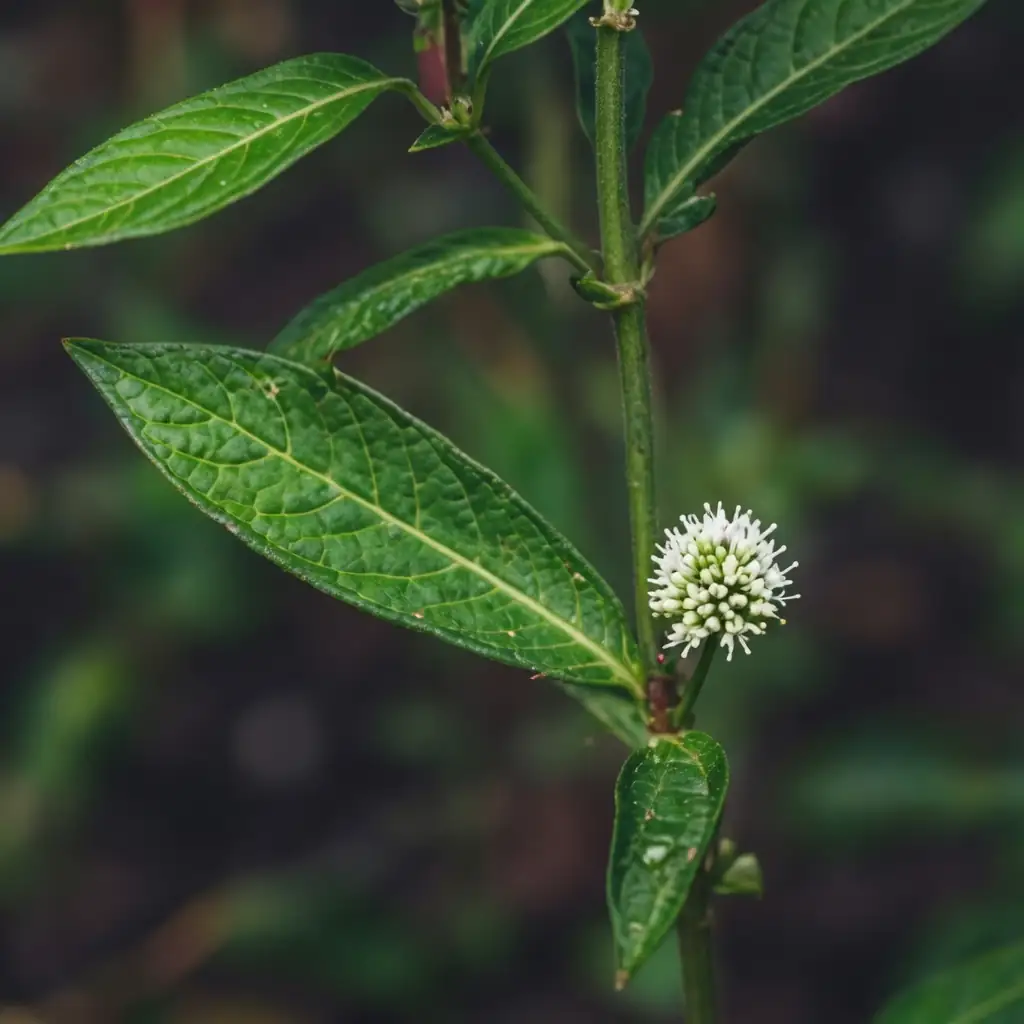
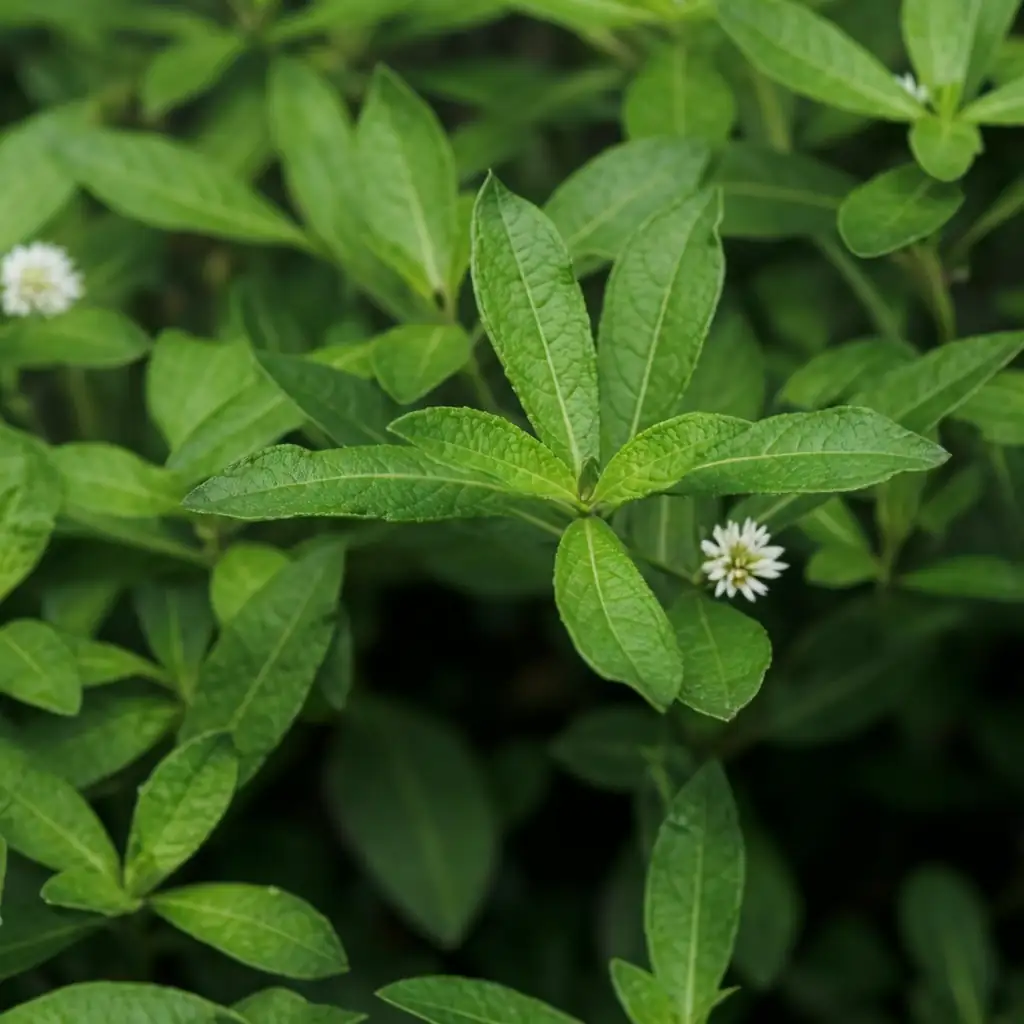
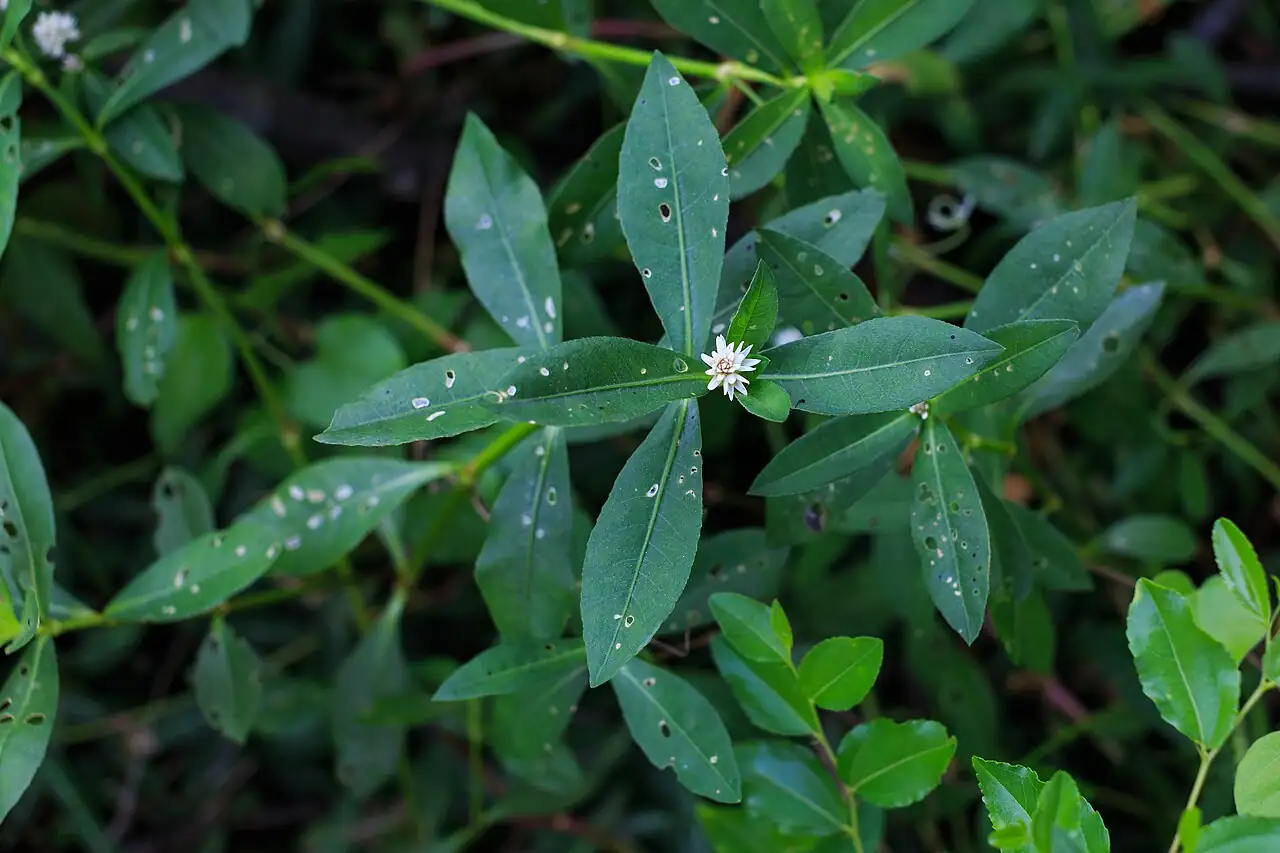
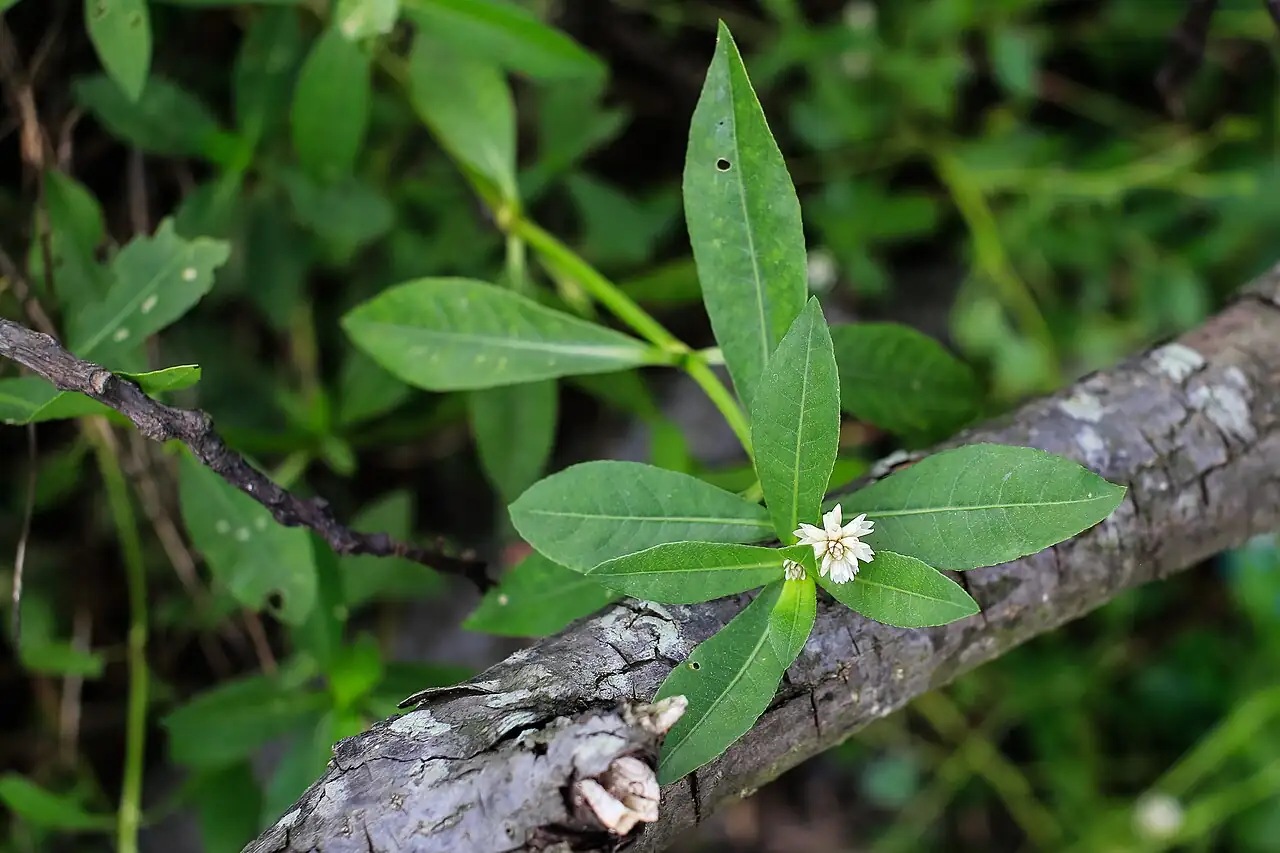
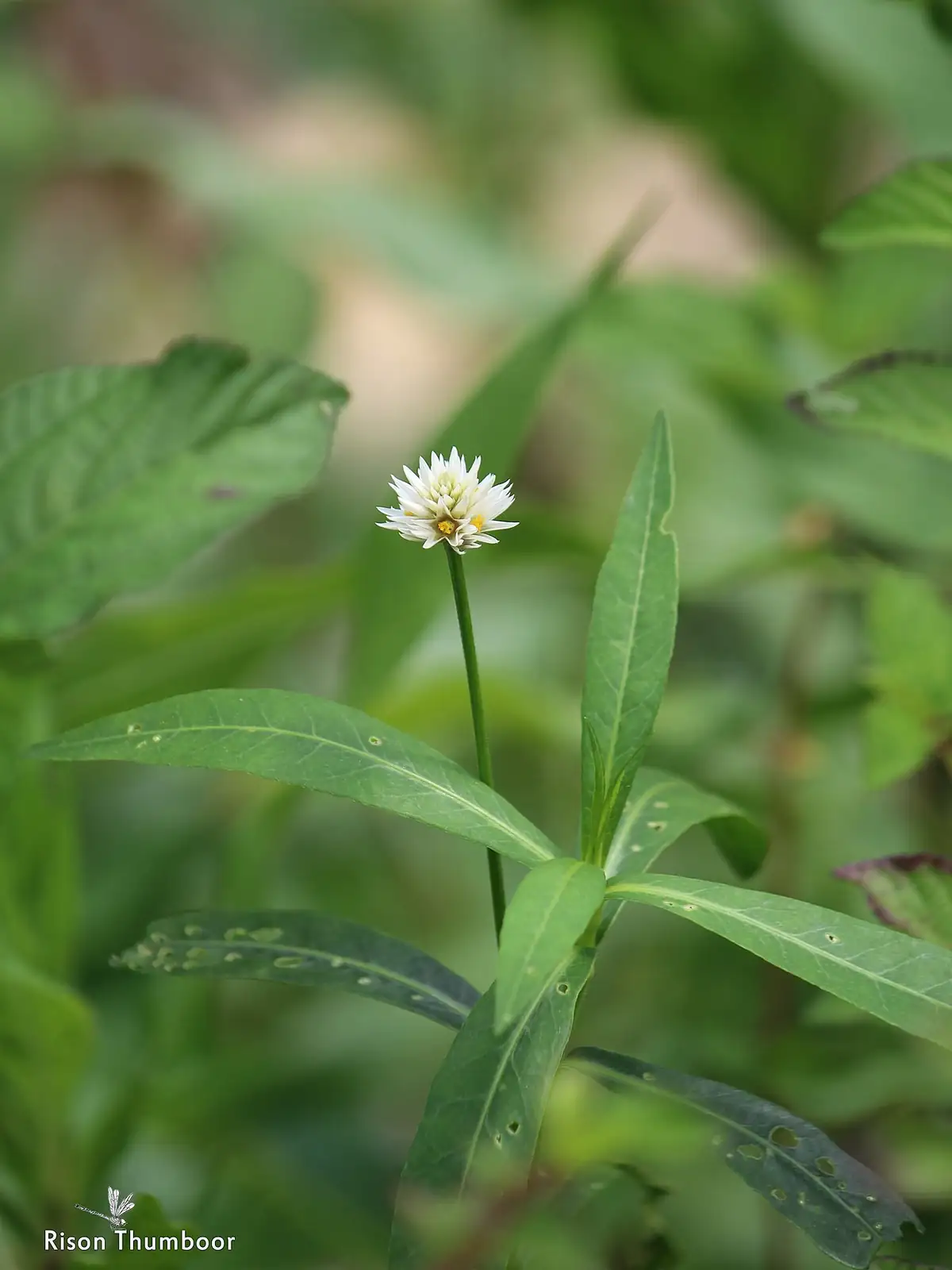
- Foliage: Leaves are short-oval to obovate-lanceolate with smooth (entire) margins and a small pointed tip. Young stems and leaf axils may show whitish to rusty soft hairs, becoming nearly hairless as the plant matures.
- Flower: Small, dense, round, button-like flower heads are borne singly in the leaf axils. White bracts give them a bright, clover-like appearance.
- Flowering Season: May–October
- Growth Habit: Creeping and mat-forming at the base with ascending tips; stems are hollow and tubular. Highly adaptable—thrives in shallow water and saturated soils, yet can tolerate drier periods once established; growth is most aggressive in warm weather.
Environment
Sunlight
Full sun to partial shade; strongest growth and most flowering typically occur in full sun.
Temperature
Prefers warm conditions; most active growth around 20–30°C (68–86°F). Frost can damage above-ground growth, though plants may persist and resprout in milder climates.
Humidity
Very adaptable: thrives in saturated, wet environments and shallow water, but can also handle drier spells after establishment.
Soil
Moist to waterlogged soils; often rooted in mud along pond edges, marshes, canals, and drainage ditches. Tolerates many soil types as long as moisture is available.
Placement
Outdoor wetlands and water edges (pond margins, ditches, canals). Not recommended for home planting in many regions due to invasiveness and legal restrictions.
Hardiness
Generally invasive in warm-temperate to subtropical regions; top growth may be frost-damaged, but the plant can persist where winters are not severe (often behaving as a perennial in mild climates).
Care Guide
Difficulty
Easy to grow but notoriously hard to control. Frequently listed as a noxious or regulated invasive weed—avoid intentional cultivation and follow local guidance for containment or eradication.
Buying Guide
Do not purchase or plant. If you ever see it offered for sale, verify local laws—this species is prohibited or restricted in many regions.
Watering
In a strictly controlled, contained setting it tolerates (and often prefers) consistently wet conditions or shallow water. For outdoor management, the key is preventing spread: avoid moving water or plant debris, and remove plants before fragments break off and drift.
Fertilization
Not needed; added nutrients can accelerate invasive growth. Avoid nutrient enrichment in waterways where infestations occur.
Pruning
Mechanical removal must be meticulous—small stem fragments can regrow. Collect every piece and dispose of plant material securely (do not compost unless local authorities confirm safe destruction methods).
Propagation
Spreads mainly by vegetative fragments: broken stem pieces root easily and start new colonies. Creeping stems also root along their length, quickly forming dense mats.
Repotting
Not applicable for normal cultivation. If maintained for research, use sealed containers and strict biosecurity to prevent escape during any handling or repotting.
📅 Seasonal Care Calendar
Spring–autumn: rapid growth and spread; monitor early and remove promptly. Cool season: growth slows; in mild areas it may persist and rebound quickly when temperatures rise.
Pests, Diseases & Safety
Common Pests & Diseases
Often robust and not strongly checked by pests in introduced regions. Dense mats can worsen mosquito habitat and reduce water oxygen and light, indirectly harming aquatic organisms and water quality.
Toxicity
Not well documented as toxic to people or pets in casual contact, but it should not be eaten or used medicinally without expert guidance. The primary risk is ecological: it is an aggressive invasive plant that can damage waterways and ecosystems.
Culture & Symbolism
Symbolism: Often linked with persistence and resilience—though it’s far more famous for being a plant that “won’t quit” in the context of invasive-species control.
History & Legends: Native to South America, alligator weed was transported beyond its natural range (sometimes intentionally, often accidentally). Once introduced, it became infamous for forming thick mats in waterways and invading farmland in many regions.
Uses: Occasionally mentioned for ground cover or “greening,” but its use is strongly discouraged because it can severely impact crops, waterways, and native ecosystems. In most places, the responsible focus is management, control, and prevention of spread.
FAQ
When does alligator weed flower?
Most commonly from May to October (May–October), producing small white button-like flower heads in the leaf axils.
Where is it native to?
South America, including Brazil, Uruguay, and Argentina.
How does it spread so easily?
Mainly by vegetative fragments—small pieces of stem can root and form new plants. Its creeping, hollow stems also root as they grow, creating dense mats.
Is it a good plant to grow at home in a pond?
Usually no. It’s widely regulated and highly invasive; it can escape, clog waterways, and outcompete native plants. Choose non-invasive alternatives recommended for your region.
Is it annual or perennial?
It is a perennial herb.
Fun Facts
- It can form floating or rooted mats so dense they can alter water flow and reduce light and oxygen for aquatic life.
- Tiny stem fragments can start new infestations—cutting or transporting plant material often makes the problem worse if fragments aren’t contained.
- Its little white flower heads often resemble miniature clover blooms.
- Although native to South America, it has become a notorious invasive species in many warm regions worldwide.