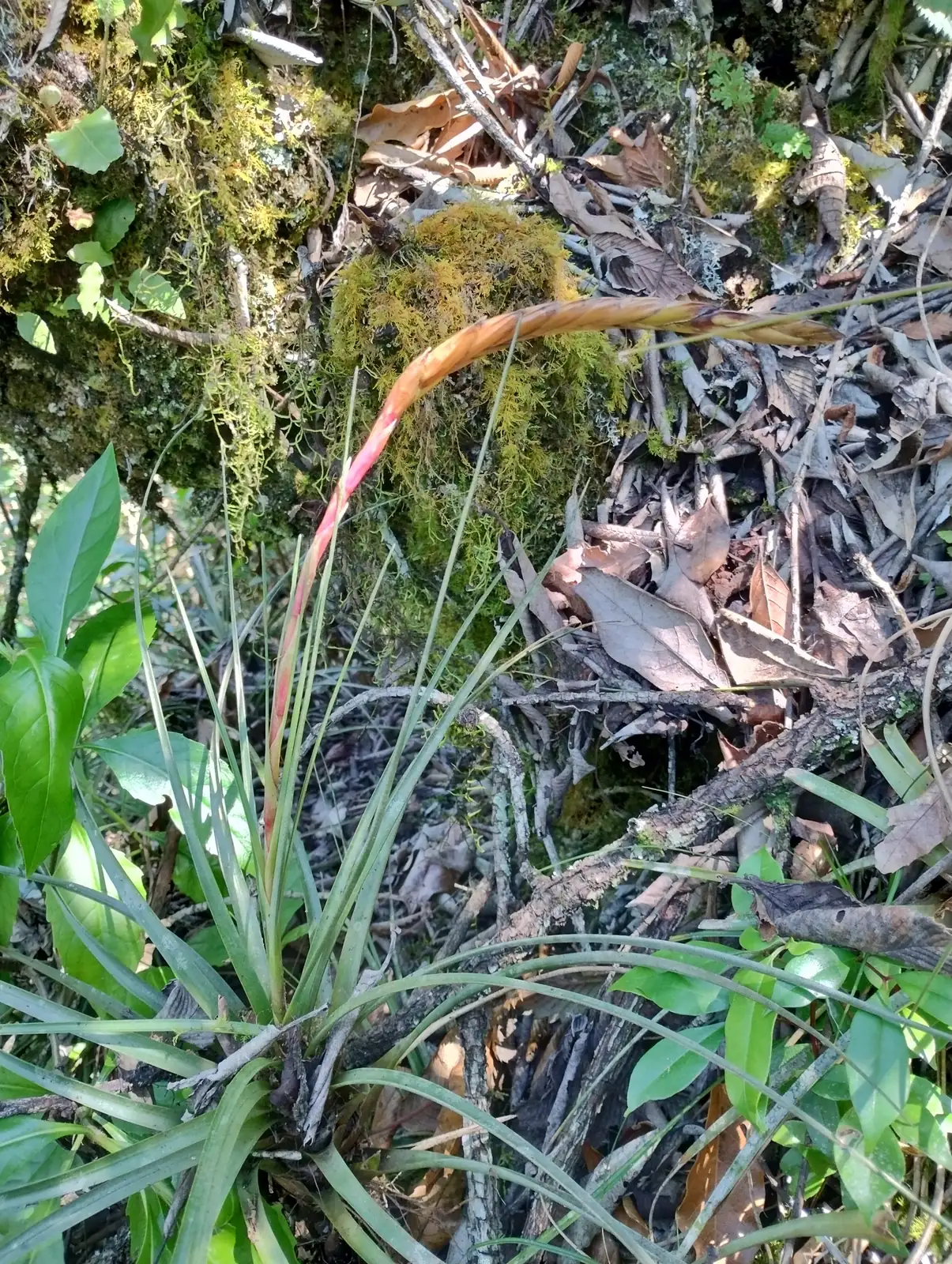
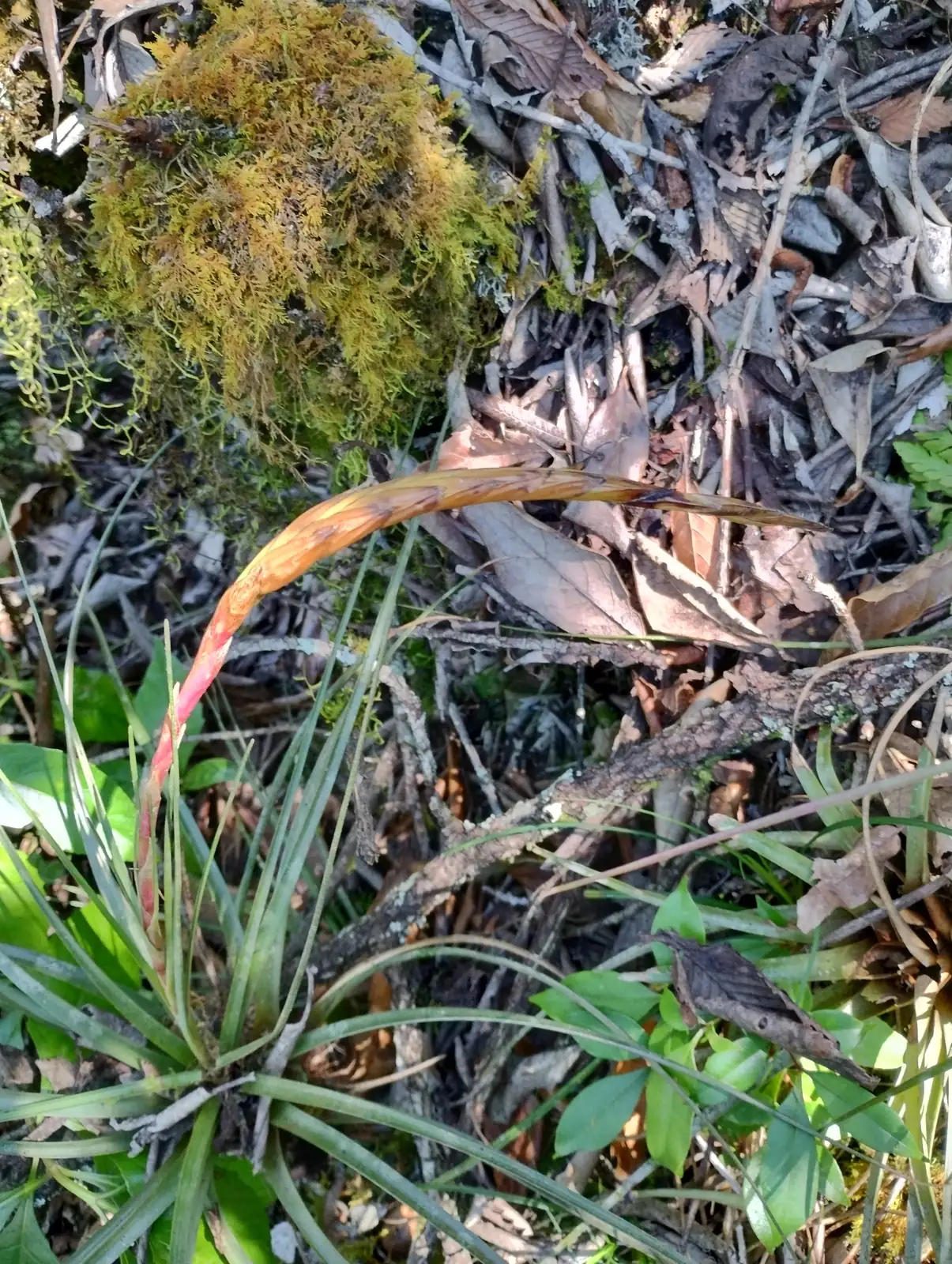
Plant Features
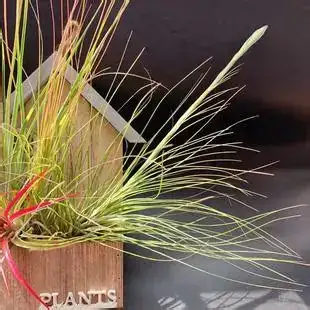
- Size: Typically 10–25 cm (4–10 in) tall and about 10–20 cm (4–8 in) wide, depending on age and growing conditions.
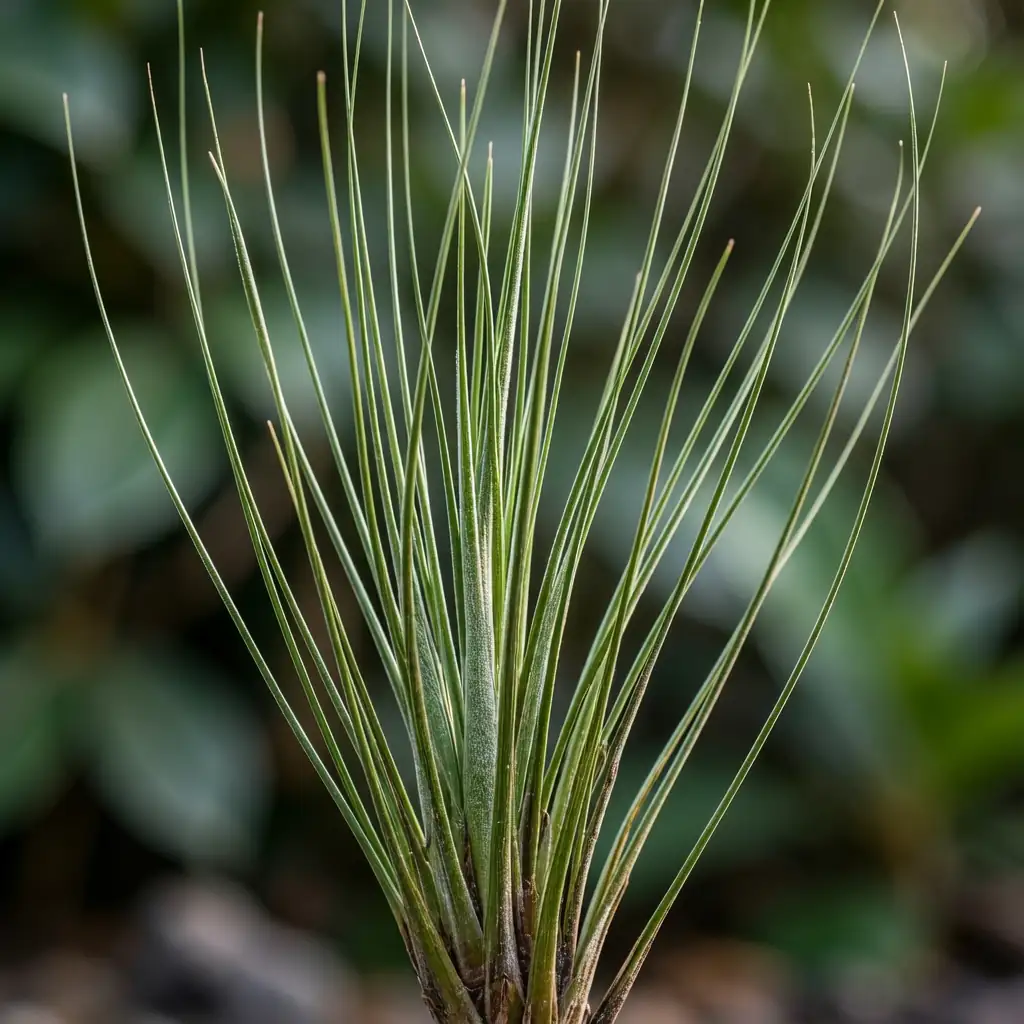
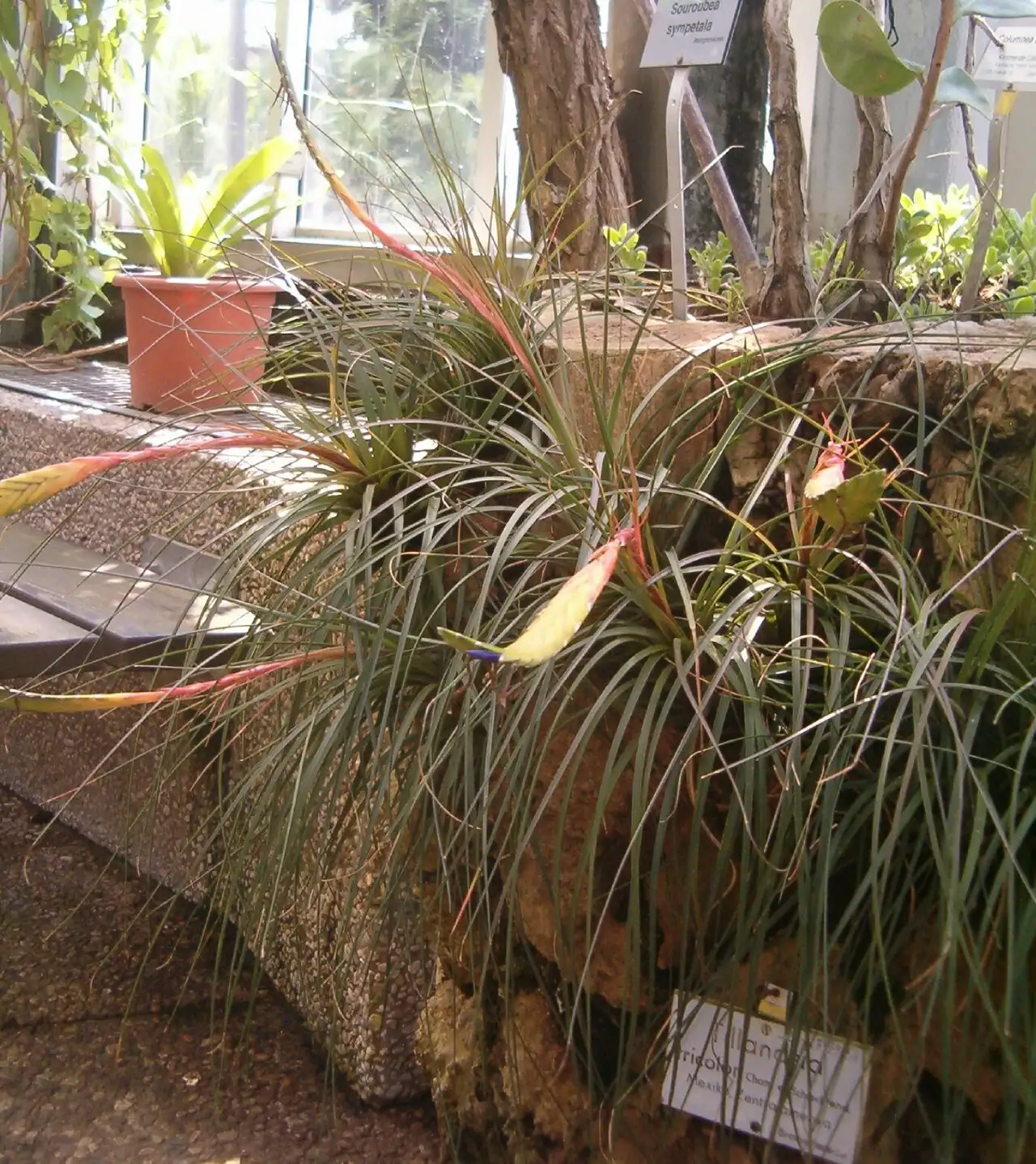
- Foliage: Narrow, grass-like, silvery leaves with a matte sheen. The fine texture looks delicate and can desiccate if kept too dry for too long; the silvery cast comes from moisture-catching trichomes on the leaf surface.
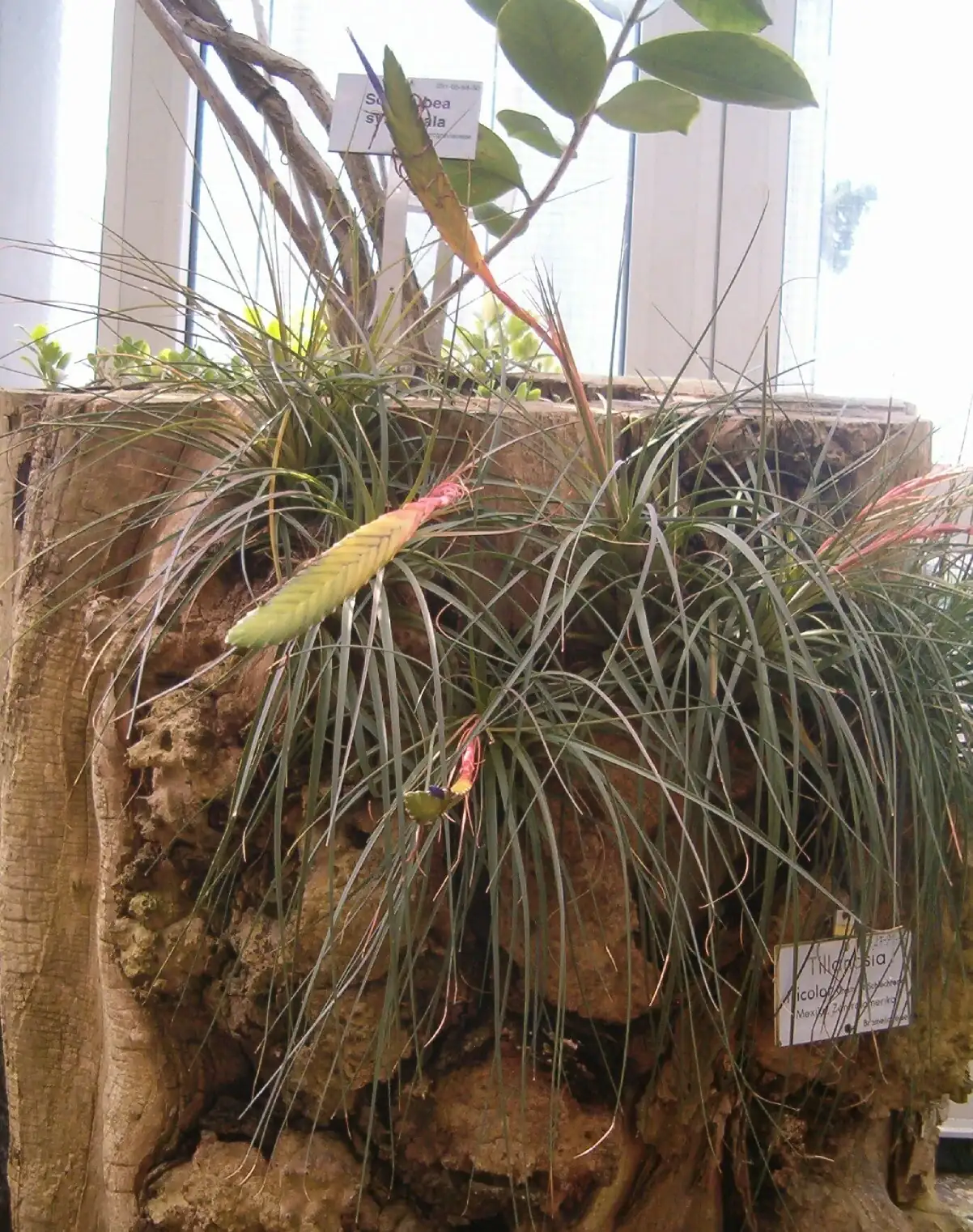
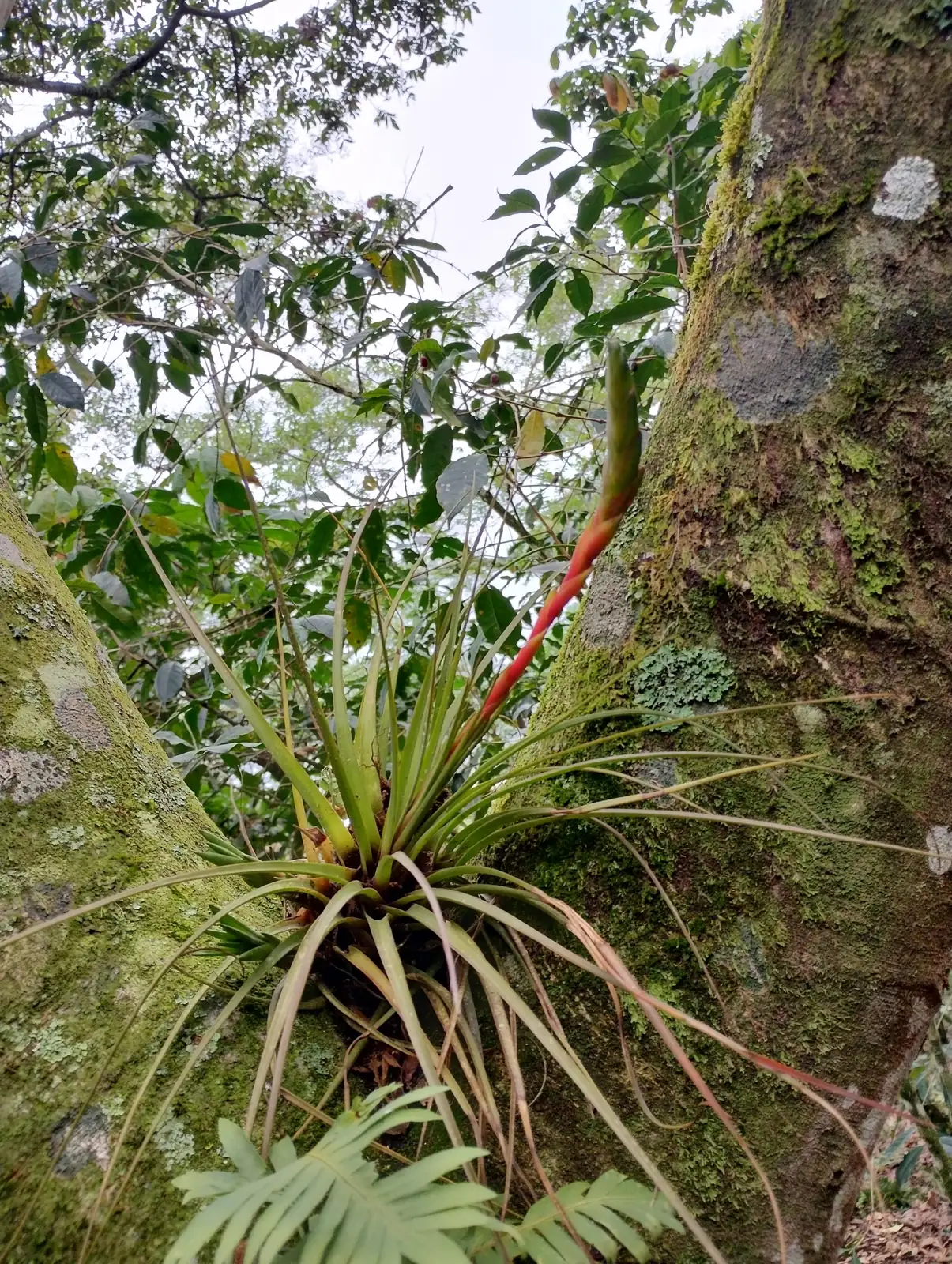
- Flower: Flowers emerge from a slender, elongated spike with colorful bracts. The small tubular blooms appear in tidy rows and are commonly purple with pink tones, giving a bright two-tone look at flowering time.
- Flowering Season: Most commonly late spring to summer (may vary with indoor culture and light).
- Growth Habit: Compact epiphyte that forms offsets (“pups”), often becoming a small clump after flowering.
Environment
Sunlight
Bright, indirect light; can take gentle morning sun. Avoid harsh midday sun behind glass, which can overheat and scorch the leaves.
Temperature
18–30°C (64–86°F); protect from cold—avoid prolonged exposure below about 10°C (50°F).
Humidity
Moderate to high humidity, ideally 50–70%, paired with good airflow so the plant dries quickly and doesn’t rot.
Soil
No soil needed. Mount on cork/wood or place in a well-ventilated holder; keep the base from staying wet and ensure fast drying after watering.
Placement
Near a bright window (east or bright south/west with a sheer curtain), on a bright shelf with airflow, or in a well-ventilated bathroom (only if it still dries fast after watering).
Hardiness
USDA Zone 10–12 (50°F/10°C and warmer); not frost tolerant.
Care Guide
Difficulty
Easy to moderate: very doable indoors if you nail the trio of bright light, strong airflow, and consistent hydration—without leaving the plant wet for long periods.
Buying Guide
Choose plants with firm, unwrinkled leaves and a healthy silvery coating (trichomes). Avoid a dark, mushy base or a sour smell, which can indicate rot.
Watering
Water regularly—about 1–3 times per week depending on heat, light, and airflow. Soak for 15–30 minutes, then shake off excess water and place it upside-down or on its side briefly so water can’t sit in the base. It should dry fully within about 3–4 hours. Mist between soakings if humidity is low, but avoid letting water pool in the plant’s base.
Fertilization
Feed lightly during active growth: 1–2 times per month with a bromeliad/air-plant fertilizer at 1/4 strength. Rinse with plain water occasionally to prevent mineral buildup.
Pruning
Remove only fully brown, dry leaf tips for appearance (avoid cutting into green tissue). After flowering, trim the spent inflorescence once it has fully dried.
Propagation
By offsets (“pups”): separate when pups are about 1/3–1/2 the size of the mother plant, or leave them attached to form a fuller clump.
Repotting
Not applicable like a potted plant. Remount or reposition if it outgrows its mount, if airflow is poor, or if the display keeps the base damp.
📅 Seasonal Care Calendar
Spring–summer: brighter light, more frequent watering, and light feeding. Autumn–winter: reduce watering frequency, keep warm and bright, and prioritize fast drying and airflow.
Pests, Diseases & Safety
Common Pests & Diseases
May get mealybugs or scale, especially indoors. Treat with repeated swabbing/sprays of diluted isopropyl alcohol and improve airflow. Rot is the most common issue—usually caused by staying wet too long or water trapped at the base.
Toxicity
Generally considered non-toxic to people and pets, but not intended for consumption. Keep out of reach of chewing pets to prevent mouth irritation or choking hazards.
Culture & Symbolism
Symbolism: Often linked with independence and resilience—an eye-catching plant that thrives without soil as long as it gets light, air, and regular drinks.
History & Legends: Tillandsias are iconic epiphytic bromeliads native to the Americas, widely collected and displayed on cork, driftwood, and modern holders for their sculptural foliage and colorful flower spikes.
Uses: Ornamental display plant for mounts, airy holders, and open terrariums (only if very well ventilated). Popular for minimalist décor, gifts, and small indoor plant arrangements.
FAQ
Do air plants really live on air?
They don’t need soil, but they absolutely need water, light, and nutrients. They absorb moisture and dissolved minerals through leaf trichomes, so regular watering and good airflow are essential.
Why are the leaf tips turning brown?
Most often it’s dehydration or mineral-heavy water. Water a bit more consistently, try rain/filtered water, and make sure the plant dries quickly after soaking.
Can I keep it in a closed glass terrarium?
Closed terrariums are usually too stagnant and stay wet too long. Choose an open terrarium or a mount/display where the plant dries within a few hours after watering.
Fun Facts
- That silvery look comes from trichomes—tiny scales that help capture moisture and also protect the plant from sun and drought.
- After flowering, the mother plant typically shifts energy into producing pups, so one plant can slowly become a little clump over time.