

Unveiling the Philodendron ‘Pink Princess’: A Quirky Marvel for Your Plant Collection
If you’ve ever dreamed of injecting a splash of royal hue into your indoor jungle, meet the Philodendron erubescens ‘Pink Princess’. This plant is not just a pretty face in the world of houseplants; it’s a star performer with a personality to match its vibrant colors. Let’s dive into the fascinating world of this pink-variegated marvel and uncover why it deserves a spot in your home.
The Royal Heritage and Rise to Fame
Originating from the lush landscapes of Colombia, the Pink Princess is a cultivated gem that first dazzled plant enthusiasts in the 1970s. It belongs to the Araceae family, making it a distant cousin to the Monstera and peace lilies. With its heart-shaped leaves dressed in a dramatic mix of deep green and pink, this plant has captivated collectors worldwide. But what makes it truly special is the variegation—a delightful genetic mutation that turns each leaf into a unique work of art.
Pink Patterns: Nature’s Canvas
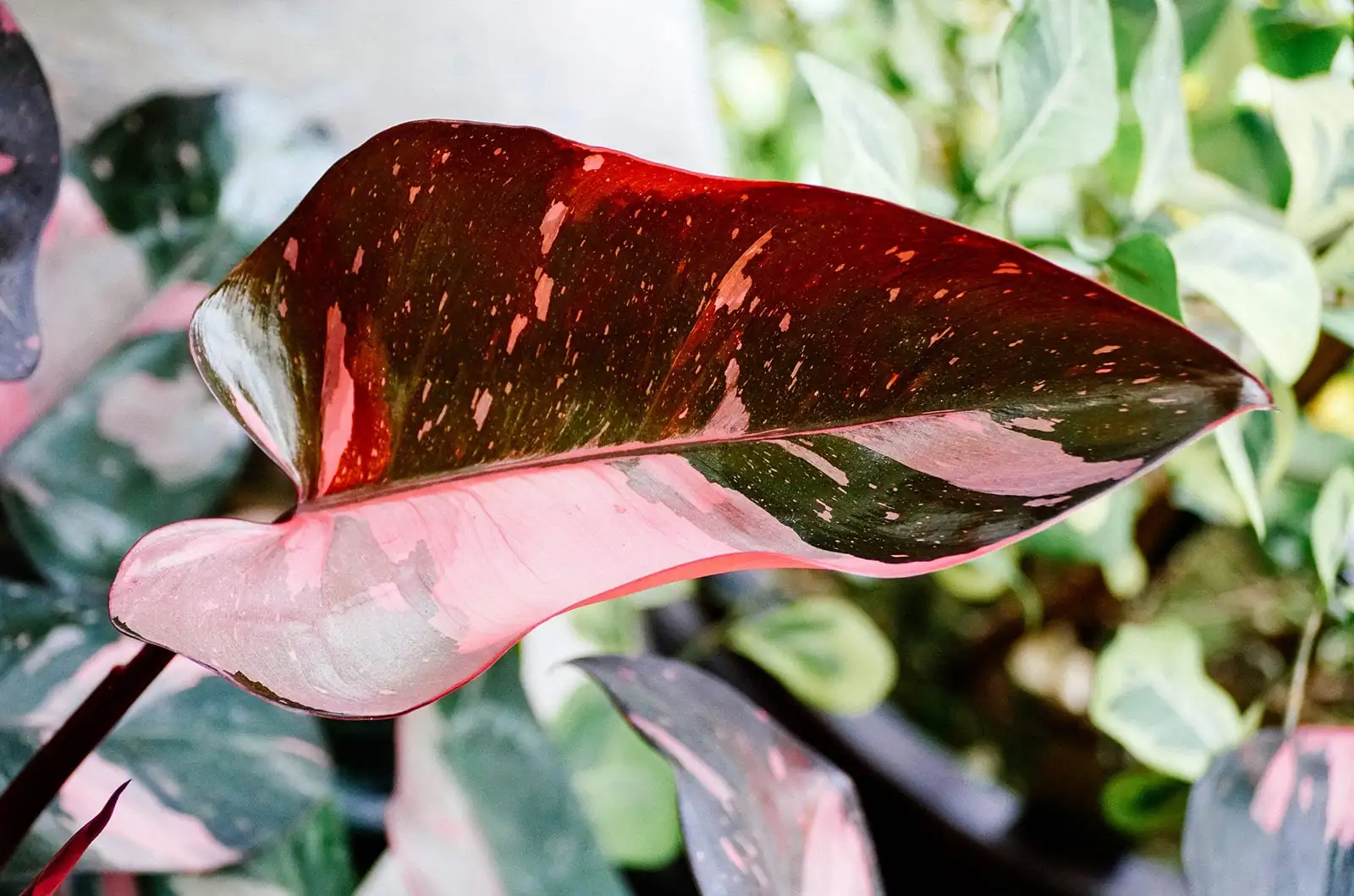
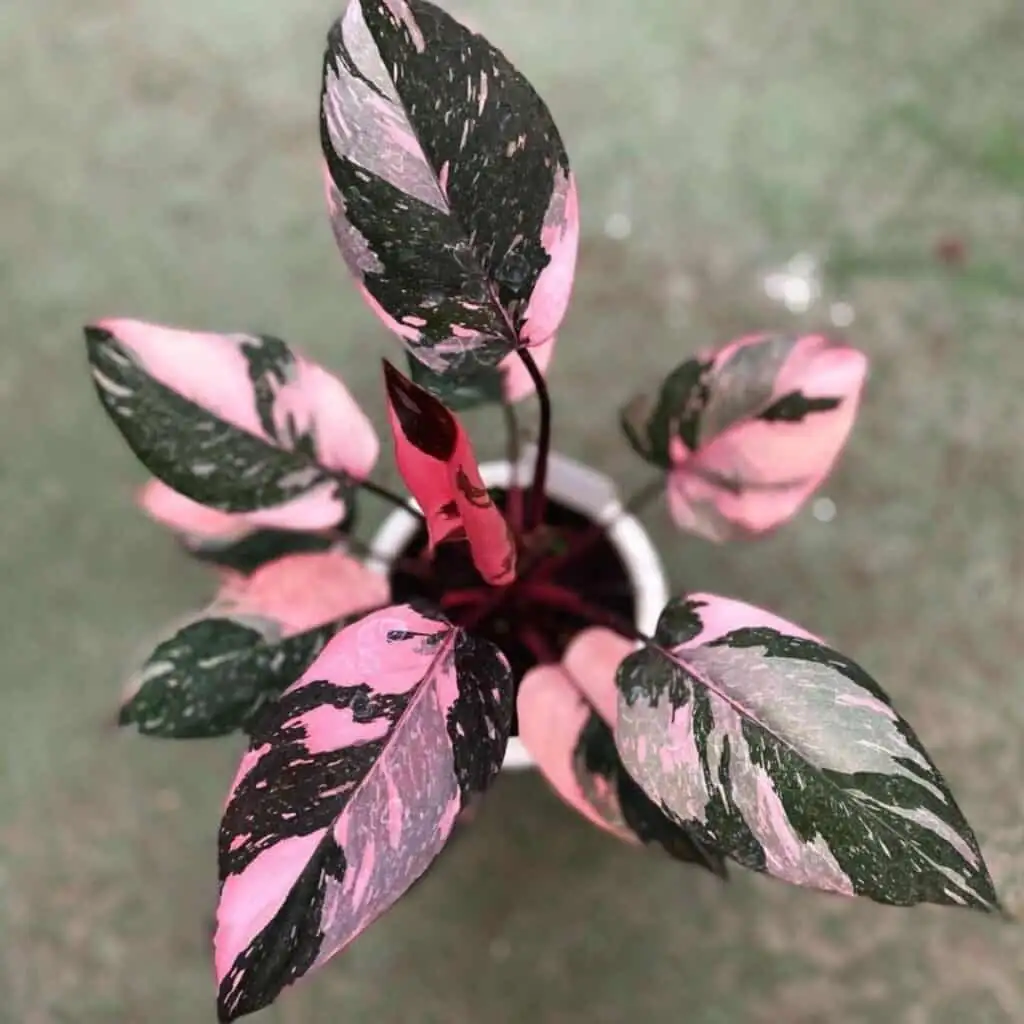
Imagine a leaf as your canvas and nature as the artist. Each Pink Princess leaf features a distinctive splash of pink, ranging from soft blushes to bright fuchsias. It’s like receiving a surprise with every new leaf, as the patterns are never the same. This variegation results from areas of the leaf having less chlorophyll, giving them that eye-catching pink hue. It’s like having a live-in artist creating masterpieces in your living room!
Growth Habit: Climb or Trail
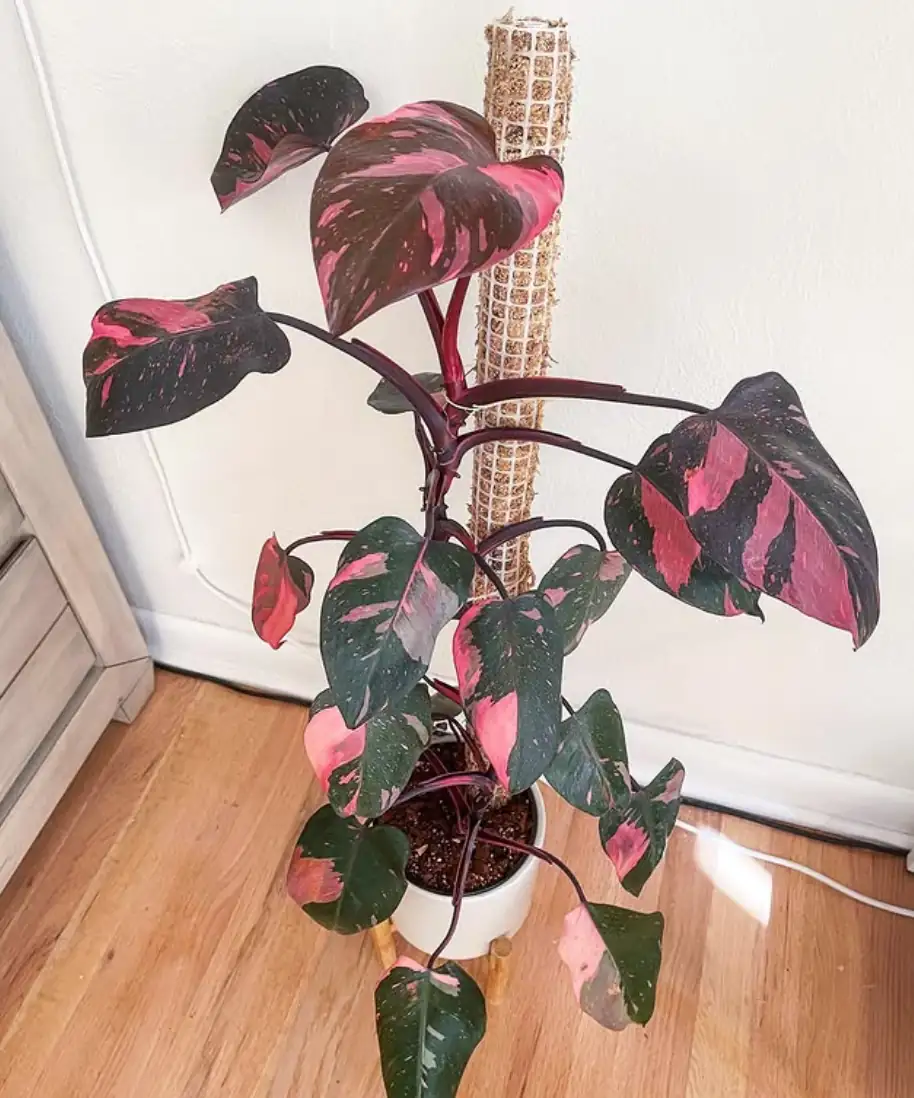
Whether you want your Pink Princess to climb majestically or trail elegantly, it’s game for either. When supported by a moss pole or trellis, it channels its inner Tarzan, producing larger, more mature leaves. Alternatively, allow it to cascade from a shelf or hanging pot for a free-spirited look. Indoors, it typically reaches heights of 90–150 cm (3–5 ft) with a spread of 30–60 cm (1–2 ft), making it a versatile choice for any space.
Care Tips: Keeping Your Princess Pleased
- Light: This plant thrives in bright, indirect light. Too little light may make the leaves greener, while too much direct sun can scorch those precious pink sections.
- Watering: Your Pink Princess prefers its soil to dry out halfway between waterings. Overwatering is a no-no; think of it as the plant equivalent of wearing soggy socks—uncomfortable and potentially harmful.
- Humidity and Temperature: With a love for humidity, aim for 50% or more if you can. It prefers temperatures between 18–27°C (65–80°F) and isn’t a fan of cold drafts.
- Soil: A chunky, well-draining mix is ideal. Consider a blend of peat-based potting mix, perlite, and orchid bark for a royal treatment.
Fun Facts: The Pink Princess Phenomenon
- Each leaf’s pink pattern is a result of variegation, not a paint-like pigment layer, making it naturally unique.
- During the houseplant boom of 2020–2021, prices for the Pink Princess skyrocketed, turning it into a must-have status symbol for plant aficionados.
- Encouraging larger leaves is as simple as providing a moss pole for it to climb.
Common Questions: Your Curiosities Answered
Why is my Pink Princess losing its pink variegation?
It craves bright, indirect light—think of it as a sun-loving diva. Too little light may cause it to lose its vibrant pink tones.
Why are the leaf edges turning brown?
Low humidity or inconsistent watering could be the culprits. Ensure your plant feels like it’s in a tropical paradise.
Is it normal for older leaves to drop?
Like any royalty, sometimes a little shedding is necessary. As long as it’s not excessive, it’s perfectly normal.
A Plant with Personality
From its glorious pink hues to its adaptable growth habits, the Pink Princess is a quintessential choice for plant lovers who appreciate individuality and a touch of whimsy. Whether you’re a seasoned collector or a plant newbie, this regal beauty is sure to add a pop of color and a lot of character to your collection. Remember, every leaf is a new masterpiece waiting to be unveiled in your home!


