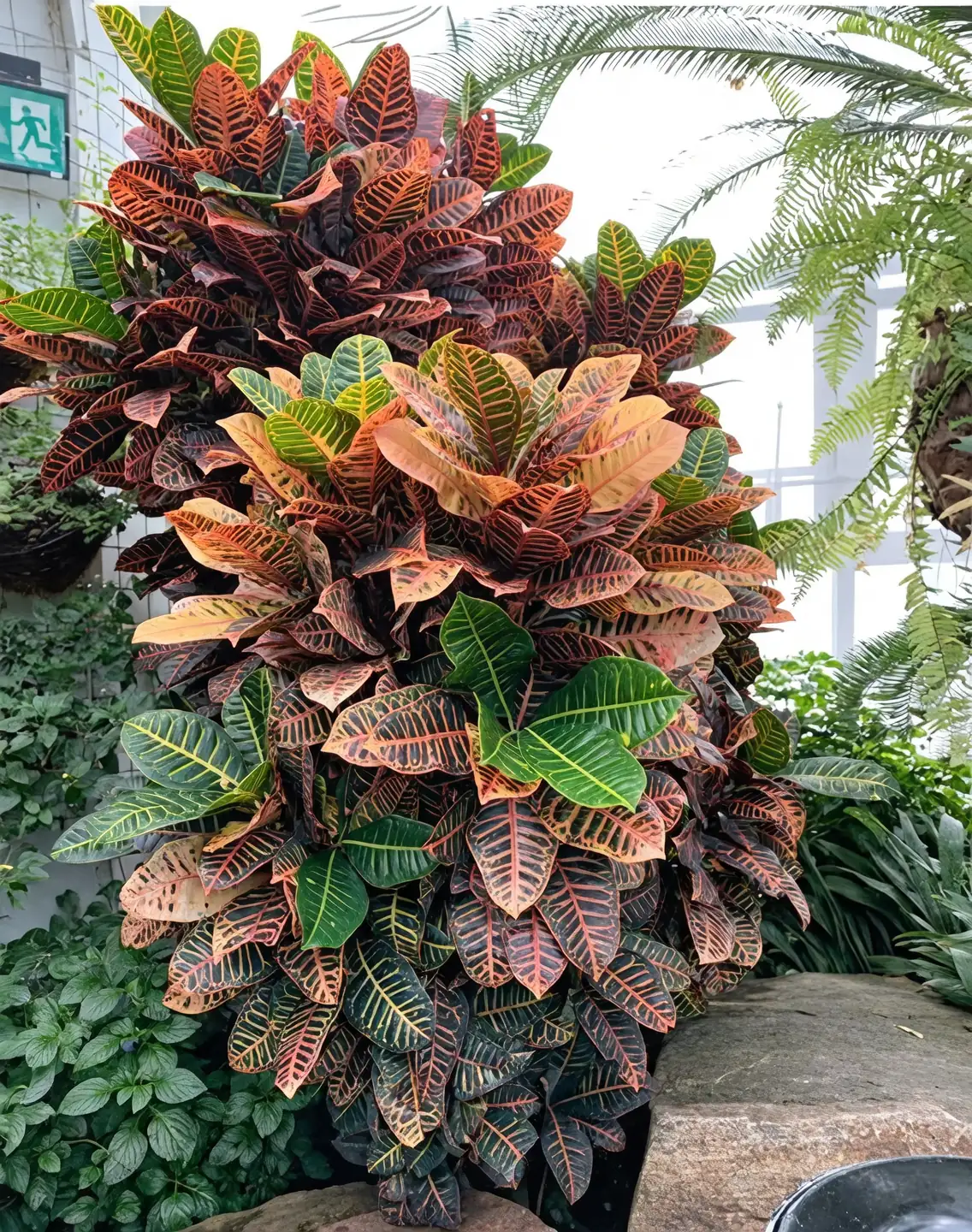
If you love foliage that dresses like a fireworks show, Codiaeum variegatum—garden croton—is your candy store. Beyond its fame for saturated reds, yellows, oranges, pinks, and purples, collectors prize this species for its wildly different leaf shapes: narrow ribbons, broad ovals, lobed fans, even spirals. Below, a field guide to the five crowd-pleasers—Petra, Mammy, Gold Dust, Magnificent, and Zanzibar—comparing leaf architecture, color patterns, light appetite, growth habits, and styling ideas to help you curate a dazzling, cohesive collection.
Croton 101: The species behind the spectacle
- What it is: An evergreen tropical shrub in the spurge family (Euphorbiaceae), grown for its thick, glossy, leathery leaves.
- Native range: Tropical Asia through the western Pacific (Malaysia/Indonesia to northern Australia and Pacific islands).
- Indoors vs. outdoors: Indoors it’s typically 12–36 in tall; with years of pampering it can hit ~5 ft. In the ground in true tropics, it becomes a branching shrub up to ~10 ft.
- Light and color: Bright, filtered light sharpens variegation. Low light pushes leaves toward green.
- Houseplant temperament: A brilliant diva. Rewards steady warmth, even moisture (not soggy), and higher humidity.
The cultivar lineup
Petra
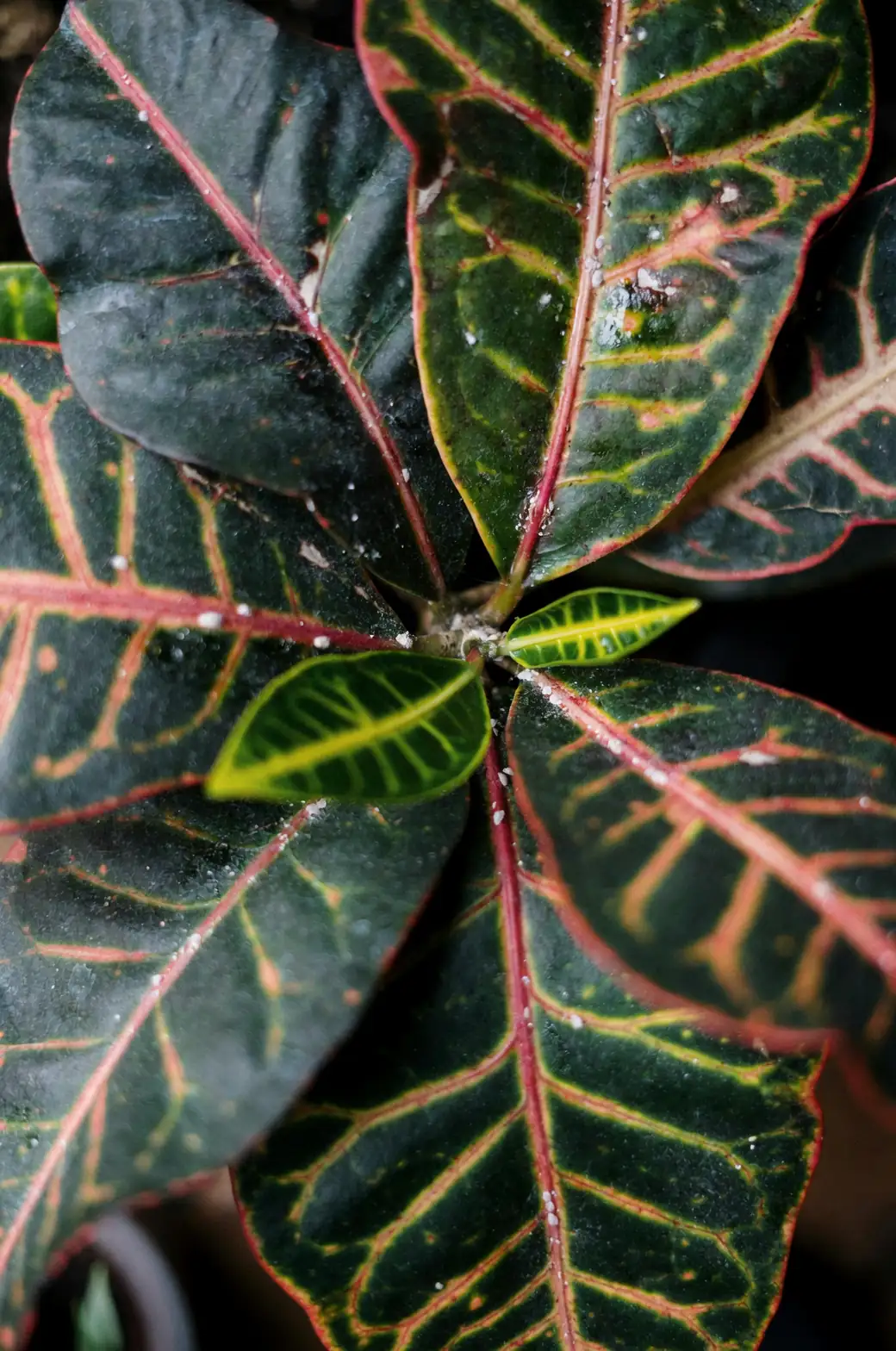
- Leaf shape & pattern: Broad, pointed, oblong leaves with strong, colored venation—think highlighter lines in yellow, orange, or red tracing deep green.
- Palette: Green base with yellow-to-red veins; older foliage often deepens toward bronze/red.
- Light needs: Bright, indirect light is its sweet spot. A dash of gentle morning sun is fine; avoid harsh midday rays that can scorch or dull color.
- Growth habit: Upright and fairly vigorous; a classic “shrubby” croton that can graduate from tabletop to floor plant over time.
- Styling notes: The architect’s croton—its graphic venation pairs beautifully with clean-lined planters (matte white, concrete, or black). Use as a color anchor among paler cultivars.
Mammy
- Leaf shape & pattern: Long, narrow leaves that twist and curl like party ribbons—sometimes spiraled.
- Palette: A festive mix of green splashed with yellow, orange, and red; some selections lean heavily red or yellow.
- Light needs: Bright, filtered light with a bit of gentle sun to intensify colors. Keep midday sun filtered.
- Growth habit: Naturally compact; easy to keep around 2–2.5 ft, great for small spaces and shelves.
- Styling notes: All about movement and texture—show it off in a tall, slim pot to echo the corkscrew foliage. Superb contrast next to broad-leaved Petra or Magnificent.

Gold Dust
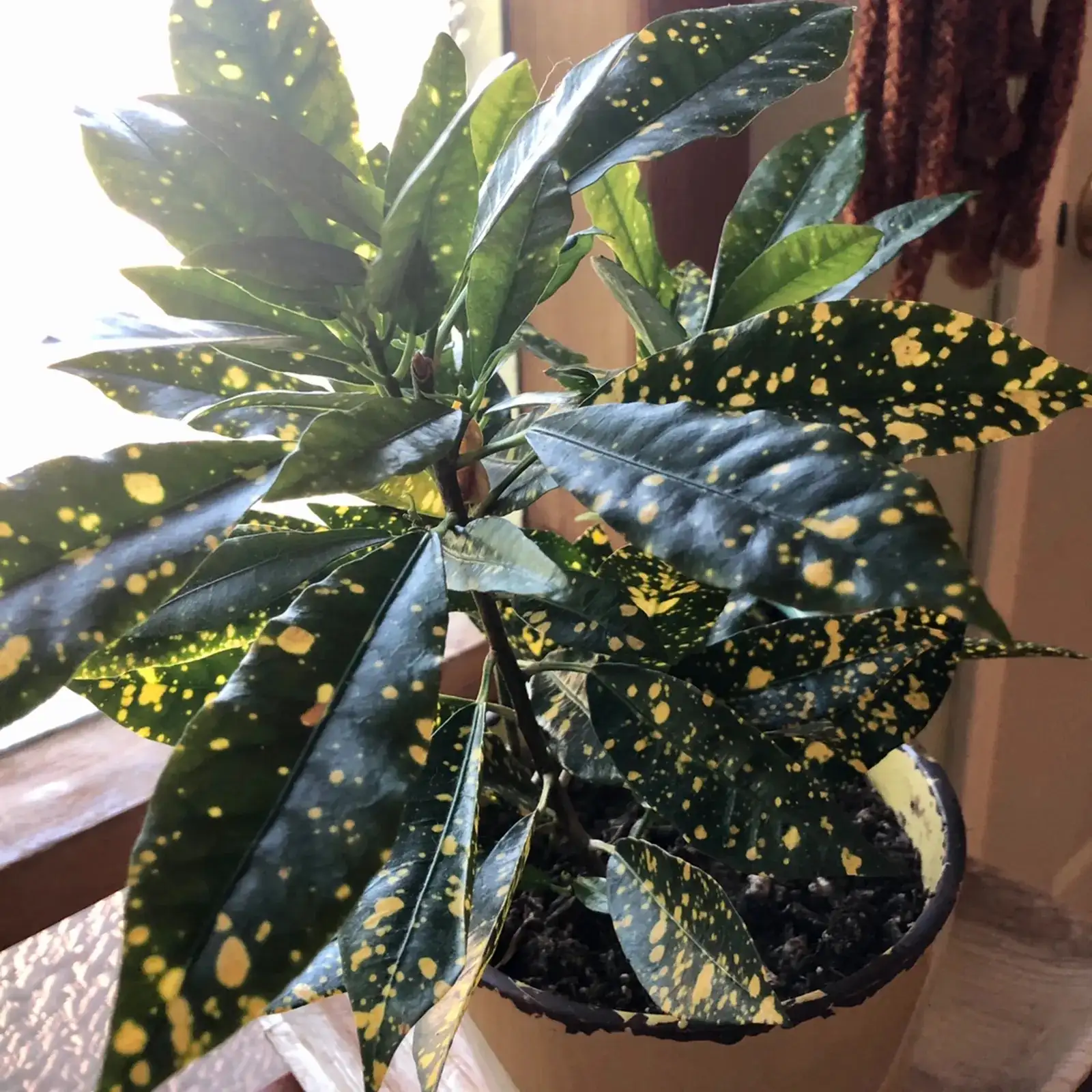
- Leaf shape & pattern: Oval to slightly elongated leaves “freckled” as if flicked with yellow paint.
- Palette: Glossy green peppered with golden-yellow speckles; new growth may emerge greener, then brighten.
- Light needs: Bright, indirect light to keep the speckles crisp; a touch of gentle sun OK. Too little light = muddy, greener leaves.
- Growth habit: Bushy and well-branched; an excellent filler between bolder patterns.
- Styling notes: The polka-dot neutral of the croton world—pairs with anything. Ideal for repeating through a collection to unify wildly different shapes.
Magnificent
- Leaf shape & pattern: Broad, substantial leaves (Petra-like) marbled and blotched rather than just veined.
- Palette: Splashes of yellow, orange, red, pink, and sometimes purple on green—like confetti on big leaves.
- Light needs: Wants bright, filtered light to bring out the multi-tone speckling; protect from harsh midday sun.
- Growth habit: Substantial, upright, and showy; a natural focal plant as it matures.
- Styling notes: Drama plant. Give it visual breathing room—single-specimen on a plant stand or in a statement floor pot. Pairs glamorously with brass or warm woods.
Zanzibar
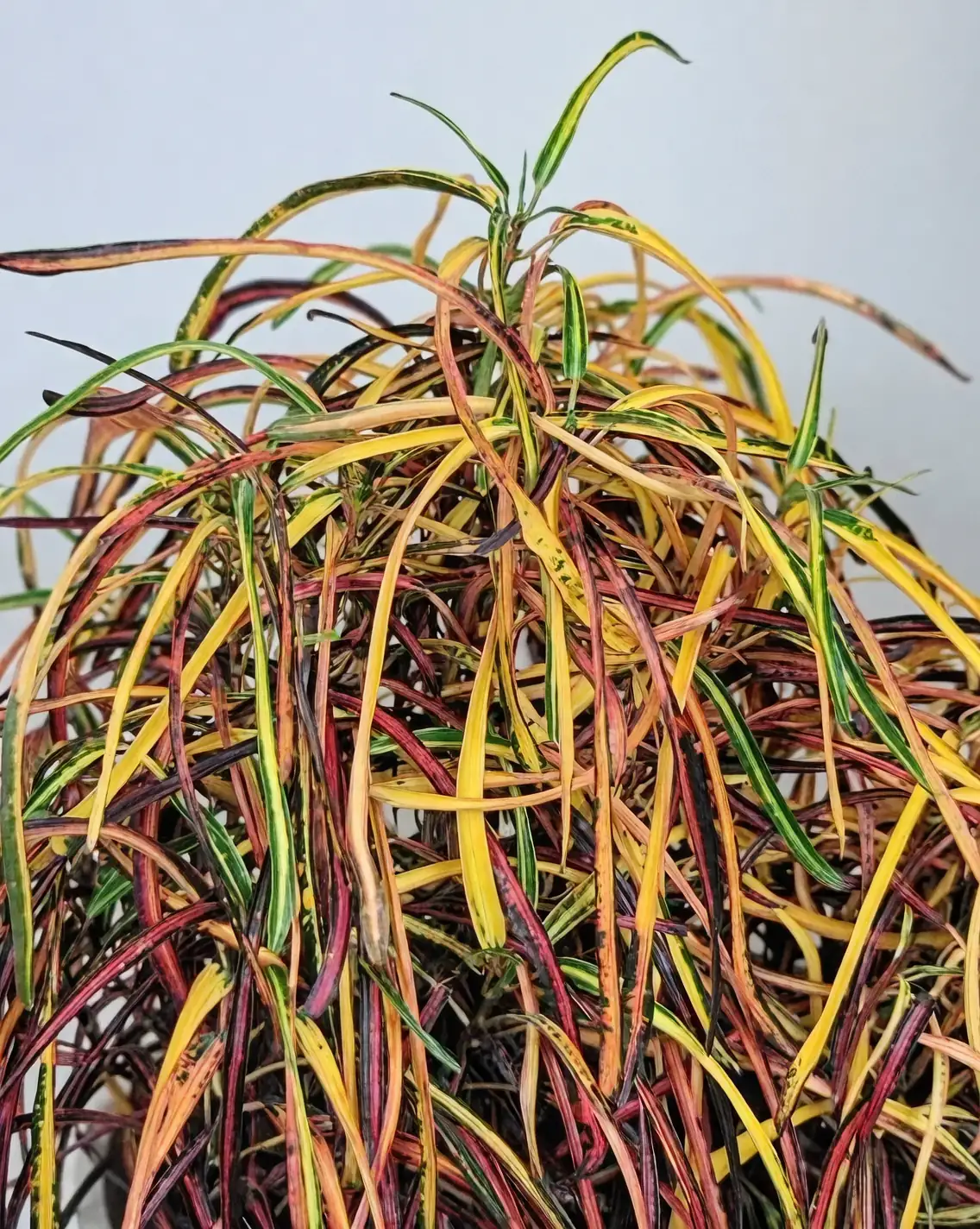
- Leaf shape & pattern: Extremely narrow, grass-like ribbons; leaves can be slightly wavy, creating a fountain effect.
- Palette: Green with streaks and flushes of yellow, orange, and red along thin blades.
- Light needs: Bright, indirect light; its narrow leaves appreciate strong brightness to color well, but still avoid intense midday sun.
- Growth habit: Airy, arching silhouette with a lighter visual footprint—excellent for vertical rhythm in a grouping.
- Styling notes: The “fine liner” in your foliage toolkit. Use it to break up heavy textures; spectacular in tall cylinders or as a counterpoint to chunky-leaved neighbors.
Quick picks: Match the plant to your purpose
- Small-space star: Mammy
- Clean-lined classic: Petra
- Speckled showpiece: Magnificent (bold blotches) or Gold Dust (fine freckles)
- Slim-profile accent: Zanzibar
- Easiest mixer in a multi-croton vignette: Gold Dust
- Future floor specimen: Petra or Magnificent
Color and light: Keeping variegation electric
- Baseline: Bright, indirect (filtered) light all day. Morning sun is usually gentle; shield from harsh midday beams.
- Telltale cues:
- Fading to green = needs more brightness.
- Dull or crispy patches = too much direct, hot sun or low humidity.
- Pro tips:
- Rotate the pot a quarter turn weekly for even color.
- Keep leaves clean; dust blocks light and invites spider mites.
- In winter’s short days, move closer to the brightest window or add a diffuse grow light.
Growth habits and pruning for display
- Natural habit: Upright, branching shrub that can get woody with age.
- Pruning:
- Best in early spring; snip just above a node to promote bushiness.
- Avoid removing more than about one-third at a time.
- Wear gloves—the milky sap can irritate skin.
- Propagation:
- Stem cuttings (4–6 in) root well in warm, humid conditions; bottom heat speeds things up.
- Air layering also works. Seed is rare and won’t be true to cultivar.
Styling your croton collection
- Containers:
- Petra/Magnificent: broad, weighted planters in matte ceramic, concrete, or wood.
- Mammy/Zanzibar: tall cylinders or pedestal pots to accentuate form.
- Gold Dust: repeat in matching pots to create cohesion between “hero” plants.
- Color palettes:
- Warm modern: brass, walnut, and rust textiles with Magnificent or Petra.
- Graphic contrast: black/white vessels with Gold Dust and Petra’s veined leaves.
- Tropical eclectic: rattan, patterned tiles, and a Mammy + Zanzibar duo for motion.
- Placement:
- Bright bathrooms or warm kitchens deliver the humidity and light crotons love.
- Group plants to raise ambient humidity and intensify that “jungle” vibe.
Care essentials for collectors
- Light: Bright, indirect light; a little gentle sun helps, but avoid harsh midday exposure.
- Temperature: Keep warm and steady—about 59–85°F (15–29°C). Below 59°F (15°C) risks stress and leaf drop.
- Humidity: Aim for 50–70%. Use a humidifier, pebble tray (pot above waterline), or group plants. Mist only if it doesn’t spot leaves and there’s good airflow.
- Water: Evenly moist, never soggy. Spring–fall, water when the top 0.5–1 in (1–2.5 cm) dries. In winter, slow down—often about every 10–14 days, depending on your home.
- Soil: Fertile, well-draining indoor mix amended for aeration (bark/perlite); slightly acidic to neutral.
- Feeding: Spring–fall only. Either a balanced liquid every 2 weeks at label rate (half-strength if sensitive) or every 4–6 weeks at half-strength. Ease off in winter.
- Repotting: In spring. Step up one pot size when roots show; young plants annually, mature every 2–3 years.
- Pests & health: Watch for spider mites (dry air!), scale, mealybugs, and thrips. Rinse foliage occasionally; treat early with insecticidal soap or horticultural oil. Remove spotted leaves and improve airflow if fungal leaf spots appear.
- Safety: Toxic if ingested; sap can irritate skin and eyes. Keep away from pets and children; wear gloves when pruning.
Buying guide: Choosing top-tier specimens
- Look for:
- Intense coloration, glossy leaves, and foliage carried low on the stems (not bare and leggy).
- Even, well-branched growth that matches cultivar traits (twisted leaves for Mammy, speckles for Gold Dust, ribbon-thin blades for Zanzibar, strong venation for Petra, bold blotches for Magnificent).
- Avoid:
- Leaf drop, limp growth, black/brown spotting, webbing, or sticky residue (pest flags).
- Tip: Check lower, mature leaves—they reveal the plant’s “true” adult look more reliably than fresh flushes.
Indoors vs. outdoors notes for warm climates
- Outdoors in frost-free zones (USDA 11–12), crotons can be landscape shrubs.
- Sun acclimation: Many cultivars tolerate more sun outdoors once acclimated, but mid-afternoon tropical sun can still scorch—ease plants into brighter conditions gradually and ensure steady moisture and humidity.
- Everywhere else: Grow in containers and bring indoors well before cool weather.
Troubleshooting quick hits
- Leaves turning green: It needs more brightness. Move nearer a bright window with filtered light.
- Sudden leaf drop: Classic stress response—check for cold drafts, low humidity, or erratic watering. Keep warm, evenly moist, and stable.
- Dull color on Mammy or Zanzibar: Increase brightness without adding harsh midday sun; modest morning sun can help.
Meaning and lore: The “flower language” of a foliage icon
Crotons rarely bloom indoors and their flowers are modest outdoors, but in the broader language of plants (花语), croton stands in for transformation, creativity, passion, and abundance. The symbolism isn’t ancient doctrine so much as a poetic read on the plant’s behavior: leaves shift colors as they mature, whole plants change their palette with the seasons and light, and the exuberant patterns project lively, optimistic energy. That’s why crotons make upbeat “new chapter” gifts for moves, graduations, and big life pivots—living reminders that change can be colorful.
—
Curating a croton collection is like assembling a wardrobe: mix standout silhouettes (Mammy, Zanzibar) with classic staples (Petra), add pattern play (Gold Dust, Magnificent), and keep conditions consistent. Do that, and your display won’t just look good—it will glow.