

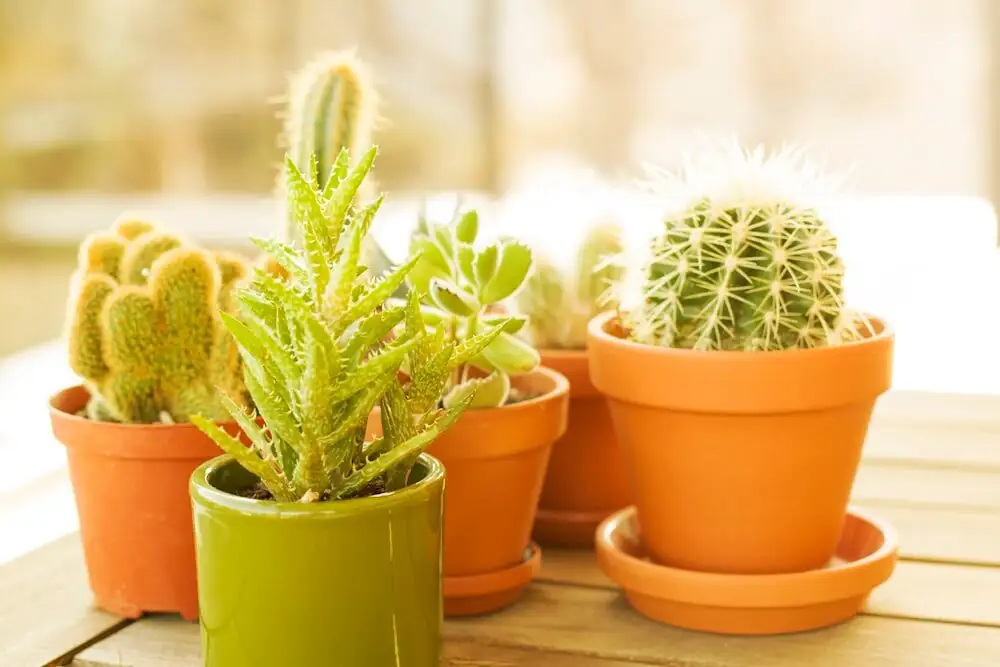
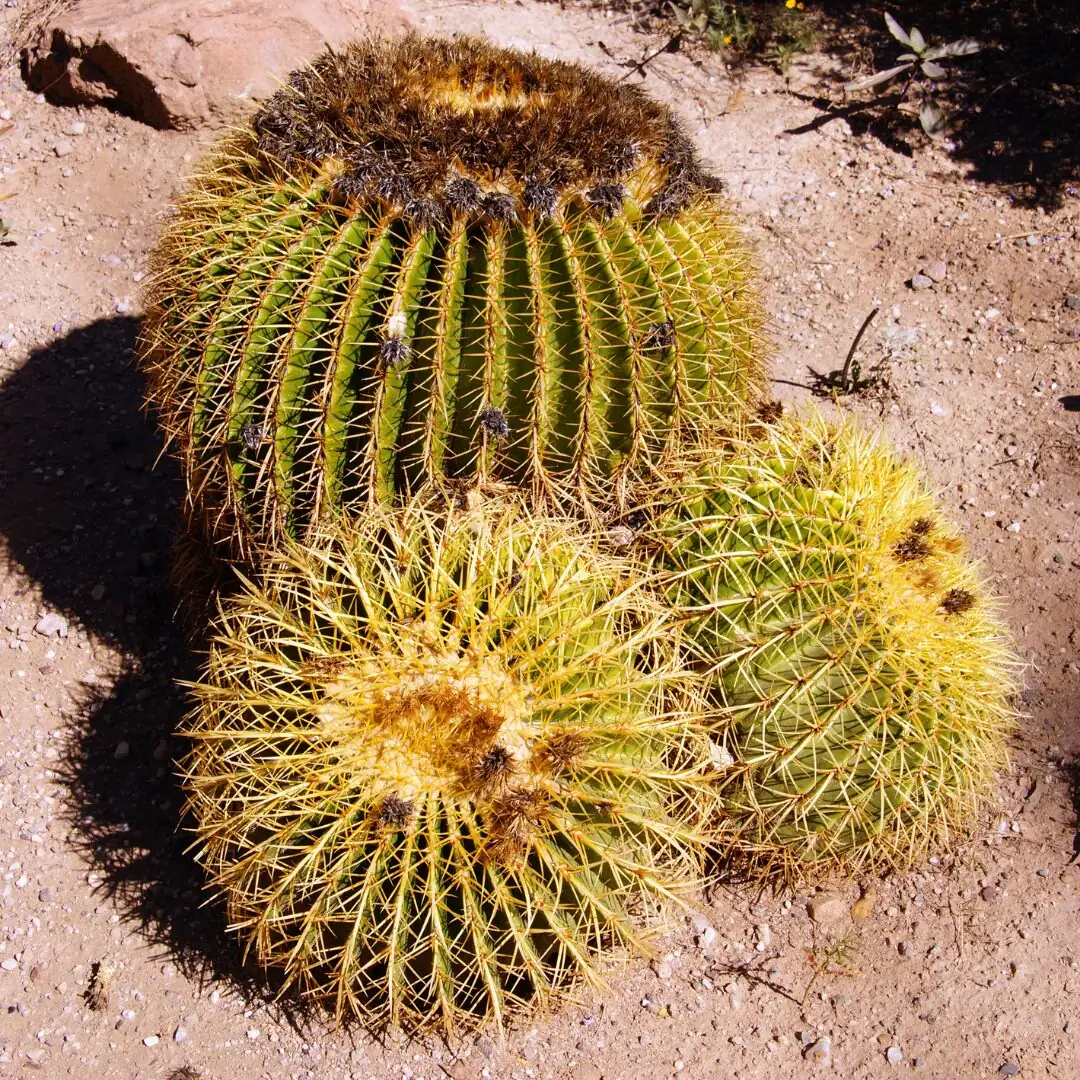
Meet the plant that flexes after a drink, wears sunshine as armor, and refuses to rush a good thing. Echinocactus grusonii—aka Golden Barrel, Golden Ball, or Mother-in-Law’s Cushion—turns the ordinary idea of “leafy green” upside down with a bright-green, ribbed globe wrapped in gleaming gold spines. It’s weird, it’s wonderful, and it’s an absolute icon from central Mexico.
Meet the Golden Barrel
- Scientific name: Echinocactus grusonii (family Cactaceae)
- Native range: Central Mexico
- Habit: A slow-growing, globose to short-barrel cactus with prominent ribs and golden-yellow spines; usually solitary when young, later producing offsets (“pups”)
- Size: With time and good light, typically about 30–90 cm (12–35 in) tall and wide; in pots, you’ll commonly see 12–40 cm (4.7–15.7 in) containers
- Vibe: A living sculpture—clean symmetry, rich color, and spiny texture in one sun-loving sphere
The Quirky Physics of a Living Barrel
Ribs that “breathe” after rain
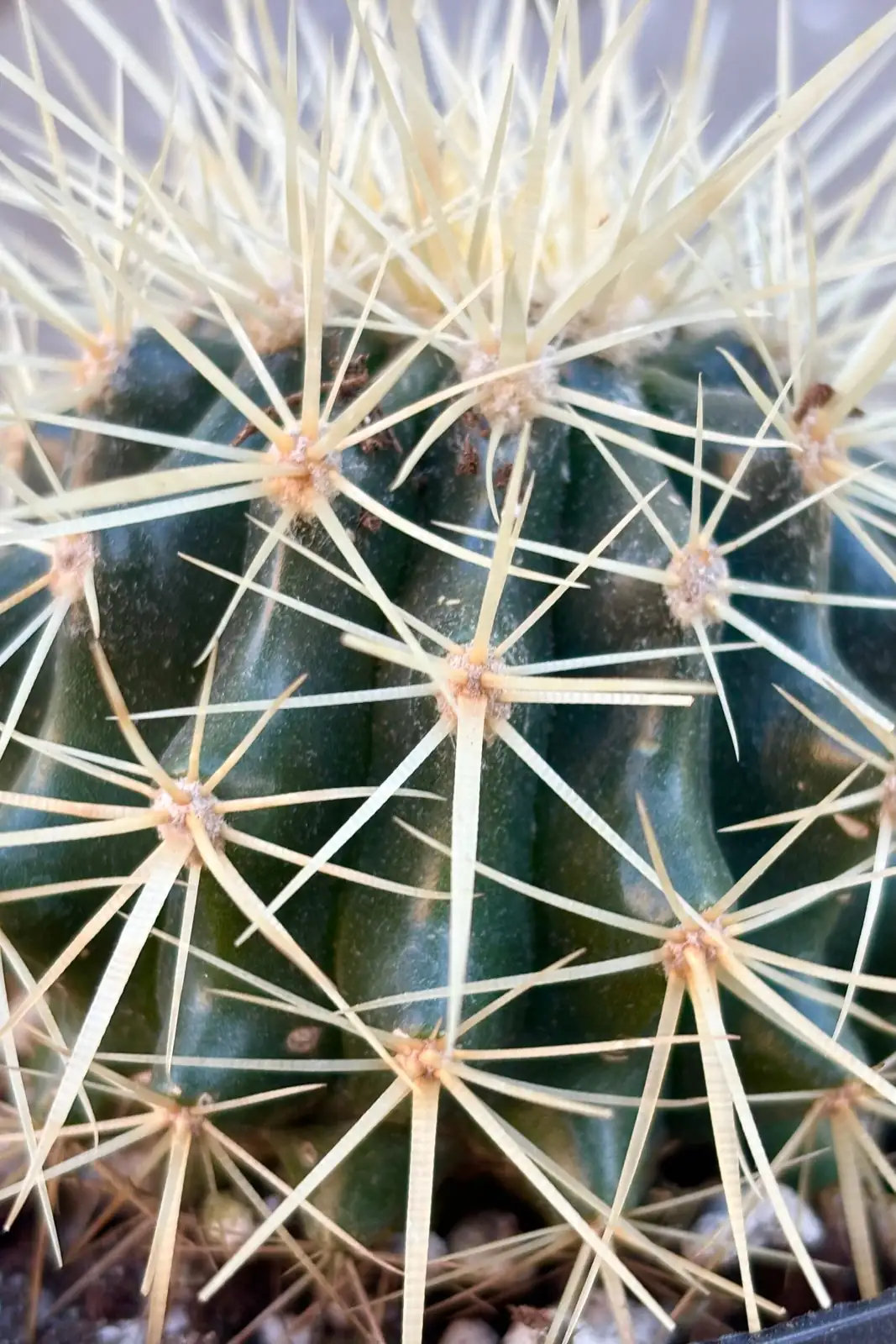
This cactus doesn’t just swell after a good soak—it shape-shifts. Those pronounced ribs act like an accordion: when water arrives, the stem plumps outward; during drought, it contracts without tearing its skin. This flexible geometry lets the plant bank precious moisture with style.
Tip for growers: mimic desert timing. Water thoroughly, then let the potting mix dry well before you even think about watering again.
No leaves, no problem
Golden Barrel has no true leaves. Photosynthesis happens in its green stem, while leaves have been evolutionarily reimagined as spines—dense, stiff, and brilliantly golden in strong light. The result? Minimal water loss, sun protection, and a dazzling halo of color.
A summer crown of flowers (for the patient)
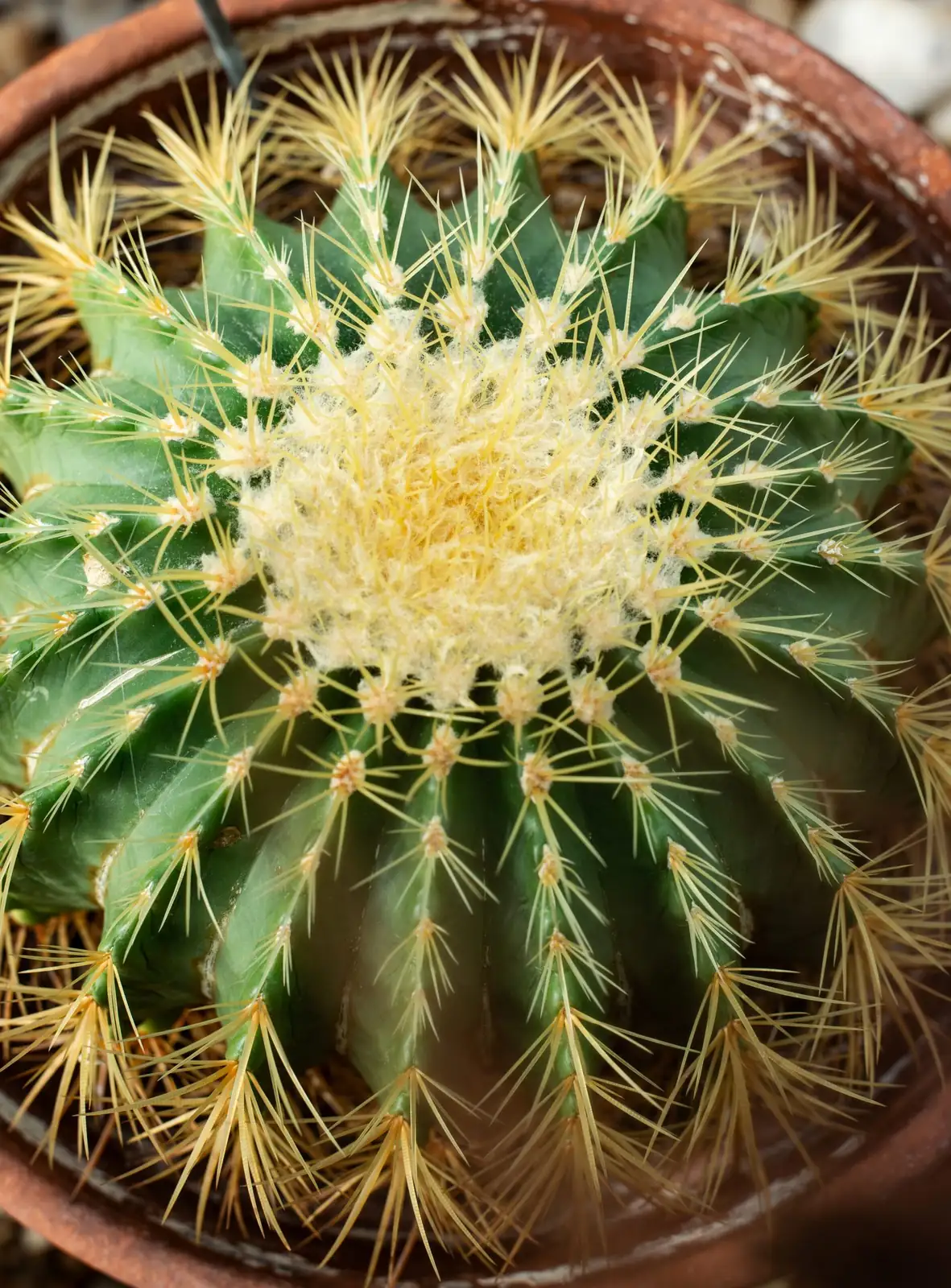
Mature plants surprise with small, yellow blooms that appear in a ring near the crown—like a dainty, floral tiara. Flowering is most likely in warm, bright summers and usually requires an older, well-established plant. Younger windowsill specimens may bide their time, but when the crown rings with blooms, it’s pure magic.
A slowpoke with staying power
This is a marathoner, not a sprinter. True “barrel” grandeur takes years. Most plants stay solo for ages, then eventually produce offsets and build into a clumping cushion. The trade-off for the slow pace? Exceptional longevity and architecture that only grows more striking with age.
Spines that glow like sunlight
Those spines earn the name “golden.” They’re richest and brightest in intense light. In prolonged low light, the plant may stretch and the spines turn duller. Indoors, a south- or east-facing window is ideal; if scorching threatens behind glass at midsummer, offer temporary, light shade while the plant acclimates.
Fast from seed (yes, really!)
Here’s a plot twist: while the plant grows slowly, its seeds can wake up briskly. Under good conditions, expect germination in about 20–25 days at 20–24°C (68–75°F). That’s speedy in cactus terms.
- How to sow: Surface-sow with a whisper-thin cover, keep warm and evenly (not soggily) moist, and give bright, indirect light. Ventilation helps prevent fungus.
- Offsets: Once pups reach about 1–2 cm (0.4–0.8 in), detach, let cuts callus, then root them in a gritty, sandy medium—often rooting within 20–30 days in warm conditions.
- Grafting: Common from May to July; the union typically heals in about 3–4 weeks.
Care That Showcases the Weird-and-Wonderful
Light
- Bright light to full sun is the sweet spot.
- Indoors: A south- or east-facing window is prime.
- If moving to stronger sun, acclimate gradually; brief, light shade during extreme heat behind glass keeps the skin safe.
Water
- Golden rule: water thoroughly, then wait until the mix is dry.
- Spring: about every 2 weeks in many homes (adjust for pot size and light).
- Summer: often weekly in warm, very bright conditions—but only after drying.
- Autumn: gradually reduce.
- Winter: keep almost completely dry; if kept cool, you can pause watering until light and warmth return.
- Never pour water into the crown or over the body.
Soil
- Aim for desert-fast drainage. Think: gritty cactus mix with coarse sand or grit. Avoid peat-heavy or water-retentive blends.
- A loamy base plus leaf mold/compost is fine if heavily cut with mineral grit. Any organic richness should be minimal.
Temperature and humidity
- Best growth: around 13–24°C (55–75°F). Nights around 10–13°C (50–55°F) are fine during active growth.
- Winter minimum: keep above about 8°C (46°F); keep soil dry and protect from frost.
- Prefers dry air. If you must raise humidity, lightly mist the surrounding air only—never the body—and ensure good airflow.
Feeding
- During the growing season, feed monthly with a cactus fertilizer or a low-nitrogen formula (e.g., 15-15-30) at half strength.
- No fertilizer in winter.
Repotting
- Every ~2 years in spring or when rootbound. Choose a pot sized to the roots with excellent drainage; a heavier container helps prevent tipping.
- After repotting, keep dry for several days to let root cuts callus before watering.
Placement ideas
- Sunny windowsill, bright living room, studio, office, balcony, porch, or sunroom—anywhere with strong light and airflow. Keep it out of dim corners.
Health and safety
- Main risks: rot and fungus when cool and wet; pests like spider mites, mealybugs, and scale.
- Prevention: strong light, gritty fast drainage, and ventilation.
- Treatment: isolate affected plants; use insecticidal soap or horticultural oil; for rot, remove affected tissue and use an appropriate fungicide as needed.
- Not known to be poisonous, but spines are serious—position out of reach and handle with thick gloves or tongs.
A note for daredevils: water culture
It’s possible to grow Golden Barrel hydroponically, but it’s higher-risk. If you try it, keep about half the roots in water, change water regularly (weekly in summer, monthly in winter), keep everything clean, and add only a light dose of nutrients during changes.
Styling the Sphere
- Solo statement: Park one in a wide, low pot where its symmetry shines.
- Textural trio: Pair with silver-leaved succulents or upright euphorbias for contrast.
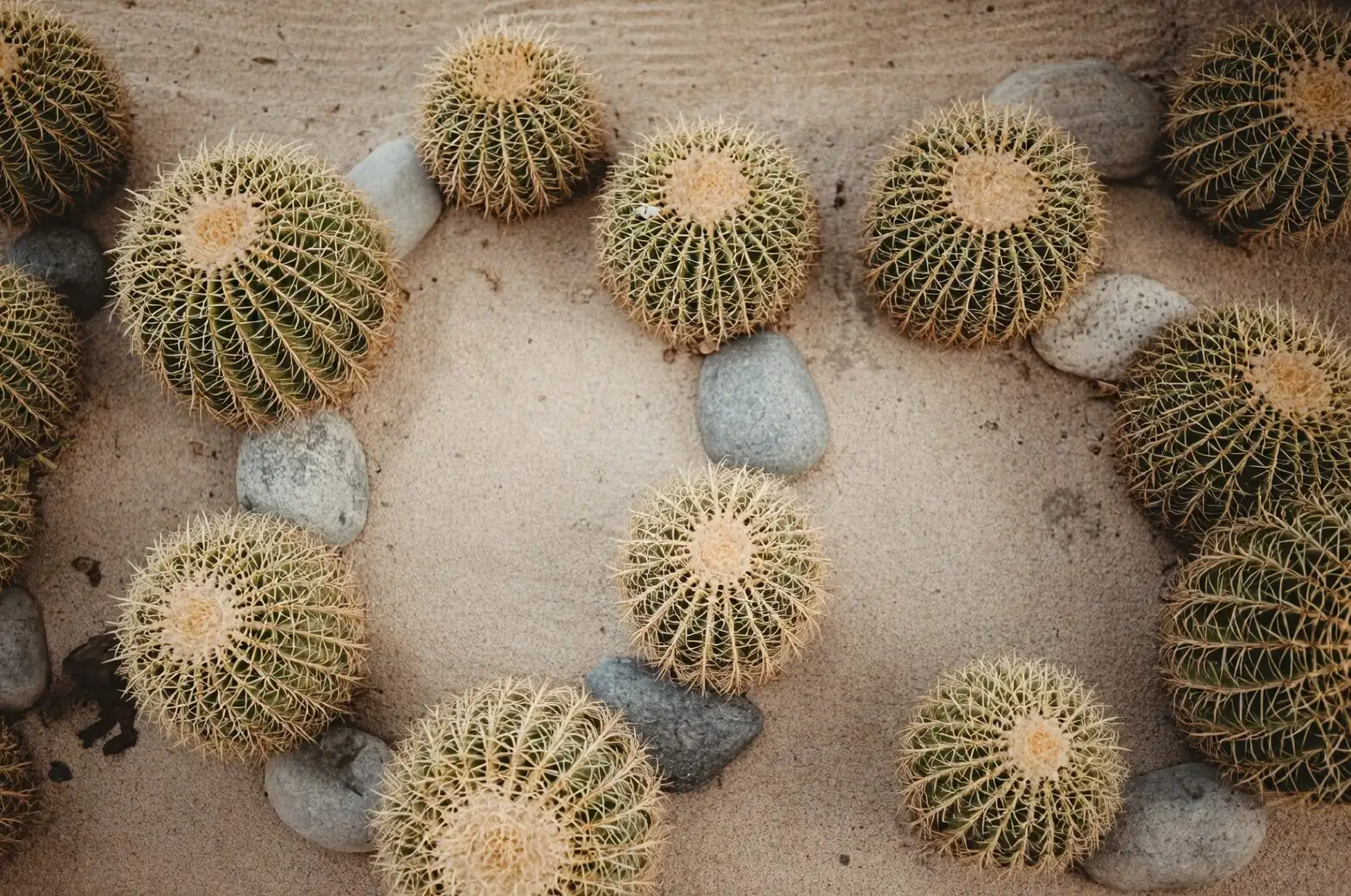
- Desert vignette: In frost-free, dry climates (roughly USDA 10–11), cluster multiple barrels among rocks and gravel for a living sculpture garden.
Symbolism and the “flower language”
Golden Barrel is widely gifted as a symbol of resilience, endurance, and protective strength. The message comes straight from its life story: no flimsy leaves, just a fortress of spines; a body built to weather drought; and—after years of patience—a crown-ring of summer flowers like a quiet halo. In modern “flower language,” it says: stay strong, stand bright, and protect your core while you grow at your own pace.
Quick facts to drop at your next plant‑nerd party
- It has no true leaves; the green stem does the photosynthesis.
- The ribs expand after rainfall and contract during drought—built-in water budgeting!
- Spines glow golden in strong light; too little light dulls color and can stretch growth.
- Yellow flowers form a ring near the crown on mature plants, typically in summer.
- Seeds often germinate in roughly 20–25 days at 20–24°C (68–75°F).
- Truly impressive “barrel” size takes years; older plants may produce pups and form clumps.
Whether you’re after a sunlit accent for your desk or a sculptural anchor for a bright balcony, Echinocactus grusonii delivers personality in prickles—slow, sturdy, and brilliantly golden.