

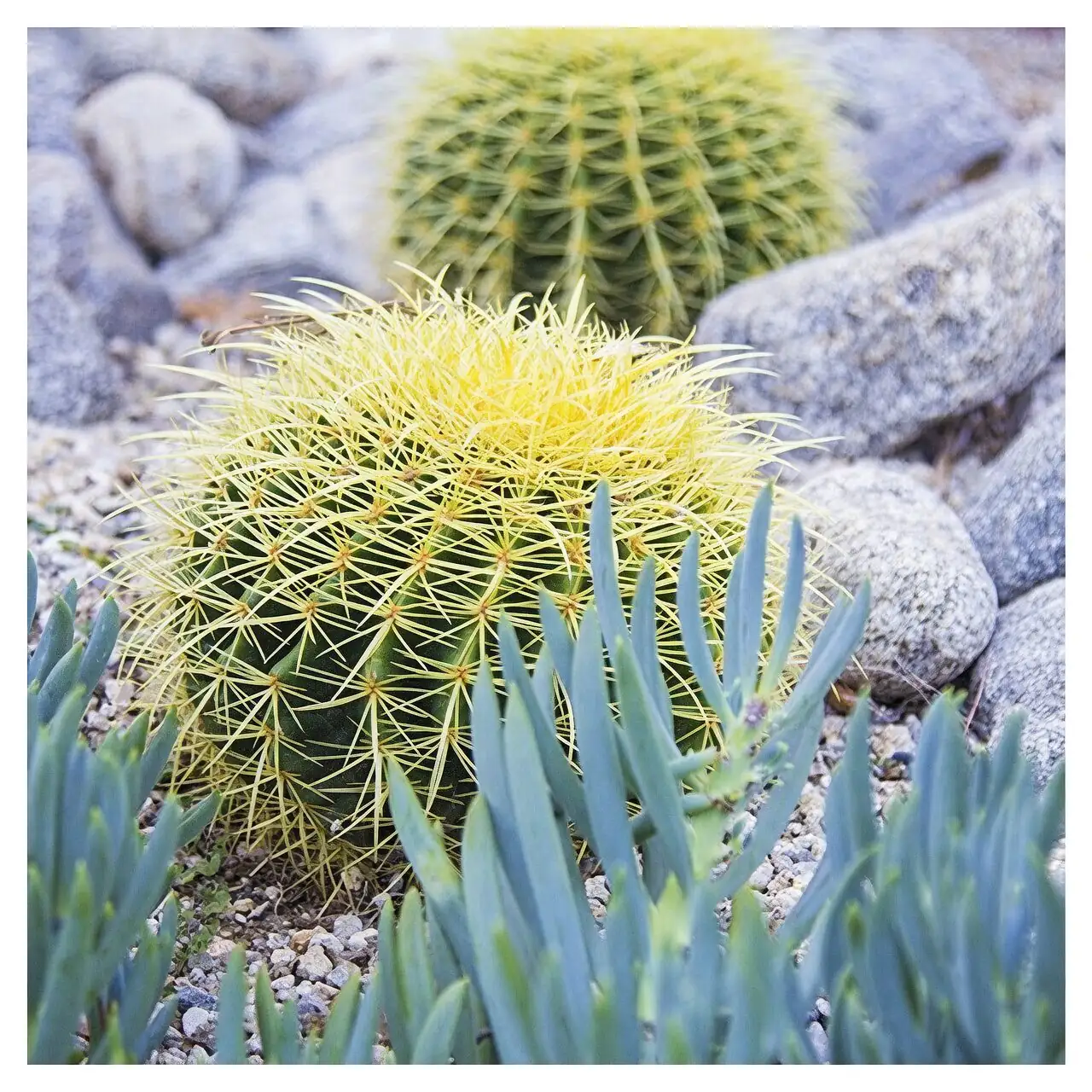
Golden barrel cactus (Echinocactus grusonii) is landscape geometry you can plant—pure sculpture in sunlight. Those radiant golden spines wrap a glossy green barrel that holds its silhouette for decades. If you garden in a warm, dry climate or keep a sunny balcony, this blueprint shows exactly how to site, mound, and style it with rock to make the gold glow—while staying within the real-world limits of USDA Zones 10–11.
Meet the plant: living architecture
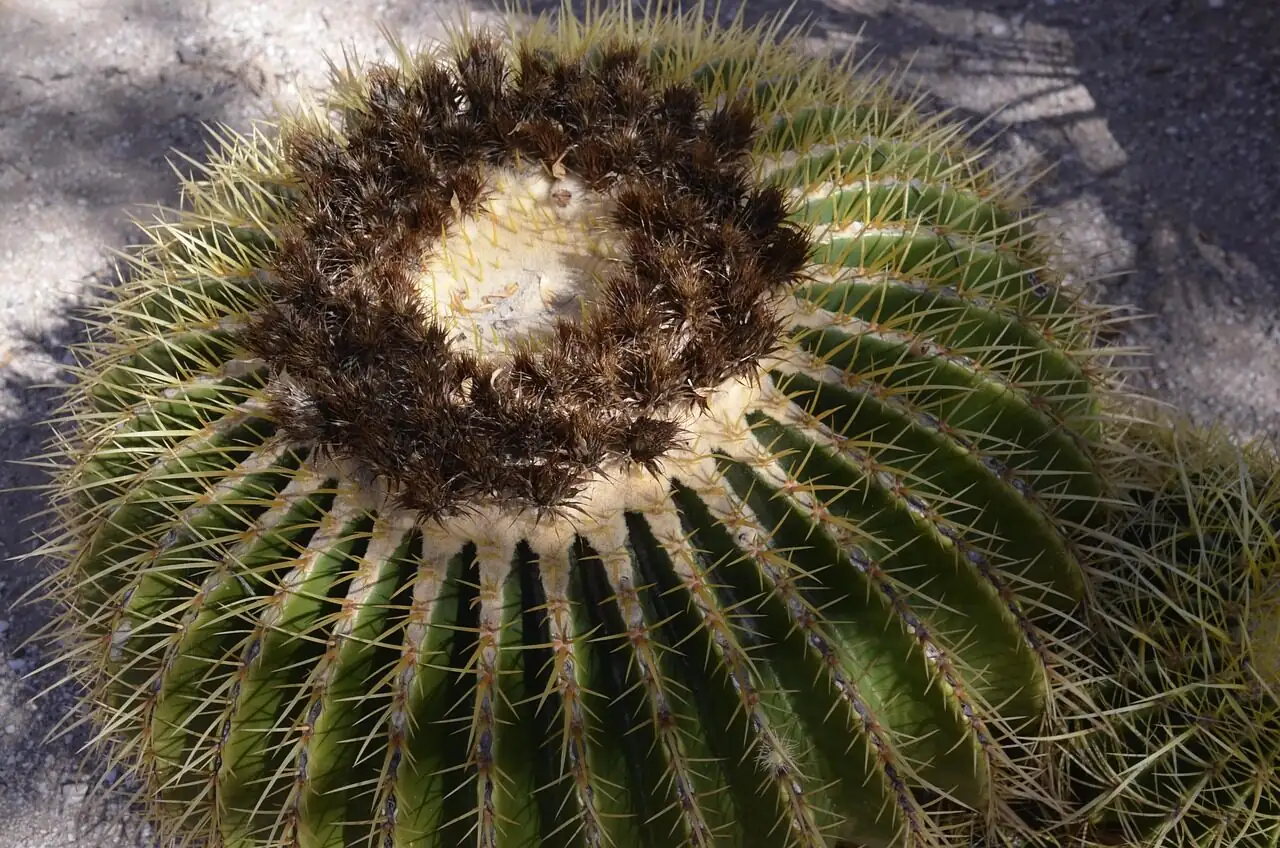
- Look: Bright green, globose to short-barrel body with strong vertical ribs; dense golden-yellow spines that intensify in strong light.
- Size and pace: Slow-growing; typically 30–90 cm (12–35 in) tall and wide over time. With patience and great light, can reach roughly 3 ft x 3 ft. Often solitary for years; older plants may pup into a luminous clump.
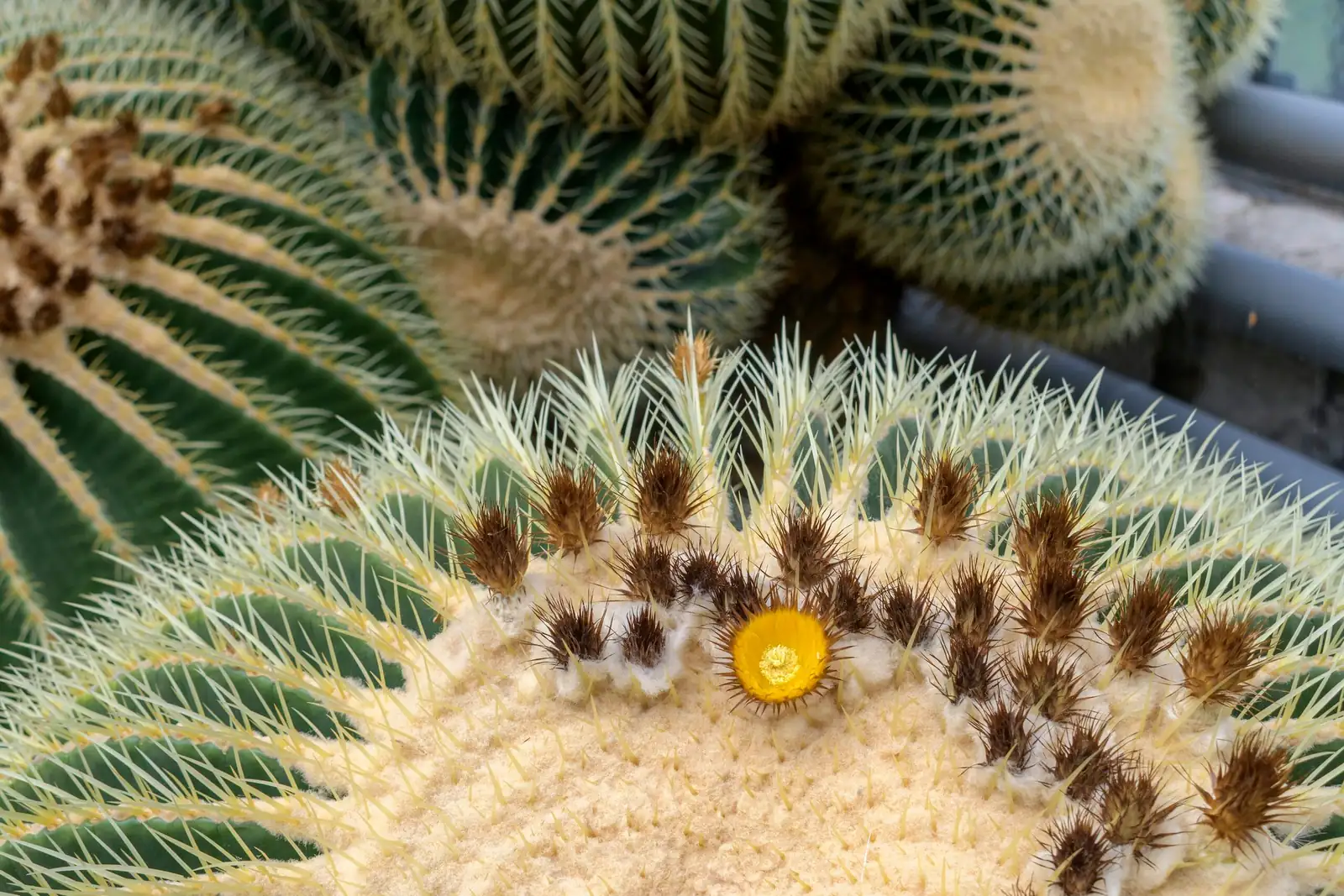
- Flowers: Small yellow blooms in a crown ring on mature plants in summer—most likely with heat and strong light.
- Personality: Drought tolerant once established; exquisitely sensitive to overwatering and poor drainage.
Climate reality check (Zones 10–11)
- Best outdoors in warm, dry regions—roughly USDA Zone 10–11. Not frost hardy.
- Temperature: Ideal growth 13–24°C (55–75°F); protect from frost and keep above ~8°C (46°F) in winter, with soil kept dry.
- Wet + cold = trouble. Prolonged cold, wet soil invites rot. In cooler zones, grow in a container you can move under cover for cold snaps.
Sun mapping your site (before you plant)
Give your barrel the kind of sun that keeps spines golden without scorching a newly placed plant.
- Track light for 2–3 days:
- Use a phone compass/sun-path app to note hours of direct sun from spring to late summer.
- South and west exposures are prime; east is gentler and great for acclimation.
- Check reflectors and heat traps:
- White walls, glass, pale gravel, and metal railings bounce extra light/heat (good in winter, intense in midsummer).
- Behind glass can superheat at midday; acclimate and use brief, light shade if you see scorch.
- Airflow matters:
- Warm, moving air dries spines after dew and helps prevent fungal issues.
- Acclimation plan:
- After purchase or relocation, step up sun over 10–14 days: start with bright morning sun + dappled afternoon, then increase exposure. Temporary 30% shade cloth is handy in peak heat while the plant adjusts.
Mounding for perfect drainage (ground or raised bed)
A golden barrel is happiest on a mini-summit. The crown stays high and dry; the roots enjoy fast-draining, gritty soil.
Build a cactus berm
- Dimensions:
- Height: 15–30 cm (6–12 in) above grade.
- Footprint: At least 3× the plant’s diameter now, with gentle 5–10% slopes.
- Sub-base (optional but excellent on heavy soils):
- Remove 10–15 cm (4–6 in) of native soil.
- Backfill with a coarse layer (crushed gravel 10–20 mm) to encourage percolation.
- Soil recipe (free-draining is non-negotiable):
- Blend loam-based potting soil or loamy garden soil with a little leaf mold/compost, then heavily amend with coarse sand and grit.
- Practical target by volume: about 30–40% loam, 10% leaf mold/compost (sparingly), 50–60% mineral grit/coarse sand/pumice.
- Avoid peat-heavy or water-retentive mixes.
- Planting:
- Set the crown above the surrounding grade. Do not bury the neck.
- Backfill lightly and don’t compact; tap to settle.
- Top-dress with 2–4 cm (¾–1½ in) of gravel to keep the crown clean and splash-free.
- Water-in once, modestly:
- Give a light settling drink, then let the berm dry thoroughly before the next watering.
Boulder choreography
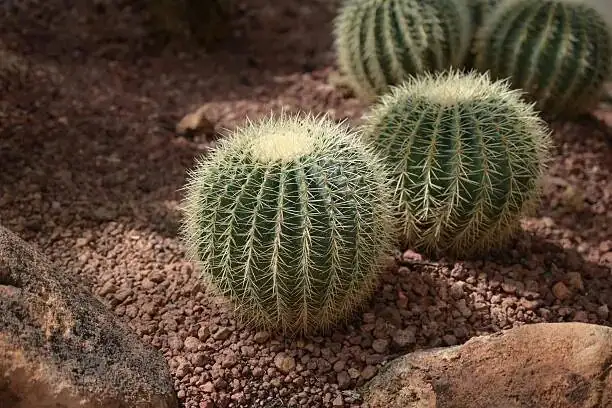
- Nestle one or two stones (20–40 cm) just below the barrel’s shoulder, keeping the plant on the high point. This anchors the vignette visually and protects the root zone from foot traffic without trapping moisture at the crown.
Balcony or terrace: the container blueprint
When ground isn’t an option, design an elegant, mobile micro-desert.
- Pot:
- Heavy, well-drained container with large unobstructed holes (ceramic, concrete, or thick-walled clay resists tipping).
- Size to the root ball—not excessively oversized. Typical pots range 12–40 cm (4.7–15.7 in) diameter for cultivated plants.
- Mix:
- Use the gritty blend above. For pots, lean even more mineral: 60–70% coarse grit/pumice/lava + 30–40% loam with just a whisper of compost.
- Planting:
- Keep the crown proud of the rim edge; top-dress with gravel.
- Never let a saucer hold standing water.
- Placement:
- South/east exposures shine; back off west sun until acclimated.
- Leave a few inches from walls to avoid reflected scorch and to promote airflow.
Rock and gravel palettes that make the gold glow
Choose a mineral palette that frames the spines—and respects heat.
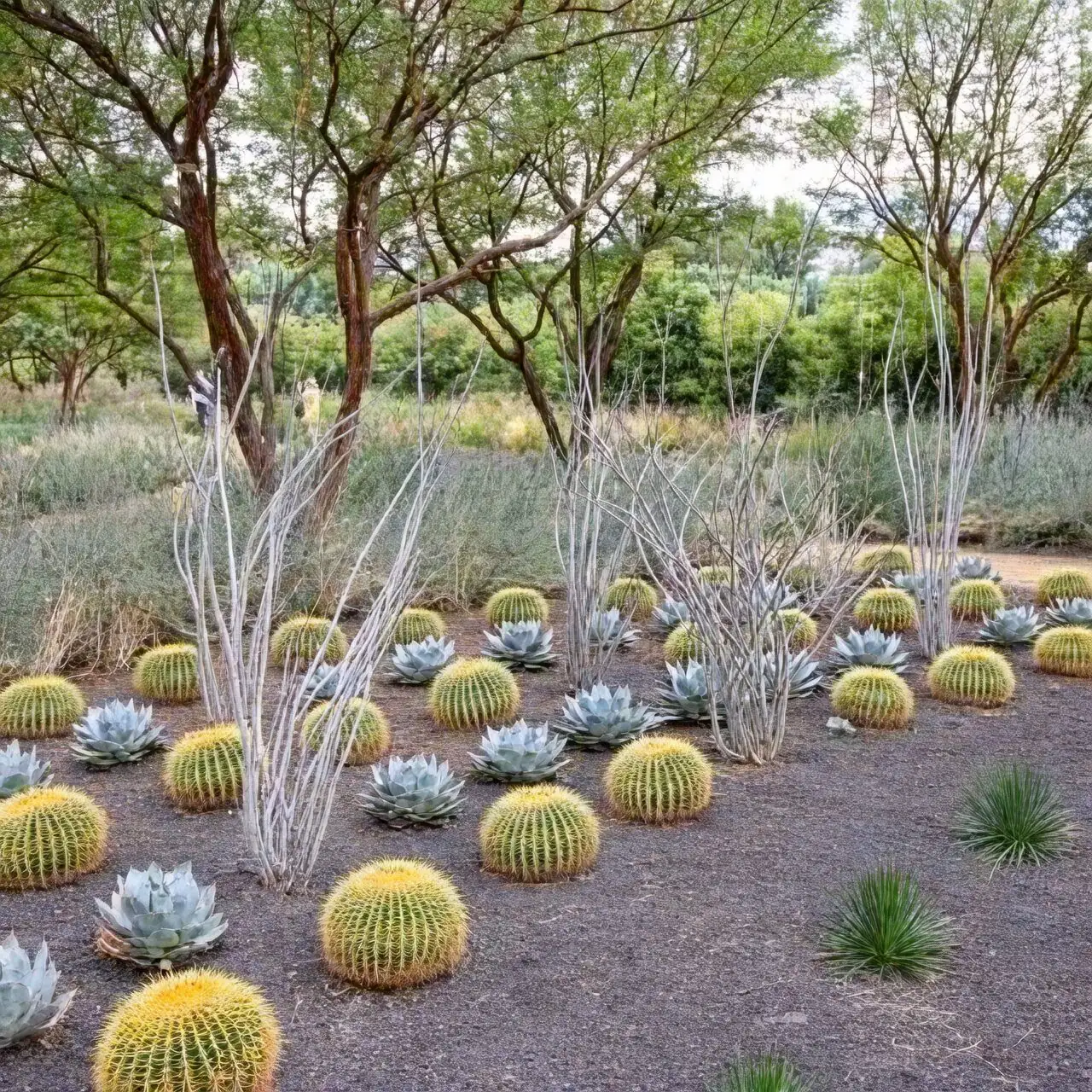
- Desert Modern (high contrast):
- Dark basalt or charcoal lava rock + pale quartz gravel. The gold pops; use in areas without brutal afternoon heat, as dark rock runs hot.
- Warm Sandstone Serenity:
- Buff limestone or tawny sandstone boulders + honey-beige decomposed granite. A sun-warmed harmony that echoes the spines.
- Coastal Caliche:
- Creamy chalk/limestone chips + gray river pebbles for a soft, luminous base with cool undertones.
- Micro-gravel matrix:
- Layer 10–20 mm gravel underfoot and 3–6 mm fines as a top veil for a crisp, seamless finish.
Tip: Use one dominant stone color and one accent. Keep grout lines (bare soil) invisible—continuous mineral surfaces shed water and look intentional.
Watering, feeding, and seasonal rhythm outdoors
- The golden rule: Water thoroughly only after the mix has dried out well. Never let containers sit in water; avoid pouring onto the crown.
- Typical pacing (adjust for heat, light, and pot size):
- Spring: about every 2 weeks.
- Summer (active growth, potential flowering): roughly weekly in hot, very bright conditions—still only after the mix dries.
- Autumn: taper.
- Winter: keep nearly dry; if kept cool, stop watering until warmth and light return.
- Feeding:
- Monthly in the growing season with a cactus or low-nitrogen formula (e.g., 15-15-30) at half strength. No fertilizer in winter.
Three design blueprints to steal
1) Sun-step berm (Zone 10–11 courtyard)
- Build a 20 cm-high, 1.2 m-wide berm.
- Plant one 30–40 cm golden barrel on the apex; flank with two smaller barrels or low mounding companions (e.g., low-growing aloes or dyckias) on the shoulders.
- Top-dress with beige decomposed granite; add one charcoal lava boulder for contrast.
- Result: A clean, sculptural focal point with perfect drainage.
2) Balcony trio (mobile micro-desert)
- One heavy 35–45 cm pot for the focal barrel; two 20–25 cm pots with textural foils (e.g., silver paddles of Kalanchoe bracteata or a tidy clump of blue festuca-like ornamental grass in warm zones).
- Uniform gravel top-dressing unifies the group; stagger heights on stands to “tier” the scene.
- Keep the set near a south/east rail; roll back into bright shelter for rare cold snaps.
3) Ribbon repeat along a path
- Repeat modules every 1.5–2 m: one barrel centered between two low, flat boulders.
- Use a single gravel color throughout for a gallery-like rhythm that glows at golden hour.
Maintenance and troubleshooting
- Light management:
- Dull or darker spines and stretching = not enough light. Increase sun gradually; brief light shade only during extreme heat/acclimation.
- Pests:
- Spider mites, mealybugs, and scale occasionally visit. Isolate and treat with insecticidal soap or horticultural oil; maintain airflow and bright light.
- Rot prevention:
- Fast drainage, mineral-rich mix, and a dry-leaning routine—especially in cool seasons—are your best defense.
Safety, symbolism, and the long view
- Handle with care: Spines are sharp and can puncture skin. Place away from narrow walkways and at kid/pet-safe distances. Use thick gloves, folded newspaper, or tongs when moving.
- Symbolism:
- Golden barrel is often gifted as a talisman of resilience and protective strength—its flawless geometry and armored glow embody endurance. The “language” makes sense once you see how it thrives on little and stands unfazed in harsh light.
- Patience pays:
- Great form takes time. With warmth, strong light, and restraint at the watering can, a single globe becomes an heirloom—and, in time, a constellation of golden “pups.”
Quick specs for designers
- Botanical name: Echinocactus grusonii (Golden barrel cactus)
- Origin: Central Mexico
- Sun: Bright light to full sun; acclimate to intense exposure and give brief light shade in extreme midsummer if scorching begins—especially behind glass.
- Soil: Very free-draining cactus mix—loam with a small amount of organic matter, amended heavily with coarse sand/grit. Avoid heavy, water-retentive media.
- Water: Only after the mix dries thoroughly; nearly dry in winter if cool.
- Temperature: Grow best 13–24°C (55–75°F); keep above ~8°C (46°F) in winter; frost-free.
- Hardiness/use: Outdoor in warm, dry climates (roughly USDA 10–11); excellent container specimen everywhere with winter protection.
- Growth habit: Slow, globose to short-barrel; may offset with age.
- Flowering: Yellow, summer, on mature plants.
Design it high, dress it in stone, map its sun—and let the gold do the rest.