

Imagine a tiny lotus that gathers its children close, a living mandala of protection and promise on your windowsill. That’s the quiet magic of Orostachys furusei—the Dunce Cap Succulent—whose clustered rosettes have inspired a flower language rich with themes of family, guardianship, and prosperity. This is a plant that looks like it’s telling a story: a mother at the center, little ones circling in, and a bright future growing leaf by leaf.
Meet Orostachys furusei, the “Dunce Cap” with a tender heart
- Botanical name: Orostachys furusei
- Common names: Dunce Cap Succulent; also traded as “Rock Pine” or simply “Orostachys”
- Chinese name: 子持年华 (often read as “with children in the prime of life”), a nod to a mother rosette holding court among many “kids”
- Family: Crassulaceae
- Origin: Southeast Asia
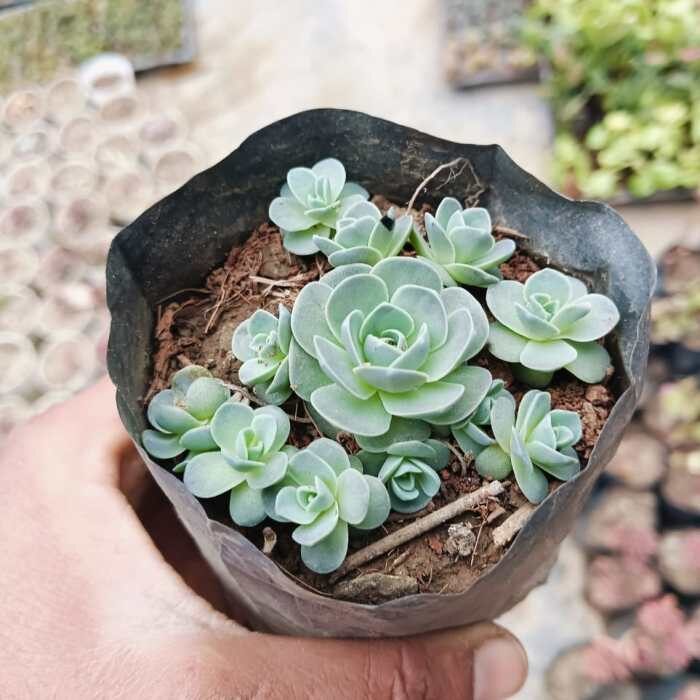
Compact and orderly, Orostachys furusei builds tight, lotus-like rosettes of thick leaves—usually bright to bluish green—that can cluster over time into a small family portrait. In summer to autumn, it sends up short stalks topped with delicate, star-shaped flowers. Like many monocarpic rosette succulents, a blooming rosette gradually declines after flowering; offsets carry the lineage forward.
- Size: Individual rosettes typically 5–15 cm (2–6 in) across; clumps spread wider with age
- Temperament: Loves strong light, warmth, and a gritty, fast-draining mix; not frost-hardy and sensitive to waterlogging
How a ring of “children” became a language of family, protection, and prosperity
The mother rosette and her brood
Orostachys furusei often grows as a central “mother” rosette encircled by smaller offsets—real, rooted “children.” In many East Asian plant circles, this scene is instantly legible: a household gathered, cared for, and multiplying. The Chinese name 子持年华 captures that affection—literally “with children”—turning a simple growth habit into a cultural metaphor.
From growth habit to meaning
- Family and protection: The mother rosette shelters the offsets at the base, like a low, protective embrace. It feels domestic: a secure center, loved ones close by.
- Prosperity and continuity: Offsets promise more rosettes next season—more life, more fullness. In traditional symbolism, multiplicity and round, full forms are auspicious; a plant that multiplies hints at abundance and thriving descendants.
- Selflessness in bloom: The summer–autumn flowers are small stars, but their meaning is big. Because the blooming rosette may weaken afterward, the “mother” gives her finest effort to ensure seeds and offsets carry forward—an image of legacy and devotion.
A lotus-like echo
Though not a lotus, the rosette’s neat, layered symmetry often evokes lotus imagery—order, purity, and centeredness. In Chinese aesthetics, such calm geometry suggests harmony within the household and steadiness in fortune.
Gifting: what this succulent “says” without words
A potted Orostachys furusei makes a thoughtful gift when you want to bless someone’s home, family, or new beginning.
Best occasions:
- Housewarmings and newlyweds: “May your home be full, harmonious, and ever-growing.”
- Mother’s Day and baby showers: “Protected, cherished, and multiplying blessings.”
- New business openings: “Clustering success and steady prosperity.”
- Milestones and reunions: “Family at heart, future in bloom.”
How to present it:
- Choose a firm, symmetrical rosette with clean color (avoid soft bases or sour-smelling soil).
- Gift it in a pot with drainage; warm, earthy ceramics or stoneware feel grounded and auspicious.
- Consider gifting in pairs to double the good fortune.
- Tuck in a care card to help the symbolism thrive (see Quick-Care below).
Gift card ideas:
- “A home that gathers, a future that grows.”
- “May your circle be close and your blessings many.”
- “Roots secure, rosettes multiplying—prosperity ahead.”
Feng shui placement: where it radiates its best energy
Think “bright, calm, and grounded.” This succulent prefers very good light and dry feet, and its serene, rounded form suits spaces where you want harmony to pool rather than rush.
Where to place it:
- East (Family and Health): Honors the theme of kinship and protection; ideal on an east-facing bright sill.
- Southeast (Wealth and Abundance): The clumping habit and plump leaves echo accumulation and steady growth—perfect for wealth qi.
- Home office or storefront counter: A gentle, persistent symbol of growth without the “spiky” intensity of some cacti.
- Center of a display: Its lotus-like symmetry makes a natural focal point in a living room vignette with stones and a small tray of grit to keep energy grounded.
Practical feng shui meets plant health:
- Light: Bright light to full sun; in extreme midsummer heat behind glass, give light midday protection.
- Avoid damp bathrooms or cold, drafty corners; keep above 5°C (41°F).
- Choose a gritty, fast-draining mix to keep roots lively and qi flowing.
Quick-care so the meaning flourishes
- Light: Bright light to full sun; partial shade tolerated but avoid prolonged low light (it will stretch).
- Water: Drench, then let the mix dry out well. Water more in active summer growth, ease off in autumn, and keep sparing in winter—especially if cool.
- Soil: A very free-draining succulent/cactus mix. Blend compost (preferably peat-free) with coarse sand, grit, or pumice.
- Temperature: Ideal 20–25°C (68–77°F); protect from frost and keep above 5°C (41°F).
- Airflow: Good ventilation helps prevent rot and leaf spot.
- Feeding: Light monthly feeding in active growth with a diluted, balanced fertilizer; none in winter.
- Grooming: Remove dry or damaged leaves for a crisp rosette. To prolong a prized rosette, snip the flower stalk early.
- Propagation: Divide offsets during spring repotting; rooted pups establish fastest. Fresh seed can be sown at about 13–18°C (55–64°F).
- Repotting: Refresh mix yearly in spring; most plants are happy in a 12–15 cm (4.7–5.9 in) pot with drainage holes.

Common pitfalls:
- Stretching (etiolation): Move to stronger light or add a grow light.
- Root rot: Comes from cold, wet soil and poor drainage—switch to a grittier mix and water only after the pot fully dries.
- Pests: Mealybugs and scale are the usual suspects; dab with isopropyl alcohol or use horticultural oil/soap and repeat until controlled.
- Safety: No widely cited, species-specific toxicity data; play it safe and keep away from curious pets and children.
Flower language, clarified
“Flower language” here isn’t a centuries-old canon specific to Orostachys; it’s a modern, culture-forward reading born from what we see the plant do. The mother-and-children rosettes invite us to read family into form, protection into posture, and prosperity into the way offsets keep arriving. The actual flowers—small stars in summer to autumn—add a tender coda: a parent plant pouring its energy into the next generation. In that sense, this little succulent becomes a quiet emblem of love that plans for tomorrow.
FAQs for givers and receivers
- The rosette is loosening and elongating—what now?
- It needs more light. Move it to a brighter spot, or supplement with a grow light. Protect from scorching midday sun behind glass.
- A flower stalk appeared—should I let it bloom?
- For symbolism, bloom away; for longevity of a favorite rosette, snip early to reduce post-bloom decline. Offsets will continue the lineage either way.
- Winter care in a nutshell?
- Keep bright, cool-to-moderate, and on the dry side. Water sparingly, and never let it sit in cold, wet soil.
A final note
Orostachys furusei is more than a pretty rosette. It’s a living blessing on the windowsill—mother and children gathered, prosperity budding at the edges, and the quiet promise that what we nurture today will keep unfolding, beautifully, tomorrow.