

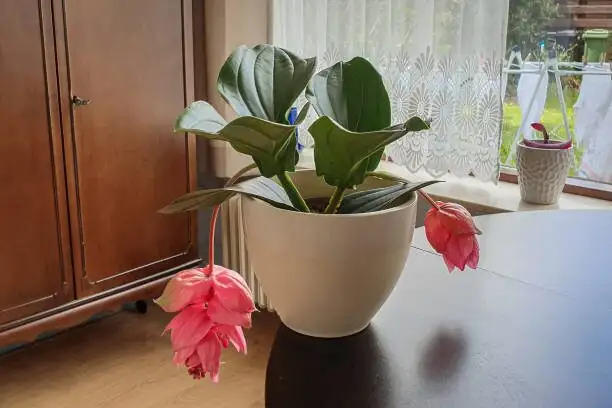
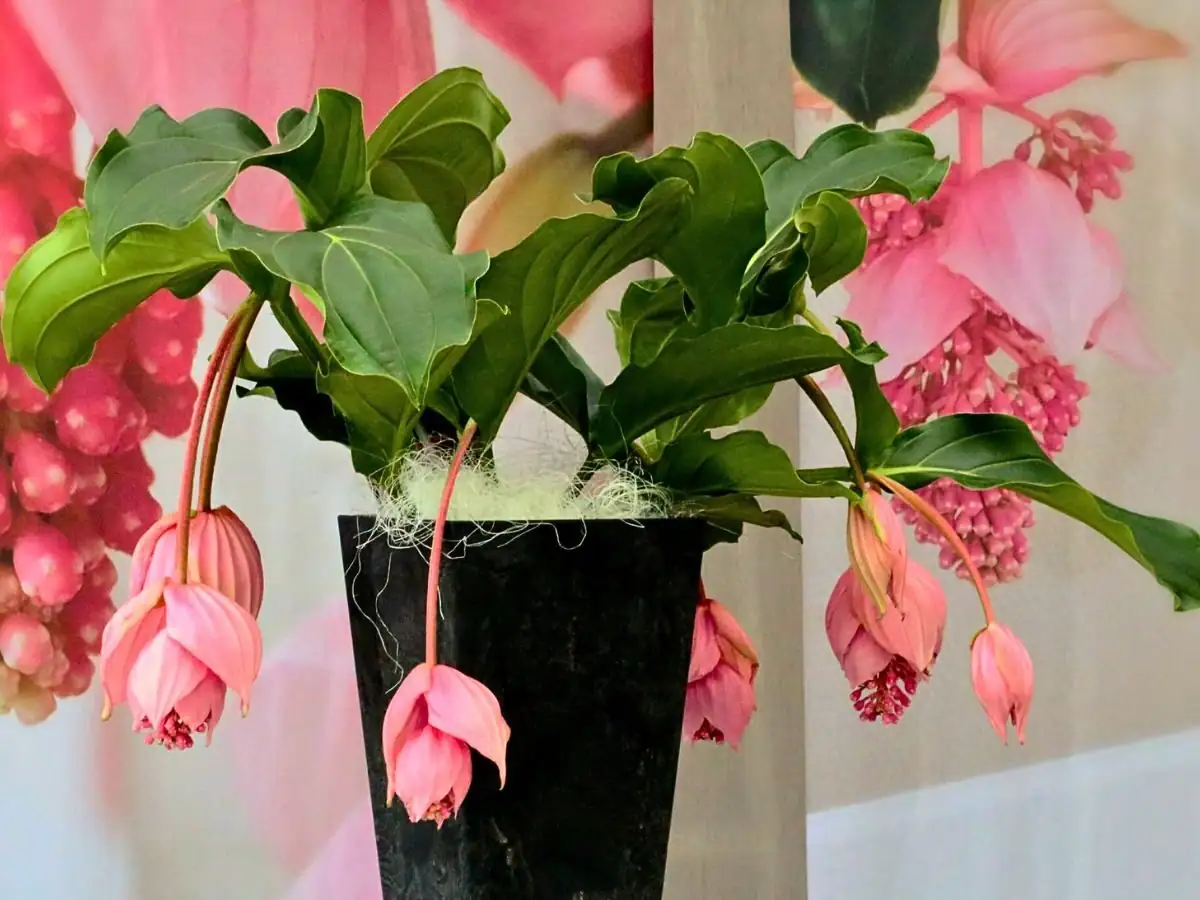
Imagine a chandelier of pink bracts and tiny tucked-away flowers dangling from a sculptural shrub—a living centerpiece you have to look up at to fully appreciate. That’s Rose Grape (Medinilla magnifica), a tropical beauty from the Philippines that rewards precise, thoughtful care with jaw-dropping blooms. If you’ve ever watched buds yellow and drop or roots sulk after repotting, this guide is your shortcut to potting mix confidence: bark versus humus, why oxygen beats “richness,” how deep pots quietly fix drainage issues, and exactly how to repot with minimal stress.
Meet your diva: what the plant is asking for
- Habitat clue: In warm, humid tropical forests, Medinilla grows where air moves freely around roots—on or above the forest floor in leaf litter and debris—never in stagnant, soggy soil.
- Translation for containers: Bright filtered light, steady warmth, generous humidity, and a potting medium that’s rich yet exceptionally airy and free-draining.
- What you get right = blooms: Keep roots oxygenated, moisture even (not wet), and temperatures warm and stable to coax those famous spring-to-summer cascading clusters.
Oxygen, not just moisture: the root science that makes or breaks bloom
Roots don’t just drink—they breathe. In air-poor, waterlogged media, roots slip into oxygen debt (hypoxia), tissues break down, and rot organisms move in. Medinilla punishes that with stalled growth, bud/flower drop, and a long recovery.
Three practical principles:
- Big pores = breathability. Chunky particles (bark, perlite, charcoal) create large air spaces so water drains quickly and fresh oxygen moves in.
- Even moisture, fast drainage. You want a mix that holds a film of moisture on particles, not a swamp between them.
- The perched water problem is real. Water clings at the very bottom of any pot—no matter the pot height. A deeper pot doesn’t raise that perched zone; it simply reduces what portion of the root ball is affected, improving overall aeration.
Two proven paths: choose your mix by how you water and your room conditions
Path 1: The chunky “orchid-style” blend (bark/perlite/charcoal)
Best if you:
- Prefer to water more frequently (or use bottom-watering).
- Have warm temps and good humidity (50–70%+, aiming for 70–80% during bud set).
- Want maximum oxygen and quick recovery if you overwater.
Texture and behavior:
- Water surges through, then the particles hold a thin film of moisture.
- Easy to flush salts; low rot risk; dries faster in summer heat.
A reliable DIY recipe (by volume):
- 50% fine orchid bark (not dust, not giant chips—“fine to medium” pieces)
- 25–30% perlite or pumice (for air-filled porosity that doesn’t collapse)
- 10–15% horticultural charcoal (filters impurities, adds structure)
- Optional: 5–10% coco chips if your home is very dry (adds gentle moisture retention)
Watering rhythm:
- Keep evenly moist, never soggy; in hot spells you may water very frequently (even daily if conditions are warm and bright).
- Bottom-water with lukewarm rain or distilled water for ~20 minutes; drain completely.
Path 2: The humus-rich, free-draining mix (leaf-mold/compost base, lightened)
Best if you:
- Want a bit more moisture-holding with less frequent watering.
- Keep the plant in bright light but slightly cooler conditions.
- Are meticulous about not overwatering.
Texture and behavior:
- Soft, loamy feel but still gritty and springy—never mushy.
- Retains moisture longer than bark mixes but must drain fast.
A reliable DIY recipe (by volume):
- 40% high-quality, leaf-mold or compost-based potting mix (fine, clean, not peat-heavy)
- 25–30% fine orchid bark
- 20–25% perlite or pumice
- 5–10% coarse sand or vermiculite
- Optional: 5–10% horticultural charcoal to keep things sweet and airy
Watering rhythm:
- Water thoroughly when the top ~2–3 cm (about an inch) begins to dry; avoid the trap of “constantly damp.”
- In winter, let the upper layer dry slightly more before watering again.
Pro tip: Whichever path you choose, do a drain test. Water a freshly potted plant and time the first flush: it should run out in seconds, not minutes. After 20 minutes, the pot should feel heavy-but-breathable—not dripping.
Why a deep pot quietly solves more problems than you think
Medinilla is a tall, arching shrub with heavy, pendant flower clusters. A deep pot serves three jobs:
- Better aeration: With the perched water zone remaining at the bottom, extra depth increases the proportion of well-aerated root space.
- Stability: Tall stems plus weighty blooms need the ballast and root run a deep container provides.
- Moisture gradient you can manage: The top stays airier; the lower zone stays moderately moist, which suits this plant’s “evenly moist, never soggy” preference.
Practical specs:
- Aim for a pot ~20–25 cm (8–10 in) wide and 30–40 cm (12–16 in) deep with generous drainage.
- Materials: Plastic retains moisture longer; terracotta breathes and dries faster—choose based on your home’s humidity and your watering style.
- Skip “drainage layers” of pebbles; they raise, not lower, the perched water into the root zone. Instead, rely on a uniformly airy mix and big drainage holes.
Charcoal, perlite, bark: what each actually does
- Fine orchid bark: Framework for pores; slow-decaying, slightly moisture-retentive.
- Perlite/pumice: Increases air-filled porosity and speeds drainage; resists compaction.
- Horticultural charcoal: Adds structure, buffers impurities, modestly sweetens sour spots; not a replacement for good drainage but a helpful additive.
Repotting with minimal stress: when and how
When to repot:
- Best in spring, roughly every 2 years (sometimes 2–3).
- Signs you’re due: the mix collapses or smells sour, roots circle the pot or push from drain holes, watering frequency suddenly doubles, or the plant becomes top-heavy.
- Avoid repotting in bloom—bud and flower drop are likely.
Stress-minimizing, step-by-step:
- Pre-water the day before so roots are flexible and hydrated.
- Choose a deep pot just one size up; pre-moisten your new mix so it’s evenly damp, not wet.
- Gently slide the plant out. Tease away only loose, exhausted mix; avoid ripping a healthy root mass.
- Prune dead roots lightly; leave healthy, woody roots intact.
- Set the root ball so the crown sits at the same height; fill around with your airy mix, tapping the pot to settle—don’t compact it.
- Bottom-water once, then drain thoroughly.
- Aftercare: Give bright, filtered light with slightly higher humidity and gentle airflow. Provide light shade for a few days while it regains turgor. Avoid heat spikes and don’t wet the flowers.
Watering that matches the mix (and prevents bud drop)
- Growing and blooming: keep evenly moist without extremes. Sudden swings from bone-dry to soaking-wet commonly trigger bud/flower drop.
- Summer heat: expect frequent watering—sometimes daily with a chunky mix—balanced by excellent drainage and good airflow.
- Winter: reduce frequency and let the top layer dry slightly between waterings.
- Technique matters: Bottom-watering with lukewarm rain or distilled water for ~20 minutes helps saturate a chunky mix evenly; always drain completely and never leave the pot sitting in water.
Light, warmth, humidity—quick settings for strong roots and blooms
- Light: Bright, filtered/indirect. An east window or a south window with a sheer curtain is ideal. Avoid harsh midday sun.
- Temperature: Warm and steady is best—aim for about 22–28°C (72–82°F). Protect from chills; keep it above roughly 16°C (61°F).
- Humidity: Medium-high to high. 50–70%+ is workable; 70–80% is ideal during bud set. Use a humidifier or pebble tray; mist around the plant if needed but avoid wetting the flowers.
Feeding for flowers (without overdoing it)
Two easy programs that work:
- Monthly balanced feeding (e.g., 20-20-20 at label rate) during active growth, plus 1–2 extra bloom-supporting feeds (higher K and P) as buds form.
- Or: From spring to late summer, feed every 2 weeks with a half-strength, high-potassium liquid fertilizer.
Tip: Err on the lighter side and prioritize potassium as buds develop.
Troubleshooting the potting mix connection
- Bud or flower drop? Check for hot direct sun, heat buildup with stagnant air, cold drafts, or watering lurches. Improve airflow, stabilize moisture, and raise humidity.
- Leaves dulling, roots browning? Mix too tight or too wet. Increase bark/perlite, repot in spring, and ensure the pot drains instantly.
- Pests (dry-air lovers like spider mites, plus scale, mealybugs, whiteflies): Boost humidity and airflow; treat early with insecticidal soap or horticultural oil, repeating as needed.
- Disease (leaf spot, stem/root rot): Usually follows soggy media or wet blooms—keep the mix airy, water smartly, and avoid splashing flowers.
Display to thrill
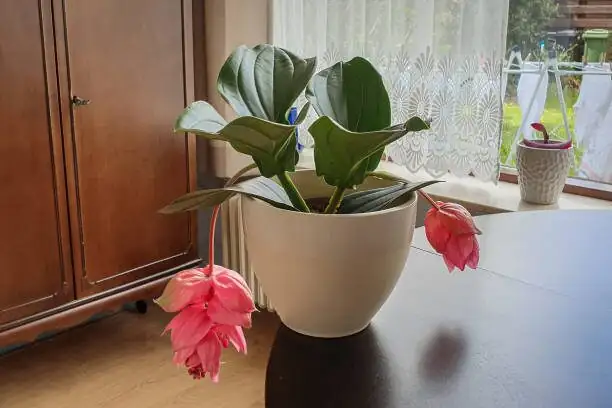
- Elevate the pot so those “chandeliers” can drape in full view.
- Gently support heavy stems while blooming so they don’t kink or snap.
- Keep it in pride of place with bright, filtered light and steady warmth.
Quick look at the plant you’re pampering
- Name: Rose Grape (Medinilla magnifica), family Melastomataceae, native to the tropical forests of the Philippines.
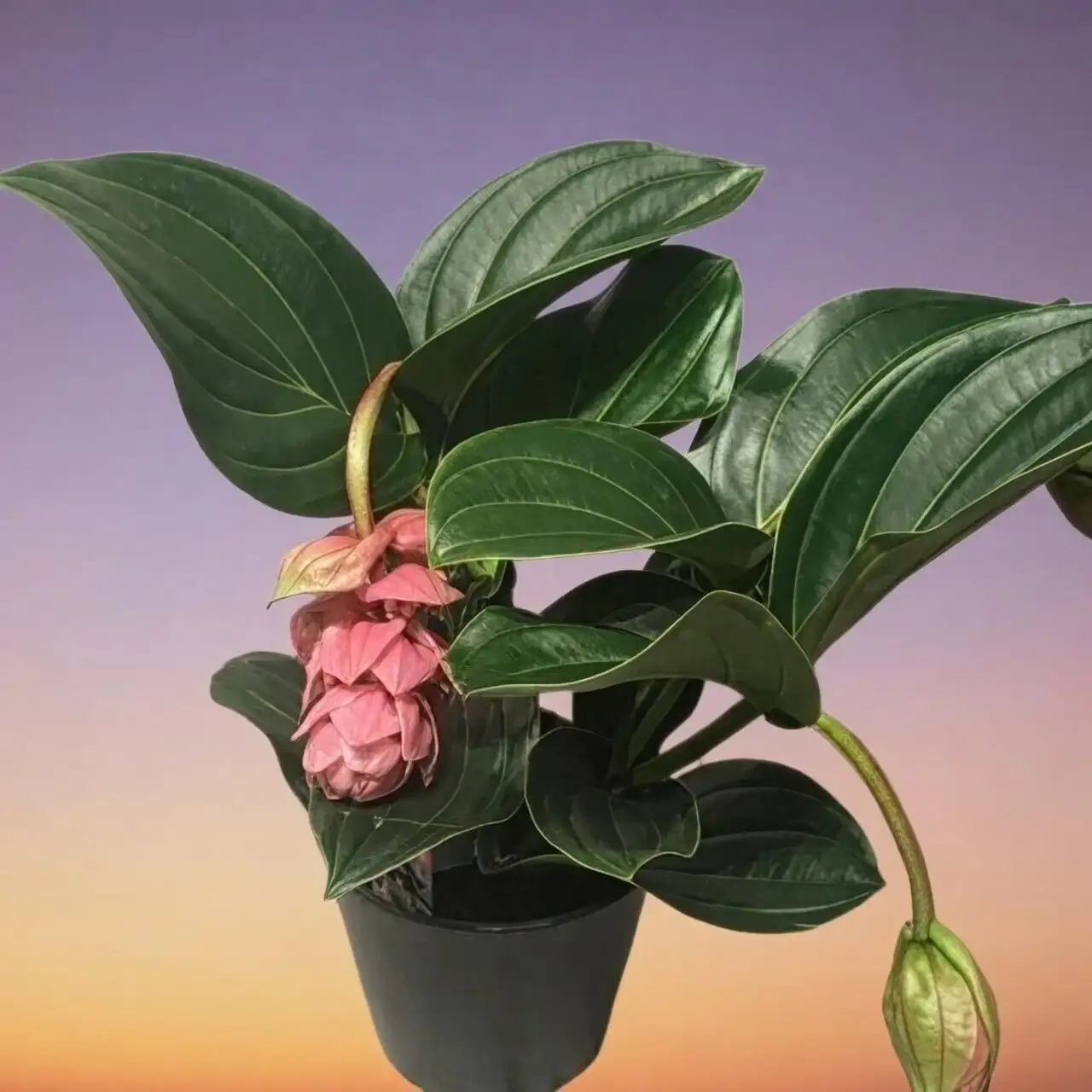
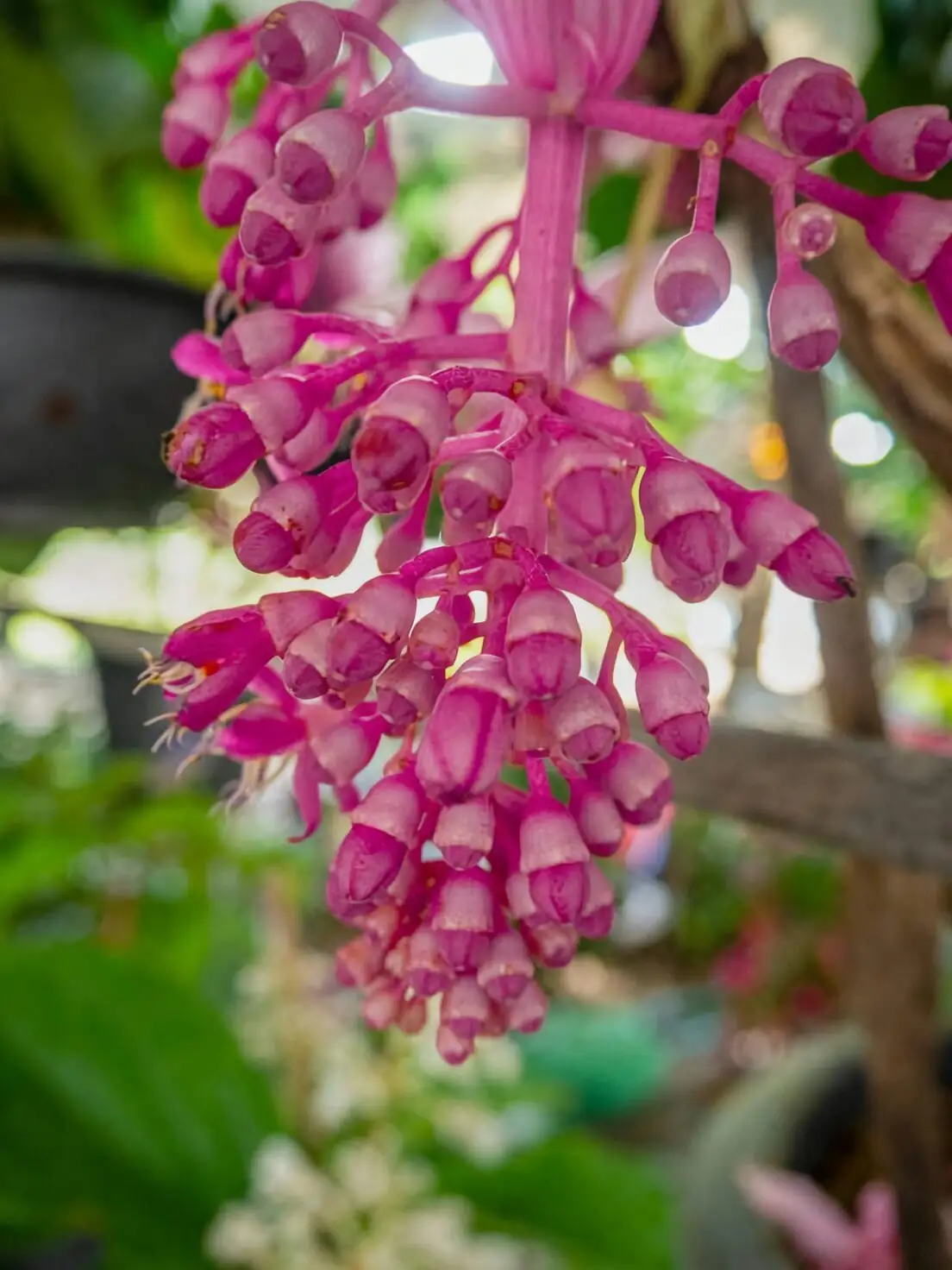
- Habit: Evergreen shrub with big, leathery, deep-green leaves and long, pendant pink bracted inflorescences.
- Bloom season: Spring to summer.
- Indoors: A premium, statement plant that thrives with consistent care in bright, filtered light and higher humidity.
The headline for Medinilla success is simple: feed the flowers by feeding the roots with air. Whether you choose a chunky bark/perlite/charcoal blend or a humus-rich yet free-draining mix, pair it with a deep, well-drained pot, water evenly, and time your repot for spring with a gentle hand. Do that, and your Rose Grape will repay you with the kind of show that stops conversations.