

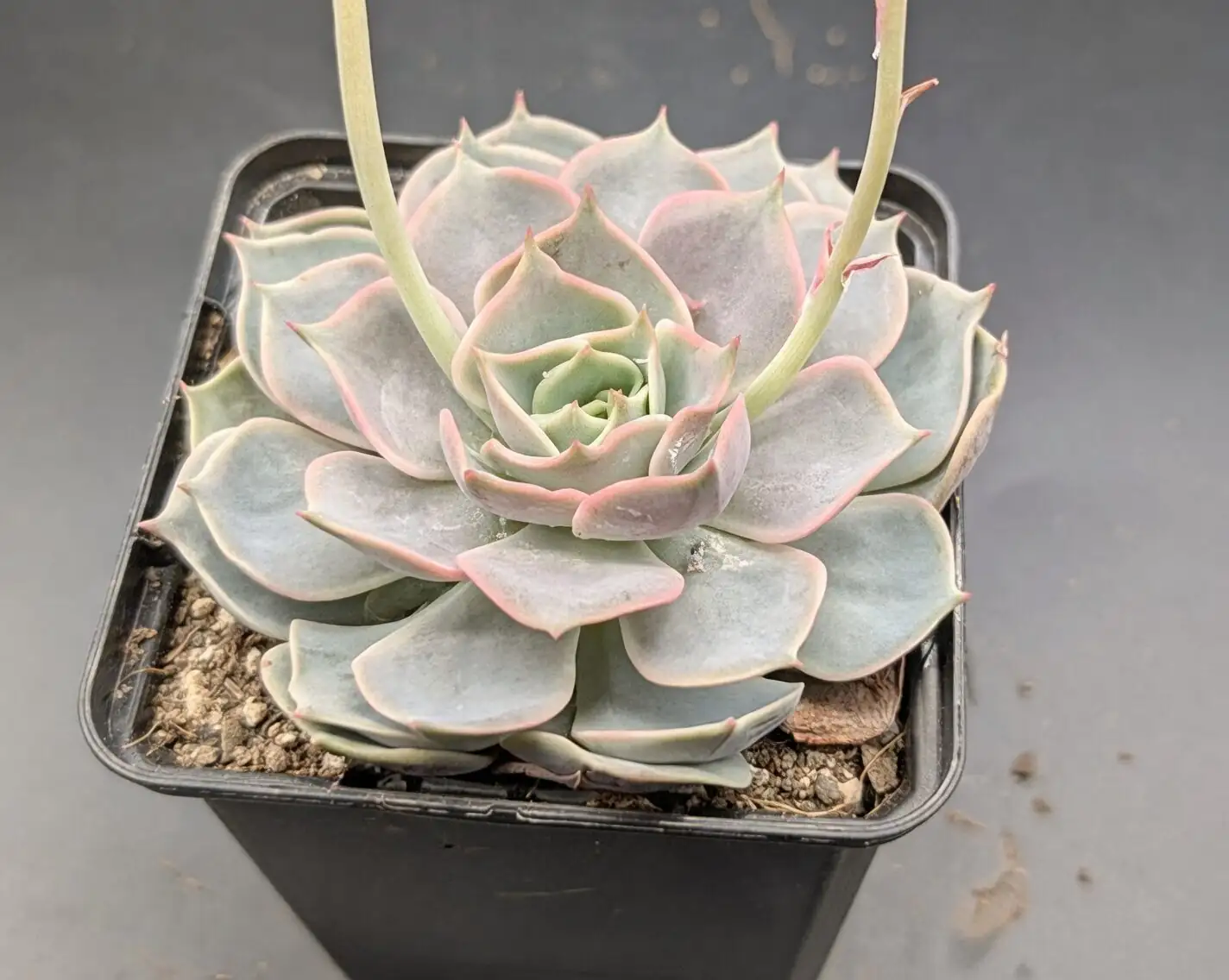
From a single leaf to a brand-new rosette—few gardening joys beat watching Echeveria “Meililian” (美丽莲) clone itself into a tiny, perfect star. This compact, gray-to-dark-gray beauty is slow and tidy, then suddenly theatrical when it sends up branched stalks topped with bright pink-to-red, star-shaped blooms. In this masterclass, we’ll zero in on the two most reliable ways to multiply it—leaf cuttings and offsets—covering sterile detachments, callusing cues, first-root timelines, exactly when to mist versus soak, and how to prevent the dreaded leaf melt on waxy foliage.
Meet “Meililian” in a minute
- Identity: Echeveria (Crassulaceae), ornamental cultivar sold under the trade name “Meililian”/美丽莲.
- Look: Tight, symmetrical rosette; thick gray to dark gray leaves with paler edges. Strong light deepens the color.
- Habit: Slow-growing, drought-tolerant, rosette-forming; flower stalks rise well above the plant with vivid pink–red, starry clusters (spring to early summer).
- Environment: Full sun to bright partial sun; low humidity and excellent airflow; fast-draining succulent mix; frost-tender.
- Water style: Soak thoroughly, then let the mix dry out completely; keep almost dry in winter.
Propagation sweet spot: Spring through early autumn. Warmth, bright light, and dry air speed rooting and minimize rot.
Tools, setup, and the grit that saves leaves
- Tools: Sterile, sharp blade (scalpel, craft knife), fine tweezers, rubbing alcohol (70%), paper towels.
- Pots/trays: Shallow seed trays or small nursery pots with drainage holes.
- Mix: Very fast-draining succulent blend (e.g., 50–70% mineral like pumice/perlite/coarse sand with the rest a lean potting mix). A gritty top-dressing (2–5 mm pumice or small gravel) keeps cut ends dry.
- Optional: A dusting of dry sulfur or ground cinnamon as a mild antifungal on cut edges.
- Light: Very bright, indirect light during healing/rooting; gradually increase direct sun later.
- Climate: 18–27°C (65–81°F) with dry air and gentle airflow (a small fan helps).
Pro tip: Don’t wipe the powdery leaf bloom (farina). It’s a natural water-repellent jacket; removing it raises rot risk during propagation.
Leaf cuttings: a step-by-step masterclass
1) Choose the right leaf
- Select mature, plump leaves from the mid-rosette—not the tiny inner ones or the oldest, papery outer leaves.
- Avoid blemishes, tears, or mealybugs. Healthy leaves root faster and resist “melt.”
2) Clean detachment from a compact rosette
Meililian’s rosette is tight, so be precise.
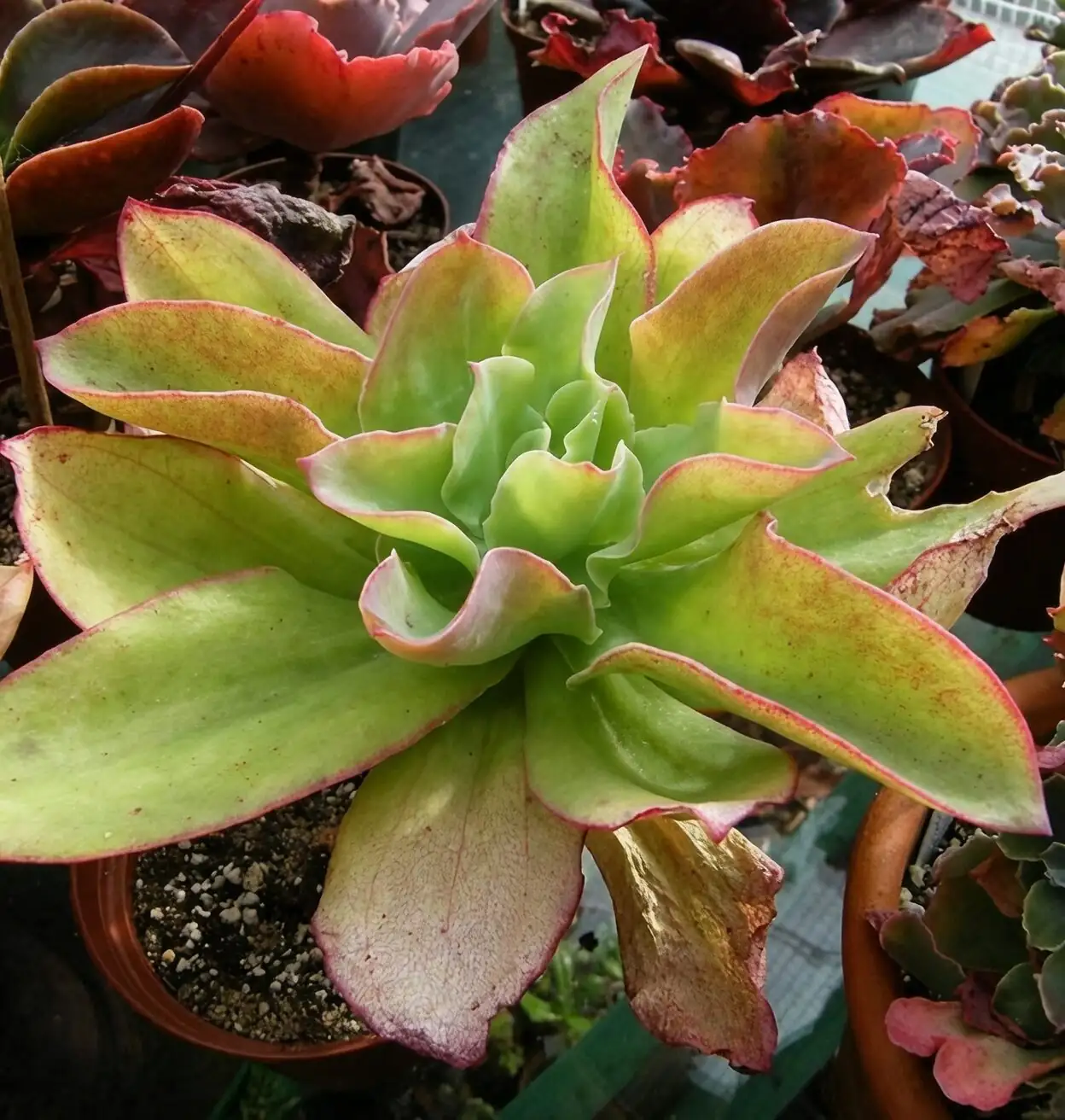
- Hydration helps: Water 2–3 days before detachment so the plant is firm but not sopping-wet; turgid leaves release more cleanly.
- The twist-and-wiggle: Cup the rosette, gently wiggle the leaf side-to-side, and twist until the entire base “pops” free. If any base tissue tears off and remains on the stem, success drops.
- When rosettes are very tight: Slide a sterile, thin blade close along the stem to slice the leaf base flush without nicking neighbors. Lift away with tweezers by the petiole, not the blade surface (to keep farina intact).
Immediately lay leaves on a dry paper towel. If sap beads, blot once—no water rinses.
3) The callus: what perfect healing looks like
- Cues it’s ready: The cut edge turns matte, dry, slightly leathery or papery; edges may roll minutely inward; there’s no cool, wet feel.
- Typical timing: 2–5 days in warm, dry air; thicker leaves can take up to a week. Faster in spring–summer, slower in cool seasons.
Only place on mix once fully callused. Premature planting invites rot.
4) Positioning on the medium
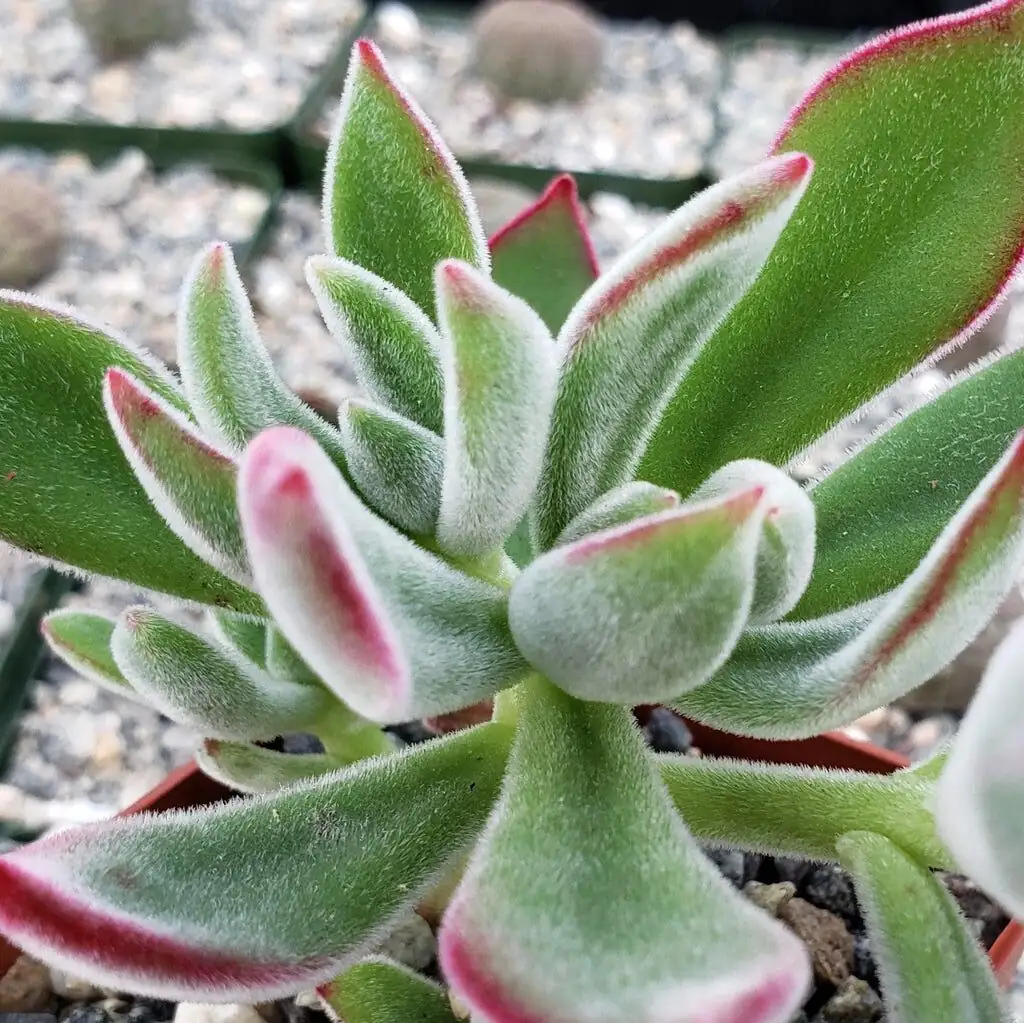
- Lay each leaf flat on a gritty top-dressing with the cut end just kissing the surface—never buried.
- Spacing: 2–3 cm apart for airflow.
- Label your tray; different dates help you learn your climate’s rhythm.
5) Watering strategy: when to mist vs. soak
- Before roots: Keep completely dry. No misting. The succulent leaf has enough reserves; moisture now is the #1 cause of melt.
- First roots appear (tiny white/pink nubs, usually day 7–21): Lightly mist the substrate around, not over, the leaf every 3–5 days. Think “dew,” not “rain.” The surface should dry within 12–24 hours.
- Roots 1–2 cm + a baby rosette forming (week 3–8+): Switch to brief bottom-soaks. Set the tray in 0.5–1 cm of water for 2–5 minutes, then drain thoroughly. Repeat every 7–10 days as the mix fully dries.
- Established pup with several leaves: Transition to the adult soak-and-dry schedule. Still avoid splashing water into the young rosette.
Never spray directly onto leaf blades or into forming rosettes. Overhead moisture on waxy foliage is the fast track to translucent mush.
6) Light, temperature, and airflow during rooting
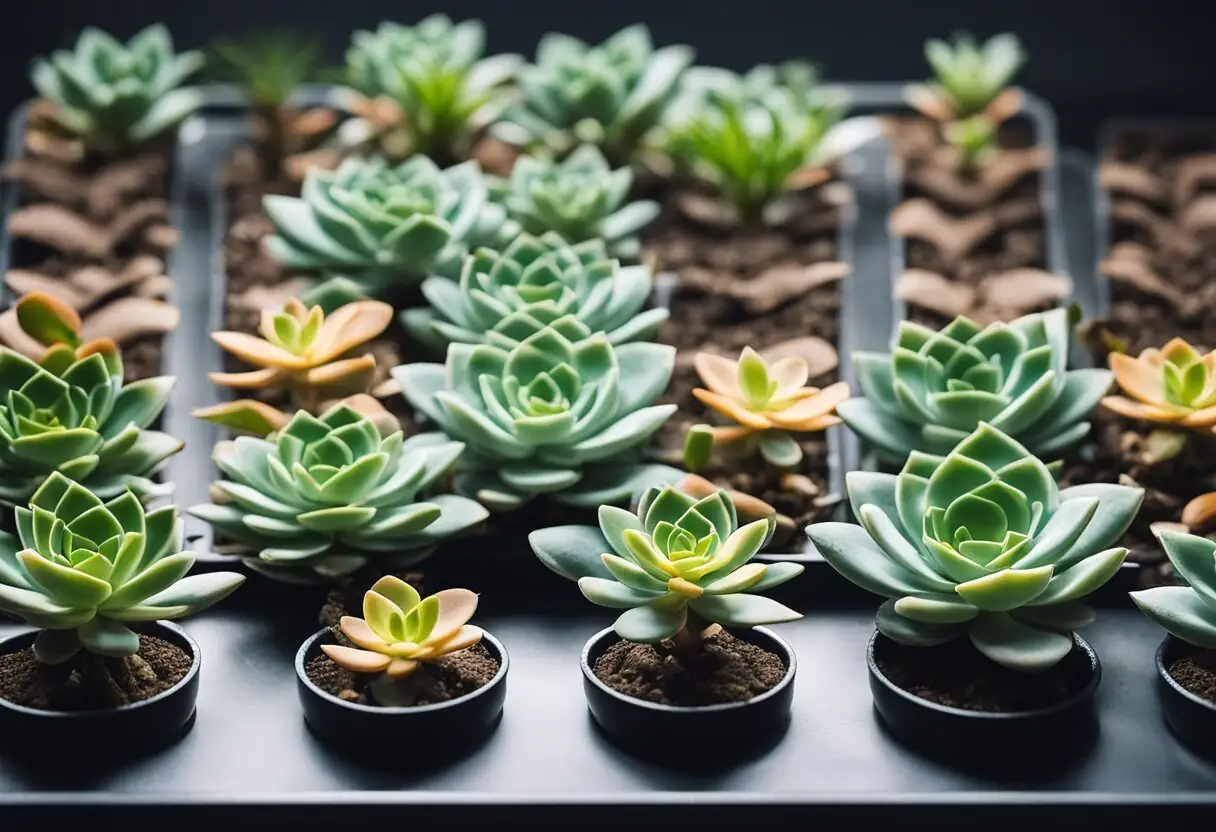
- Light: Bright, indirect light while callusing and rooting; add gentle morning sun once pups appear. Gradually increase to more direct sun over 2–3 weeks.
- Temp: 18–24°C (65–75°F) is ideal. Cooler temps slow rooting substantially.
- Air: Keep humidity low with noticeable airflow. Avoid domes or closed prop boxes—great for tropicals, not for Echeveria.
7) Timeline you can trust (typical ranges)
- Day 0–2: Detach leaves; begin callusing dry.
- Day 3–7: Callus complete. Place on gritty medium—still dry.
- Week 1–3: Root nubbins form; start minimal substrate misting.
- Week 3–8: Pup (tiny rosette) appears; begin brief bottom-soaks.
- Month 2–4: Pup gains several leaves; consider potting up.
Season and light can speed or slow each stage; winter attempts often take twice as long.
8) Preventing leaf melt and rot in compact, waxy foliage
- Keep the cut edge elevated and dry on a gritty top-dressing.
- Zero overhead misting; only moisten the medium below.
- Bright light plus airflow; no humidity domes, no terrariums.
- Sterilize tools and cull any leaf showing soft spots early.
- Don’t crowd; stagnant air around touching leaves encourages fungal spread.
- Avoid fertilizer until pups have several leaves. Nutrient salts can burn tiny roots.
9) Potting up the baby
- When the pup has 4–6 leaves and a root system you can gently lift, snip away the withered mother leaf.
- Pot into a small, shallow pot (5–7 cm) with very fast-draining mix.
- First drink: a light bottom-soak after 2–3 days of settling dry. Then resume a soak-and-dry cycle, letting the mix dry completely between waterings.
- Increase light gradually to maintain a neat, compact rosette and deepen Meililian’s gray tones.
Offsets (pups): quick, clean, and high success
When to separate
Wait until the offset:
- Has at least 5–7 leaves and, ideally, some visible roots of its own, or
- Reaches about one-third the diameter of the mother rosette.
If the plant is blooming, remove finished flower stalks first to conserve energy.
Separation with minimal trauma
- Unpot and brush away soil to reveal where the offset joins the stem.
- Using a sterile blade, slice the offset away with a sliver of stem or its own root tuft. Avoid crushing the base.
- Let both cut surfaces callus:
- Offsets: 1–3 days
- Mother plant: 3–5 days if there’s a larger wound
- Dust cuts lightly with sulfur or cinnamon if your climate is humid.
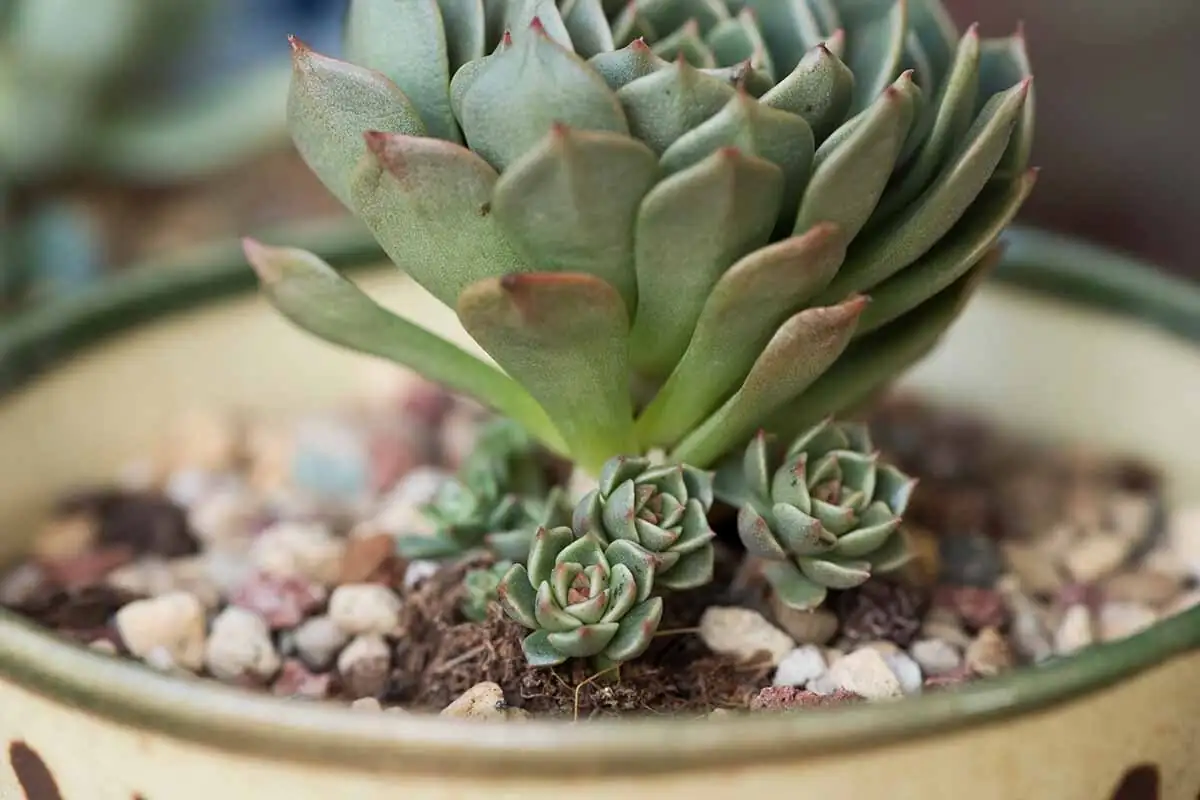
Planting and the first water
- Pot the offset upright in fast-draining mix; don’t bury the rosette base.
- Wait 2–3 days, then give a small bottom-soak. Allow to dry fully before watering again.
- Light: Start bright-indirect; add a few hours of direct morning sun after a week, building to the plant’s usual high-light placement.
Troubleshooting your propagation
- Leaves go mushy/translucent:
- Cause: Moisture too early; high humidity; overhead misting.
- Fix: Remove affected leaves; increase airflow; restart with stricter dry callus.
- No roots after 4 weeks in good season:
- Cause: Too cool, too dim, or old/senescent leaves.
- Fix: Warmer spot (20–24°C), more brightness, try fresher mid-rosette leaves.
- Roots but no pup for many weeks:
- Cause: Low light or late-season slowdown.
- Fix: More light (gradual), be patient; some clones root first, pup later.
- Pup etiolates (stretches, opens loosely):
- Cause: Insufficient light.
- Fix: Increase sun exposure in steps; keep the soak-and-dry rhythm.
- Offset wilts post-separation:
- Cause: No callus time or too-deep planting.
- Fix: Unpot, dry-callus 1–3 days, replant shallower; resume modest bottom-watering once settled.
- Pests (mealybugs/scale) on mother or nursery trays:
- Dab with alcohol on cotton swabs; improve airflow; quarantine infested plants. Always sterilize blades before cuts.
Care context that makes propagation easier
- Light: Full sun to bright partial sun; acclimate gradually to prevent scorch. Strong light tightens rosettes and boosts color and flowering.
- Water: Deep, infrequent. Let the mix dry out fully; keep much drier in winter.
- Soil: Very fast-draining succulent mix; add plenty of grit/pumice.
- Climate: Prefers dry air and good airflow; frost-tender—protect from cold.
- Feeding: Light, diluted feed 2–3 times in the growing season; none in winter.
Pro tips and myths to retire
- Don’t bag or dome Echeveria like tropical cuttings—humidity invites rot.
- Handle leaves by the edges or petiole; preserve the farina.
- Bottom heat is optional; if used, keep it mild (20–22°C) and never pair with high humidity.
- Size your pots small; oversized pots keep roots wet too long.
- Label and stagger batches—you’ll learn your home’s exact timelines.
A brief note on symbolism
Echeverias are often linked with resilience and calm balance: the rosette sits composed for months, then suddenly erupts into vivid “fireworks” when conditions align. The meaning likely springs from that rhythm—quiet endurance followed by dramatic reward—an elegant metaphor for steady, patient gardening (and propagation).
Quick-reference cheat sheet
- Best season: Spring–early autumn
- Leaf detachment: Twist-and-wiggle; entire base intact; or slice flush with a sterile thin blade
- Callus time: Leaves 2–5+ days; offsets 1–3 days
- First roots: Typically day 7–21 (warm, bright conditions)
- Watering:
- Pre-root: No water
- Root nubs: Lightly mist substrate only
- Pup forming: Brief bottom-soaks; dry fully between
- Light: Bright-indirect at first; add gentle sun as pups develop
- Melt prevention: Dry air, airflow, gritty top-dress, no overhead misting, preserve farina
- Potting up: Pup with 4–6 leaves → small pot, fast mix, resume soak-and-dry
Multiply your Meililian with a calm, deliberate cadence—dry, bright, and airy—and each leaf or offset will repay you with a miniature, perfectly poised rosette, ready to one day throw its own constellation of pink-red stars.