

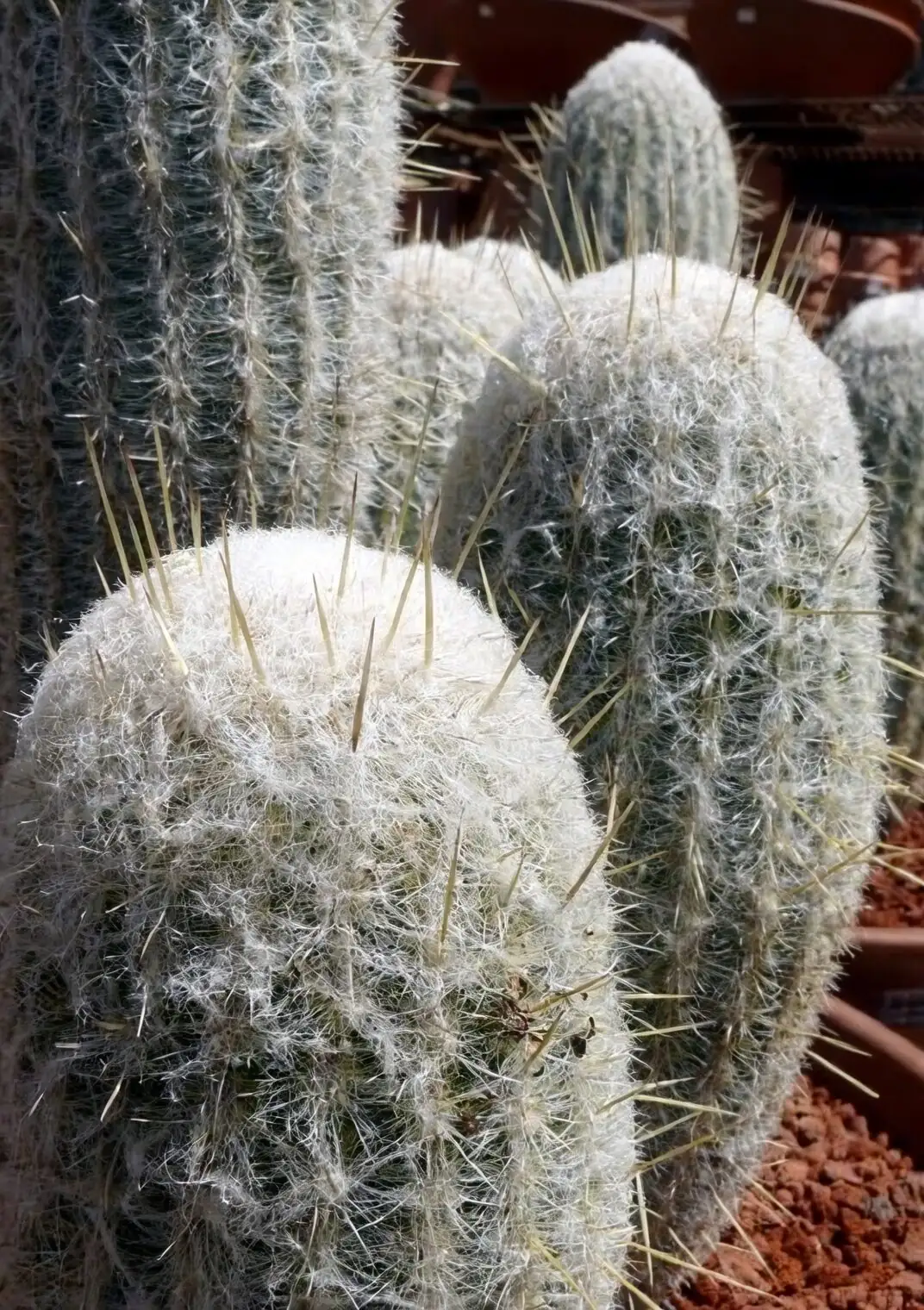
Think of the “old man” cacti aisle as a lineup of white‑haired celebrities. They all look fluffy from a distance—but up close, each has a signature style. If you’ve ever stood in a nursery wondering whether that shaggy youngster is Cephalocereus senilis (the classic Old Man Cactus) or one of its convincing look‑alikes from Espostoa or Oreocereus, this side‑by‑side buying guide is for you.
Below, you’ll learn how to ID them in seconds by hair texture, spine color, and areole spacing—and how to choose ethically sourced, healthy plants you can grow with confidence.
Quick ID: The “Old Man” Trio at a Glance
- Cephalocereus senilis (Old Man Cactus, Old Man of Mexico)
- Hair: Long, silky, flowing “beard” that drapes like spun silk, especially on young growth
- Spines: Mostly hidden under the hair; not usually the first thing you see
- Areoles: Close‑set, each one producing a notable tuft of hair; rows are tight and even
- Habit: Upright, usually single column when young; may clump from the base with age
- Espostoa (often sold as “Peruvian Old Man”)
- Hair: Dense, cottony/felted look that hugs the stem; overall fuzz is even and plush
- Spines: Distinct short, sharp spines present in each areole; often reddish/yellowish at first, then gray with age
- Areoles: Numerous and very tight; each packed with many short spines and wool
- Habit: Columnar that often branches with age; several species develop a lateral flowering zone when mature
- Oreocereus (frequently sold as “Old Man of the Andes”)
- Hair: Shaggy but coarser, often in tufts; looks windy and wild rather than silky
- Spines: Obvious, longer bristles that project through the hair; often yellow to orange or reddish‑tipped
- Areoles: More widely spaced, each a fuzzy tuft with stout, protruding spines
- Habit: Columnar, often clumping; generally more cold‑tolerant than the others
Pro tip: Bring a wooden coffee stirrer or blunt toothpick. Gently part the “beard” to examine areoles and spines without snagging your fingers.
Hair Texture: Your Fastest Field Test
- Cephalocereus senilis
- Look for long, fine, silky strands that wave and drape. On young plants, hair density can be strikingly high; on older segments it may thin slightly.
- The hair reads as silver‑white from any angle and moves like soft fiber.
- Espostoa
- Think “cotton ball” rather than “beard.” The coat is dense, fluffy, and forms a uniform felt that clings to the body of the cactus.
- You’ll often see a softer outline with fewer free‑flowing hairs.
- Oreocereus
- The wool looks tousled and clumpy, with coarser fibers. It’s common to see distinct, stiff spines poking through the shag.
Spine Color and Presence: What Pops Through the Wool?
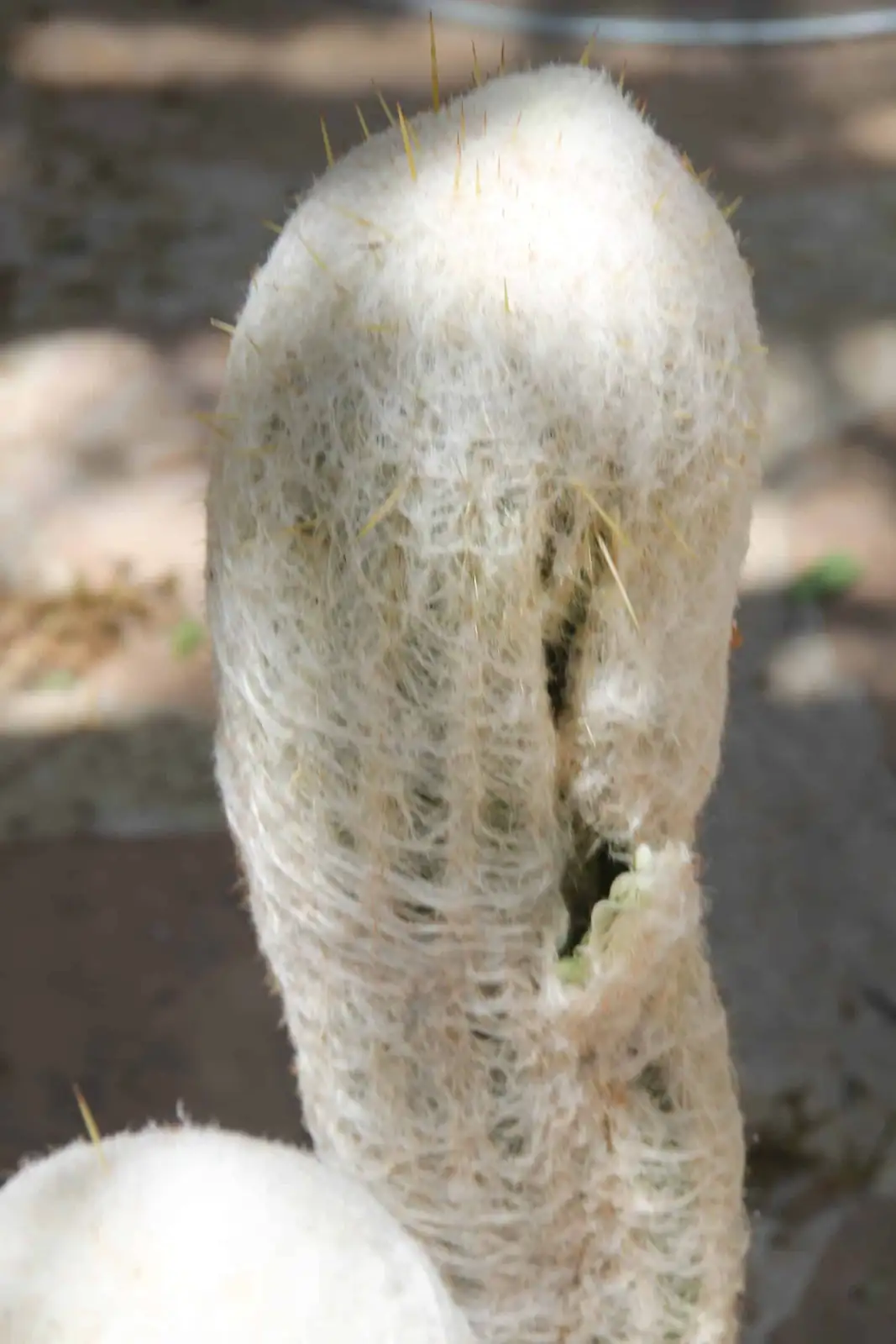
- Cephalocereus senilis
- Spines are there—but hidden. When you part the hair, you’ll find slender, pale to straw‑toned spines beneath. On a quick glance, it reads as “all hair, no teeth.”
- Espostoa
- Areoles carry many short, needle‑like spines. These are often reddish‑ to yellowish‑brown on younger growth and turn gray with age. You can usually spot them right through the fuzz.
- Oreocereus
- Expect longer, more forceful spines that stand proud of the wool—frequently yellow, orange, or reddish at the tips. They’re part of the plant’s look, not a hidden surprise.
Safety note: Hidden spines still puncture. Handle all three with gloves, but be extra cautious with Espostoa and Oreocereus where spines are clearly exposed.
Areole Spacing and Rib “Feel”: Read the Pattern Under the Hair
- Cephalocereus senilis
- Areoles are close together in neat rows; each is a strong “hair generator,” so the beard looks continuous. Ribs are present but often seem smoothed over by the drape of hair.
- Espostoa
- Areoles are very densely packed along numerous ribs. Each areole bristles with many short spines plus wool, creating a plush, even coat.
- Oreocereus
- Areoles are a bit more widely spaced and tufted, each with obvious projecting spines. The ribbing tends to look chunkier and more pronounced when you peer through the hair.
Growth Habit Hints While You Shop
- Cephalocereus senilis
- Usually a single, straight column when young; with time, it may produce basal clumps. Indoors and in containers it rarely flowers.
- Espostoa
- Often branches as it matures and, in age, some species form a lateral flowering zone (a denser, woolly strip along one side).
- Oreocereus
- Commonly clumps and may show multiple heads; the look is rugged, mountain‑adapted, and typically more tolerant of cold.
Buying Day Checklist: Choosing a Healthy Old Man Cactus (especially Cephalocereus)
- Handle wisely
- Wear protective gloves—Cephalocereus hides spines under that irresistible fluff.
- Check the body
- Look for a firm, upright column with no squishy or discolored spots, especially near the base (early rot shows here first).
- Inspect the hair
- Prefer clean, dry, unmatted hair. Damp, yellowed, or crusted patches may hint at pests or overwatering.
- Peek beneath the wool
- Part the hair at a few points to ensure the epidermis is intact and green, with no corky lesions or mealybugs hiding in the fleece.
- Size and pot
- For Cephalocereus senilis, a small pot around 10 cm (4 in) with a gritty, fast‑draining cactus mix is ideal. Avoid oversized pots that hold excess moisture.
- Light needs
- Choose the brightest spot you can offer. Full sun yields the densest, healthiest hair on Cephalocereus; acclimate gradually if moving from shade.
Ethical Sourcing: How to Buy With a Clear Conscience
These white‑haired columnars are charismatic—and that makes them targets for wild collection. Protect habitats while you shop:
- Ask the magic question
- “Is this plant nursery‑propagated from seed or cuttings?” Favor seed‑grown, nursery‑raised stock.
- Avoid suspicious giants
- Extra‑large, old columns offered cheaply or without provenance are red flags for wild collection.
- Request paperwork for imports
- Reputable sellers are transparent about origin and permits for international plants.
- Prefer local growers
- Regional nurseries and specialized cactus growers are more likely to raise stock ethically and can tell you exactly how the plants were propagated.
- Support conservation
- When possible, buy from vendors who contribute to habitat protection or maintain seed‑grown lines of endemic species (Cephalocereus senilis is native to east‑central Mexico, notably Hidalgo and Veracruz).
Aftercare Essentials for Cephalocereus senilis

- Light
- Full sun is best; in very hot summers, provide bright light with light afternoon shade to prevent scorch, especially right after moving outdoors.
- Water
- Soak thoroughly, then let the top 1–2 cm (0.4–0.8 in) of mix dry completely before watering again. In winter, cut way back—often just 1–2 light waterings for the entire season (or none if kept cool).
- Temperature and air
- Ideal range is about 10–32°C (50–90°F). Protect from frost and keep above roughly 5°C (41°F). Low humidity and good airflow help keep that white wool pristine.
- Soil and repotting
- Use a very fast‑draining cactus mix—equal parts potting soil, coarse sand, and perlite/pumice is a reliable DIY blend. Repot young plants each spring; mature plants every ~2 years, stepping up only slightly in pot size.
- Feeding
- Feed monthly in spring and summer with a cactus fertilizer; stop in fall and winter.
Common Pitfalls (and Easy Wins)
- Overwatering is the #1 mistake
- Cold plus wet soil leads to quick rot. Keep winter water minimal.
- Keep the hair dry when possible
- Wet wool invites pests and fungus. Water at the substrate level and ensure airflow.
- Watch for stealth pests
- Mealybugs (including root mealies), scale, and spider mites can hide in the wool. Inspect regularly and treat early with insecticidal soap or horticultural oil.
Symbolism Corner: Why “Old Man” Captivates
In the language of houseplants, the Old Man Cactus embodies longevity, resilience, and quiet wisdom—an image born from its snowy “beard,” slow growth, and ability to endure sun and drought. While not a traditional floral emblem with ancient lore, the symbolism resonates with modern growers: a dignified elder in cactus form, thriving through patience and good light.
Fast Recap: Your Pocket ID Card
- Want silk and drape with mostly hidden spines? Cephalocereus senilis.
- See cottony, hugging fuzz with obvious short, sharp spines? Likely Espostoa.
- Spot shaggy tufts with long, projecting yellow‑to‑reddish spines? That’s Oreocereus.
Choose a firm, clean, nursery‑propagated plant, pot it in gritty mix, give it fierce light, and enjoy the daily delight of a cactus that wears its own built‑in sunhat.