

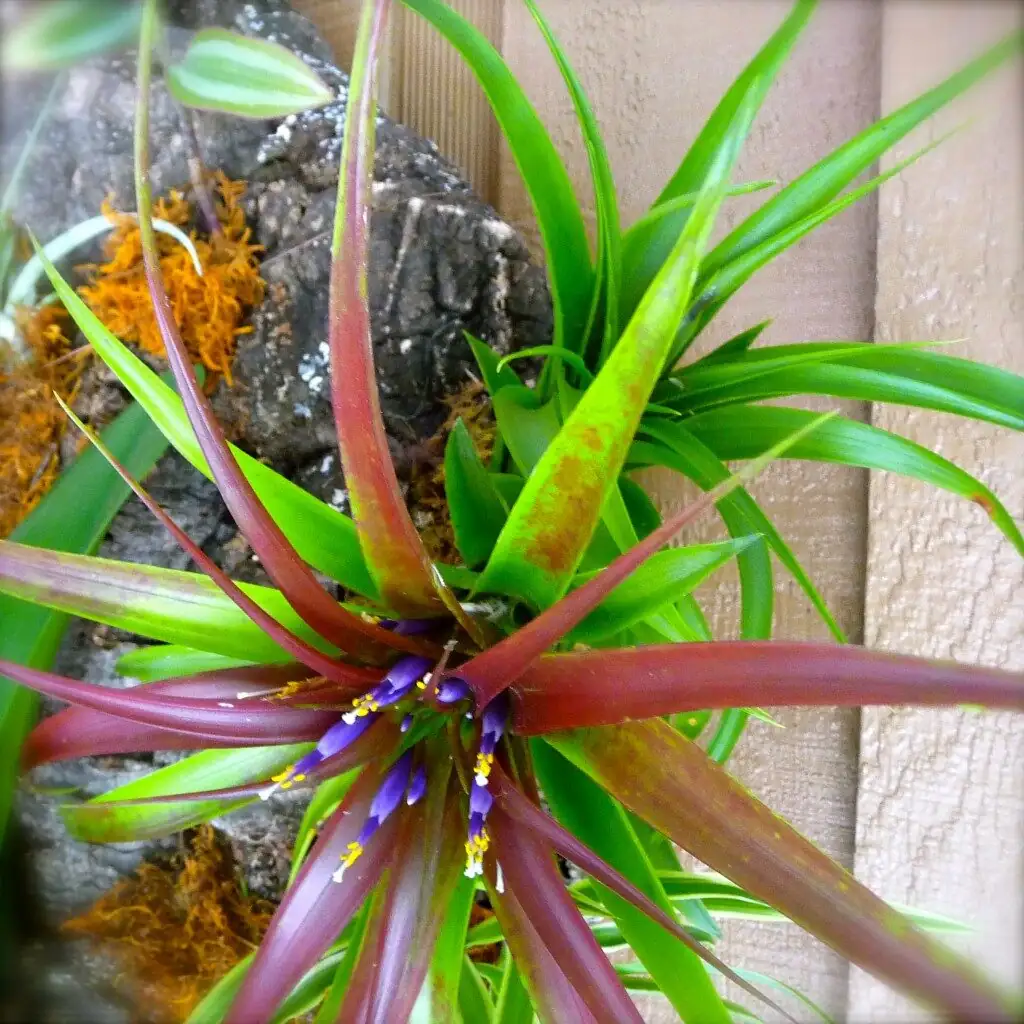
Think of Aechmea fendleri—aka the Dragonfly Bromeliad—as a living sculpture that loves to perch like a bird on a branch. Mount it well and you’ll get a gallery‑wall jungle vibe: silvery green, vase‑shaped leaves arching from the wood, a central water “cup” glinting like a tiny pond, and in summer a tall, pink‑bracted spike dusted with purple flowers. Let’s turn your wall into a tropical display and keep your mounted rosette thriving.
Meet the plant you’re mounting
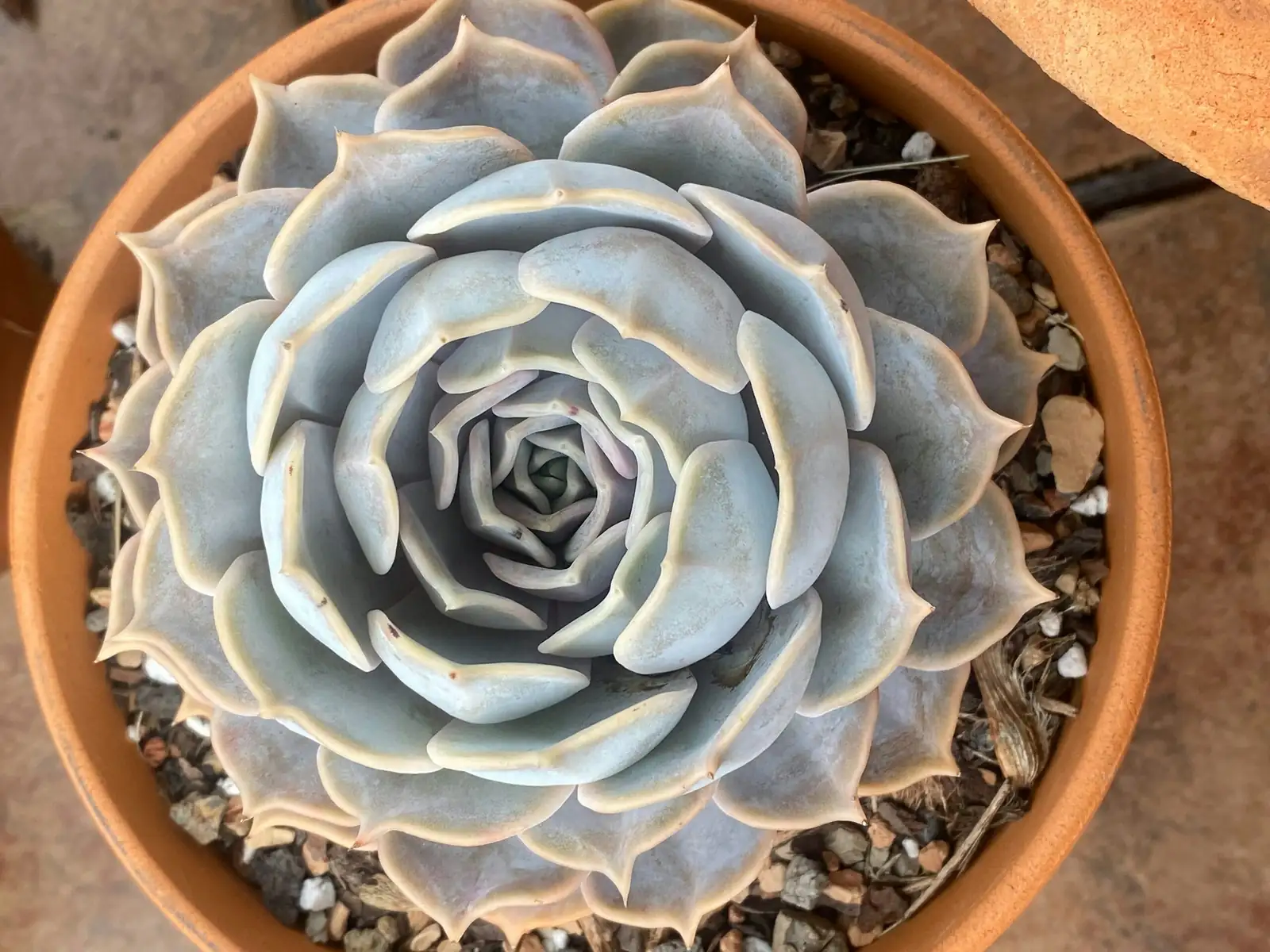
- Identity: Aechmea fendleri (Dragonfly Bromeliad), a rosette‑forming epiphyte from northern South America (notably Venezuela and nearby regions).
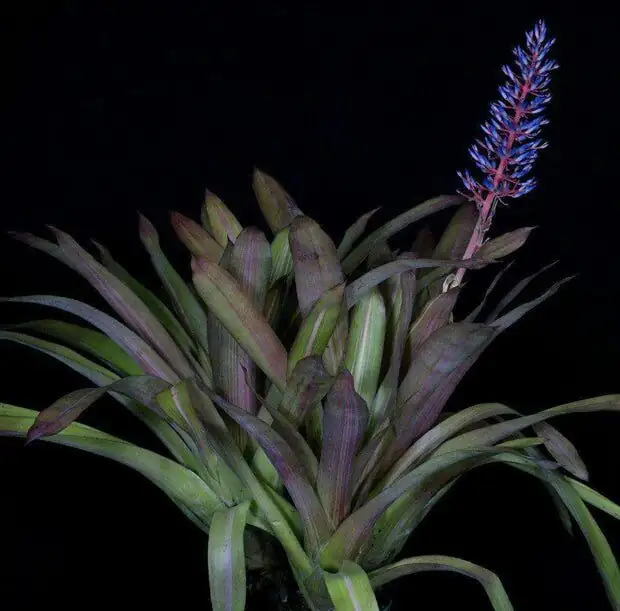
- Look: Tight, vase‑shaped rosette of subtly banded, silver‑green leaves that naturally hold water in the central “cup.”
- Flowers: Summer inflorescence with long‑lasting pink bracts and short‑lived purple blooms.
- Habit: Clumps over time by producing offsets (pups).
Why it loves mounting: In nature it anchors to trees. Its roots are more about grip than guzzling; leaves and the rosette’s cup handle much of the hydration.
Materials for a clean, secure, airy mount
Choose materials that resist rot, allow airflow, and look great on a wall.

- Mount bases (pick one):
- Natural cork bark slab (lightweight, airy, classic)
- Hardwoods/driftwood with textured surface (no soft, rotting wood)
- Tree‑fern style plaques or eco‑fiber boards with coarse texture
- Fasteners and ties:
- Stainless steel eye screws + picture wire or hanging hardware
- Ties: brown cotton thread, waxed twine, or clear fishing line
- Optional: UV‑stable zip ties (snug, not strangling; remove later once rooted)
- Cushion and moisture management:
- A pinch of long‑fiber sphagnum moss (pre‑soaked and wrung out very well)
- Coconut husk fiber or a thin chip of orchid bark to lift the base slightly (prevents soggy contact)
- Tools:
- Scissors or snips
- Spray bottle with rainwater or distilled water
- Small hand mister or squeeze bottle for cup refills
Pro tip: Keep anything absorbent minimal. Mounted bromeliads like to breathe; too much moss invites rot.
Prepping the plant (5 quick checks)
- Inspect the base: Firm, not mushy. Trim off any dead roots, keep healthy ones.
- Rinse the rosette cup: Empty old water and refill with fresh rain or distilled water.
- Decide on angle: The rosette should sit near‑upright so the cup holds water (slight tilt is fine; don’t let it spill out).
- Pups present? Keep small pups attached for now. Separate only when they’re 1/3–1/2 the size of mom with their own roots.
- Hydrate: Lightly mist leaves before mounting to reduce stress.
Step‑by‑step: tie, cushion, and set the rosette
- Stage the slab:
- Install hanging hardware on the back (stainless eye screws + wire).
- If your wall needs protection, add small rubber bumpers or standoffs so air can move behind the mount.
- Dry fit the plant:
- Set Aechmea where you want it—usually in the upper third of the slab for a natural, “perched” look.
- Check that the central cup sits close to upright.
- Add the thinnest cushion:
- Place a wafer‑thin layer of coconut fiber or a single orchid‑bark chip under the root base to lift it slightly from the wood.
- If roots are bare, tuck in just a pinch of pre‑soaked, well‑wrung sphagnum around them. Avoid packing moss into leaf axils or the crown.
- Tie in place (the “gentle X”):
- Run your tie material around the mount and across the base of the rosette (below the lowest leaves, over the root zone), forming a gentle X.
- Snug, not tight—no cutting into tissue. Add a second wrap if the plant wiggles.
- If using zip ties, slip a thin bit of coco fiber under the tie to prevent abrasion. Trim ends flush.
- Final angle check:
- Confirm the rosette cup sits open and ready to hold water.
- Mist lightly and hang.
Tip: Prefer a cleaner look? Brown cotton thread “vanishes” visually and biodegrades over time, by which point the roots often have a grip.
Watering a mounted rosette (cup care is king)
- The cup: Fill the central rosette with rainwater or distilled water. Tap water can leave mineral crusts.
- Refresh rhythm: Top up/refresh every 4–8 weeks. In warm spells, refresh more often to keep it sweet, not stagnant.
- Flush occasionally: Tip the plant gently to pour out old water and refill; this prevents salt buildup and funk.
- Leaf misting: In hot, dry weather, mist daily or every other day. Aim for the leaves and cup, not for soaking the mount.
- Mounted pad: Keep any moss barely damp at most. It should dry slightly between mists.
Winter tweak: Water less. The cup still gets refreshed on schedule, but misting and any pad moisture should be lighter since evaporation slows.
Pro move for wall setups: Take the whole mount to the sink for a thorough cup refresh and a quick mist, let it drip for 10–15 minutes, then rehang.
Light, temperature, and placement for a gallery‑wall jungle
- Light: Bright, filtered light. An east window is perfect; a bright north window works; or a few feet back from a south/west window with a sheer curtain. Avoid harsh midday sun that can scorch leaves.
- Temperature: 15–27°C (59–81°F); keep above 10°C (50°F).
- Humidity: Moderate is fine; extra humidity is appreciated in heat. Dry air invites spider mites, so pair humidity with airflow.
Styling tip: Stagger several mounts at eye level, mixing in smaller bromeliads or a staghorn fern. Odd‑number groupings feel intentional; leave breathing room between pieces.
Airflow and wall‑mount secrets (no stale corners!)
- Spacing: Leave 5–10 cm (2–4 in) between mounts so air can circulate.
- Standoffs: Use bumpers or a wood frame so the slab sits slightly off the wall—this prevents trapped moisture and improves drying.
- Gentle movement: A quiet oscillating fan across the room keeps the microclimate fresh without blasting the leaves.
- Sun–shade balance: Light the wall evenly; avoid hot spots that over‑dry the cup.
Feeding on a mount
- Season: Spring through late summer.
- Formula: Balanced liquid fertilizer at 1/2 strength every 2 weeks.
- Application: As a foliar mist or a tiny dose into the cup.
- Reset: Flush the cup with plain water occasionally to avoid salt buildup.
Bloom, bracts, and pups
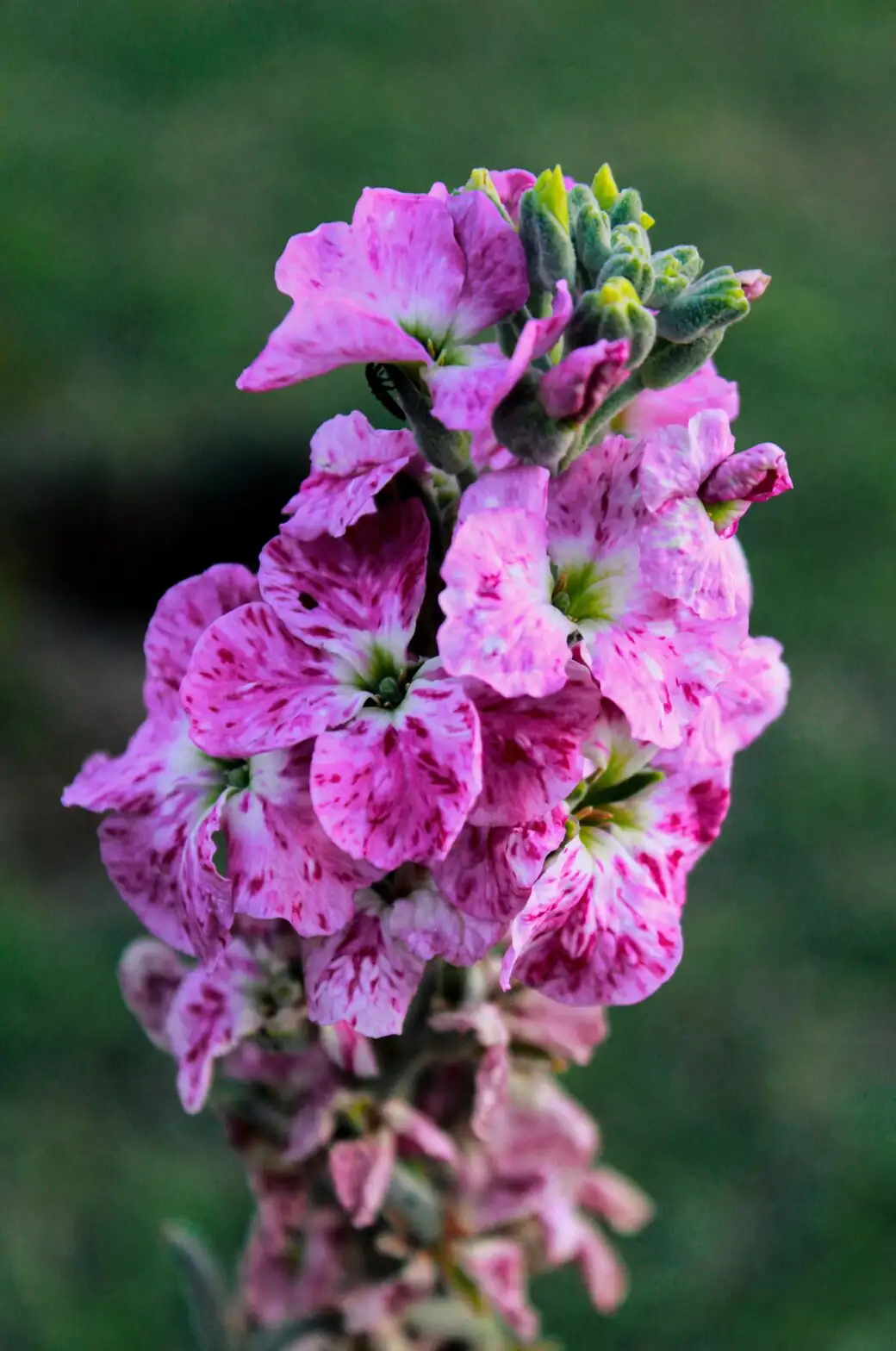
- Show time: In summer, expect a tall spike with showy pink bracts and small purple flowers. Bracts outlast the true blooms.
- Aftercare: Remove the spent flower spike once it fades.
- Pups: The mother rosette won’t rebloom, but she’ll produce offsets. On a mount, let the clump develop for a lush look, or detach pups (1/3–1/2 mom’s size, rooted) to start new mounts.
How to detach a mounted pup:
- Support the mount on a table.
- Gently wiggle the pup; use a clean pruner to cut at the narrowest point where it joins the mother.
- Re‑mount using the same method above.
Troubleshooting the mount
- Cup smells off or has film: Flush, refresh with rain/distilled water, improve airflow.
- Leaves browning from tips: Often low humidity or salt/mineral buildup. Mist more during heat; use cleaner water; flush the cup.
- Pale, bleached patches: Light is too intense—move back or diffuse with a sheer.
- Soft base or blackened leaf axils: Too soggy. Remove excess moss, improve airflow, let the base dry between mists.
- Tiny webs or stippling: Spider mites—common in dry air. Increase humidity and wipe leaves; treat early if needed. Also watch for mealybugs and scale.
Safety, hardiness, and everyday ease
- Hardiness: Not frost‑hardy; outdoors year‑round only in frost‑free climates (roughly USDA 10–11).
- Toxicity: Generally low. Sap may irritate sensitive skin; keep out of reach of nibbling pets.
- Difficulty: Easy when you respect the cup, keep air moving, and give bright filtered light.
Micro‑layout ideas for a gallery‑wall jungle
- Soft triangle: Three mounts at staggered heights; Aechmea fendleri as the anchor, flanked by smaller epiphytes.
- Texture play: Pair cork bark with a single darker driftwood piece for contrast.
- Shadow gap: Paint the wall a deep green or charcoal so the plants pop and the hardware disappears.
A note on “flower language” and symbolism
Bromeliads, members of the same family as the traditional hospitality symbol (the pineapple), are often linked with welcome and resilience. The Dragonfly Bromeliad fits this perfectly: it holds a tiny reservoir for guests (pollinators in the wild, your mist in the home), and its bracts stay decorative for ages—beauty with staying power rather than a fleeting flourish.
Quick care cadence (at a glance)
- Weekly: Check cup water level; mist leaves if the air is dry.
- Every 2 weeks (spring–late summer): Feed at 1/2 strength; flush the cup occasionally.
- Every 4–8 weeks: Fully refresh the cup water.
- Seasonally: Trim only fully brown leaf tips; remove spent flower spikes; separate pups when ready.
With a thoughtful tie, a feather‑light touch of moss, clean cup water, and a whisper of airflow, your Aechmea fendleri will transform a blank wall into living architecture—pink bracts and all.