Imagine a flower that perfumes a room, then seems to slip into silence the moment you lean in to sniff it. Meet Sweet Violet (Viola odorata): a woodland charmer with a chemistry trick up its sleeve, a penchant for secret self-pollination, and a fragrance story so elusive that true violet perfume has become a rare luxury.
The scent that does a vanishing act
- The trick: Sweet violet’s fragrance features beta-ionone, a compound that temporarily desensitizes parts of your smell receptors. After your first indulgent sniff, your nose simply “goes quiet” for a few minutes—so it feels like the scent has vanished. It hasn’t; your brain has just stepped out for a breather.
- How to smell it again: Step away, sniff fresh air, then return. The sweetness reappears as your receptors reset—peekaboo perfumery at its most delightful.
The flowers you rarely see: violets’ secret self-pollination
- Besides those classic early-spring blooms, Sweet violet produces tiny, non-opening flowers later in the season. These cleistogamous blossoms stay shut and quietly self-pollinate inside the bud, ensuring a steady seed set even when pollinators are scarce.
- Result: A discreet, self-seeding habit that helps violets naturalize and gently widen their little green carpets.
Why “real” violet perfume is so rare
- Flower power, not flower yield: It takes an enormous amount of violet bloom to produce a minuscule quantity of true violet scent—so the genuine article is scarce and costly.
- Modern solution: Perfumers often lean on ionones (beta-ionone among them), skillfully crafted aroma compounds inspired by violet’s signature. They capture that soft, powdery, dewy sweetness without requiring mountains of petals.
Meet Sweet Violet (Viola odorata)
- Family and kin: Violaceae; genus Viola.
- Origin: Native to Europe, North Africa, and West Asia; widely distributed through temperate regions, including the Mediterranean coast and southern Europe.
- Habit: Low-growing, spreading perennial forming dense mats via short rhizomes and creeping stolons.
- Size: Typically 5–15 cm (2–6 in) tall.
- Leaves: Basal rosette of heart-shaped to rounded, deep green leaves with scalloped edges and soft hairs.
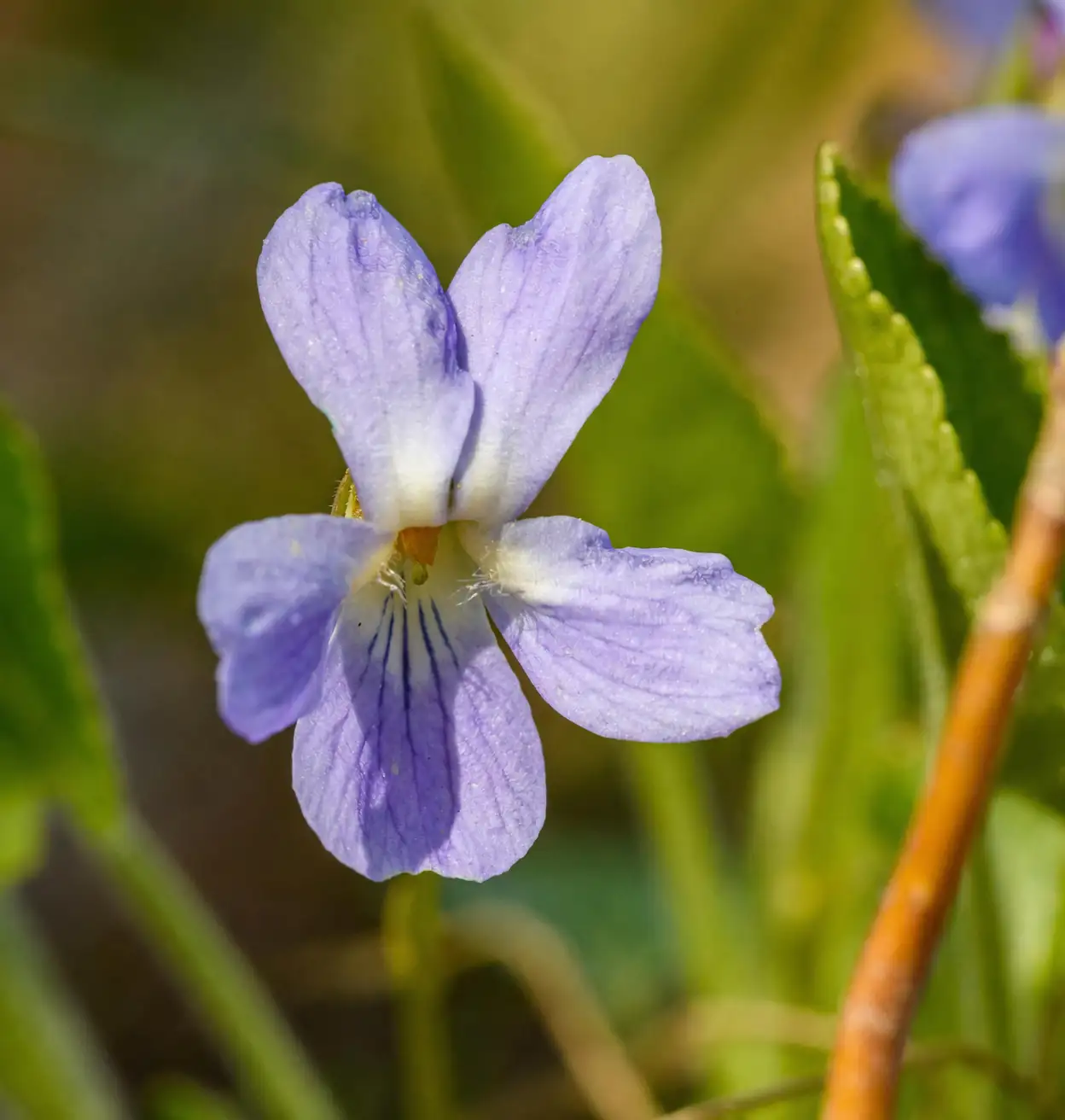
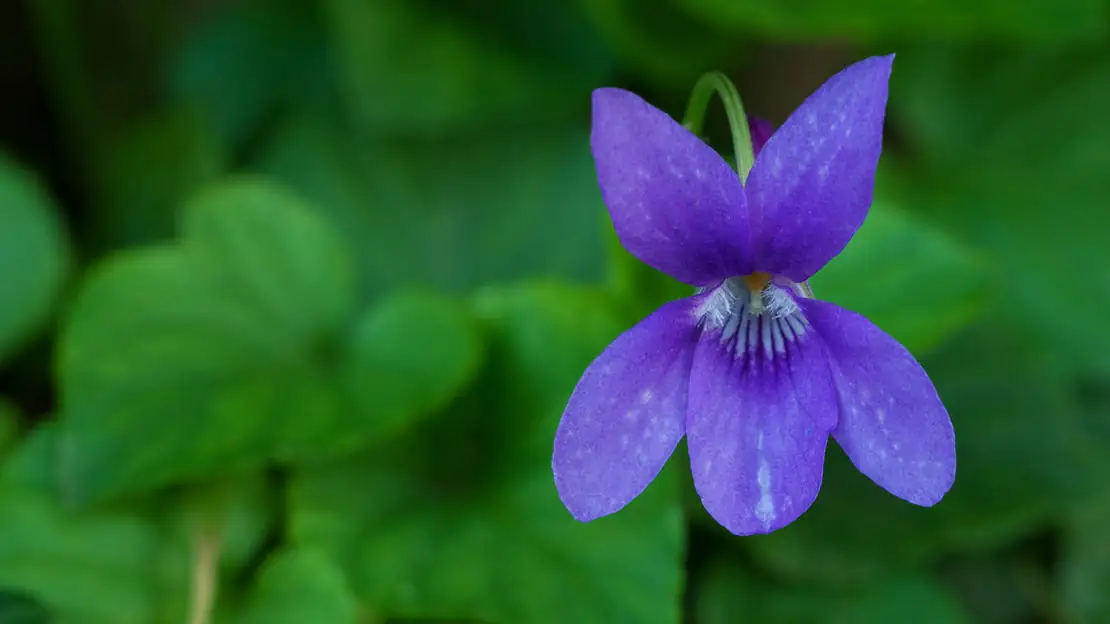
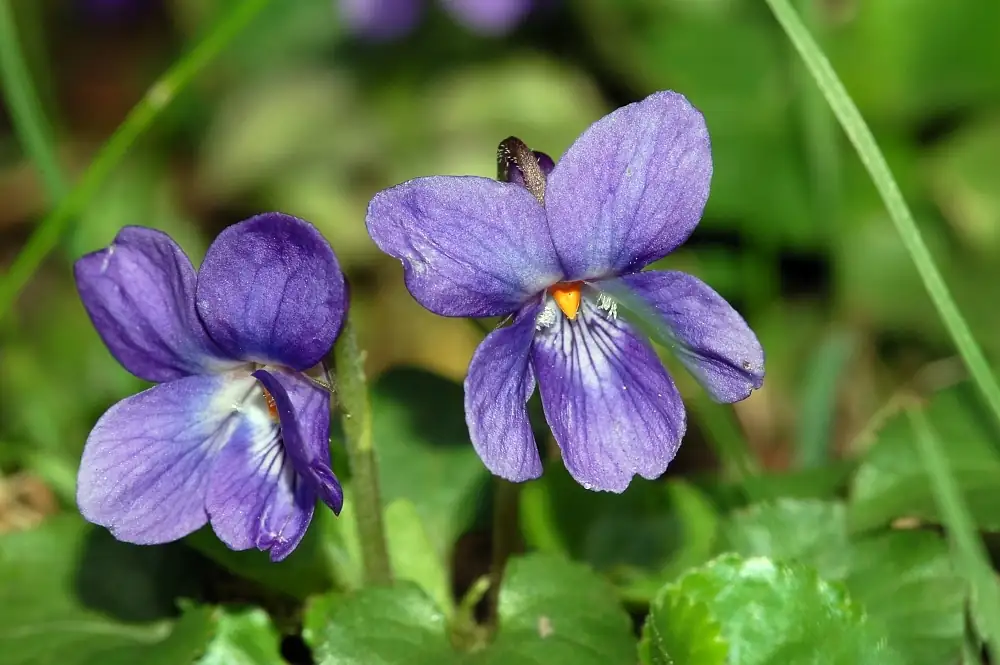
- Flowers: Small, nodding, five-petaled blooms about 1.5–2 cm (0.6–0.8 in) across; usually deep purple to violet-blue, sometimes white or pale lavender; often richly fragrant with a distinct spur.
- Bloom time: Early spring (March–May), with occasional autumn encores.
- Also known as: Sweet Violet, Common/English/Florist’s/Garden/Wood Violet.
Where it thrives
- Light: Partial to full shade is ideal—think dappled woodland light. Avoid harsh, hot sun.
- Temperature: Cool-loving; happiest around 15–20°C (60–70°F). Cold hardy to about -15°C (5°F).
- Soil: Fertile, humus-rich, and well-draining; prefers neutral to slightly acidic (pH 6.0–7.0).
- Water: Evenly moist, never waterlogged. Dislikes long dry spells.
- Hardiness: USDA Zones 3–9.
- Great placements: Woodland gardens, under shrubs and trees, shady borders, rock gardens, and containers—especially where its fragrance can be savored.
A ground cover with opinions
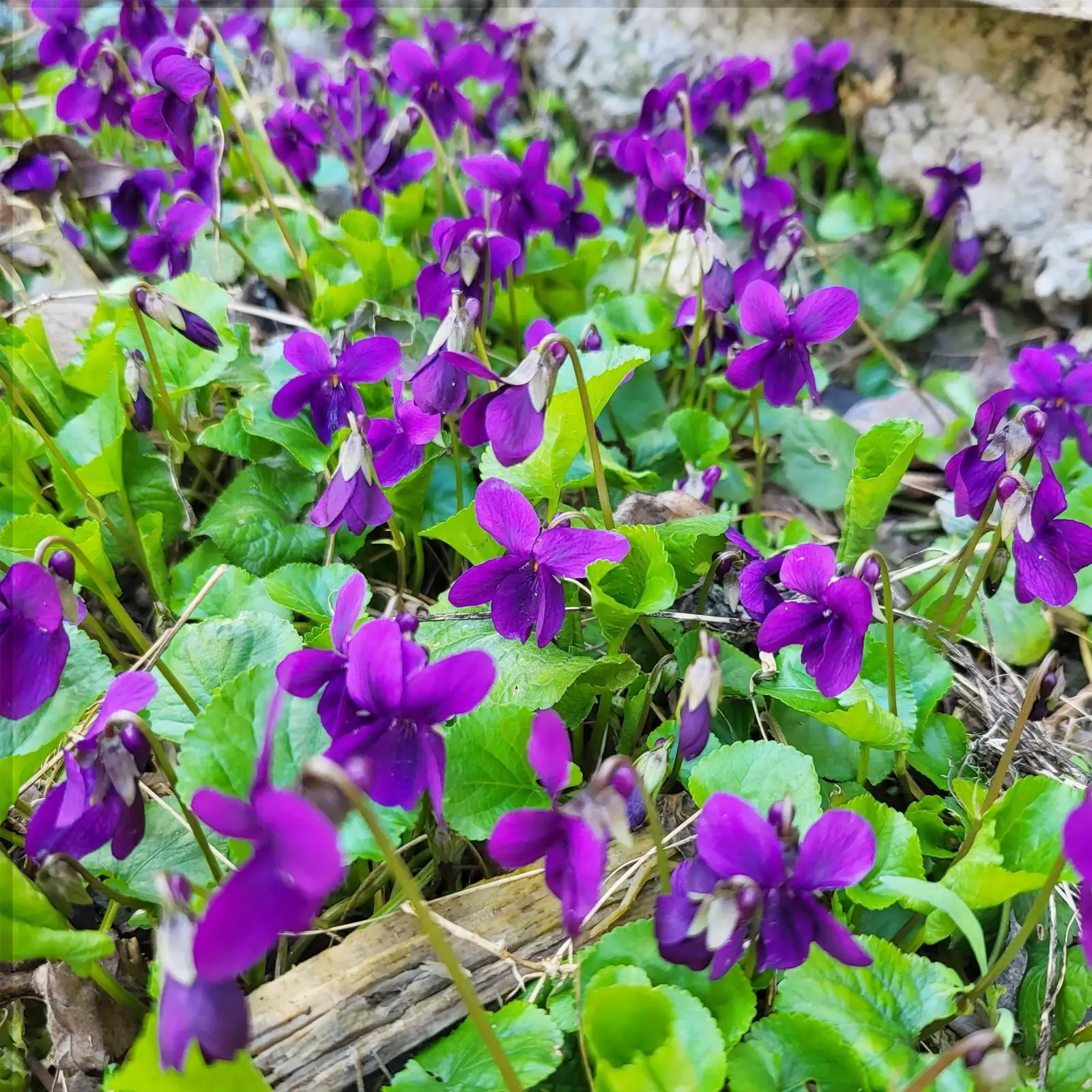
- Spreading style: Those creeping stolons help it knit into soft, scented mats—perfect for shady nooks.
- In lawns: Its broad leaves and low, persistent clumps can outcompete turf in shade. Some gardeners smile and let the violets take the lead; others keep them to borders and beds.
Grow it well: quick gardener’s guide
- Watering: Keep soil consistently moist in active growth; let the surface dry slightly between waterings. Water at the soil line to avoid mildew.
- Feeding: In spring, top-dress with compost or use a balanced slow-release fertilizer. During active growth, a light, diluted feed every 10–15 days boosts vigor; a touch more phosphorus/potassium during bloom can encourage flowers.
- Pruning: Deadhead for tidiness and to encourage repeats. Thin crowded patches and trim old foliage in autumn for airflow.
- Propagation:
- Easiest: Divide clumps in early spring or fall; peg down or pot up stolons with roots attached.
- From seed: Sow at 15–20°C (60–70°F) with a light covering and steady moisture.
- Nature’s nudge: Cleistogamous flowers self-pollinate and set seed, helping the plant naturalize.
- Containers: Repot every 1–2 years in early spring. Use a rich, well-draining mix and handle fine roots gently.
- Seasonal rhythm:
- Spring: Peak flowering; water evenly and feed lightly.
- Summer: Provide shade and coolness. Plants may go semi-dormant in heat—reduce watering but don’t let roots bone-dry.
- Autumn: Prime time to divide; you may see a bonus flush of blooms.
- Winter: Top growth may rest; mulch lightly in exposed cold.
Edible, safe, and pleasantly old-fashioned
- Edible parts: Flowers and young leaves—lovely in salads, teas, and candies; blooms are famous candied or sugared for cakes and desserts.
- Safety: Generally non-toxic to people and pets. Avoid eating the roots, which can cause nausea or vomiting.
- Traditional herbal lore: Long used gently for soothing coughs and calming inflamed throats, thanks in part to soothing mucilage and flavonoids like rutin.
Troubleshooting: common pests and diseases
- Pests: Aphids, spider mites, slugs, and snails may visit.
- Remedies: Encourage airflow, hand-pick slugs/snails, use insecticidal soap or neem for aphids.
- Diseases: Powdery mildew and leaf spot can appear in still, damp conditions.
- Prevention: Water at soil level, thin crowded clumps, remove affected leaves. Use suitable fungicides or mild home-style treatments where appropriate.
Quick ID and lookalikes
- The easiest tell: Fragrance. Viola odorata is notably sweet-scented; many lawn violets and lookalikes are weakly scented or scentless.
- The look: Heart-shaped leaves in a basal rosette, nodding flowers with darker veining and a clear spur, typically early-spring bloom.
Folklore, symbolism, and the language of flowers
- Meanings: Modesty, faithfulness, remembrance, and pure love. Purple violets lean into loyalty; white forms suggest innocence and purity.
- Why these meanings? Their low, nodding flowers seem demure—“modest” in Victorian eyes. The first blooms of spring became emblems of steadfast affection returning year after year.
- Cultural notes:
- A romantic emblem in the Victorian language of flowers.
- A Napoleonic love note: Napoleon and Joséphine adored violets; pressed violets from Joséphine’s grave were reportedly found in his locket.
- Shakespeare’s pages are dotted with violets—from Hamlet to The Winter’s Tale.
- Fun civic flourish: Violets are the state flowers of Illinois, New Jersey, Rhode Island, and Wisconsin.
Little irresistible extras
- The beta-ionone “vanish” effect turns every sniff into a magic trick.
- Those secret self-pollinating flowers quietly secure next spring’s display.
- Early-spring blossoms arrive when bees are hungry; the nectar-filled spur is a timely treat.
- Sweet violets sometimes rebloom in autumn—like a gentle encore after the main show.
- In medieval Europe, violets were simple household deodorizers—nature’s first air freshener.
FAQ
- Why does it seem to stop smelling after the first sniff?
- Beta-ionone temporarily dulls your scent receptors. Give it a moment; your nose will recover and the fragrance returns.
- Will Sweet Violets survive hot summers?
- They prefer cool conditions and may go semi-dormant or look tired in strong heat—especially if dry. The roots usually ride it out and regrow in autumn.
- Can I eat the flowers?
- Yes. Use fresh or candied blooms; add young leaves to salads or cook like tender greens. Skip the roots.
- How can I tell Sweet Violet from other violets?
- Trust your nose. Viola odorata is distinctly sweet-scented. Look for heart-shaped leaves, nodding flowers, and a noticeable spur.
Sweet Violet is a study in gentle contradictions: modest yet enduring, delicate yet hardy, fragrant yet fleeting to the nose. Plant it where you pass often, and let the earliest days of spring greet you with its quiet luxury.