

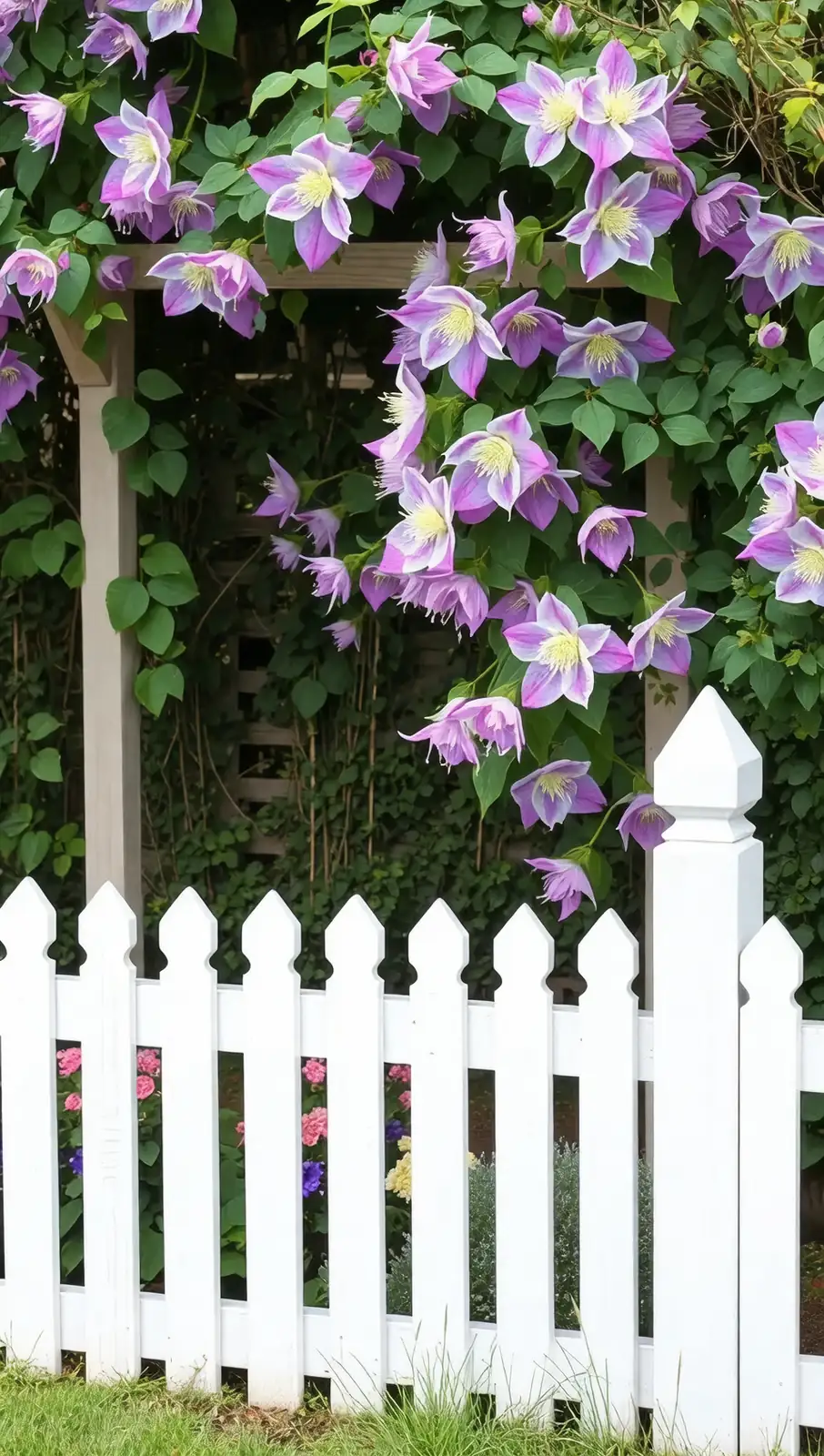
Clematis has a reputation: glamorous, dramatic, and “a bit of a diva.” But the Queen of Climbers is also wildly misunderstood. Ready to bust some myths? Grab your trellis—here’s a fun, fact-packed tour through the truths of Clematis spp., from faux petals and twining leaf stalks to fluffy “old man’s beard” seedheads and those mesmerizing central bosses in C. florida types.
Myth-busting list: 17 truths every clematis lover should know
1) “Those petals are gorgeous!”
Truth: They’re not petals at all.
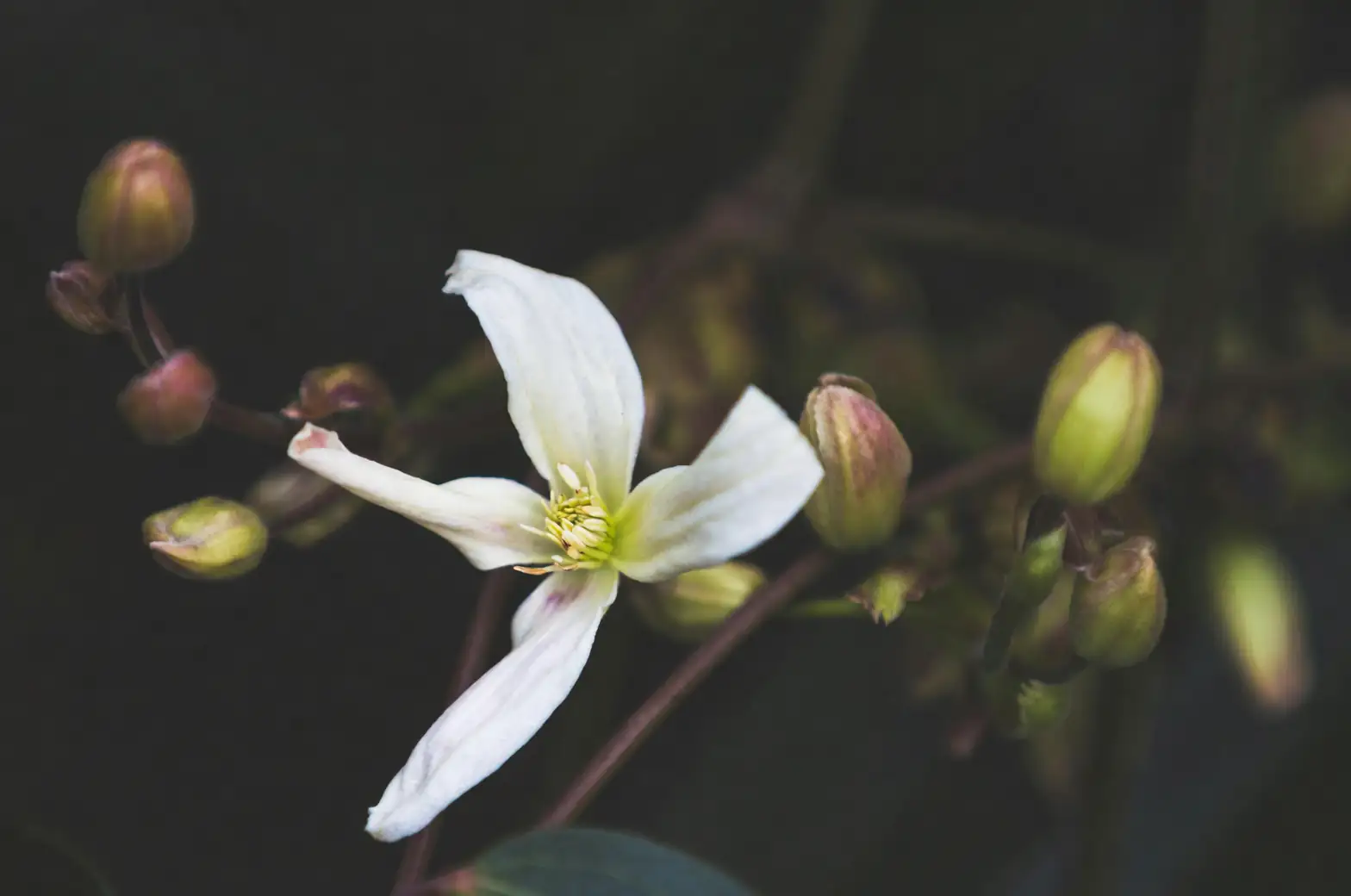
- Most clematis show off petal-like sepals; true petals are often absent. That’s why many flowers look starry or saucer-shaped with 4–8 “petals” that are actually sepals. Doubles stack extra layers of these sepals for a ruffled look.
2) “It climbs like ivy with sticky pads.”
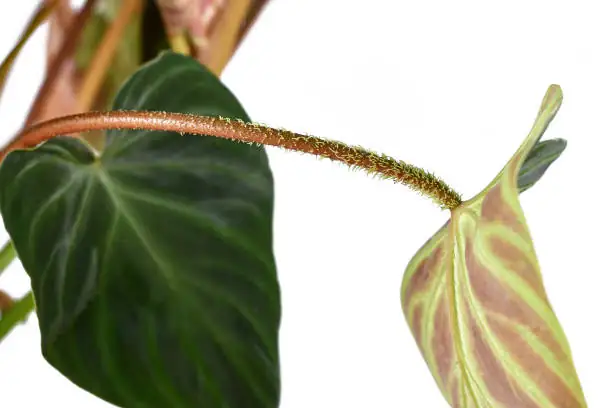
Truth: Clematis climbs with leaf stalks, not tendrils or roots.
- The leaf petioles twist around slender supports. Offer canes, wires, or a trellis with something 0.25–0.5 in (6–12 mm) to clasp. No aerial roots, no tendrils—just twining petioles doing acrobatics.
3) “The stems are tough as rope.”
Truth: New stems snap easily.
- Young growth is surprisingly brittle. Train and tie in gently—small breaks cost big flowers. Soft ties and frequent, light guidance prevent those heartbreak snaps.
4) “It’s a short-season fling.”
Truth: Clematis can bloom from early spring into fall—if you choose wisely.
- Bloom time is variety-dependent and mapped by simple pruning groups:
- Group 1: Early spring on old wood (think alpinas, montanas).
- Group 2: Late spring/early summer on old and new wood, with potential rebloom.
- Group 3: Summer to fall on new wood (viticellas, many late types).
- Many Clematis florida selections shine from summer into autumn.
5) “All clematis look alike.”
Truth: There’s a whole fashion week of shapes and sizes.
- From tiny bells to vast saucers over 10 in (25 cm) wide; colors in white, cream, pink, red, purple, blue, and bicolors. Centers often contrast dramatically with the sepals.
6) “Those pom‑poms in the middle are just more petals.”
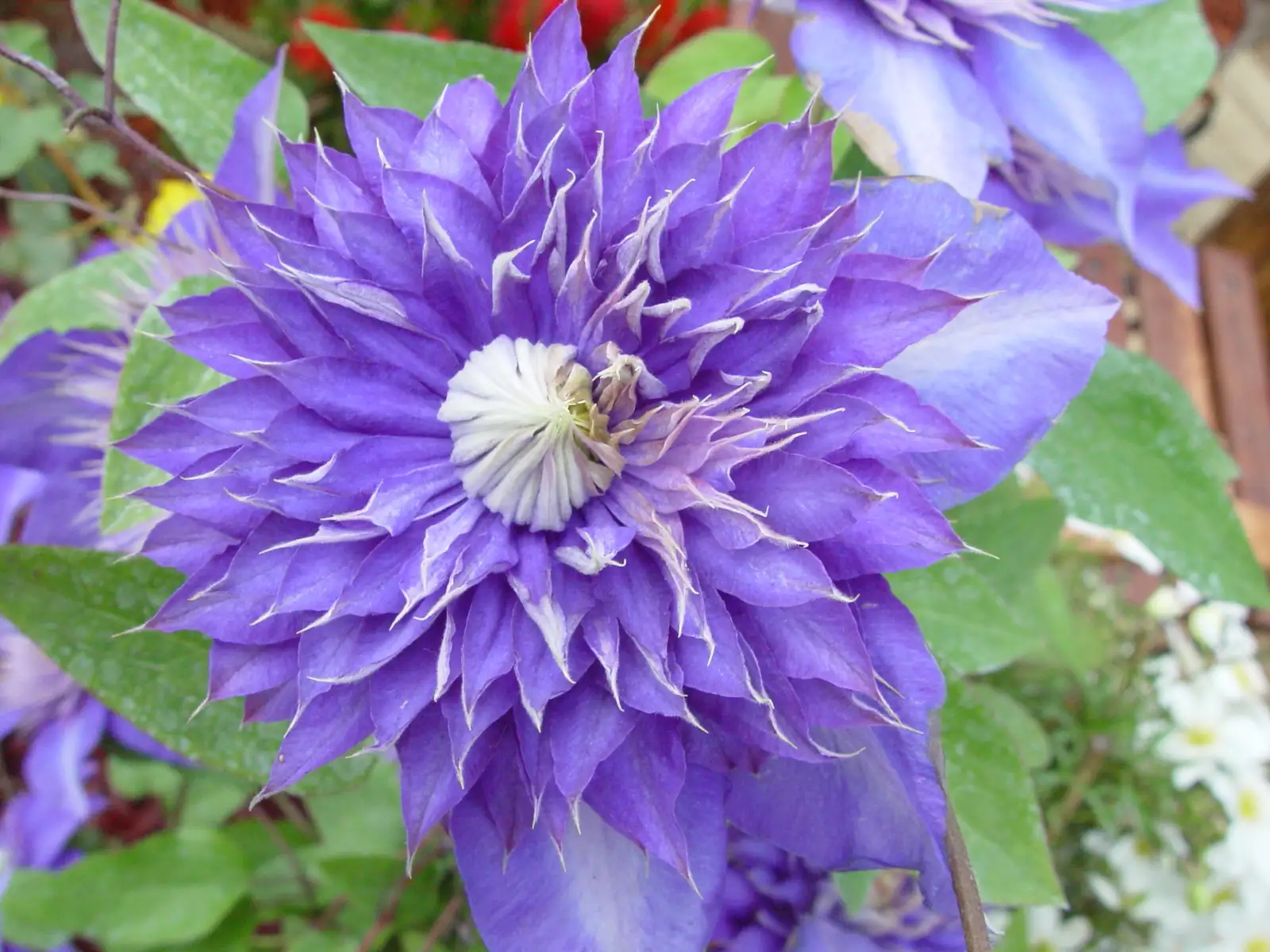
Truth: In many C. florida types, the central “boss” is the star.
- Notably among Clematis florida cultivars, the center forms an ornamental structure that looks like a sculpted rosette—one reason these varieties are so collectible.
7) “Clematis doesn’t smell like anything.”
Truth: Some do—and they’re delightful.
- While not all are scented, selected species and cultivars bring sweet, sometimes surprisingly strong fragrance. Consider them your garden’s scented side plot.
8) “It needs blazing, all-day sun to bloom.”
Truth: Bright light is best, but many appreciate a siesta.
- Aim for 6+ hours of sun, yet protect from harsh midday/afternoon heat—especially in containers. Classic rule: head in the sun, feet in the shade. Mulch, cool stones, or low companion plants keep roots comfy.
9) “Any soil will do.”
Truth: Feed the roots the good stuff—without drowning them.
- Clematis prefer fertile, organically rich, well-draining soil that holds moisture but never puddles. Many thrive at neutral to slightly alkaline pH and are lime/calcium tolerant. In pots, skip exhausted, compacted mix and avoid waterlogging.
10) “It’s either hardy or it isn’t.”
Truth: Hardiness depends on the group and variety.
- Many garden clematis are hardy in USDA Zones 4–9. Some evergreen and specialty types (including container-grown C. florida selections) are less cold hardy and appreciate shelter. Extended extreme heat also stresses many varieties—shade the pot and keep moisture steady.
11) “Every clematis is a rampant wall-covering vine.”
Truth: There’s a clematis for small spaces, too.
- Classic climbers often reach 6–12 ft (1.8–3.7 m), vigorous sorts 20–30 ft (6–9 m). But container-friendly and naturally compact types stay around 3–6 ft (0.9–1.8 m), and some groups are more herbaceous than viney.
12) “It’s fussy.”
Truth: Once you meet three needs, it’s a sweetheart.
- Give it sturdy support, consistent moisture with excellent drainage, and pruning that matches its group. Do that, and clematis repays you with a show-stopping cascade.
13) “Pruning is a mysterious art.”
Truth: It’s a three-card trick—learn the card, win the show.
- Group 1: Minimal prune—tidy after flowering.
- Group 2: Light prune in late winter/early spring—remove weak stems and shorten to strong buds.
- Group 3: Hard prune in late winter/early spring—to about 12–18 in (30–45 cm).
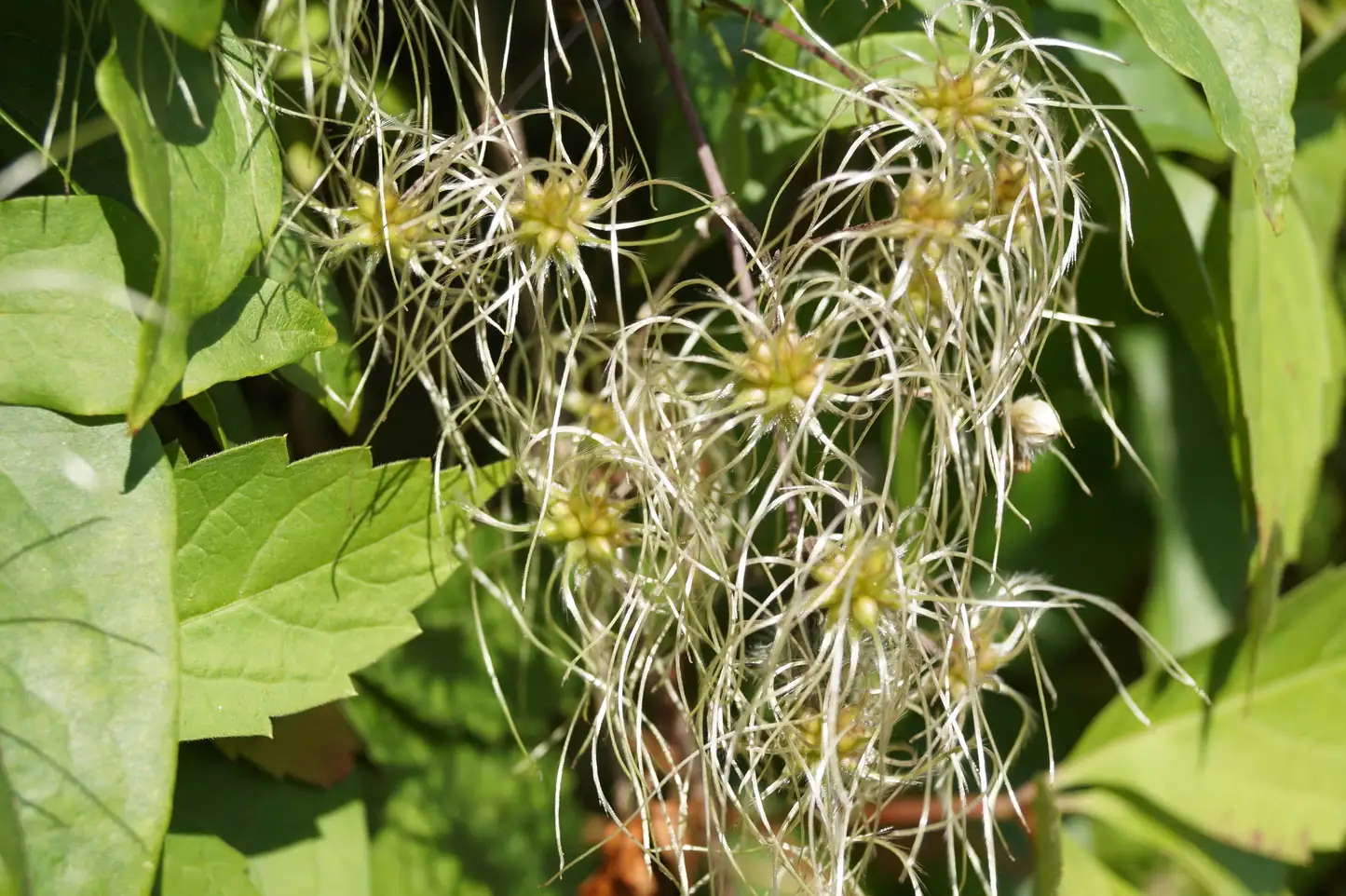
14) “Seedheads are messy—cut them off.”
Truth: Leave some for the grand finale: old man’s beard.
- After bloom, many clematis ripen silky, feathery plumes that fluff into luminous, cloudlike clusters—decorative through late season and beyond. They’re not just pretty; they nod to common names like Old Man’s Beard and Traveller’s Joy.
15) “Clematis is purely European.”
Truth: The genus is cosmopolitan, with its greatest diversity in East Asia.
- Clematis is native across temperate Northern Hemisphere regions, with a strong center of diversity in China and Japan. It rose to Western stardom in the 18th–19th centuries; the famed ‘Jackmanii’ (1862) helped spark the modern clematis craze.
16) “It’s bulletproof against pests and diseases.”
Truth: Mostly resilient, but know the red flags.
- Watch for clematis wilt (sudden stem collapse/blackening); cut back to healthy tissue—plants often resprout. Powdery mildew and gray mold love stale air and wet leaves—water at the base, improve airflow. Pests can include aphids, spider mites, slugs/snails, earwigs, and caterpillars.
17) “Safe as salad.”
Truth: Handle with care.
- Clematis contains irritant compounds. Sap can cause dermatitis in sensitive people; ingestion can upset pets and people. Wear gloves if you react, and discourage nibbling.
Spotlight on growth habit: how clematis really lives
- Climbing method: Twining leaf stalks (petioles), not tendrils or sticky pads.
- Habit: Mostly woody or semi-woody climbers; some groups are less climbing or herbaceous.
- Size: Many peak at 6–12 ft (1.8–3.7 m) with support; compact kinds sit at 3–6 ft (0.9–1.8 m); vigorous ones can roam to 20–30 ft (6–9 m).
Long bloom windows, decoded
- Early to mid-spring: Group 1 lights up bare branches.
- Late spring to early summer (with possible repeats): Group 2 bridges the seasons.
- Summer through fall: Group 3 keeps color rolling into sweater weather.
- Bonus: Many Clematis florida varieties concentrate their magic from summer into autumn, often with those show-stopping central bosses.
Clever care hacks you’ll actually use
- Light: Bright to full sun with protection from harsh afternoon rays in summer.
- Roots: Keep cool and shaded—mulch, groundcovers, or even a paving stone “hat.”
- Water: Deeply and regularly; aim for evenly moist, never soggy. In pots, water when the top 1 in (2.5 cm) dries.
- Soil: Fertile, well-draining, moisture-retentive; neutral to slightly alkaline suits many.
- Feeding: Hungry vines appreciate compost at planting, a balanced feed in early spring (plus early summer in-ground), and more frequent feeding in containers. Shift emphasis toward phosphorus/potash when buds form; avoid excess nitrogen.
- Support and training: Provide fine-textured supports to catch those petioles; tie in young growth gently and often.
- Containers: Start young plants in 6–8 in (15–20 cm) pots; long-term stars prefer big quarters—often 18 in (45 cm) deep and wide—with excellent drainage. Set crowns slightly deeper than in the nursery pot.
- Repot and refresh: Every 2–3 years, ideally in spring or after flowering; refresh mix and check drainage.
- Propagation: Semi-ripe cuttings (late spring–summer) root reliably; layering is almost foolproof. Seeds are slow and variable but charming for the patient.
Flower language, thoughtfully decoded
- Clematis often symbolizes mental beauty, cleverness, ingenuity, and aspiration—apt for a plant that thinks vertically and climbs skyward.
- These meanings crystallized in the Victorian language of flowers, where gifting clematis signaled admiration for wit and intellect. Color layers were sometimes added (white for purity, purple for dignity, pink for joyful admiration).
- A modern caveat: “flower language” varies by culture and era. Treat it as poetic tradition, not a fixed dictionary.
A quick chooser’s checklist
- Want fragrance? Seek selections known for scent—some species and cultivars surprise with sweet notes.
- Tight spaces or containers? Choose compact or naturally short varieties; give them a roomy pot long-term.
- Hot summers? Site for morning sun and afternoon shade; mulch well.
- Cold snaps? Many types shrug off serious chill, but less-hardy evergreens and some C. florida selections appreciate protection—especially in containers.
Final take
Clematis isn’t a diva; it’s a virtuoso. Give it the right stage—bright light, cool feet, kind hands, and pruning that fits its group—and it will waterfall your garden with color for months. And when the show closes, don’t forget to applaud the encore: those silvery, feathery seedheads, the Old Man’s Beard that proves clematis saves some of its best for last.


