A globetrotter by name, a homebody by nature: Agapanthus africanus wears the romantic nickname “Lily of the Nile,” yet its true story begins far from the Nile, in South Africa’s Cape—where sea winds comb through fynbos and sandstone mountains blush after winter rain. This is a plant with a passport full of aliases, a fan club that dates to the 1600s, and a family tree that has wandered through more taxonomic neighborhoods than most botanists care to admit.
Cape-born: how a fynbos native became a garden icon
Step into the Western Cape’s winter‑rainfall world and you’ll meet Agapanthus africanus in its element:
- Habitat: acidic, sandy soils on mountain slopes, between rocks, and even perched in shallow sandstone pockets. It thrives from the Cape Peninsula eastward to around Swellendam.
- Climate rhythm: cool, moist winters; dry, luminous summers. Fire periodically resets the fynbos—and A. africanus often answers with a flush of especially exuberant flowering afterward.
- Wildlife dance: bees and sunbirds work the umbels; wind helps along. Baboons and buck have been known to nip at developing heads—nature’s unsolicited pruning crew.
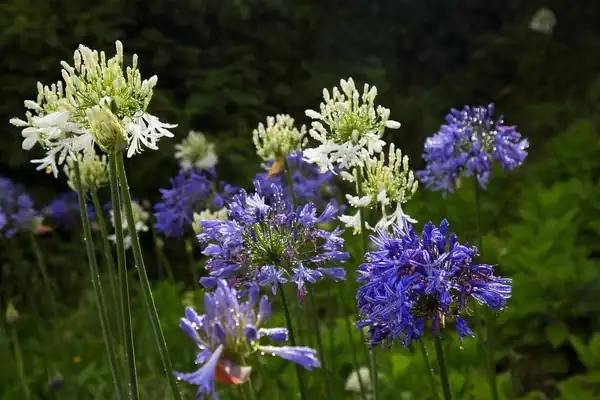
In the wild, the plants are evergreen, forming neat fans of glossy, strap-like leaves and sending up sturdy stems topped with spherical “firework” heads of trumpet blooms—most often deep to light blue, with white forms a rare, thrilling find.
“Lily of the Nile”—how the misnomer took root
- The nickname likely clung because early Europeans lumped many bulbous or lily-like exotics into a few familiar boxes, and “Nile” sounded seductively exotic.
- The truth: Agapanthus is South African through and through. Its genus name blends Greek agape (love) + anthos (flower), a nod to the “flower of love”—not the Nile.
Plant hunters, ships, and a 17th‑century crush
By the late 1600s, colonial shipping routes and the great age of botanical curiosity carried Cape treasures into European orangeries and glasshouses. Blue, spherical, and summer-flowering, agapanthus became a status plant for collectors:
- First mentions in European literature surface in the 1670s, with plants arriving from around the Cape of Good Hope.
- Early names tumbled about—Hyacinthus africanus and other misfits—until the Parisian savant L’Héritier coined Agapanthus (late 1780s). A bit later, the specific name africanus took hold in the 1820s.
- The craze spilled beyond botanic gardens into aristocratic estates, where the plant’s poised umbels and glossy leaves lent a “Mediterranean” confidence to summer borders.
A famously wandering family tree
If agapanthus had a family reunion, you’d need a referee. Over the centuries it has been shuffled among big lily-like families—at times filed under Liliaceae, later Amaryllidaceae or Alliaceae—before settling into its own, Agapanthaceae.
- The genus itself is variable and cross-friendly. Gardeners and breeders have mingled species so freely that many plants in commerce are hybrids with mixed parentage.
- A practical twist: the agapanthus most widely grown worldwide are often cultivars and hybrids of Agapanthus praecox. Meanwhile, A. africanus, the Cape evergreen, stays truest to its coastal mountains and winter‑rainfall roots—beautiful, yes, but a touch more particular about cold and soil.
What sets Agapanthus africanus apart
Think of A. africanus as the classic Cape form with an elegant, open-faced look:
- Evergreen fans of glossy, strap-like leaves (about 30–60 cm long, 2.5–5 cm wide) stay handsome year‑round in mild climates.
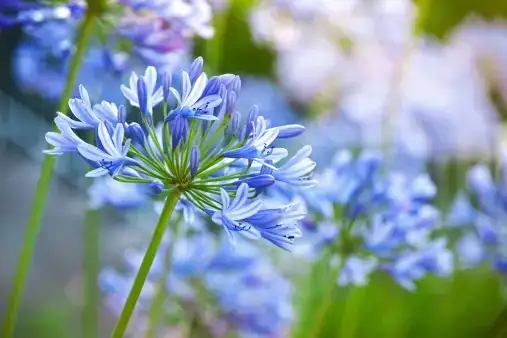
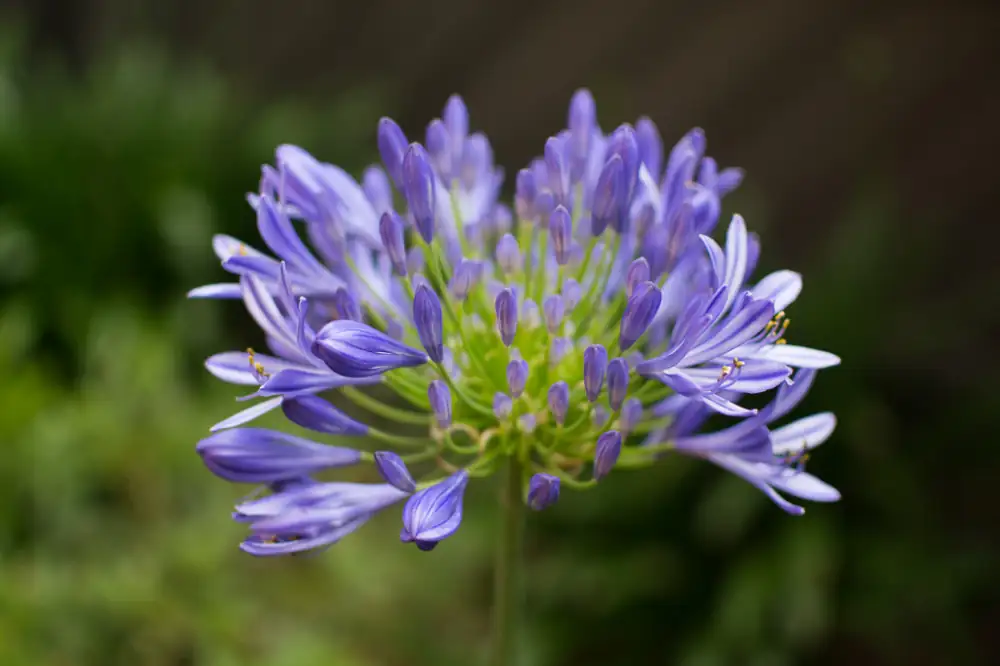
- Rounded umbels carry dozens of tubular to trumpet-shaped florets, typically deep to light blue; white is uncommon but unforgettable.
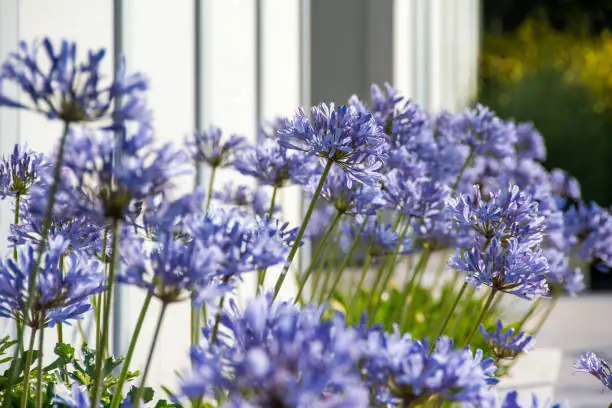
- In gardens, clumps reach about 60–90 cm tall and 60 cm wide, with flower stalks commonly rising to 90–120 cm—held cleanly above the foliage for that “floating fireworks” effect.
From fynbos to front path: how to grow it beautifully
A. africanus looks exotic yet asks for just a few non‑negotiables: sun, drainage, and a sensible watering hand.
- Sunlight
- Best bloom in full sun: aim for 6–8 hours. In very hot regions, light afternoon shade can help.
- Soil
- Fertile, well-drained, moisture‑retentive soil—sandy loam is ideal. Slightly acidic (pH ~5.5–6.5) suits it. Avoid waterlogging at all costs.
- Watering
- Establishment: about 2.5 cm (1 in) per week, kept evenly moist but never soggy.
- Once established: more drought-tolerant; many plants cruise on roughly half that in average conditions. Let the top layer dry between waterings and keep much drier in winter.
- Feeding
- Spring: a balanced feed (e.g., 10‑10‑10); repeat about two months later.
- For stronger bloom: a phosphorus‑leaning blend (e.g., 5‑10‑10). Go easy on nitrogen or you’ll grow leaves at the expense of flowers.
- Containers: a light feed every 4–6 weeks in the growing season.
- Cold and hardiness
- Generally suited to USDA Zones 7–11; some cultivars can manage Zone 6 with protection. Evergreen forms, including A. africanus, dislike extended freezes and soggy winter soils.
- Containers
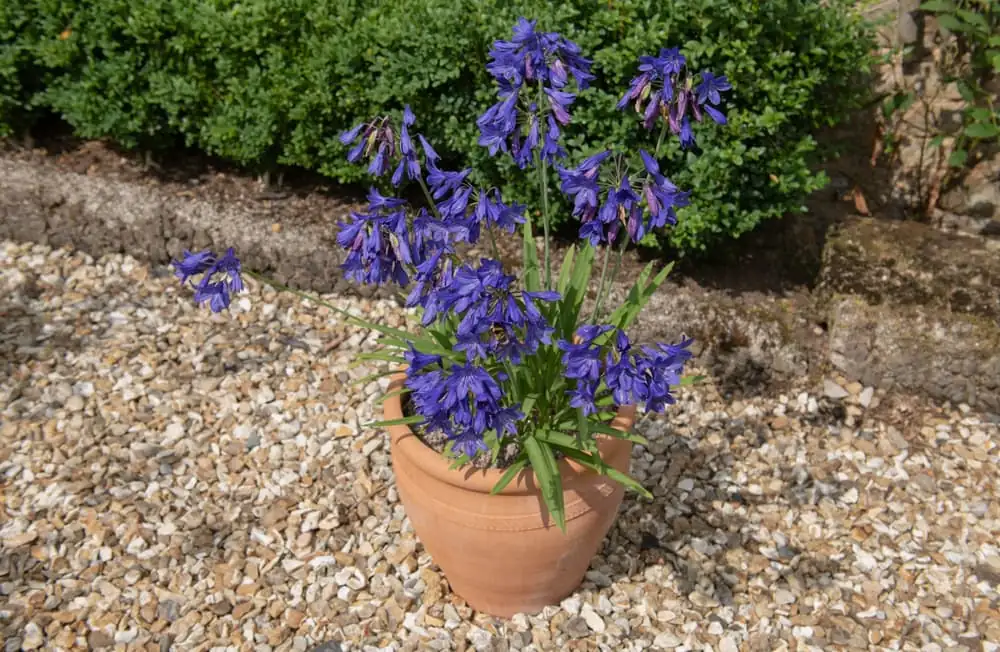
- A signature look. Use fast‑draining mix and a pot with holes. Don’t overpot—agapanthus often flowers best a bit root‑bound. Repot about every two years, stepping up only ~10 cm (4 in).
- Grooming and dividing
- Deadhead by removing spent scapes at the base. Clip tatty leaves anytime. Divide clumps every 4–6 years (early spring for deciduous types; many growers split evergreen types after flowering in autumn).
- Health and safety
- Usually trouble‑free; watch for aphids, mealybugs, spider mites. Good spacing = fewer fungal woes. The big risk is rot from poor drainage.
- Toxic if ingested; sap may irritate skin. Keep away from kids and pets.
Why borders and bouquets adore it
Those elevated, globe-like heads aren’t just showy—they’re practical:
- Cut-flower star: stems are strong, umbels stay architectural, and the blooms last well in the vase.
- Four seasons of form: glossy fans frame paths and patios before and after bloom.
- Bonus: relatively resistant to deer and rabbits. Dried seed heads bring sculptural drama to winter arrangements.
The love in the name: a thoughtful take on “flower language”
“Agapanthus” distills Greek agape (love) + anthos (flower): the idea of steadfast, generous love rather than fleeting romance. That etymology—not a strict Victorian code—is the root of its symbolism.
- Blue blooms whisper loyalty and devotion; white suggests sincerity and purity.
- The plant’s habit deepens the metaphor: it returns reliably each summer, its many small trumpets joining into one luminous sphere—unity in multiplicity.
Quick myths and conversation nuggets
- Not of the Nile: it’s a South African native of the Cape.
- Fireworks, literally: a single head can hold up to about 100 tiny trumpets.
- Thrift with flair: once established, it handles dry spells—just give it drainage.
- Root room, but not too much: slightly tight roots can mean better bloom.
- Airborne travelers: seeds are flat and winged, built to ride the wind.
A note on names you’ll meet at the nursery
- Common aliases: African Lily, African Blue Lily, Love Flower, Lily of the Nile.
- Many plants sold simply as “agapanthus” are hybrids—often with Agapanthus praecox in the mix. If you’re chasing the true Cape character of A. africanus, ask for provenance and expect an evergreen plant with a preference for mild, winter‑moist conditions and excellent drainage.
Troubleshooting bloom shy plants
- Light: less than 6–8 hours = fewer flowers.
- Pot size: too roomy can delay blooming; a cozy fit encourages it.
- Feeding: too much nitrogen grows leaves, not umbels.
- Youth or recent division: seedlings need 3–5 years; divisions may rest a season.
From ship holds and palace glasshouses to modern borders and balcony pots, Agapanthus africanus has journeyed far without forgetting its roots. Give it sun, lean, free‑draining earth, and room to toss its blue fireworks—and the Cape will come to life wherever you garden.