

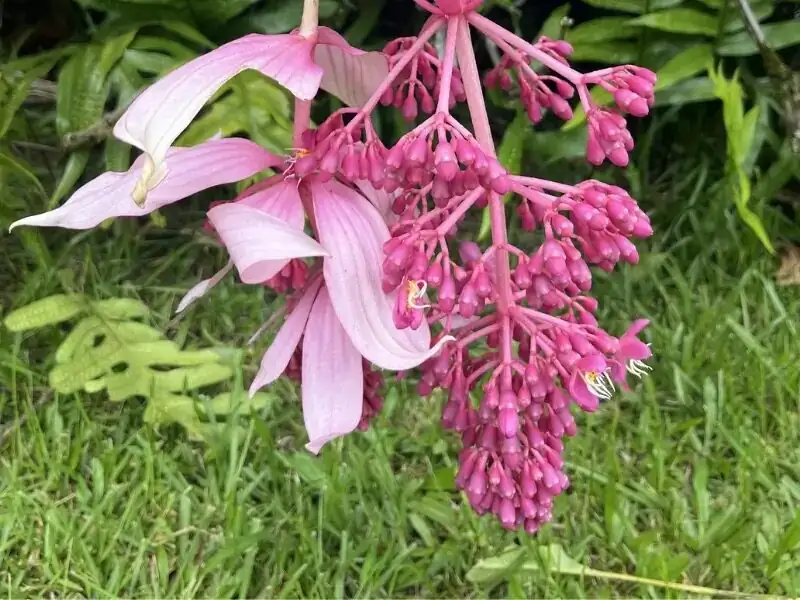
Imagine a plant that wears a pink chandelier like haute couture and then drops the mic. That’s Medinilla magnifica—aka Rose Grape—a glossy-leaved tropical diva from the Philippines whose cascading clusters stop traffic across living rooms and conservatories. It’s glamorous, a little picky, and wildly misunderstood. Let’s bust the biggest myths and show you how to make those jaw-dropping clusters perform like they’re on a runway.
Myth-buster: Why “Philippine Orchid” Is a Misnomer (and why it stuck anyway)
- Not an orchid at all: Medinilla magnifica belongs to the Melastomataceae family, genus Medinilla. Orchids are in Orchidaceae—totally different botanical clan.
- So why the nickname? Those dramatic, dangling “lantern” clusters look as exotic as orchid sprays, and many growers use a chunky, “orchid-style” potting mix because this plant craves air at the roots. The trade name “Philippine Orchid” stuck for the look, not the lineage.
- The real name to know: Rose Grape (plus Magnificent Medinilla, Philippine Medinilla, and Showy Medinilla). Native to the tropical forests of the Philippines, it’s a premium, statement-making houseplant when given warmth, bright filtered light, and delicious humidity.
Bracts That Upstage the “Real” Flowers
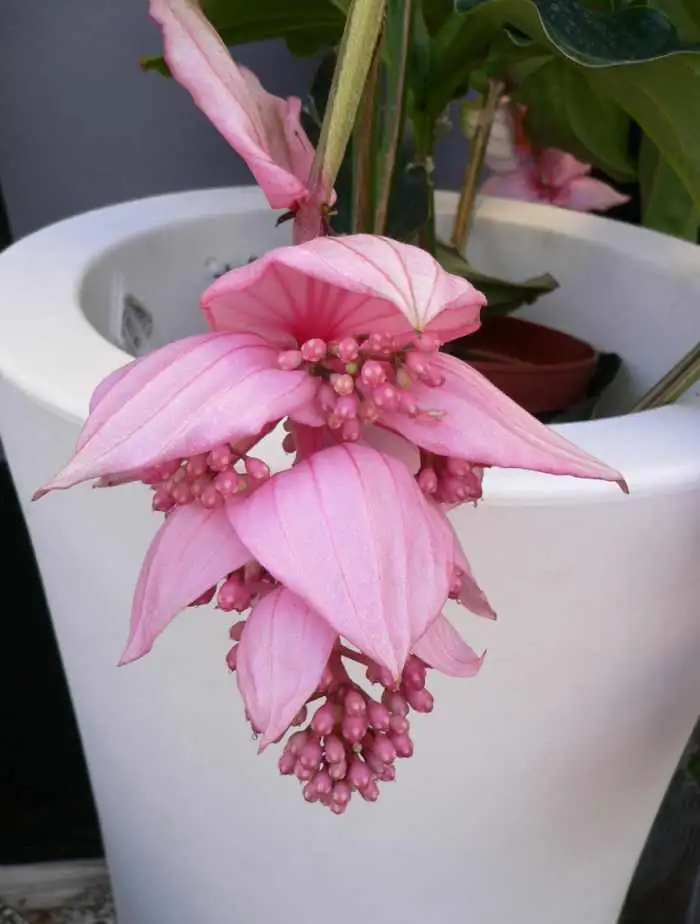
Here’s the head-turning secret: those big pink “petals” are actually bracts—modified leaves designed to dazzle. The true flowers are the many smaller blooms tucked within each cluster, commonly described as pink to purple.
- Bracts = the show. Think shell-pink, layered, and architectural.
- True flowers = the detail work. Numerous, delicate, and nestled inside.
- Performance tip: Try not to wet the flowers when misting—keep the moisture to the air around the plant, not the blooms themselves.
Heavy Is the Head That Wears the Chandelier: Why Clusters Weigh So Much
If you’ve ever wondered why Medinilla’s flower stems bow like a ballerina mid-curtsy, it’s by design:
- Each long, arching stem carries a pendant panicle packed with many small flowers.
- The bracts are thick and moisture-rich, adding real weight to the display.
- As clusters mature, the combined mass of bracts and blooms makes them hang beautifully below the foliage.
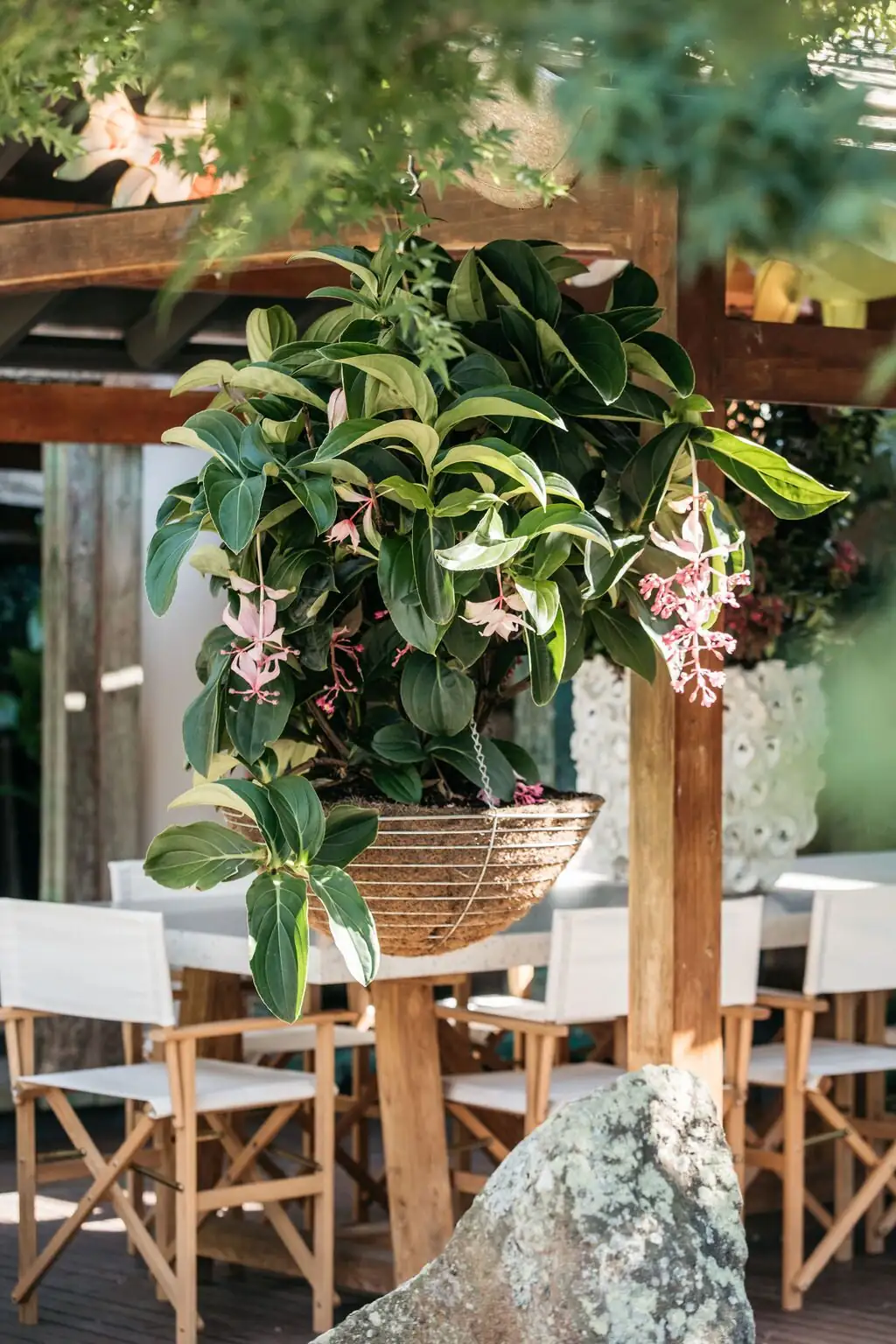
Translation: the drama is built in, and it’s heavy. Offer gentle support for stems during bloom (soft ties or discreet stakes), maintain steady conditions, and avoid big swings in watering. Stress—hot direct sun, cold drafts, heat plus stagnant air, or flip-flop watering—can trigger bud or flower drop.
Give It the High Throne It Deserves: How to Display for Maximum Wow
Because the clusters cascade, Medinilla looks best when the pot sits high enough to let the blooms drape naturally.
Ideal light and placement
- Light: Bright, filtered/indirect. A bright east window, or a south window with a sheer curtain is perfect. Avoid prolonged harsh midday sun that scorches leaves and injures buds.
- Height ideas:
- A tall plant stand or pedestal in a bright room.
- A deep, tall planter that subtly elevates the crown.
- A sturdy shelf or console near a bright window where clusters can spill over the edge.
- A stair landing or mezzanine ledge with bright, indirect light.
- Extra polish:
- Rotate the pot a quarter turn weekly for even growth (but avoid moving it frequently once buds form).
- Use soft ties/Y-stakes to guide drooping stems so they don’t flop or snap.
- Maintain airflow without drafts; think gentle ventilation, not a blast from an AC vent.
The Plant at a Glance
- Origin: Tropical forests of the Philippines.
- Size in containers: Typically 1.0–2.0 m tall and 0.8–1.5 m wide (many indoor specimens around 1.2 m × 1.0 m).
- Look: Large, leathery, deep-green leaves with bold veins; long, pendant, pink-bracted clusters.
- Bloom window: Spring to summer (often late spring through summer indoors).
Care (A Practical, No-Drama Cheat Sheet)
Light
- Bright, filtered/indirect; tolerates partial shade. Keep harsh midday sun off the leaves and buds.
Temperature
- Sweet spot: 22–28°C (72–82°F) for robust growth.
- Acceptable: 17–25°C (63–77°F). Keep it above ~16°C (61°F) and away from cold drafts or heat spikes.
Humidity
- Loves medium-high to high humidity: aim for 50–70%+, with 70–80% ideal for bud set.
- Use a humidifier or pebble tray; mist the air around the plant rather than the flowers.
Water
- Keep evenly moist during growth and bloom, never soggy.
- Bottom-watering works wonders: stand the pot in lukewarm rain or distilled water for ~20 minutes, then drain thoroughly.
- In hot summer, it may need frequent watering; avoid the yo-yo from bone-dry to saturated.
- In winter, water less and let the top of the mix dry slightly between waterings.
Soil
- Airy, rich, free-draining. Two proven paths:
- A chunky “orchid-style” mix (fine bark + perlite/charcoal).
- A humus-rich potting mix lightened with coarse sand, perlite, or vermiculite.
- Goal: Excellent drainage and oxygen at the roots.
Feeding
- During the growing season:
- Option 1: Monthly balanced fertilizer (e.g., 20-20-20) plus 1–2 bloom-supporting feeds (higher P/K) as buds form.
- Option 2: Every 2 weeks at half-strength with a high-potassium liquid fertilizer from spring to late summer.
- Don’t overfeed; prioritize potassium when buds and blooms develop.
Pruning
- After flowering: remove spent clusters and cut back the flowered shoots by about half to encourage new growth for next season.
- Tidy any overly long stems to maintain a rounded, elegant shape.
Repotting
- Every ~2 years in spring (sometimes 2–3), with minimal root disturbance.
- Use a deep container ~20–25 cm wide and 30–40 cm deep with superior drainage.
- Some growers plant 1–3 young plants together for a fuller, boutique look.
Hardiness
- Frost-tender; outdoor year-round only around USDA Zone 11–12. Indoors, keep it warm and protected.
Buying Smart (So Your Show Doesn’t End Early)
- Look for firm, glossy, deep-green leaves with prominent veins—no tears, spots, or sticky residue.
- Check under leaves and along stems for mealybugs or scale.
- Choose a plant with developing buds or 3–5 strong clusters; ideally one cluster just starting to open so you can assess color and quality.
- Avoid browned/blackened bracts, soft stems, or obvious spotting (stress or damage flags).
Troubleshooting Bud and Flower Drop
- Usual suspects:
- Harsh direct sun or indoor overheating with poor airflow.
- Cold drafts.
- Watering extremes (too dry, then too wet).
- Low humidity or sudden environmental changes.
- Fixes:
- Bright filtered light; steady warmth.
- Even moisture (not soggy).
- Humidity toward 70–80% if possible.
- Good airflow, no blasts. Avoid wetting flowers.
Flower Language, Symbolism, and What It Really Means
Medinilla magnifica is often associated with tropical glamour, elegance, and abundance—the floral equivalent of a statement necklace. While there’s no deep, ancient “flower language” tradition tied to this Philippine native, modern gifting culture leans on its chandelier clusters and lush foliage to signal refined taste and a love of the extraordinary. In short: it’s a showpiece that says, “celebration,” not subtlety.
Pests, Health, and Safety
- Pests: Spider mites (especially in dry air), scale, mealybugs, whiteflies. Raise humidity and airflow, isolate affected plants, and treat early with insecticidal soap or horticultural oil (repeat as needed).
- Diseases: Leaf spot and rot are typically linked to poor ventilation, wet flowers, or waterlogged soil. Keep the mix airy, don’t soak the blooms, remove affected tissue promptly.
- Toxicity: Not widely documented as toxic to humans or pets; still, keep out of reach—chewing any houseplant can cause mild stomach upset.
Quick Fun Facts
- Those lavish “petals” are bracts; the real flowers are the small blooms inside.
- The clusters are surprisingly heavy—elevating the pot and sometimes supporting stems transforms the display.
- Think conservatory chic: it thrives with warmth and humidity and prefers VIP treatment over “set it and forget it.”
A Seasonal Rhythm That Works
- Spring: Ramp up light (filtered), humidity, and feeding; repot if due.
- Late spring–early summer: Prime bloom time—steady moisture, bright filtered light, and good ventilation.
- After flowering: Remove spent clusters and prune flowered shoots back by about half.
- Winter: Keep warm (above ~16°C/61°F), move closer to the brightest window, and water less until new stems initiate.
Give Rose Grape a high perch, bright-but-soft light, and a humid, steady microclimate—and those pink chandeliers won’t just perform, they’ll bring the house down.