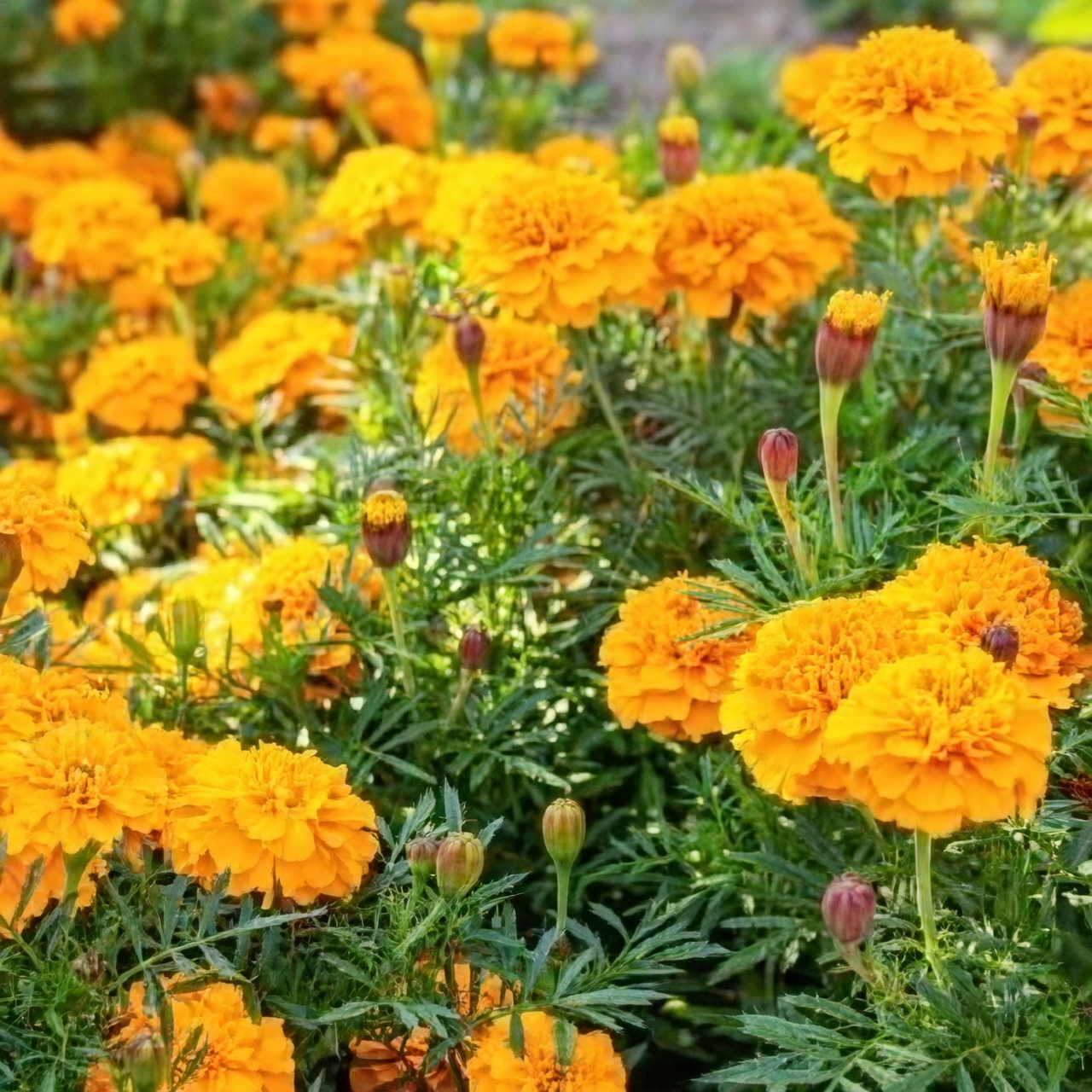
Imagine a pocketful of sunshine that never tires of performing along the garden’s edge: that’s Tagetes patula, the French marigold. Small in stature, big on personality, it left the volcanic highlands of Mexico and Guatemala centuries ago and—by way of European trade, fashionable bedding schemes, and a bit of savvy rebranding—became the world’s go-to border charmer.
From Mesoamerica to “French”: a spirited itinerary
Roots in Mexico and Central America
- Native home: Mexico and Guatemala, where wild Tagetes species have long perfumed fields and festivities.
- Cultural resonance: Marigolds feature prominently in Mexican traditions—most famously in Day of the Dead celebrations. While the taller Tagetes erecta is the archetypal cempasúchil for altars, French marigolds share the same lineage, solar palette, and evocative scent that links marigolds to remembrance and warmth.
Across the Atlantic: trade, taste, and a new label
- 16th–18th centuries: Spanish ships carried seed and plants to Europe. In gardens from Iberia to Paris, marigolds proved easy, cheerful, and prolific.
- Why “French”? Not because it’s native to France, but because French and other European gardeners popularized and refined compact, frilled forms ideal for stylish borders. The name stuck as the plant rose to stardom in European horticulture.
- The border revolution: By the 19th century, “carpet-bedding” and crisp edgings were in vogue. The low, spreading habit of Tagetes patula made it a natural—neat, vivid, and obedient under shears and sunshine.
A global border icon
- From cottage edges in Britain to city balconies in Asia and vegetable patches in the Americas, French marigolds now color gardens worldwide. Their compact size, forgiving nature, and long bloom season make them a universal crowd-pleaser.
Portrait of a plant: compact fireworks with a spicy sigh
- Habit and size: A compact, bushy annual, typically 15–30 cm (6–12 in) tall and about 15–20 cm (6–8 in) wide.
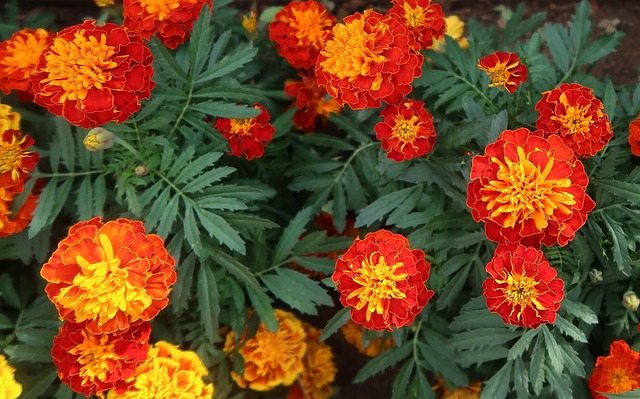
- Leaves: Finely divided, fern-like, bright green foliage with a pleasantly spicy, resinous aroma when brushed.
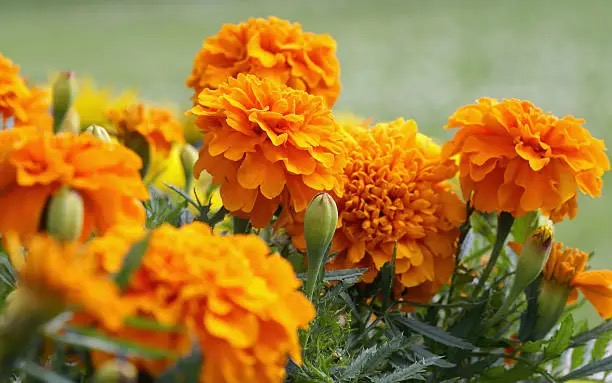
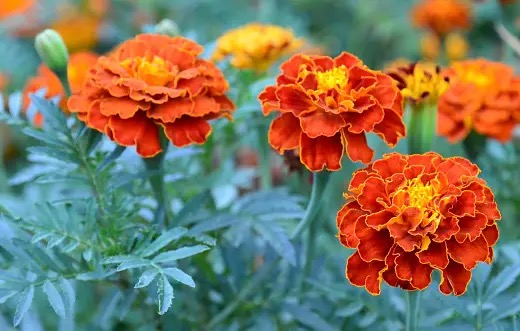
- Flowers: Frilly, crested, semi-double to fully double daisies about 2.5–7.5 cm (1–3 in) across. Expect sunstruck shades—golden yellow, orange, russet red, and lively bicolors.
- Bloom time: Early summer to autumn, often right up to first frost; flowering may pause in extreme heat and return when temperatures ease.
Why gardeners fell in love (and stay in love)
- Always “on”: Long, generous bloom with simple deadheading.
- Color that reads from across the path: Hot hues and cheerful bicolors outline beds like a ribbon.
- Garden-friendly scent: The foliage’s spicy note is both nostalgic and practical—deer and rabbits tend to pass it by.
- Tough yet polite: Tolerant of modest soils and occasional dryness, but refined enough for neat borders, pots, and patio planters.
Cultivation made delightfully simple
Sun, soil, and temperature
- Sun: Full sun (6+ hours) is best. In very hot climates, a touch of light afternoon shade is fine, but too much shade reduces blooms.
- Soil: Well-drained is the golden rule. Moderately fertile, dry-to-evenly moist soil with pH around 6–7 works beautifully. Handles sand, loam, and even clay if drainage is decent.
- Temperature: Loves 20–24°C (68–75°F). Not frost-hardy; growth slows near 4°C (40°F) and plants succumb to hard frost. Grown as an annual in USDA Zones 2–11.
Watering and feeding
- Watering: After transplanting, water well to establish. Then allow the topsoil to dry to the touch before watering thoroughly. It’s fairly drought-tolerant, but consistent moisture yields the most flowers. In heat waves, containers may need water about twice weekly. Always water at soil level; avoid soggy roots.
- Fertilization: Not a heavy feeder. For containers or poor soil, mix in a balanced fertilizer at planting (e.g., 10-10-10). Avoid excess nitrogen—foliage will surge while flowers sulk.
Pinching, deadheading, and spacing
- Pinch early tips to encourage branching and a fuller mound.
- Deadhead spent blooms to keep the flower factory humming.
- Space plants about 25–30 cm (10–12 in) apart for airflow and vigor.
- If plants stretch, trim stems just above a leaf set—no more than one-third at a time.
Seed-sowing and calendars
- From seed: Easy. Sow indoors 6–8 weeks before last frost; germination takes ~7–14 days at 21–24°C (70–75°F). Sow outdoors after frost, about 6 mm (1/4 in) deep.
- Yearly rhythm:
- Spring: Start seeds or set out healthy transplants with buds (not full bloom) for better establishment.
- Summer: Peak performance—water during dry spells, offer light shade if heat is extreme, and deadhead.
- Autumn: Keeps going until frost. In frost-free areas, late-summer planting gives fall fireworks.
- Winter: Annuals fade with frost; in mild climates they decline gradually with age.
- Self-seeding: If you let some blooms mature, you may meet their cheerful offspring next year.
Pots and patios
- Dwarf types thrive in ~15 cm (6 in) pots; standard varieties are happier in containers about 30 cm (12 in) across. Avoid overcrowding to reduce disease and keep the look crisp.
Companion with benefits (and a dash of realism)
- In the veggie patch: French marigolds are classic companions for tomatoes and herbs; their roots can help suppress certain root-knot nematodes, and the blooms support beneficial insects.
- Scent and wildlife: The spicy foliage scent tends to deter browsing by deer and rabbits.
- A thoughtful note: Companion planting isn’t a magic shield. Marigolds do not repel every pest; they can still host thrips or spider mites. Think of them as part of a diverse, resilient planting strategy rather than a cure-all.

Pests, diseases, and simple fixes
- Usual suspects: Spider mites and thrips can rough up leaves and flowers.
- Response: Increase humidity with occasional, targeted water sprays; treat heavier infestations with neem or horticultural oil.
- Fungal/bacterial issues: Powdery mildew, botrytis, and bacterial leaf spots thrive in crowded, damp conditions.
- Prevention: Space plants well, water at the base, and keep foliage dry.
- Root troubles: Root rot comes from poor drainage or overwatering—correct the soil condition.
- Sudden wilt: Soilborne wilts (e.g., Fusarium/Verticillium) may cause collapse; remove plants, improve rotation and drainage, and replant with healthy stock elsewhere.
Flower language, symbolism, and what they really say
- Warmth and devotion: In many traditions, marigolds symbolize affectionate warmth, steadfast love, and the life-affirming power of the sun—fitting for a flower that glows from first warm days to frost.
- Grief and remembrance: Victorian floriography sometimes cast marigolds in a more somber light—loss, sorrow, even jealousy. In Mesoamerican practice, marigolds illuminate pathways for beloved spirits, blending radiance with remembrance.
- A protective aura: Folklore across cultures leans on marigolds as lucky, protective plants that ward off ill will—perhaps inspired by their assertive color and confident scent.
- The takeaway: French marigold’s “language” is complex and context-rich—sunny loyalty on one hand, bittersweet memory on the other—mirroring its ability to brighten life’s thresholds, literal and symbolic.
Choosing cultivars: a sampler of reliable stars
Seed houses have shaped French marigolds into a dazzling wardrobe. Look for:
- Series and types: Bonanza, Boy O’ Boy, Hero, Hot Pak, Janie, Aurora, Disco, Durango, Little Hero, Safari, and Super Hero—varying in height, flower form (single to crested “carnation” styles), and patterns.
- Award-winners:
- ‘Naughty Marietta’ (AAS, 1947): A classic single with golden petals and a mahogany splash—timeless for edging.
- ‘Super Hero Spry’ (AAS, 2018): Bold, tidy, and floriferous—modern punch with old-soul charm.
Buying and planting like a pro
- At the nursery: Choose sturdy plants with bright, healthy foliage and tight buds rather than open blooms; they’ll settle in and branch better.
- At home: Plant into well-drained soil, water in thoroughly, and give them the sunniest spot you can. Then pinch, deadhead, and enjoy the parade.
Safety and good sense
- Generally low-toxicity; sap and essential oils can irritate sensitive skin—wear gloves if needed.
- Typically safe around pets with normal exposure, though nibbling large amounts of any plant can upset tummies.
Quick answers to common questions
- Do they come back every year? No—French marigolds are annuals, though you may see self-sown volunteers next season.
- How to keep them blooming? Full sun, modest feeding, consistent moisture, and regular deadheading. If heat slows them down, they’ll rebound when temperatures dip.
- Leaves turning brown or spotted? Often wet foliage, poor airflow, or stress. Water at the soil line, thin for circulation, and remove badly affected leaves.
- French vs. African marigolds? French marigold (Tagetes patula) is compact (about 15–30 cm tall) with smaller, often bicolored blooms; African marigold (Tagetes erecta) is taller with larger flowers.
A small plant with a long story
Tagetes patula may be called “French,” but its heart beats with Mesoamerican sun. It emigrated, adapted, and charmed its way into nearly every gardener’s toolkit—an edging virtuoso that turns the margins into a main event. Plant it where you’ll pass by daily. Brush the feathery leaves, catch that spicy sigh, and let a line of bright little suns guide you through the season.