

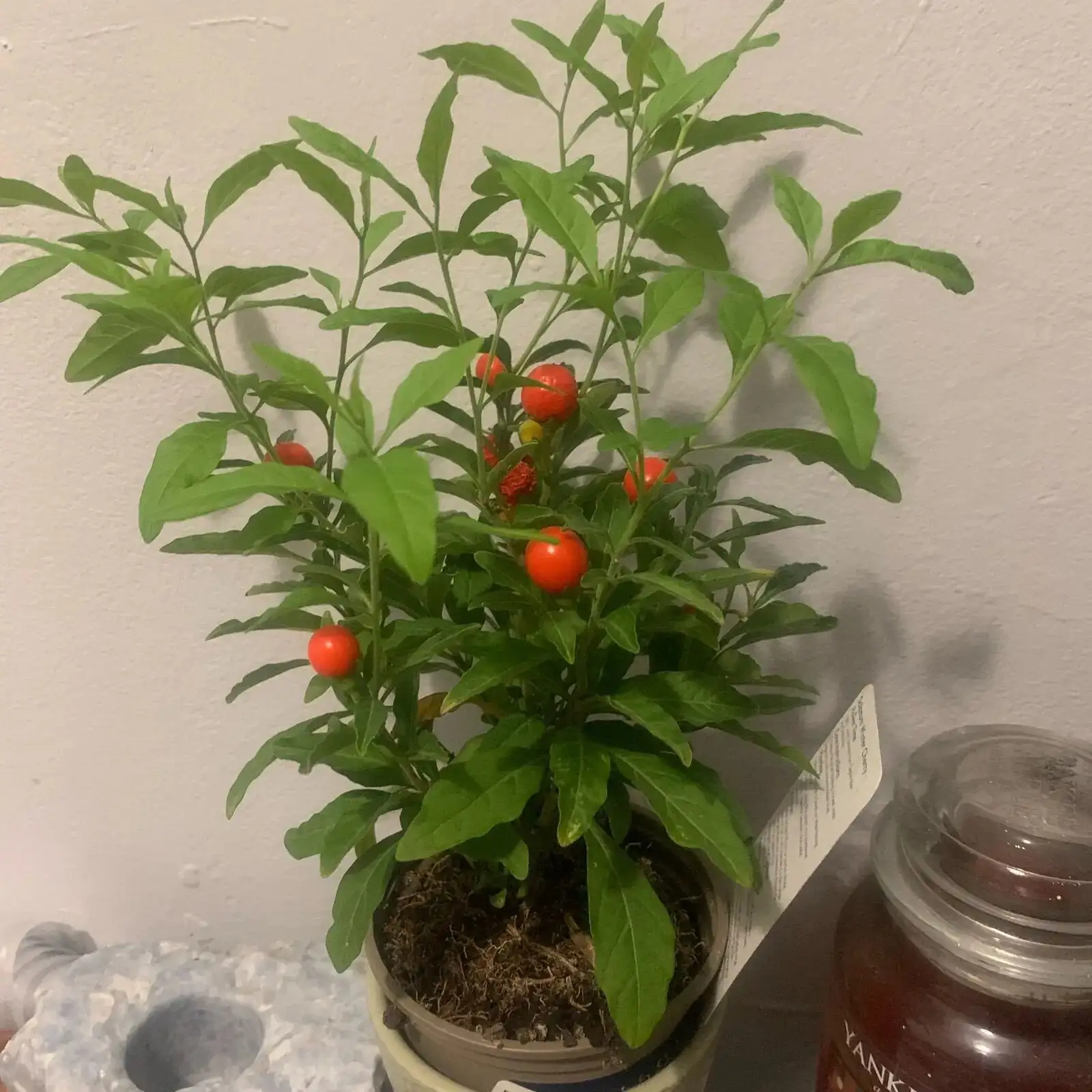
Meet Solanum pseudocapsicum, the Jerusalem cherry—a compact evergreen subshrub that turns into a tiny holiday showstopper right when the days get short. Those glossy “cherries” glowing on windowsills? They’re actually bright, long-lasting berries that ripen right through winter. Ready to separate legend from leaf? Let’s bust the biggest myths and learn how to keep this seasonal star looking spectacular.
Myth-busting the Jerusalem cherry
Myth 1: “It flowers in summer.”
Fact: Autumn is its blooming season.
Jerusalem cherry produces small, starry white flowers in autumn, then follows with clusters of berries that hold through winter. Indoors, the fruit display is often at its best in the darkest months.
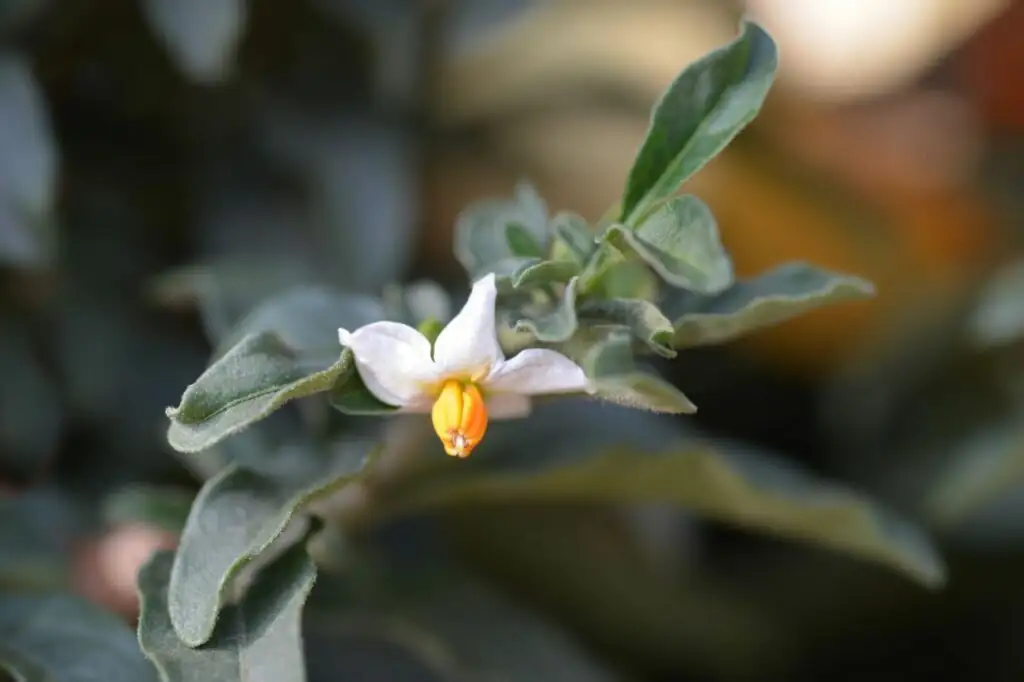
Pro tips for better fruit set:
- Light: Very bright light is non-negotiable—think an east- or south-facing window.
- Water: During flowering, ease off slightly to encourage fruiting.
- Feed: As buds appear in autumn, give 1–2 extra feeds higher in phosphorus and potassium (a bloom/fruit formula around 15-15-30 works well).
Myth 2: “Those are real cherries, so they must be edible.”
Fact: Not cherries—and not edible.
Despite names like Christmas cherry and Winter cherry, this is a Solanum (nightshade), not a Prunus (true cherry). The berries and other parts contain solanaceous alkaloids and are toxic if eaten, typically causing gastrointestinal upset. Keep the plant out of reach of children and pets.
Bonus fascination: The berry show is a slow-motion color shift—green to orange and then a bright coral-red—that can stay gorgeous for weeks.
Myth 3: “The berries are dyed or sprayed to look that red.”
Fact: The coral-red is 100% natural.
The color progression happens as fruits ripen. To keep them vivid and hanging on:
- Give the plant bright light to full sun.
- In winter, keep temperatures above 8–10°C (46–50°F) and avoid cold drafts or sudden swings.
- Water lightly; don’t splash the berries (it can spot and weaken them).
Myth 4: “It’s slow from seed—you’ll wait forever.”
Fact: It’s a speedy sprinter.
From seed, Jerusalem cherry often sprouts in about 10–12 days when kept warm.
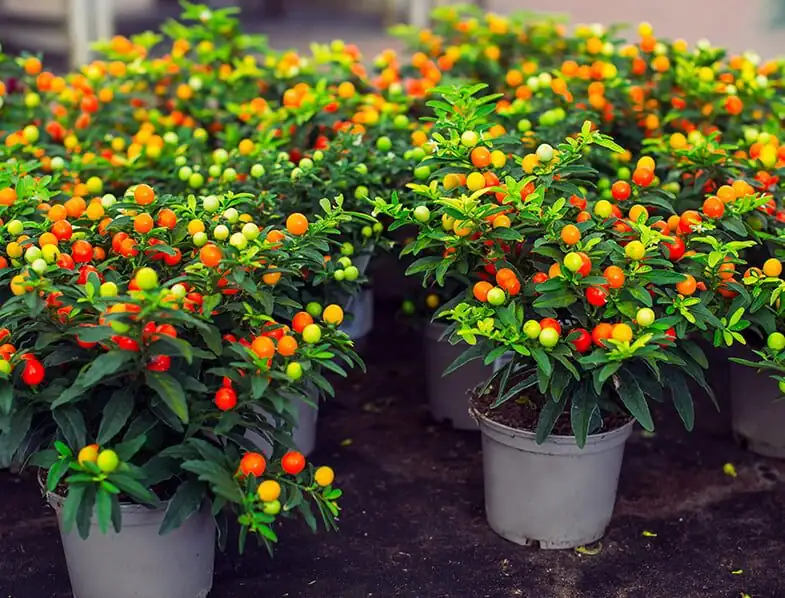
How to time your own winter show:
- When to sow: Early spring.
- Temperature: 18–20°C (64–68°F) for best germination.
- Medium: A fertile, well-draining potting mix with added perlite or coarse sand.
- Aftercare: When seedlings reach 10–15 cm (4–6 in), pinch once to encourage a bushy shape. With strong light and steady feeding, you can have a fruiting display by late autumn into winter.
Prefer a shortcut? Semi-ripe cuttings taken in summer (about 10 cm/4 in) usually root in 2–3 weeks in warm, humid conditions.
Myth 5: “It’s a disposable, deciduous holiday plant.”
Fact: It’s evergreen and can go the distance.
Jerusalem cherry is an evergreen, compact subshrub. Treat it right and it can rebound after winter:
- After the display, trim back to refresh growth.
- Keep it in bright light and warmth (ideally 20–25°C / 68–77°F).
- Under good conditions, it can flower and fruit again.
That said, many people buy it for a one- to two-year display because young plants are naturally denser and berry-laden. Older plants tend to get leggy indoors, and maintaining peak fruiting under household light can be fussy—so growers (and gift-givers) often start fresh each year.
Myth 6: “It fails because it’s ‘weak.’”
Fact: It’s just particular.
This plant is straightforward in bright light and even conditions, but it reacts quickly to stress:
- Too cold, too wet, or too dim = leaf and berry drop.
- It prefers to be slightly pot-bound and hates soggy soil.
- Sudden temperature shifts are the fast track to a bald, berry-less shrub.
Keep things stable, and it returns the favor with an abundant winter display.
Care cheat sheet (for a no-drama winter show)
- Light: Bright light to full sun. Best near an east- or south-facing window; tolerates partial shade but colors best in strong light.
- Temperature: 20–25°C (68–77°F) for growth. Winter minimum 8–10°C (46–50°F); protect from drafts.
- Watering:
- Growing season: Water thoroughly when the top 2–3 cm (about 1 in) dries.
- During flowering: Slightly reduce watering to encourage fruit set.
- Fruiting/winter: Keep just slightly dry; avoid “drought then drench.” Water sparingly in cool, dim spells (often every 4–5 days—adjust to your conditions). Don’t wet the berries.
- Feeding: Every 2 weeks in active growth with a balanced fertilizer; in autumn, add 1–2 feeds higher in P and K to boost flowering/fruiting.
- Soil: Rich, free-draining mix—loam-based with peat/coco and perlite or coarse sand.
- Pruning: Pinch once at 10–15 cm tall to keep it compact. After winter, cut back to refresh; new shoots can bloom again in good light.
- Repotting: Keep slightly pot-bound in a 10–15 cm (4–6 in) pot. Repot only when truly needed to avoid sogginess.
- Outdoors: Frost-tender; grow outside only in warm seasons or in very mild climates (about USDA Zone 10–11). Bring inside well before frost.
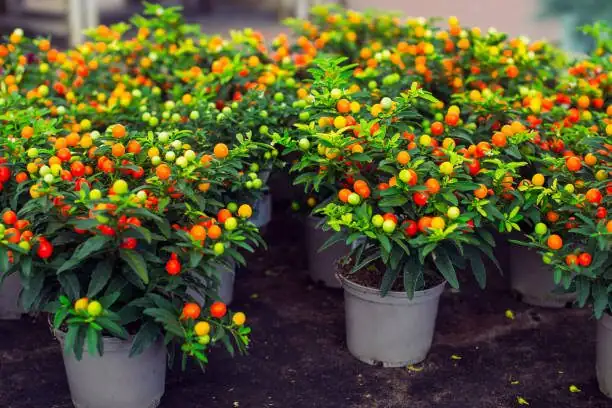
Why it’s sold as a “one- to two-year” plant (and how to beat that)
- The trade grows Jerusalem cherry for a specific look: compact plants loaded with evenly sized, glossy berries at Christmas. That picture-perfect form is easiest on young, tightly pinched stock.
- Indoors, older plants often stretch, and fruit set drops if light is weak. Sensitivity to cold drafts and overwatering can also strip berries fast.
- Your options:
- Refresh annually from spring-sown seed or summer cuttings for reliable holiday color.
- Or keep one going: prune after winter, keep it bright and warm, and maintain steady, modest watering. Many home growers get repeat performances with discipline.
Troubleshooting: leaf or berry drop
- Low light: Move it brighter—close to glass on an east or south window.
- Cold drafts or sudden temperature swings: Stabilize above 8–10°C (46–50°F).
- Overwatering: Let the top layer dry slightly and never leave it waterlogged. Avoid splashing the berries.
- Pests: Whiteflies are the usual indoor nuisance; treat with insecticidal soap or horticultural oil and repeat as needed.
- Diseases: Leaf spot and anthracnose can appear in stagnant, damp conditions—improve airflow, avoid wetting leaves/berries, and remove affected parts.
Quick profile
- Common names: Jerusalem cherry, Christmas cherry, Winter cherry, False Jerusalem cherry, Madeira Winter Cherry
- Scientific name: Solanum pseudocapsicum
- Family: Solanaceae (nightshade family)
- Origin: Native to South America; widely grown and naturalized in warm-temperate and subtropical regions of Europe and Asia
- Habit and size: Evergreen, compact, bushy subshrub; typically 30–60 cm (12–24 in) tall and 30–45 cm (12–18 in) wide in containers
Buying guide (what to look for)
- Choose a plant that’s dense and well-branched with short internodes.
- Berries should be glossy, firm, and fairly uniform in size and ripeness.
- Skip any with yellowing foliage or soft, spotted fruit.
- Handle gently—ripe berries can drop or stems can snap on the way home.
- Set it immediately in bright light, water carefully (keeping the mix slightly on the dry side), and avoid rapid temperature changes.
Seed-to-berry timeline at a glance
- Spring: Sow indoors at 18–20°C (64–68°F); expect germination in about 10–12 days.
- Early growth: Keep bright; pinch once between 10–15 cm tall to promote bushiness.
- Summer: Feed every 2 weeks; take cuttings if you want extra plants.
- Autumn: Flowers appear; reduce watering slightly and add 1–2 higher P/K feeds.
- Winter: Enjoy the berry show; keep cool-bright and just slightly dry for maximum hang time.
Safety first
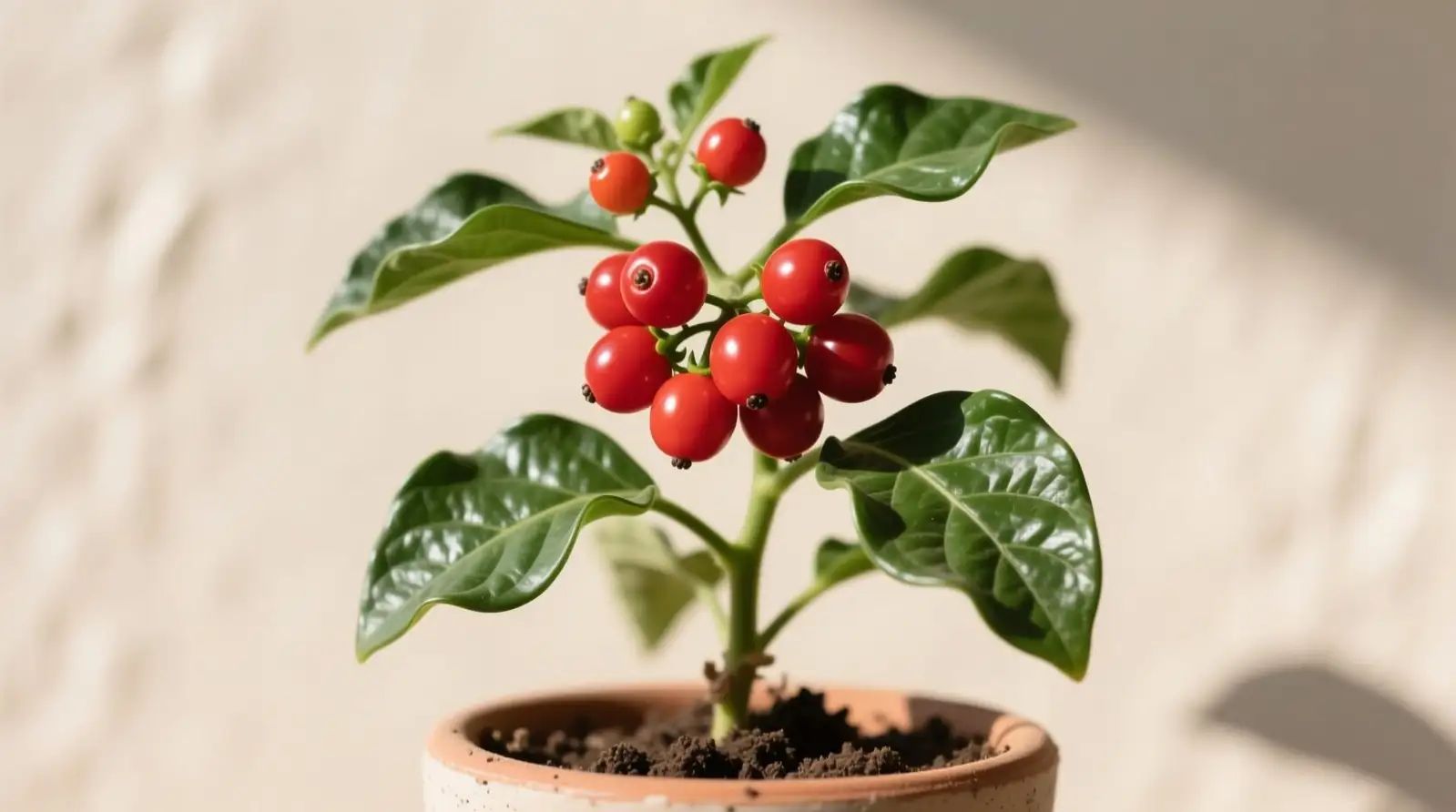
- Toxic if eaten. The berries (and other parts) can cause gastrointestinal upset.
- Keep out of reach of children and pets. Educate curious housemates that “pretty” does not equal “edible.”
Flower language and modern meaning
While Jerusalem cherry doesn’t anchor classic Victorian floriography, its modern symbolism leans into seasonal cheer and “good luck.” It’s easy to see why: a compact evergreen bearing bright, enduring berries in the darkest weeks of the year reads like a promise of warmth and prosperity ahead. In short, it’s a pint-sized talisman of staying power—evergreen leaves, patient autumn flowers, and a winter payoff in coral-red.
—
Bottom line: Solanum pseudocapsicum isn’t a fussy diva—it’s a timing artist. Give it bright light, steady warmth, and modest watering, and you’ll get an autumn-to-winter performance few houseplants can match. Whether you grow it as a one-season showpiece or train it for encores, the Jerusalem cherry proves that holiday color can be living, luminous, and surprisingly easy to renew.