


Meet the rose grape (Medinilla magnifica): a tropical showstopper from the forests of the Philippines with glossy, veined leaves and cascading, pink “chandelier” blooms. It’s not fragile—it’s particular. Nail the light, warmth, humidity, and watering rhythm, and it will reward you with spectacular, draping clusters from spring into summer.
The quick-start care playbook (your targets at a glance)
- Light: Very bright, filtered light. Ideal: an east-facing window or a south window with a sheer curtain. Avoid harsh midday sun.
- Temperature: Warm and steady—target 22–28°C (72–82°F). Acceptable 17–25°C (63–77°F). Keep above 16°C (61°F). Avoid heat spikes plus stagnant air during bloom.
- Humidity: Minimum 50–70%+, ideal 70–80% for bud set and long bloom life. Humidifier or pebble tray recommended. Mist around the plant, not on the flowers.
- Watering (active growth/bloom): Keep evenly moist, never soggy. Bottom-water with lukewarm rain/distilled water for ~20 minutes, then drain fully. In winter, water less and let the mix dry slightly.
- Soil: Airy and free-draining yet rich. Orchid-style barky mix or a humus-rich potting mix loosened with perlite/charcoal—oxygen at the roots is non-negotiable.
- Feeding: Spring–summer feed regularly. Either monthly with a balanced fertilizer, plus 1–2 extra bloom-support feeds (higher K/P) when buds form, or every 2 weeks at half-strength with a high-potassium liquid feed.
- Pruning: After flowering, remove spent clusters and cut back the flowered shoots by about half to encourage new blooming growth.
- Placement: Display high so blooms can drape. Provide gentle airflow; avoid cold drafts and hot, stuffy corners.
Light: position with precision
- Best indoor spots
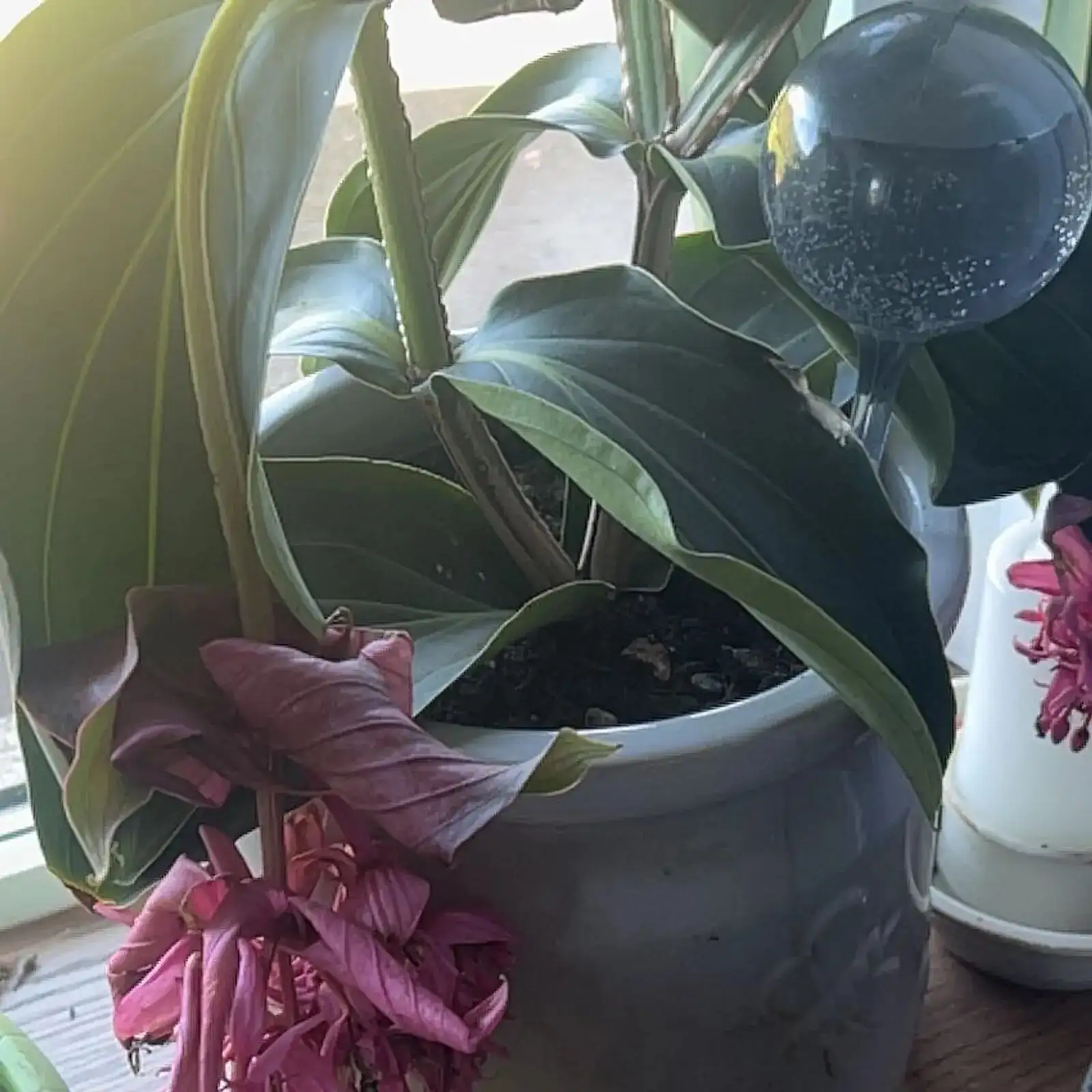
- East window with bright morning sun filtered by a sheer is ideal.
- South window with a sheer curtain works well; keep it out of the direct midday beam.
- In winter, move closer to the brightest window without exposing leaves to harsh, prolonged direct sun.
- Outdoors (warm climates only, frost-free)
- Bright shade or dappled light; shelter from rain and drying winds.
- Read the leaves
- Too much sun: bleached or crispy patches; buds may brown.
- Too little light: long, weak internodes, reluctant blooming.
Temperature and airflow: warm, calm, and steady
- Targets
- Day: 22–28°C (72–82°F) for best growth.
- Night: keep consistently warm; don’t drop below 16°C (61°F).
- Air movement
- Gentle, consistent airflow prevents heat buildup and reduces bud drop risk. Think “breeze,” not “draft.”
Humidity: the bloom lever
- Targets
- Minimum 50–70%+, ideal 70–80% during bud set and bloom.
- How to achieve it
- Run a humidifier beside the plant.
- Use a wide pebble tray filled with water under (but not touching) the pot base.
- Group humidity-loving plants together.
- Lightly mist around foliage in the morning if needed—avoid wetting the flowers.
Soil and pot: oxygen-rich and free-draining
- Mix options (choose one style)
- Orchid-style chunky mix: fine bark + perlite + a pinch of horticultural charcoal (airy and fast-draining).
- Humus-rich houseplant mix: high-quality potting soil with leaf mold/compost, lightened generously with coarse sand/perlite/vermiculite.
- Container
- Deep pot, 20–25 cm (8–10 in) wide and 30–40 cm (12–16 in) deep, with excellent drainage.
- Some displays use 1–3 young plants per pot for fullness.
Watering routines that prevent stress and trigger chandeliers
- Your golden rule
- Even moisture, never waterlogged; avoid dramatic swings from bone-dry to drenched. Swings cause bud and flower drop.
- Bottom-watering method (active growth and bloom)
- Fill a basin with lukewarm rain or distilled water.
- Set the pot in the water so it reaches about a third to halfway up the pot height.
- Soak for ~20 minutes.
- Lift, let excess drain completely, then return to its cachepot/stand. Never leave it sitting in water.
- When to water again
- Check daily in warm seasons; water when the top 2–3 cm (about 1 in) feels just barely dry but the mix beneath is still faintly moist.
- Pot-weight test: a light pot signals time to water; consistent heft means hold.
- Summer vs. winter
- Summer: faster drying—may need very frequent watering (even daily in hot, airy setups with chunky mixes). Keep it even.
- Winter: reduce frequency; allow the mix to dry slightly more between waterings while keeping the plant warm and bright.
- Flower-protective habits
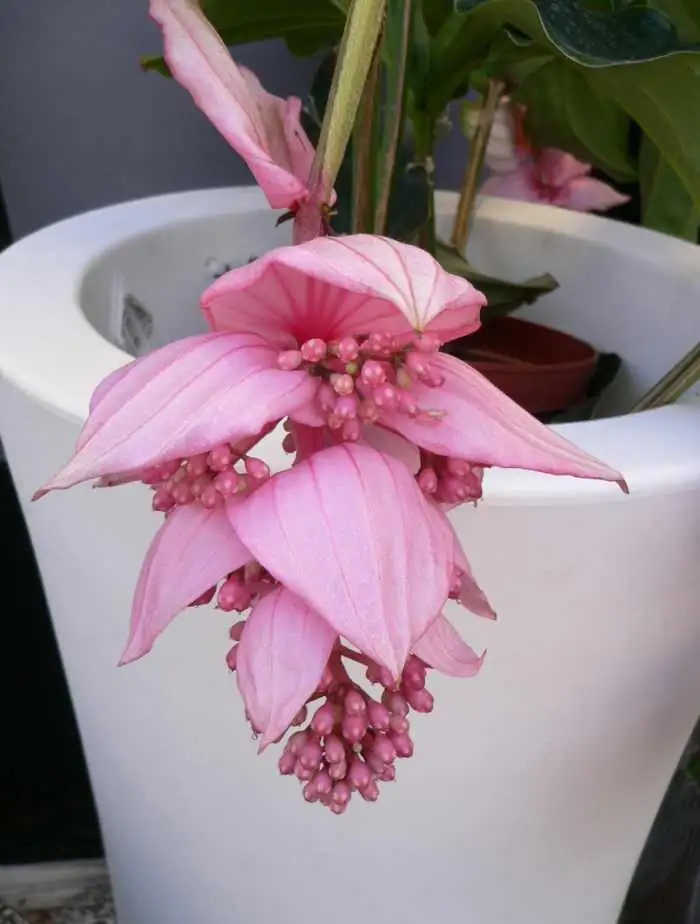
- Avoid splashing water onto bracts/flowers.
- Monthly, do a gentle top-water flush (shielding the blooms) to rinse fertilizer salts, then drain thoroughly.
Feeding for bloom power
- Two workable strategies
- Option 1: Feed monthly with a balanced fertilizer (e.g., 20-20-20 at label rate). When buds appear, add 1–2 extra feeds using a bloom-support formula higher in potassium (and phosphorus).
- Option 2: From spring to late summer, feed every 2 weeks at half-strength with a high-potassium liquid fertilizer.
- Tips
- Do not overfeed; consistent, moderate nutrition beats sporadic heavy doses.
- Use rain or distilled water if your tap water is hard.
Pruning, support, and display
- After flowering
- Remove spent clusters promptly.
- Cut back shoots that have flowered by about half to encourage fresh growth for next season’s blooms.
- During bloom
- Heavy, drooping stems may need gentle ties or a discreet support hoop.
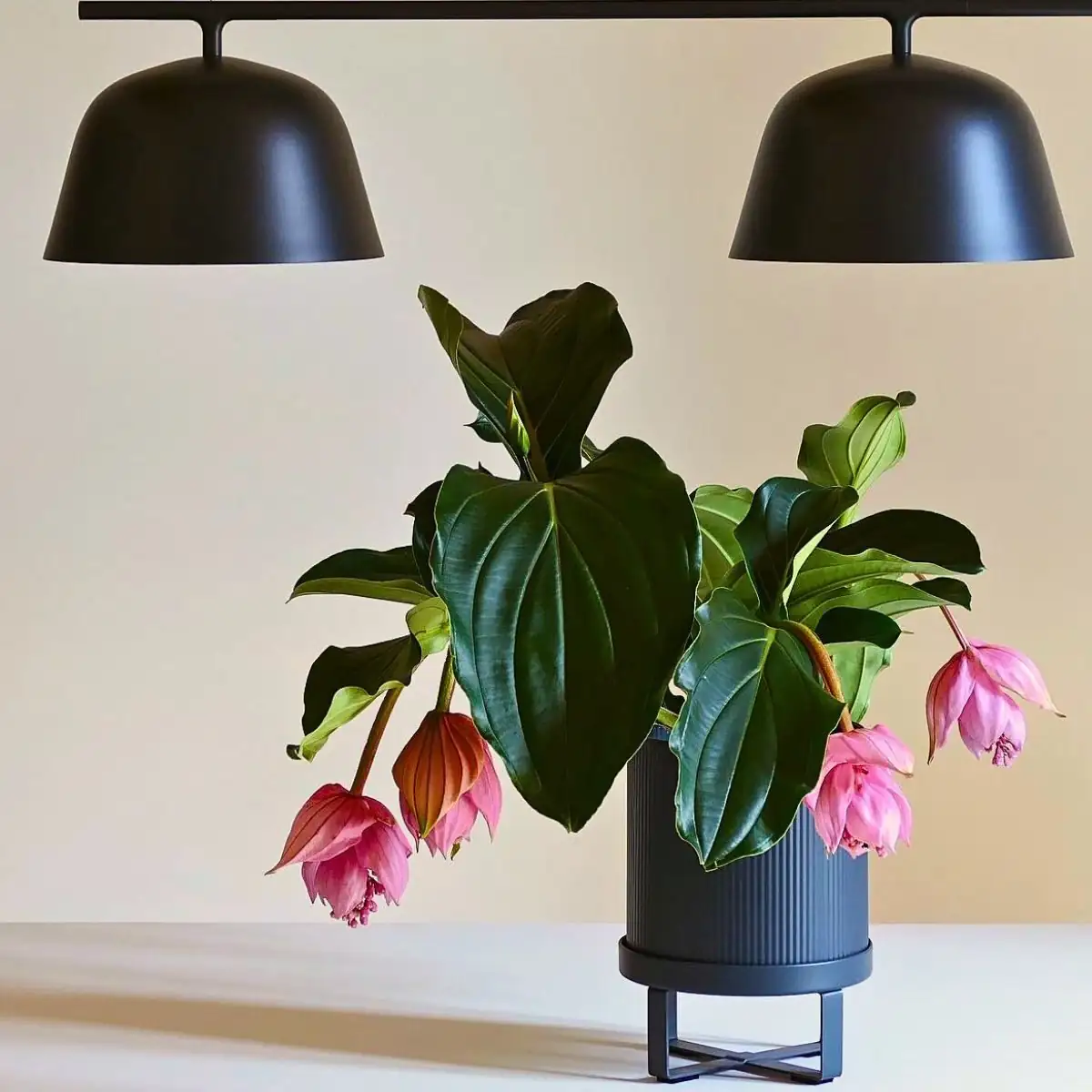
- Elevate the pot on a stand so the “chandeliers” can drape.
Repotting rhythm
- Every ~2 years in spring (sometimes 2–3), stepping up only one size.
- Disturb roots as little as possible; switch into a fresh, free-draining, rich mix.
- Give light shade and steady humidity for a week while it settles.
Season-by-season calendar
- Spring
- Brightest filtered light; raise humidity toward 70–80%; resume regular feeding.
- Repot if due.
- Late spring to early summer (main bloom window)
- Keep evenly moist and warm with excellent humidity and gentle airflow.
- Avoid hot direct sun and closed, stuffy rooms.
- Summer
- Maintain frequent watering as needed; don’t let the mix swing dry–soggy.
- Continue feeding program; avoid wetting flowers when misting around.
- After flowering
- Deadhead clusters; prune flowered shoots by half; tidy shape.
- Winter
- Keep above 16°C (61°F), brightest possible filtered light, and water less—slightly on the dry side until new flower stems reappear.
Troubleshooting: keep buds on, not off
- Bud/flower drop (most common)
- Causes: heat spikes + poor ventilation, cold drafts, harsh direct sun, or erratic watering.
- Fix: stabilize warmth, raise humidity to 70–80%, maintain even moisture, provide bright filtered light and gentle airflow. Avoid wetting flowers.
- Scorched or faded leaves
- Dial back direct midday sun; add a sheer.
- Limp growth, no blooms
- Increase light (without scorch), boost humidity, and ensure post-bloom pruning was done to stimulate new flowering wood.
- Root or stem rot
- Occurs in heavy, waterlogged media. Repot into an airy mix; trim rot; allow better drainage and airflow.
Pests and diseases
- Likely culprits: spider mites (dry air), mealybugs, scale, whiteflies.
- Response: Isolate, then treat early with insecticidal soap or horticultural oil; repeat as needed. Improve humidity and airflow.
- Disease: leaf spot, root/stem rot—linked to poor ventilation, wet flowers, or waterlogged soil. Remove affected tissues and correct conditions.
Propagation (for the bold)
- Stem cuttings
- Spring softwood or summer semi-ripe cuttings, 8–10 cm (3–4 in). Root warm and humid; expect ~3–4 weeks.
- Air-layering
- Spring/summer; typically 8–12 weeks to root.
- Seed
- Fresh seed sown promptly or in spring; germinate around 19–24°C (66–75°F), often in 3–4 weeks.
Safety notes
- Not widely documented as toxic to humans or pets, but ingestion may cause mild stomach upset. Best kept out of reach.
Symbolism and story
- Often gifted as a statement of tropical glamour, elegance, and abundance—those cascading pink bracts are pure theater. In the trade it’s sometimes called “Philippine Orchid,” a nod to its exotic, pendant blooms rather than its true family ties (it isn’t an orchid). As “flower language,” its oversized, long-lasting clusters have come to suggest opulence and memorable taste—less a folklore tradition, more a modern design cue from conservatories and couture interiors.
A simple weekly rhythm to lock in success
- Twice weekly: Check moisture (top 2–3 cm), pot weight, and humidity (aim for 70–80% when budding).
- Weekly: Bottom-water as needed; inspect for pests; wipe dust from leaves; ensure gentle airflow.
- Every 2 weeks (spring–late summer): Feed per your chosen plan. Adjust if buds are forming to prioritize potassium.
- Monthly: Top-flush to leach salts (avoid wetting flowers), then drain thoroughly.
- After bloom: Deadhead and prune flowered shoots by half; keep light bright and humidity generous to fuel new flowering growth.
Display tip
- Place it high—on a plant stand or in a tall planter—so the heavy inflorescences can drape naturally. This one thrives on stagecraft as much as horticulture.
With bright filtered light, warm steadiness, rainforest humidity, and that even-moisture routine—especially bottom-watering—you’ll trade stress and bud drop for a reliable curtain of pink, chandelier blooms each year.