

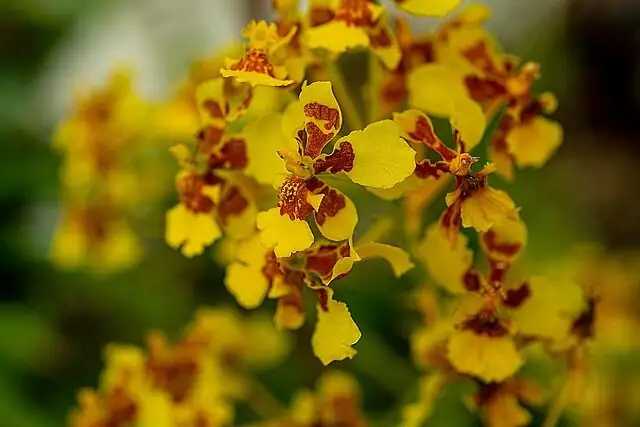
If you’ve fallen for the “orchids are fussy” rumor, Dancing Lady Orchids are here to prove otherwise. Oncidiums and their modern hybrids are lively, generous bloomers that reward bright windows and smart watering with cascading sprays of “tiny dancers.” The catch? A few persistent myths keep them from performing their best. Let’s bust those—and replace them with care habits that actually work for Oncidium-type orchids.
Meet the plant behind the myths
- Botanical profile: Oncidium spp. (incl. horticultural hybrids; Oncidium Group), Orchidaceae
- Nicknames: Dancing Lady Orchid, Golden Butterfly/Golden Shower Orchid
- Origin: Tropical to subtropical Americas—especially Mexico, Central America, and northern to central South America. Most plants sold today are easy-going Oncidium-type hybrids selected for home conditions.
- Look: Clump-forming orchids with water-storing pseudobulbs and arching, strap-like leaves. Tall, branching spikes carry dozens of fluttery blooms in yellow, bronze, red, pink, or white—sometimes lightly fragrant.
- Size: Many grow 20–60 cm tall in foliage; flower spikes 30–90 cm; mature clumps can spread to about 60 × 60 cm.
Myth 1: “Ice cubes are the safest way to water orchids.”
The problem
- Oncidiums are tropical, epiphytic orchids with roots adapted to airy, fast-draining conditions—not to cold shock from melting ice.
- Ice does not prevent overwatering; constant wetness is what rots roots, not the volume of water alone. Cold + wet = double stress.
The habit to adopt instead
- Water deeply, drain completely. Then wait until the medium is just approaching dryness (top begins to dry) before watering again.
- Keep a steady rhythm during budding/flowering—don’t let the plant swing from drought to drench. Erratic dryness is a top cause of yellowing buds and bud drop.
- Practical cadence:
- Active growth indoors: often 2–3 times weekly.
- Hot summer (outdoors): sometimes about every 2 days.
- Winter semi-rest: reduce sharply; in cool homes this may be roughly monthly—just enough to prevent severe shriveling. Below ~10°C/50°F, keep very dry to limit rot.
- Use rain or distilled water if your tap water is very hard. Flush the pot with plain water occasionally to prevent salt buildup.
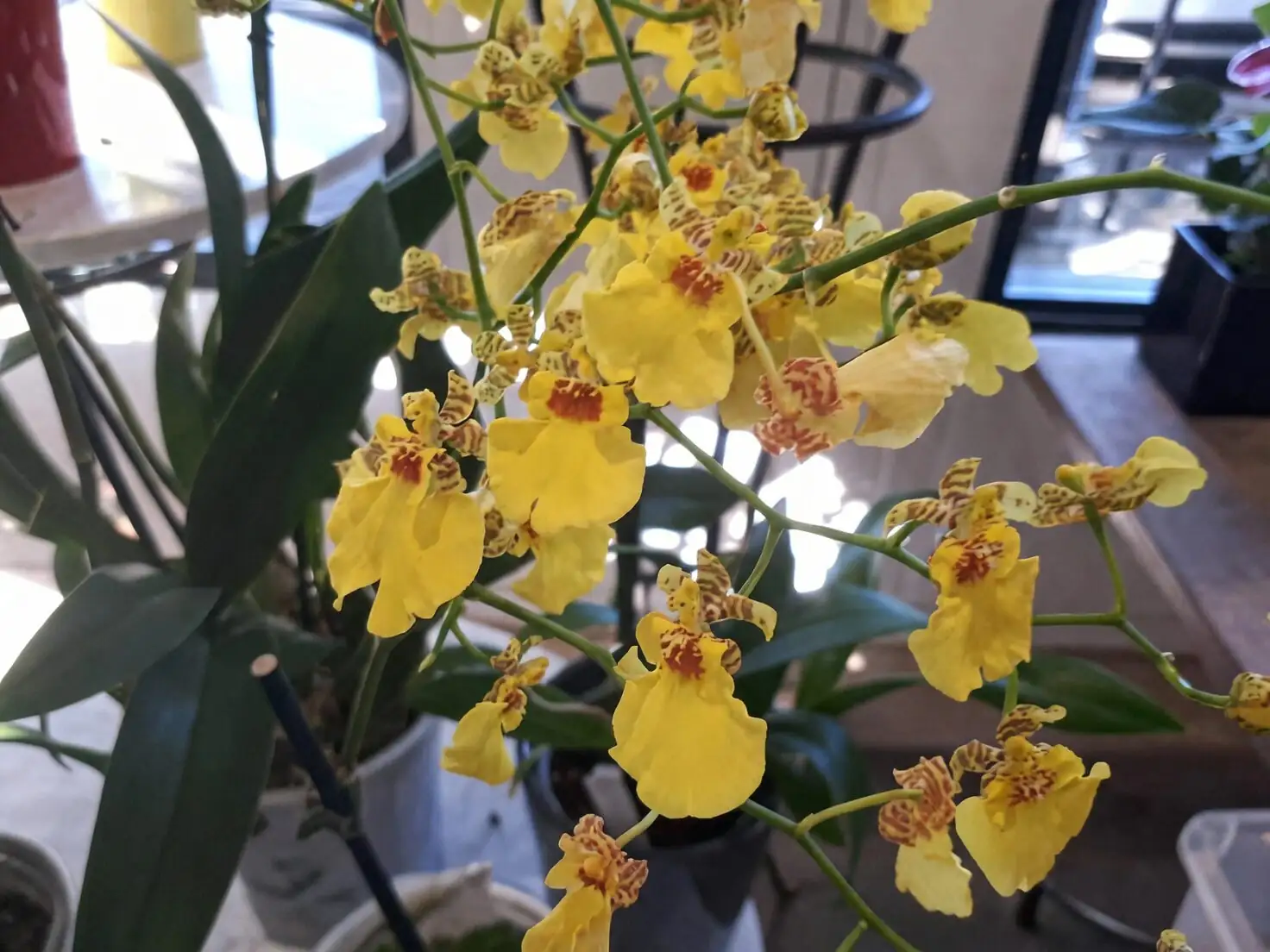
Pro tip: “Accordion” pleats on new leaves point to inconsistent moisture or low humidity during growth. Tighten your wet/dry rhythm and bump humidity (with airflow).
Myth 2: “Keep it constantly moist.”
The problem
- Constant wetness suffocates roots and invites rot. Oncidiums like moisture—but with oxygen around the roots.
- Pseudobulbs store water, yet the plant is still sensitive to extended drought when spiking or blooming.
The habit to adopt instead
- Aim for moist-then-almost-dry cycles. Think “freshly wrung sponge,” not “soaked towel” or “crunchy desert.”
- Choose a truly airy medium:
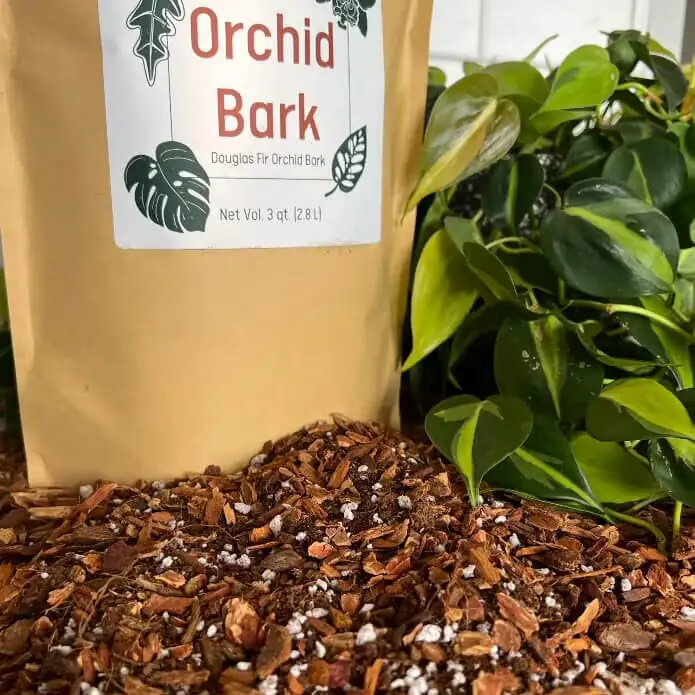
- Fine-to-medium orchid bark with perlite/charcoal is classic.
- You can blend a little sphagnum for moisture balance if your home is very dry, provided the mix still drains quickly.
- Alternatives: add pumice/lava rock/coarse sand/brick chips for gritty aeration. Mounted plants are great too—just water more often.
Myth 3: “Oncidiums are low-light orchids.”
The problem
- Low light is the fastest route to “leaves forever, flowers never.”
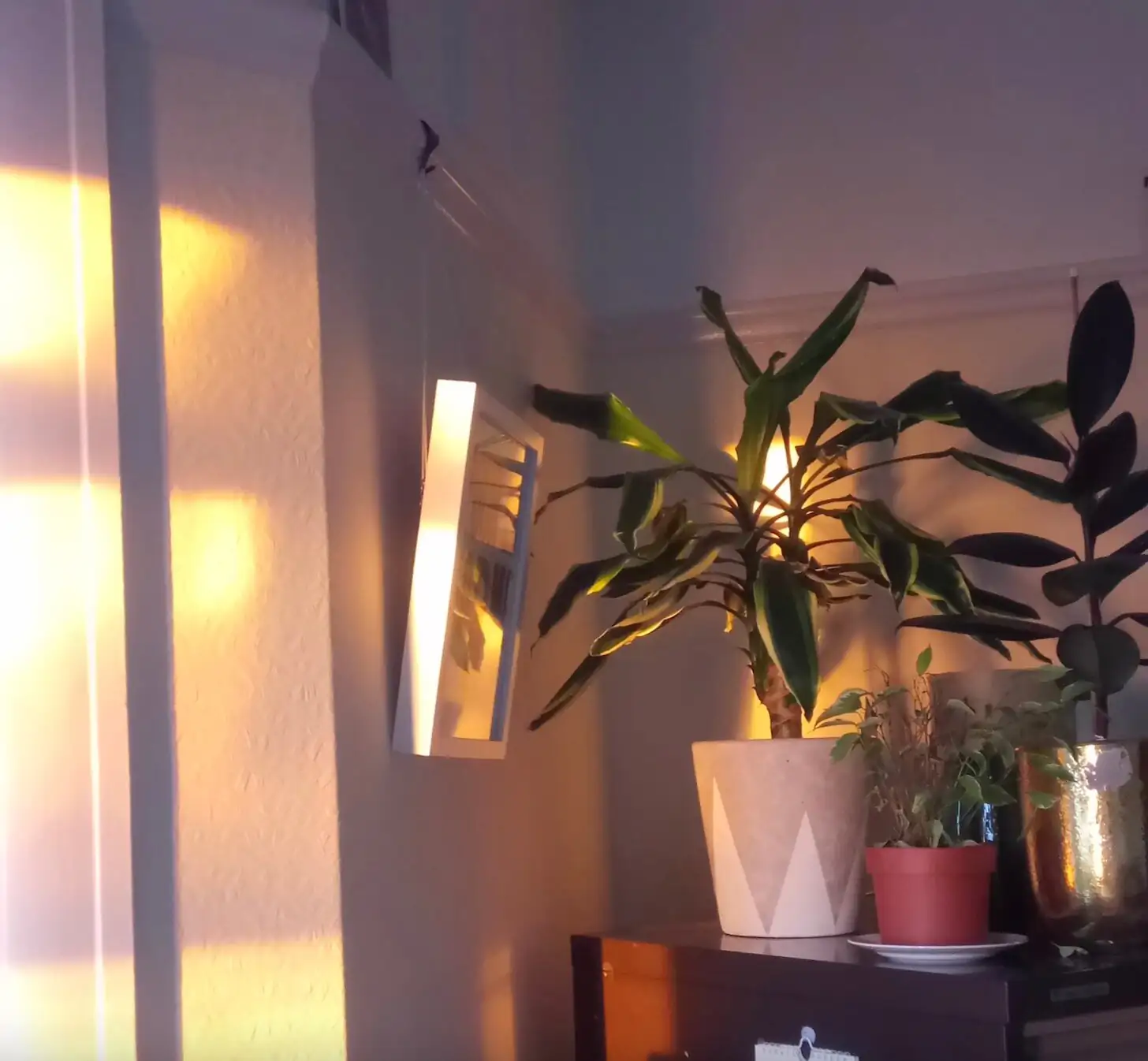
- While they aren’t sunbathers at midday, Oncidium-types want bright, filtered light—and often some gentle morning sun.
The habit to adopt instead
- Indoors: East windows are ideal (a couple of hours of soft morning sun). A bright, lightly shaded south or west window also works.
- Outdoors (warm months): Give seasonal shade and airflow.
- Late spring/early summer: about 30% shade.
- Midsummer: ~50% shade.
- Autumn: 20–30% shade as the sun weakens.
- Avoid harsh midday sun that can scorch leaves.
- Leaf color cues:
- Medium green with a slight yellow cast = good light.
- Very dark green = too dim; expect few or no blooms.
- Yellow patches/crispy tips = too much direct sun.
Myth 4: “Bigger pots are better.”
The problem
- Oversized pots stay wet longer, starving roots of air and risking rot.
- Oncidiums expand outward along a rhizome; they prefer snug quarters that dry predictably.
The habit to adopt instead
- Pot small and airy—typically 12.5–15 cm (5–6 in) wide for common home plants, adjusted to the root mass.
- Repot every 1–2 years or when the mix breaks down.
- Best timing: just before or as new growth starts (often spring).
- After repotting: keep in bright shade and go easy on water for 1–2 weeks to let cuts heal.
Myth 5: “Spraying the blooms keeps them fresh.”
The problem
- Wet flowers spot, brown, and bud blast accelerates in stagnant, damp air.
- Repeated misting at random times can keep leaves wet and invite leaf spot.
The habit to adopt instead
- Target humidity, not petals: Aim for 40–60% with gentle airflow.
- Pebble tray (pot above waterline), a small humidifier, or light morning mist on roots/leaves only—never on the blooms.
- Space plants for air movement so foliage dries within a few hours.
Light, temperature, humidity—dialed for Oncidiums
- Light: Bright, filtered/indirect light to gentle part sun. East windows shine; shaded south/west works with care.
- Temperature: Comfortable around 12–25°C (54–77°F) with cooler nights. Keep above about 8°C (46°F) in winter. If nights dip below ~10°C (50°F), keep the plant much drier.
- Humidity: 40–60% is a sweet spot. Pair any humidity boost with airflow.
Fertilizer that helps (and never burns)
- During active growth and bud initiation (roughly March–October):
- Feed lightly every 2 weeks with a balanced orchid fertilizer, or at about 1/4 strength every 2–3 waterings.
- Flush with plain water occasionally to prevent salt buildup.
- Reduce or pause feeding during full bloom and through the cooler winter rest.
Blooming, staking, and aftercare
- Many hybrids bloom in autumn, but timing varies by cultivar—some flower in winter, spring, or summer. With a mix of cultivars, you can see flowers most months of the year.
- Spike care:
- Provide steady moisture (not soggy) while spikes form and buds swell.
- Stake gently if a spike flops at 30–40 cm (12–16 in) to avoid breakage.
- After flowering: Let the spike brown, then cut near the base. Don’t remove living pseudobulbs; they continue to store energy for new growth.
How to pot, mount, and divide
- Potting media: Fine-to-medium bark blends with perlite/charcoal; optionally a little sphagnum for balance; or mount on cork/bark with attentive watering.
- Division: Best when the clump is mature. Divide so each section has at least 3–4 healthy pseudobulbs for fastest recovery (2 can work in excellent conditions). Afterward, keep in bright shade and go light on water for 1–2 weeks.
A simple seasonal game plan
- Spring: Increase light; resume regular watering as new growth starts; begin light feeding.
- Summer: Provide shade (30–50%) and airflow; water more frequently in heat.
- Autumn: Many bloom now; keep bright light and an even wet/dry rhythm.
- Winter: Cooler, brighter, and drier. Strongly reduce watering (especially below 10°C/50°F). Winter-blooming types may want slightly steadier moisture and bright light.
Troubleshooting quick wins
- Wrinkled pseudobulbs: Check roots and medium. If roots are healthy, increase watering rhythm during growth and raise humidity with airflow.
- Buds yellowing/dropping: Typically drought swings, a sudden environment change, or very dry air. Steady the watering schedule, lift humidity to ~40–60%, avoid hot dry heater air, and don’t spray the buds.
- Leaf spots/rot: Usually poor airflow or water sitting on leaves. Water early in the day, ensure the mix is airy, and space plants.
- Pests: Scale, mealybugs, spider mites, and aphids target tender growth/spikes. Treat early with insecticidal soap or horticultural oil labeled for orchids; improve airflow and refresh old media.
Where to place—and where not to
- Best placements: Bright east window, bright enclosed balcony, or a lightly shaded south/west window with airflow.
- Avoid: Frost, intense midday sun, and dry blasts from heaters or radiators. Outdoors year-round only in frost-free, warm regions (roughly USDA 10–12).
Buying guide: picking a plant that will perform
- Choose firm, plump pseudobulbs and clean medium-green leaves.
- Inspect for fresh, white to tan roots (not blackened or mushy).
- For the longest show, pick a plant with a mix of buds and newly opening flowers.
- In winter, plants already close to bloom often perform best at home.
Safety notes
- Generally considered non-toxic to people and commonly listed as non-toxic to cats and dogs. Still, discourage nibbling to avoid mild stomach upset.
Symbolism and “flower language,” unpacked
- Dancing Lady Orchids are widely associated with joy, celebration, and lively elegance—modern meanings born from the blooms’ flared, skirt-like lips that look like tiny dancers catching a breeze.
- Rather than ancient folklore, this is a contemporary, visual metaphor embraced by florists and gift-givers: an exuberant spray that reads as festive, cheerful energy. In weddings and celebratory arrangements, they signal movement, music, and delight—apt for a plant that often carries dozens (even hundreds) of fluttery blossoms.
Fun to know
- Many shop “Oncidiums” are actually complex intergenerics but grow the same way: airy roots, bright filtered light, and a steady wet/dry rhythm.
- A well-grown clump can put on a show-stopping display—think cloud of golden butterflies above a tidy fan of leaves.
The Oncidium care formula, distilled
- Bright filtered light with gentle morning sun
- Airy orchid mix in a snug pot (or mount)—never regular potting soil
- Deep watering, full drainage, then wait until the mix approaches dryness
- Moderate humidity (40–60%) with airflow; never spray the blooms
- Light, regular feeding in growth; ease up in winter and during peak bloom
- Cool-bright winters, warm-bright summers, always frost-free
Ditch the ice cubes, the oversized pots, the dim corners, and the dewy petals. Give your Dancing Lady an airy stage, bright lights, and a rhythmic watering beat—and watch those little dancers twirl for weeks.