

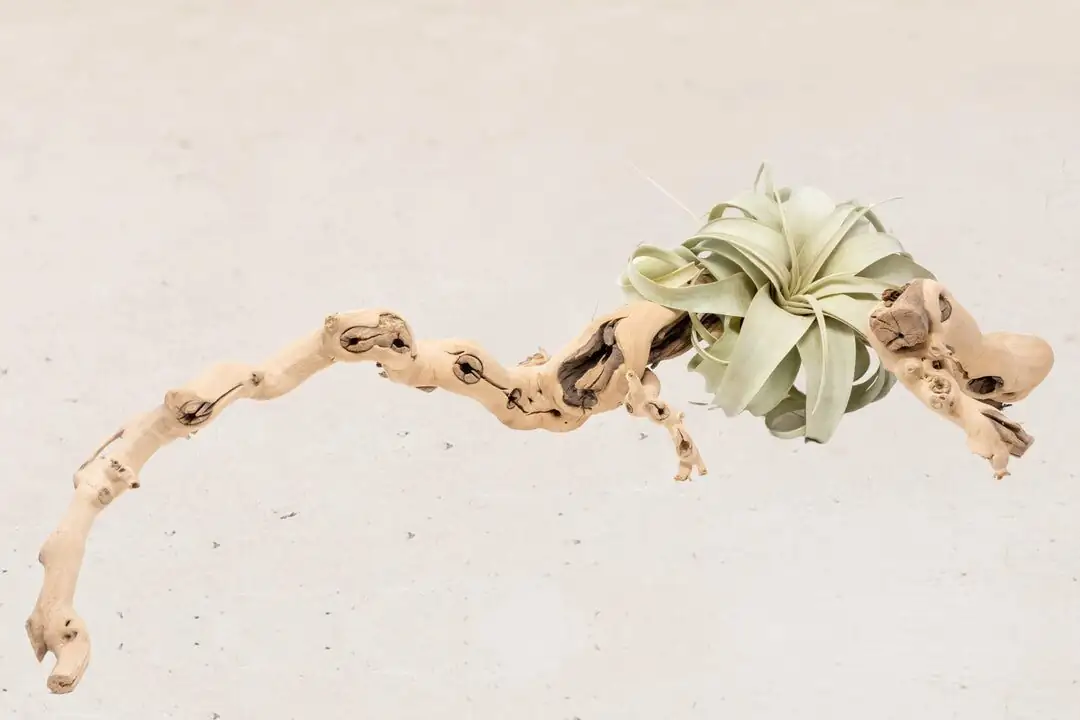
Meet the King of the Air Plants with a crown that needs to breathe. Tillandsia xerographica is all sweeping silver curls and sculptural poise—so your display should lift, frame, and showcase the rosette while keeping every leaf bathed in airflow. The right DIY mount doesn’t just look modern; it prevents trapped moisture, speeds drying, and keeps this desert-dwelling bromeliad happy for years.
Below you’ll find air-smart display ideas using mesh, wire, fishing line, and minimalist stands—each designed to let the rosette shine and dry fast after misting.
Design principles for a healthy, showpiece display
- Airflow is everything: Aim for 360° ventilation and fast dry-down after watering (ideally within about 4 hours).
- Minimal contact: Support the plant by a few outer leaves, not the core; never wedge the base into a tight cup.
- Light it right: Bright light with a little gentle direct sun is ideal—near an east window or filtered south light. Avoid deep shade and harsh, scorching midday sun.
- Warm and airy: 15–30°C (59–86°F). Keep frost-free and protect from chills below 10°C (50°F).
- Watering style: Prefer thorough misting over soaking. In very dry homes, a quick 5–10 second rinse can help—then dry quickly. Water earlier in the day, and always ensure strong airflow.
- No soil, no closed containers: Mount on wood, rock, stands, or mesh—avoid wet media, moss pockets, or sealed terrariums that trap moisture.
Smart materials: what to use (and what to skip)
- Best-in-class
- Stainless steel or aluminum wire (roughly 16–20 gauge for cradles; finer for ties)
- Nylon fishing line/monofilament (10–30 lb test) for near-invisible “floating” mounts
- Plastic-coated mesh or powder-coated metal grid for rust resistance and smooth edges
- Cork bark or well-cured driftwood for natural mounts
- Bonsai wire for tidy, adjustable ties (choose aluminum or anodized; not copper)
- Optional, plant-safe glue for special cases: E6000 is widely used and cures flexible and clear
- Avoid
- Copper wire (toxic to air plants)
- Tight cups, wet moss, or dense wraps that trap moisture at the base
- Oil-heavy leaf sprays
- Closed globes/terrariums unless vigorously ventilated
Pro tip: Wherever wire contacts leaves, soften the touch with a tiny sleeve of heat-shrink tubing, silicone airline tubing, or a wrapped bit of nylon thread.
Four hero builds that let the rosette breathe
1) Mesh cradle pedestal (airy from all angles)
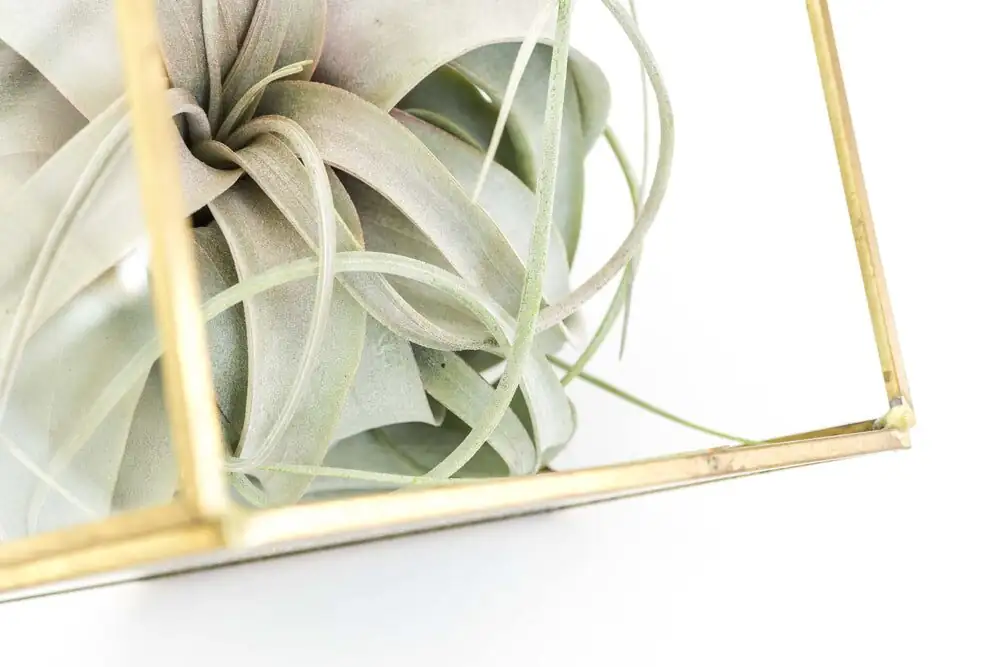
Gives the plant a “hovering” stage while keeping the core wide open.
Materials
- Plastic-coated hardware cloth (about 1/4 in grid)
- Tin snips, needle-nose pliers
- Zip ties or stainless wire
- Rubber bumpers or felt pads (optional feet)
Steps
1) Cut a circle of mesh, then clip triangular notches so you can curve it into a shallow bowl. Roll cut edges under to blunt them.
2) Create a short mesh pedestal under the bowl (like a thimble). Join with zip ties.
3) Test-fit the plant so only a few outer leaves rest on the rim; the base and center remain open.
4) Add rubber feet to raise the pedestal off the surface for extra airflow.
Why it works: The bowl supports outer leaves lightly, lifts the rosette up into moving air, and keeps water from pooling in the heart.
2) Wire “halo” stand (sculptural and adjustable)
A single loop frames the plant like a gallery piece.
Materials
- Aluminum or stainless wire (16–18 gauge)
- Round-nose pliers
- Small stone/wood base with drilled hole (or a heavy metal base)
Steps
1) Form a circular halo slightly larger than the plant’s mid-rosette.
2) Create two or three subtle “prongs” or saddles on the halo that touch only outer leaves.
3) Mount the halo on a vertical stem anchored to your base; adjust so the rosette sits slightly above center, facing the light.
4) Check that the core stays fully open and the plant can be lifted off easily for rinsing.
Why it works: Minimal contact, maximum visibility—and the open ring funnels airflow right through the rosette.
3) Floating fishing-line mobile (the “levitating rosette”)
Looks like it’s suspended in air; dries lightning-fast.
Materials
- Clear monofilament (10–20 lb)
- Small ceiling hook or window-frame hook
- Optional swivel (prevents twisting)
Steps
1) Tie a long main line to the hook. From the rosette’s outer leaves, thread three short lines as a tripod sling, knotting them to the main line above.
2) Adjust until the plant hangs level and secure, with nothing touching the center.
3) Hang near bright light with gentle air movement. Water by misting in place or untying one side for a quick sink-side rinse. Shake gently and rehang.
Why it works: Nearly invisible support and total exposure to air—ideal for fast drying and even light.
4) Minimalist tripod stand (the “pizza-table” hack)

A tiny three-legged perch that disappears under the curls.
Materials
- Small tripod stand (you can repurpose a clean “pizza saver” or bend one from stainless wire)
- Silicone caps or heat-shrink tubing for feet/tips
Steps
1) If DIY-ing, bend three equal legs from wire and join at the top, forming a low tripod.
2) Cap the feet and top tips with silicone to prevent scratches.
3) Rest the plant so two or three outer leaves perch on the top; nothing wedges into the core.
Why it works: Three-point contact is inherently stable and ultra-breathable, and the stand hides in the rosette’s shadows.
Wall and window displays that breathe
Grid panel gallery
- Mount a powder-coated metal grid 2–5 cm off the wall for rear airflow.
- Hang xerographica on S-hooks or a U-shaped wire cradle that cups outer leaves.
- Place near an east/south window with filtered midday sun; rotate weekly for even growth.
Driftwood rail with bonsai wire
- Choose a dry, well-cured branch; never wrap wet moss around the base.
- Use bonsai wire or fishing line to anchor by the roots or outer leaves, leaving the center untouched.
- Display horizontally so water can’t pool after misting; if needed, tilt to drain and dry.
Suspended ring in a bright window
- Hang a metal or bamboo ring, then add a minimal wire saddle under the rosette.
- Keep 360° clearance so air slips around every curl.
Watering and ongoing care for mounted plants
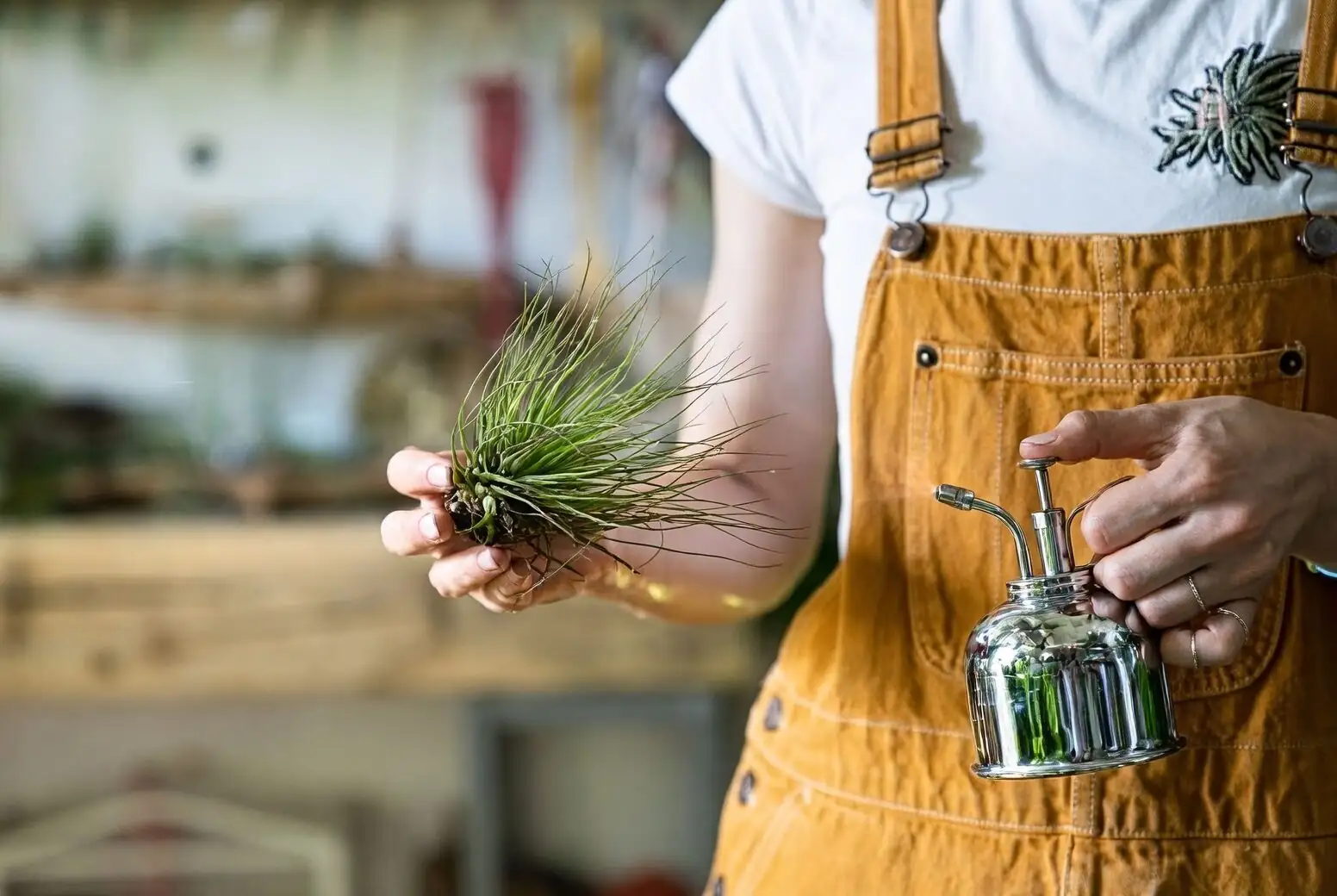
- Watering rhythm: Mist thoroughly, then ensure full dry-down within about 4 hours. In very dry homes, a quick 5–10 second rinse helps—then shake gently.
- Timing: Water earlier in the day; prioritize airflow every time.
- Light feeding: Use a bromeliad/air-plant fertilizer at 1/4 strength every 2–4 weeks in spring–summer (monthly is fine). Rinse with plain water periodically to prevent mineral buildup.
- Cleaning: Dust dulls that silver glow. Use a soft brush or a gentle rinse, then dry fast.
- Pests: Watch for mealybugs/scale. Spot-treat with a cotton swab dipped in 70% isopropyl alcohol. Avoid oil-heavy sprays on air plants.
- Seasonal tweaks: Brighter light and slightly more frequent misting in spring–summer; reduce watering in fall–winter but keep light strong and temperatures warm.
Note on soaking: This species generally prefers misting and quick dry-down. If you must soak to rescue a severely dehydrated plant, keep it very brief and ensure it dries fully within a few hours.
Designing for blooms and pups
- Allow headroom: A mature xerographica may send up a tall, long-lasting spike with small purple tubular flowers. Leave space above your mount.
- After the show: The mother slowly declines—normal for bromeliads—but produces pups. Either keep them attached for a fuller clump or separate when each pup is about 1/3–1/2 the size of the mother.
- Easy remounts: Wire, mesh, and fishing line make it simple to adjust your display as the family grows.
Quick troubleshooting
- Leaf tips browning? Often very dry air, inconsistent watering, or mineral-heavy water. Try slightly more frequent misting, use rain/filtered water, and keep it bright with strong airflow.
- Leaves greener/softer? Likely too little light. Move closer to bright windows with filtered sun.
- Base dark or sour smell? That’s rot risk from staying wet. Open the display, improve airflow, shorten watering sessions, and ensure fast drying.
Styling tips to let the rosette reign
- Embrace negative space: Give the plant a visual “stage” with breathing room around those curls.
- Go low and light: Minimal stands in matte black, brushed steel, or clear lines make the silver pop.
- Shadow play: Position near a wall or tabletop lamp to cast dramatic rosette shadows in the evening.
- One statement, not many: A single xerographica often looks more luxurious than a crowded cluster.
A note on meaning
With no need for soil and a flair for thriving on light and air, Tillandsia xerographica is often linked to independence, resilience, and modern minimalism. Displaying it on near-invisible lines, airy halos, or spare pedestals isn’t just stylish—it echoes the plant’s nature: self-possessed, sculptural, and perfectly at home suspended between earth and sky.
Happy building—and may your King of the Air Plants sit high on a throne of airflow.