
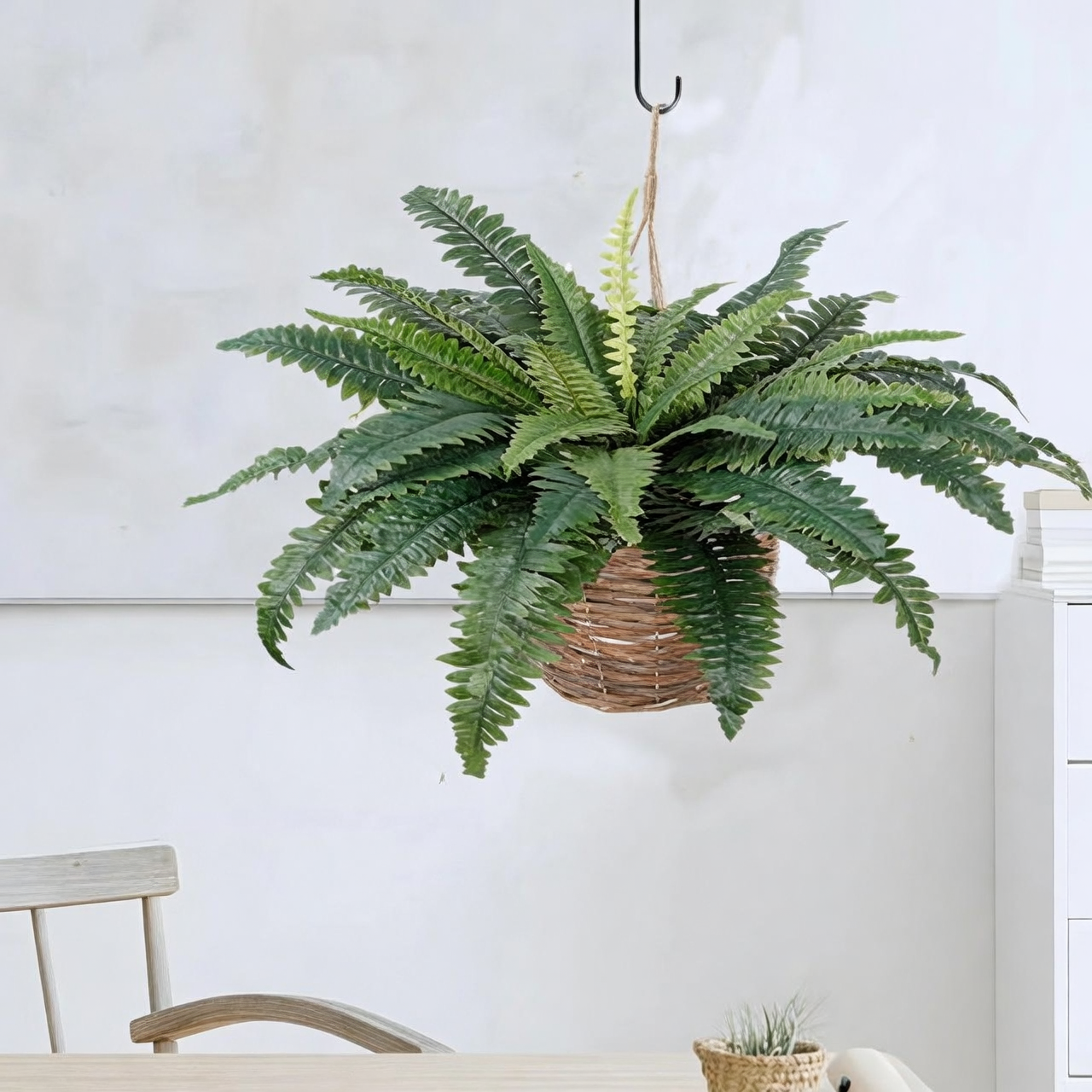
Think a plant needs flowers to put on a show? Meet the fern that throws a garden party without a single petal. Nephrolepis exaltata—better known as the Boston fern—spreads by spores, pops out baby plantlets on runners, and fountains into a feathery green cascade that makes rooms feel instantly softer. It’s botanical choreography, minus the bloom drama.
Meet Nephrolepis exaltata (Boston Fern)
- Family: Nephrolepidaceae
- Origin: Tropical Americas, including Florida and the West Indies; now grown worldwide as a houseplant
- Look: Evergreen, finely divided fronds that rise, then arch and spill—think “soft green fountain”
- Size indoors: Usually 30–90 cm tall and 60–90 cm wide; individual fronds can reach up to about 120 cm in great conditions
- Nicknames: Boston Fern, Sword Fern, Ladder Fern, Tuber Ladder Fern, Wild Boston Fern
Bite‑size revelations: how a “non‑flowering” plant multiplies like mad
No flowers, no problem: spore power
- Ferns don’t make flowers or seeds—they make spores.
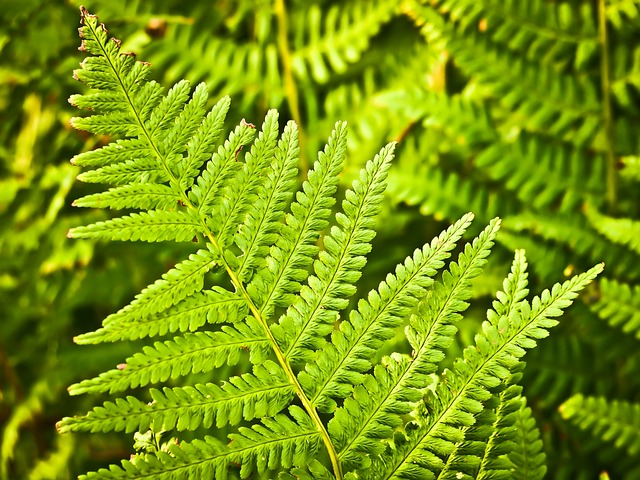
- On mature fronds, look for tidy, dot-like clusters (sori) on the undersides. When ripe, these release dust-fine spores that ride air currents like microscopic confetti.
- With patience and humidity, those spores can start a whole new generation—slow, yes, but totally magical for plant geeks.
Runners on a mission: stolon plantlets
- Boston ferns don’t just rely on spores; they also sprint across space with slender runners (stolons).
- Those runners tip-root or form little plantlets you can detach and pot up. It’s why a hanging basket fills out fast—and why one fern can become five before you’ve finished your coffee.

The “green fountain” explained (fern physics, but fun)
- Fronds unfurl as fiddleheads, grow upward, then arch as:
- gravity and frond weight increase toward the tips,
- tissues stiffen unevenly along the frond,
- and new fronds keep pushing from the crown.
- Arrange dozens of arching fronds in a circle, and you get that signature flowing dome—like a slow-motion fireworks burst in green.
The comeback kid: bounce‑back after a hard cutback
- Got crispy tips or a tired thicket? This fern tolerates a bold refresh.
- Trim out yellowed or broken fronds at the base regularly. For severely stressed plants, a harder cutback often triggers fresh growth—just pair it with warmth, moisture, and high humidity for the rebound.
How to keep the fountain flowing (care that actually works)
Light
- Bright, indirect light to partial shade.
- Gentle morning sun is fine; avoid strong midday/afternoon rays that scorch fronds.
- Too little light = sparse, stretchy growth.
Water
- Keep evenly moist in spring–early autumn. Water thoroughly when the top 2–3 cm (about 1 in) begins to dry, then drain well.
- Don’t let the root ball bake bone-dry. Don’t leave it soggy.
- Winter: water a bit less, but never let it fully dry.
- Pro tip: every couple of weeks, soak the pot for ~10 minutes and drain to rehydrate evenly.
Humidity
- Aim for 50–70%+ for lushest fronds.
- Bathroom or kitchen perches can be ideal—if light and ventilation are decent.
- Use a humidifier, pebble tray (keep pot above waterline), grouping, or regular misting. Keep some airflow to prevent fungal grumbles.
Temperature
- Happy zone: 16–24°C (61–75°F).
- Brief dips to ~10–12°C (50–54°F) are tolerable, but keep it above ~7°C (45°F).
- Prolonged heat above ~35°C (95°F) stresses it—boost humidity and shade if it’s sweltering.
Soil
- Moisture‑retentive yet free‑draining. Try a peat/leaf‑mold–based mix with perlite or coarse sand.
- Slightly acidic is preferred. Avoid heavy, waterlogged media.
Feeding
- Growing season: balanced liquid fertilizer at 1/2 strength monthly (or more diluted every 2 weeks April–September).
- Flush the pot with plain water now and then to prevent salt buildup (a sneaky cause of brown tips).
- Pause feeding in late autumn/winter.
Pruning
- Snip yellow, brown, or broken fronds at the base for a crisp look.
- Light thinning improves airflow.
- Hard cutback for triage cases often works—pair with warmth and humidity.

Repotting
- Every 2–3 years in spring, or when root-bound.
- Step up one pot size, refresh mix, and trim any rotten roots.
- Multiple clumps in a 15–20 cm (6–8 in) basket = instant, full fountain.
Where to put it
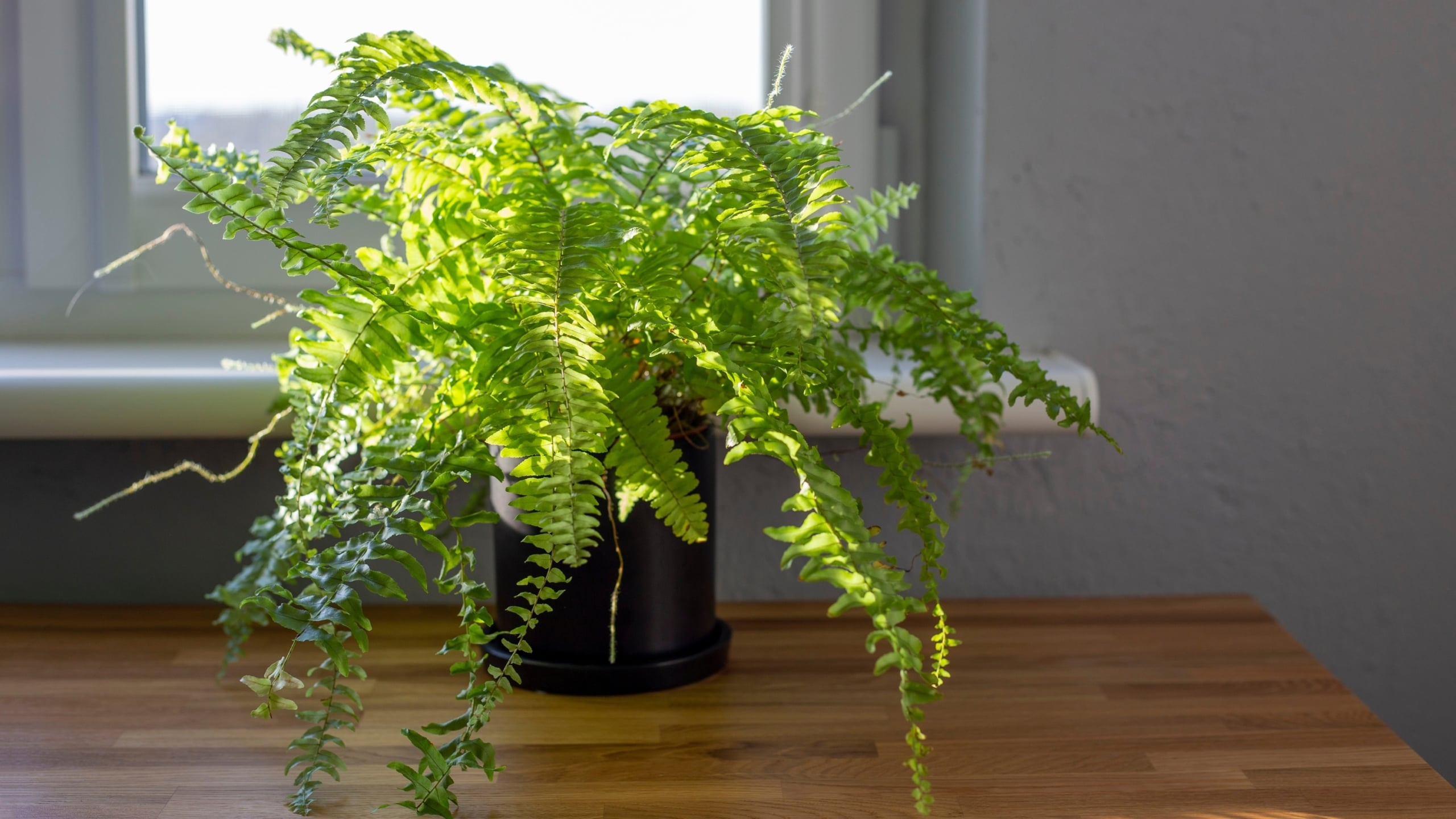
- Near east- or north-facing windows, or set back from a brighter window with filtered light.
- Keep away from heaters, AC blasts, and harsh sun through glass.
- Hanging baskets, plant stands, and tabletops all work—just give it room to spill.
Multiply your fern family (easy to advanced)
Easiest: division
- Best in spring to early summer.
- Split a healthy clump, pot into fresh mix, and keep evenly moist. Expect 2–3 weeks to reestablish.
Runner plantlets
- Detach rooted plantlets along stolons and pot them up. Baby ferns in record time.
Advanced: spores
- Harvest ripe spores from undersides of mature fronds.
- Sow on a fine, sterile peat/leaf‑mold medium with a bit of grit for air.
- Keep consistently moist and humid; prothalli may appear in 8–10 weeks. Slow but rewarding.
Optional experiment: water culture
- Rinse off soil, anchor the crown in inert media (expanded clay, stones), keep roots in clean water.
- Refresh regularly; feed lightly in the growing season. Monitor root health closely.
Quick display ideas
- Hanging basket by a bright window: maximum fountain effect.
- On a pedestal stand: let fronds drape like green fringe.
- Group with other humidity lovers (calatheas, fittonias) for a mini cloud‑forest vibe.
Troubleshooting (fast fixes)
- Brown tips? Usually low humidity or a too-dry root ball; also possible salt buildup or harsh sun. Boost humidity, water evenly, flush salts, soften light.
- Sparse, lanky growth? Increase light (indirect), feed modestly, and consider a spring repot.
- Pests: spider mites (love dry air), mealybugs, scale, whiteflies. Rinse fronds, isolate, and use insecticidal soap or neem.
- Diseases: root rot and occasional fungal blights in soggy, stagnant conditions. Use airy mix, thorough watering with full drainage, and never leave pots standing in water.
Outdoor notes
- Frost‑tender; best year‑round outdoors in USDA Zones 10–11 (sometimes 9–11 in sheltered microclimates). Provide bright shade and steady moisture. Bring inside before cold snaps.
Pet‑friendly bonus
- Generally regarded as non‑toxic to humans, cats, and dogs. Still, nibbling can upset sensitive tummies—decorate, don’t dine.
A little history and “flower language” for a plant with no flowers
- Victorian craze alert: a distinctive, arching form of Nephrolepis exaltata took off in the late 1800s, turning the “Boston fern” into a porch and parlor staple.
- Symbolism: ferns are long associated with freshness, sincerity, renewal, and a sense of calm—like a pocket of woodland hush indoors. In the spirit of “flower language,” ferns’ meanings often reflect hidden places and quiet resilience rather than petals and perfume, making Boston fern the emblem of gentle rejuvenation at home.
Fast facts to impress your plant pals
- It’s a fern—no flowers, no seeds—just spores (and plenty of them).
- It also spreads by stolons that make baby plantlets. Propagation party!
- Loves bright, indirect light, evenly moist soil, and humid air.
- Classic arching “fountain” form from frond biomechanics and dense, circular growth.
- Stressed plant? With warmth and humidity, it often rebounds after a hard cutback.
- Frequently cited on “air-improving plant” lists; in real rooms, the fresh feel comes from dust-trapping foliage and humidity—any VOC removal impact depends on ventilation and plant mass.
Treat Nephrolepis exaltata like a softly lit, well-hydrated diva, and it will reward you with a year‑round performance—no flowers needed.