

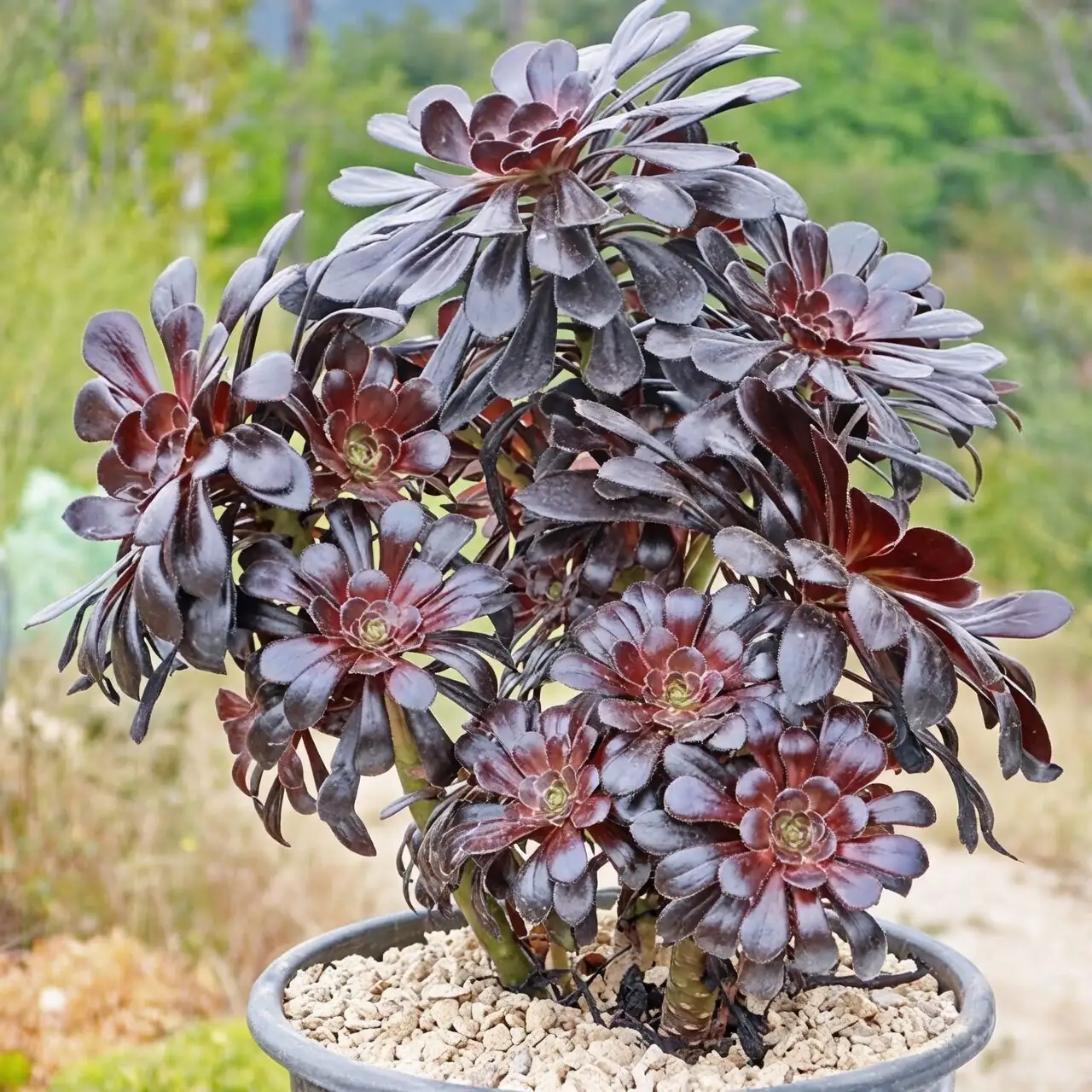
Think of a rose that learned to armor itself in velvet night. That’s the allure of Aeonium arboreum ‘Zwartkop’—the Black Rose Aeonium, or in Chinese, Hei Fashi (黑法师). In the last decade, this sculptural succulent became a social‑media darling across China’s balcony gardens and plant forums, and with it bloomed a modern “flower language” (花语): strength wrapped in elegance, and—after the flowers fade—resilient new beginnings.
Meet the plant behind the poetry
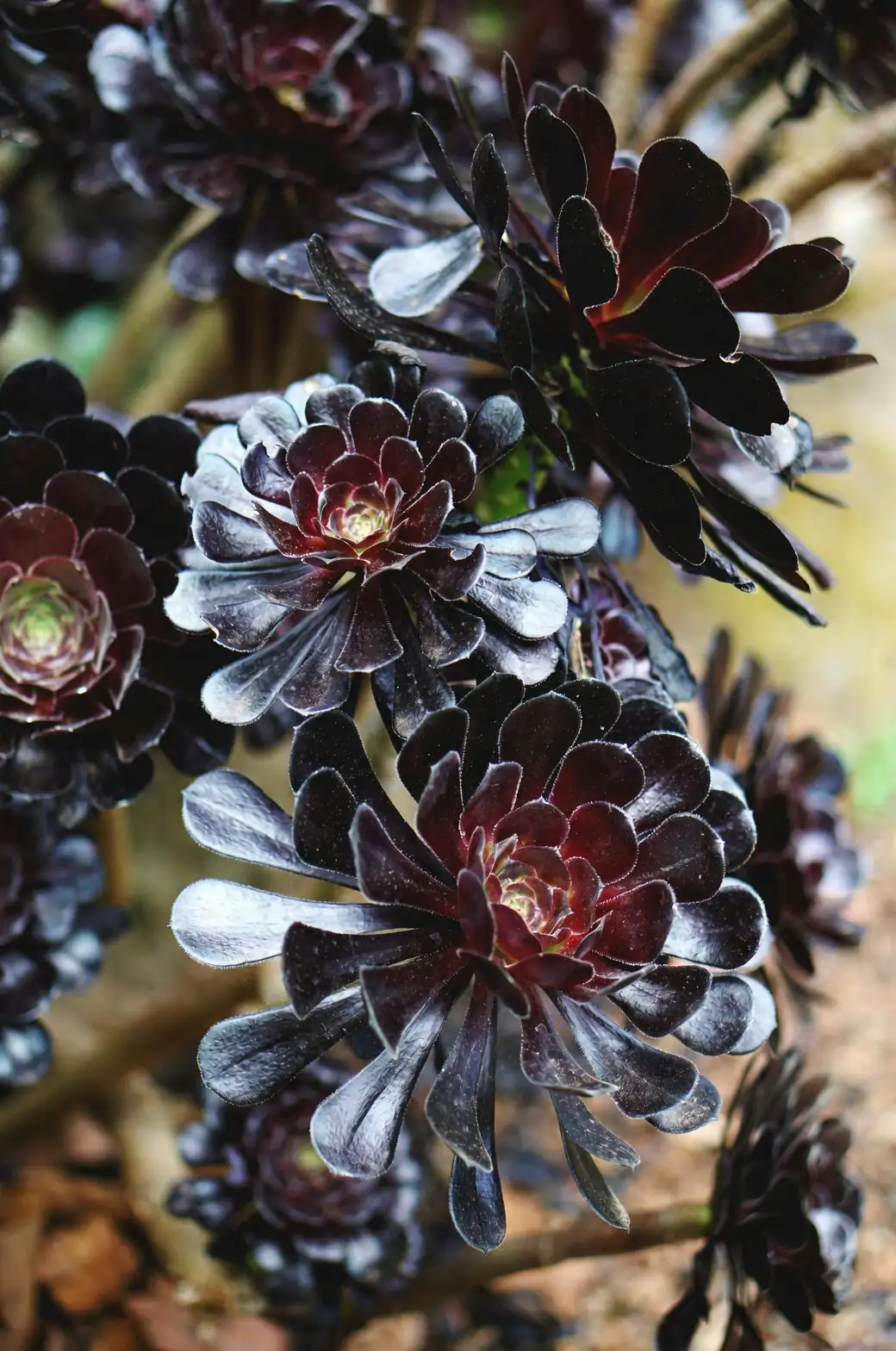
- Botanical identity: Aeonium arboreum ‘Zwartkop’ (Family Crassulaceae)
- Common names: Black Rose Aeonium, Aeonium ‘Zwartkop’, Black Tree Aeonium; Chinese: 黑法师
- Origins: A dark‑leaved cultivar of Aeonium arboreum, a species native to the Canary Islands (Macaronesia)
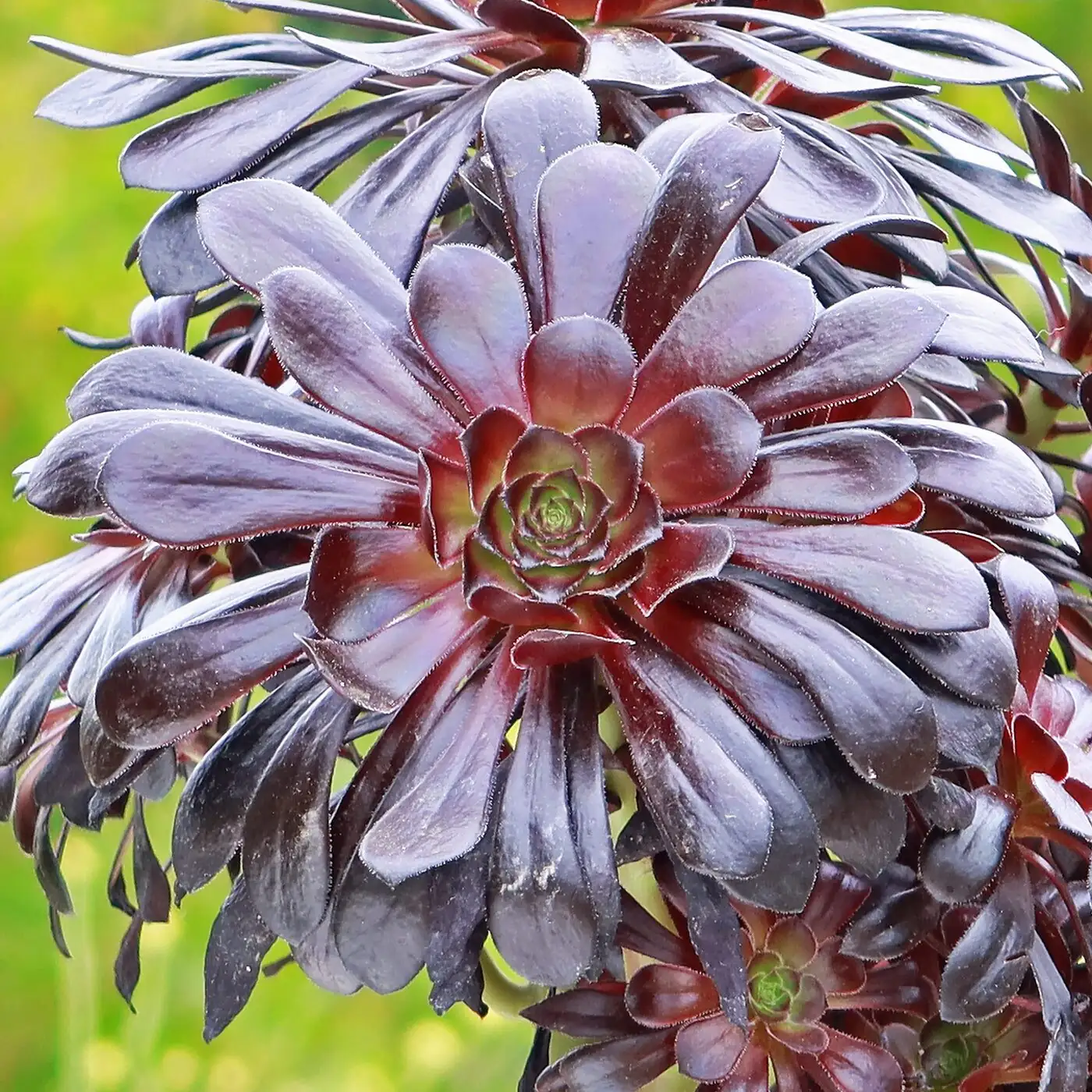
- Look and habit: Glossy, spoon‑shaped leaves build tight rosettes so deep burgundy‑purple they read almost black—like a bouquet of midnight roses perched on woody, branching stems
- Seasonal rhythm: Most active from autumn through spring; slows or semi‑rests in hot summer
- Flowers: Mature rosettes send up conical sprays of tiny, star‑shaped yellow blooms in spring; that particular rosette then declines, while side rosettes carry on
How modern Chinese succulent culture shaped its flower language
Flower language in China is not static scripture—it’s living culture. For succulents especially, much of today’s hua yu coalesced online, where millions trade cuttings, care hacks, and symbolism. Hei Fashi’s meanings crystallized from what the eye sees and what the plant does.
The “black rose” look: cool elegance with steel in its spine
- The near‑black rosette resembles a rose in permanent bloom—sleek, modern, self‑possessed.
- Its poise under bright sun and low humidity makes it an emblem of urban composure: refined, but unflinching.
The bloom‑and‑regenerate arc: endings that spark beginnings
- A flowering rosette bows out after its yellow stars fade (it’s monocarpic), but the plant usually persists by way of offsets.
- In hua yu, this reads as a graceful letting‑go of the old to fuel the new—perfect for chapter changes: graduations, career pivots, or recovery after a hard season.
The slow summer, strong cool‑season growth: strength with patience
- Aeoniums often idle in hot summers, then surge when the air cools. The message: conserve energy wisely, act when conditions are right.
Put together, modern Chinese succulent communities celebrate Hei Fashi as a talisman of quiet power, chic restraint, and resilient rebirth.
Feng shui readings: grounding elegance, water‑calm wisdom
While interpretations vary by school and practitioner, contemporary feng shui enthusiasts often read Black Rose Aeonium through the lens of the Water element (Kan trigram):
- Energetic notes: transformation, depth, inner wisdom, and emotional steadiness
- Directional cue: commonly placed toward the North (a Water sector) to encourage clarity and adaptable flow
- Aesthetic cues: round or oval pots in black or deep blue echo Water’s contours and tones
Practical balance matters:
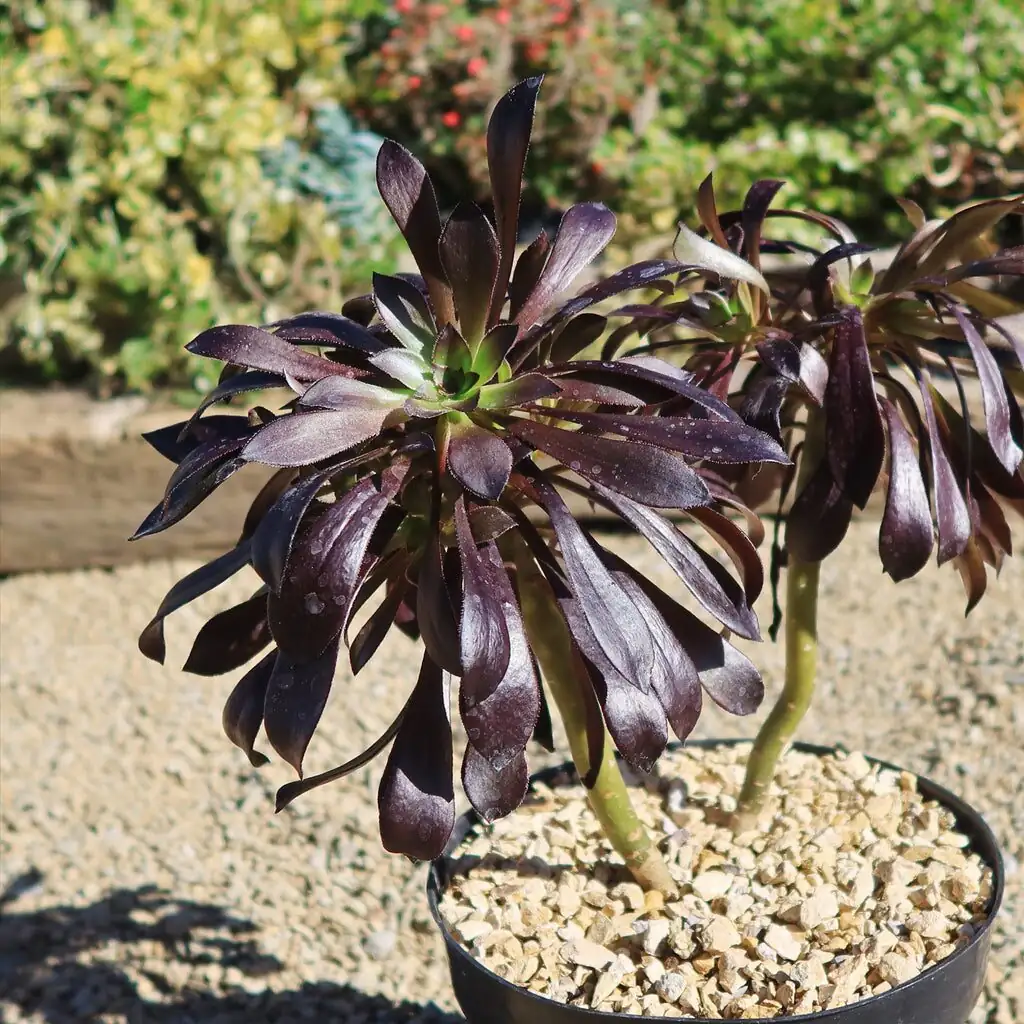
- Light is non‑negotiable: place in the brightest window you have; sheer a harsh midday hotspot behind glass to avoid scorch.
- Water as symbol ≠ water in the pot: keep the soil fast‑draining and never waterlog it, or you invite rot and stagnant “Qi.”
- Harmonizing companions: pair its dark rosettes with lighter, fine‑textured succulents to balance yin/yang and highlight contrast.
Gift‑giving: what your Black Rose Aeonium says without words
When you give Hei Fashi, you’re sending a sleek, living manifesto.
- To the steadfast friend: “Strength looks good on you.”
- To the new graduate or entrepreneur: “Elegance under pressure—may each ending seed a new start.”
- To a partner: “Mystery, loyalty, and the courage to evolve—together.”
Gifting tips:
- Choose a compact, symmetrical rosette with firm, glossy leaves.
- Present it in a breathable pot with drainage; black or cobalt glaze elevates the look and nods to feng shui’s Water motif.
- Tuck in a care card: brightest light; water deeply then drain, but keep soil almost dry in hot summer; protect from frost.
Keeping the symbolism alive: care that deepens color and character
Want those rosettes to stay nearly black and perfectly tight? Treat it like the architecture plant it is.
Light
- Full sun to very bright light; bright partial shade is tolerated.
- Indoors: a south or east window is ideal; pull back from scorching midday glass in heatwaves.
- Too little light = greener, stretchier growth.
Water
- During active growth (autumn–spring): water thoroughly, let excess drain, and water again when the top layer dries. Never sit in a saucer of water.
- Summer semi‑dormancy: keep the mix almost dry; offer small sips only if rosettes wrinkle.
- Winter in cool rooms: go drier to avoid rot.
Temperature and humidity
- Happy around 10–24°C (50–75°F), strongest growth near 20–25°C (68–77°F).
- Keep frost‑free; above ~6°C (43°F) is a practical minimum.
- Low to average household humidity with good airflow is best.
Soil and pots
- Use a fast‑draining cactus/succulent mix cut generously with grit, coarse sand, or pumice.
- Repot in spring every 2–3 years (or yearly for fast growers), moving up one size with fresh mix.
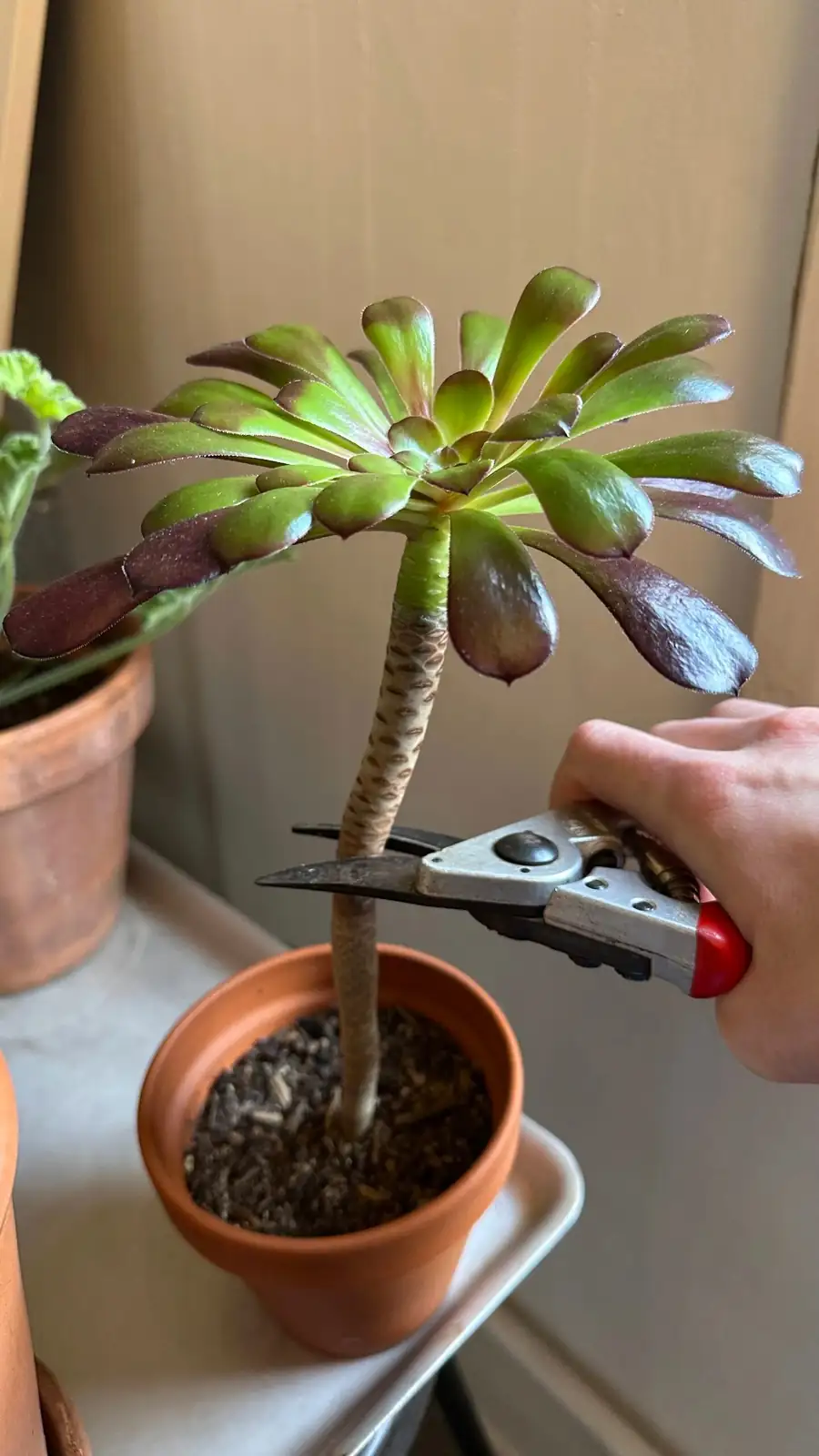
Pruning and shaping
- Groom away dried lower leaves.
- After flowering, wait for the blooming rosette to dry, then remove it; the plant carries on via side rosettes.
- To refresh shape, cut back leggy stems; many growers restart from cuttings every 2–3 years.
Propagation (your built‑in “new beginnings”)
- Take a healthy rosette with a short stem; let the cut end callus for several days.
- Set into a dry, gritty mix; begin light watering once roots form—often in about 3–4 weeks under good conditions.
Health and gentle safety
- Watch for mealybugs, aphids (on flower stalks), whiteflies, and scale; treat early with insecticidal soap or horticultural oil.
- The biggest risk is rot from soggy soil plus low light.
- Not known as highly toxic, but sap can irritate sensitive skin—keep away from pets and children and wash hands after pruning.
Note: It thrives in open displays with airflow; sealed terrariums are too humid and dim for long‑term success.
Bloom, then begin again: tending the moment
Spring is your best bet for that golden burst of starry flowers. When your rosette does bloom:
- Celebrate the milestone—this is the plant’s reproductive crescendo.
- After the show, let the flowering rosette dry, then remove it cleanly.
- Encourage side rosettes with bright light and careful watering; take cuttings if you want to share the legacy.
In the language of modern Chinese succulent culture, Black Rose Aeonium’s message is contemporary yet timeless: be elegant but unafraid, let go when it’s time, and trust that new rosettes—new stories—are already forming at the edges. It’s not just a plant on your windowsill; it’s a daily lesson in poised resilience, written in velvet petals of night.