

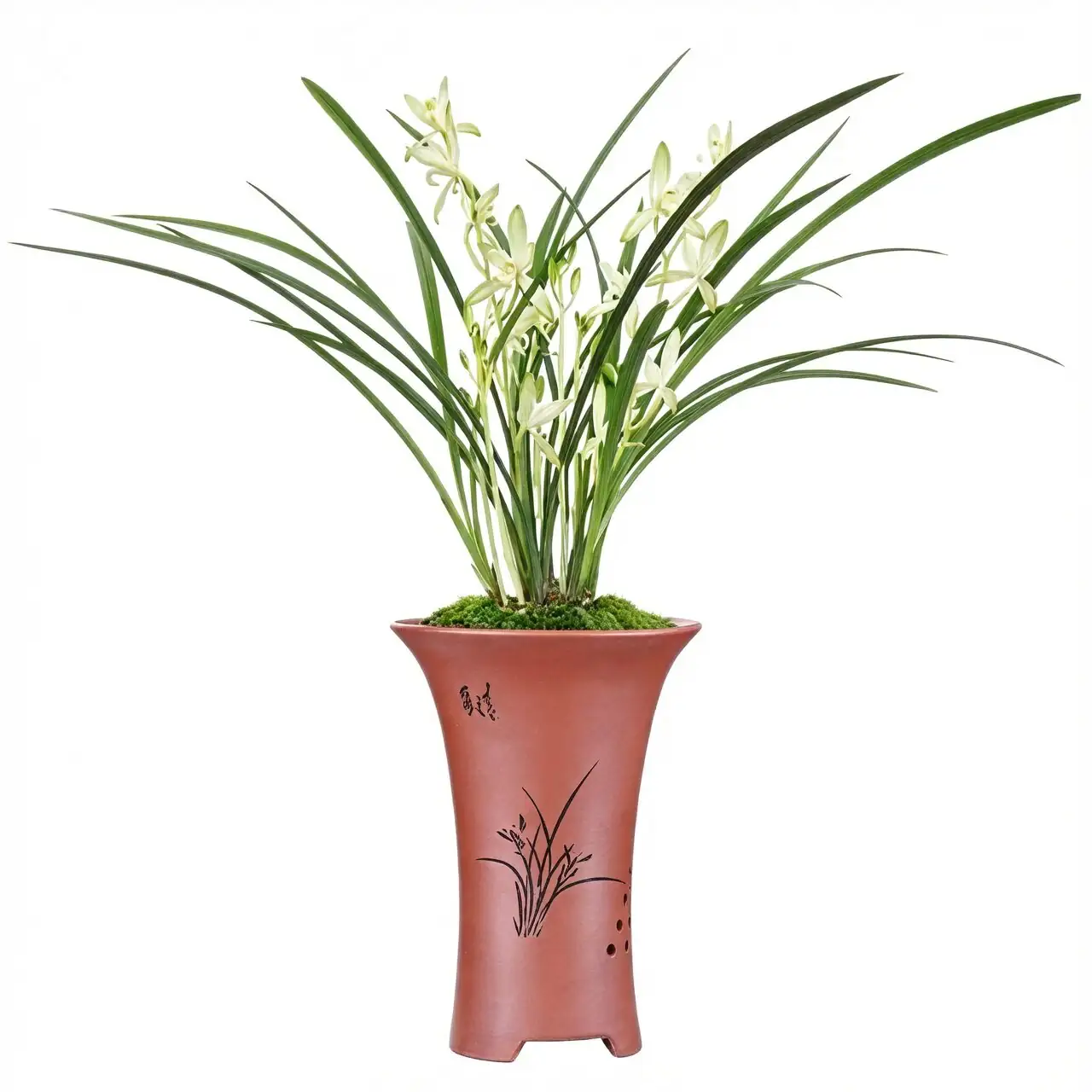
Forget the magic recipe. With Cymbidium goeringii—the Chinese Cymbidium or “spring orchid”—success hinges less on the potting ingredient list and far more on air, timing, and restraint. Think of this orchid as a perfumed athlete: it breathes best in a light, well-ventilated mix, performs on a seasonal schedule, and stumbles the moment you smother its roots or drench its crown.
Meet the orchid of quiet charisma
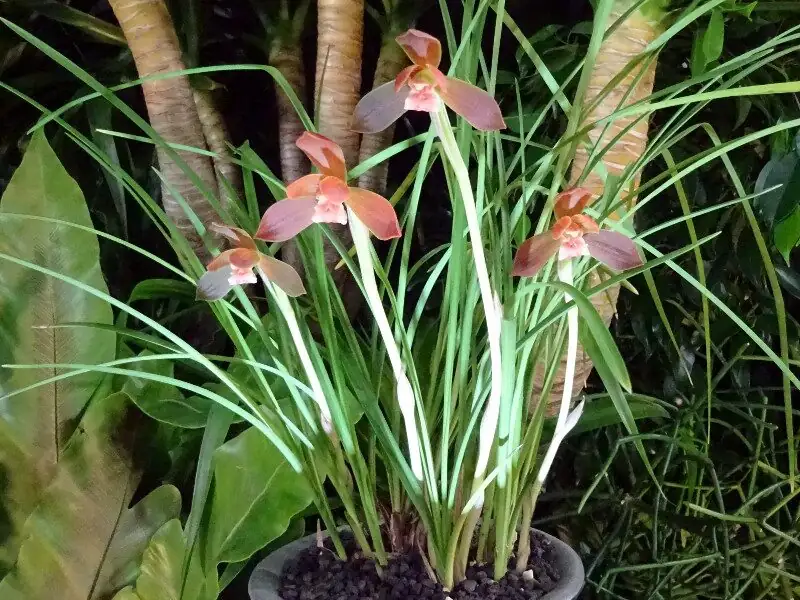
Cymbidium goeringii forms tidy clumps of deep-green, grassy leaves and sends up a few waxy, star-shaped flowers in winter to spring. The legend is its fragrance—rich, sweet, and almost impossibly refined. Native to China, Japan, and the Korean Peninsula, it’s traditionally grown in pots where light, airflow, and careful watering can be precisely managed.
- Height: typically 20–40 cm (8–16 in) in cultivation
- Season: flowers in winter to spring
- Habit: clump-forming sympodial orchid with small pseudobulbs
- Personality: cool-growing, shade-loving, strongly fragrant, sensitive to waterlogging
Myth 1: “There’s one perfect potting mix.”
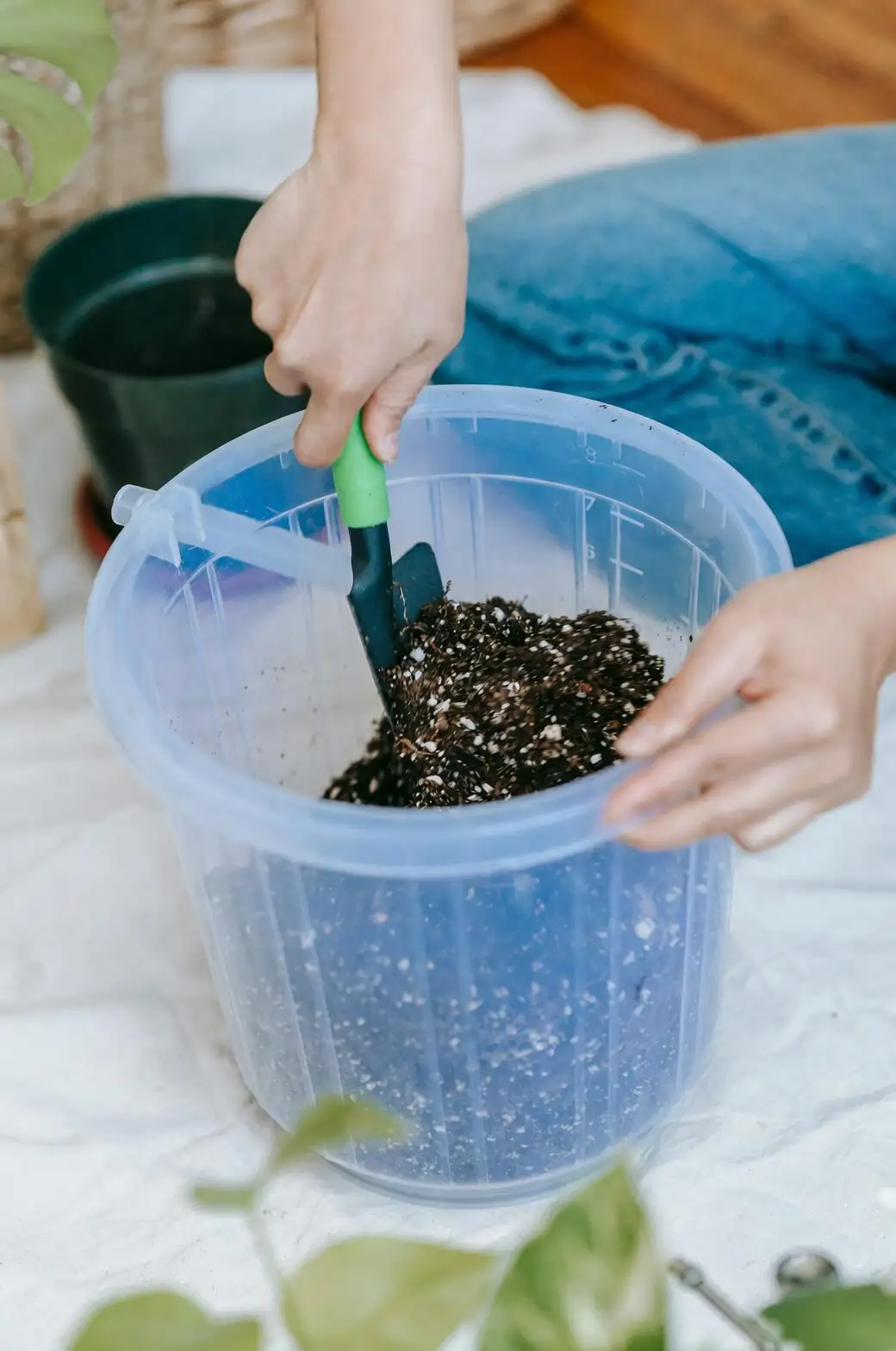
What you put in the pot matters—but not as much as how the mix behaves. The goal is unwavering: a very airy, fast-draining medium that never stays soggy yet holds a whisper of moisture.
What the roots actually want
- Ample oxygen around roots and rhizomes
- Quick drainage so water never pools or stagnates
- Even humidity in the root zone without a cold, wet core
Build structure first, then choose ingredients
You can hit that target with many materials if you keep porosity high and water moving:
- Organic-leaning blends: leaf mold, peat, long-fiber moss, composted bark/wood chips, coconut coir, plus coarse partners like pumice, brick chips, charcoal, and vermiculite.
- Granular/mineral blends: modern growers increasingly use layered, rinsed, granular media (for example, pumice with Kanuma-like particles and perlite/hard pumice) to keep flow-through and air-filled porosity high. Rinse fines, use coarser pieces low in the pot and finer near the top, and keep the surface loose.
Pro tip: pick a deep, well-drained pot, lay a coarse drainage layer (shards, brick chips) at the base, and leave about 2 cm (0.8 in) headspace. It’s the pot-plus-particle architecture that keeps this orchid smiling.
Myth 2: “Never use moss.”
Long-fiber sphagnum has a bad reputation because it’s easy to compact and overwater. Yet some skilled growers raise C. goeringii in mostly moss with beautiful results. The difference? Ruthless control of ventilation and timing.
When moss-heavy mixes actually work
- Ventilation is excellent: strong, continuous airflow prevents a cold, wet core.
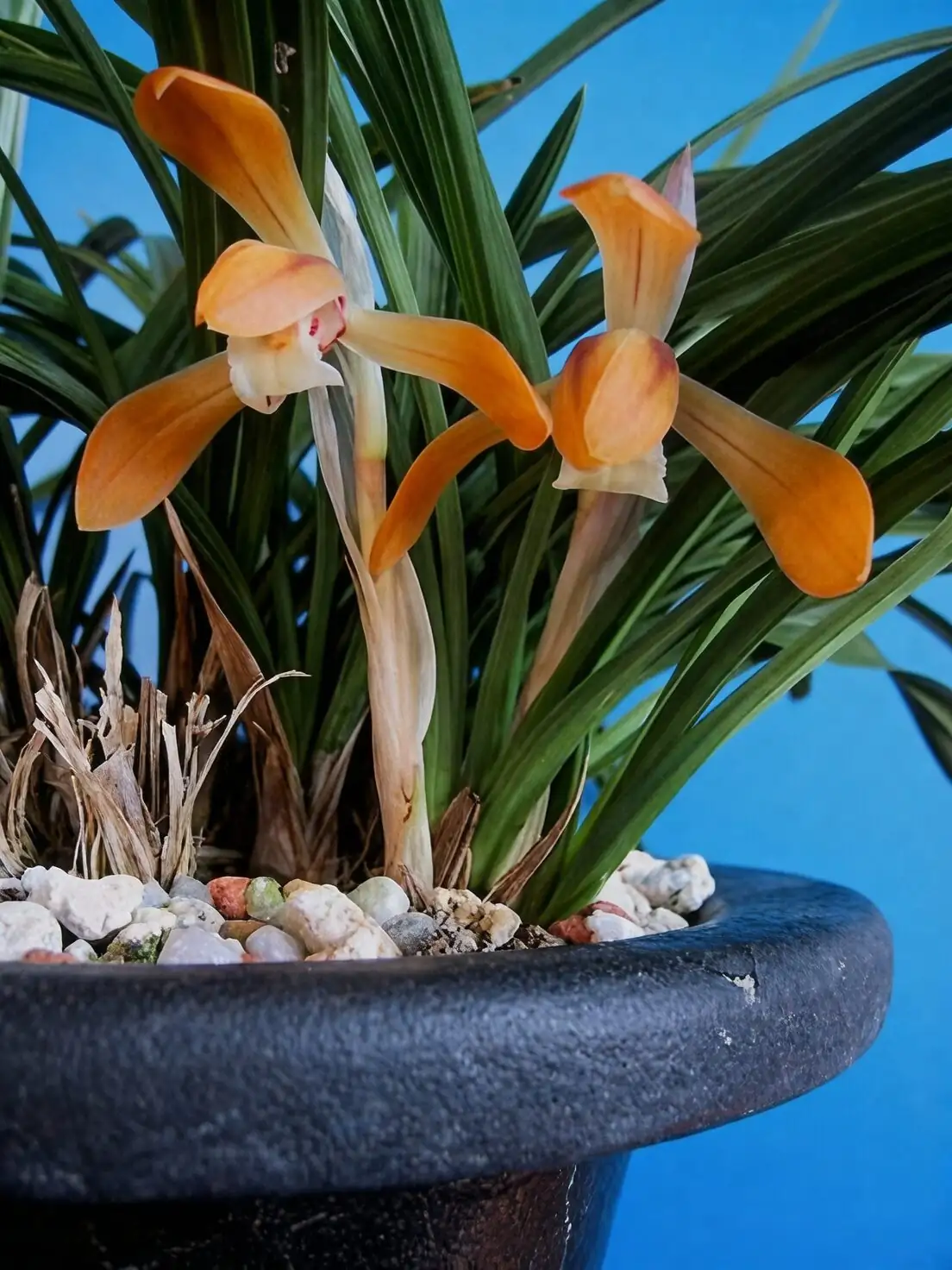
- The pot breathes: unglazed clay or containers with extra side holes promote evaporation.
- The moss is loose: never pack it; add a coarse base layer (pumice/brick chips/charcoal) to stop compaction and create chimneys for air movement.
- Watering is surgical: smaller volumes, less often, timed to warmth and sun so the center doesn’t stay wet for long.
Red flags your moss setup is failing
- A sour smell or persistently cool, wet center after watering
- White fungal fluff or algae on the surface
- Shrinking growths and fewer leaves over time
If any appear, pivot to a more open blend and increase airflow immediately.
Timing beats technique: water, feed, repot on the plant’s clock
C. goeringii rewards calendar-savvy growers. Tune your care to season and growth stage.
Watering that avoids trouble
- Summer: water more during active growth, but shield from heavy rain and never allow prolonged wetness.
- Autumn: water in the morning so leaves and crowns dry by nightfall.
- Winter: water less, ideally around midday on sunny days. Use clean, room-temperature water; let tap water stand to dissipate chlorine. Keep water out of the plant’s center.
- Always: avoid splashing dirty water onto leaves and never let water pool in the crown.
Fertilizing without backfire
- During active growth: very dilute feed every 2–3 weeks.
- Pause in winter and around flowering.
- Skip feeding on overcast/rainy days, and keep fertilizer solution out of the plant’s center.
Repotting and division with minimal sulking

- Frequency: every 2–3 years.
- Best windows: before new roots elongate—often March or around September.
- Method: let the medium dry slightly, remove old mix, trim dead tissue. Many growers pot 3–5 shoots together for a fuller clump. Spread roots, firm gently, leave 2 cm (0.8 in) headspace, water thoroughly, then recover in bright shade.
- Division: keep pieces modest (2–3 growths), make clean cuts, and dust with sulfur. Reduce excessive bloom load on weak plants.
Light, temperature, humidity: the quiet balancing act
- Light: bright shade to dappled/filtered light. In summer, about 60%–80% shade. In winter, a bright windowsill or balcony with gentle sun works—soften intense indoor sun and boost humidity if needed.
- Temperature: happiest at 15–25°C (59–77°F). Brief dips to about -8 to -5°C (18–23°F) are tolerable if kept drier and protected; avoid prolonged freezes and heat above 35°C (95°F), which slows growth.
- Bud cues: flower bud initiation is often encouraged around 12–13°C (54–55°F).
- Humidity: aim for 50%–60% as a baseline; 80%–90% during vigorous growth is excellent if airflow is strong. In winter, many growers target 60%–70% with steady air movement.
The rot dodge: how to avoid crown and root issues
- Keep the center dry: water the medium, not the crown. Pour around the pot’s edge.
- Time matters: morning in autumn; midday on sunny winter days. Avoid evening drenching.
- Air is your ally: run fans or ensure natural breezes; avoid stagnant, muggy pockets.
- Smart potting: deep pot, robust drainage layer, open mix, and a little headspace to prevent splash-back into the plant’s center.
- Weather watch: protect from heavy rain; in still, humid spells, lower humidity slightly and increase airflow.
- Hygiene: remove yellowing or damaged leaves; sanitize tools. If leaf spot or soft rot threatens (soggy media, white fungal growth), intervene early and consider an orchid-appropriate fungicide per label and local rules.
Quick setup recipes by growing environment
- Cool, breezy balcony
- Medium: layered granular mix (e.g., coarse pumice at the base, then medium, then finer near the top), rinsed of fines.
- Pot: deep, unglazed clay with ample drainage.
- Practice: small, frequent waterings aligned with warmth/sun; protect from heavy rain.
- Humid greenhouse with strong fans
- Medium: moss-dominant, packed loosely over a coarse base of brick chips/charcoal/pumice.
- Pot: very breathable, with extra holes if possible.
- Practice: tight watering schedule; superb ventilation; very dilute fertilizer during active growth only.
- Dry indoor apartment
- Medium: airy organic blend (fine bark + pumice/brick chips + a touch of leaf mold or coconut coir + charcoal).
- Placement: bright window softened with sheer curtain; humidity boosted to ~60–70%.
- Practice: water less in winter; use a humidity tray that doesn’t wick into the pot; fans on low for gentle movement.
Troubleshooting mini‑guide
- Growths getting smaller, leaves fewer: likely root stress (overwet or bone-dry) plus light/humidity mismatch. Open the mix, adjust watering, boost humidity, and soften harsh light.
- White fungal film or sour-smelling pot: warning for soft rot. Improve airflow at once and repot into a fresher, airier medium.
- Buds blasting: heat spikes (>35°C), dry air, or feeding at the wrong time. Cool nights near 12–13°C help initiate buds; keep conditions steady.
- Burned leaf tips or salt crust: mineral buildup. Flush with clean water and dilute fertilizer further; consider rainwater or filtered water.
Culture, meaning, and why we’re still enchanted
Flower language isn’t a universal code; it’s a cultural lens. In East Asia, Cymbidium goeringii has long symbolized purity, elegance, and refined character—beauty that whispers rather than shouts. Scholars praised it for centuries not just for its restrained form, but for that dignified, enveloping perfume. Grow it well and you’ll understand the metaphor: balanced care, quiet strength, exquisite reward.
Fast facts at a glance
- Names: Chinese Cymbidium, Spring Orchid, Goering’s Cymbidium (Cymbidium goeringii)
- Origin: China, Japan, Korean Peninsula
- Size: 20–40 cm (8–16 in), slow-clumping
- Flowers: few, waxy, starry; greenish to yellow-green with markings; intensely fragrant
- Season: winter to spring
Safety note
Cymbidium orchids aren’t widely cited as seriously toxic to people or pets, but nibbling can cause mild stomach upset. Keep out of reach of curious chewers.
Bottom line: stop chasing the “perfect” recipe. Prioritize aeration, water at the right moment, protect the crown, and match your mix to your airflow. Do that, and this modest-looking orchid will fill your late winter with one of the finest scents in the plant world.