


If a plant could wear couture, Aeonium arboreum ‘Zwartkop’ would strut the runway in inky rosettes and sculptural lines. This branching succulent—often called the Black Rose Aeonium—looks like a bouquet of dark roses perched on woody stems, and it’s as at home in a sunlit window as it is in a minimalist balcony bowl. Below: design-forward ways to stage it, pair it, and keep those near-black rosettes looking crisp and dramatic—plus why open displays always outshine closed terrariums for this architectural star.
Light makes the look: where to place it for deepest color
‘Zwartkop’ loves brightness. Strong light keeps the rosettes darkest (deep burgundy to almost black) and the form tight.
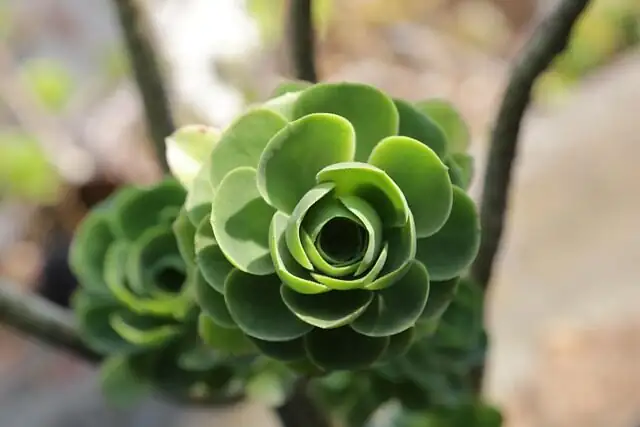
- Sheer-curtain south windows: Give it the brightest spot you have, but in hot weather behind glass, buffer harsh midday rays with a sheer or pull the plant a bit back from the glass to prevent scorch.
- Morning-sun balconies (east-facing): Ideal. A few hours of direct morning sun with bright light the rest of the day keeps color rich without heat stress.
- Sunrooms and grow-light shelves: Excellent. Use strong, full-spectrum lighting 12–14 hours daily and keep air moving.
- Outdoor terraces (warm seasons only): Bright conditions with some protection during heatwaves. Bring inside before cold snaps; this plant is tender and not frost tolerant.
Telltales you need more light: greener centers, stretched stems, and looser rosettes. Add light gradually to avoid shock.
Vessels that flatter an architectural succulent
Choose containers that showcase the “little tree” silhouette and those beautifully patterned stems (the ladder of old leaf scars is a feature, not a flaw).
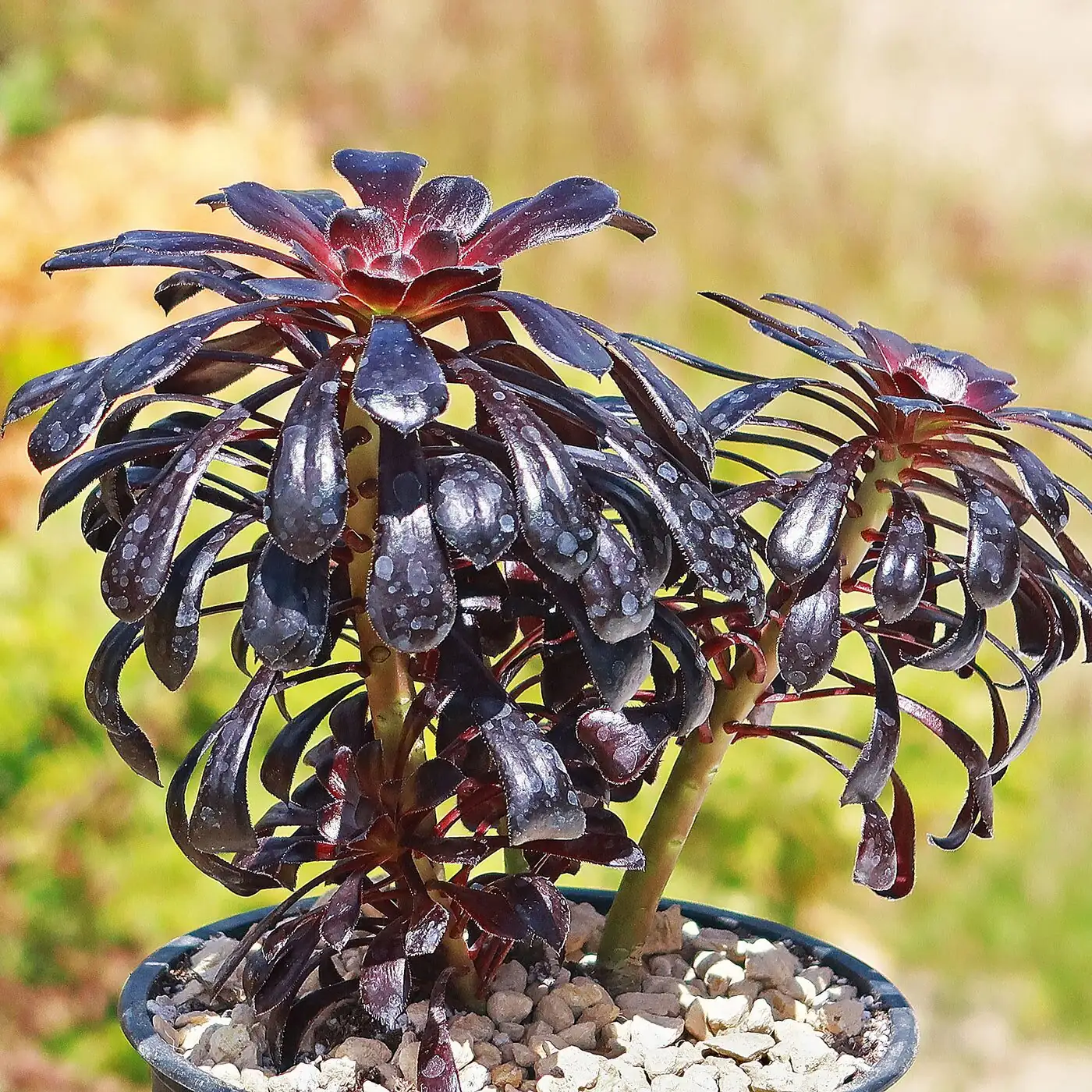
Elevated silhouettes: footed and pedestal bowls
- A footed bowl or pedestal cup lifts the rosettes to eye level and creates shadow-play under the heads.
- Plant slightly toward the edge so stems lean into view—instant drama on a console or windowsill.
Matte, mineral, and metal finishes
- Matte charcoal concrete makes the foliage read almost black—sleek, gallery-ready.
- Pale limestone or white ceramic creates high contrast and a crisp, modern look.
- Patinated brass or bronzed metal warms the palette and echoes the rosettes’ winey undertones.
Tip: If your dream vessel lacks drainage, keep the plant in a plastic nursery pot and “cache” it inside. Lift out to water; never leave it sitting in runoff.
Shallow bonsai trays and troughs
- A low, wide tray turns branching specimens into a mini grove. Topdress with grit for a dry-garden aesthetic.
- For small to medium plants, a 12–15 cm pot (4.7–6 in) with a gritty mix is the sweet spot; choose drainage holes every time.
Lightweight balcony bowls
- Fiberstone or resin “carved stone” bowls give the Mediterranean look without the heft.
- Anchor the composition with ‘Zwartkop’ at the rim to expose stems; nestle low companions at its feet (details below).
Color choreography: pairings that make ‘Zwartkop’ pop
Use contrast and texture like a stylist—dark rosettes become the star when the supporting cast is right.
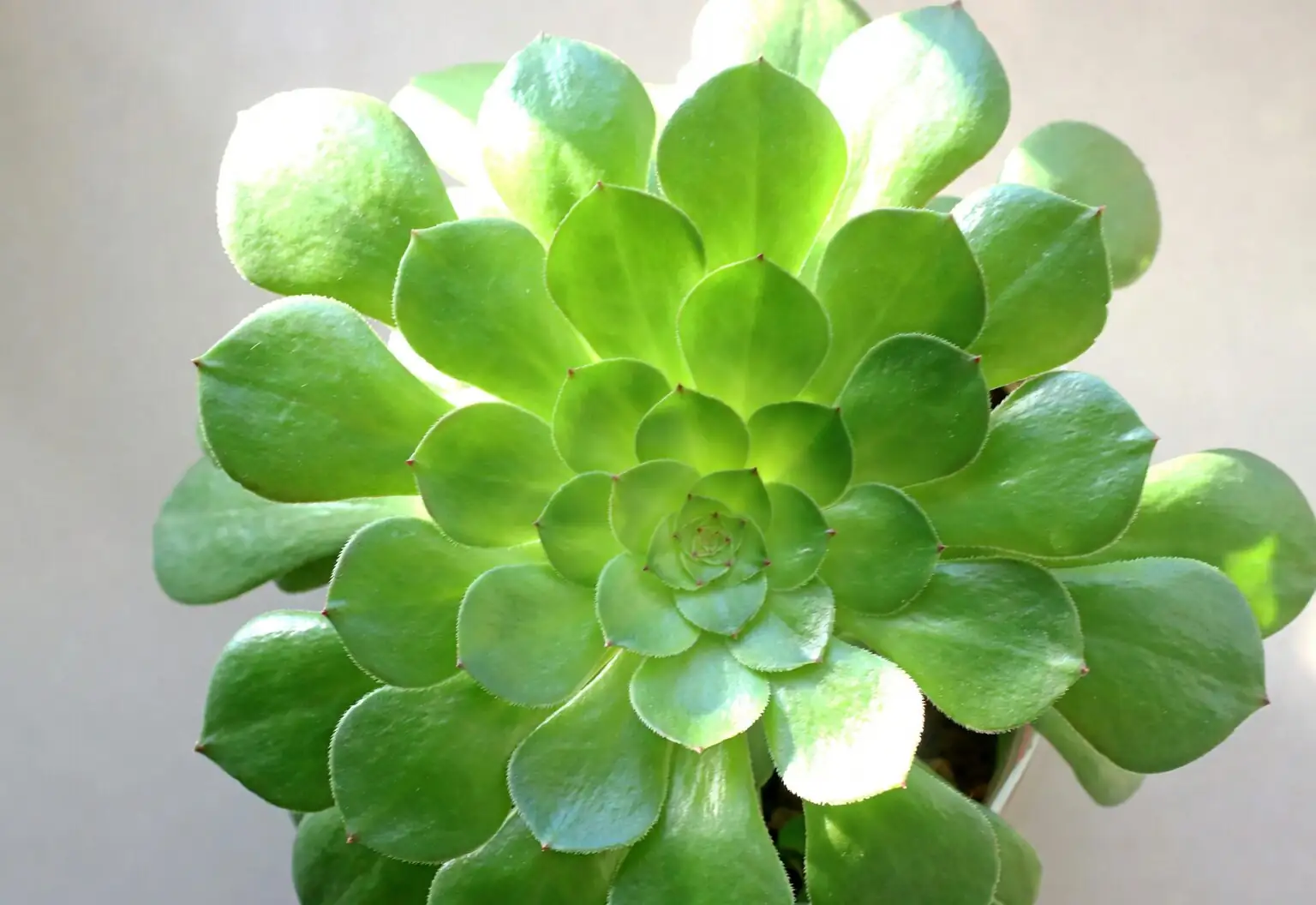
- Pale silver and moonlight blues
- Echeveria lilacina (silver), Senecio serpens (blue chalksticks), or Kalanchoe pumila (frosted lilac) make the black read blacker.
- Lime sparks and chartreuse edges
- Sedum ‘Lemon Ball’ or Aeonium ‘Sunburst’ (in separate containers with similar light but slightly different watering) give zingy highlights.
- Dark-on-dark intensity
- Stage ‘Zwartkop’ beside Pelargonium ‘Lord Bute’ in its own pot: a moody pairing with near-black petals and magenta margins that’s pure drama.
- Cascades and negative space
- Dichondra argentea ‘Silver Falls’ drapes over the rim and throws the upright rosettes into relief.
Note: Many stylish companions are also tender. Group pots together for a coordinated vignette instead of cramming mixed needs in one container—and shift the whole tableau indoors before frost.
Why open displays beat closed terrariums
‘Zwartkop’ is a low-humidity, high-light succulent. Closed terrariums stack the deck against it.
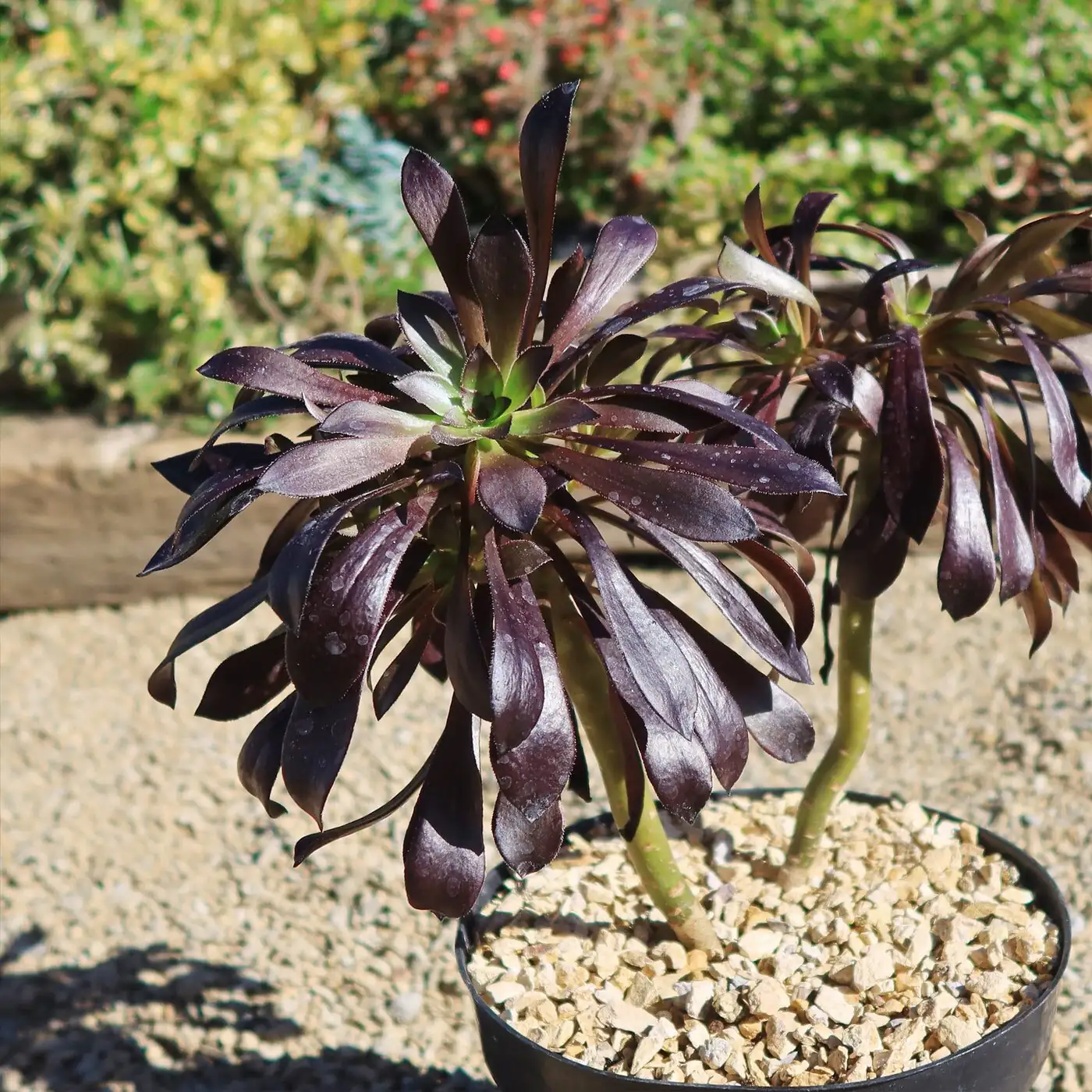
- Airflow matters. Stagnant, humid air in sealed vessels encourages rot and leaf spot; open air keeps leaves firm and glossy.
- Brightness matters more. Narrow-neck glass diffuses light and shades the crown, leading to stretching and greened-up rosettes.
- Seasonal rhythm needs dryness. In hot summer weather, this plant often slows or semi-dorms—closed systems stay damp right when the roots want a breather.
If you crave glass, pick a wide-mouthed, fully open vessel with excellent drainage—or better, display your potted plant inside a glass cloche stand with the dome off.
Quick-start care (the designer’s cheat sheet)
- Light: Full sun to very bright light. Indoors, brightest window possible; filter harsh midday sun behind glass.
- Temperature: Happy around 10–24°C (50–75°F); strongest growth near 20–25°C (68–77°F). Keep frost-free and above roughly 6°C (43°F).
- Humidity: Low to average with good airflow.
- Soil: Fast-draining cactus/succulent mix. Cut standard mix generously with grit, coarse sand, or pumice. Topdress with horticultural grit for a finished look.
- Watering:
- Autumn through spring (main growth): Water deeply, then let the top layer dry before the next drink. Never soggy.
- Summer heat (semi-dormancy): Keep almost dry; offer small sips only if rosettes begin to wrinkle.
- Cool winter rooms: Err on the dry side to avoid rot.
- Feeding: Monthly at half strength in the main growth windows (winter through late spring and/or spring and autumn). Skip feeding in summer dormancy.
- Size and shaping: In pots, plants often stay compact when young, then can branch into roughly 60 × 60 cm (24 × 24 in) with time, pruning, and container size.
- Pruning: Remove shriveled lower leaves for a clean collar. After flowering (clusters of tiny yellow, starry blooms in spring), the blooming rosette declines—wait until dry, then remove. Cut back leggy stems to encourage branching.
- Propagation: Take a rosette with a short stem. Let the cut callus for several days, then set in a dry, gritty mix. Begin light watering after roots form (often in 3–4 weeks).
- Repotting: Spring is best. Refresh mix annually for young plants or every 2–3 years, sizing up just one step.
Styled scenarios to copy now
The sheer-south window vignette
- Vessel: Matte white pedestal bowl.
- Planting: One strongly colored ‘Zwartkop’ set slightly off-center to show stems.
- Companion: A separate silver echeveria in a tiny matte charcoal cup.
- Light: Bright all day, with a sheer during midday in hot spells.
- Finishing touch: Fine pale grit topdressing to bounce light back into the rosette.
Morning-sun balcony bowl
- Vessel: Low “carved stone” bowl, lightweight.
- Planting: ‘Zwartkop’ near the rim; a low carpet of echeverias or a hardy sempervivum cluster in the foreground for texture.
- Care: Morning sun, bright shade midday in heatwaves. Bring indoors before cold nights.
The grow-light gallery shelf
- Vessel: Slim rectangle trough.
- Planting: Three ‘Zwartkop’ cuttings at graduated heights for a mini-grove effect.
- Setup: Strong LED (12–14 hours/day), small fan for airflow, gritty mix. No glass covers.
Troubleshooting at a glance
- Rosettes turning green or stretching: Increase light; move closer to the window or upgrade grow lights.
- Leaf scorch (crispy patches, especially behind glass): Filter midday sun; pull back from the pane.
- Mushy stems or lingering wet soil: Unpot, trim to healthy tissue, reroot the top after callusing; switch to a grittier mix.
- Pests: Mealybugs, aphids (especially on flower stalks), whiteflies, scale. Treat early with insecticidal soap or horticultural oil; improve airflow and avoid wetting leaves late in the day.
Symbolism, reimagined
While there isn’t a centuries-old “flower language” canon for aeoniums, modern plant lovers read ‘Zwartkop’ as resilience and bold, contemporary elegance. It holds its form in bright, dry conditions; it rests through heat and returns refreshed; and when a mature rosette finally throws its cluster of tiny yellow stars in spring, that one crown bows out so the side rosettes can carry on. In other words: a living lesson in renewal—and a masterclass in minimalist drama.
Set it on a stage that suits its character—clean lines, sharp light, open air—and this Black Rose will perform for years.