

Picture a tiny green pinecone crossed with a lotus—the Dunce Cap Succulent (Orostachys furusei) sits perfectly poised on a windowsill, stacking leaf upon leaf into a tidy, sculptural rosette. Then one day, it raises a conical bloom like a little flag of victory… and the star rosette begins to fade. Drama! Do you let it flower? Do you snip the stalk? And how do those little “kids” around the base keep the show going? Let’s dive into the science and the how‑to.
Meet Orostachys furusei (aka “Dunce Cap Succulent”)
- Identity: Orostachys furusei, Crassulaceae; also called Rock Pine; rosette‑forming succulent often grown in small pots.
- Look: Neat, lotus‑like rosettes of thick, bright to slightly bluish‑green leaves; forms small clumps with time.
- Size: Individual rosettes usually 5–15 cm (2–6 in) across.
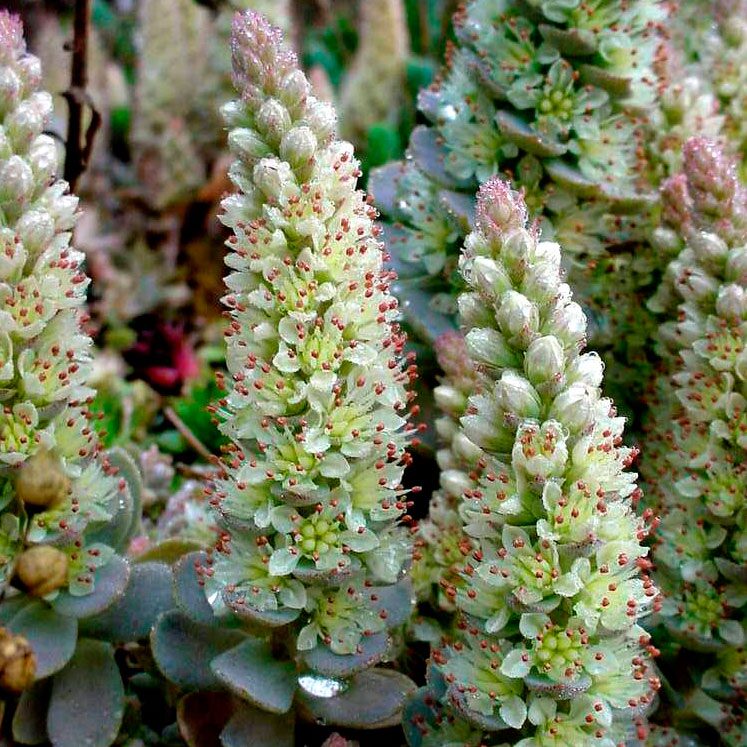
- Flowers: Small, star‑shaped blooms on a short‑stalked, conical inflorescence; summer to autumn.
- Temperament: Loves bright light, warmth, and very fast drainage; dislikes waterlogged soil; not frost‑hardy.
- Best setting: A bright windowsill or sheltered balcony with airflow; outdoors only in warm seasons if protected from heavy rain.
Note: Some Orostachys species from colder regions are genuinely hardy; O. furusei isn’t one of them. Treat it as a tender succulent and protect from frost.
The bloom‑and‑fade storyline (why the rosette declines after flowering)
Orostachys furusei is a monocarpic rosette: an individual rosette blooms once, then declines. Think of a rosette as a battery that slow‑charges for a grand finale.
The science behind the spectacle
- Resource reallocation: As the flower stalk appears, the rosette diverts stored carbohydrates and nutrients upwards to build buds and ripen seed.
- Hormone shift: Flowering changes the plant’s internal hormone balance (notably gibberellins and ethylene), tipping the “stay leafy” program toward reproduction and senescence.
- Structural cost: The compact rosette loosens slightly as leaves sacrifice resources. After seed set, programmed decline finishes the job.
What you’ll see at home
- Early: The center tightens, then elongates; a small cone begins.
- Mid: The “dunce cap” of starry blooms opens. The rosette looks thinner, a bit tired.
- Late: The flowering rosette fades and may die back, while nearby offsets carry on.
To snip or not to snip the flower stalk?
This is the grower’s fork in the road. There’s no single right answer—just priorities.
Reasons to snip early
- Preserve the look: Keeps a favorite rosette tight and pristine for longer.
- Conserve energy for offsets: More resources can go into the surrounding “kids.”
- Tidy plant, fewer pests: Removing a stalk before it withers eliminates a future magnet for mealybugs and rot.
Reasons to let it bloom
- Seed and the full show: Enjoy the complete flowering performance and possibly harvest fresh seed.
- Natural cycle: If the rosette is mature and already shifting into senescence, snipping late won’t rewind the clock much.
Reasons to wait and see
- If you’re undecided: Let the stalk develop slightly, then decide. Early removal has the biggest effect on preserving the rosette; mid‑bloom removal is more about tidiness than longevity.
How to snip well (if you choose to)
- Time it: As soon as the stalk is clearly forming.
- Tools: Use clean, sharp snips; sterilize with isopropyl alcohol.
- Cut: Remove the stalk as low as you can without damaging the rosette core.
- Aftercare: Keep the crown dry and airy for several days. Bright light, excellent drainage, no splashy watering over the leaves.
- Optional: Dust the cut lightly with dry sulfur or cinnamon if you’re in a very humid spot.
Offsets: the heirs to the throne
Even if a single rosette fades, the clump lives on through offsets—nature’s insurance policy.

How offsets keep the clump going
- Clonal continuity: Offsets are genetically identical “children” that share the parent’s tight form and color.
- Resource sharing: Before separation, offsets can sip energy through a stolon; after rooting, they’re self‑sufficient.
When and how to divide offsets (best in spring)
- Choose offsets with roots: They establish fastest.
- Reveal the stolon: Gently tease away a bit of mix to find the connecting stem.
- Cut close to the offset: Clean blade, quick snip.
- Potting: Use a small pot and a very gritty, fast‑draining succulent mix (compost blended with coarse sand, grit, or pumice).
- Watering: Wait to water until you see new growth, then water thoroughly and let the mix dry well between drinks.
- Bonus: Repot the parent clump in fresh mix at the same time to reset drainage.
Growing from seed (if you let it flower)
- Use fresh seed promptly for best results.
- Target a cool germination range around 13–18°C (55–64°F).
- Keep the surface just barely moist and airy; once seedlings show, give bright, gentle light.
Conditions that keep rosettes tight and happy

- Light: Bright light to full sun; provide light midday protection in extreme heat, especially behind glass.
- Temperature: Ideal 20–25°C (68–77°F); always keep above 5°C (41°F). Not frost‑hardy.
- Soil: Very free‑draining succulent/cactus mix; err gritty, not rich, to avoid weak, soft growth.
- Watering rhythm:
- Spring: Water lightly about once per month, adjusting for light, warmth, and pot size.
- Summer: A bit more frequent during active growth—but only after the mix dries well.
- Autumn: Gradually reduce.
- Winter: Keep on the dry side; water sparingly if cool.
- Feeding: Low‑strength balanced fertilizer about monthly in active growth; none in winter.
- Potting: Drainage holes are non‑negotiable. A 12–15 cm (4.7–5.9 in) pot often suits a typical plant. Repot yearly in spring.
- Grooming: Remove dead/damaged leaves to keep the rosette crisp. If you want to extend a favorite rosette’s prime, remove the flower stalk early.
Troubleshooting around bloom time
- Stretching/loose rosette: Almost always low light. Move to a brighter spot or add a grow light; protect from glass‑magnified midsummer scorch.
- Root rot: Cold, wet mix is the culprit. Repot into a gritty blend, improve airflow, and water only after the mix dries well.
- Pests: Mealybugs and scale are the usual suspects; root mealybugs can hide where leaves are tightly packed. Dab with isopropyl alcohol or use horticultural oil/insecticidal soap; repeat until resolved.
- Leaf spots in damp air: Improve ventilation, keep foliage dry, and remove affected leaves.
A practical game plan for bloom season
- Want the spectacle? Let the stalk develop and enjoy the starry show in summer to autumn; collect fresh seed if you like.
- Want the rosette to remain picture‑perfect? Snip the stalk at takeoff, and channel energy to offsets.
- Either way, plan for succession: Keep one or two rooted offsets growing on so the clump never skips a beat.
Symbolism and “flower language”
Orostachys furusei is often likened to a lotus and celebrated for its “parent with children” look—a quiet emblem of continuity: one rosette bows out, the family carries on. While there isn’t a deep, traditional flower‑language canon tied to this species, modern succulent lovers read it as resilience through generations, tidy beauty with a touch of impermanence. It’s a miniature lesson in legacy on a windowsill.
Fast FAQ
- My rosette is loosening—what now? Increase light immediately; outdoors in mild seasons can help tighten growth, but shade it from punishing midday rays behind glass.
- Why did my plant rot even though I “stopped watering”? If the mix stays wet and airless, it won’t dry safely on its own. Repot into a gritty blend, ensure drainage holes, and water only when the mix has truly dried.
Bottom line: Orostachys furusei is a small succulent with a big story. Let it bloom for the drama, or snip for longevity—either way, its offsets keep the lineage going. Give it sun, grit, and restraint at the watering can, and your dunce caps will keep graduating year after year.