

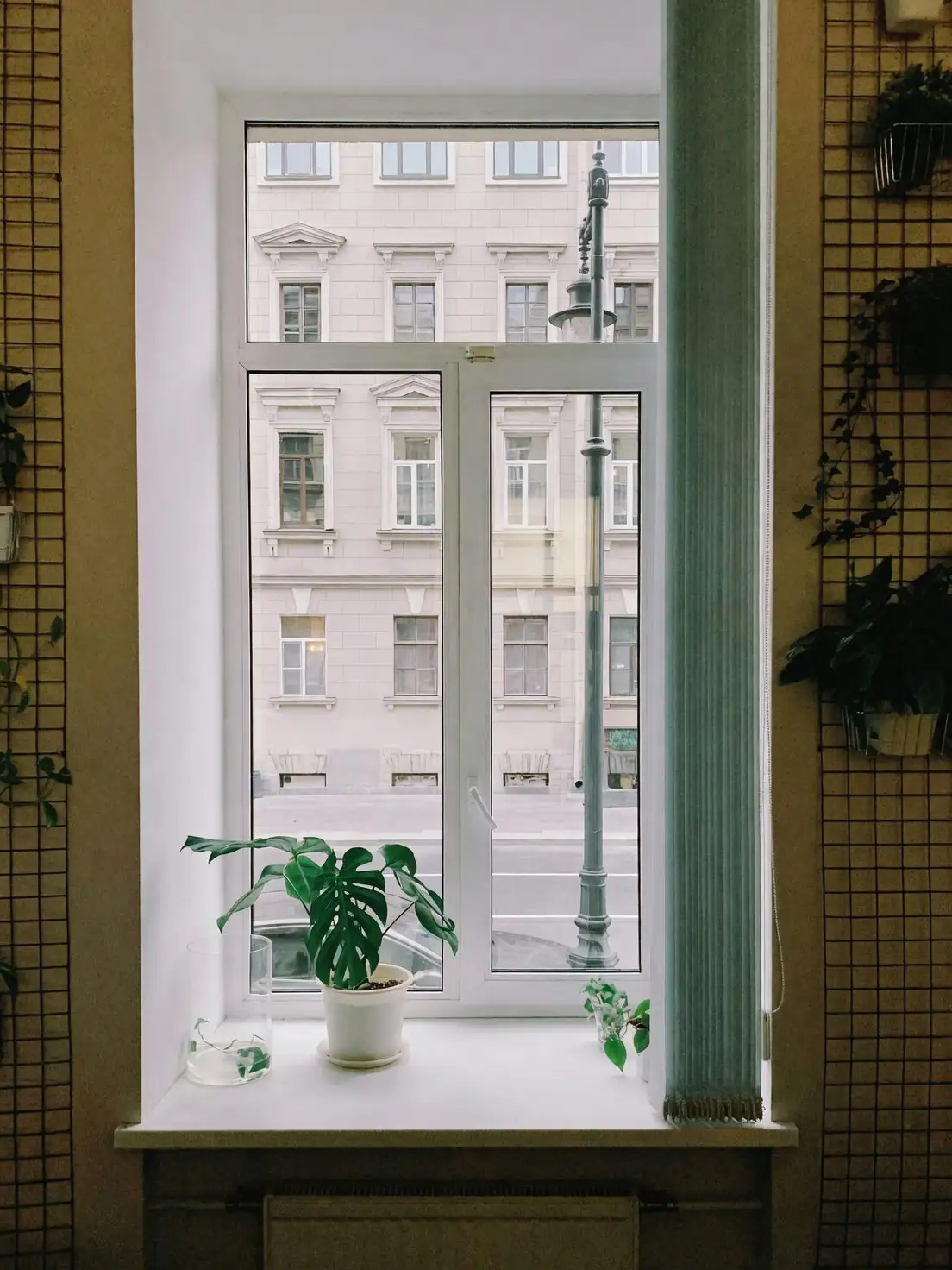
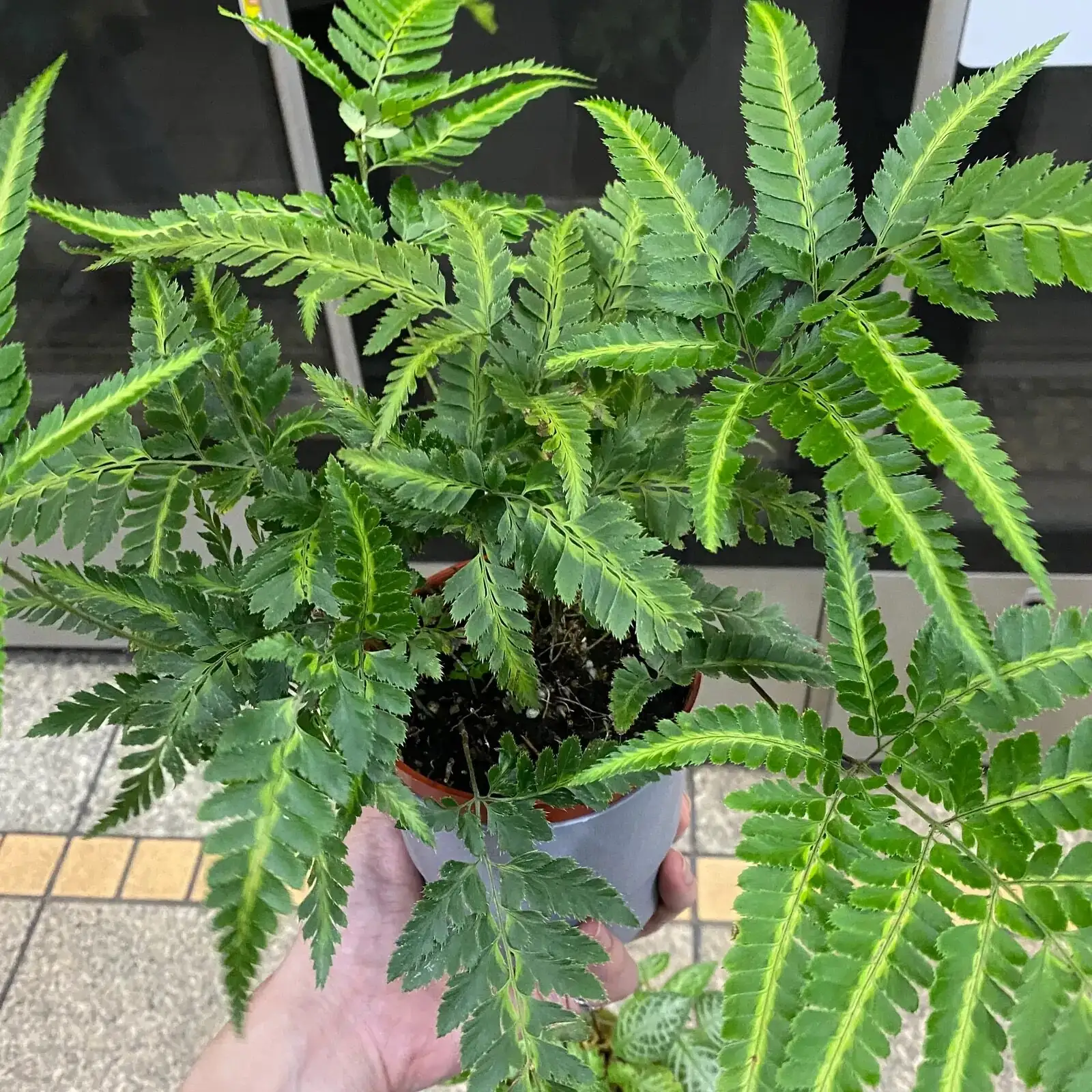
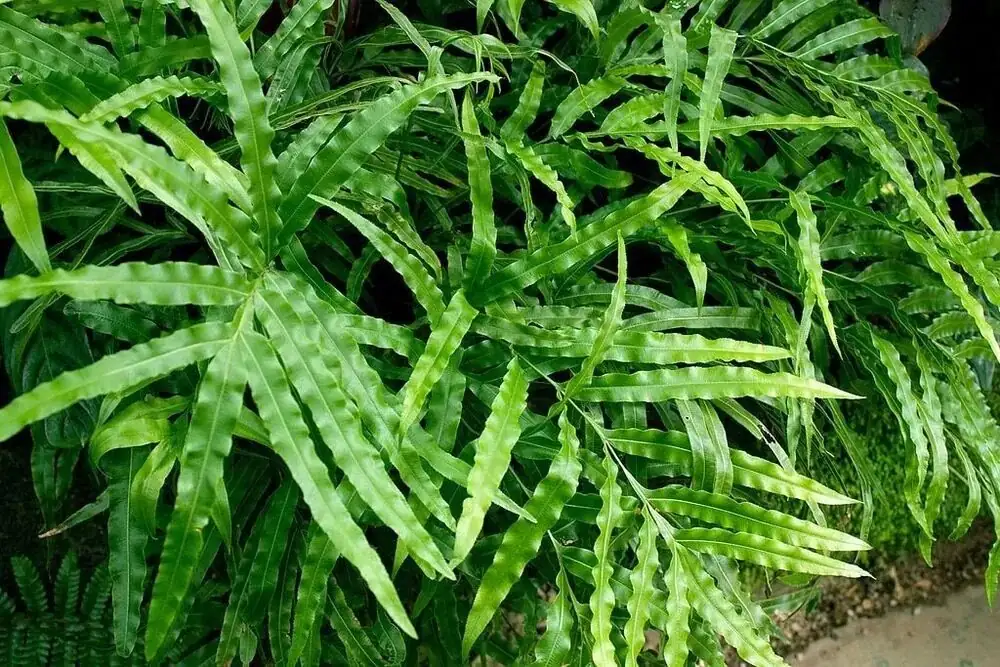
Meet the phoenix-tailed fern that thrives on rhythm. Pteris cretica—known as Chinese Brake Fern, Cretan Brake, or Ribbon Fern—brings delicate, tail-like fronds and a graceful, arching habit to your space. Give it bright, indirect light, steady moisture, and humidity it can sip all day, and it will reward you with a lush, calming green presence on a sill, desk, or in a bright bathroom.
Below is your upbeat, practical care playbook—complete with watering cadence you can actually follow, light hacks that protect those elegant fronds, and humidity boosts that keep leaf tips plush and happy.
Meet Chinese Brake Fern (Pteris cretica)
- Names: Chinese Brake Fern, Cretan Brake, Ribbon Fern; Chinese name 凤尾蕨 (“phoenix-tail fern”)
- Family/Genus: Pteridaceae, Pteris
- Origin: Mediterranean region to Western Asia (widely sold as cultivated ornamental varieties)
- Size: Typically 30–60 cm (12–24 in) tall and wide in containers
- Habit: Clump-forming evergreen (or semi-evergreen) fern with upright-to-arching fronds
- Indoors vibe: Warm, humid air + bright, indirect light; great for windowsills and bathrooms
- Outdoors (mild, frost-free areas): Sheltered shade—near rocks, walls, or pond edges
Light: perfectly bright‑indirect (no scorch!)
Delicate fronds love filtered brightness but burn in harsh rays. Think forest-edge light, not beach-at-noon.
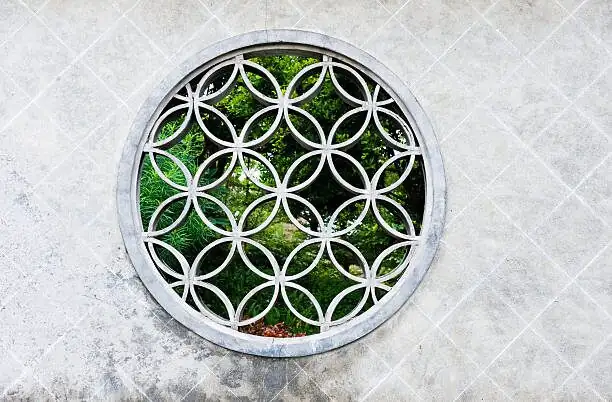
Window wizardry
- Best spots: North or east-facing windowsills with sheer curtains; a few feet back from bright south/west windows.
- Distance rule: If midday sun directly touches fronds, step it back 0.5–1.5 m (2–5 ft) or diffuse with a curtain/blind.
- Low light? It copes, but growth slows and variegation (on fancy cultivars) may fade.
Quick light checks
- Shadow test: A soft, fuzzy shadow = great. A sharp shadow = too bright.
- Hand heat test at midday: If light feels hot on your hand, it’s too intense for the fronds.
- Bonus: Rotate the pot a quarter turn every 2–3 weeks for even, upright growth.
Outdoors (mild climates only)
- USDA 9–11. Keep it in sheltered shade, protected from direct sun and drying winds.
Watering rhythm you can actually follow
Pteris cretica likes its soil evenly moist—never bone-dry, never soggy. Think “a consistently damp sponge,” not “wet towel.”
The 1–2 cm rule (your new metronome)
- Check the top 1–2 cm (0.4–0.8 in) of mix. When it feels just slightly dry, it’s time to water.
- Tools that help: a finger, a wooden chopstick (darkened tip means moist), or the pot-weight test (lighter = time to water).
How often? Ballpark by season
- Spring–summer (active growth, average indoor conditions): every 4–7 days
- Autumn: every 7–10 days
- Winter (cooler rooms/heating on): every 7–10+ days, but never allow a full dry-out
Note: These are starting points. Always defer to the 1–2 cm check.
The right way to water
- Water thoroughly until excess drains from the pot bottom. Discard runoff.
- Water the mix, not the crown (the center where new fronds emerge).
- Bottom-water occasionally to ensure even moisture, but don’t let it sit in water for hours.
Pots and mix that make moisture easy
- Pot: Use a container with drainage. If you struggle to keep moisture steady, use plastic or glazed ceramic (they dry more slowly than terracotta).
- Mix: Moisture-retentive yet free-draining. Try:
- 2 parts peat-free potting mix
- 1 part fine bark or orchid mix
- 1 part perlite
- Goal: Even moisture, air at the roots, and zero waterlogging.
Humidity that keeps tips lush
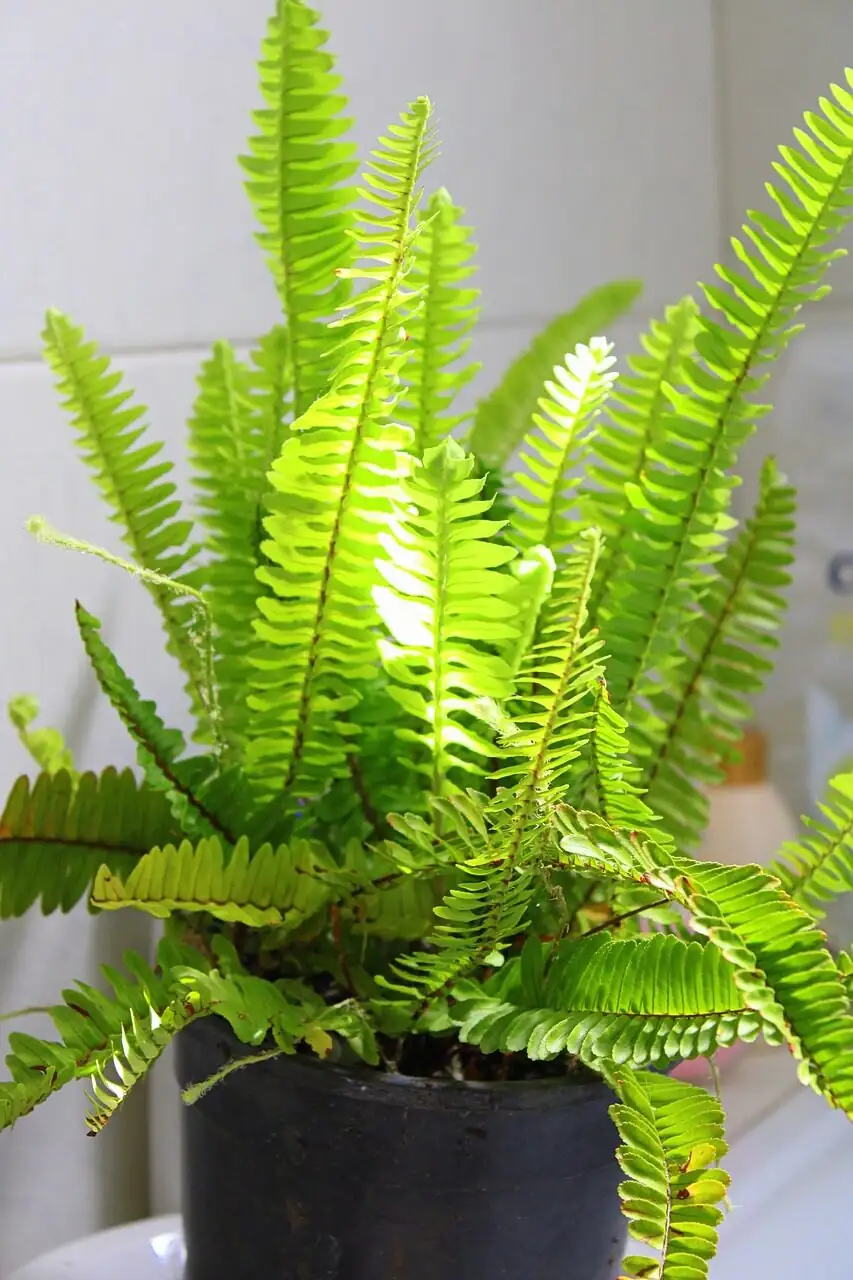
Aim for 50%+ relative humidity. Below that, tips brown and fronds lose their spring.
Your 50%+ playbook
- Pebble/humidity tray: Place the pot above (not in) water on pebbles to bathe leaves in gentle humidity.
- Humidifier: The most reliable fix for heated rooms. Set 50–60% as a sweet spot.
- Grouping: Cluster humidity-loving plants to raise the local microclimate.
- Best room: A bright bathroom often nails both light and moisture.
Misting—helpful, not a cure-all
- Light morning mists can help, especially during winter heating, but rely on a tray or humidifier for consistent results.
- Keep fronds clean by gently rinsing in the shower monthly—great for dust and pests, too.
Temperature & placement comfort zone
- Best growth: 12–22°C (54–72°F)
- Ideal nights: 10–16°C (50–61°F)
- Winter threshold: Keep above 10°C (50°F) for good foliage; growth can pause below about 5°C (41°F)
- Avoid: Cold drafts, hot radiators/vents, and pressing fronds against chilly window glass
Feeding, repotting, and pruning
Fertilizing (light and gentle)
- Spring–summer: Balanced houseplant feed at 1/4–1/2 strength every 4–6 weeks
- Autumn–winter: Back off feeding; too much fertilizer can scorch fronds
- Tip: Flush the pot with plain water every couple of months to prevent salt build-up.
Repotting rhythm
- Every 1–2 years in spring, or when roots fill the pot
- Size up by just 2–5 cm (1–2 in) and refresh the mix to restore drainage and vigor
Pruning = tidy and healthy
- Snip yellowing or damaged fronds at the base with clean scissors
- Avoid cutting into the crown where new fronds unfurl
Propagation: easiest by division
- Best time: During repotting in spring
- Steps:
- Slide the plant out, gently tease the rootball.
- Separate into clumps, each with healthy roots and fronds.
- Pot divisions into fresh mix; keep evenly moist and moderately humid.
- From spores? Possible but slower and more technical—rewarding for fern enthusiasts.
Troubleshooting (fast fixes)
- Brown tips: Usually low humidity, irregular watering, or too much direct sun.
- Fix: Aim for 50%+ humidity, steady moisture, and bright-indirect light.
- Crispy or greyed fronds: Underwatering or hot, dry air.
- Fix: Follow the 1–2 cm rule; boost humidity; move from heaters.
- Yellow fronds and limp growth: Overwatering, low light, or dense mix.
- Fix: Brighten the spot, improve drainage, water only when top 1–2 cm is slightly dry.
- Scorched patches or bleached fronds: Direct sunburn.
- Fix: Diffuse light or increase distance from window.
- Fungus gnats: Overly wet media.
- Fix: Allow the surface to dry slightly between waterings; use sticky traps and improve drainage.
- Pests (scale, mealybugs, spider mites—especially in dry air):
- Fix: Rinse fronds, increase humidity, and treat with insecticidal soap or horticultural oil; repeat weekly until clear.
Year‑round care calendar
- Spring–summer: Active growth—keep evenly moist, maintain humidity, and feed lightly every 4–6 weeks.
- Autumn: Reduce feeding; water a touch less but never let the mix go bone-dry.
- Winter: Keep above 10°C (50°F). Growth may slow; maintain humidity and protect from drafts and cold glass.
Safety, symbolism, and little extras
- Toxicity: Generally considered non-toxic to people and pets (nibbling may cause mild stomach upset).
- Symbolism: Like many ferns, Chinese Brake Fern is linked with freshness, resilience, and a calm, restorative green atmosphere. While “flower language” doesn’t literally apply to non-flowering ferns, its phoenix-tail shape evokes renewal and quiet strength—why it’s so beloved in serene, spa-like interiors.
- Fun fern facts:
- Those “phoenix-tail” fronds inspired its Chinese common name.
- No flowers here—Pteris cretica reproduces via spores in neat lines under mature fronds.
- Many plants sold are cultivated selections chosen for especially elegant fronds and houseplant reliability.
Quick FAQ
- Why are the frond tips turning brown?
- Usually low humidity, inconsistent watering, or too much direct sun. Aim for 50%+ humidity, keep soil evenly moist, and shift to bright, indirect light.
- Does it flower?
- No—ferns don’t flower. This species reproduces by spores that form on the undersides of mature fronds.
- Can it handle cold near a window?
- Keep it away from cold drafts and chilly glass. Above about 10°C (50°F) is best; extended exposure below about 5°C (41°F) can halt growth and damage foliage.
Give your Pteris cretica the trifecta—bright, indirect light, an even watering rhythm, and a humid hug—and those feathery fronds will arch and unfurl like tiny green fireworks all year long.