
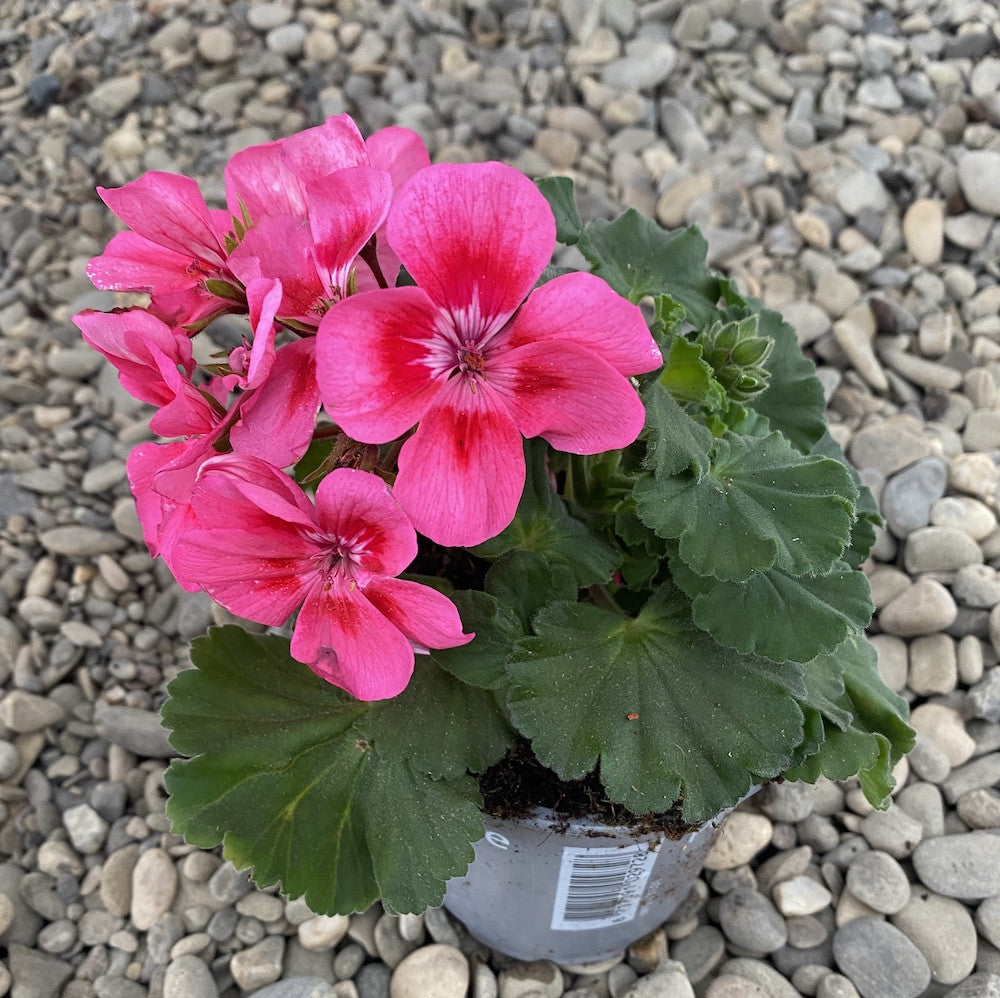
Meet your resilient balcony buddy: Pelargonium × hortorum, the zonal geranium. When it’s sunny, breezy, and the pot drains well, this plant is a flower factory. When air is still and the potting mix stays wet, it rolls out the red carpet for disease and sap-suckers. Use this spot-and-solve guide to fix problems fast—without the jargon—and keep blooms coming from spring through fall (and inside, nearly year-round with strong light).
Before we dive in, remember the three habits that prevent almost everything:
- Light: at least 4–6 hours of direct sun.
- Water: soak, then wait until the top 2–3 cm (about 1 in) dries before watering again. Always empty saucers.
- Air: good airflow, dry leaves, and regular deadheading.
Tip: Isolate any troubled plant right away so hitchhiking pests don’t spread.
Botrytis (gray mold)
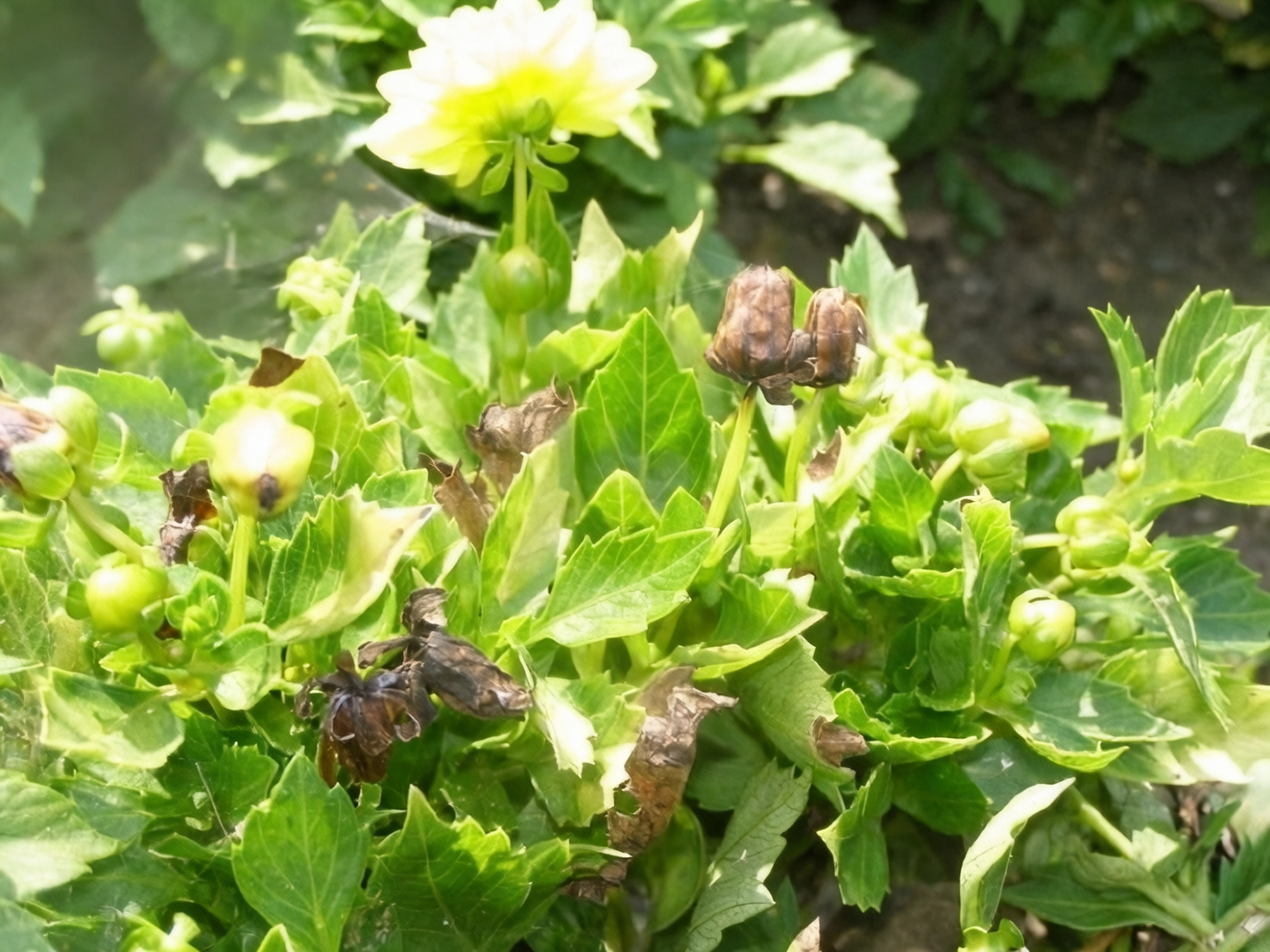
What it looks like
- Papery brown flowers that go mushy and collapse.
- Gray, fuzzy mold on petals, leaves, or stems.
- Often shows up after cool, damp spells or when old blooms are left on.
Solve it today
- Strip trouble fast: snap off spent flower heads and any soft, moldy bits. Bag and bin—don’t compost.
- Dry the “weather”: move to a brighter, breezier spot; run a small fan nearby; keep leaves dry; water at the soil line only.
- Space it out: give neighboring plants room so air can move between leaves.
Keep it from coming back
- Deadhead promptly and avoid overhead watering.
- Let the potting mix dry slightly between waterings.
- If outbreaks persist, consider a fungicide labeled for gray mold on ornamentals—follow the label exactly.
Rust
What it looks like
- Bright yellow spots on the upper leaf surface.
- Brown, powdery dots (pustules) directly underneath those yellow spots.
- Leaves may yellow and drop if ignored.
Solve it today
- Remove affected leaves gently (don’t shake the spores around). Bag-and-bin.
- Rinse hands/tools afterward. Isolate the plant.
- Improve airflow and keep leaves dry. Water early in the day at the base.
Keep it from coming back
- Avoid crowding and splashing water on foliage.
- Regularly check the undersides of leaves.
- Severe or recurring cases may need a rust-specific ornamental fungicide—use carefully and rotate with prevention habits above.
Bacterial leaf spot/blight
What it looks like
- Tiny round brown spots with a thin yellow “halo.”
- Later, a wedge-shaped yellow or tan area spreads in from the leaf edge; parts of the plant can wilt.
- Roots often still look normal (a clue it’s not root rot).
- Spreads fast with splashed water and handling.
Solve it today
- Be decisive: bag-and-bin the plant if many leaves show symptoms or if you see wilting plus those characteristic spots. There’s no reliable home cure.
- If only a leaf or two is affected, remove them, isolate the plant, and watch closely.
- Clean shears and surfaces with 70% alcohol or a 10% bleach solution.
Keep it from coming back
- Buy clean, compact plants; inspect new arrivals and quarantine 2 weeks.
- Never overhead-water. Water the mix, not the leaves.
- Space plants; handle when leaves are dry.
Root rot
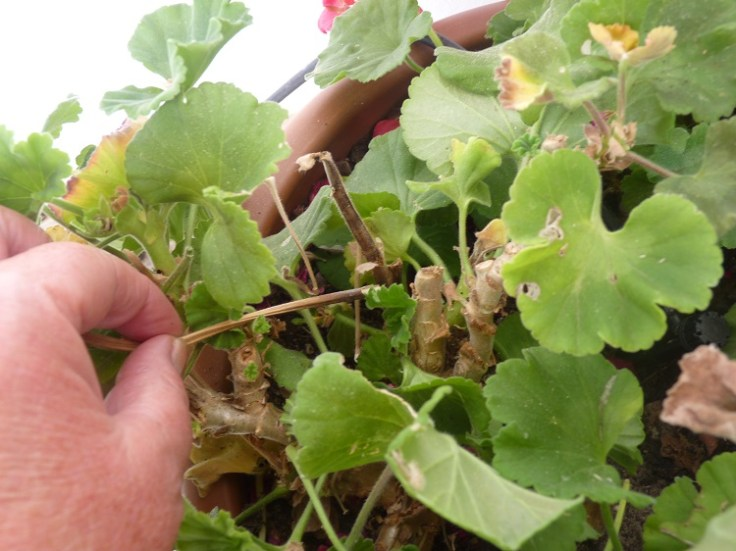
What it looks like
- Plant wilts even though soil feels wet.
- Lower leaves yellow; growth stalls.
- Roots look brown, mushy, or smell sour when you slide the plant from its pot.
Solve it today
- Unpot gently. Trim away brown mushy roots with sterilized scissors.
- Repot into fresh, gritty, free-draining mix (potting soil + perlite/coarse sand + a bit of composted bark). Use a pot with drainage holes.
- Water lightly, then wait until the top 2–3 cm dries before watering again. Keep in bright light with good airflow.
Keep it from coming back
- Drainage is non-negotiable. Never leave the pot sitting in water.
- In cool weather, water less often; in winter indoors, keep it on the dry side.
- Aim for temperatures around 10–25°C (50–77°F); prolonged heat plus wet soil can cause a slowdown and stress the roots.
Aphids
What they look like
- Clusters of soft green/black insects on new growth and flower stalks.
- Sticky leaves (honeydew) and distorted new leaves/buds.
Solve it today
- Rinse: take the plant to a sink or outdoors and spray a firm stream of water over stems and undersides of leaves.
- Squish or wipe: pinch off heavy clusters or wipe with a damp cloth.
- Spray: use insecticidal soap or horticultural oil, covering undersides of leaves. Repeat every 4–7 days until clear.
Keep it from coming back
- Don’t overfeed nitrogen; it makes too-soft, tasty growth.
- Check the tips weekly; early action = easy control.
- Outdoors, encourage beneficials by avoiding broad-spectrum insecticides.
Whiteflies
What they look like
- A tiny white “snowstorm” when you brush the plant.
- Scale-like nymphs stuck on leaf undersides; sticky honeydew may appear.
Solve it today
- Yellow sticky traps near the plant to catch adults.
- Morning vacuum: gently vacuum adults off leaves (low power).
- Spray undersides with insecticidal soap or horticultural oil weekly for 3–4 rounds to break the cycle.
Keep it from coming back
- Quarantine new plants.
- Keep air moving; whiteflies love still, warm corners.
- Remove heavily infested leaves early.
Spider mites
What they look like
- Fine speckling on leaves that turns them dull or bronzed.
- Tiny webbing in leaf nooks, especially in warm, dry rooms.
Solve it today
- Shower treatment: rinse both sides of leaves thoroughly.
- Wipe: use a damp cloth on the undersides.
- Follow up with insecticidal soap or a light horticultural oil; repeat 3 times at 5–7 day intervals.
Keep it from coming back
- Bright light and steady airflow; avoid hot, stagnant, extra-dry indoor spots.
- Quick weekly leaf check—especially the undersides.
Mealybugs
What they look like
- White, cottony tufts in leaf joints, along stems, or at the soil line.
- Leaves may yellow or growth may stall. Sometimes “root mealies” hide in the mix as cottony bits on roots.
Solve it today
- Dab each bug with a cotton swab dipped in 70% alcohol; wipe away residue.
- Prune the worst-infested stems.
- Spray with insecticidal soap or horticultural oil, getting into crevices. Repeat weekly until gone.
- For root mealies: unpot, rinse roots, prune infested bits, and repot into fresh mix and a clean pot.
Keep it from coming back
- Inspect leaf joints during every watering.
- Avoid overwatering and overfertilizing—soft growth attracts pests.
- Isolate any plant with even a few cottony spots.
Daily and weekly habits that keep zonal geraniums unstoppable
- Sun and placement
- Give 4–6+ hours of direct sun. Indoors, an east or south window is ideal.
- In intense summer heat, shield from harsh midday sun through glass and prioritize ventilation.
- Watering rhythm
- Water thoroughly, then wait until the top 2–3 cm is dry. Empty saucers.
- In winter, keep it on the dry side; in heat, you may water more often—always check the soil first.
- Airflow and tidiness
- Space plants; run a small fan in stuffy rooms.
- Deadhead spent flower clusters promptly; remove yellowing leaves.
- Feeding for flowers
- During active growth, feed every 2–4 weeks. When buds form, use a bloom-leaning, higher-potassium feed and go easy on nitrogen.
- Pruning and shaping
- Pinch tips on young plants to encourage branching.
- If it gets leggy, cut back by 1/3–1/2 and keep it bright, airy, and slightly cool as it rebounds.
- Potting mix and repotting
- Use an airy, free-draining mix (potting soil + perlite/grit + a bit of bark). Repot every 1–2 years, one size up, and never bury stems deeper than before.
- Weather smarts
- Keep above 5°C (41°F). In cold climates, bring plants in before frost and give maximum light at 10–15°C (50–59°F).
Fast troubleshooting map
- Gray fuzz on flowers/leaves → Botrytis: clean, dry, and ventilate.
- Yellow spots top/brown dust below → Rust: remove leaves, dry foliage, improve airflow.
- Tiny brown spots with yellow halos, wedge-like yellowing, quick spread → Bacterial leaf spot/blight: remove or discard, keep leaves dry, clean tools.
- Wet soil + wilting + brown mushy roots → Root rot: unpot, trim, repot in gritty mix, water less.
- Sticky new growth with clusters of soft insects → Aphids: rinse, soap/oil, repeat.
- Cloud of tiny white flies on touch → Whiteflies: sticky traps, vacuum, soap/oil, repeat.
- Speckled, dull leaves + fine webs → Spider mites: rinse, wipe, soap/oil, repeat.
- White cotton in joints/roots → Mealybugs: alcohol swabs, prune, soap/oil; repot if root mealies.
A quick word on safety
- Wear gloves if you have sensitive skin; pelargonium sap can irritate.
- Keep plants away from nibbling pets—ingesting foliage may cause mild stomach upset.
With bright light, a breathable potting mix, and leaves kept clean and dry, Pelargonium × hortorum repays you with nonstop color and a can-do attitude. Check leaves weekly, act early, and enjoy a season (or many) of cheerful umbels and that classic zonal leaf ring that says, “all is well on the windowsill.”