

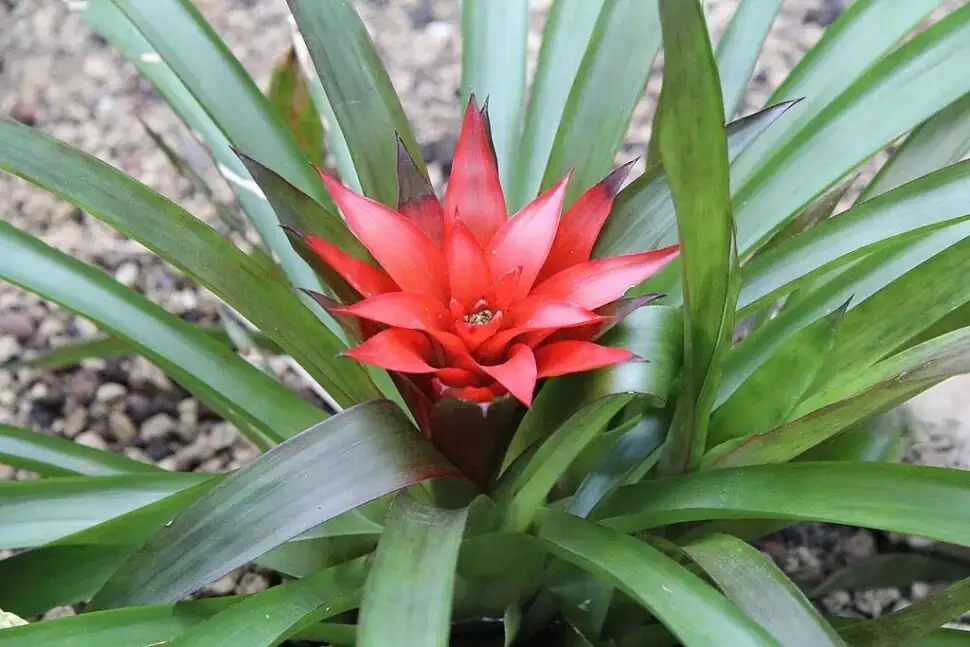
Step close to an ornamental bromeliad—those flamboyant Guzmania, Vriesea, and Aechmea you see glinting in shops—and you’re peering into a tiny world where leaves build rain-catching tanks, armor bristles along the margins, and the “flower” that stole your heart is actually a clever disguise. These are plants of delightful oddities, equal parts sculpture and ecosystem, with life cycles that read like mini epics: bloom grandly once, pass the torch to a ring of heirs (pups), repeat.
Meet the showstoppers: Guzmania, Vriesea, and Aechmea
- Architecture: A tight, vase-like rosette of arching leaves. Many species naturally live as epiphytes, perched on tree branches in the tropical and subtropical Americas.
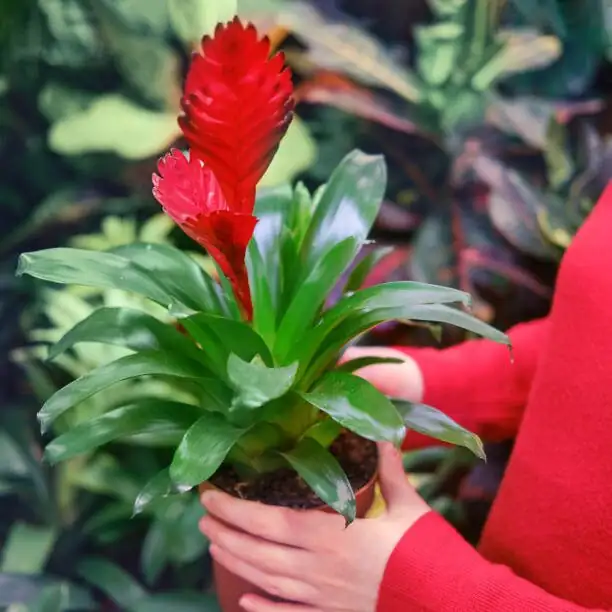
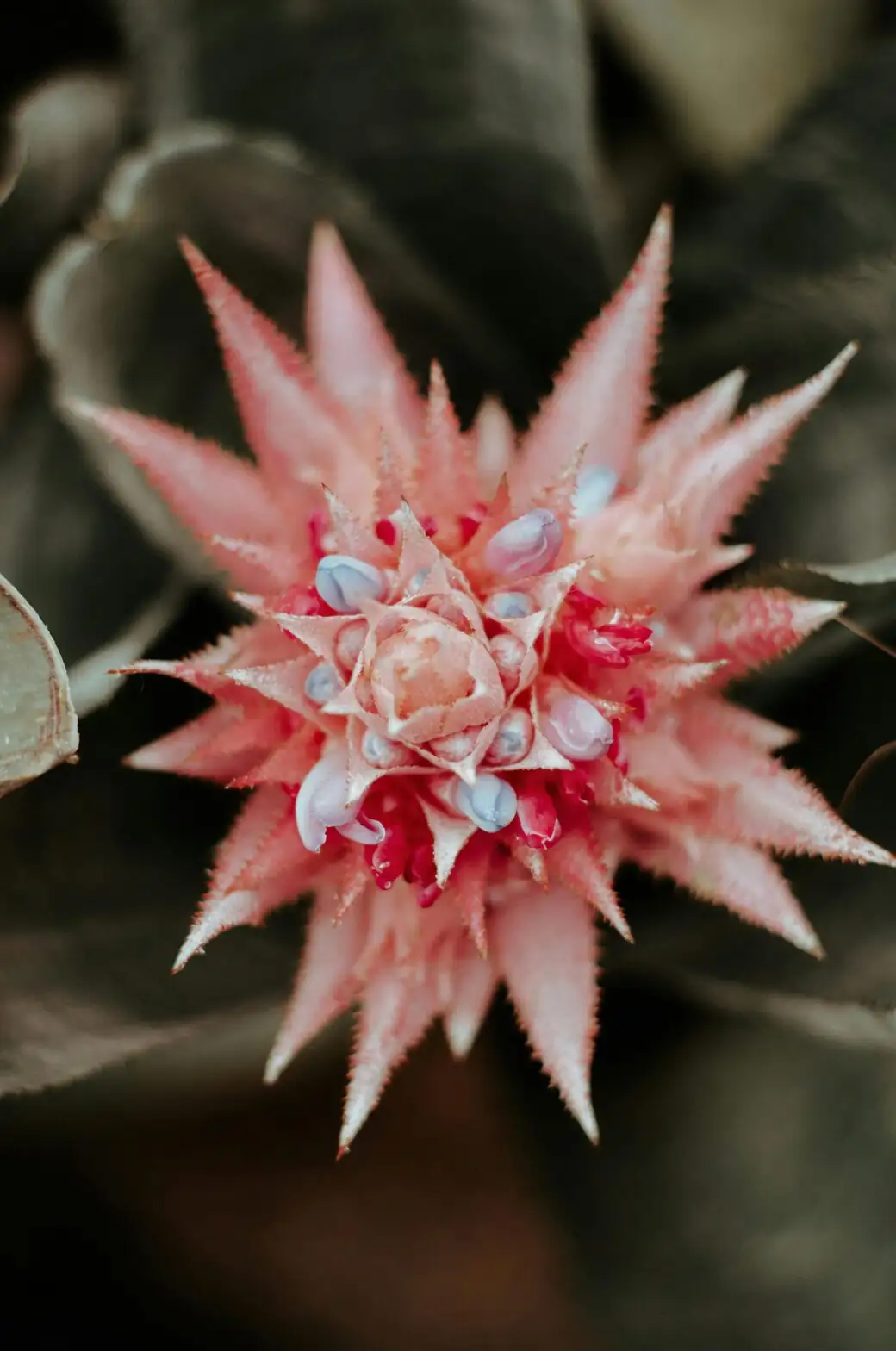
- Color play: The big, bold “flower” is usually a crown of bracts—often red, orange, pink, or yellow—that stay vivid for weeks to months. The true flowers are smaller, short-lived, and emerge from within.
- Texture and armor: Foliage ranges from smooth and glossy to lightly toothed or spiny along the margins (Aechmea often brings the prickles). Some Aechmea even show subtle banding—like botanical zebra stripes.
The tank: a pocket rainforest you can hold
Many bromeliads form a central cup—a reservoir made by overlapping leaves. Outdoors, this water trap becomes a microhabitat where debris gathers and tiny creatures take refuge. Indoors, it’s less about wildlife and more about smart care:
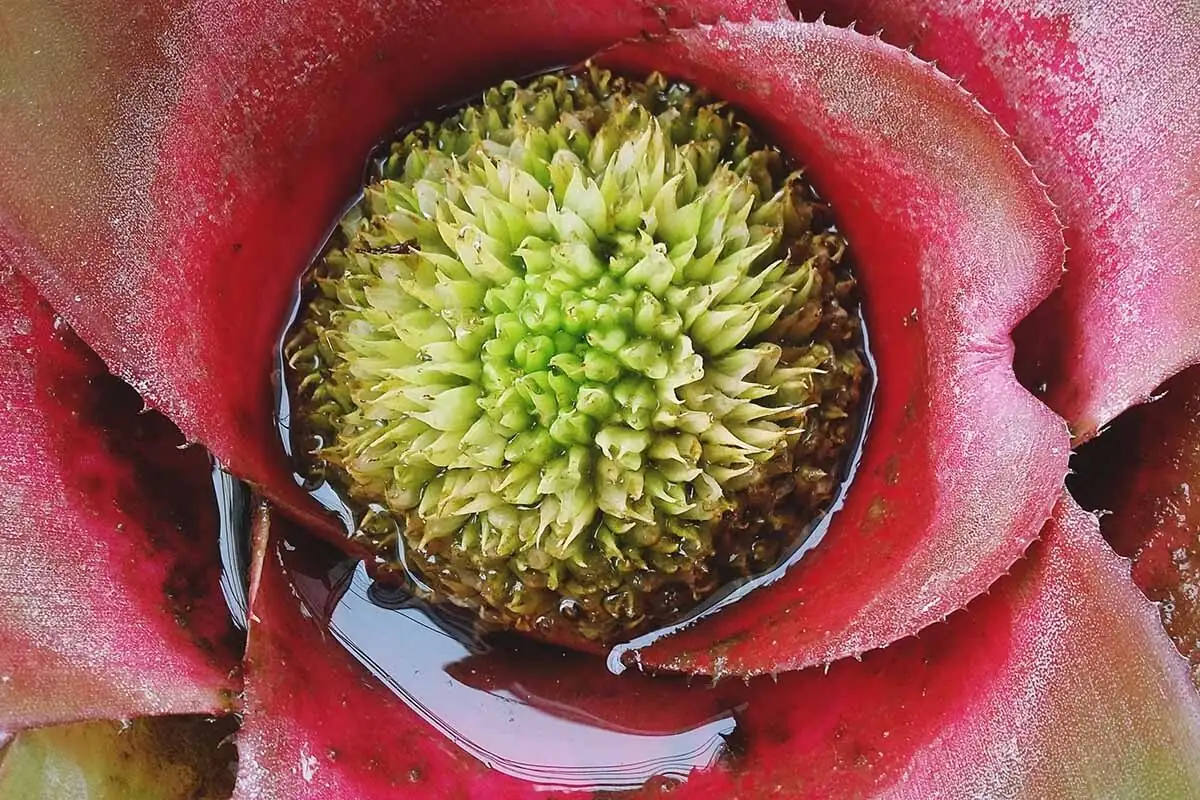
- Keep a small amount of clean water in the cup and refresh it about weekly so it never goes stale.
- In cooler or lower-light periods, reduce or empty the cup to lower the risk of rot.
- Always let excess water drain from the pot—no saucer baths, please.
The long con of color: bracts outlast the bloom
If your bromeliad seems to be “flowering” forever, that’s the trick: the show is in the bracts. Think of them as a vivid marquee advertising the much shorter performance of the true flowers tucked inside. The bracts often remain beautiful long after the flowers have finished.
Monocarpic by design: bloom, then bequeath
Many popular ornamental bromeliads are monocarpic: each rosette blooms once, then slowly declines. But this is not a tragedy—it’s a succession plan.
- After blooming, the mother rosette channels energy into pups (offsets) that form around the base.
- Let pups grow to 1/3–1/2 the size of the mother before gently separating.
- Pot pups into an airy, free-draining mix, keep them warm and slightly humid, and they’ll establish into a new clump—and, eventually, repeat the cycle.
Light, warmth, and air: the comfort zone
- Light: Bright, indirect light is ideal; gentle morning sun is fine, but protect from harsh midday rays that can scorch leaves and fade bract color.
- Temperature: 18–28°C (64–82°F). Protect from temperatures below 10°C (50°F) and cold drafts.
- Humidity: Moderate to high (about 50–70%). In dry homes, group plants or run a humidifier to prevent crispy tips.
- Placement: Near an east- or north-facing window, or set back from a bright south/west exposure with a sheer curtain. Bright kitchens and bathrooms can be perfect if the light is right.
- Outdoor limits: Not frost tolerant; generally suited to warm climates only (roughly USDA 10–12).
Potting mix and watering: think “orchid-adjacent”
- Mix: Very free-draining and airy—orchid bark with perlite or similar. Avoid heavy, soggy soils.
- Watering the mix: Moisten lightly and let excess drain; never leave the pot sitting in water.
- Watering the cup: For tank-forming types, keep a little fresh water in the central cup and refresh weekly; reduce or empty in cool/dim conditions.
Feeding, pruning, and repotting
- Fertilizer: Feed sparingly during active growth—balanced fertilizer at about 1/4 strength every 4–6 weeks. Overfeeding can dull bract color and stress roots.
- Pruning: After the show fades, remove the spent flower spike/bracts. Trim brown leaf tips as needed. Gloves help with spiny margins.
- Repotting: Only when crowded or unstable, typically every 1–2 years. Use a relatively small pot and that airy mix—bromeliads like a snug fit.
Spiky leaf armor and other delightful defenses
Those toothed or mildly spiny edges aren’t just for drama—they discourage leaf-munchers and channel rain toward the tank. If your plant leans prickly (hello, Aechmea), handle with care. The good news: they’re generally non-toxic to people and pets; the main hazard is mechanical—little scratches if you’re not mindful.
Buying smart: what to look for
- Choose plants with firm, upright leaves and vivid, clean bracts.
- Avoid soft or wobbly bases, blackened centers, or a sour smell—classic rot red flags.
- Minor browning at leaf tips is common; skip plants with heavy spotting, sticky residue, visible pests, or webbing.
Tiny ecosystem, big personality: styling ideas
- Stage a trio of contrasting forms—smooth-leaved Guzmania beside a banded, slightly armored Aechmea and a sculptural Vriesea—for instant tropical architecture.
- Elevate in decorative cachepots with drainage-friendly liners.
- Cluster near a bright bathroom window for that spa-like, rainforest vibe.
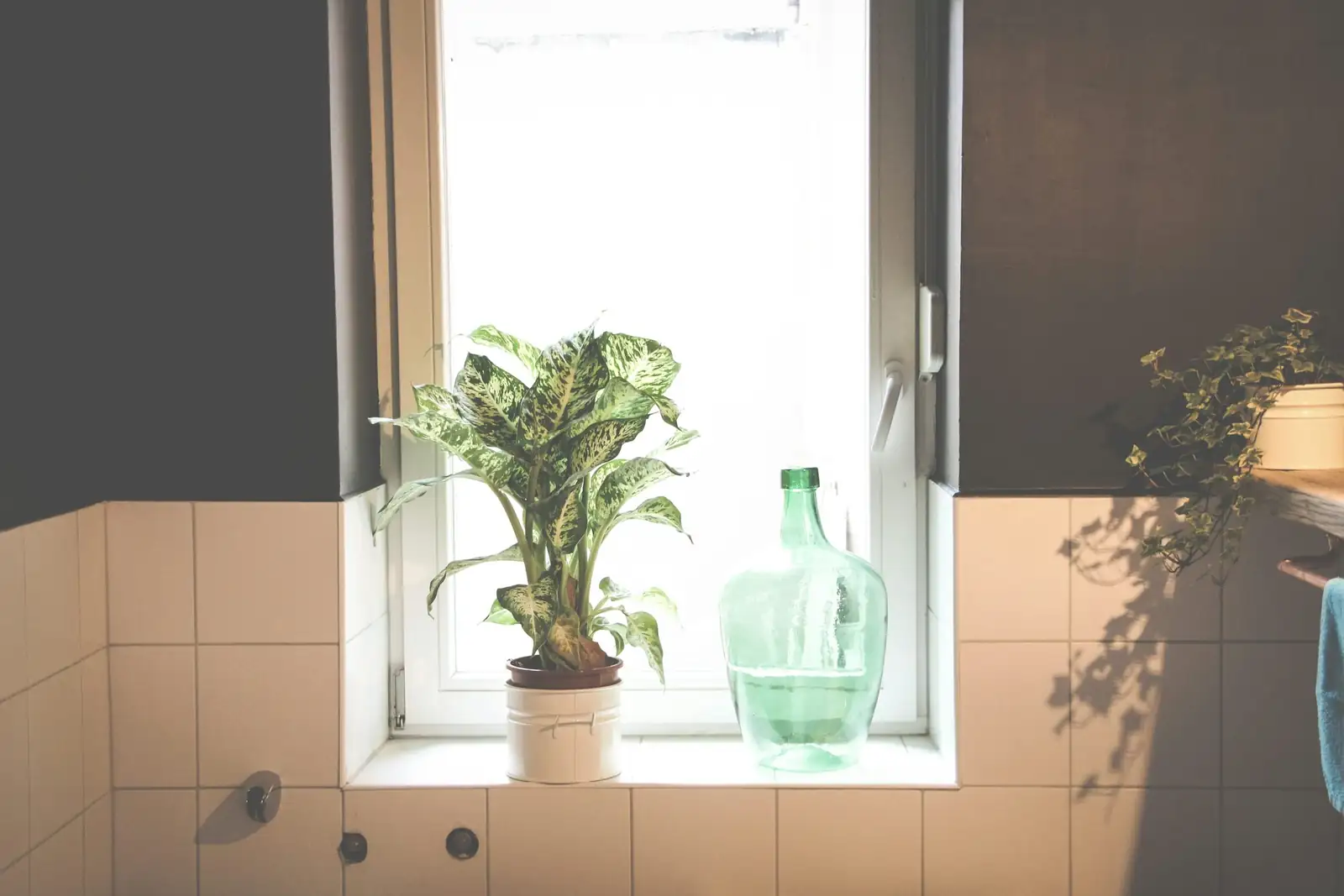
Pests and problems: what they’re telling you
- Usual suspects: Mealybugs, scale, and spider mites (especially in dry air). Treat early and isolate if needed.
- Rot risks: Overwatering, poor drainage, or stagnant cup water. Keep air moving, refresh cup water, and let the potting mix breathe.
Quick troubleshooting
- Brown tips: Air too dry or water quality/minor stress. Raise humidity; avoid letting the mix swing from bone-dry to soggy.
- Faded bracts: Natural aging, or too much sun. Shift to bright, filtered light.
- Pale, stretched leaves: Not enough light. Move closer to a bright window with gentle morning sun.
- Mushy center or base: Rot from excess moisture or stale cup water. Improve drainage, refresh or empty the tank more often, and let the mix dry slightly between waterings.
FAQ
- Why is my bromeliad’s “flower” lasting so long?
- Because the showy part is usually the bracts. They can look great for weeks to months, even after the small true flowers have finished.
- Do bromeliads die after flowering?
- Many ornamental types are monocarpic: the mother rosette slowly declines after blooming. The silver lining is pups—new rosettes that carry the torch.
- Can I keep water in the center cup?
- Yes for tank-forming types—keep a small amount of clean water and refresh it about weekly. In cooler or low-light periods, reduce or empty the cup to prevent rot.
Flower language and symbolism: hospitality with a tropical heartbeat
Bromeliads often symbolize vibrant energy, hospitality, and tropical cheer—themes popularized by interiors that use their long-lasting color as a sign of welcome. The cultural root of “hospitality” echoes the pineapple (a fellow bromeliad) long used as a welcoming emblem in the Americas. Beyond décor, their symbolism deepens:
- Resilience: Thriving on tree limbs with little soil, they embody resourcefulness.
- Community: The tank shelters a micro-world—life supported by a single plant.
- Renewal: Monocarpic bloom followed by pups mirrors graceful succession and legacy.
Fun to know
- Many bromeliads are epiphytes—they perch on trees without taking nutrients from their hosts.
- Some bromeliads form miniature “tanks” that, in the wild, can harbor tiny insects and even amphibians.
- Pineapple is a bromeliad—the same family as your living-room showpiece.
Care for them with bright, filtered light, warmth, and air at the roots, and these sculptural oddities will reward you with color that lingers, a story-rich life cycle, and a living reminder that even a houseplant can hold a whole world in its heart.