

Imagine a row of tiny, patterned pebbles quietly winking back from your windowsill—then, one afternoon, a crisp daisy bursts from the crack between them. That’s the magic of Lithops (Living Stones): miniature desert gems that turn a bright window into a curated rockscape. With shallow dishes, mineral top-dressings, and clever color-matching, you can style a serene, no-mess display that stays healthy under strong light and good airflow.
The windowsill brief: light, air, dryness
Lithops thrive where sunlight is generous and the air moves.
- Light: Aim for 6+ hours of direct sun. South- or west-facing windows are ideal; east can work well too. In very hot summers, give light midday shade and ensure airflow to prevent scorching behind glass.
- Airflow: Keep the air fresh. Open the window when weather allows or run a small, quiet fan on a timer for gentle movement. This helps the mineral mix dry quickly and discourages fungus gnats.
- Temperature: Best around 15–26°C (59–79°F). Keep above about 12°C (54°F) indoors in winter; protect from frost.
- Humidity: Low is best. Avoid persistently damp, stagnant rooms (think showers or steamy kitchens).
Pro tip: Acclimate newly purchased plants to stronger sun over 1–2 weeks to prevent sunburn.
Why shallow dishes shine
Lithops have sparse, relatively shallow roots and sit low to the ground—perfect for bonsai trays, lotus bowls, or low trough planters with excellent drainage holes.
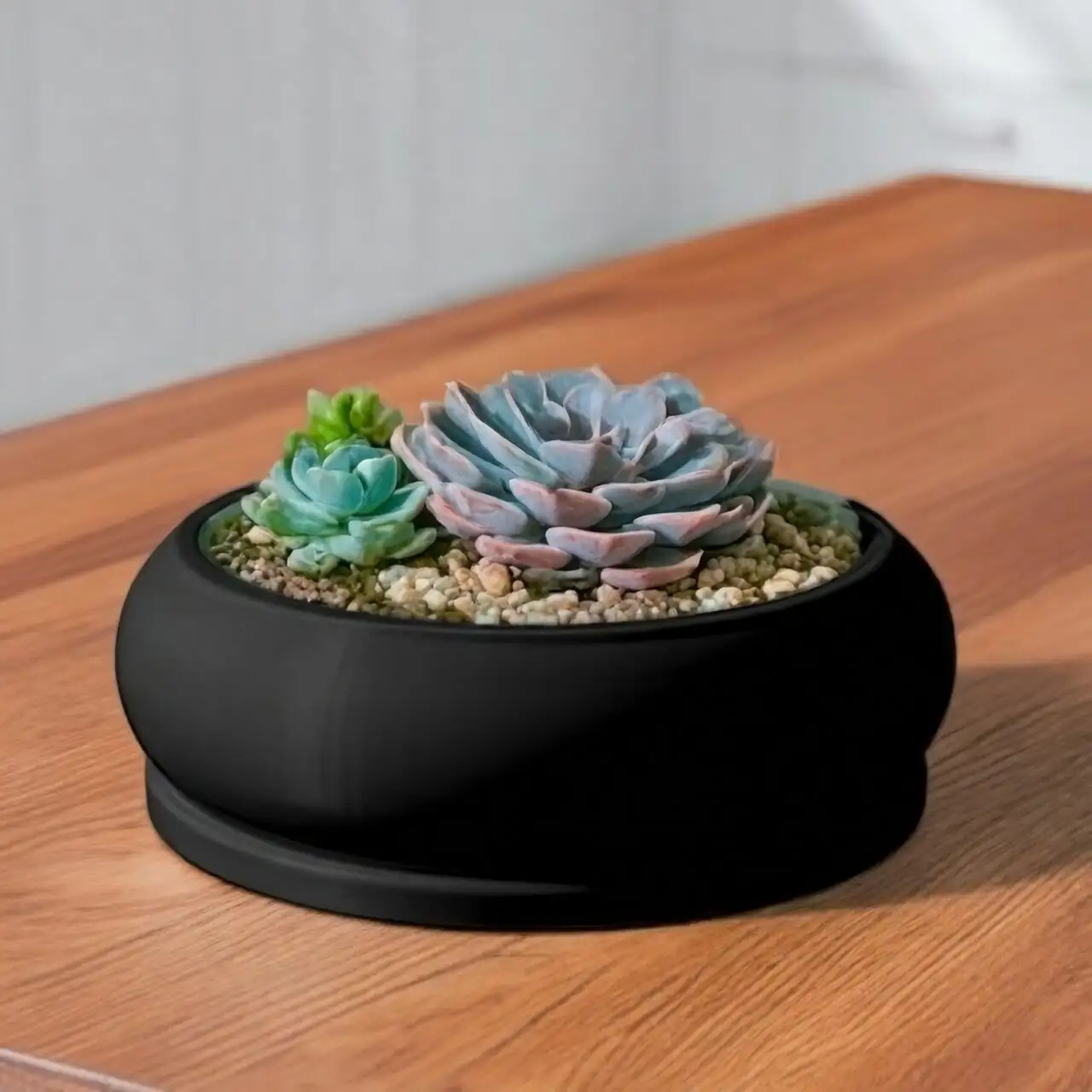
- Scale: A 7.5–10 cm (3–4 in) dish suits a single plant. A 10–12 cm (4–4.7 in) shallow pot often holds about 3–5 plants comfortably.
- Material: Unglazed clay or lightly glazed ceramics with a drainage hole help moisture exit fast.
- Depth: Low profile is great, but ensure the mix (not a false “drainage layer”) provides real drainage. Skip pebbles at the bottom; use a uniformly gritty mix instead.
- Lip design: A thin rim keeps top-dressing tidy without shading plant shoulders.
Spacing and layout
- Space each head so the “shoulders” aren’t touching—about 2–3 cm apart for small plants. Clumps can be planted slightly closer.
- Plant on a subtle mound so water naturally sheds away from the central fissure.
- Keep the plant body level with the top-dressing (no burying).
The gritty foundation: a fast-draining mix
Lithops demand a mineral-rich, very free-draining substrate.
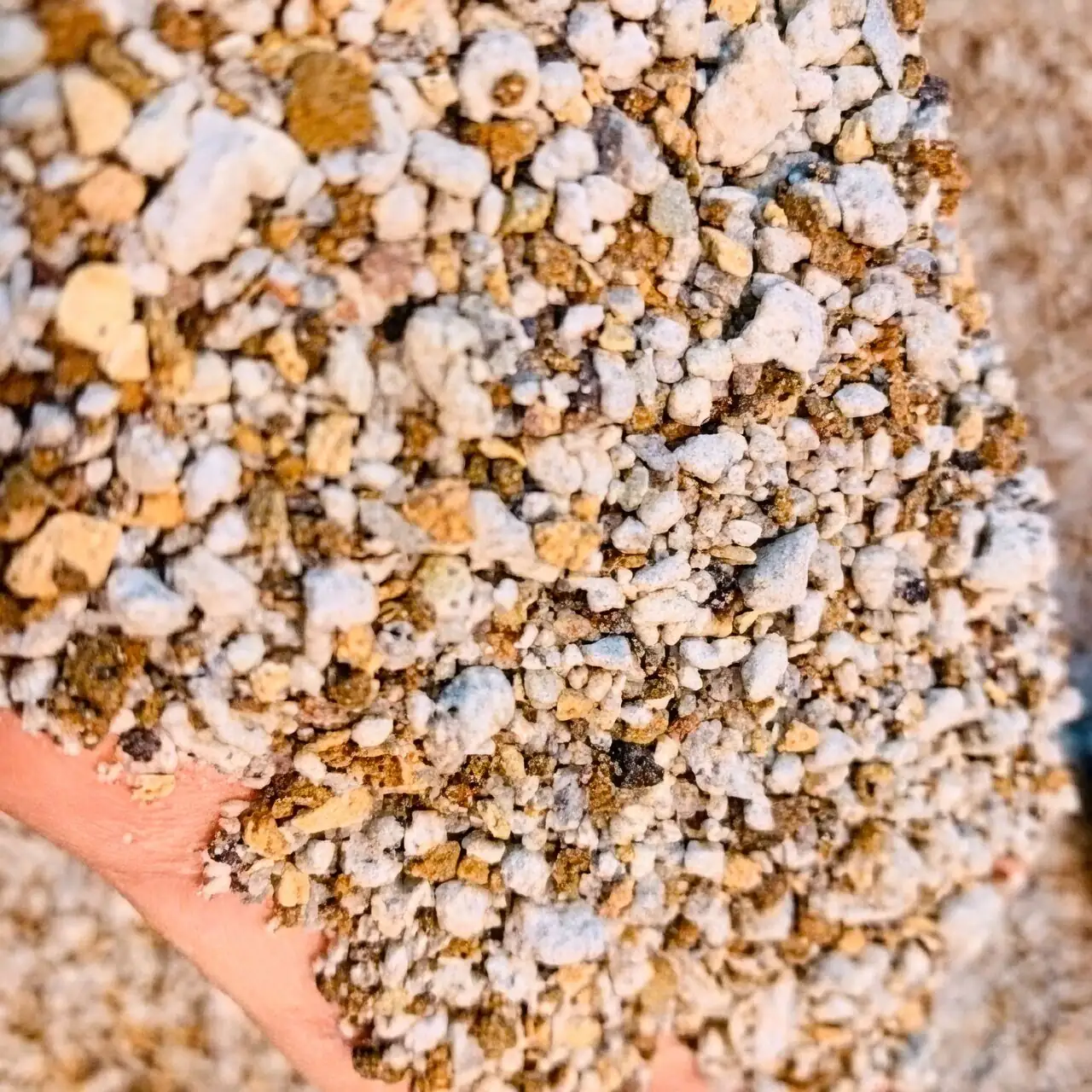
- Start simple: Mix potting soil with coarse grit/sand at roughly 2:1 (by volume). If the pot dries slowly, increase the mineral fraction.
- Popular mineral ingredients: pumice, coarse sand, 2–6 mm gravel, lava rock, crushed quartz, or granite chicken grit.
- Organic content: Keep it modest—just enough to buffer moisture during active growth, but not enough to stay damp for long.
Pro tip: Before planting, moisten a handful of the mix and squeeze—if it clumps, you need more grit.
Mineral top-dressings that look good and work hard
Top-dressing is both fashion and function: it finishes the look, keeps the crown clean, and speeds surface drying. Choose coarse, angular particles (3–6 mm) so air still circulates.
- Depth: Just enough to cover the mix—think a single thin layer. Don’t entomb the neck.
- Color ideas:
- Cool granite and quartz (silver/white) for blue-grey Lithops like L. salicola or L. julii.
- Warm decomposed granite, tan pea gravel, or ochre slate for browns and tans like L. lesliei, L. karasmontana, L. hookeri.
- Charcoal shale or black lava to make pale, windowed tops pop.
- Rose granite or burgundy gravel to echo the famous L. optica ‘Rubra’.
Avoid fine sand or powders—they compact, trap moisture, and smother the surface.
Curated color stories for your sill
- Monochrome Granite Garden
- Plants: Blue-grey and silver-patterned cultivars (salicola, julii forms).
- Top-dressing: Crushed quartz and pale granite.
- Vessel: Matte white or pale stone ceramic.
- Warm Karoo Trough
- Plants: Tan-to-russet species (lesliei, aucampiae, karasmontana).
- Top-dressing: Decomposed granite, golden pea gravel.
- Vessel: Unglazed terra-cotta or warm oatmeal glaze.
- Desert Dusk Minimalism
- Plants: L. optica ‘Rubra’ with a few neutral companions.
- Top-dressing: Charcoal shale with a scatter of pink granite.
- Vessel: Low black stoneware for drama.
- Soft Neutrals, High Texture
- Plants: A mixed trio with subtle marbling.
- Top-dressing: Mixed-size pale gravels for a natural “wadi” look.
- Vessel: Oval bonsai tray in muted grey.
Design tips: Use odd-numbered groupings, leave negative space, and vary pebble size slightly to mimic nature.
Planting, step by step
- Cover the drainage hole with a single mesh square (not pebbles).
- Fill with gritty mix, gently mounding toward the center.
- Set Lithops at the same depth they were growing before—shoulders visible, not buried.
- Add a thin mineral top-dressing; brush stray grit off the plant bodies.
- Do not water immediately if roots were disturbed—wait 3–5 days, then give a light drink.
No-mess watering on a windowsill
Lithops prefer to dry completely, then receive a modest drink. It’s safer to keep them slightly wrinkly than waterlogged.
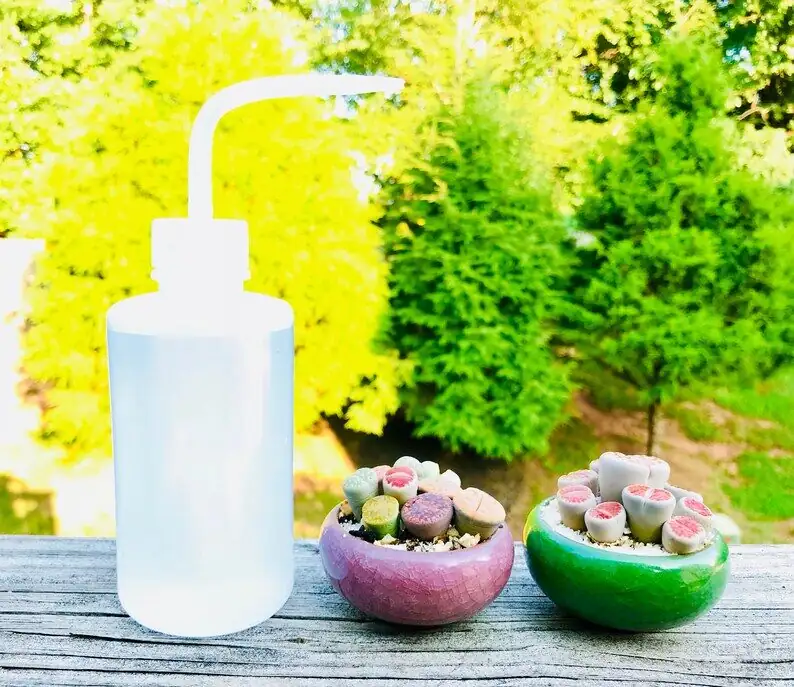
- Tools that help:
- Squeeze bottle or syringe to dribble water along the inner rim of the pot—no splashing on the bodies.
- A turkey baster to spot-water and to remove any standing water quickly.
- A catch tray lined with a few pebbles to intercept drips; empty it immediately after watering.
- Methods:
- Edge-watering: Add a small volume at the pot’s edge; stop before water freely streams from the hole.
- Brief bottom-soak: For very dry mix only—set the pot in shallow water for a few minutes, then drain thoroughly. Never leave water in a saucer.
- Seasonal rhythm:
- Late summer to autumn: Cautious, occasional watering supports growth and flowering—only after the mix is fully dry.
- Winter: Keep bright and mostly dry.
- Spring: Water sparingly and avoid watering during leaf replacement until old leaves have largely dried.
- Hot summer spells: Many plants rest—water much less, allow airflow, and give light midday shade behind glass.
Light and airflow choreography
- Orientation: South/west is prime; east works for gentler mornings. Rotate the dish a quarter-turn every 1–2 weeks for even growth.
- Heat management: Behind glass, midday sun can scorch—use a sheer curtain at peak hours or move the dish 15–30 cm back.
- Ventilation: A small USB fan on a timer (for example, 15 minutes each hour during the warmest part of the day) keeps the crown dry and roots out of trouble.
Keeping the look crisp
- Dust the top-dressing with a soft brush every few weeks.
- Remove fully dried, papery old leaves during repotting—never pull off anything still fleshy.
- Repot infrequently (about every 2 years or when the mix slows), ideally in late winter to early spring.
Quick troubleshooting
- Wrinkling but firm: Time for a modest drink.
- Mushy base or blackened tissue: Likely rot—unpot, remove bad roots, repot into a drier, grittier mix, and improve airflow.
- Elongated, tall “pebble”: Not enough light; move to a brighter window or add a grow light.
- Sun scorch (bleached or browned patches): Provide light midday shade, increase airflow, and acclimate gradually.
- Gnats: Switch to all-mineral top-dressing, allow true dry-downs, and boost ventilation.
Flower moment and meaning
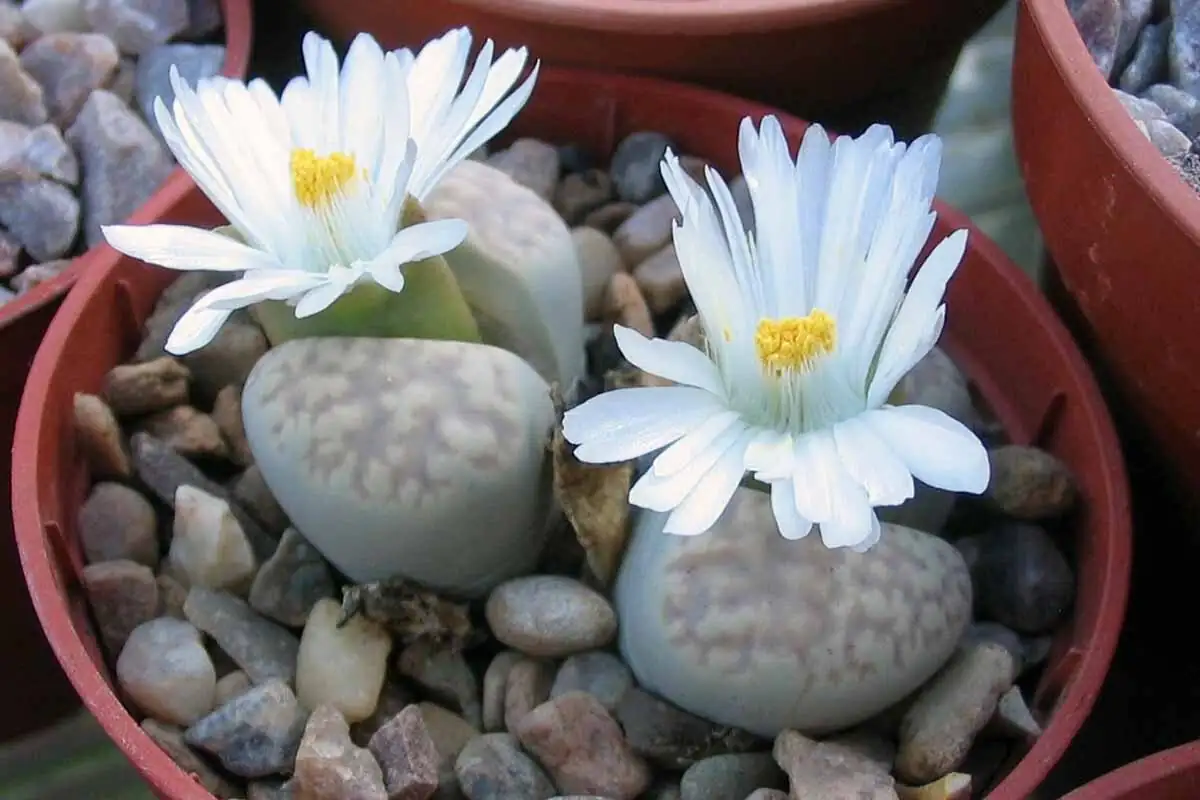
From late summer through autumn, daisy-like blooms—usually white, sometimes yellow—push from the central slit like confetti from a geode. Their “beauty in disguise” persona, surviving deserts while masquerading as stones, has made Lithops a symbol of resilience and quiet strength. They whisper that elegance doesn’t need to shout.
Choosing plants for your styled dish
- Look for firm, plump bodies with crisp patterns and an intact central fissure.
- Avoid soft spots, mushy bases, blackened tissue, persistent wet soil, or obvious pests.
- Seed-grown plants typically need 2–3 years to flower; buy a few sizes if you want staggered blooms.
Safe for homes, neat for sills
Lithops are generally considered non-toxic to humans and pets, but their pebble-like bodies can be a choking hazard—display out of reach of curious hands and paws.
A simple recipe to get started
- Vessel: 10–12 cm low ceramic with a drainage hole.
- Mix: Start with potting soil:grit at about 2:1 by volume; increase mineral content if drying is slow.
- Top-dressing: Coarse quartz or granite, a thin single layer.
- Placement: Bright south/west window with a bit of midday protection in peak heat and gentle airflow.
- Water: Only when fully dry, lightly; keep drier in winter and during leaf replacement.
Styled with a designer’s eye and a desert grower’s restraint, your Living Stones will read as both sculpture and story—small, stoic, and perfectly at home on a sunlit sill.