

What if choosing an air plant felt as intuitive as choosing a seat in a café—sunny window bar or cozy corner booth? With Tillandsia, picking the right species for your light and humidity makes all the difference. Think silvery, fuzzy rosettes that revel in bright, dry spots (hello, T. tectorum and T. xerographica) versus greener forms that sip moisture in brighter shade (T. ionantha and T. stricta). Here’s your buyer’s guide—complete with care nuances and styling ideas—to get the match just right.
Start here: read your light and humidity
- Bright, dry room with lots of airflow? Choose gray, highly trichomed, “xeric-leaning” species that tolerate more sun and less frequent watering.
- Bright but filtered light with moderate humidity (50–70%+)—think east window, a set-back south window, or a bright bathroom with a window? Choose greener “mesic-leaning” species that like steady moisture and brighter shade.
- Rule of thumb: more silver = more sun and drought tolerance; more green = more shade and water tolerance.
Tip: Indoors, avoid harsh midday sun, especially through glass. Gentle morning sun is usually fine for gray-leaved types; most greener types want bright, indirect light.
Xeric picks for bright, dry perches
These are the sunbathers with visible, fuzzy leaf scales (trichomes) that act like tiny sponges.
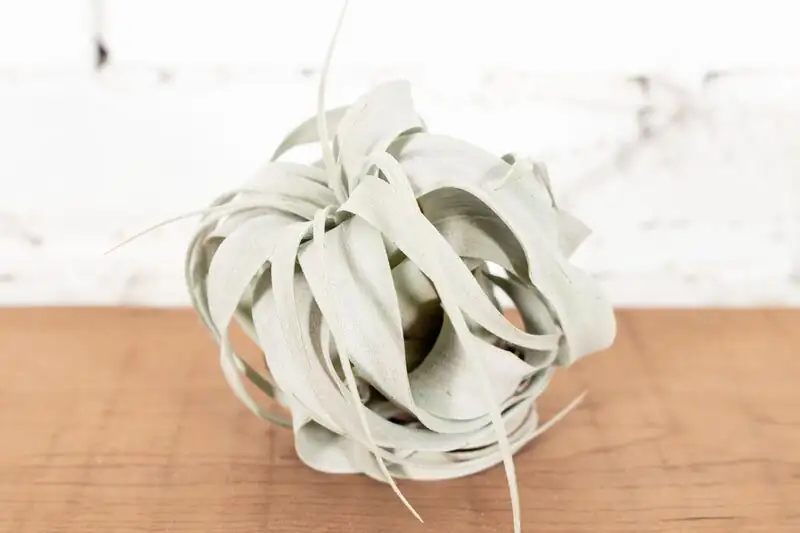
Tillandsia tectorum (often sold as T. tectorum “Ecuador”)
- Look: Ethereal, snow-dusted rosette with ultra-silvery, fuzzy leaves.
- Best spot: Brightest window with excellent airflow; can handle gentle morning sun.
- Watering nuance: Very light touch. Many growers succeed with misting rather than frequent soaks. If you dunk, do it briefly and only when it’s truly thirsty—then dry fast (aim for fully dry within ~4 hours).
- Styling: Shine in minimalist cradles, on pale driftwood, or atop a sun-bleached stone. Keep it removable for occasional rinses.

Tillandsia xerographica
- Look: A sculptural queen—broad, ribboning leaves in a grand rosette; often 20–30+ cm across with age.
- Best spot: Bright, filtered light; tolerates a little direct morning sun.
- Watering nuance: Deep, less-frequent hydration works well. Soak ~30–60 minutes (weekly-ish in warm, dry rooms), then shake hard and drain upside down. Excellent airflow is nonnegotiable.
- Styling: Statement piece on a pedestal, in a wire halo, or centered on cork bark. Pairs beautifully with stones and desert-inspired accents.
Other xeric-leaning favorites worth seeking:
- T. streptophylla (curly, octopus-like leaves; enjoys bright light and drying quickly)
- T. duratii (aromatic when in bloom; long, coiling leaves)
- T. capitata forms (often peachy with blush; bright light lovers)
Mesic to semi-mesic picks for brighter shade and humidity
These greener species appreciate steadier moisture and filtered light.
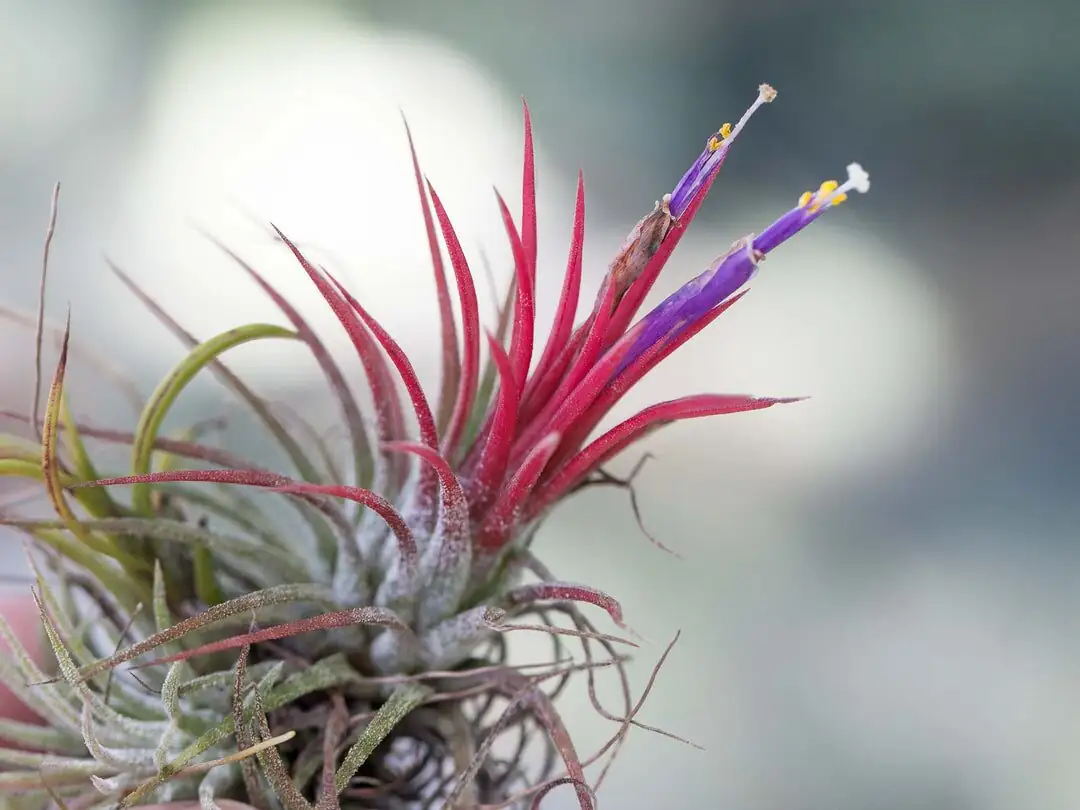
Tillandsia ionantha
- Look: Compact rosettes that blush vivid red at bloom; purple tubular flowers.
- Best spot: Bright, indirect light; closer to an east window or set back from a south/west window.
- Watering nuance: More frequent hydration than xeric types. Soak weekly in warm seasons, mist in between if air is dry. Dry fast after every watering.
- Styling: Cluster several on a cork panel or driftwood branch; they pup readily into charming clumps.
Tillandsia stricta
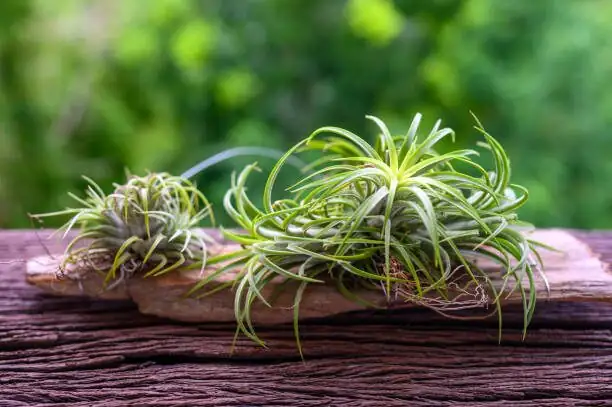
- Look: Neat, grassy rosette; often produces striking pink bracts.
- Best spot: Bright shade/filtered light. Avoid strong midday sun.
- Watering nuance: Consistent, moderate moisture with quick drying. In warm months, a weekly soak plus an extra mist or two in dry rooms.
- Styling: Excellent on a mounted plaque, tucked into an open glass orb (always ventilated), or perched in a shell.
Other mesic-leaning companions:
- T. brachycaulos (flushes red with light and at bloom)
- T. bulbosa and T. butzii (distinctive forms; love humidity and bright shade)
- T. usneoides (Spanish moss)—a graceful cascade in high-airflow, bright shade
Match the plant to the place
- East window, breezy shelf: T. ionantha, T. stricta, T. brachycaulos.
- Sunny, airy living room with morning sun: T. xerographica, T. capitata, T. streptophylla.
- Bright bathroom with a window (humidity + airflow): T. ionantha, T. stricta, T. bulbosa, Spanish moss.
- South/west window (set back or filtered): Gray species like T. xerographica or T. tectorum; still protect from harsh midday beams behind glass.
Watering and airflow: the rhythm that keeps them thriving
General routine for most:
- Soak about once weekly for 30–60 minutes using rain, distilled, or low-mineral water.
- Shake vigorously, then set plants upside down or on their sides to drain; target fully dry within ~4 hours.
- In hot, dry rooms, add light misting 2–3 times weekly between soaks.
- In winter or low light, water less often and keep them on the dry side—but not desiccated.
- Keep flowers as dry as possible during watering to avoid damage.
Xeric twist:
- Heavily silvery species (e.g., T. tectorum) prefer much lighter watering—often just periodic misting and very infrequent, brief dunks. Always prioritize airflow and quick drying.
Light, temperature, humidity—set the stage
- Light: Bright, indirect to light shade indoors; gentle morning sun for gray types.
- Temperature: 15–25°C (59–77°F) ideal. Keep most common species >10°C (50°F) in winter.
- Humidity: Aim for 50–70%+ with strong ventilation. Still, wet air invites rot—airflow matters as much as moisture.
Feeding, seasons, and growth
- Fertilizer: Foliar-feed lightly during active growth using a bromeliad/air-plant or orchid fertilizer at 1/4 strength. Mist or soak with diluted feed about monthly; rinse with plain water occasionally. Pause or reduce in winter.
- Seasonal cues:
- Spring–summer: Brighter filtered light, slightly more water, gentle feeding, turbo airflow.
- Autumn: Taper water and feed as days shorten.
- Winter: Warmth, less water, near-zero fertilizer, and quick drying.
- Growth and bloom: Most Tillandsia bloom once per rosette with colorful bracts and tubular flowers. Afterward, the “mother” slowly declines and produces pups (offsets) to carry on.
Buyer’s checklist: choose a winner
- Look for a firm, symmetrical rosette with crisp leaves (not limp, mushy, or severely wrinkled).
- Avoid blackened bases, soft crowns, sour smells, or rot.
- Check crevices for mealybugs/scale.
- If buying in bloom, choose intact bracts and make sure water can’t pool in them.
Health notes and safety
- Most issues are cultural: rot from staying wet too long in cool or still air; sunscald from harsh light. Dry fast after every watering.
- Pests: Mealybugs and scale are most common; treat with insecticidal soap or carefully dab with diluted isopropyl alcohol, keeping the crown from staying wet. Spider mites can appear in very dry rooms—improve humidity and rinse/soak consistently.
- Pet-friendly: Generally considered non-toxic to people, cats, and dogs. Still, place out of reach of nibblers.
Display and pairing ideas that suit their care
- Go breathable: Cork bark, driftwood, wire cradles, open glass, shells, or stones. Keep plants removable for soaking and drying.
- Desert vignette: Pair T. xerographica or T. tectorum with lava rock, pale driftwood, and a sculptural stone. Minimalist and high airflow.
- Cloud forest plaque: Mount T. ionantha, T. stricta, and T. bulbosa on a cork slab. Add just a touch of decorative (dry) moss around but never pack it tightly—airflow first.
- Hanging mobiles and frames: Use fishing line or soft wire; space plants so none shade or drip on each other.
- Terrariums: Only open ones. Return plants to the vessel only after they’re fully dry.
- Pro tip: Avoid permanent glues; use ties or a dab of removable, water-safe adhesive so you can detach plants for soaking.
Blooming, pups, and clumping
- After flowering, remove fading bracts to keep things tidy and prevent moisture from sitting in the inflorescence.
- Pups can be left to form lush clumps or separated once they’re about 1/3–1/2 the size of the mother (bonus if they’ve grown a few anchoring roots).
Symbolism: why air plants capture imaginations
Air plants have become symbols of freedom, resilience, creativity, and “living lightly.” Their soil-free lifestyle and neat rosette form invite a sense of perfection-in-simplicity. While “flower language” traditions vary by culture, the modern affection for Tillandsia stems from their adaptable nature—thriving on light, air, and a bit of care—and from the endlessly creative ways we can display them.
Quick species picks at a glance
- Bright + dry, high airflow:
- T. tectorum: Very light watering (mostly mist), brightest light.
- T. xerographica: Bright, filtered light; deep but infrequent soaks; dry fast.
- T. streptophylla / T. capitata: Bright light; moderate soaks with thorough drying.
- Bright indirect + moderate humidity:
- T. ionantha: Weekly soaks + extra misting in dry rooms; clusters beautifully.
- T. stricta: Steady moisture, bright shade; avoid harsh sun.
- T. bulbosa / T. butzii: Love humidity and airflow; keep crowns dry between waterings.
A final nudge: pick the plant for the place you actually have, not the place you wish you had. With the right match—light, humidity, and airflow—Tillandsia repay you with sculptural beauty, vivid blooms, and ever-growing clumps that feel like living art.


