

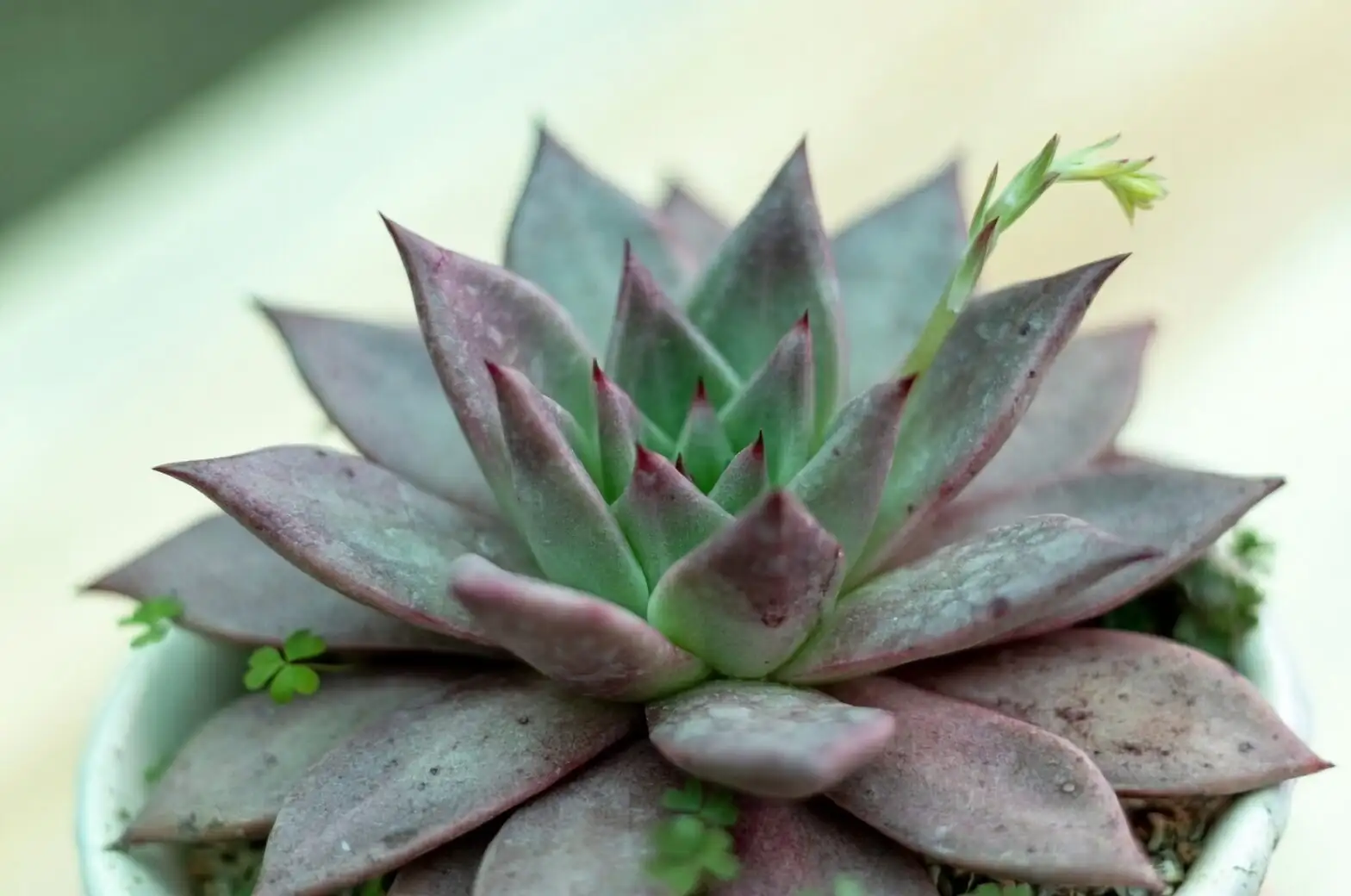
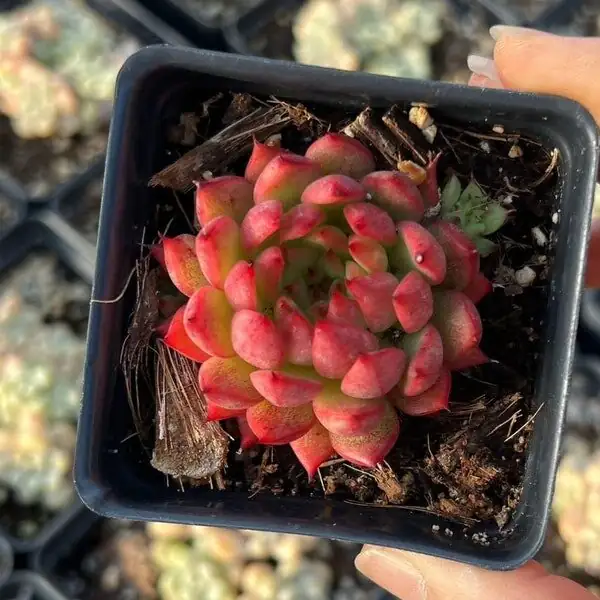
Some succulents wear their toughness like a badge, and Echeveria ‘Red Taurus’ certainly does—tight, symmetrical rosettes flushed deep wine-red in strong light, then summer flower stalks tipped with cheerful red-and-yellow blooms. But even a bull has soft spots. The “seams” where leaves meet the stem, the tender flower stalks, and the undersides of leaves are prime ambush points for mealybugs, aphids, and spider mites. And if water lingers at the crown or in soggy soil, rot charges in. Here’s a fast, field-tested triage guide to spot problems early, take decisive action, and keep your Red Taurus charging forward.
Fast triage: what you’re seeing—and what to do now
Mealybugs (most common; hide in leaf axils and the crown)
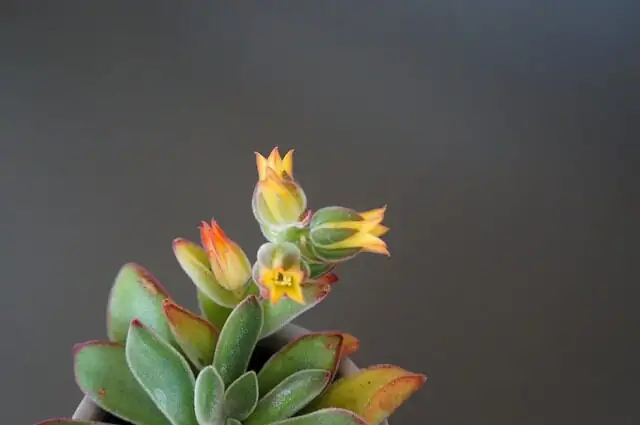
- Look for: White, cottony tufts deep where leaves meet the stem; sticky honeydew; distorted new growth; ants patrolling.
- Confirm: Part the rosette gently—use a flashlight to scan the leaf axils and crown.
- Act now: Isolate the plant. Dab or spray visible mealybugs with 70% isopropyl alcohol (test on one leaf first). Physically remove clusters with a cotton swab or soft brush.
- Follow-up: Repeat treatment every 3–4 days for 2 weeks to catch hatchlings. Control ants (they farm mealybugs for honeydew).
Aphids (often cluster on flower stalks and buds)
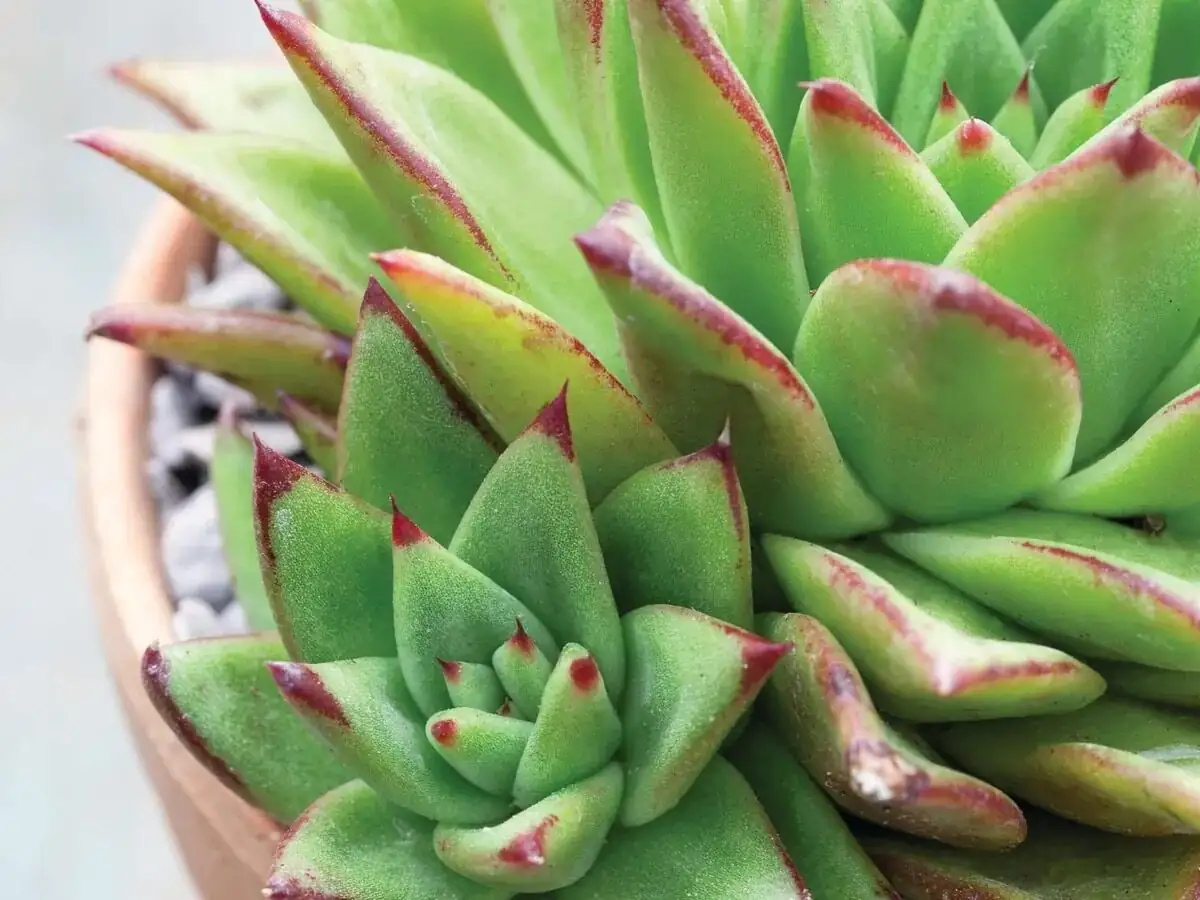
- Look for: Crowds of pear-shaped green/black aphids on the tall summer bloom stalks; sticky residue; sooty mold may follow.
- Confirm: Check along the entire stalk, especially near buds and under bracts.
- Act now: If the stalk is heavily infested, cut it off and discard. Otherwise, treat stalks and buds with insecticidal soap or 70% isopropyl alcohol; wipe off residue after it dries.
- Follow-up: Recheck twice weekly until clear; remove any renewed colonies promptly.
Spider mites (hot, dry spells)
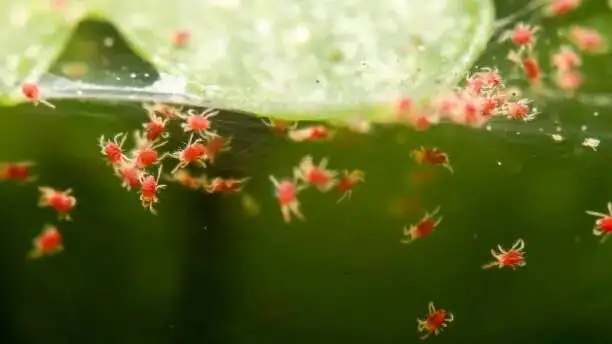
- Look for: Fine stippling or dulling of the burgundy leaves; very fine webbing between inner leaves; leaves can look dusty.
- Confirm: Tap a leaf over white paper; watch for tiny reddish or yellowish moving dots.
- Act now: Increase airflow. Treat leaf undersides and inner rosette with insecticidal soap or a careful mist of 70% isopropyl alcohol (patch test first).
- Follow-up: Repeat every 3–4 days for 2 weeks; keep the plant out of intense midday sun during treatment days to avoid product burn.
Tip: Avoid spraying alcohol or soap in full sun or heat waves. Treat in early morning or late day and let the plant dry with good airflow.
Step-by-step: treatments that work
Tools and basics
- 70% isopropyl alcohol in a fine-mist spray bottle
- Insecticidal soap (use per label)
- Cotton swabs, soft artist’s brush, tweezers
- Paper towels, small trash bag, sanitized snips
- Optional: yellow sticky traps (to monitor winged aphids), a small fan for airflow
Mealybugs in leaf axils (precision clean-out)
- Isolate the plant.
- Gently tilt the rosette sideways so liquid won’t pool in the crown.
- Use a cotton swab dipped in 70% isopropyl alcohol to dab each white tuft; mealybugs dissolve on contact. For tight spots, use a soft brush.
- Lightly mist the rosette center with alcohol only if needed—avoid drenching the crown.
- Wipe away dead mealybugs and honeydew; remove any dried lower leaves where pests hide.
- Let the plant dry quickly with strong airflow.
- Repeat every 3–4 days for 2 weeks. If you see ants, manage them—they reintroduce pests.
Aphids on flower stalks (don’t let them sap the show)
- Inspect as soon as stalks appear; aphids favor fresh growth and buds.
- If the stalk is heavily coated, prune it off and dispose of it sealed. Your plant will often push another stalk in good conditions.
- For lighter infestations, spray stalks and buds with insecticidal soap or 70% isopropyl alcohol until wet; avoid runoff into the rosette.
- After it dries, wipe or rinse the stalk gently. Keep the plant shaded and breezy for a few hours post-treatment.
- Repeat in 3–4 days if needed; check adjacent plants, too.
Spider mites (slow and steady wins)
- Boost airflow immediately; a small fan or moving the plant to a breezier bright spot helps.
- On a cool, shaded part of the day, mist leaf undersides and the inner rosette with insecticidal soap or 70% isopropyl alcohol; avoid saturating the crown.
- Allow thorough drying before returning the plant to brighter light.
- Repeat every 3–4 days for 2 weeks. Persistence is key—mites cycle fast.
- If mites persist, consider a miticide labeled for ornamentals and rotate modes of action as directed.
Note: Many succulents tolerate 70% isopropyl alcohol well, but always patch-test one leaf first and never spray under intense sun or high heat.
Preventing the big killer: crown and root rot
Rot moves faster than bugs when conditions are wrong. Your best defense is a gritty mix, measured watering, and moving air.
Build the right foundation
- Soil: Use a very free-draining cactus/succulent mix. Improve it 30–70% with mineral grit (pumice or perlite) so water sheets through and roots breathe.
- Pot: Always choose a pot with a drainage hole; terracotta helps moisture evaporate.
- Watering: Soak thoroughly, then allow the mix to dry out completely before watering again. In spring–summer that’s often every 7–14 days; in winter, every 3–4 weeks or less.
- Technique: Water at the soil line, not into the rosette. If water does land in the crown, tip the plant to drain it and wick out with a paper towel.
Air, light, and temperature
- Light: Bright light to full sun keeps rosettes tight and colorful; in very hot climates, add light afternoon shade.
- Airflow: Space plants so leaves don’t touch; use a fan indoors; avoid long, damp stillness around the crown.
- Temperature: Best growth at 59–81°F (15–27°C). Protect from frost; keep above 32–41°F (0–5°C).
Rot SOS (if you spot trouble)
- Symptoms: Mushy, translucent leaves; a foul smell; blackened, soggy roots; rot starting in the crown.
- Act fast:
- Unpot and remove all wet, dark, or mushy tissue and roots with sterilized tools, cutting back to firm, healthy tissue.
- Let the cut surfaces callus for 2–5 days in a dry, bright, airy spot.
- Repot into fresh, gritty, dry mix. Do not water for about a week, then resume a sparse soak-and-dry routine.
Smart prevention habits
- Quarantine new plants for 2–3 weeks; inspect the crown and leaf bases for mealybugs.
- Keep rosettes clean: remove spent lower leaves that create pest hideouts.
- Water only when the mix is dry; don’t let water sit in the crown.
- Feed lightly in spring and summer at 1/4–1/2 strength every 4–6 weeks; skip winter. Overfertilizing can invite pests.
- Space plants for airflow; avoid crowding mixed bowls.
- Monitor weekly, especially during hot, dry spells or when flower stalks appear.
- Control ants outdoors; they protect and spread aphids and mealybugs.
- Use yellow sticky cards to monitor flying aphids in greenhouses or bright indoor setups.
- Clean and sanitize tools between plants.
Season-by-season watch
- Spring: Growth surges—also prime time for mealybugs. Increase light gradually and resume soak-and-dry watering. Inspect leaf axils weekly.
- Summer: Red Taurus blooms; watch stalks for aphids. Water only when fully dry. Provide light afternoon shade in extreme heat and keep air moving to deter mites.
- Autumn: Growth slows—reduce watering. Keep bright light to maintain color.
- Winter: Bright and cool is ideal; water very sparingly. Protect from frost and avoid cold, wet soil.
Quick answers to common “uh-ohs”
- Leaves turning more green? Color deepens with strong light and often cooler nights. Gradually increase direct sun for richer burgundy tones.
- Plant stretching tall? That’s low light (etiolation). Move to brighter light; you can behead and re-root the rosette to restore a compact form.
- Rot from the center? Most often trapped water in the crown or soil staying wet too long with poor airflow. Water at the soil line, use a gritty mix, and let the pot dry fully between waterings.
With a gritty substrate underfoot, good light on top, and a breeze through those layered leaves, Echeveria ‘Red Taurus’ stays fierce and flawless. Keep your triage kit handy, act quickly at the first cottony tuft or sticky stalk, and this burgundy beauty will repay you with tight rosettes and summer fireworks year after year.
Safety note: Generally considered non-toxic to people and pets, though chewing any plant can cause mild stomach upset. Keep out of reach of nibblers.