

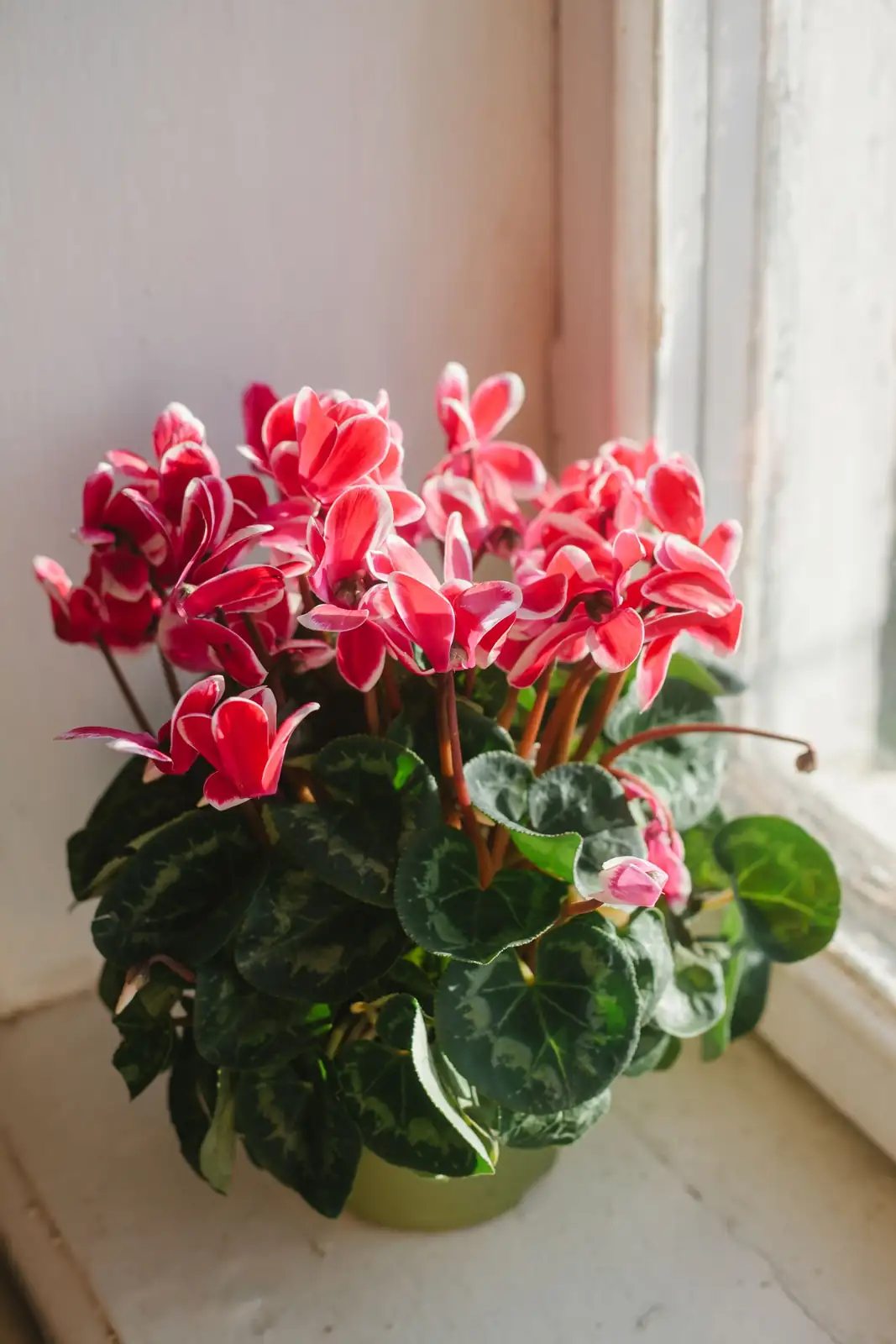
Cyclamen persicum is the rare houseplant that loves sweater weather. While laptops, lamps, and radiators make interiors cozy (and many plants sulk), this compact “ballerina” thrives in cool rooms, flashing silver-marbled hearts of foliage and butterfly-like blooms just when your desk, sill, or dining table needs cheering up most.
Why this plant is an interior designer’s winter secret
- Compact and tidy: typically 15–23 cm (6–9 in) tall and wide—perfect scale for desktops, windowsills, and small tables.
- Foliage as decor: heart-shaped leaves intricately marbled with silver look luxe even without flowers.
- Long, cool-season color: elegant blooms in white, pink, red, or purple from fall through spring (often peaking December to February).
- Heat averse (in a good way): it actively prefers cool, bright spots where other tropical houseplants underperform.
Think of it as the room’s winter corsage—refined, seasonal, and surprisingly low-drama when you meet its simple need for light, cool air, and careful watering.
Place it like a pro: brightening desks, sills, and tables—without heat stress
Windowsills
- Best exposures: bright, indirect light—east-facing is ideal; north is gentle and safe. In south or west windows, set it back from the glass or use a sheer curtain.
- Keep it cool: avoid radiators, baseboards, and sun-baked glass. A few centimeters of air gap and a ceramic or cork trivet help prevent warm-up from below.
Desks
- Position out of the heat plume from laptops and monitors. LED task lamps are fine; incandescent bulbs run too hot.
- Rotate a quarter turn weekly for even growth and a symmetric “mound.”
Tables and consoles
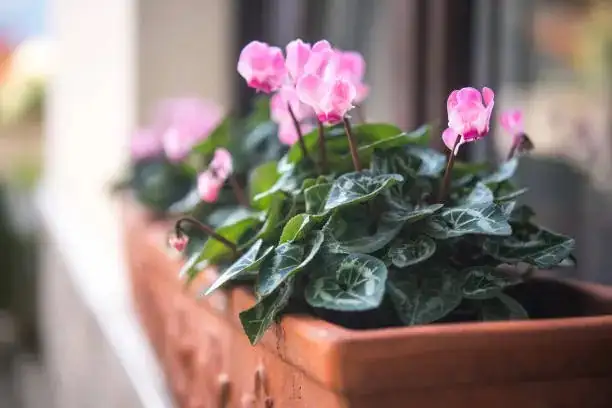
- Group 3 mini cyclamen in a long trough for a festive runner, or style a single standard size in a footed cachepot. Keep candles at a distance and avoid heat-emitting centerpieces.
Pro tip: A shallow pebble tray under the pot subtly boosts humidity without wetting the crown, and the stone layer also insulates from warm surfaces.
Comfort zone: light, temperature, humidity
- Light: bright, indirect. Avoid hot, direct sun that can scorch leaves.
- Temperature: cool is key—about 15–21°C (60–70°F) by day; ideally 4–10°C (40–50°F) at night. Sustained warmth (especially above ~20°C / 68°F) shortens bloom life.
- Humidity: moderate to high, ideally above 50%. Use a pebble tray or humidifier and keep gentle air movement around the leaves.
Containers and potting that flatter—and protect
- Potting mix: rich but very free-draining, slightly acidic. A loamy, peat-based mix with added perlite works well.
- Drainage: essential. Terracotta keeps the root zone cooler; use pot feet to prevent waterlogging.
- Tuber position: when repotting (about every 2 years, during summer dormancy), keep the top third of the tuber slightly exposed above the soil line to reduce rot.
Watering like an expert stylist
- Check first: water when the top 2–3 cm (about 1 in) of soil feels dry.
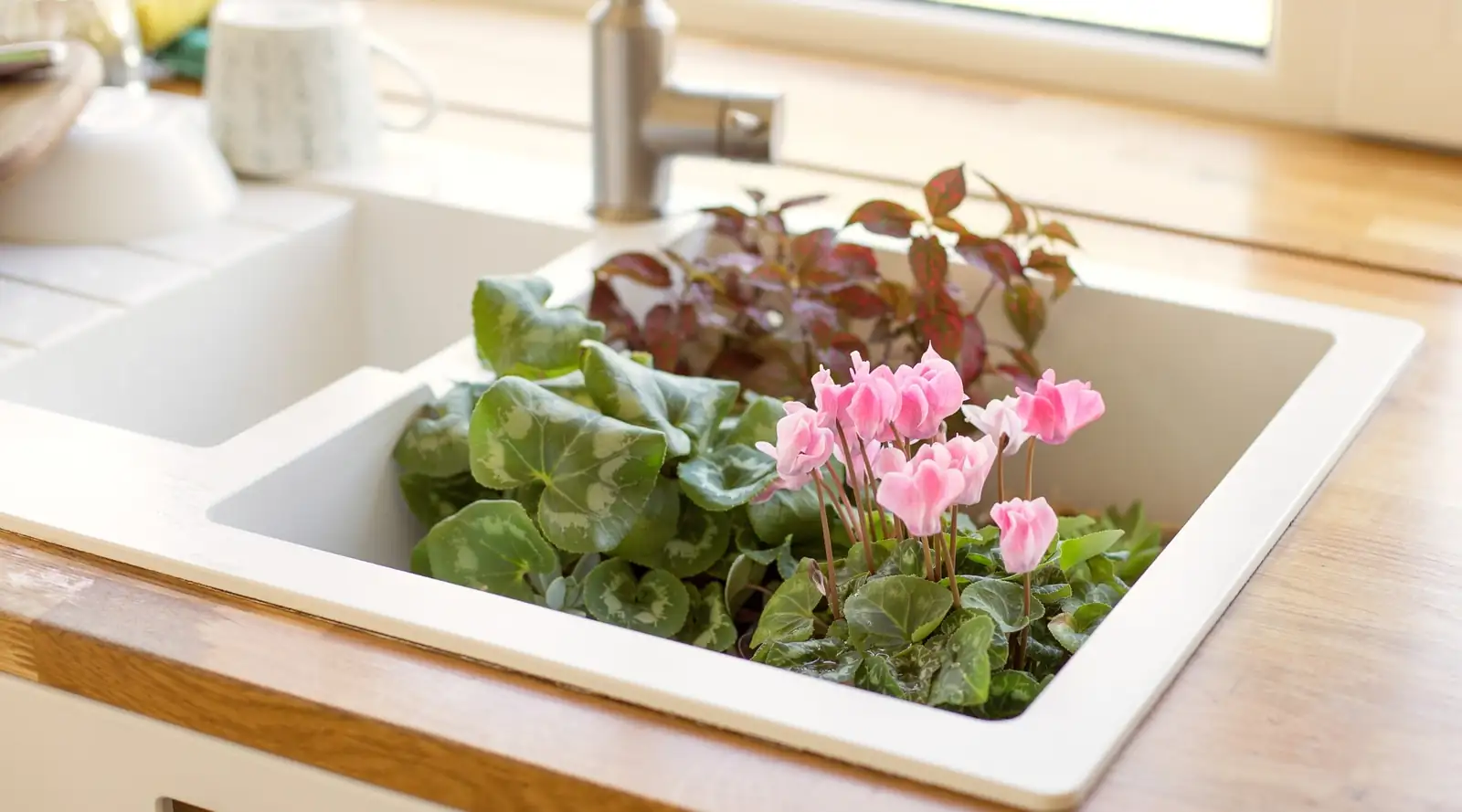
- Bottom-water: set the pot in a shallow bowl of water for 10–15 minutes, then drain thoroughly. Keeping the crown/tuber top dry greatly lowers rot risk.
- Never leave the pot standing in water. During summer dormancy, water sparingly—just enough to prevent the tuber from shriveling.
Feeding for foliage, pausing for performance
- During active leafy growth, feed every 2–3 weeks with a diluted liquid fertilizer (often a low-nitrogen formula).
- Pause feeding during peak bloom and through dormancy; resume when fresh growth returns in fall.
Grooming for a longer show
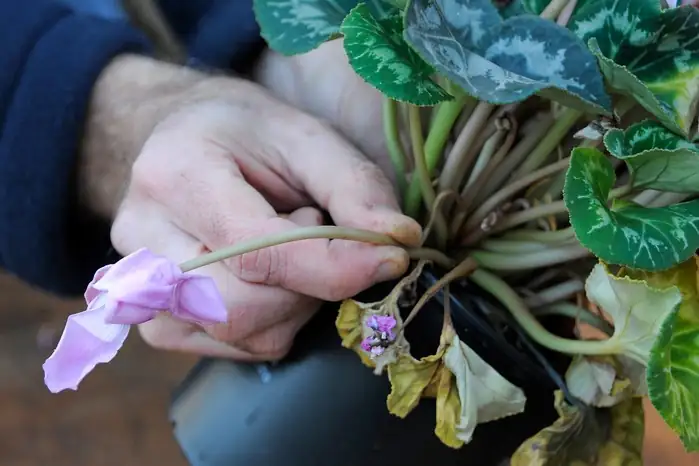
- Deadhead the cyclamen way: gently twist and pull spent flower stems and yellowing leaves from the base rather than cutting. This tidies the plant, reduces disease risk, and encourages more blooms.
Buying guide: what a designer’s eye looks for
- Choose firm tubers, crisp marbled leaves, and lots of unopened buds (the more buds, the longer the display).
- Avoid yellowing foliage, wilted plants, or any mushy crown.
- Size and palette: standards make a statement; miniatures are perfect in trios. Pair deep red blooms with matte charcoal ceramics, candy pink with soft white, and snowy white with raw terracotta for a Nordic winter look.
A season-by-season plan (so it reblooms next year)
- Spring (Mar–May): Flowering slows; gradually reduce watering as leaves begin to yellow.
- Summer (Jun–Aug): Rest/dormancy—keep cool, airy, and mostly dry. This is the time to repot if needed.
- Fall (Sep–Nov): New leaves appear—resume watering and feeding; buds form as days cool.
- Winter (Dec–Feb): Peak flowering—keep cool, bright (indirect), and evenly moist; avoid heat and soggy soil.
Heat‑savvy styling checklist
- Keep it away from heaters, heat vents, fireplaces, and sunny glass at midday.
- Don’t crowd it among electronics on a warm desk shelf.
- Choose LED lighting over hot bulbs; lift the pot on a trivet; use breathable pots.
- In offices, move it out of weekend “setback” hot zones and away from drying drafts.
Troubleshooting at a glance
- Yellowing leaves: usually overwatering, underwatering, or too much warmth. Check soil moisture and move to a cooler spot.
- Buds droop or fail to open: heat stress, low light, or over-wet soil. Brighten the site (indirectly), cool it down, and water by soaking from below.
- Gray fuzz (botrytis): improve air movement, remove spent stems promptly, keep the crown dry.
- Pests to watch: cyclamen mites, aphids, vine weevils, spider mites. Treat early and adjust care to keep the plant cool and clean.
Safety note
Cyclamen is toxic to humans and pets, with the tuber containing the highest concentration of irritating compounds. Ingestion may cause drooling, vomiting, and diarrhea—keep it out of reach of curious hands and paws.
Origins, meaning, and a little lore
Native to the Mediterranean—from Greece to Syria and Lebanon—Cyclamen persicum has charmed people for centuries with its winter grace. Its name comes from the Greek “kyklos,” meaning circle, a nod to its rounded tuber and the plant’s elegant seasonal cycle. In floral symbolism, cyclamen often represents sincere affection, devotion, and lasting feelings; in some traditions it also carries the sentiment of gentle farewells. Color lore follows suit: red for love, white for purity, pink for enduring affection. While these meanings are cultural rather than botanical, they explain why cyclamen is such a beloved holiday and winter gift.
Fun to notice: as flowers fade, their stems often coil, drawing seed pods toward the soil—another quiet, sculptural detail that rewards a second look.
Quick style recipes
- Minimalist desk: one white cyclamen in a sand-colored matte ceramic, on a cork trivet; pebble tray tucked beneath.
- Cozy sill trio: three mini cyclamen—pink, magenta, white—in small terracotta pots on pot feet; sheer curtain filtering morning light.
- Dinner table runner: a long, low planter with alternating red cyclamen and silver-marbled foliage front-and-center; keep candles offset to avoid heat.
With a cool perch, bright indirect light, and a gentle hand at the watering can, Cyclamen persicum brings months of effortless elegance to your worktops and windows—proof that great design can be both beautiful and beautifully low‑maintenance.


