
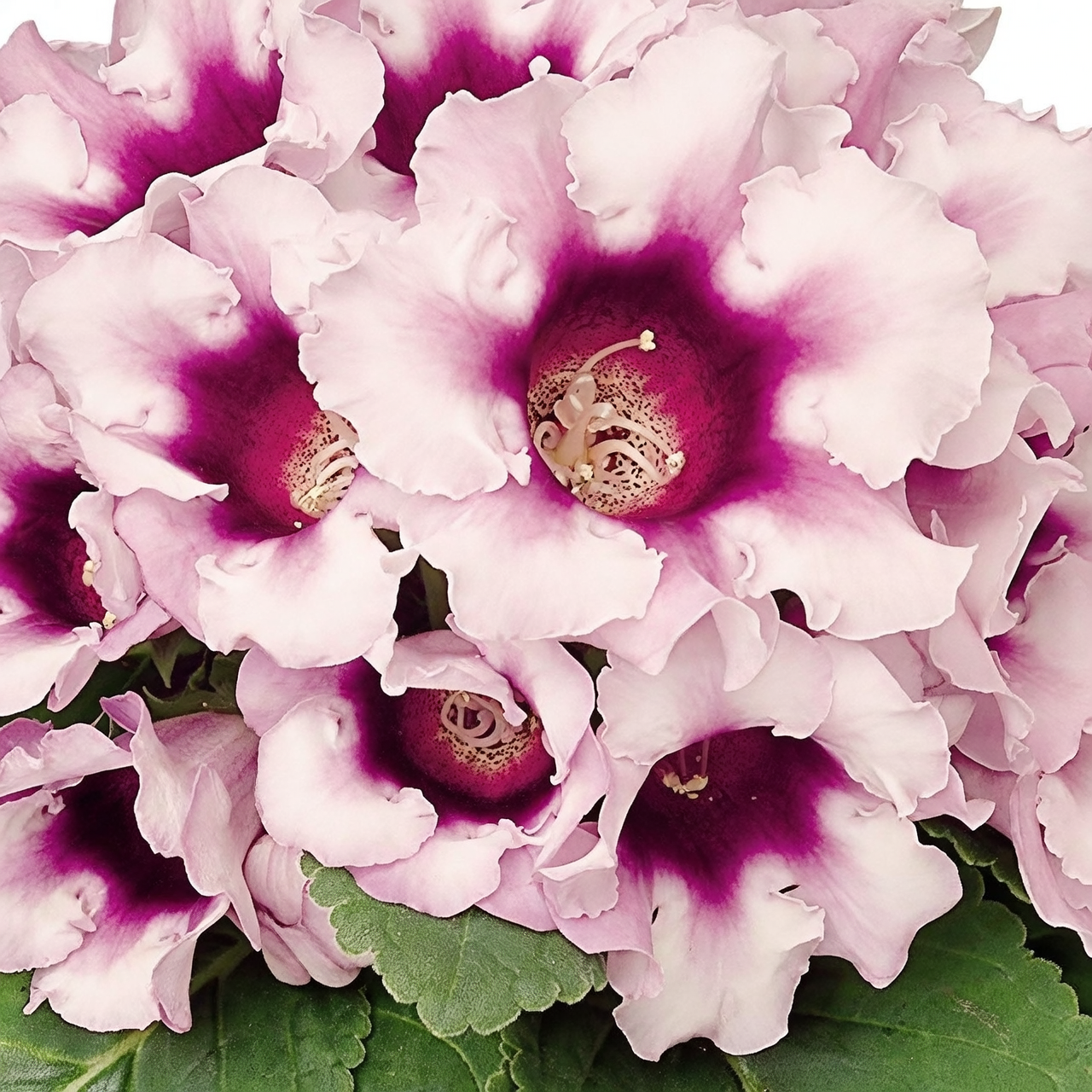
Step close to a florist’s gloxinia (Sinningia speciosa) and it’s hard not to stare. A tidy rosette of plush, velvety leaves frames trumpet-to-bell-shaped blooms that look like little theater curtains made of velvet—reds, pinks, purples, luminous whites, and a galaxy of speckles and bicolors. It’s the very picture of “love at first sight,” and not by accident. Here’s how that meaning took hold in Victorian floriography, how it traveled into modern gifting and Chinese-style 花语, and how to choose colors and occasions that speak beautifully across cultures.
How “love at first sight” began: from rainforest cliffs to Victorian parlors
Born dramatic
Sinningia speciosa is native to Brazil, where it thrives in warm, bright, humid forest light and often anchors itself on rocky outcrops. Even in the wild, its visual strategy is bold: a compact, tuber-based plant that saves up energy to throw out big, velvety, funnel-to-bell blooms you can’t ignore. That instant impact—combined with a naturally bouquet-like rosette—sets the stage for meanings tied to admiration and sudden attraction.
The Victorian reading
When Brazilian “gloxinias” arrived in 19th‑century Europe, they became indoor stars. Victorians loved a showy windowsill plant, and breeder–collectors quickly offered richly colored single and double forms, striking bicolors, and spotted patterns. In the language of flowers, gloxinia came to signal love at first sight and heartfelt admiration—perfect for a parlor culture obsessed with coded messages. The flower’s lush velvet and generous form read as elegance and luxury; its forward-facing trumpets suggested a gaze returned. In other words, it looked exactly like a first crush feels.
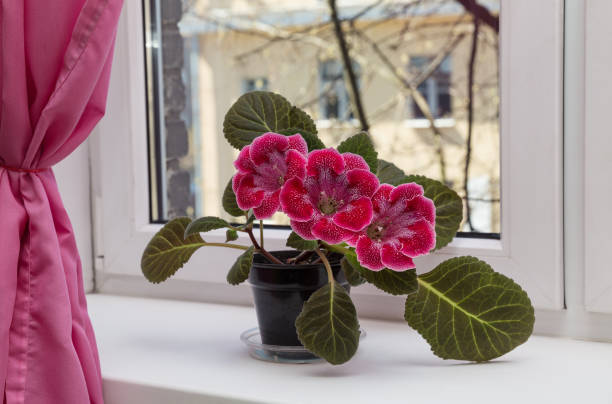
Note on names: although long called “gloxinia,” florist’s gloxinia is botanically Sinningia speciosa (Gesneriaceae). The name stuck from earlier, broader use of “Gloxinia,” but today’s favorite gift plant is very much a Sinningia—tuberous, compact, and made for indoor drama.
How the meaning traveled: modern gifting and Chinese-style 花语
From calling cards to care cards
Floriography never truly disappeared; it just moved platforms. Today, gifting a blooming potted plant sends both a message and months of color. Florist’s gloxinia fits perfectly: compact for desks and windowsills, breathtaking at first glance, and—given bright filtered light, steady warmth, humidity, and careful watering that keeps the fuzzy leaves dry—capable of flowering from late spring into autumn. Its reputation for “instant attraction” and “admiration” meshes with modern sentiments from early dating to “thank you for your mentorship.”
In Chinese 花语 culture
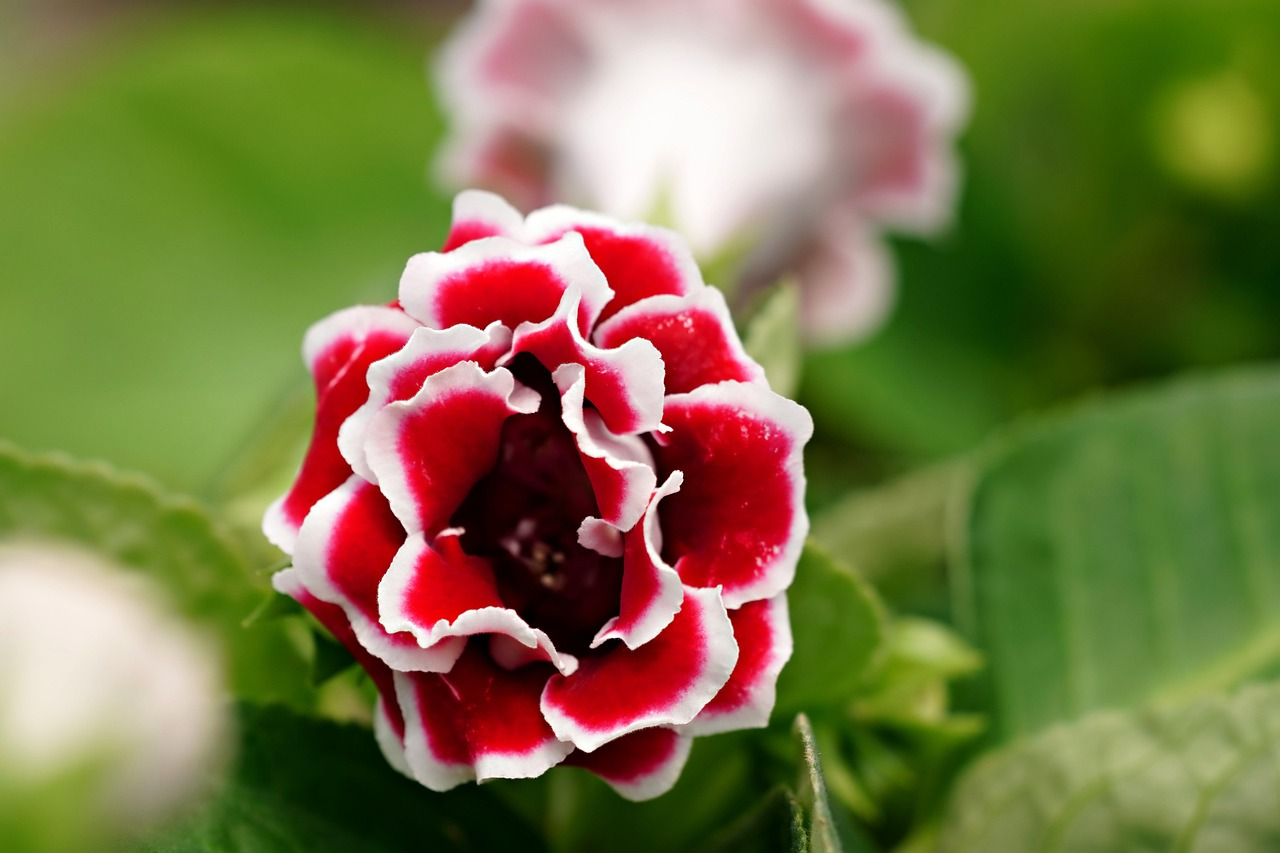
Contemporary Chinese flower language (花语) borrows freely—from Victorian codes, from Japanese hanakotoba, and from modern marketing—then localizes meanings. For gloxinia (大岩桐), you’ll often see 一见钟情 (love at first sight), 倾慕/钦佩 (admiration), and 初恋 (first love) used in guides and gift posts. It resonates because the plant performs like a velvet bouquet on a windowsill: sincere, generous, unforgettable.
Cultural nuances to keep in mind:
- White can read as solemn or funerary in some contexts. For romance or celebration, lean red, pink, or purple; reserve white for minimalists who love clean aesthetics or for respectful, non-funerary thanks.
- Red is broadly auspicious and celebratory—ideal for festive gifting (春节, 乔迁, 升职).
- Purple in Chinese taste often signals elegance and nobility (高贵、体面) and works well for mentors, seniors, or formal settings.
- Bicolors and spotted forms feel youthful and playful—great for first dates or creative colleagues.
Color-by-color: what to say without saying a word
Gloxinia cultivars most commonly flower in red, pink, purple-to-violet, and white, with many spectacular bicolors, speckles, and even doubles. Choose with purpose:
- Red: First love, passion, and “you had me at hello.”
- Best for: Confessions, Qixi/Valentine’s, anniversaries.
- Gift-note idea: “Your smile stopped me in my tracks.”
- Pink: Gentleness, sweetness, and warm affection.
- Best for: Mother’s Day, 520, thoughtful “I’m thinking of you,” new beginnings.
- Gift-note idea: “For the kindest heart I know.”
- Purple (and violet shades): Admiration, grace, and respect with a luxurious edge.
- Best for: Teacher’s Day, mentors, promotions, dignified romance.
- Gift-note idea: “With deep respect—and a quiet crush.”
- White: Purity, sincerity, and trust; minimalist chic.
- Best for: Housewarmings, thank‑yous, clean modern interiors; avoid in somber contexts unless appropriate.
- Gift-note idea: “For a fresh start and clear light.”
- Bicolors, speckled, and double forms: Playful charisma and creativity.
- Best for: First dates, birthdays, congratulations where you want to dazzle.
- Gift-note idea: “You make ordinary days look extraordinary.”
Style tip: A ceramic pot color can echo or counterpoint your message—red or gold for festive luck; matte white or stone gray for sincerity; deep indigo or charcoal to set off purple blooms with gallery polish.
Thoughtful occasions that fit the meaning
- The first date or the “soft confession”
- Choose a compact red or bicolor plant; it signals instant attraction while staying tasteful and lasting longer than a cut bouquet.
- Qixi, Valentine’s, anniversaries
- Red for passion; purple for dignified, enduring love; pink for tender romance.
- 520 (I love you Day) and birthdays
- Bicolors or spotted doubles feel celebratory and personal.
- Housewarmings and promotions
- Purple for respect and success; white or pink for warmth and good beginnings; red for auspicious cheer.
- Teacher’s Day and mentors
- Purple or white to convey admiration and gratitude without overstepping into overt romance.
- Recovery wishes and care packages
- Pink or white with a clean, bright pot—uplifting but calm. Avoid pairing with a fruit basket; see the ethylene note below.
Gifting etiquette and a tiny care primer (so your message keeps blooming)

Florist’s gloxinia is easy to fall for and moderately easy to keep happy with a few key habits. Tucking a simple care card with the plant turns your gift into a long-running show.
Light
- Bright, indirect/filtered light is ideal—an east-facing window is perfect. Harsh midday sun scorches; too little light fades flowers.
Water and humidity
- Keep the mix evenly moist but never soggy during growth and bloom. Water at soil level or bottom-water; keep the velvety leaves and flowers dry to prevent spotting and rot.
- Enjoys moderate to high humidity (around 50–70%); a pebble tray or humidifier helps, along with gentle airflow.
Temperature
- Happy around 16–24°C (61–75°F). It dislikes extreme heat and may pause flowering in hot, muggy midsummer. In winter or rest periods, keep it cooler and much drier (about 10–12°C/50–54°F is classic) without letting it drop below 5°C (41°F).
Deadheading and feeding
- Snip spent blooms and stalks promptly to encourage new flowers and help the tuber recharge.
- Feed lightly every 2 weeks in active growth; switch to a bloom-leaning formula when buds appear. Keep fertilizer off the leaves.
Timing expectations
- Peak flowering runs late spring into autumn and can last for months with the right care. A brief midsummer pause is normal in heat; it will resume when conditions improve.
Important quirks
- Ethylene sensitive: Keep away from ripening fruit, which can cause buds to drop and the show to end early—skip the fruit-basket pairing.
- Travel smart: Protect from chills and jostling; those velvety leaves bruise easily.
- Pets and kids: Toxicity isn’t strongly documented and is generally considered low concern, but it’s still best to prevent chewing or ingestion.
Sample note to include:
- “Bright, filtered light; water the soil, not the leaves. Keep a little humid and snip faded blooms. If it’s very hot, a brief rest is normal—your velvet bouquet will return.”
Why this plant makes the meaning stick
Victorians weren’t wrong. Sinningia speciosa looks like a bouquet that arranged itself: a low rosette presenting a constellation of velvet trumpets directly to the viewer. The effect is instantaneous—sumptuous but approachable, elegant yet exuberant. That visual “first glance” thrill is exactly what its messages promise: love at first sight and abiding admiration. Choose the right color, time your moment, and let this little parlor star do what it does best—speak volumes without saying a word.