

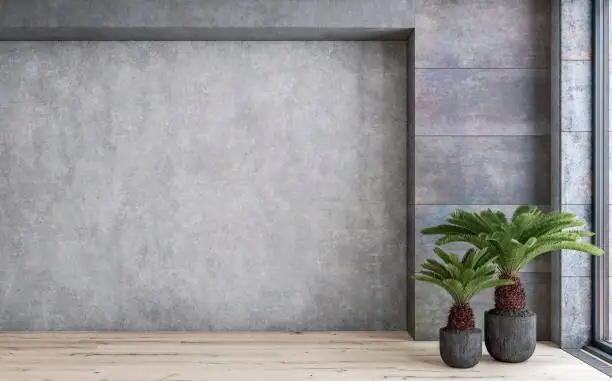
Imagine a time traveler living quietly in your lobby or by a sunlit window—armored in glossy fronds, steady as a sentinel. That’s Cycas revoluta, the Sago Palm: not a true palm but a cycad, a living fossil whose lineage stretches back to the dinosaur age. In East Asian “flower language” (huayu), this plant speaks in themes of longevity, resilience, and steadfastness—meanings that grew from its ancient story, evergreen toughness, and unhurried, enduring growth.
The plant behind the meaning
- Identity: Cycas revoluta (commonly called Sago Palm), a cycad from southern Japan—especially the Ryukyu Islands—now widely cultivated.
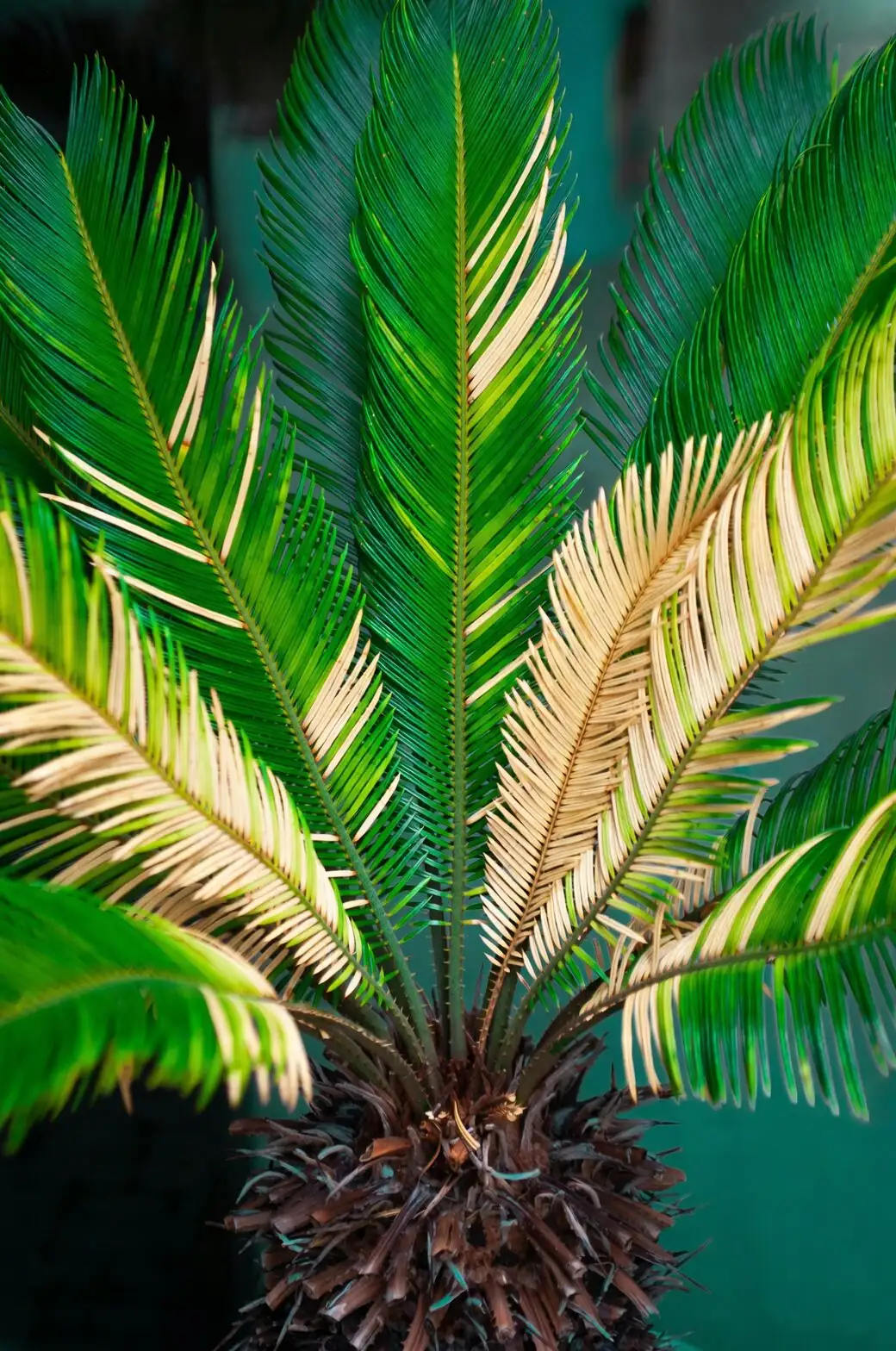
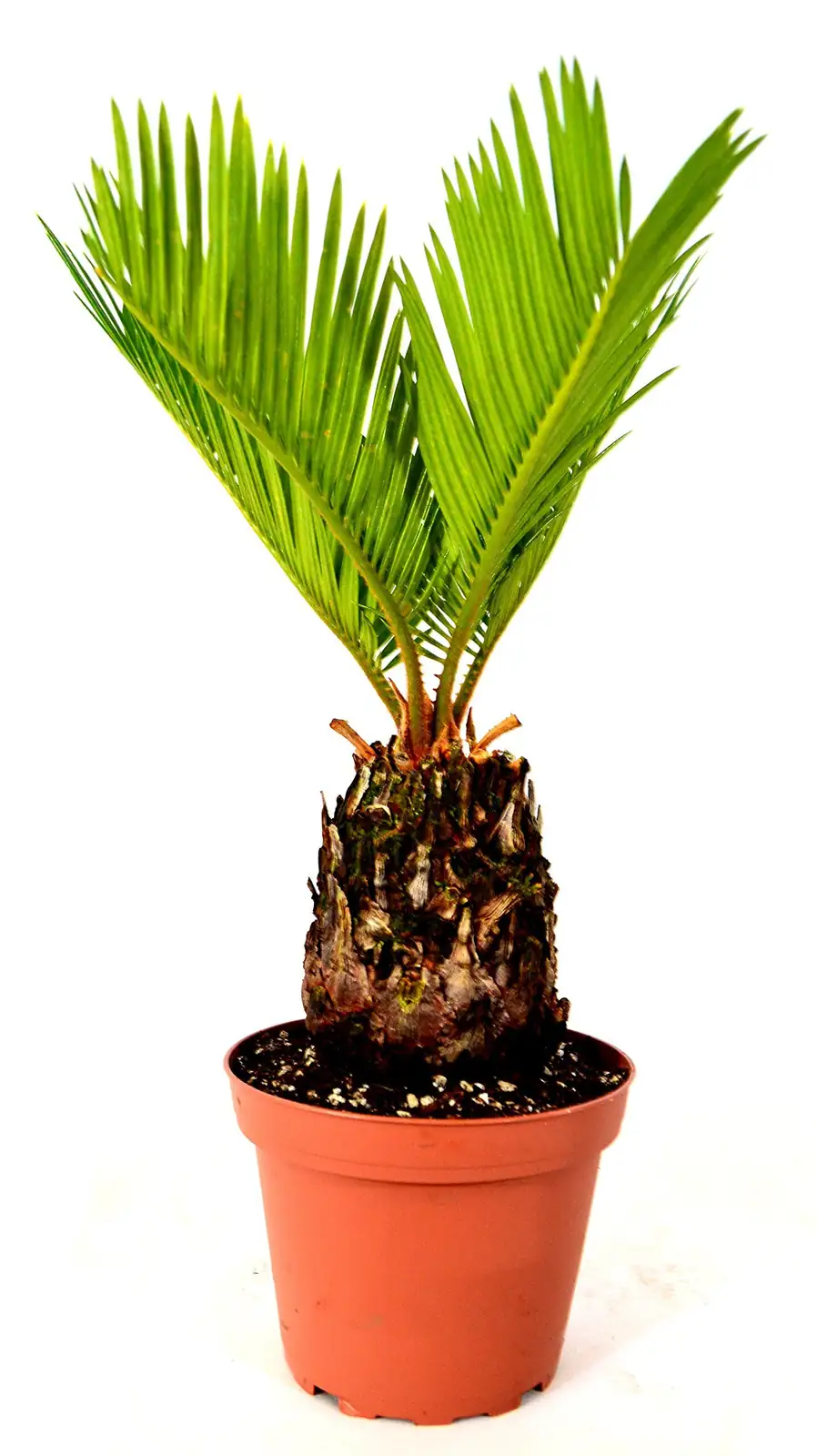
- Form: A chunky, textured trunk topped by a perfectly composed rosette of stiff, dark-green fronds. Each narrow leaflet is rigid and needle-tipped—handsome, architectural, and prickly.
- Not a flowerer: It doesn’t make true flowers. Mature plants form cones (male) or woolly seed structures (female)—a rarity indoors and a reminder of its ancient gymnosperm kinship.
- Tempo: Exceptionally slow-growing. Indoors it often stays around 60 × 60 cm (24 × 24 in) for years, expanding its crown in elegant “flushes” of new fronds.
How its “flower language” took root
“Flower language” (huayu) is less about petals and more about cultural storytelling. With Sago Palm, three messages recur across East Asian aesthetics and gift-giving.
Longevity
- Ancient lineage: As a “living fossil,” the cycad embodies time itself—survival across eras, steady life force, and grace that doesn’t rush.
- Evergreen presence: It stays green through seasons, quietly signaling continuity and long life.
Resilience
- Tough architecture: Those rigid, sharp-tipped leaflets and stout trunk telegraph durability. The plant tolerates bright light and intermittent dryness when established (just don’t overwater).
- Patience as power: It matures at its own deliberate pace, suggesting strength that’s measured, not flashy.
Steadfastness
- Symmetry and stance: The centered rosette and upright core feel grounded and resolute—like a guardian.
- Name echoes in Chinese: The Chinese common name, Su Tie (苏铁), includes the character for “iron” (铁), which folk culture reads as firmness and fortitude.
Roots in East Asian garden culture and feng shui
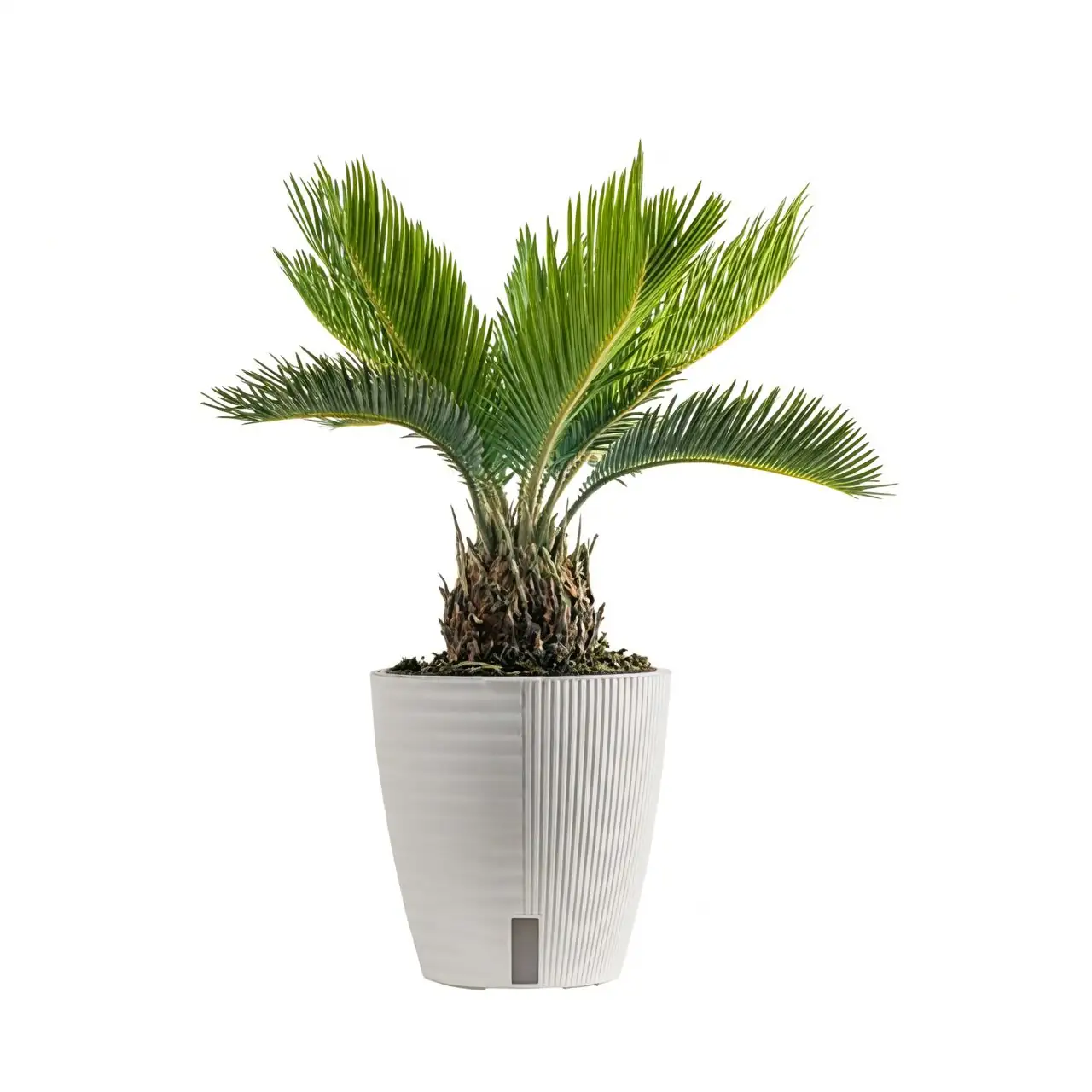
- Garden aesthetics: In Japanese and Chinese landscapes, Sago Palm’s sculptural silhouette pairs naturally with stone, gravel, and open space. It reads as a living “form piece,” bridging the wild and the orderly.
- Bonsai sensibility: Its deliberate growth makes it popular for bonsai-like presentation—compact, powerful, and contemplative.
- Feng shui interpretations:
- Form language: A steady trunk (mountain-like support) and radiating fronds (sunburst vitality) signify stable backing and outward momentum.
- Placement ideas (interpretations vary by school):
- Entrances and lobbies: A single, well-grown specimen can symbolize a dignified welcome and long-term prosperity.
- Home office or study: Represents focus and steady advancement.
- Outdoors flanking a gate or pathway: Reads as protective, steadfast “sentinels.”
- Avoid bedrooms and quiet meditation corners if you follow the view that spiky foliage introduces overly “sharp” energy.
- Practical note: Place where there’s bright, filtered light and room to admire the rosette—while keeping a safe distance from traffic paths because the leaflets are prickly.
Symbolism in gifting, business openings, and decor
- When to gift:
- Grand openings, corporate milestones, promotions, or new ventures (resilience and steady prosperity).
- Anniversaries and retirements (longevity and well-earned stability).
- Housewarmings (a guardian-like presence for the new home).
- How to frame the message:
- “May your enterprise grow steadily and endure.”
- “Wishing you strength through seasons and success that lasts.”
- “For a home grounded in calm and continuity.”
- Presentation tips:
- Use a dignified container—matte ceramic, stone, or a metallic finish (gold/brass) for a prosperity cue.
- A discreet red ribbon or card can nod to auspicious tradition without overwhelming the plant’s sculptural form.
- Always include a care card—and a clear toxicity warning for homes with pets or children.
Styling cues for modern interiors
- Minimalist stagecraft: Give it breathing room—one specimen per vignette—so the radial fronds read like living architecture.
- Material harmony: Pair with stone, wood, or textured limewash walls; add a shallow bowl of pebbles or a low lantern for a gallery-like stillness.
- Scale and sightlines: Pedestal stands elevate smaller plants to eye level; in larger rooms, a floor pot (20–30 cm/8–12 in for typical sizes) anchors a corner with quiet authority.
Quick care that supports the meaning
- Light: Bright light with protection from harsh midday sun. Indoors, place near a bright window with filtered light; partial sun/partial shade outdoors.
- Temperature: 13–24°C (55–75°F). Protect from frost and cold drafts. Generally hardy in USDA Zones 9–11.
- Humidity: Average indoor humidity is fine; in hot, dry spells, occasional misting keeps foliage looking fresh.
- Soil: Very fast draining is essential. Try a 1:1 blend of soil-based mix and general-purpose potting mix, with added grit/perlite as needed.
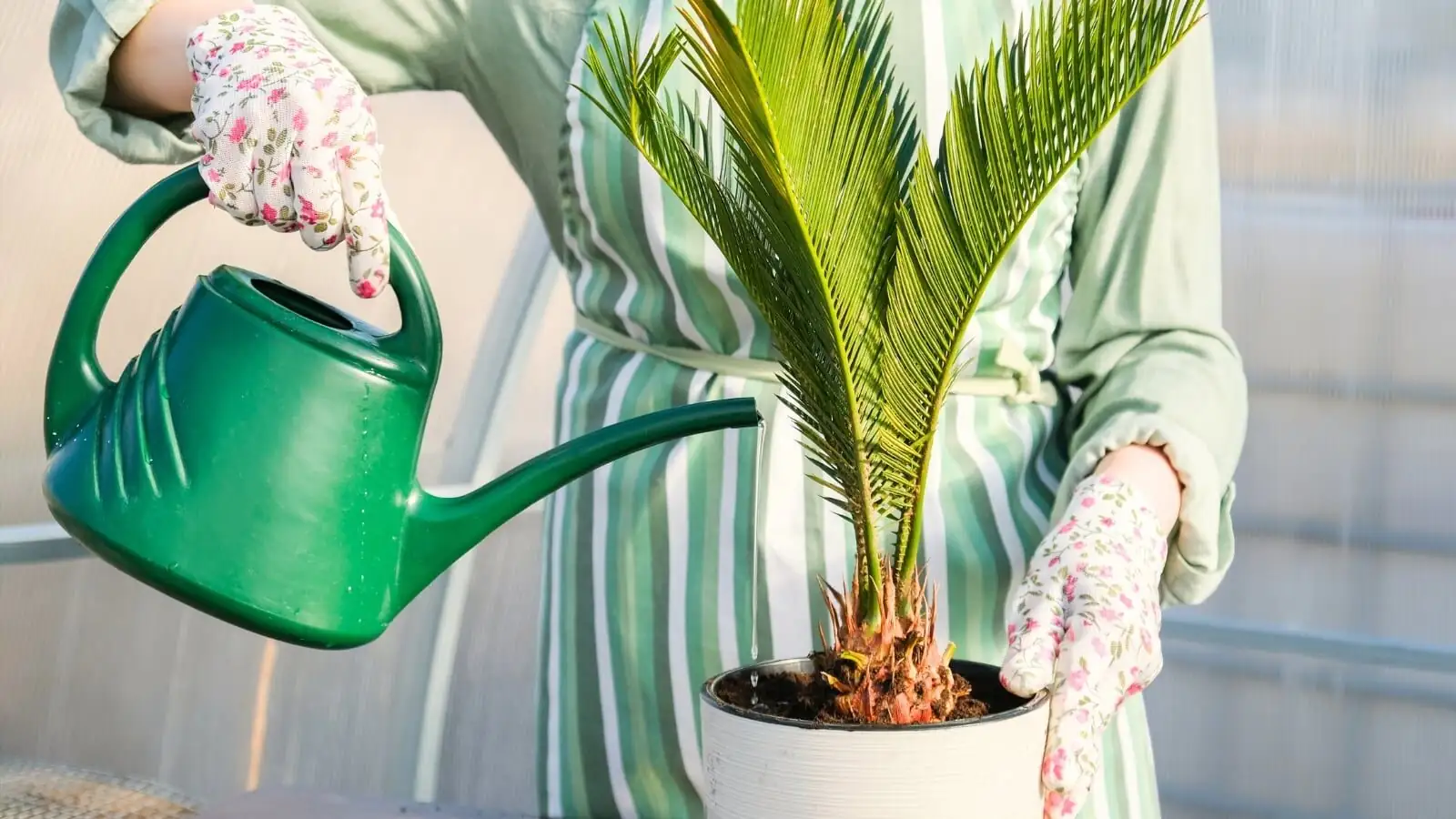
- Watering: Spring–autumn, water when the top of the mix has dried slightly. Winter, keep almost dry. Never pour water into the central crown—this risks crown rot.
- Feeding: Monthly at half strength in spring–autumn; cycads dislike heavy feeding.
- Pruning: Only remove fully brown, dead fronds. Green fronds store energy; don’t trim them.
- Repotting: About every 3 years (or sooner if root-bound). Disturb roots as little as possible.
- Pests: Watch for scale, mealybugs, and spider mites; ensure airflow and avoid overwatering to prevent root/crown rot.
- Safety: Highly toxic to humans and pets—seeds are especially dangerous. Place well out of reach and handle with care; the leaflets are sharp.
Flower language, minus the flowers
Sago Palm doesn’t bloom in the usual sense, and cones appear only on mature plants—particularly outdoors. Its “flower language” is really plant language: a cultural reading of form, history, and character. Longevity comes from its ancient lineage and evergreen habit; resilience from its armored fronds and low-maintenance poise; steadfastness from its symmetrical stance and iron-evoking name. Altogether, it’s a living emblem of success that grows slowly but surely—perfect for moments when you want your message to last.