

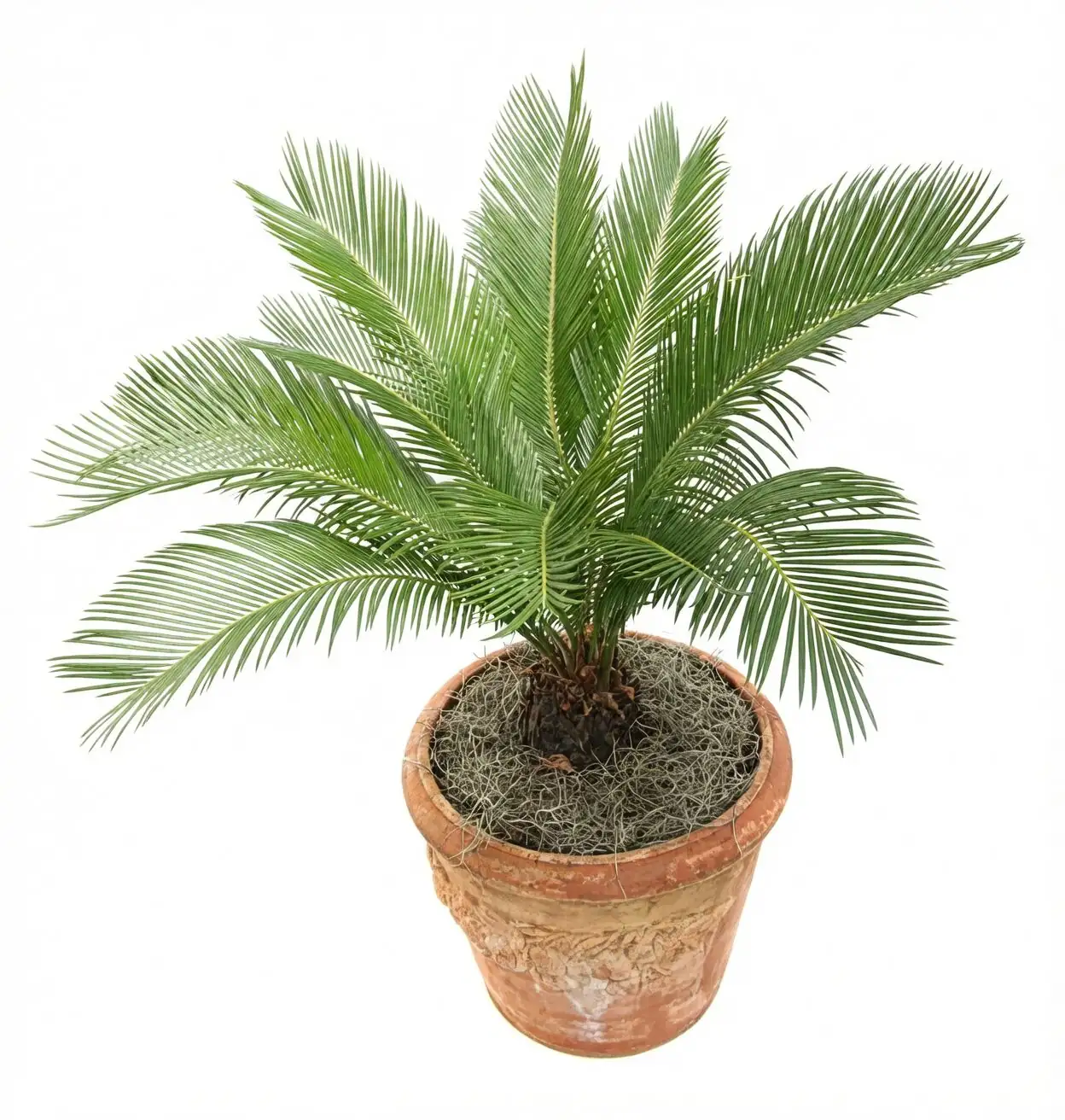
Imagine a plant that watched the continents drift, the dinosaurs rise and fall, and still kept its poise. Now picture that same survivor sitting on your windowsill, polished and prim as a bonsai-style sculpture. That’s Cycas revoluta—better known as the Sago Palm (though it isn’t a palm at all)—a living relic that wears its 200-million-year lineage like a crown of lacquered green feathers.
Born of islands and storms: the native range
Cycas revoluta is native to southern Japan, including the Ryukyu Islands. Think rocky headlands, airy hillsides, and sparse forests where ocean winds comb through the leaves, summer monsoons drench the ground, and autumn sun dries it back again. Out there, heat and shade trade places across the seasons. That’s where this species learned its hallmark rhythm—endure, wait, and then grow in decisive, elegant bursts.
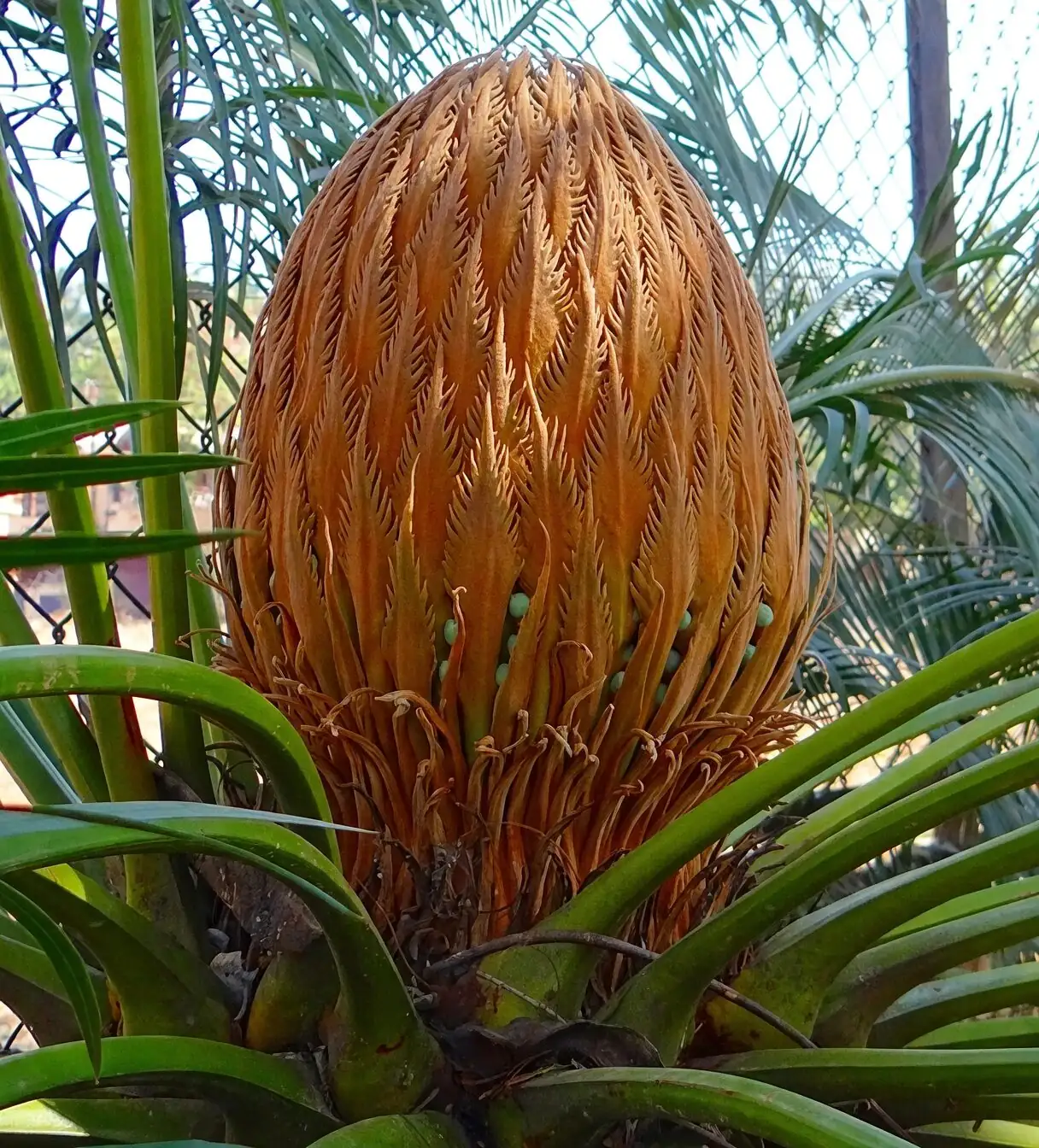
- Not truly a palm: it’s a cycad, part of an ancient group of seed plants that predates flowering plants.
- Long cultivated in East Asia for its sculptural presence and steady, enduring temperament.
The architecture of an ancient survivor
A trunk that’s more than a trunk
The stout, pet-like “trunk” is a caudex—a living storage vault that banks water and nutrients for lean times. Touch it and you’ll feel the resilience: firm, slow-built, storied.
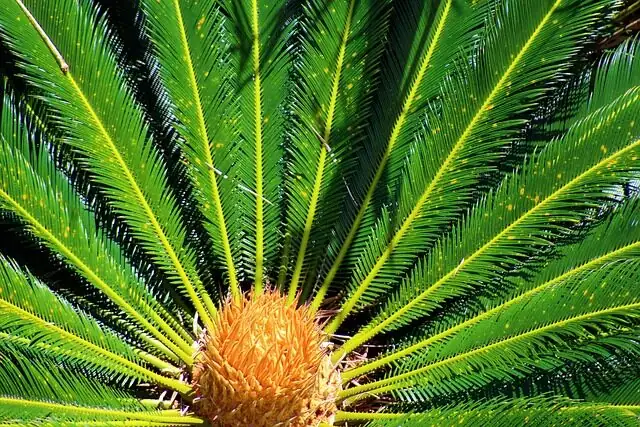
Fronds like lacquered feathers
Stiff, glossy, feather-like fronds radiate in a tidy rosette. They hold a rich green even in lower light. When light is too low during a new flush, fronds may stretch longer and narrower—an elegant nudge from the plant that it wants a brighter stage.
Growth by “chapters,” not pages
Cycas revoluta grows in slow, deliberate chapters, pushing new leaves in flushes. As the newest fronds harden, the oldest outer ones fade toward yellow-green and wither; removing them spotlights the plant’s handsome silhouette and keeps energy focused.
Male or female—never both
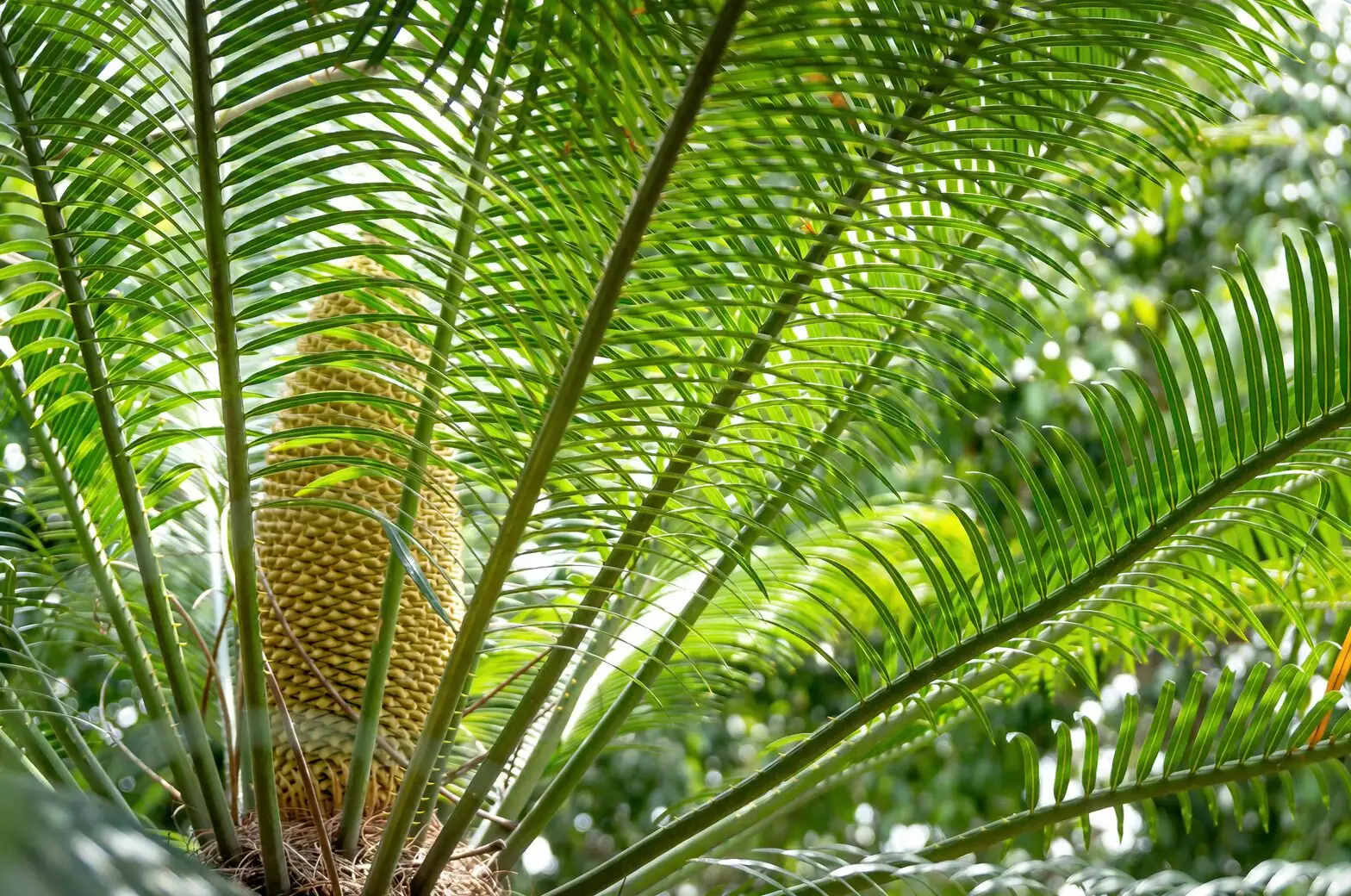
This species is dioecious: male and female cones form on separate plants in summer. There are no true flowers—just cones and modified leaf structures. Once a male cone has finished, or a female structure has matured its seeds, removing the spent structure helps the plant refocus on leaf growth.
Survival strategies translated to the home and garden
This species is both tough and particular: heat-tolerant and shade-tolerant, but decidedly sensitive to staying wet—especially in cool conditions.
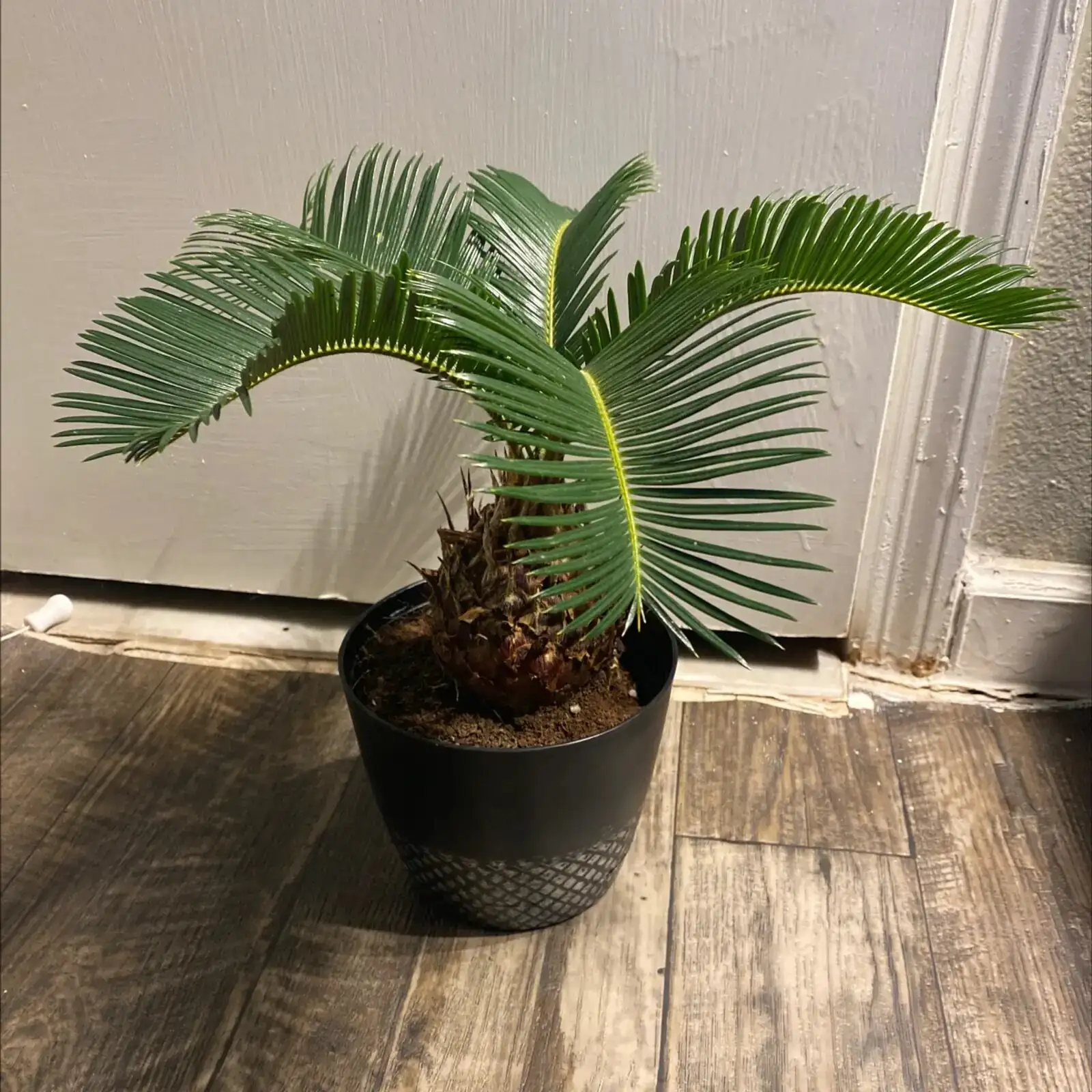
- Light: Bright light to full sun is ideal (with gradual acclimation to strong sun). It tolerates shade and lower indoor light, but give the brightest, airiest spot you have to avoid stretched fronds during a flush.
- Temperature: Thrives at 13–27°C (55–81°F). Can handle heat up to about 40°C (104°F) if the soil drains well. In winter, keep above 7–10°C (45–50°F). Cold plus wet is a recipe for rot; prolonged dips below 0°C (32°F) damage fronds.
- Soil: Use a sharply draining, fertile mix—think loam or garden soil blended with peat/coir and added sand or grit. A “drainage layer” alone won’t rescue heavy soil; the entire mix must drain freely.
- Water: Let the top of the mix dry before watering again; never leave the pot standing in water. Water more regularly in spring–summer, pare back in autumn, and keep on the dry side in winter.
- Humidity & airflow: Warm, moderately humid air suits it. Light daily misting in warm months is welcome, but pair humidity with good ventilation.
- Hardiness & placement: Not frost-hardy. Outdoors year-round mainly in warm climates (about USDA Zones 9–11). Elsewhere, grow in containers: outdoors on sunny patios in warm seasons; indoors beside a bright window in winter.
From temple courtyards to global patios
For centuries in East Asia, Cycas revoluta has been prized for its dignified symmetry and the way it seems to hold time still. Today it’s a global favorite—on stoops and balconies, in office lobbies, or styled as a bonsai-like specimen on apartment windowsills. Many “mini sago palms” at markets are simply young plants; they stay small for years, making them perfectly sized companions for containers.
You may also see “bald” specimens—leafless caudexes sold for patient growers. Handled right, they wake slowly, rooting and then issuing a triumphant new flush.
Choosing and settling in your plant
- Pick a firm, upright caudex with neatly arranged, deep-green fronds. Avoid spotting, pests, or damage. The crown’s growing point should look clean and alive.
- For leafless “bald” plants: choose a hard, symmetrical caudex with no soft spots, rot, or lesions. Pot it in coarse, fast-draining media (even clean coarse sand at first), give bright light and airflow, and mist lightly. Once new roots and fronds appear, begin gentle feeding.
Propagation, patience, and the long view
Cycas revoluta rewards calm, methodical hands.
- Seeds: Sow indoors in late spring to early summer. Cover with about 2 cm (0.8 in) of mix and keep warmly at roughly 15–29°C (59–84°F). Under ideal warmth, germination may begin in about 2 weeks, though it can take longer.
- Offsets (pups): Commonly divided in spring during repotting. Separate pups that have formed over about 2–3 years, allow cut surfaces to dry/callus, then pot in a 50/50 sand-and-soil mix. Keep in bright shade until established.
- Trunk sectioning (advanced): In early summer, cut 2–3 cm (0.8–1.2 in) thick sections, let them dry, then lay on moist sand with high humidity. Pups may appear in roughly 3–4 months; remove and root once they’re sizable.
Grooming and repotting for sculptural poise
- Pruning: Remove aging, yellowing outer fronds after the newest flush has fully expanded. If a cone appears, remove the spent male cone after it finishes or the female structure after seeds mature, so energy shifts to leaf growth.
- Repotting: Use a round, slightly shallow pot with excellent drainage—commonly 15–50 cm (6–20 in) wide depending on plant size. Repot small to medium plants every 2–3 years; large specimens every 5–6. Refresh into a fast-draining, fertile mix and avoid overpotting.
Health and hazards: what to watch
- Pests: Scale insects are the usual culprits, especially where airflow is poor. Improve ventilation, wipe them off, and treat with horticultural oil or insecticidal soap; repeat as needed.
- Rot risks: Overwatering in cool weather invites root and crown rot. When in doubt, err dry—especially in winter.
- Toxicity: All parts are poisonous if ingested, with seeds especially dangerous. Keep away from children and pets; ingestion can cause severe gastrointestinal upset and, in pets, potentially serious liver damage.
Flower language and symbolism
In East Asian garden culture, this species gathers themes of good fortune, freedom, happiness, and especially longevity. It’s not “floral language” in the petal-and-poem sense—cycads bear cones, not flowers—but a symbolic reading shaped by centuries of observation. Why longevity? Because a sago cycad is built to outlast: evergreen in spirit, unhurried in growth, and capable of living for decades (and in ideal conditions, far longer). Its clean geometry evokes composure; its steadfast flushes, perseverance. That symbolic weight is why it appears in courtyards and entryways—a quiet wish for stability and auspicious days ahead, even as we respect its very real toxicity.
A simple seasonal calendar
- Spring–summer: Main growth period. Provide bright light, good airflow, and more frequent watering. Raise humidity. Best time for repotting and dividing offsets. Sow seed late spring–early summer (15–29°C / 59–84°F). Early summer is also the window for advanced trunk-section propagation.
- Autumn: Taper watering as temperatures drop; prepare to bring containers indoors before cold arrives.
- Winter: Keep brighter and much drier; maintain above 7–10°C (45–50°F). Avoid cold, damp air and any situation where the pot stays wet.
Quick facts to remember
- Not a true palm—Cycas revoluta is a cycad.
- Male and female cones occur on separate plants.
- Shade-tolerant and heat-tolerant, but very sensitive to overwatering.
- With patience and good care, it can be a long-lived companion.
- Highly toxic if ingested; seeds are especially dangerous.
If you’re drawn to plants with stories, this one’s an epic. From salt-swept Ryukyuan hillsides to your sunlit sill, Cycas revoluta carries a hush of prehistory and the calm of a seasoned survivor—growing slowly, beautifully, resolutely, one careful chapter at a time.