

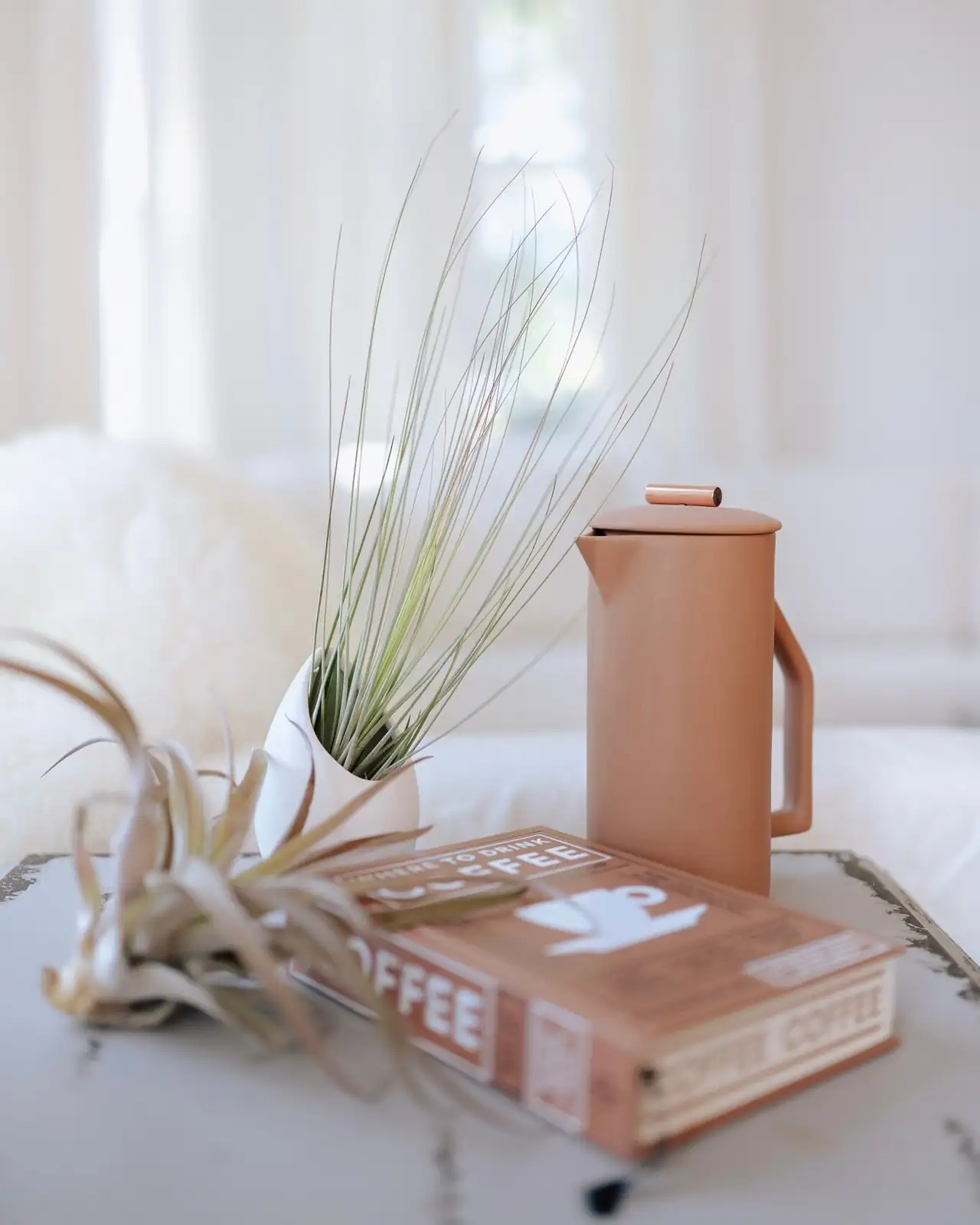
If you’ve ever tucked an air plant into a sealed globe, spritzed it twice, and hoped for the best—this one’s for you. Tillandsia juncea may look feather-light and effortless, but it runs on real physics: water uptake through leaf scales, fast drying, ample air, and bright light. Let’s retire the most stubborn myths and replace them with simple, evidence-based habits that keep this graceful species thriving for years.
Meet Tillandsia juncea, the elegant “fountain”
- Origin: Native to Mexico and Central America
- Look: A tidy, fountain-like tuft of long, narrow, green leaves that forms clumps over time
- Size: Typically 15–30 cm (6–12 in) tall; clumps can spread 15–30 cm wide
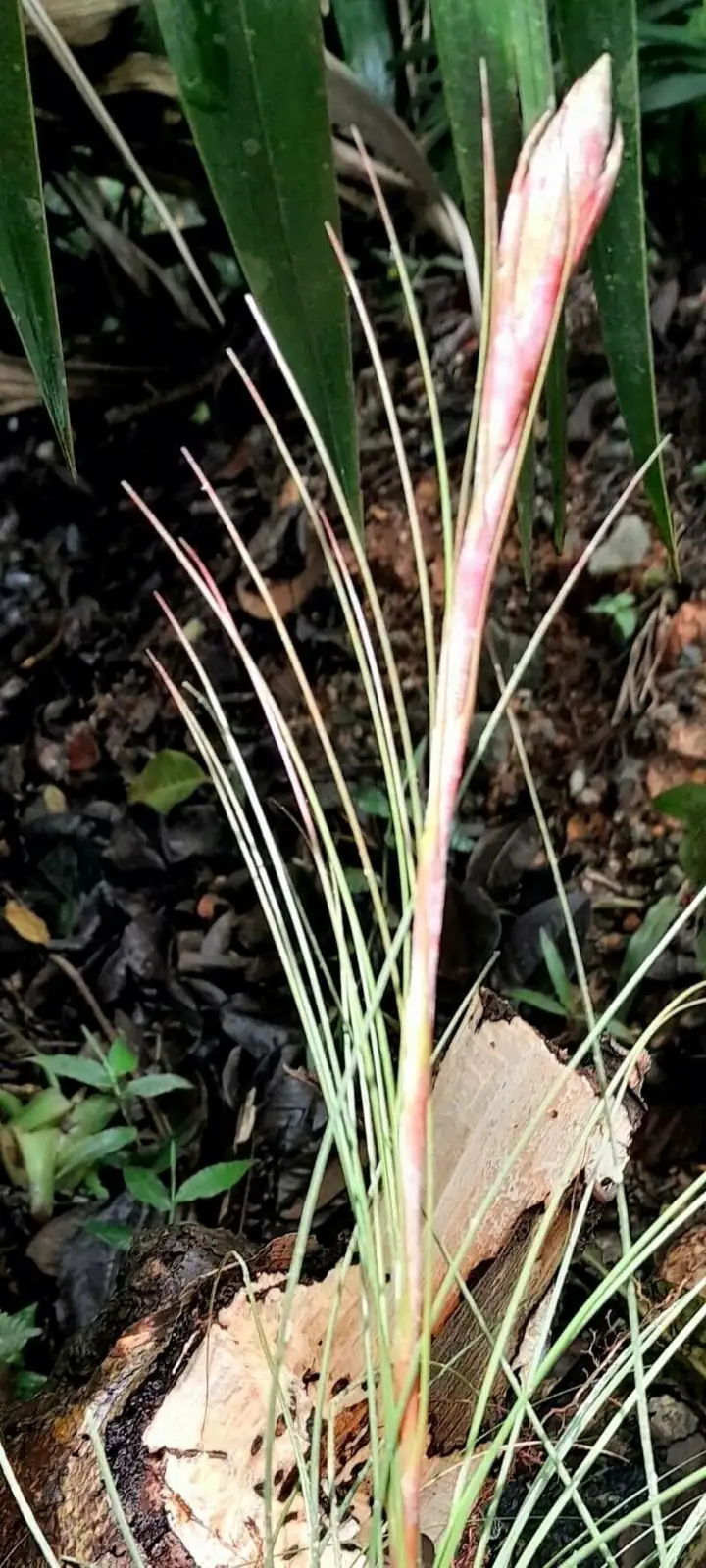
- Bloom: A vivid pink, comet-like spike with small purple tubular flowers in late spring to summer (with the right conditions)
- Lifestyle: Epiphytic and clumping—no soil needed, ever. It produces offsets (“pups”) around the base and gradually builds a fuller colony
- Personality: Forgiving and springy. If you forget a watering, it often bounces back quickly—provided it can dry fast afterward
Myth #1: “Closed terrariums are perfect for air plants”
What actually keeps T. juncea alive is air movement. In a sealed container, water lingers, oxygen exchange stalls, and rot prowls—especially at the base.
Do this instead
- Choose open displays: bowls with wide mouths, mesh baskets, driftwood/cork mounts, hanging arrangements
- Prioritize airflow: place near a bright window with a natural breeze or run a small fan on low a few hours after watering
- Drying rule: after any soak, the plant should be completely dry within 2–4 hours (always under 4)
- Placement sweet spot: bright, indirect light or gentle morning sun; avoid harsh midday rays unless humidity is higher and airflow is excellent
- Bathrooms? Great—only if the light is strong and the plant still dries quickly
Myth #2: “A quick mist is all they need”
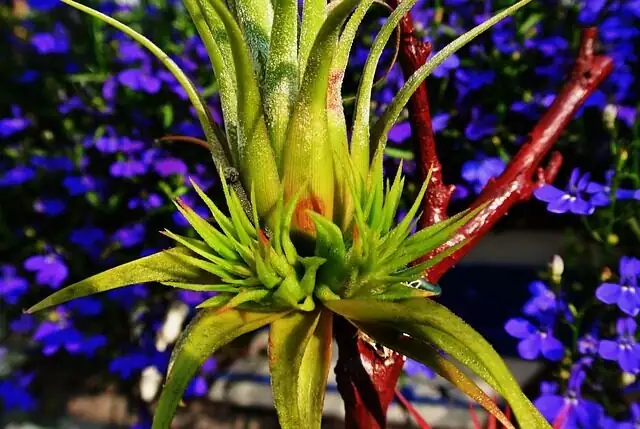
T. juncea absorbs water primarily through leaf trichomes (the silvery “dust” on the leaves). A light mist barely wets the surface and often leaves the base damp—riskier than it sounds.
Do this instead
- Soak to water: submerge the plant for 15–30 minutes
- Warm/dry seasons: about 1–2 times per week
- Cooler/darker periods: every 10–14 days
- After soaking: shake out excess, set the plant upside down for a minute if needed, then dry with strong airflow (2–4 hours)
- Never leave water sitting in the base or trapped in tight displays
- Use clean water and occasionally rinse with plain water to prevent mineral buildup
Where misting fits
- Use as a humidity pick‑me‑up between proper soaks in very dry rooms, but don’t rely on misting as the primary watering method
Myth #3: “Fertilizer will burn or kill air plants”
In reality, light feeding makes a noticeable difference: better color on that pink spike, stronger growth, and more pups.
Do this instead
- Feed lightly in spring and summer: once monthly at 1/4 strength with a bromeliad/air‑plant fertilizer (or a low‑copper orchid fertilizer)
- Rinse occasionally with plain water to avoid mineral/salt buildup
- Skip heavy or frequent feedings; for this species, less is more—but not zero
Bonus myth to ditch: “They’re fine in dim rooms”
Air plants are living things, not decor props. T. juncea wants several hours of bright, indirect light daily. Dark shelves and windowless corners lead to slow decline. If natural light is limited, use bright full‑spectrum grow lights and keep airflow strong.
A simple, science‑backed routine
- Light
- Bright, indirect light or gentle morning sun
- Indoors: pull it within a few feet of your brightest window or under a quality grow light
- Water
- Soak 15–30 minutes; 1–2×/week in warm/dry weather; every 10–14 days in cool/low‑light conditions
- Always dry fully within 2–4 hours with good airflow
- Airflow and humidity
- Aim for 40–70% humidity paired with strong air movement
- Airflow matters more than raw humidity—wet + stagnant is the rot recipe
- Temperature
- 18–30°C (64–86°F) is ideal
- Protect from cold; avoid sustained dips below 10°C (50°F)
- Mounting and display
- No soil. Mount on cork, driftwood, or place in an open vessel
- Use plant-safe ties or a dab of non‑smothering adhesive; don’t bury or cover the base
- Seasonal tweaks
- Spring–summer: increase light without scorching, soak a bit more often, feed monthly, keep air moving
- Fall–winter: maximize light, reduce watering frequency, keep above 10°C (50°F), insist on rapid drying every time
Flowering, pups, and the (misunderstood) life cycle
- Bloom: Expect a bright pink spike that can stay colorful for weeks, with small purple tubular flowers
- After flowering: The blooming rosette slows, but it’s not “the end”—it produces offsets (“pups”) around the base
- Keep the clump or divide
- Leave pups attached for a showier, fountain‑like colony
- Or separate when pups are about 1/3–1/2 the size of the parent
- Grooming
- Trim the spent flower spike once it fades
- Remove only fully brown, dead leaves by gently pulling or trimming
Troubleshooting quick guide
- Base turning brown/mushy
- Likely rot from staying wet too long or poor airflow
- Action: Remove from any container or mount, trim truly rotten tissue if accessible, increase airflow, resume shorter soaks once healthy tissue is dry and firm
- Leaves curling or looking accordion‑like, plant feels very light
- Underwatered or very dry air
- Action: Give a full 30‑minute soak; consider a second thorough soak a few days later; improve humidity/airflow balance
- Leaf tips browning and brittle
- Often light stress + underwatering, or mineral buildup
- Action: Deep soak, switch to clean water, lightly feed next month, improve lighting without harsh midday scorch
- Pests: Occasionally mealybugs or scale
- Action: Dab with cotton swabs dipped in 70% isopropyl alcohol, isolate the plant, and improve airflow and drying speed
Buying smart
- Choose plants with firm, springy leaves and a clean, solid base
- Avoid any blackened/mushy center or heavy stuck‑on debris
- A silvery cast is a good thing—those are healthy trichomes
Safety and hardiness
- Non‑toxic to people and pets (not edible); keep away from curious chewers to prevent mild tummy upset and plant damage
- USDA Zone 10–11 outdoors; not frost‑tolerant—best kept above 10°C (50°F)
Open terrariums done right (styling tips)
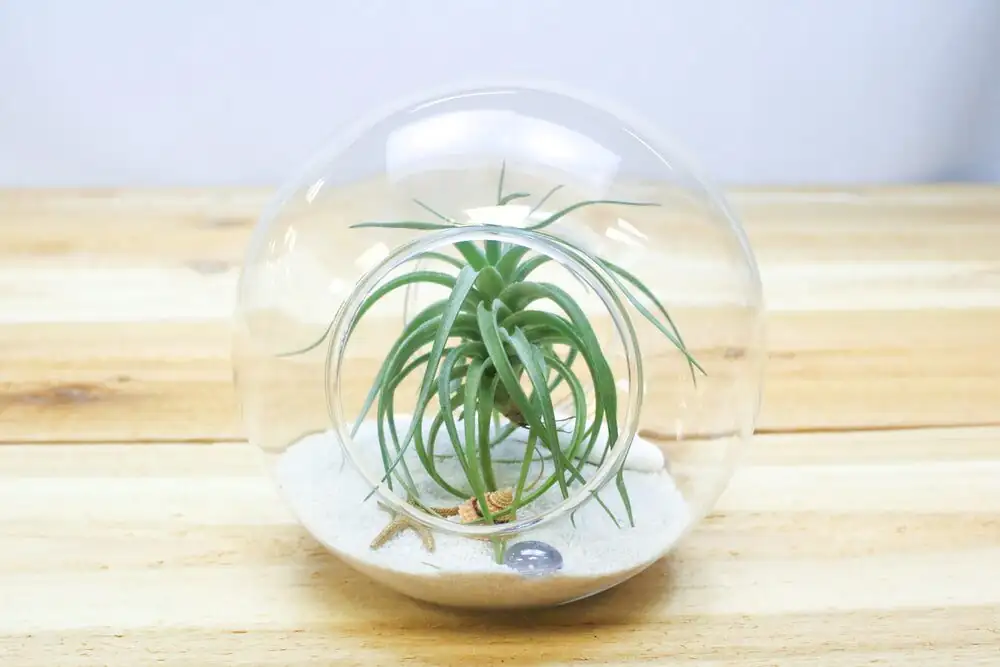
- Use a vessel with a generous opening and keep the plant elevated on gravel, shells, or a stand so air circulates freely
- Water outside the vessel, then return only once fully dry
- For mounts, angle the plant slightly downward to prevent water from settling in the base
Symbolism and the “flower language” of T. juncea
Culturally, air plants are often linked with independence and resilience—their soil‑free lifestyle and ability to thrive in exposed places make them emblems of adaptability. Modern “flower language” (花语) is a romantic, largely Victorian‑era invention that assigns meanings to blooms rather than a scientific trait. In the case of T. juncea, the symbolism aligns neatly with its biology: trichome‑armored leaves harvest moisture from the air, and clumping growth ensures continuity through pups. In other words, its “message” of self‑reliance and quiet strength is rooted in how it actually lives.
Fast answers to common questions
- Can I grow it in a closed glass terrarium?
- Not recommended. It needs airflow to dry fast. Choose an open design instead.
- Does it die after flowering?
- The blooming rosette slows, but it produces pups that keep the clump going.
- Soil or potting mix?
- Never. Mount it, nestle it in an open vessel, or set it on an airy surface—no soil needed.
The bottom line
If you give Tillandsia juncea what it truly craves—bright light, a proper soak followed by swift drying, moving air, and a light monthly feed—it will reward you with a sculptural silhouette, a jewel‑toned bloom spike, and a steadily growing clump. Retire the sealed globes and cursory spritzes; this is a plant that thrives on thoughtful, breezy minimalism.