

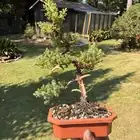
Buddhist pine (Podocarpus macrophyllus) is a bonsai workhorse: evergreen, elegant, and wonderfully responsive to training. If you’re chasing tighter cloud pads and a more refined silhouette, one advanced lever is water. Dial it with finesse—especially during the spring flush—and you can coax noticeably shorter leaves without stalling growth or risking scorch. The art is in “just enough” reduction, wrapped in safeguards.
Here’s a deep, practical guide to doing exactly that.
Meet the tree you’re tuning
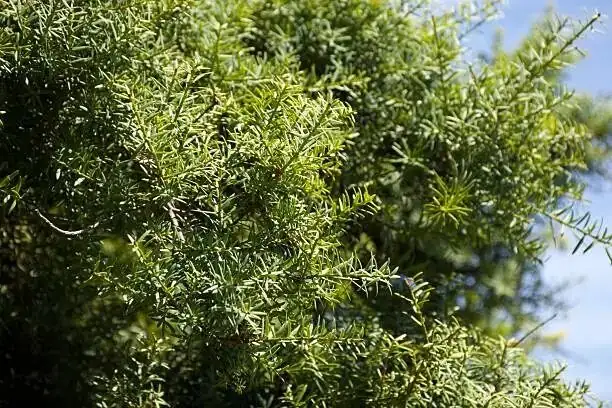
- Who it is: Podocarpus macrophyllus (aka Buddhist pine, Japanese yew, Yew Plum Pine), a podocarp native to China and Japan.
- Habit: Evergreen, leathery, narrow lance-shaped leaves; dense branching that responds well to pruning and wiring for classic cloud-pad styling.
- Light: Bright light to partial shade. Protect from scorching midday summer sun—an east-facing balcony or bright, airy indoor spot is ideal.
- Temperature: Best at 15–25°C (59–77°F). Brief dips to about -5°C (23°F) are survivable, but protect from hard freezes.
- Humidity: Moderate to high. In hot weather, occasional misting helps foliage stay fresh.
- Soil: Free-draining and airy—think fertile loam + leaf mold/compost + coarse sand/grit. Never let roots sit in soggy soil.
Why slight water reduction shortens leaves
During spring flush, new leaves lengthen as cells expand. A gentle, temporary reduction in water nudges the plant to allocate slightly less to leaf expansion while still maintaining healthy growth—resulting in shorter, denser foliage. The goal is to moderate turgor during the expansion window without triggering stress responses (leaf scorch, stalled buds, or dieback).
Think “micro-deficit,” not drought.
The spring-flush micro-deficit protocol
This is a timing-and-touch technique. Watch the tree, not the calendar.
Phase 1: Pre-flush prep (late winter to early spring)
- Health first: Only attempt on vigorous trees with active buds and no pest pressure.
- Soil check: Ensure a free-draining mix; repot if it’s been ~2–3 years or if drainage slowed. Bonsai containers for this species are often 20–40 cm (8–16 in) deep for stability.
- Light: Position in bright light with good airflow; plan shade for peak summer hours.
- Feeding: For potted/bonsai trees, start monthly feeding in spring and continue through the growing season; stop in winter. Avoid a heavy nitrogen surge right before the flush—steady, balanced feeding maintains vigor without pushing oversize leaves.
Phase 2: Detect the flush
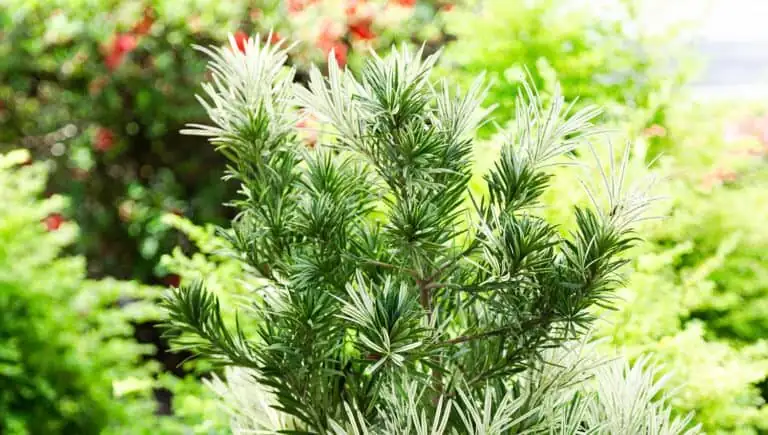
- Visual cues: Buds swell, then push soft, lime-green tips. That’s your window.
- Weather cue: Ideal when days are mild (around 15–25°C/59–77°F). Skip the technique during heatwaves or intense sun.
Phase 3: The controlled shortfall (roughly 7–14 days at peak expansion)
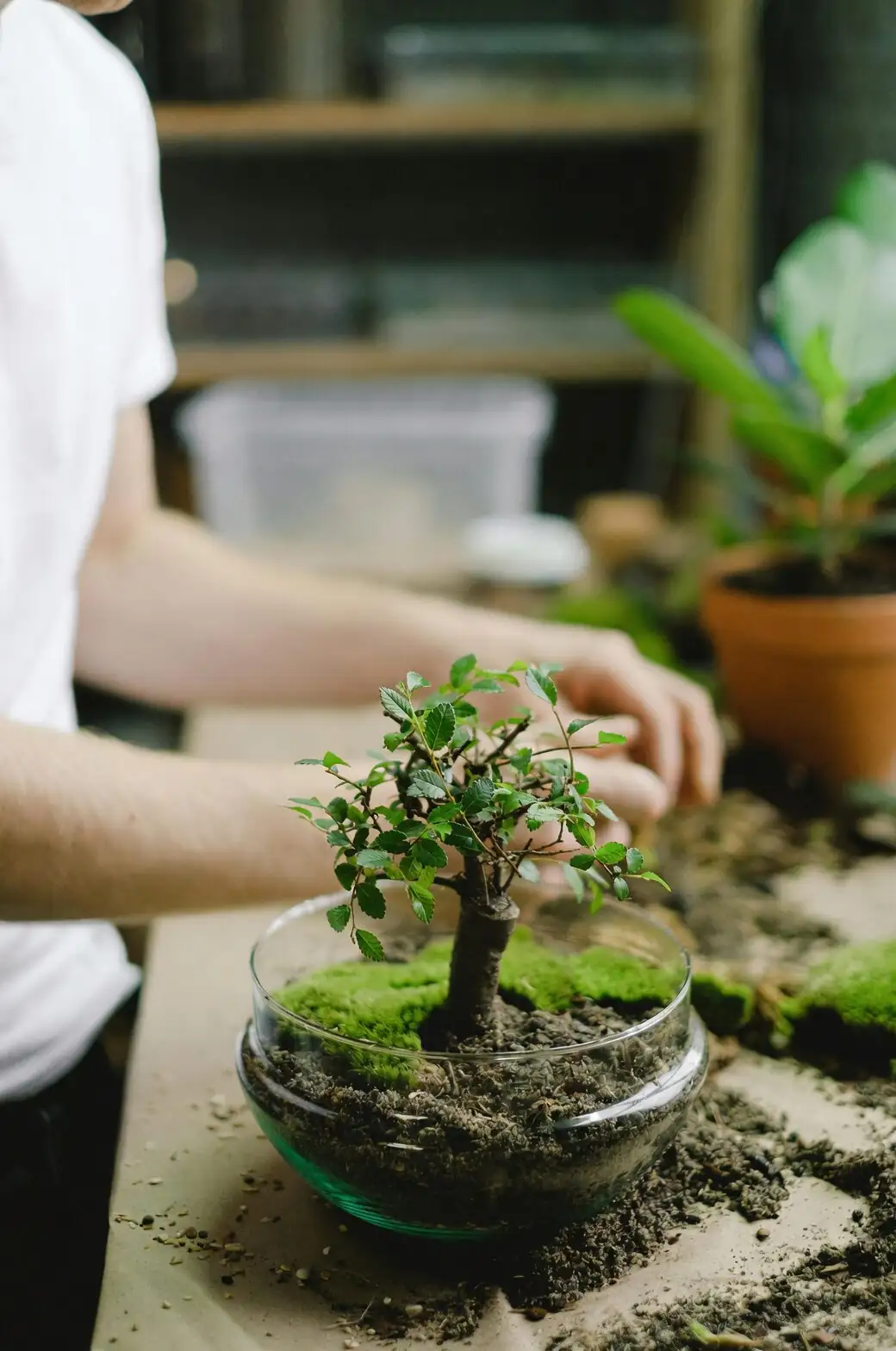
- Watering pattern:
- Water thoroughly, then wait until the top layer of mix is nearly dry before watering again. Practically: let the top 1–2 cm (about a finger’s depth) lose moisture, but don’t allow the entire rootball to dry hard.
- If you normally water “about twice a week” in spring, you’ll often stretch that interval slightly—always guided by the soil’s feel and pot weight, not a rigid schedule.
- Volume and timing:
- When you do water, water to full saturation (until runoff), then let excess drain completely. Morning watering is kindest.
- Light and leaf safety:
- Provide bright light but protect from harsh midday sun to avoid scorch while the plant is under a gentle deficit. East exposure or light midday shade works beautifully.
- Humidity buffer:
- In warm spells, an occasional, fine morning mist keeps foliage fresh without keeping leaves wet overnight. Good airflow reduces leaf spot and anthracnose risk.
Phase 4: Stabilize and resume normal care
- As tips firm from soft lime-green to deeper green and expansion slows, return to your standard “water when the top begins to dry” rhythm.
- Continue routine pinching to keep the silhouette tight and build layered pads.
Safeguards that separate refinement from stress
- Non-negotiables:
- Never let the root zone stay constantly wet—this species strongly resents waterlogging.
- Never let the rootball go bone-dry during flush. Aim for “nearly dry” on top, not drought.
- Sun management:
- Avoid midday summer scorch. Use morning sun + dappled light or bright shade at noon, especially on balconies and patios.
- Heat clause:
- If temperatures jump well above the comfortable range, abandon water reduction and focus on cooling, airflow, and shade; resume the technique only when weather moderates.
- Watch the foliage:
- If new tips droop mid-day and don’t recover by evening, or edges bronze, you’re too dry or too hot—water and add shade.
- If growth is soft, pale, and overly long, you may be overwatering or lighting is insufficient—improve light and ensure the mix is draining freely.
How this integrates with styling
- Pinching and pruning: In spring, pinch or prune shoot tips to restrain extension and keep pads compact. With slightly shorter leaves, each trim yields crisper cloud-pad definition.
- Wiring: Podocarpus takes wiring well. Shape framework branches first; maintain foliage pads with seasonal pinching thereafter.
- Pad refinement rhythm: Alternate light pinching with short windows of micro-deficit watering during spring flushes to dial leaf size while maintaining momentum.
Soil, pots, and drainage that make it all work
- Mix recipe: Free-draining is key. A classic blend is fertile loam + leaf mold/compost + coarse sand/grit. Avoid heavy, water-retentive media.
- Pot depth: 20–40 cm (8–16 in) bonsai containers anchor the tree and buffer moisture swings without bogging the roots.
- Repotting: Refresh the mix every 2–3 years. Repot when drainage slows or roots crowd—then resume refinement only once the tree has re-established.
Light, placement, and climate notes
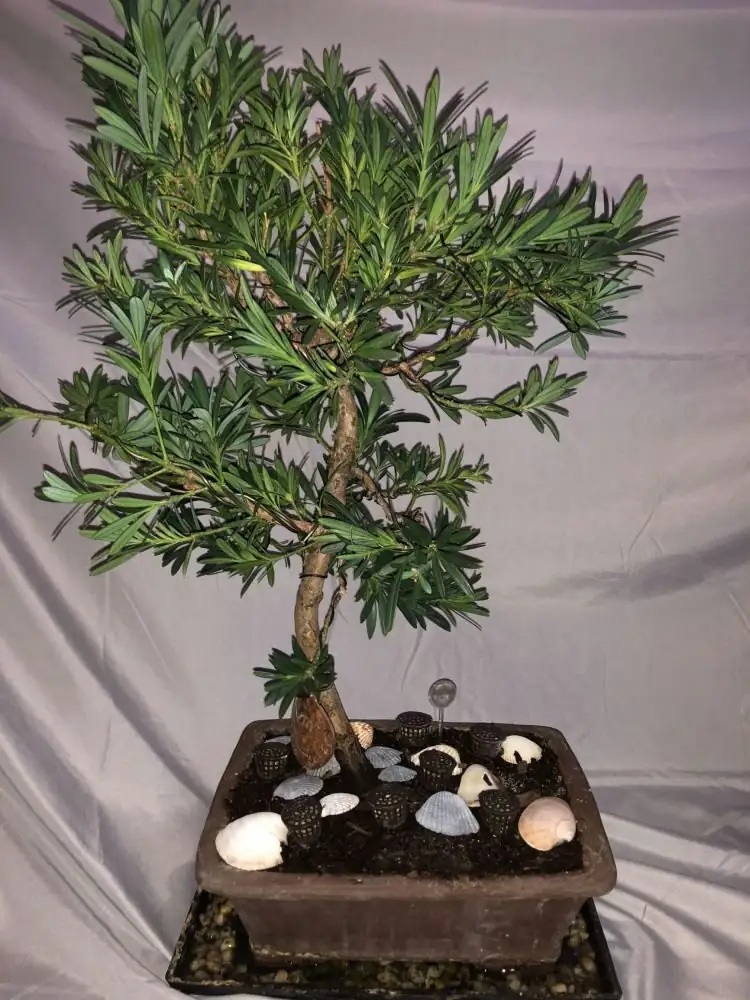
- Indoors: Place near a very bright window with airflow; east-facing is ideal. Rotate the tree regularly for even development.
- Outdoors: A sheltered, well-ventilated, bright location with protection from midday blaze suits it perfectly.
- Cold protection: Approximately USDA Zone 8–11. It can tolerate brief drops to about -5°C (23°F), but shield from hard freezes.
Feeding for steady refinement
- Containers/bonsai: Feed about once per month through the growing season, stopping in winter. A tiny amount of organic fertilizer can be mixed into the substrate at repot.
- In-ground plants: Feed in spring and autumn (about twice per year) with well-rotted organic fertilizer tea.
Seasonal calendar (bonsai-focused)
- Spring:
- Begin monthly feeding (potted plants), pinch/prune tips.
- Apply the water micro-deficit during the main flush to nudge shorter leaves.
- Sow stored seed if propagating; repot on your 2–3 year cycle as needed.
- Summer:
- Provide shade from scorching sun; occasional misting keeps foliage vivid.
- Take semi-ripe tip cuttings; rooting typically takes about 8–12 weeks.
- Autumn:
- Feed in-ground plants once; reduce watering with cooling temps and maintain sharp drainage.
- Winter:
- Stop fertilizing; protect from hard freezes. Monitor indoor humidity; don’t let soil stay wet and cold.
Propagation, pests, and health
- Propagation:
- Seed: sow fresh in summer or after moist-sand storage in spring; germination may occur in roughly two weeks under good conditions.
- Cuttings: dormant wood in spring or semi-ripe tips in summer; expect roots in about 8–12 weeks.
- Pests and diseases:
- Watch for scale, spider mites, and thrips—inspect undersides of leaves and treat early with horticultural soap or oil as locally appropriate.
- Leaf spot or anthracnose can appear in wet, stagnant conditions; improve airflow, avoid keeping foliage wet at night, and remove affected leaves promptly.
Quick pro tips for shorter leaves without drama
- Start with a vigorous, pest-free tree in a fast-draining mix.
- Use pot weight and the “finger test” at 1–2 cm depth to time watering.
- Choose bright light with midday protection; favor morning sun.
- Keep humidity moderate to high, with occasional morning mist in hot weather.
- Reduce water only during the active spring flush—and only slightly.
- Abort the technique at the first signs of stress; resume normal care and shade.
Safety note
Toxicity is not specified. As a precaution, prevent pets and children from chewing or ingesting any parts, and seek local advice if ingestion is suspected.
Refinement is orchestration, not force. With Podocarpus macrophyllus, a deft touch on the watering can—especially during spring’s tender expansion—pays off in compact leaves, clean pads, and that quietly powerful Buddhist pine presence.