

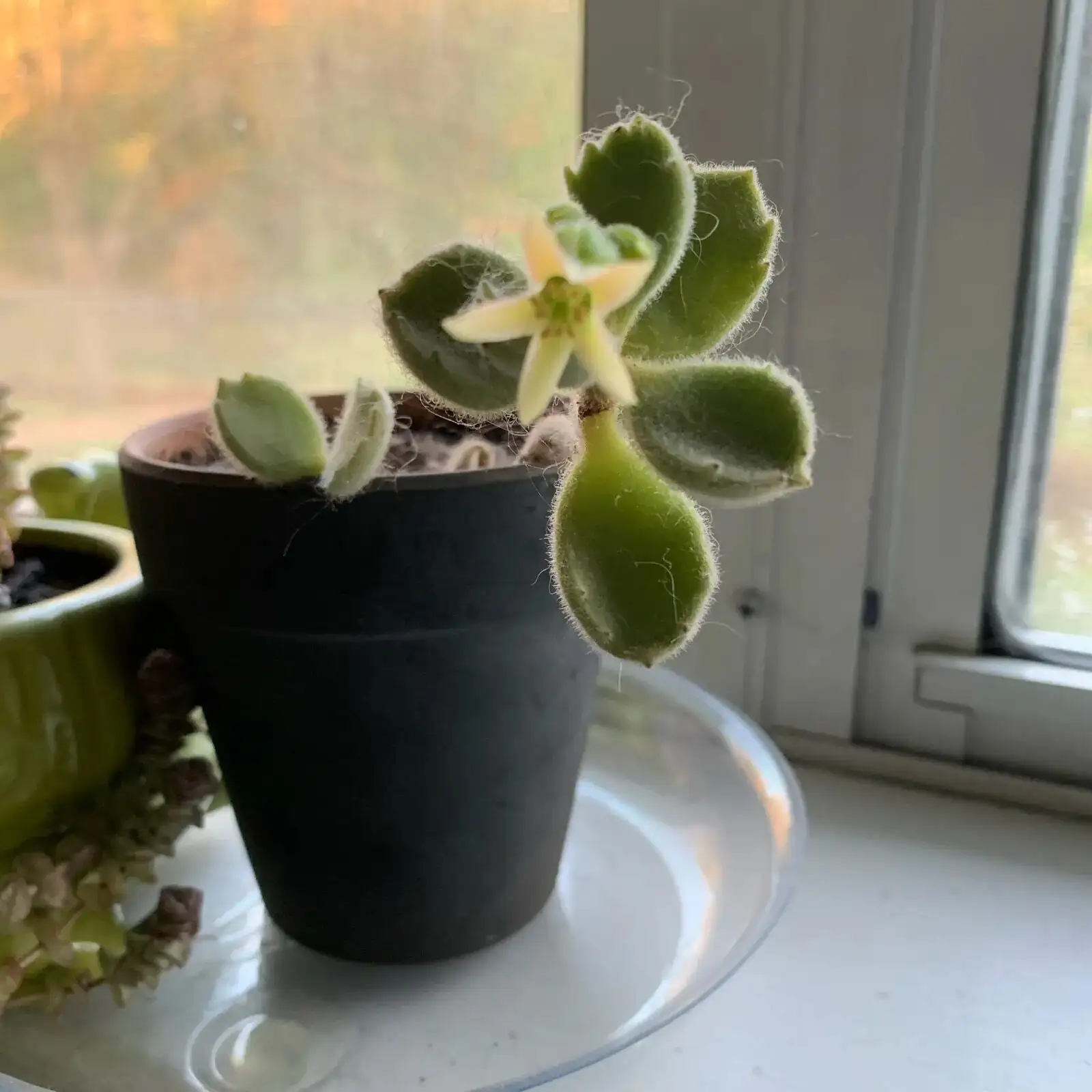
If you’ve ever wanted a tiny, velvety bear waving at you from the windowsill, this is your plant. Cotyledon tomentosa—better known as Bear’s Paw—packs plush, paw-shaped leaves tipped with little red “claws” when it’s happy. Keep it bright, airy, and on the dry side, and it rewards you with a compact, cute, branching shrublet that stays adorably chubby instead of stretching.
Here’s your upbeat, practical guide to nailing soak-and-dry watering, dialing in morning sun + bright indirect light, and using airflow and a simple seasonal schedule to keep those red-tipped claws sharp and the plant perfectly pudgy.
Meet Cotyledon tomentosa (Bear’s Paw)
- Origins: Southern Africa (especially South Africa)
- Family/Genus: Crassulaceae, Cotyledon
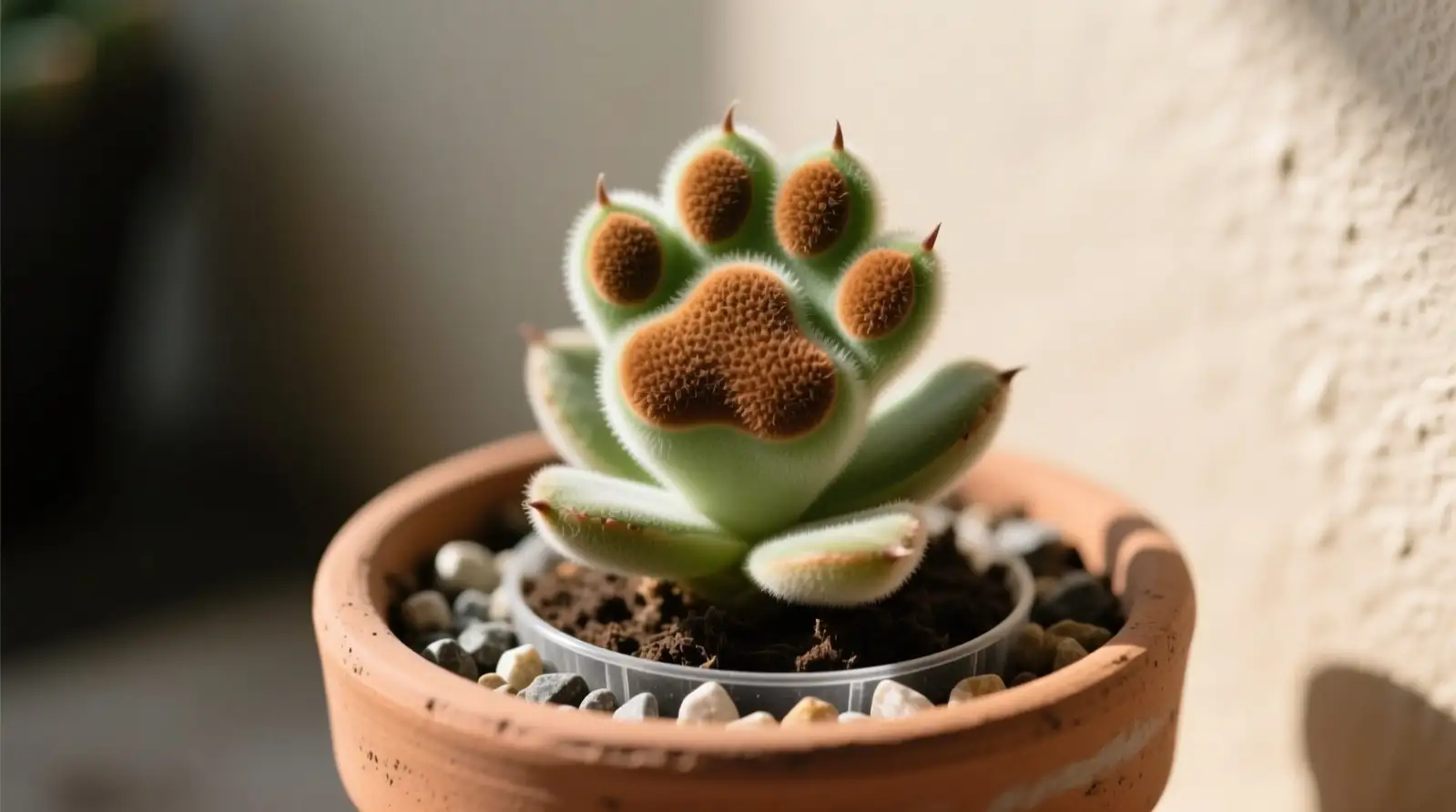
- Look: Plump, grey-green, velvety leaves with notched “toes”; tips often blush red in strong light
- Habit/Size: Compact, branching succulent subshrub. In containers, often 10–20 cm tall and 10–30 cm wide; older plants can slowly reach 20–50 cm tall if light is weaker
- Flowers: Warm-toned, bell-like blooms on upright stems; most likely with strong light and a cooler, drier rest
- Not frost hardy. Best outdoors year-round only in warm regions (roughly USDA 10–11)
Light that keeps the claws red (and the plant compact)

Think of Bear’s Paw as a breakfast-sun fanatic. Gentle morning rays plus bright, indirect light the rest of the day keep it chunky, colorful, and tight between leaves.
- Indoors:
- Best spots: Bright east window (ideal) or south window with sheer/filtered midday light
- Goal: Several hours of morning sun; bright indirect light afterward
- Rotate the pot a quarter turn weekly for even growth
- Outdoors (warm seasons):
- Place on a sunny, sheltered balcony/patio
- Provide morning sun, dappled or bright indirect light by midday/afternoon
- Acclimate over 10–14 days before boosting exposure
- Watch for signals:
- Too little light: Stretching, elongated gaps between leaves, pale color
- Too much heat/sun: Scorched patches, bleached or crispy edges—add shade and airflow
Good airflow is the unsung hero here; it lets you keep the light bright without risking leaf spots or rot.
Soak-and-dry watering for fuzzy leaves
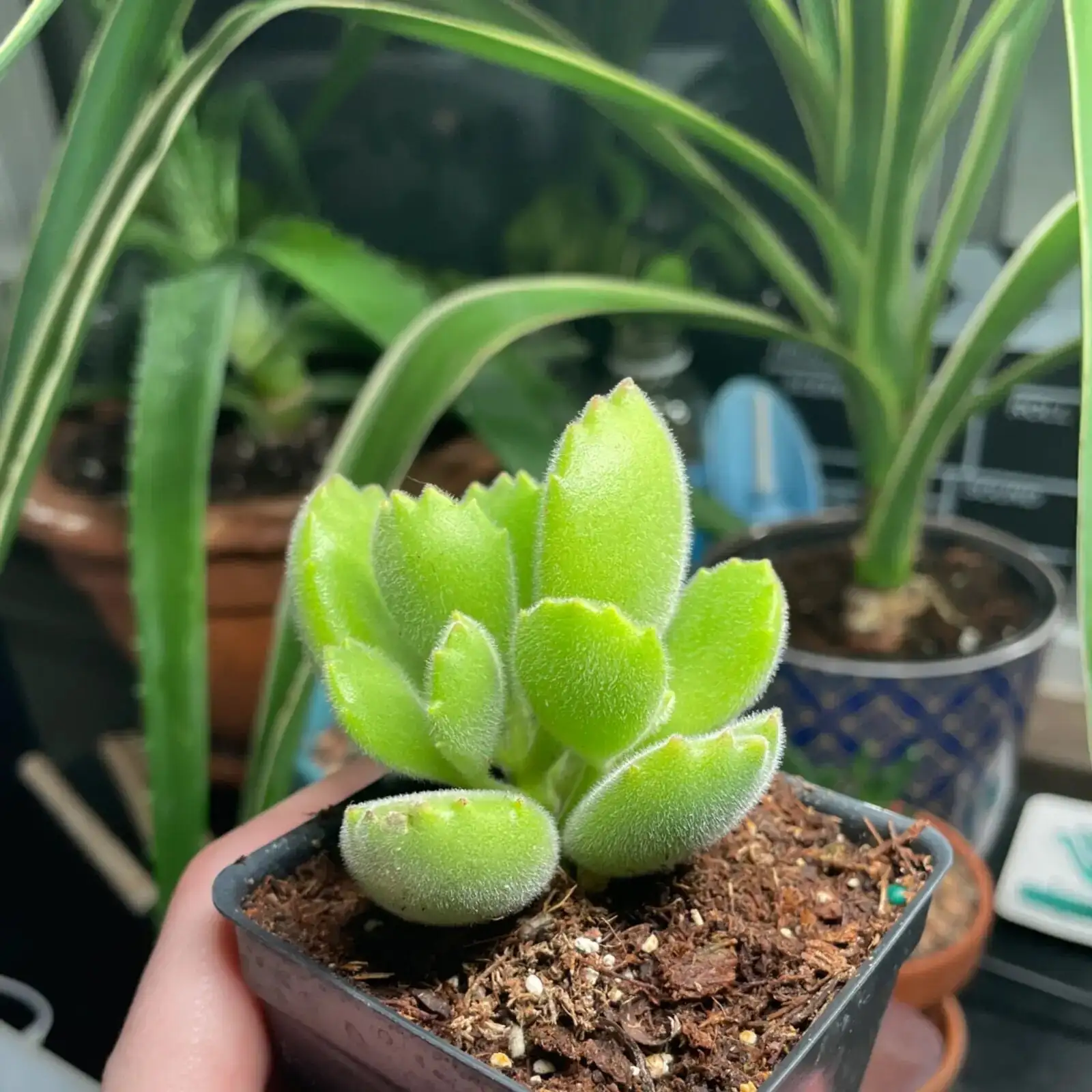
Those velvety hairs are adorable—and a hint. This plant wants its roots soaked, then time to fully dry, and it strongly prefers dry foliage.
- The method:
- Water thoroughly until excess drains out
- Then wait until the mix dries well before watering again
- Never leave water standing in a saucer
- How to know it’s time:
- Use a wooden skewer or chopstick as a moisture probe; only water when it comes out dry
- Learn the pot’s “lift test” weight when dry vs. just-watered
- Important don’ts:
- Don’t mist. Water sitting on fuzzy leaves leads to spots and invites rot
- Don’t do frequent sips—soak properly, then let it dry
- Seasonal tweaks:
- Spring/Autumn: Water sparingly—just enough to prevent severe shriveling; let the mix dry thoroughly between drinks
- Summer heat: Reduce watering and protect from heavy rain; warm nights slow root uptake
- Winter: Keep almost dry. Only water lightly if leaves begin to wrinkle, especially when kept above 10°C (50°F)
Airflow hacks that prevent spots and rot
- Space plants so leaves don’t touch
- Use a small fan on low near a bright window, or crack a window for a gentle cross-breeze
- Choose breathable pots (terracotta works well) with a generous drainage hole
- Add pot feet to lift the container and speed drying
- Top-dress with coarse grit to keep the stem base dry and tidy
- Avoid cloches, sealed cabinets, and crowded trays
A simple seasonal schedule (to prevent stretch and keep red claws)
- Spring
- Repot if needed; refresh into a very free-draining mix
- Resume soak-and-dry after true dry-downs
- Feed lightly about once a month with diluted, low-nitrogen succulent fertilizer
- Take firm tip cuttings and pinch to encourage branching
- Summer
- Give strong morning sun; add shade in intense midday/afternoon heat
- Reduce watering; shield from prolonged rain
- Boost airflow; keep water off leaves
- Autumn
- Another great time for cuttings
- Keep light bright to deepen red tips; gradually reduce watering as nights cool
- Winter
- Brightest possible spot, above 10°C (50°F)
- Keep very dry; no fertilizer
- Aim for a cooler, drier rest to set up compact spring growth and possible blooms
Soil, pots, and repotting (your drainage trifecta)
- Mix: A cactus/succulent blend cut heavily with mineral grit—roughly 1:1 organic to mineral (pumice, perlite, coarse sand, or horticultural grit)
- Pot: Snug fit with excellent drainage; many mature plants thrive in a 12–15 cm (5–6 in) pot
- Repotting: In spring, typically annually or whenever the mix compacts. Knock out old soil around the roots and reset into fresh, gritty mix
Feeding, pruning, and keeping it compact
- Fertilizer: Light touch only—about monthly, spring through early autumn, with a diluted, low-nitrogen formula. Pause feeding in winter or whenever the plant is stressed
- Pruning: Pinch tips once the plant hits ~15 cm to spur branching. If it gets leggy, cut back to reshape
- Refreshing: Older plants are often restarted from healthy cuttings every 4–5 years
Propagation: easy wins with stem cuttings
- Best season: Spring or autumn
- How-to:
- Take firm 5–7 cm (2–3 in) tip cuttings with a clean, sharp blade
- Let the cut end callus
- Insert into gritty medium; keep bright and warm (18–22°C / 64–72°F)
- Rooting typically takes about 2–3 weeks
- Leaf propagation is slower and less predictable—consider it a bonus, not the plan
- Note: Variegated Bear’s Paw grows slower and can be more sensitive to strong sun
Troubleshooting at a glance
- Stretching (leggy growth):
- Move to brighter light (especially morning sun), rotate weekly, and keep on the dry side
- Pinch or prune to reshape; restart sections as needed
- Wrinkled leaves:
- If the mix is bone dry, water thoroughly
- If the mix is still damp and leaves are limp, suspect root issues—unpot, trim rot, and reset in a drier, grittier mix
- Leaf spots/rust:
- Usually from wet foliage plus stale air; remove affected leaves, increase airflow, and water only at the soil line
- Pests:
- Mealybugs and whiteflies are the usual suspects. Isolate, then treat with insecticidal soap or horticultural oil; repeat as needed
Where it thrives
- Temperature: Best at 18–24°C (64–75°F). Keep above 10°C (50°F) in winter; protect from cold drafts
- Humidity: Prefers dry, fast-drying air. Avoid persistently damp rooms
- Placement:
- Indoors: Bright east or south-facing windowsill with airflow
- Outdoors (warm seasons): Sunny, sheltered balcony/patio; protect from harsh midday sun and long, soaking rains
Safety note
Toxicity isn’t consistently documented for Cotyledon tomentosa. To be safe, treat it as potentially irritating/toxic if ingested. Keep away from pets and small children, avoid tasting, and wash hands after handling—especially if you’re sensitive to plant sap.
A little symbolism
Bear’s Paw has become a modern symbol of comfort, warmth, and playful companionship—more meme than myth. There’s no deep folklore here; the meaning comes from how those fuzzy, paw-like leaves make people feel: cozy, cheerful, and cared for. A perfect “little buddy” plant.
Quick answers to common questions
- How do I keep those red “claws”?
- Bright light (especially morning sun), excellent airflow, and slightly drier care. Acclimate to stronger sun gradually to avoid scorch
- Why is my plant stretching?
- It needs more light. Move it brighter and keep to soak-and-dry watering. Pinch or prune to restore shape
- What should I look for when buying?
- A compact, sturdy, well-branched plant with plump, evenly fuzzy leaves; no mushy spots, black patches, pests, or sour smells
- I just brought one home—now what?
- Park it in bright light with good airflow. Water only after the mix dries well. Shade during extreme heat, and keep warm and bright in winter (above 10°C / 50°F)
With morning sun, bright indirect light, crisp airflow, and a simple soak-and-dry rhythm that goes extra light in winter, Bear’s Paw stays stout, sweet, and color-tipped—like a handful of tiny teddy bear feet waving from your sill.