
Think of Peperomia obtusifolia as the houseplant equivalent of a crisp white shirt with a playful splash of pattern: clean, compact, and quietly stylish—yet capable of show-stopping variegation when you get the light and feeding just right. If your goal is sharp cream-and-green leaves and tidy, desk-friendly growth, this guide unpacks the science of variegation and translates it into practical, easy care.
Meet Peperomia obtusifolia (Baby Rubber Plant)
- Family: Piperaceae (the pepper family)
- Origin: Tropical regions of South America, Central America, and the Caribbean—especially Brazil
- Also known as: Baby Rubber Plant, American Rubber Plant, Pepper Face Plant, Radiator Plant
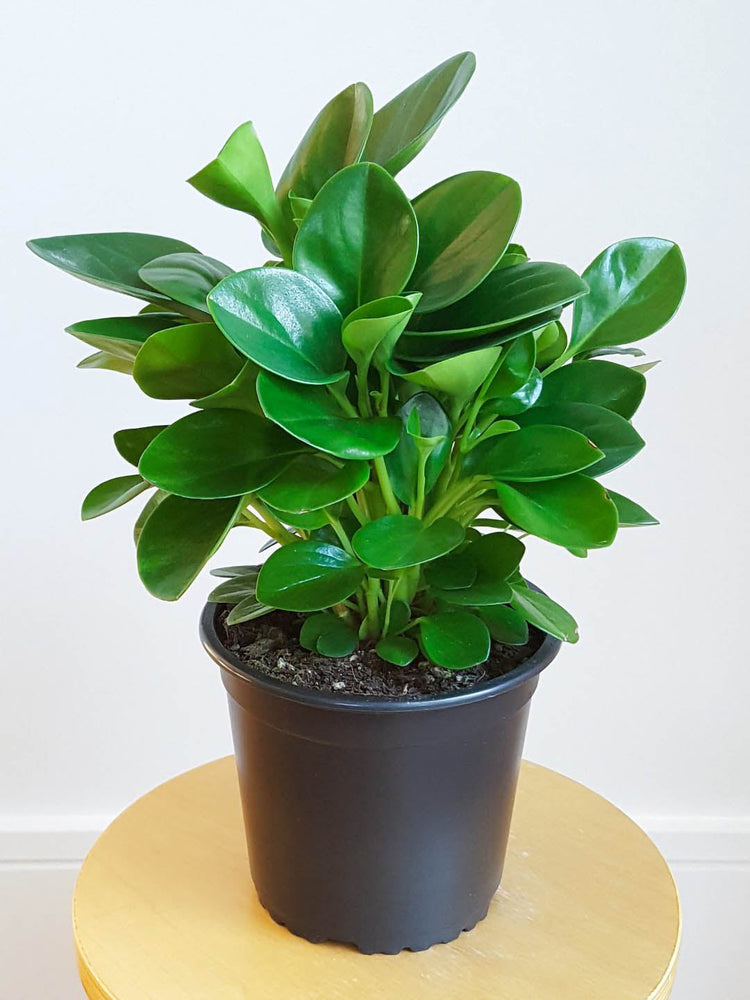
- Habit and size: A compact, upright-to-mounding evergreen perennial, typically 20–30 cm (8–12 in) tall and wide indoors
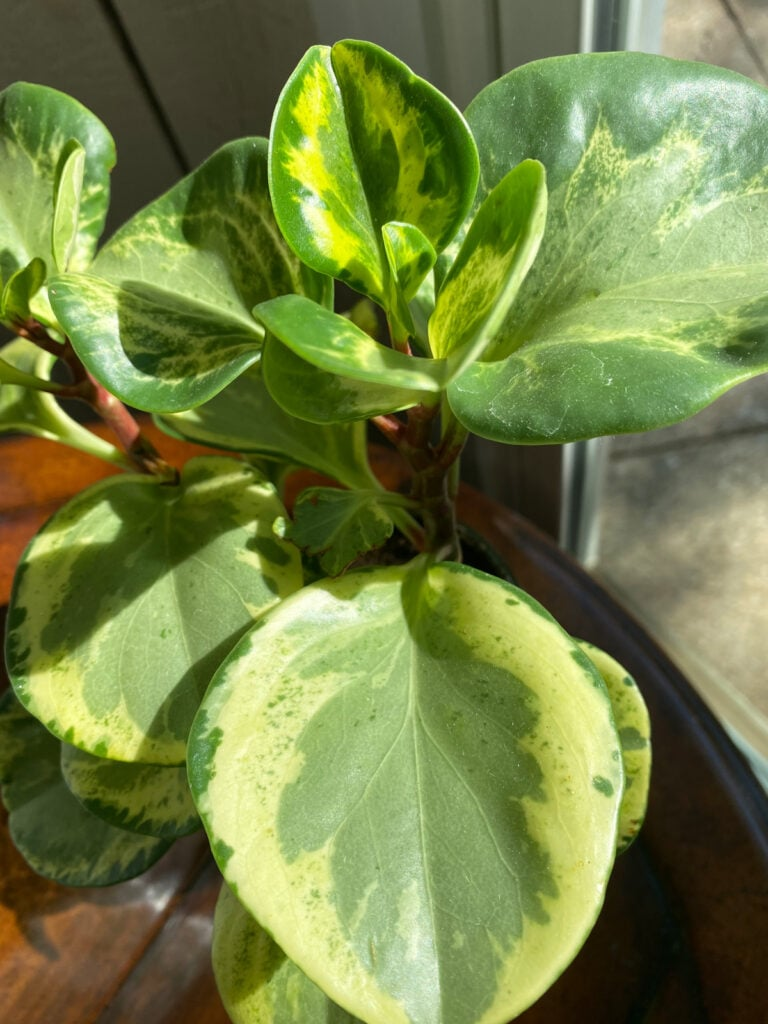
- Foliage: Thick, glossy, water-storing leaves; many cultivars feature cream/yellow variegation
- Flowers: Quirky, tail-like spikes—novel, but not the main attraction
- Personality: Low-maintenance, semi-succulent, pet-safe, forgiving of a missed watering
Variegation, Demystified: Why Patterns Fade—or Pop
What creates the cream swirls?
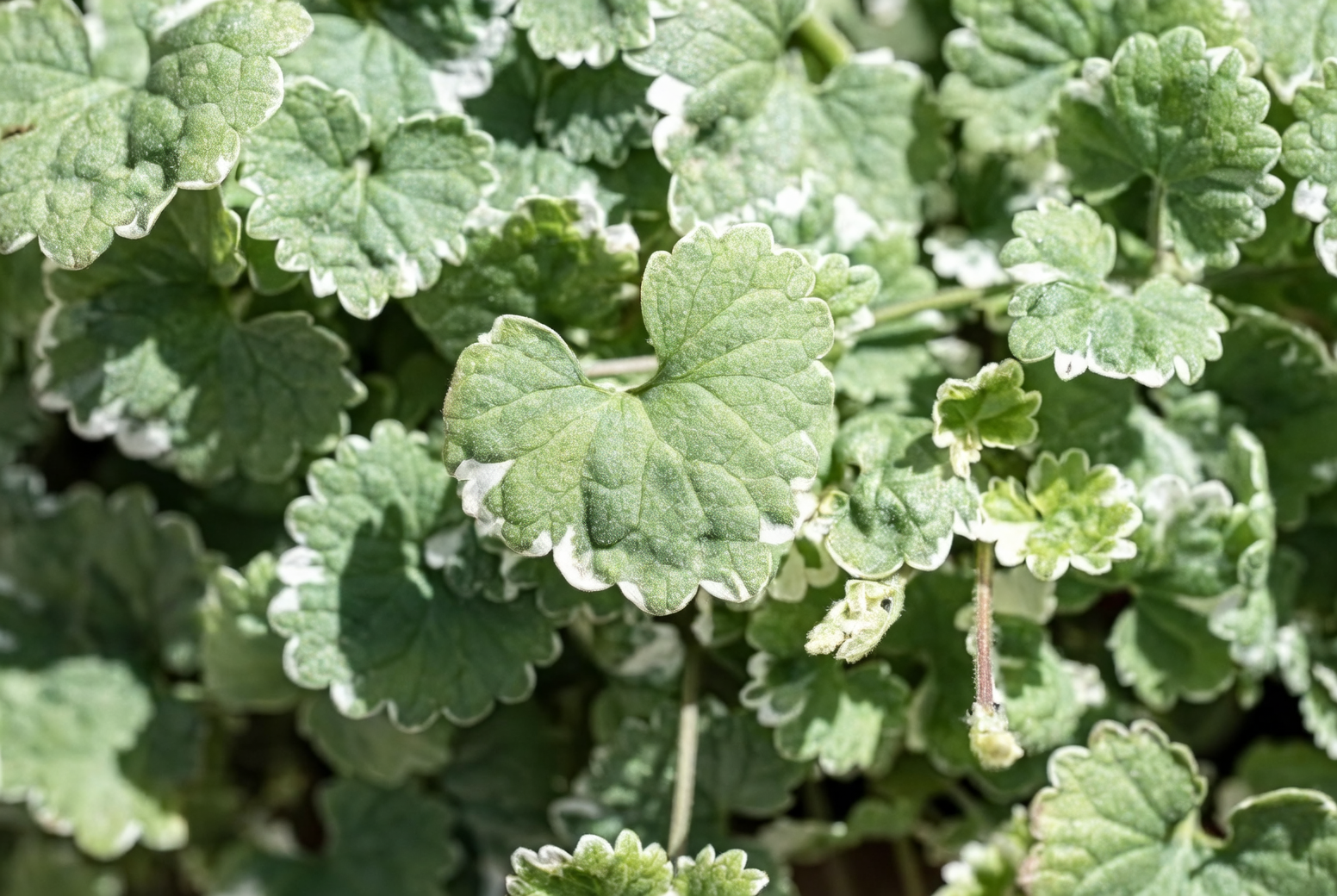
Many variegated Baby Rubber Plants are chimeras: some tissues produce normal chlorophyll (green), and others don’t (cream/yellow). The pale areas photosynthesize less, so the plant “works harder” in bright, filtered light to maintain those patterns.
Light and nitrogen: the two biggest levers
- Light: Variegated tissues have less chlorophyll; they need more light to keep colors defined. Too little light = lanky growth and muddier patterns. Too much harsh sun = scorch or bleaching.
- Nitrogen: Nitrogen fuels chlorophyll production and fast, soft growth. Excess nitrogen can blur variegation and stretch stems, making patterns look washed or “greened out.”
Crisp variegation in practice
- Use bright, filtered light (east window is ideal; south/west needs a sheer curtain). Gentle filtering around 40–50% shade keeps leaves safe yet energized.
- Feed lightly in spring–summer with a diluted, balanced liquid fertilizer. Avoid high-nitrogen formulas and never overfeed.
- Prune out all-green shoots if they appear; they grow faster and can dominate, causing the plant to “revert.”
Light: The High-Definition Setting for Pattern
- Best: Bright, indirect light to partial shade
- Placement ideas:
- East window: gold standard
- South/west window: add a sheer curtain for soft, bright light
- Low light: tolerated, but expect looser spacing and weaker pattern
- Rotate the pot about half a turn weekly for even color and shape
- Winter tip: Move a bit closer to the window for extra brightness

Water, Soil, and Pots: Semi-Succulent Sensibility
- Watering rhythm:
- Let the top ~5 cm (2 in) dry before watering again
- Typical cadence: every 7–10 days in summer; every 2–3 weeks in winter (always adjust to your conditions)
- Soil recipe: A fast-draining, airy mix—peat or coco coir base + perlite or coarse sand; optionally a handful of fine orchid bark
- Pot choice: Always use drainage holes; empties saucers promptly
- Biggest pitfall: Overwatering and cold, wet soil (root rot risk)
Temperature, Humidity, and Airflow
- Temperature sweet spot: 16–24°C (61–75°F)
- Tolerances: Generally fine from 15–27°C (59–81°F); keep above 10°C (50°F)
- Heat note: Prolonged >30°C (86°F) can slow growth
- Humidity: Adapts to average home humidity; gentle airflow is a plus. Pebble tray or humidifier helps in very dry winters.
Feeding for Pattern and Poise (Not Bulk)
- Light feeder: During active growth, use a diluted balanced liquid fertilizer
- Options: Monthly in spring/summer, or every 2 weeks from May–August if it’s actively growing well
- Avoid excess nitrogen—especially for variegated cultivars—so patterns stay crisp and growth stays compact
- Do not fertilize in fall/winter
Pruning and Training: Keep It Compact
- Pinch tips to encourage branching and a tidy mound
- Thin overly dense growth to boost airflow and reduce leaf drop
- Remove yellowing or damaged leaves anytime
- If a stem turns fully green, snip it at the base to preserve variegation
- Older plants can be cut back harder to rejuvenate
Propagation: Fast, Fun, and Beginner-Friendly
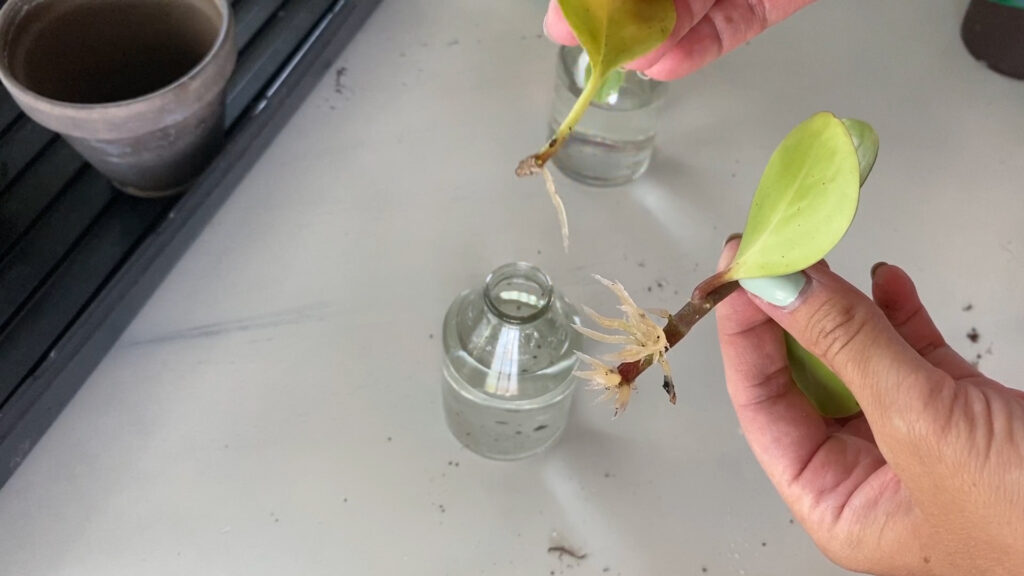
- Stem cuttings (late spring–early summer): Take 3–4 cm (1.2–1.6 in) tips with 3–5 leaves; root in a light mix or moist sand—often in about 3 weeks
- Leaf cuttings: Insert a mature leaf with ~1 cm (0.4 in) of petiole; roots in 2–3 weeks; tiny plantlets often follow ~1 month later
- Water propagation also works
- Division: Separate clumps during repotting
Repotting: Less Is More
- Likes to be slightly root-bound; repot every 2–3 years when roots fill the pot or poke from drainage holes
- Move up just 2.5–5 cm (1–2 in) in diameter
- Spring is the ideal time; refresh mix and lightly trim roots if needed
Seasonal Care Cheat Sheet
- Spring: Resume regular watering; start light feeding; best time to repot, prune, and propagate
- Summer: Peak growth; keep lightly moist (never soggy); fertilize during active growth; watch for pests
- Fall: Reduce watering; stop fertilizing
- Winter: Brighter light; minimal watering; no fertilizer; keep warm and away from drafts
Flowers: The Curious “Rat-Tail”
Expect slim, upright spikes (small, unscented) in late summer to early autumn. They’re charming in a minimalist way, but foliage is the star.
Troubleshooting: From Fading Patterns to Floppy Stems
- Yellowing, leaf drop:
- Most common: overwatering/root stress
- Also possible: too little light, harsh sun, overcrowding, poor airflow
- Fix: Bright filtered light, let mix dry partially, thin dense growth, improve ventilation
- Faded variegation, lanky stems:
- Causes: low light or excess nitrogen
- Fix: Brighter filtered light; reduce frequency/strength of feed; use balanced low-dose fertilizer; prune to compact
- Dull, matte leaves:
- Often under-watering or very low humidity
- Fix: Water thoroughly when the top 2 in are dry; consider a pebble tray
- Pests:
- Mealybugs, spider mites, whiteflies, occasionally scale (worse in stagnant air)
- Treat early with insecticidal soap or horticultural oil; repeat weekly until controlled
- Disease:
- Root rot from overwatering and cold, wet soil—prevent with fast drainage and careful watering
- Viral-like issues (rings, distortion): remove affected leaves/plants; use clean tools and sterile media
Safety and Placement Ideas
- Toxicity: Generally considered non-toxic to humans, cats, and dogs
- Perfect spots: Desks, shelves, living rooms, and bright bathrooms. An east window or a south/west window with a sheer curtain is ideal.
History, Symbolism, and a Note on Names
- A botanical classic: The genus Peperomia was named in 1794 following South American botanical exploration
- “Radiator Plant” is a long-used nickname linked to its love of warm, bright spots near windows
- Symbolism: Associated with steady, calm growth and the comfort of a tidy home—often gifted with the hopeful message, “everything will be alright”
- Name note: The Peperomia world is huge. “Watermelon Peperomia” usually refers to Peperomia argyreia, not P. obtusifolia—so double-check labels when shopping variegates
Fun Facts
- Peperomia is a mega-genus with 1,000+ described species
- Baby Rubber Plant is famous for its freshly polished look in good light
- Tip cuttings can root in about 3 weeks; leaf cuttings often root in 2–3 weeks, with plantlets about a month later
- Overfeeding, especially with nitrogen-heavy fertilizer, can blur variegation—less truly is more
Quick FAQs
- How often should I water it?
- When the top ~5 cm (2 in) is dry; often every 7–10 days in summer and every 2–3 weeks in winter, but always adjust to your light, temperature, pot, and soil
- Should I mist my Baby Rubber Plant?
- Misting offers only a brief boost. If air is very dry, use a humidifier or pebble tray—and prioritize good airflow
- Is Peperomia a succulent?
- Semi-succulent is a better term: the fleshy leaves store water, but they prefer a touch more consistent (still careful) moisture than true desert succulents
The Takeaway: Pattern Perfect, Compact, and Carefree
To keep variegation sharp and growth compact, pair bright, filtered light with a light, balanced feeding routine—and skip the heavy nitrogen. Add fast drainage, “less is more” watering, and a pinch or two of pruning, and your Peperomia obtusifolia will stay crisp, glossy, and delightfully composed year-round.